

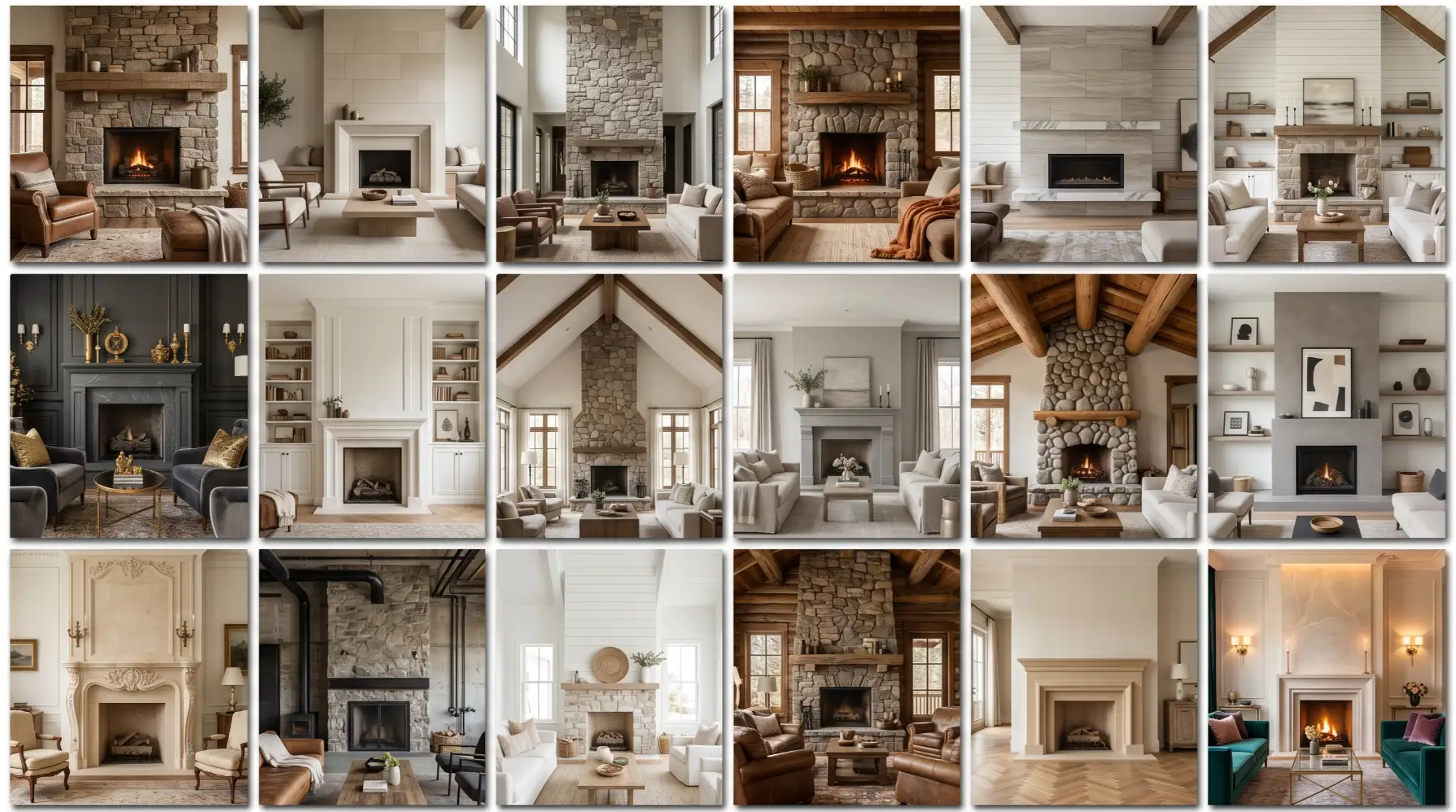
18 Stunning Stone Fireplace Ideas for a Cozy & Stylish Home
There is very little in interior design that carries the same weight, warmth, and visual authority as a stone fireplace in a well considered living room. It is not simply a source of heat. It is an architectural statement, a gathering point, and the kind of feature that defines the entire character of a space from the moment you walk through the door. A stone fireplace communicates permanence and quality in a way that few other design elements can match, and its versatility across styles, from rugged farmhouse to refined contemporary, makes it one of the most enduringly popular choices in residential design.
What makes stone fireplaces particularly compelling right now is the breadth of options available in terms of material, finish, scale, and integration with the surrounding room. Homeowners are no longer limited to a standard surround and mantel combination. Today’s stone fireplace designs range from floor to ceiling feature walls in dramatic stacked stone to sleek, minimalist limestone surrounds that anchor a modern living room with quiet elegance. The material choices are equally impressive, spanning quartzite, marble, travertine, fieldstone, limestone, and stone veneer, each bringing a distinct personality and texture to the space.
This article presents 18 stunning ideas for stone fireplace elegant living rooms, covering the full range of styles, materials, and design approaches that are shaping interior spaces right now.
18 Stunning Stone Fireplace Ideas for Elegant Living Rooms
1. The Floor to Ceiling Stacked Stone Feature Wall
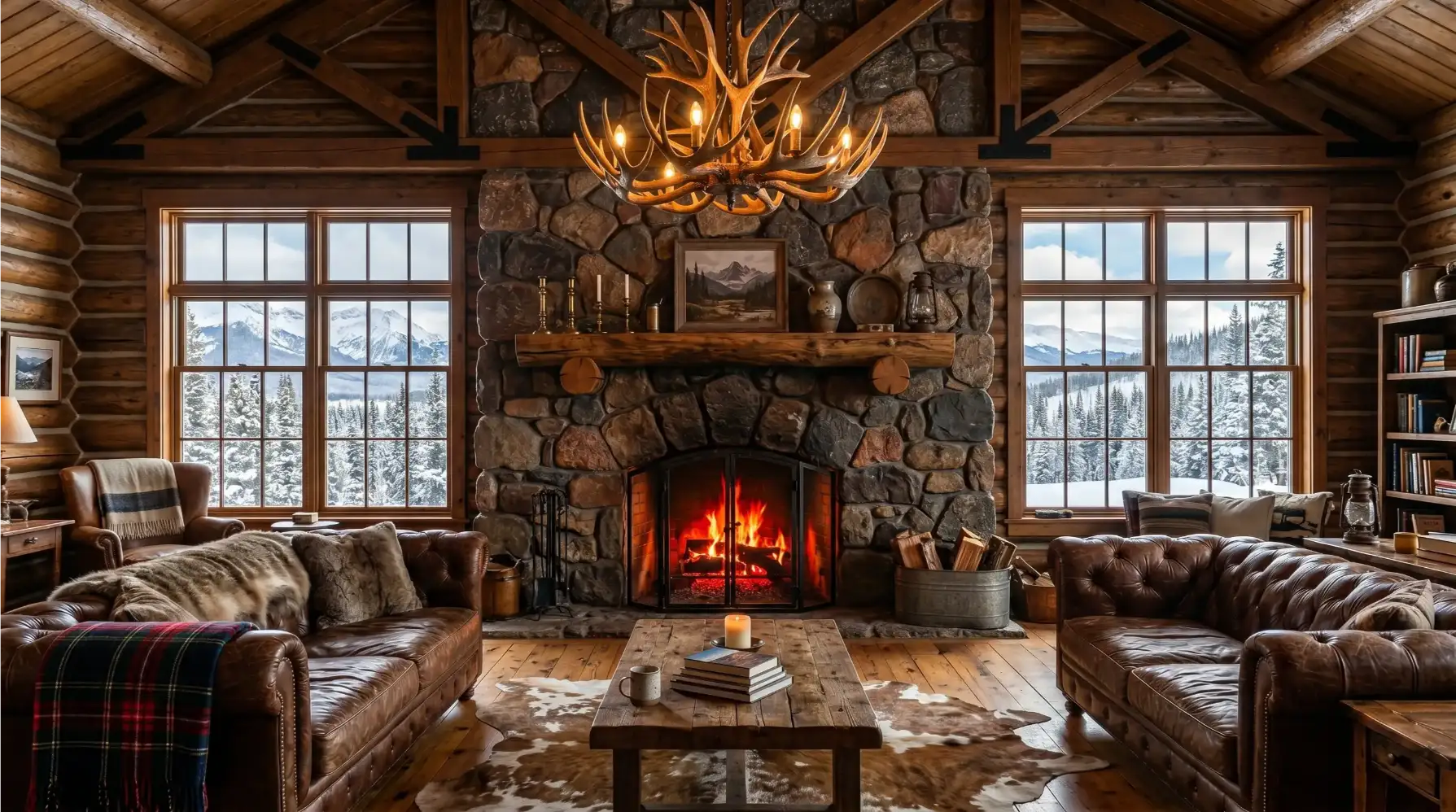
Running stone from the floor all the way to the ceiling is one of the most powerful design moves available in a living room. The full height treatment elongates the room visually, creates an undeniable focal point, and gives the fireplace a scale and presence that commands attention without requiring additional decoration. Stacked stone in irregular, dimensional pieces adds depth and shadow play across the surface, creating a wall that looks different as the light shifts throughout the day. This approach works particularly well in rooms with high ceilings where the vertical sweep of the stone adds genuine drama.
2. The Two Sided Stone Fireplace
A two sided stone fireplace creates a visual connection between two living spaces while functioning as an architectural divider that never feels closed or oppressive. The stone surround wraps both faces of the fireplace, creating a consistent material language across the transition between rooms. This design works beautifully in open plan layouts where a defined sense of separation is desired without the use of walls or screens. The stone provides visual weight and permanence while the open flame maintains a feeling of warmth and continuity across the space.
3. The Arched Stone Fireplace Opening
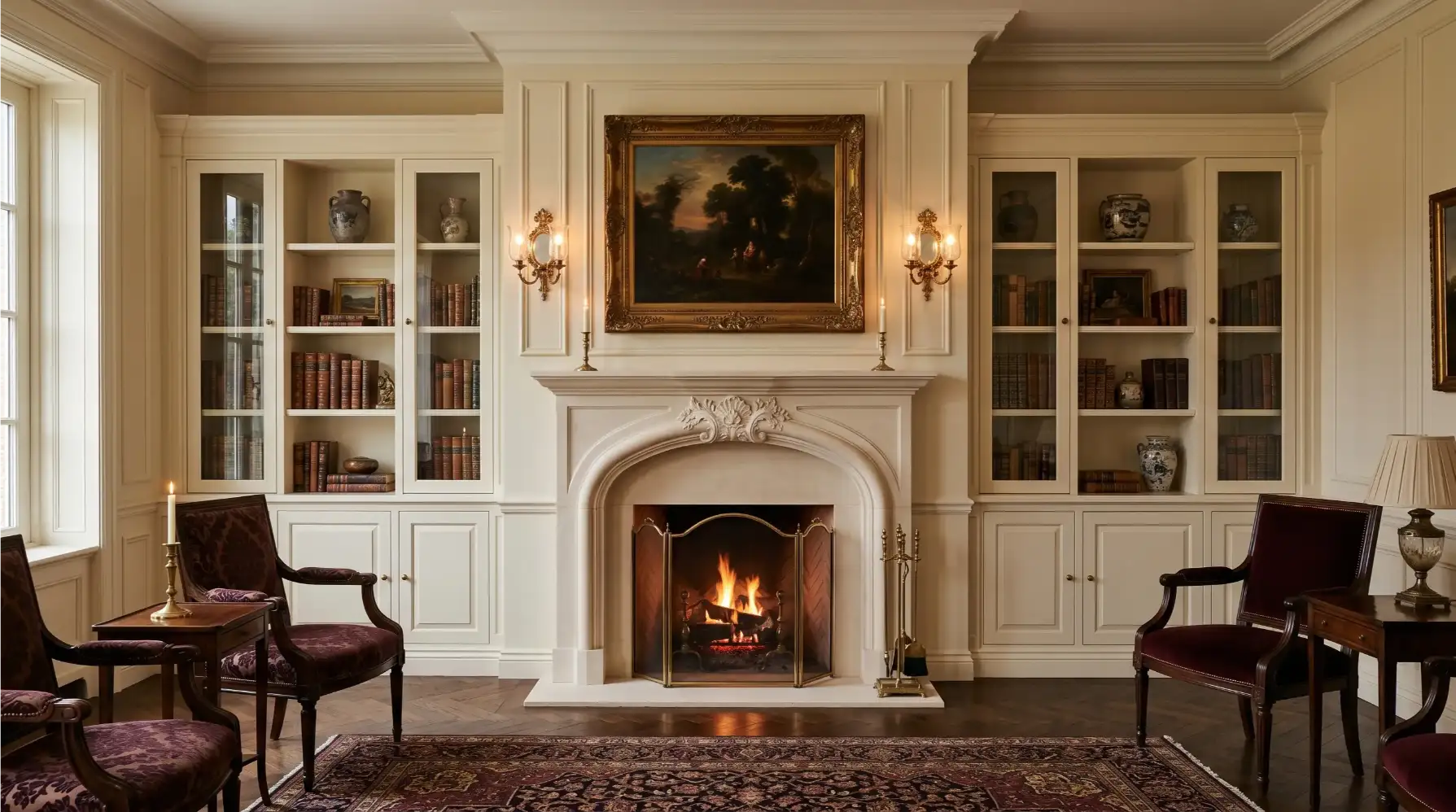
An arched opening within a stone surround introduces a softness and classical elegance that rectangular fireplace designs cannot replicate. The curve of the arch draws the eye naturally and adds an almost sculptural quality to the fireplace wall. In pale limestone or cream coloured stone, the arched opening creates a refined, almost European aesthetic that suits formal living rooms and spaces with period architectural details. Paired with a carved stone mantel and symmetrical built in shelving on either side, this design achieves a level of grandeur that feels deeply considered.
4. The Oversized Rustic Stone Fireplace
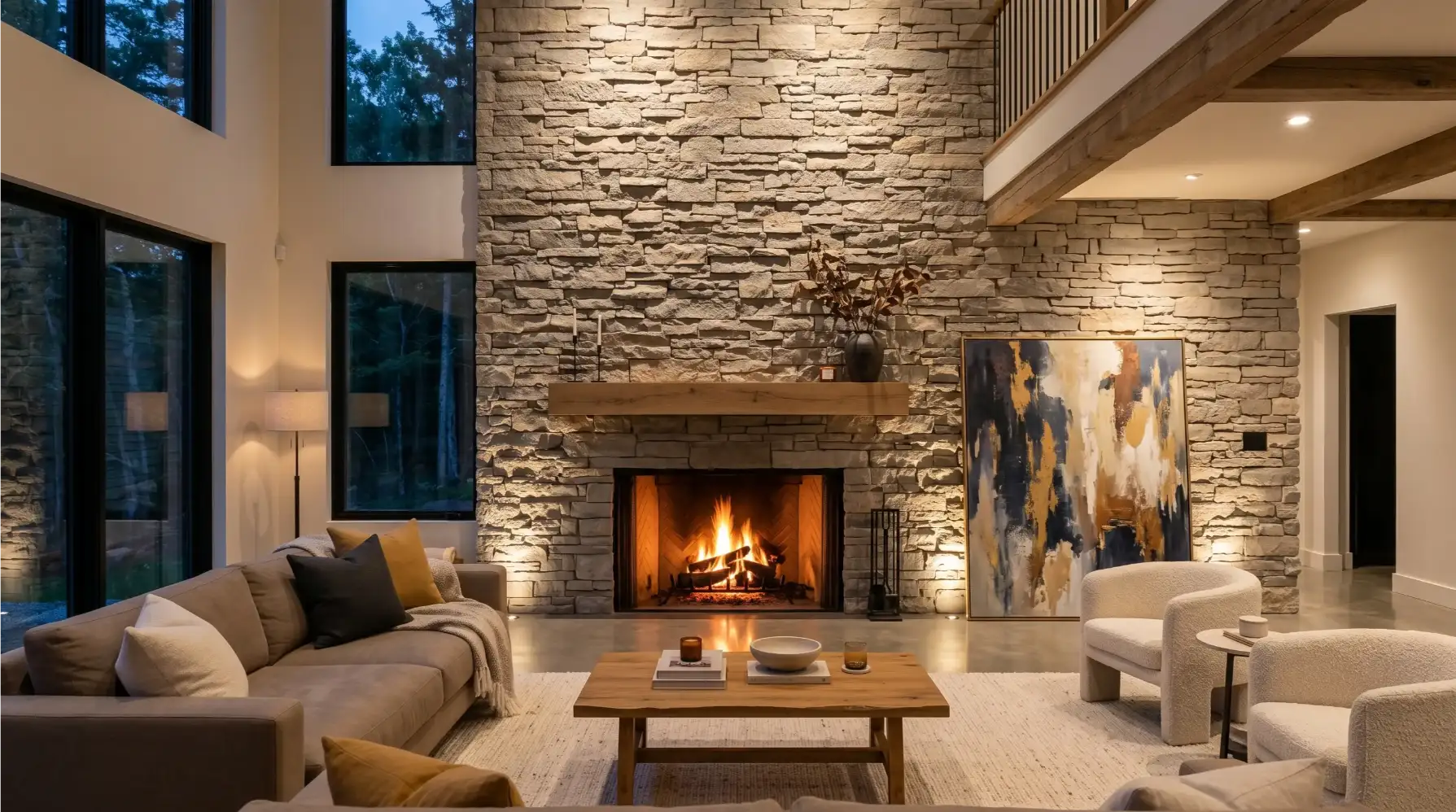
In living rooms with generous proportions and a connection to natural or rural surroundings, an oversized rustic stone fireplace built from large, irregular fieldstone pieces creates a look that feels both ancient and deeply inviting. The chunky, imperfect stones fitted together like a puzzle bring a texture and raw authenticity that no polished surface can replicate. A thick timber mantel shelf above the firebox completes the look and provides a surface for seasonal styling. This is the kind of fireplace that becomes the soul of a room, the element everything else is arranged in relation to.
5. The Minimalist Linear Stone Fireplace
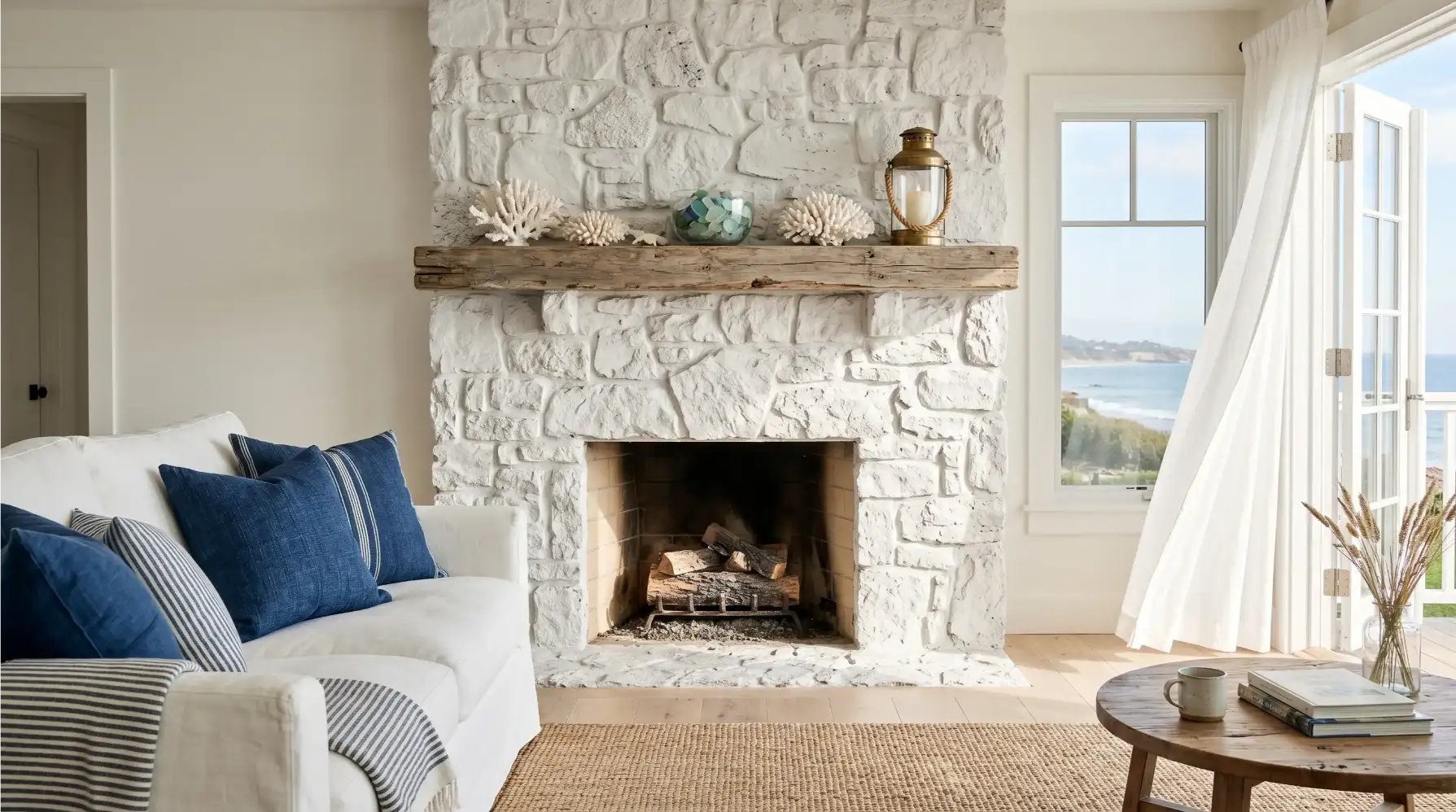
Clean horizontal lines and carefully chosen stone panels define the minimalist linear fireplace, which has become one of the strongest expressions of contemporary residential design. The firebox is set low and wide, creating a long, shallow visual that emphasises width rather than height. Thin stone veneers in a consistent tone and finish keep the surface refined and free of visual clutter. This design suits living rooms built around restraint and considered simplicity, where every material is chosen for its contribution to the whole.
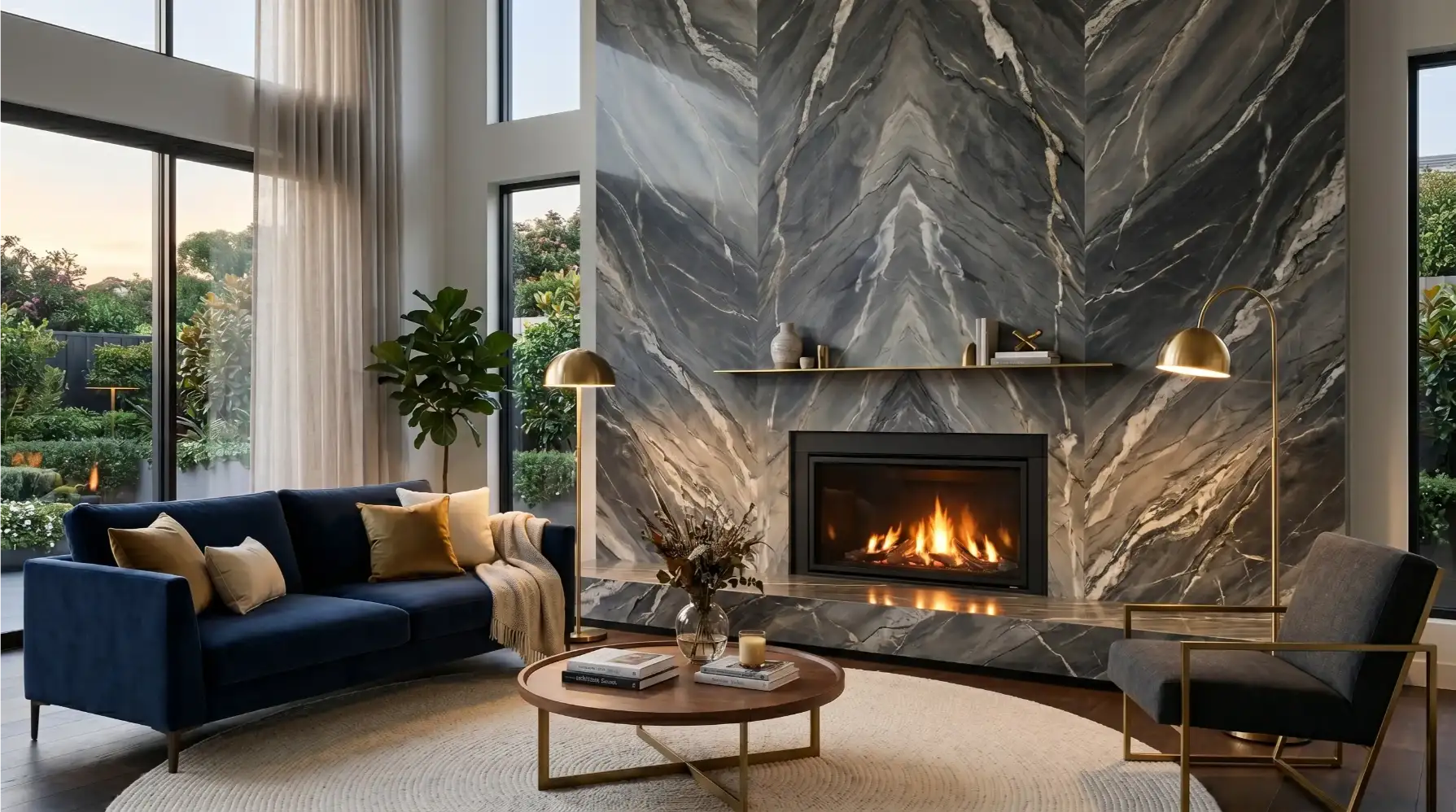
6. Quartzite Statement Surround
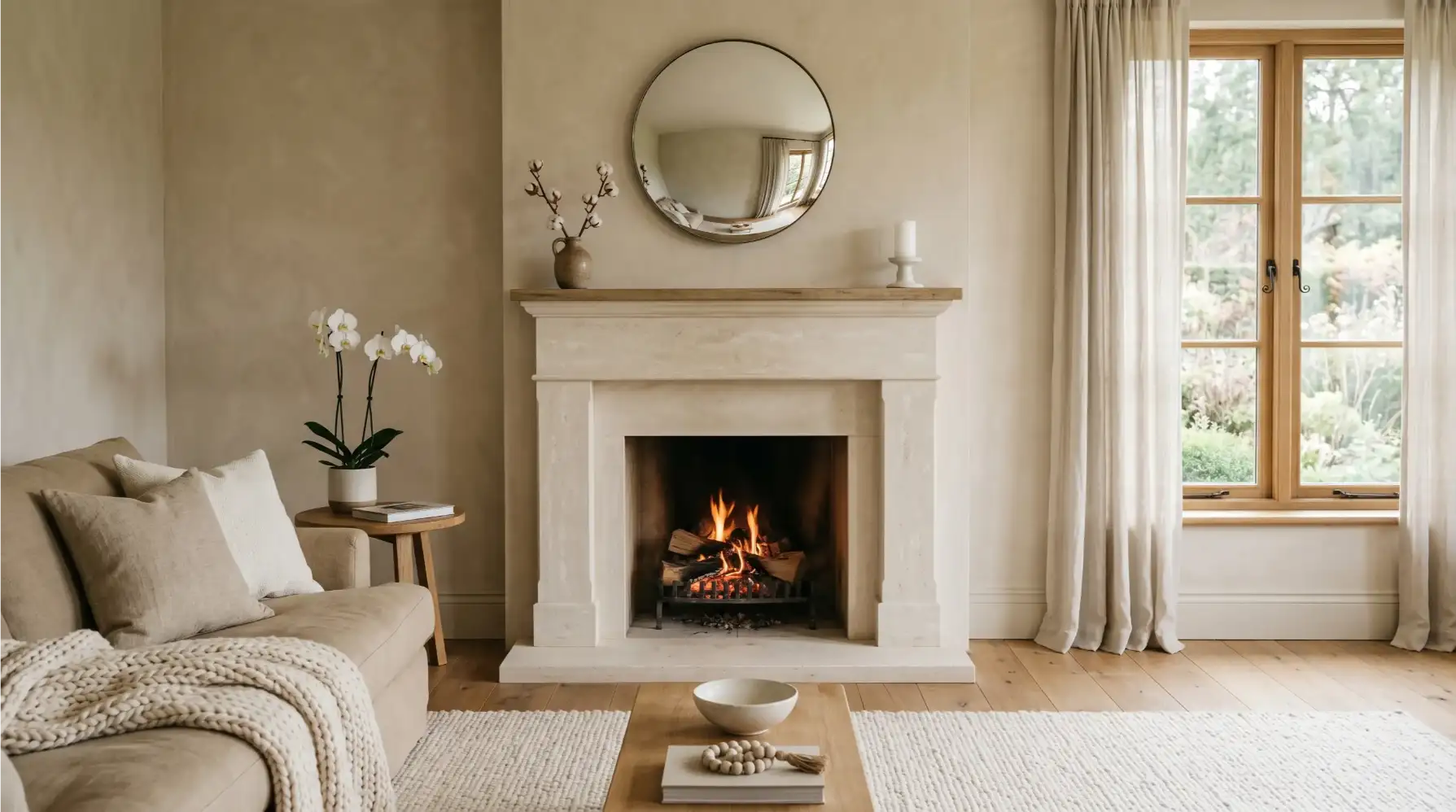
Quartzite brings a dramatic, veined quality to a fireplace surround that reads as both luxurious and completely natural. The movement of the veining creates visual interest across the stone face without requiring any additional decoration, and the material’s inherent variation means every installation is unique. A large format quartzite slab used as the fireplace surround, with minimal grout lines and a honed or leathered finish, delivers a look that sits comfortably in both modern and transitional living rooms. The natural drama of quartzite is one of the most sought after qualities in elevated interior stone work.
7. The Floating Hearth Stone Fireplace
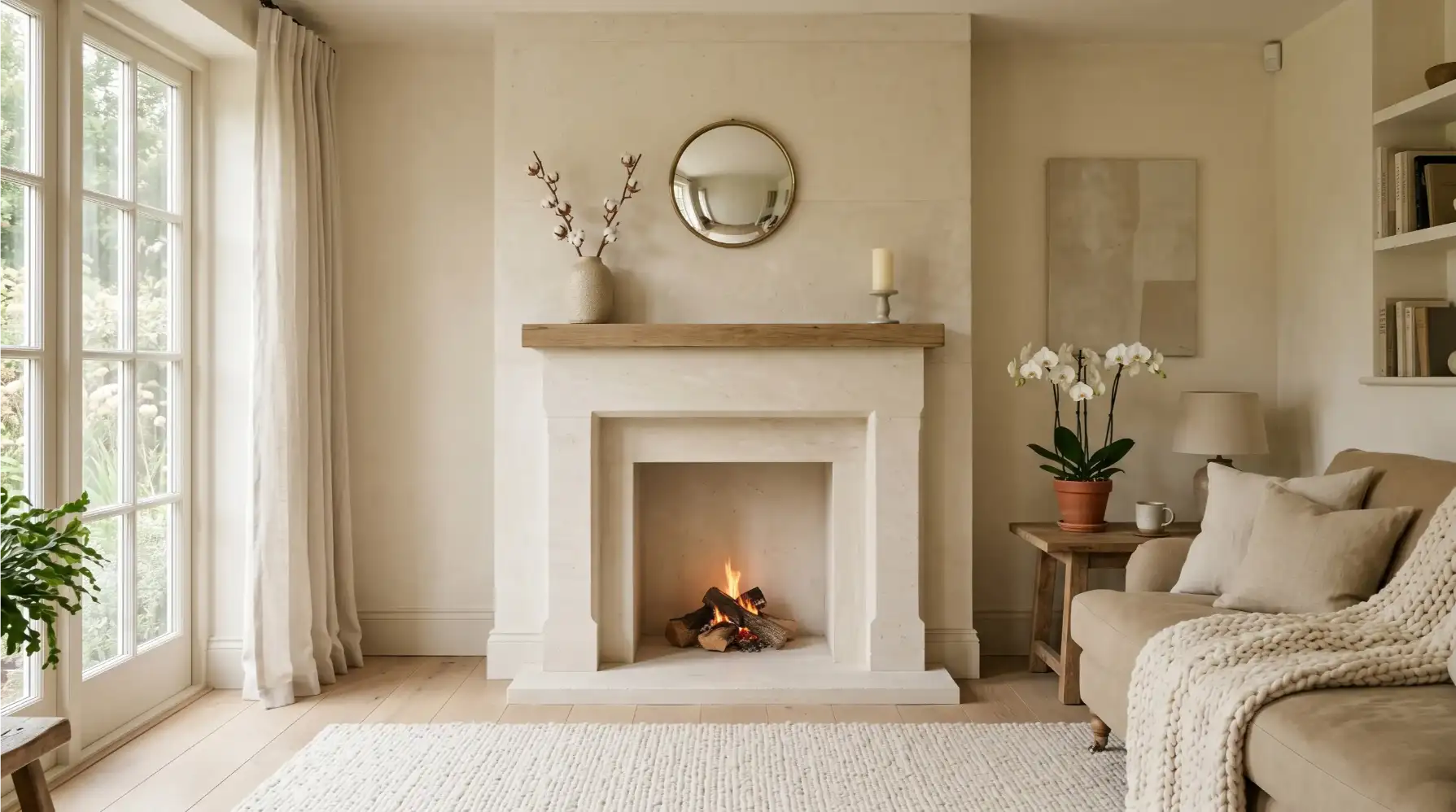
A fireplace with a floating hearth, where the firebox and stone surround appear to hover above the floor rather than sitting on a traditional raised hearth platform, creates a sleek, open visual that feels unmistakably contemporary. The stone cladding extends up the wall from the base of the firebox to the ceiling while the area beneath the firebox remains open, creating a sense of lightness and space that heavier traditional designs do not provide. This style suits rooms where the architecture is clean and modern and the design philosophy prioritises clarity over ornamentation.
8. The Pale Limestone Surround in a Neutral Living Room
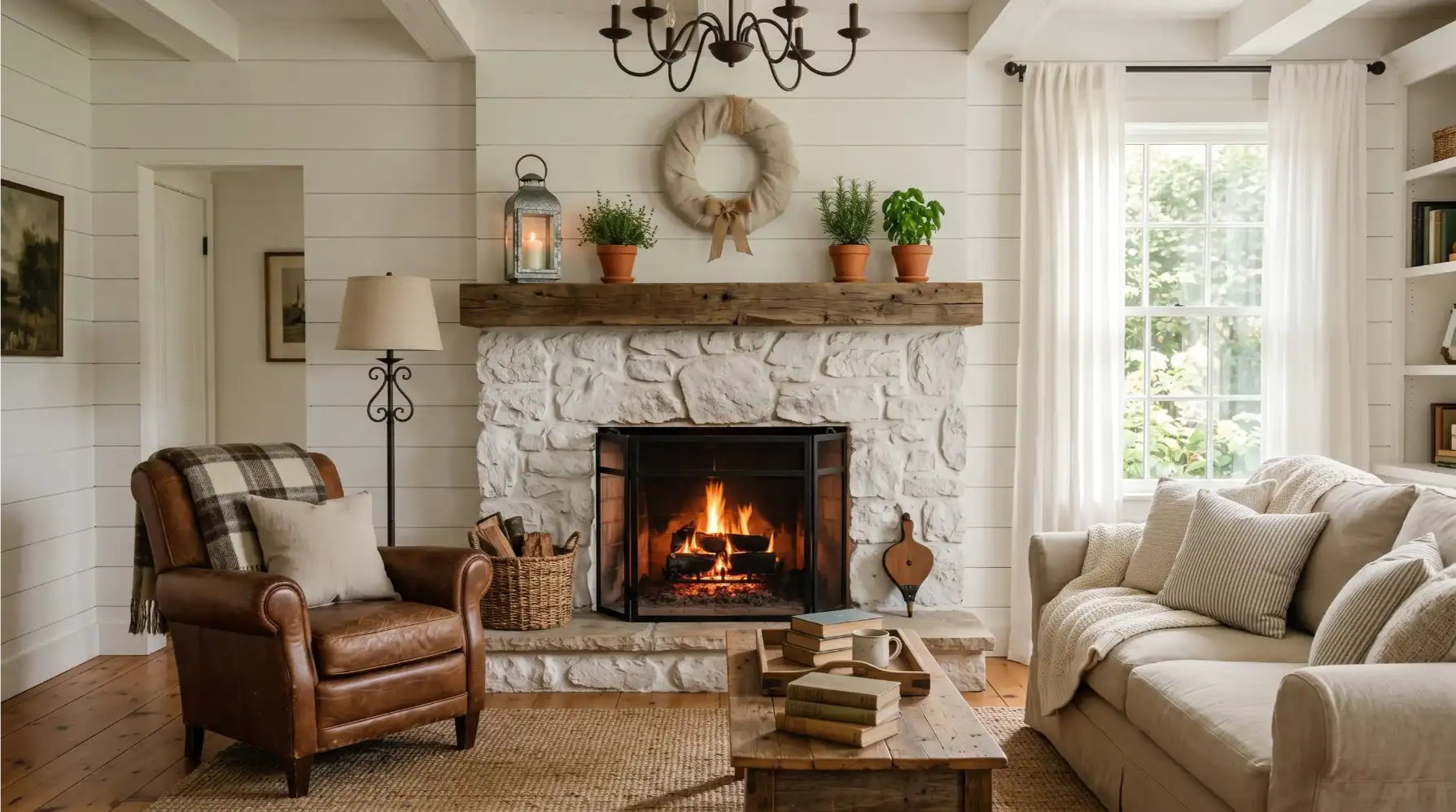
Creamy limestone used as the primary material for a fireplace surround introduces a warmth and softness into a neutral living room that feels completely natural rather than deliberate. The slightly chalky surface texture of honed limestone catches and diffuses light in a way that adds depth without competing with the other elements in the room. In a living room built around warm whites, soft linens, and pale timber floors, a limestone surround becomes the quiet anchor that holds the entire palette together. This is an understated choice that consistently rewards close attention.
9. The Farmhouse Stone Fireplace with Shiplap Surround
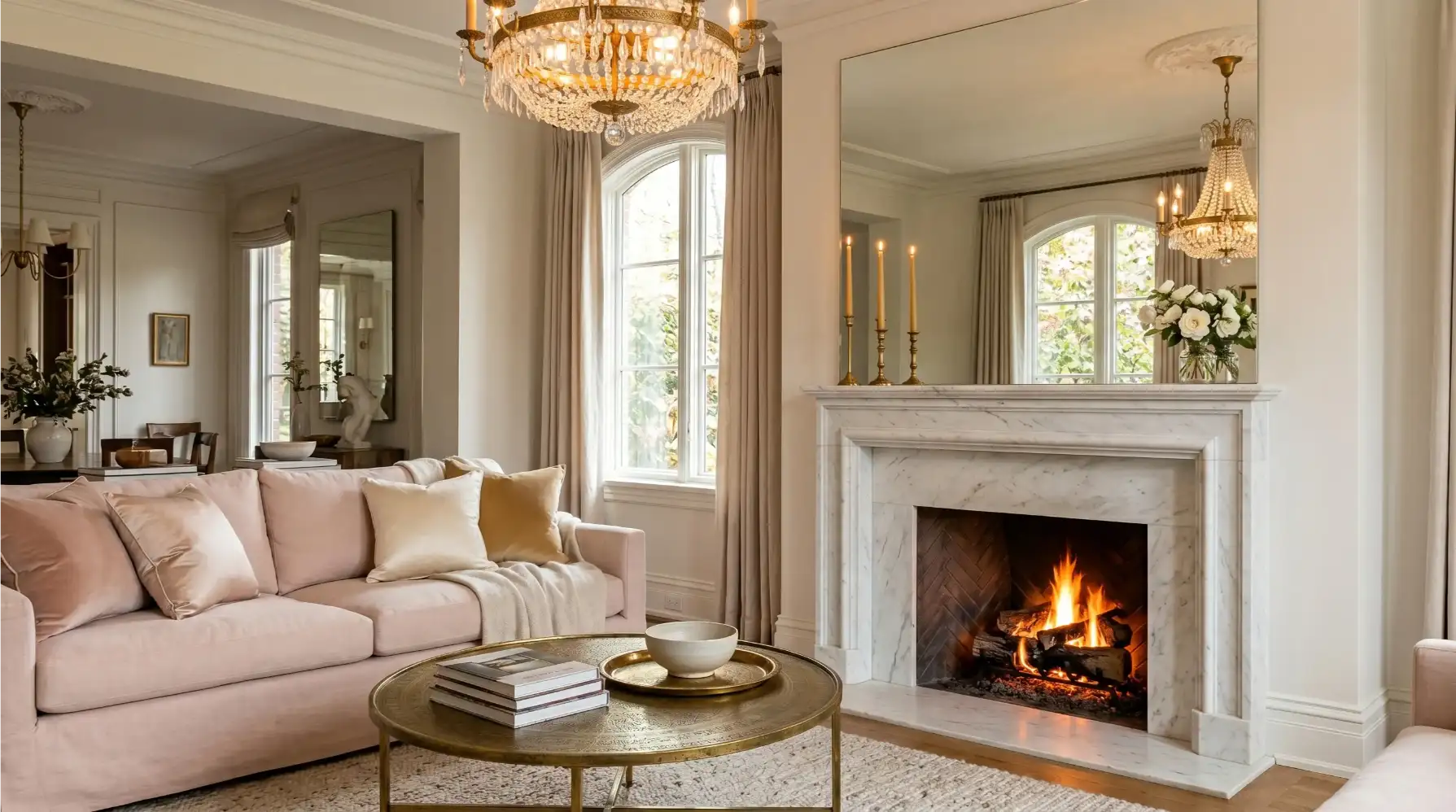
Combining a stone fireplace surround with shiplap wall cladding on either side is one of the most effective farmhouse interior moves available. The rough texture of the stone contrasts beautifully with the clean horizontal lines of the shiplap, and both materials carry that quality of honest, natural material use that defines the farmhouse aesthetic. A painted white or whitewash finish on the stone softens the overall look while preserving the dimensional quality of the stone surface. A reclaimed wood mantel shelf completes the composition with warmth and character.
10. The Stone Fireplace with Built In Timber Shelving
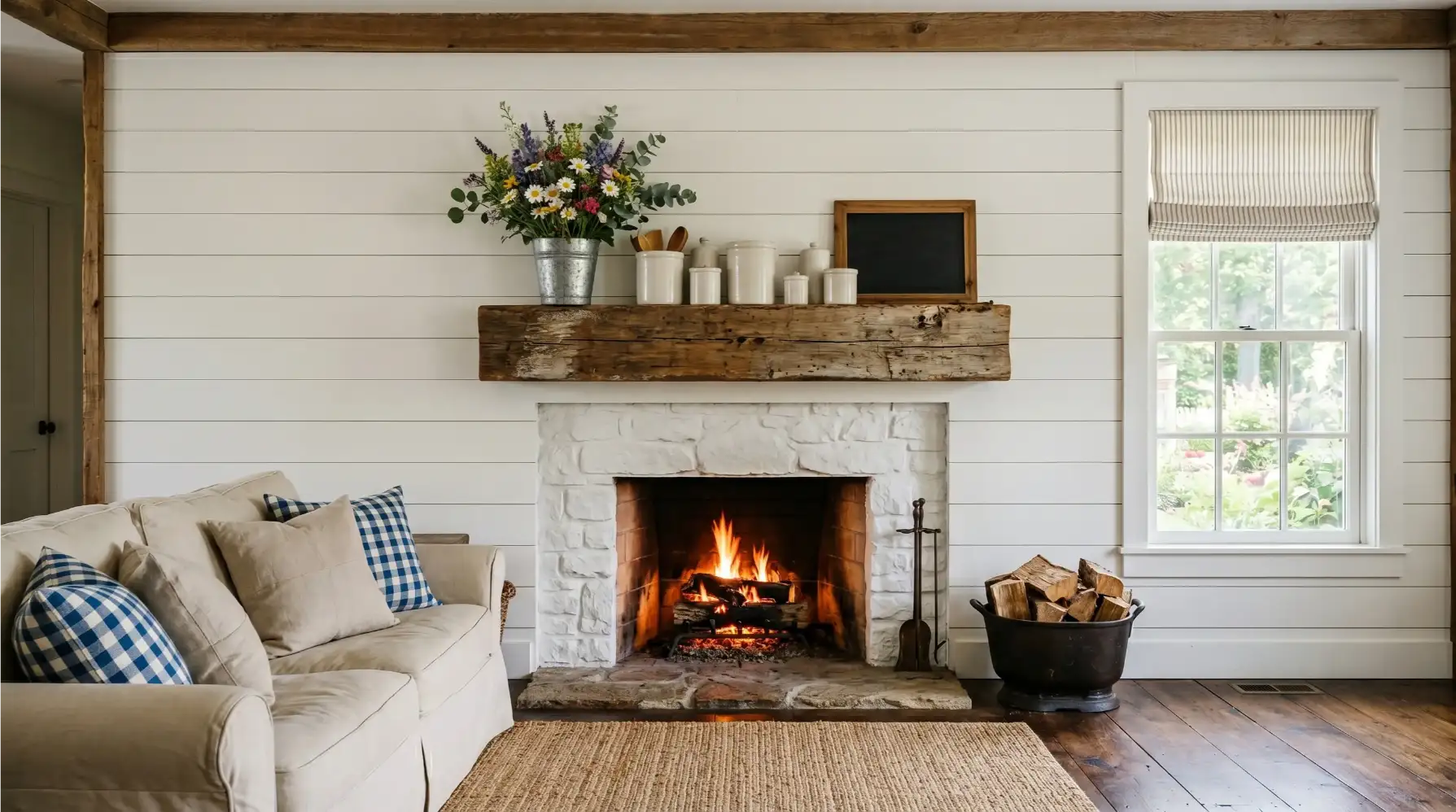
Framing a stone fireplace with built in timber shelving on either side creates one of the most functional and aesthetically satisfying living room compositions available. The symmetry of the flanking shelves provides balance and draws the eye inward toward the fireplace as the central focal point, while the warm tone of the timber softens the coolness of the stone. Books, ceramics, plants, and personal objects on the shelves add layers of personality and lived in character that pure architectural treatments do not provide. This combination works across a wide range of styles from transitional to traditional.
11. The Whitewashed Stone Fireplace
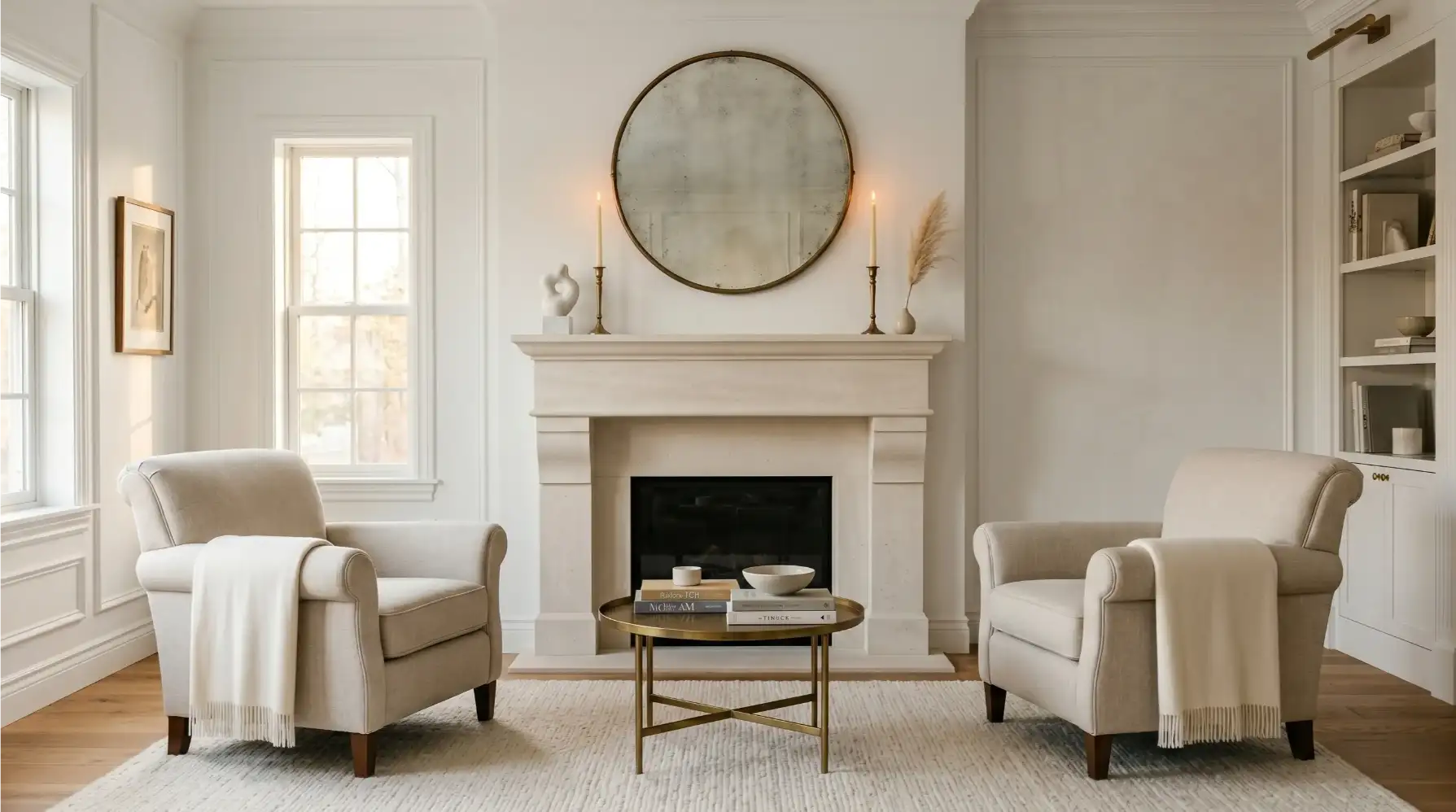
Applying a whitewash or limewash finish to an existing stone fireplace is one of the most transformative updates available for a dated or overly dark surround. The diluted paint settles into the crevices and variations of the stone surface, creating a finish that is lighter and brighter than the original while still revealing all of the texture and dimension beneath. The result is a fireplace that feels fresh, soft, and entirely current without losing any of the material honesty that makes stone such a compelling choice in the first place.
12. The Stacked Stone Fireplace with Timber Beam Mantel
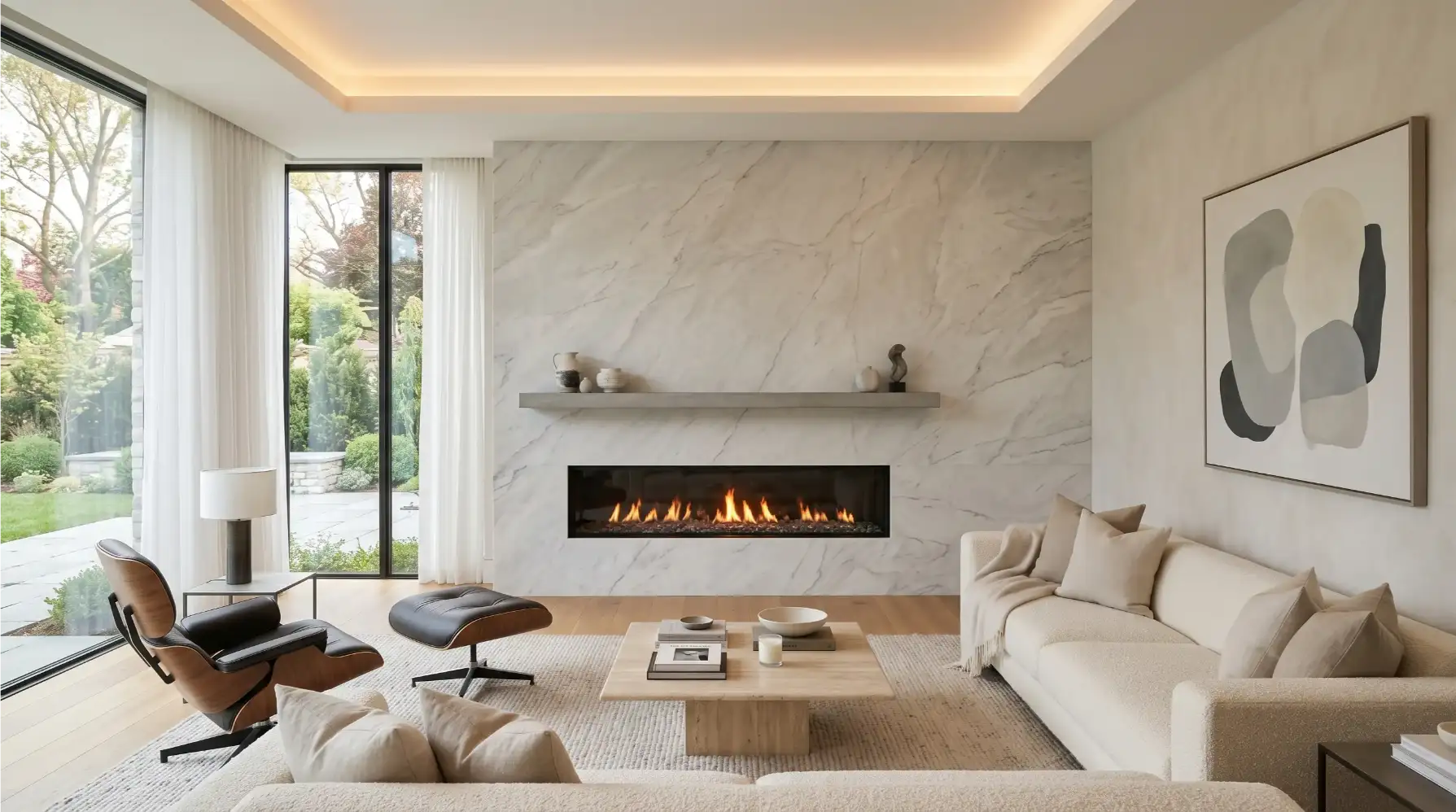
Pairing a stacked stone fireplace surround with a thick, rough hewn timber beam as the mantel shelf creates a combination that has become one of the defining visual expressions of the contemporary rustic or transitional living room. The contrast between the layered stone and the solid timber is deeply satisfying, with the two materials complementing rather than competing with each other. The beam mantel provides a generous display surface and adds a sense of architectural permanence that lighter mantel options do not achieve.
13. The Marble Stone Fireplace Surround
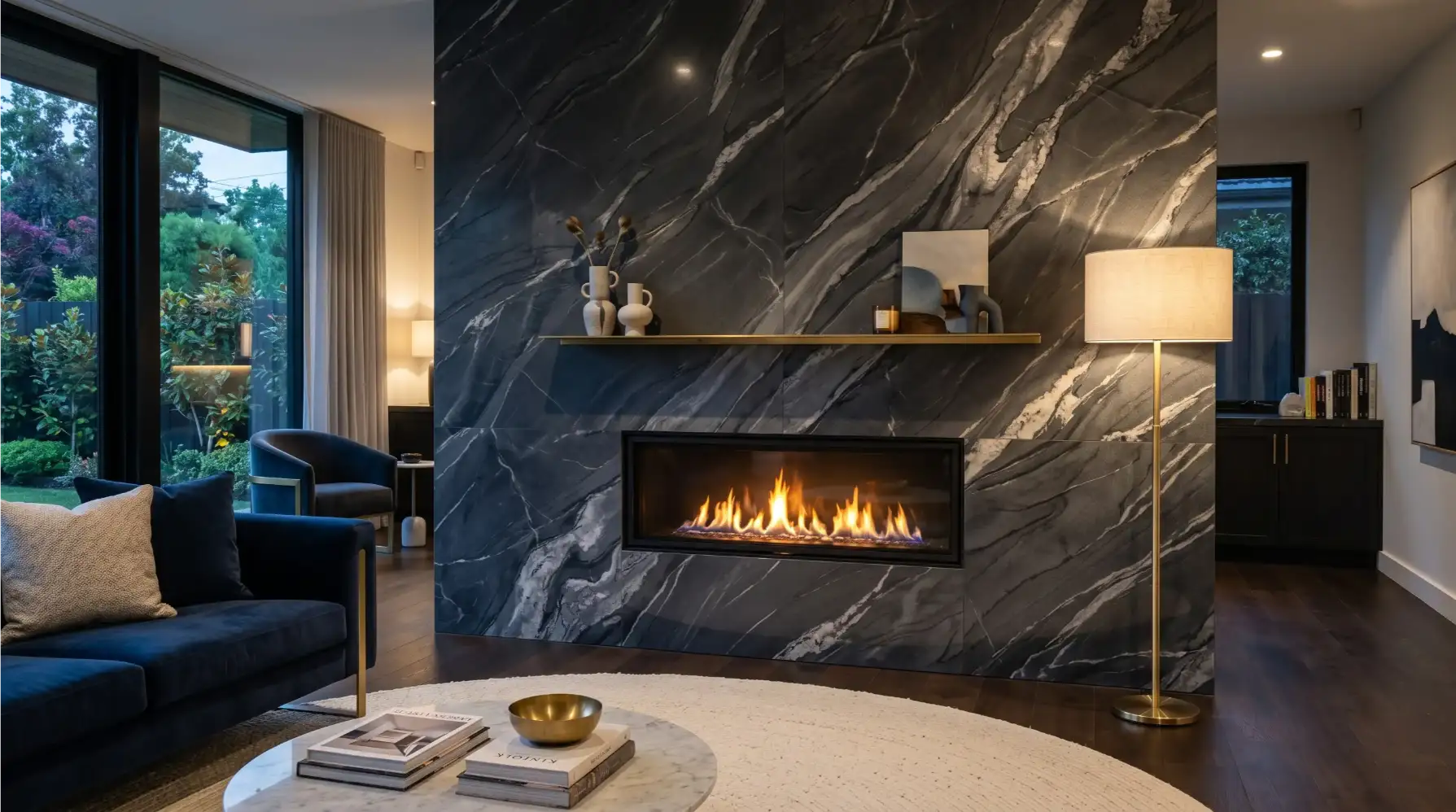
Marble has long been associated with refinement and luxury in interior design, and as a fireplace surround material it delivers on that association entirely. The soft grey veining of Carrara marble or the dramatic movement of Calacatta stone creates a surround that functions almost as a piece of sculpture within the living room. A marble surround works best in rooms where the rest of the material palette is kept restrained, allowing the natural drama of the stone to register fully. A slim profile and clean edges give a marble surround a contemporary quality that sits equally well in classic and modern rooms.
14. The Travertine Fireplace with Warm Gold Tones
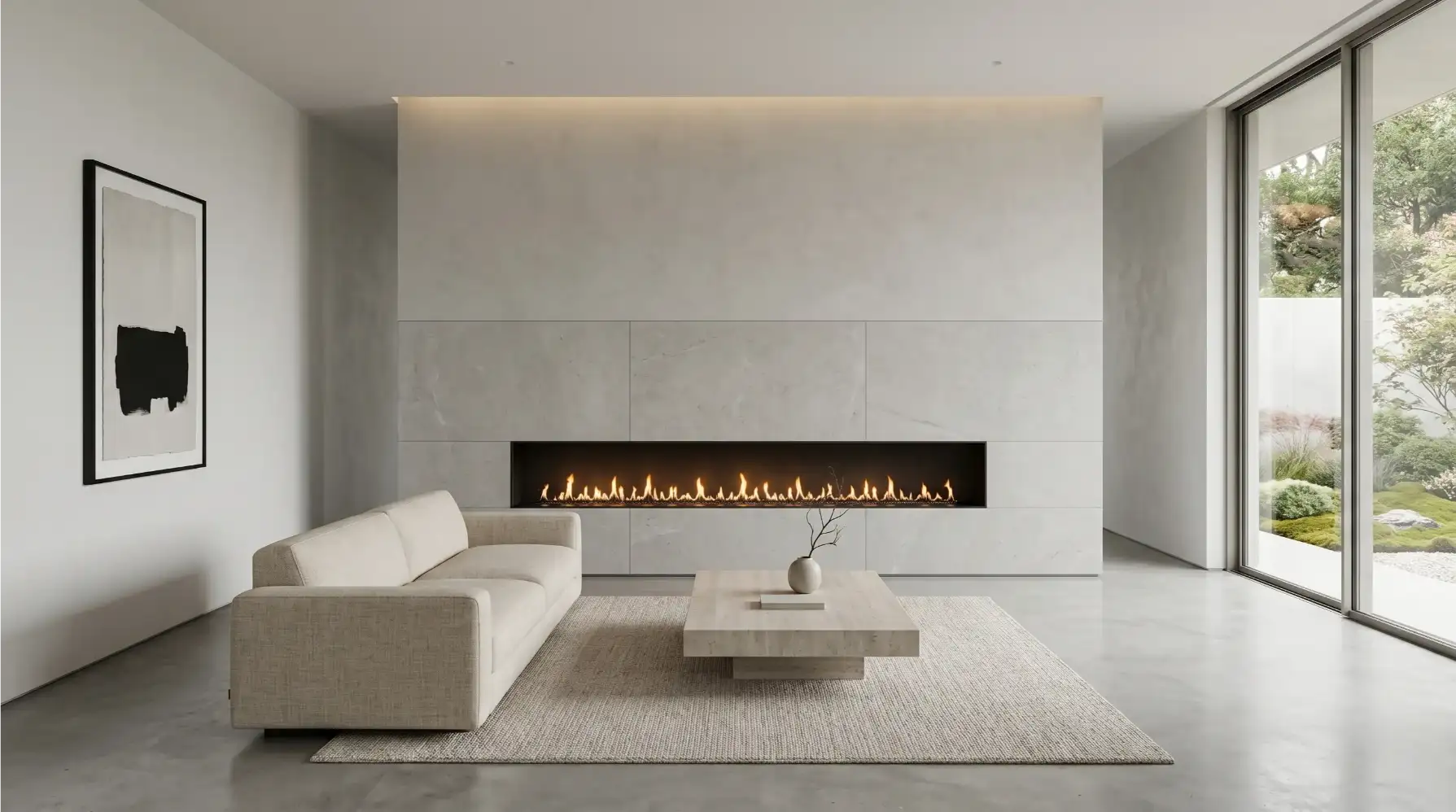
Travertine carries a warmth in its colour and texture that very few other natural stones can match. Its characteristic pitted surface and range of honey, cream, and terracotta tones make it an exceptionally welcoming choice for a living room fireplace surround. The natural variation in travertine means the surface never looks flat or uniform, and the warm undertones complement both earthy palettes and more neutral room schemes. A filled and honed travertine finish gives the surround a polished quality without eliminating the material’s inherent character.
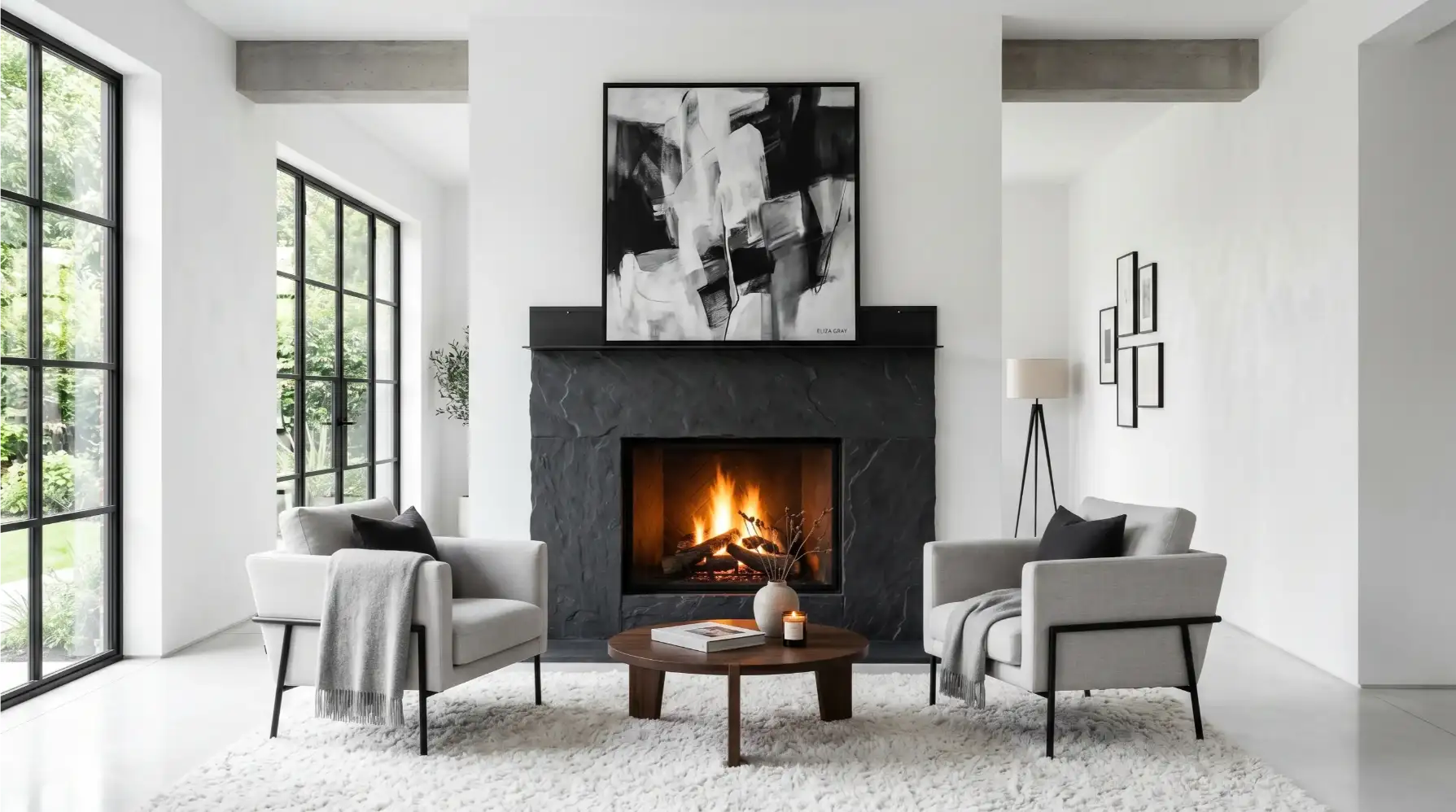
15. The Dark Stone Fireplace Against Light Walls
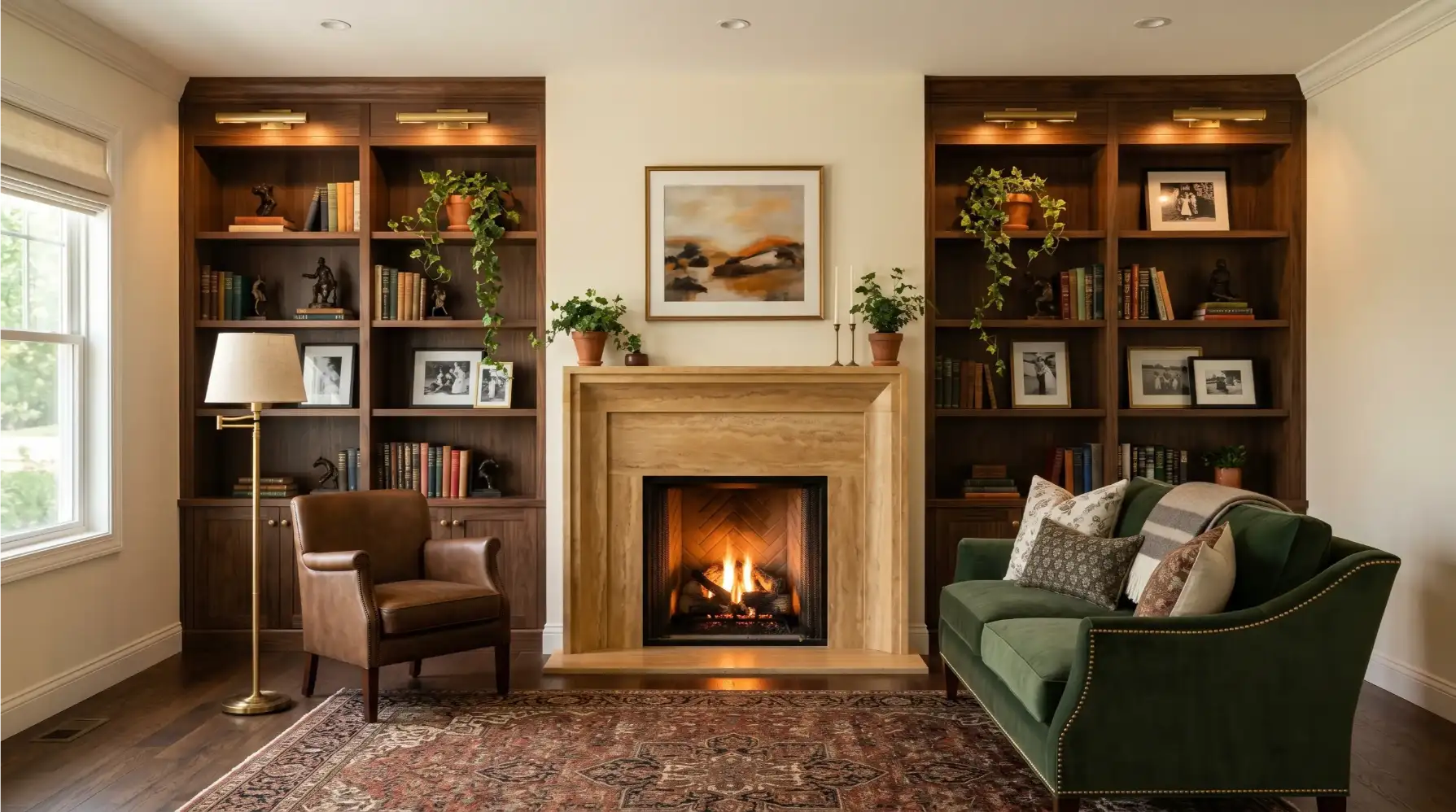
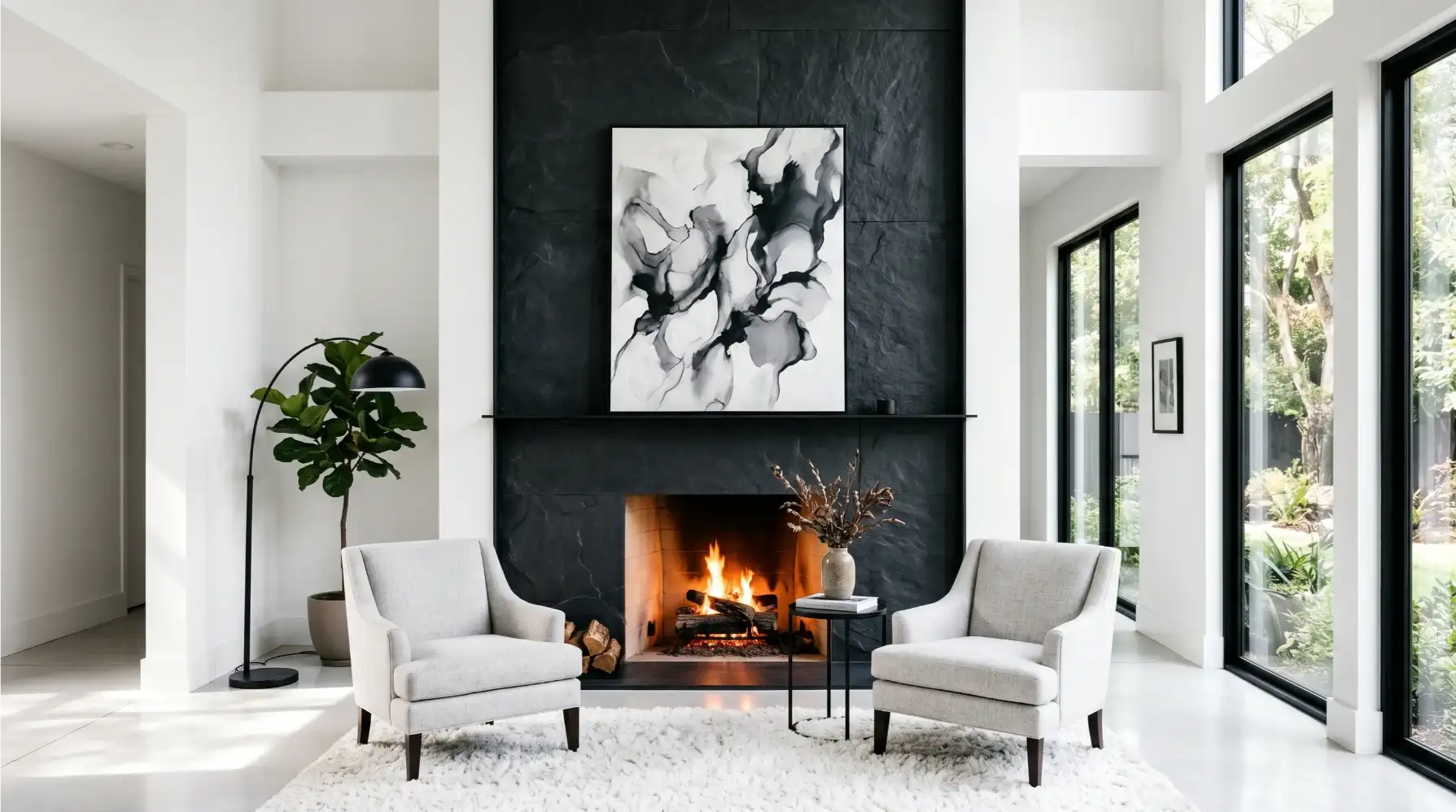
Choosing a darker stone, whether charcoal slate, deep grey quartzite, or a tonal dark limestone, and positioning it against light or pale walls creates a contrast that is one of the most visually arresting combinations in contemporary living room design. The fireplace becomes immediately and undeniably the focal point of the room, framed by the lightness of the surrounding walls in a way that gives it an almost gallery quality. Symmetrical furniture arrangement reinforces the focal point and creates a sense of order and balance that amplifies the drama of the dark stone.
16. The Stone Fireplace with Integrated Mirror Above the Mantel
Placing a large mirror directly above the mantel of a stone fireplace is a simple intervention that has a significant effect on the quality and spaciousness of a living room. The mirror reflects the light from the fire and from the windows opposite, doubling the sense of luminosity in the space and making the room feel larger and more open. Against a stone surround, the mirror adds an element of elegance and softness that balances the weight and texture of the stone. A frameless mirror or one with a simple, thin frame allows the stone to remain the primary material statement.
17. The Symmetrically Styled Stone Fireplace Wall
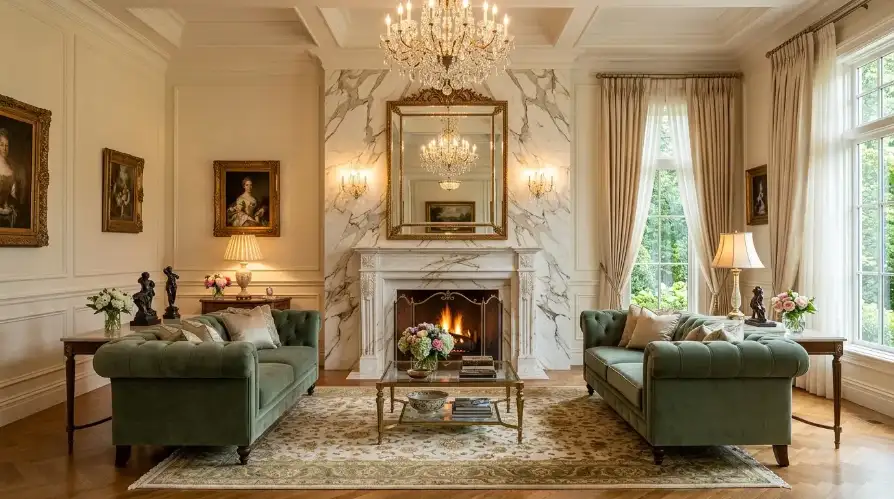
Arranging furniture and decor symmetrically around a stone fireplace creates a room composition that feels formal, considered, and deeply satisfying. Matching sofas or armchairs positioned on either side of the fireplace, paired with identical table lamps or sconces and a balanced arrangement of objects on the mantel, create a sense of order that amplifies the fireplace’s authority as the room’s focal point. Symmetry does not need to feel rigid. Slight variations in the objects on the mantel, or layered textiles on otherwise identical seating, introduce warmth and personality into a formally arranged space.
18. The Seasonal Stone Fireplace Surround Styling
One of the most underappreciated qualities of a stone fireplace surround is its capacity to be restyled with the seasons while the fundamental material remains constant. In cooler months, layered candles, dried botanicals, and stacked firewood beside the hearth create a deeply cosy and atmospheric composition. In warmer months, the same surround can be refreshed with simple greenery, a single large piece of art leaned against the stone, or a collection of ceramic vessels on the mantel. The permanence and neutrality of stone make it the ideal backdrop for seasonal decorating that changes the mood of the room without requiring any structural alteration.
Choosing the Right Stone for Your Fireplace
The stone material is the single most important decision in a stone fireplace project, and matching it to the overall style and palette of the room is essential. For modern and contemporary living rooms, quartzite and limestone in honed finishes deliver the clean, refined quality the style demands. For rustic and farmhouse spaces, fieldstone, rough granite, and irregular stacked stone bring the authentic, textural quality that defines the aesthetic. For transitional and traditional rooms, marble and travertine offer elegance and warmth in equal measure.
Practical considerations also matter. Stone is naturally heat resistant and durable, making it an excellent long term investment for a fireplace surround. Natural stone requires minimal maintenance, generally limited to occasional sealing and routine cleaning with a mild, pH neutral product. Avoiding acidic cleaners on limestone and marble is particularly important, as these can damage the stone surface over time.
Conclusion
A stone fireplace in an elegant living room is one of the most enduring and rewarding investments a homeowner can make in their interior. The eighteen ideas explored in this article demonstrate the remarkable range available within this single design category, from the raw grandeur of a floor to ceiling stacked stone feature wall to the quiet refinement of a pale limestone surround in a neutral room. Each approach carries its own character and personality, but all share the quality that defines every great stone fireplace: a sense of permanence, authenticity, and warmth that no other material quite replicates. Choose the approach that speaks to your own aesthetic, work with materials that suit your room’s scale and light, and invest in a fireplace that will remain the heart of your living room for decades to come.
Frequently Asked Questions
- What is the best type of stone to use for an elegant living room fireplace?
For an elegant living room, marble, quartzite, and limestone are the three strongest material choices. Marble delivers classical luxury with its characteristic veining and smooth surface. Quartzite offers dramatic natural movement and exceptional durability. Limestone provides a softer, warmer quality with its creamy tones and slightly textured surface. The best choice depends on the overall palette and style of the room, with marble suiting more formal spaces and limestone performing beautifully in warmer, more relaxed settings.
- How do you decorate a stone fireplace mantel in an elegant living room?
The most effective mantel styling for a stone fireplace in an elegant living room follows a principle of balanced asymmetry. A large mirror or piece of art centred above the mantel anchors the arrangement. On the mantel shelf itself, a combination of objects at varying heights, such as candlesticks, a small vase, and a sculptural object, creates visual interest without clutter. The stone surround itself provides sufficient texture, so the mantel decor should be kept relatively restrained to allow both elements to register clearly.
- Can a stone fireplace work in a modern or contemporary living room?
Absolutely. Modern stone fireplace designs using clean lined stone veneers, quartzite slabs, or minimalist limestone surrounds are among the most compelling choices for contemporary living rooms. The key is selecting stone with a refined finish, such as honed or leathered rather than rough or irregular, and choosing a design with clean proportions and a minimal profile. A linear firebox set within a full height stone panel wall is one of the most popular contemporary stone fireplace approaches in current residential design.
- How do you update or refresh an old or dated stone fireplace?
The most effective and least invasive way to refresh a dated stone fireplace is to apply a whitewash or limewash finish to the existing stone, which lightens and brightens the surround while preserving all of its dimensional texture. Replacing an old timber mantel with a cleaner, more contemporary version is another high impact update. For a more significant transformation, applying a stone veneer over the existing surface with a more current material, such as quartzite tiles or large format limestone panels, completely changes the character of the fireplace without a full structural rebuild.
- How do you maintain a natural stone fireplace surround?
Natural stone fireplace surrounds require minimal maintenance compared to tiled alternatives. Routine cleaning with a soft cloth and a pH neutral cleaner is sufficient for regular upkeep. Limestone and marble surrounds benefit from periodic sealing to prevent staining and moisture absorption, particularly in homes where the fireplace is used frequently. Avoid acidic cleaning products on marble and limestone as these can etch the surface. Quartzite and granite surrounds are more resistant and require less frequent sealing, making them lower maintenance options for busy households.

2 Comments