18 Unique Rustic Mantel Decorating Design Ideas Inspirations
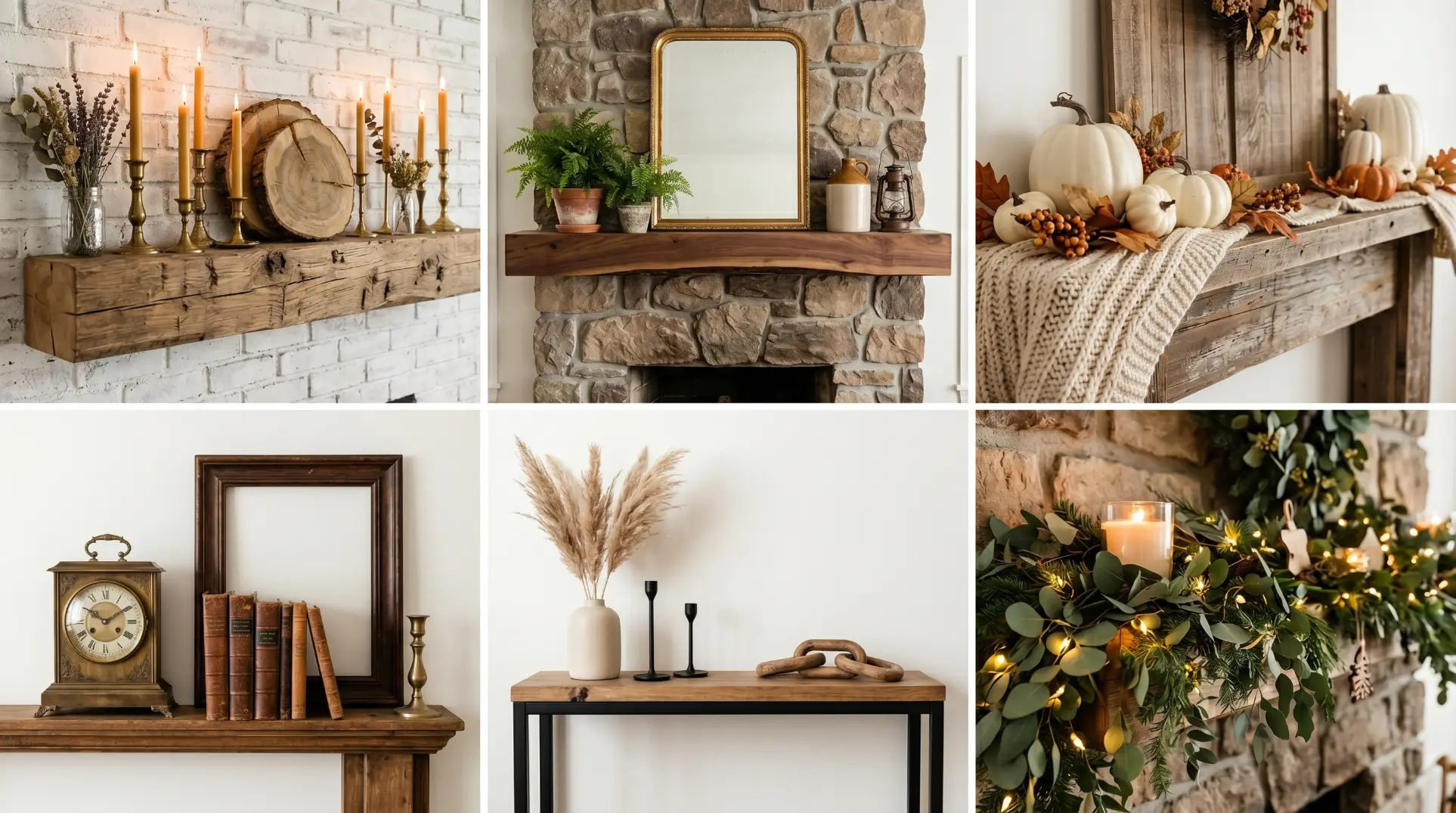
There is something deeply satisfying about a well-styled fireplace mantel. It holds the attention of everyone who walks into the room, quietly setting the mood and telling a story about the people who live there. When that mantel leans into rustic design, the effect becomes even more powerful. Rough-hewn wood, aged metals, dried botanicals, and candlelight create a space that feels grounded, personal, and genuinely warm. The fireplace is already the heart of a home, and the mantel is its crown. Getting the styling right does not require a large budget or a professional decorator. It requires understanding the principles behind rustic design and applying them with intention. This guide walks through 18 rustic mantel decorating design ideas that will help you build a display that feels timeless, layered, and entirely your own.
1. Start with a Reclaimed Wood Beam Mantel
Before a single decorative piece is placed, the mantel itself sets the tone. A reclaimed wood beam, salvaged from an old barn or industrial structure, carries natural character that no new material can replicate. Visible nail holes, deep grain patterns, and weathered surfaces become design features rather than flaws. Pairing a thick reclaimed beam with a stone or brick surround creates an instant rustic focal point that anchors the entire room.
2. Anchor the Display with One Strong Center Piece
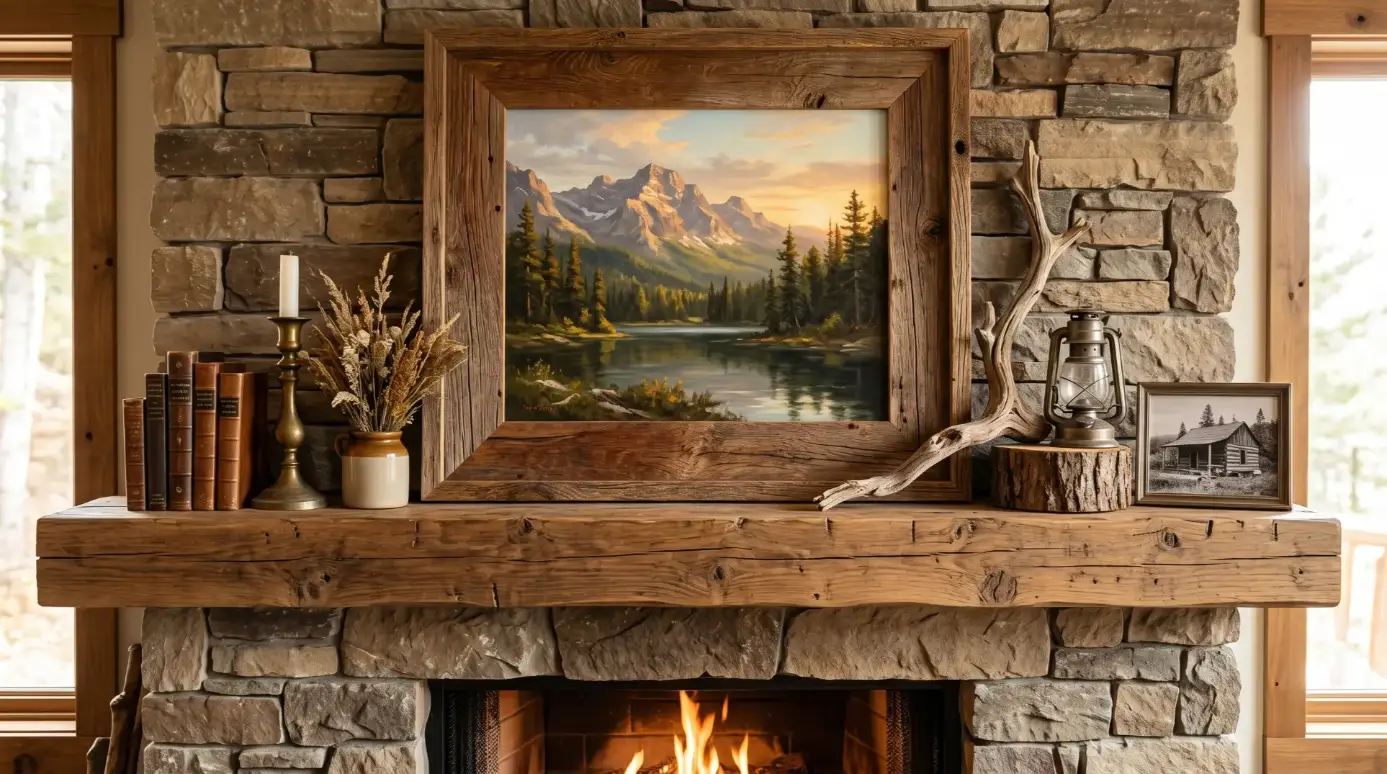
Every well-composed mantel needs a central anchor, a statement piece that draws the eye before anything else. In rustic design, this might be an oversized framed landscape painting, a large wooden sign with a meaningful phrase, a weathered mirror with a raw wood frame, or a vintage window repurposed as wall art. The anchor does not need to be the tallest piece, but it should be the most commanding. Everything else on the mantel exists in conversation with it.
3. Layer Candles for Warmth and Depth
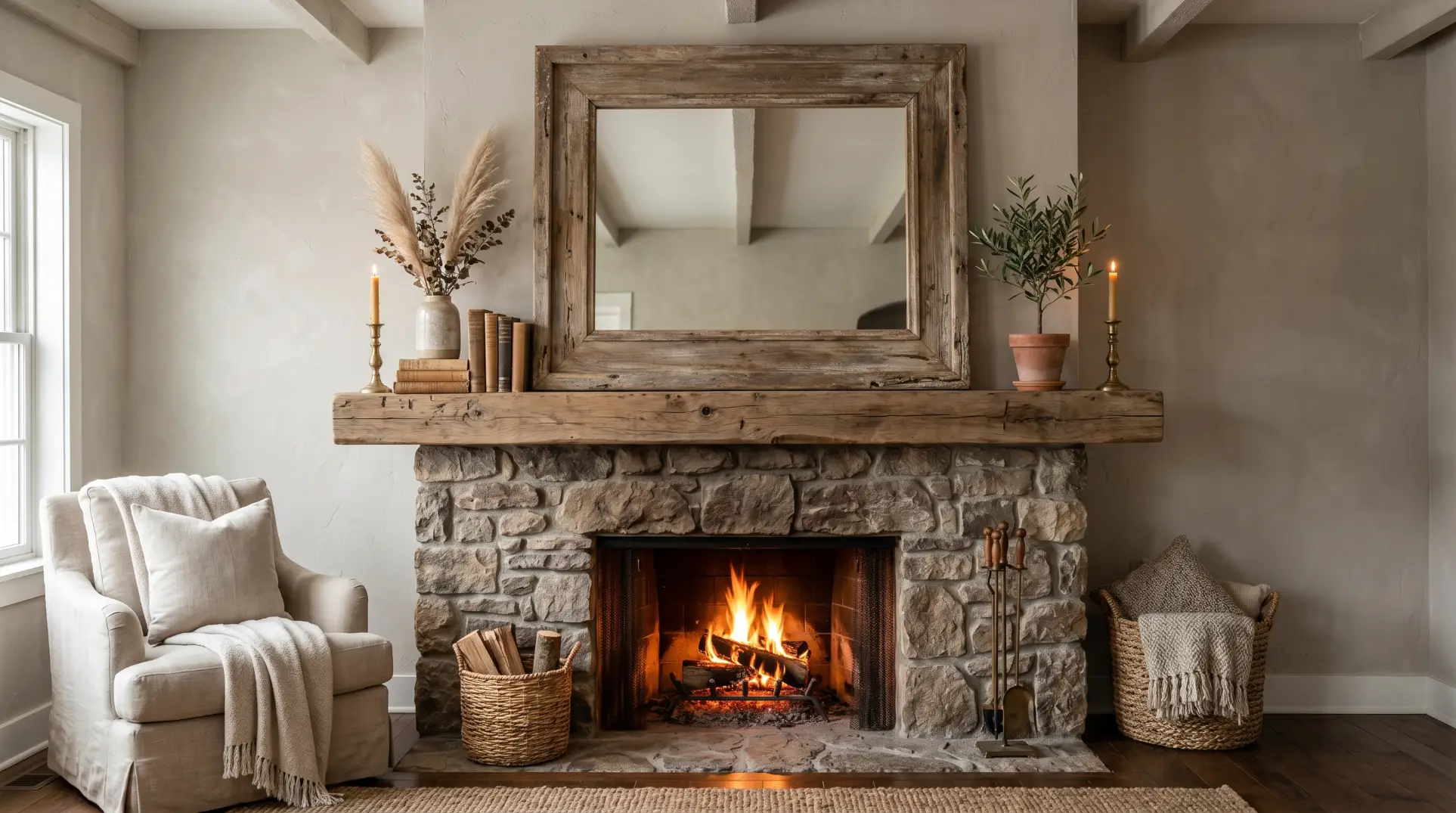
Few elements are as universally effective on a rustic mantel as candles. Grouping pillar candles of varying heights creates visual interest while casting a soft, amber glow that transforms the entire space at night. Wooden candle holders, iron taper holders, and lanterns all suit the rustic aesthetic well. Battery-operated candles work just as beautifully for homes with young children or pets, offering the same warm ambiance without any safety concerns.
4. Bring in Natural Greenery
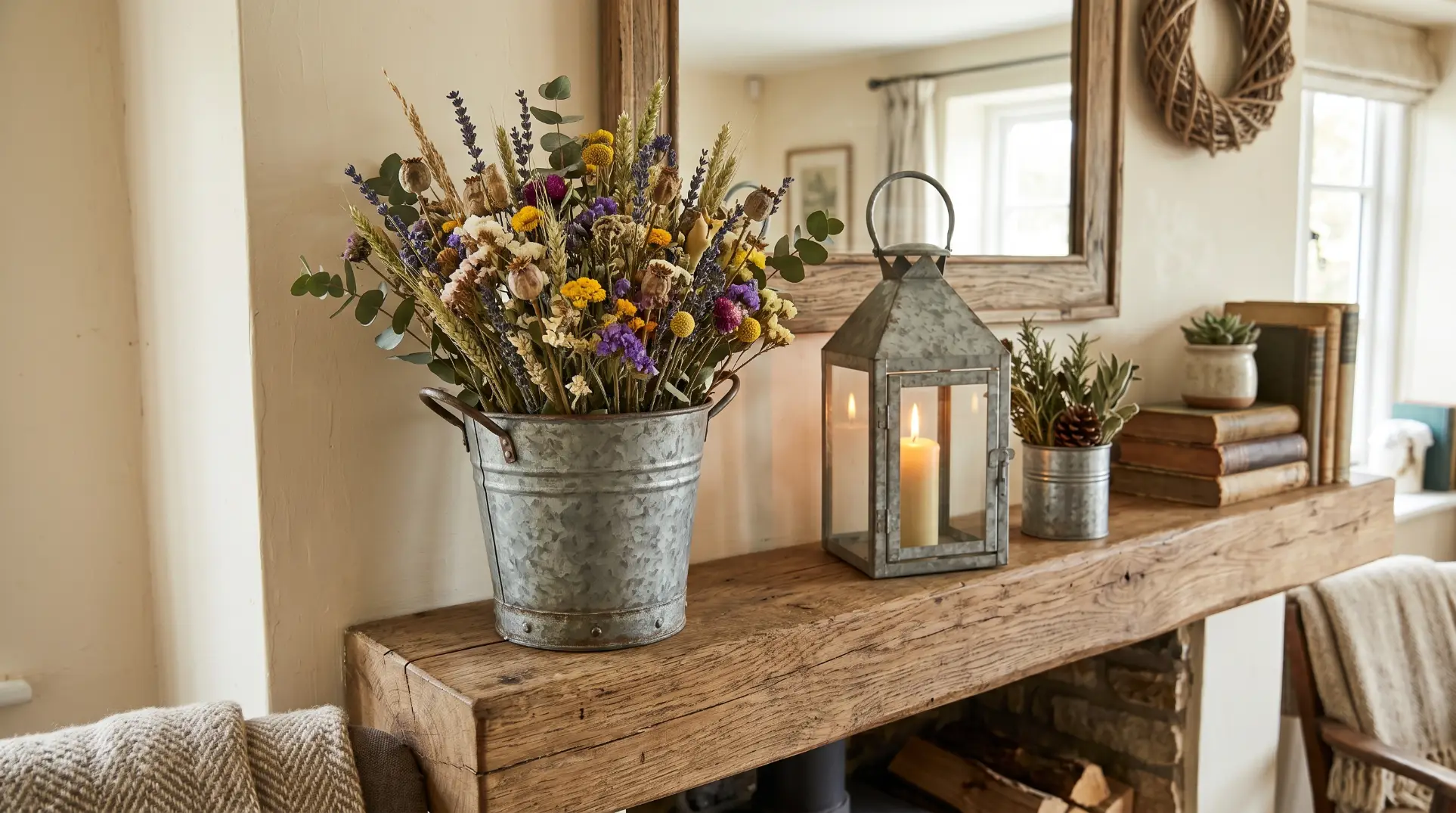
Greenery is one of the most versatile tools in rustic mantel decorating. A bundle of eucalyptus, a trailing ivy vine, a potted succulent, or a simple sprig of dried lavender all add life and freshness without overwhelming the space. Faux greenery has improved dramatically in quality and works well for those who prefer a low-maintenance approach. Eucalyptus in particular suits the rustic palette beautifully and holds its shape and subtle fragrance for weeks in its dried form.
5. Use the Rule of Three for Grouping Objects
Grouping decorative objects in odd numbers, particularly threes, creates a naturally balanced composition that avoids the stiffness of perfect symmetry. Three vintage terracotta pots in graduated sizes, three wooden candlesticks at different heights, or three small framed prints clustered together all follow this principle. The visual result feels deliberate but relaxed, which is exactly the spirit rustic design calls for.
6. Incorporate Vintage and Antique Finds
Rustic decorating thrives on objects that carry history. A slightly tarnished vintage clock, a stack of worn hardcover books, a chippped ceramic bowl from an estate sale, or an old kitchen scale placed at the edge of the mantel all add authenticity that cannot be purchased new. These items suggest that the home has been lived in and loved, which is precisely the feeling rustic design aims to create. Flea markets, antique shops, and thrift stores are excellent sources for these kinds of finds.
7. Add Height on the Outer Edges
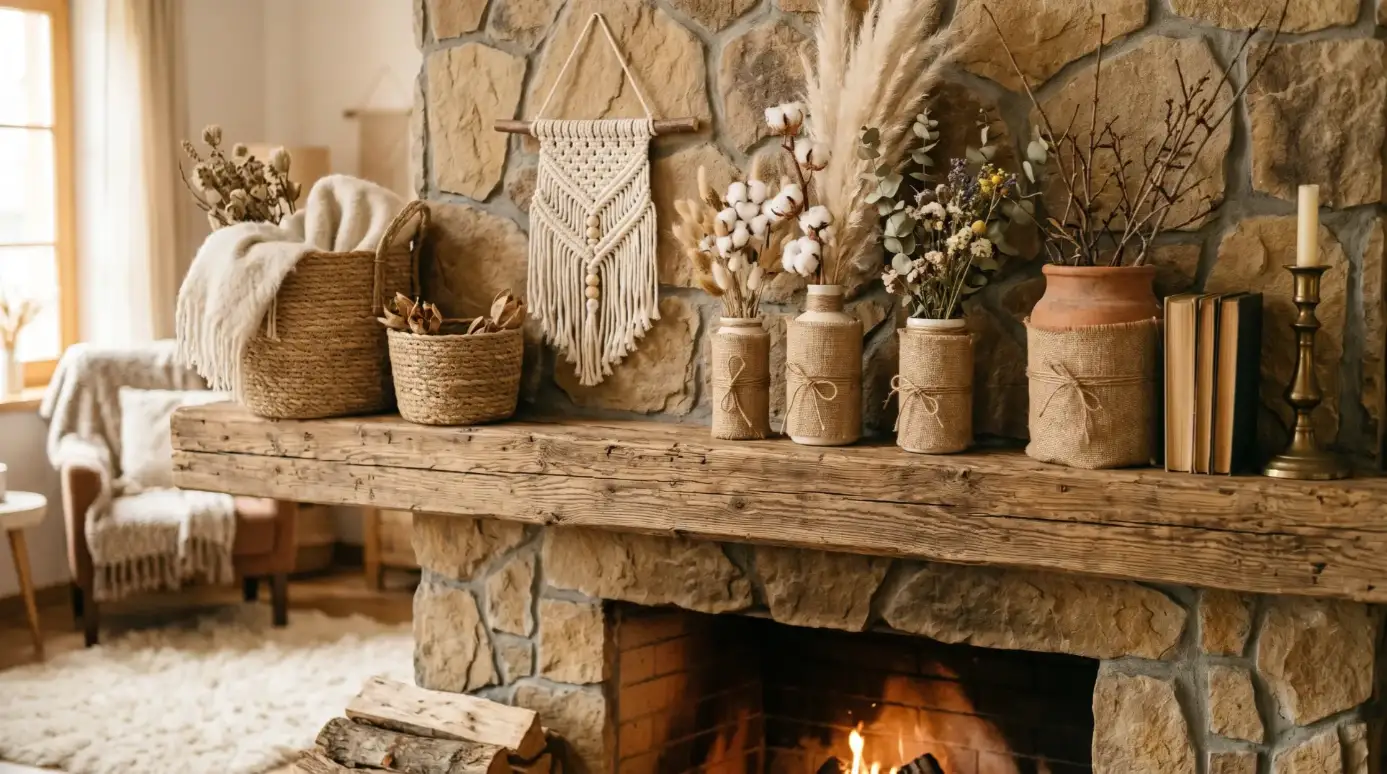
A common styling mistake is placing the tallest objects in the center and letting the arrangement drop off at the edges. A more dynamic approach adds height at the outer ends of the mantel through tall candlesticks, slender vases, stacked books topped with a small object, or potted plants in elevated containers. This creates a visual triangle that draws the eye across the full width of the display rather than anchoring it in the middle.
8. Hang a Rustic Mirror as the Focal Point
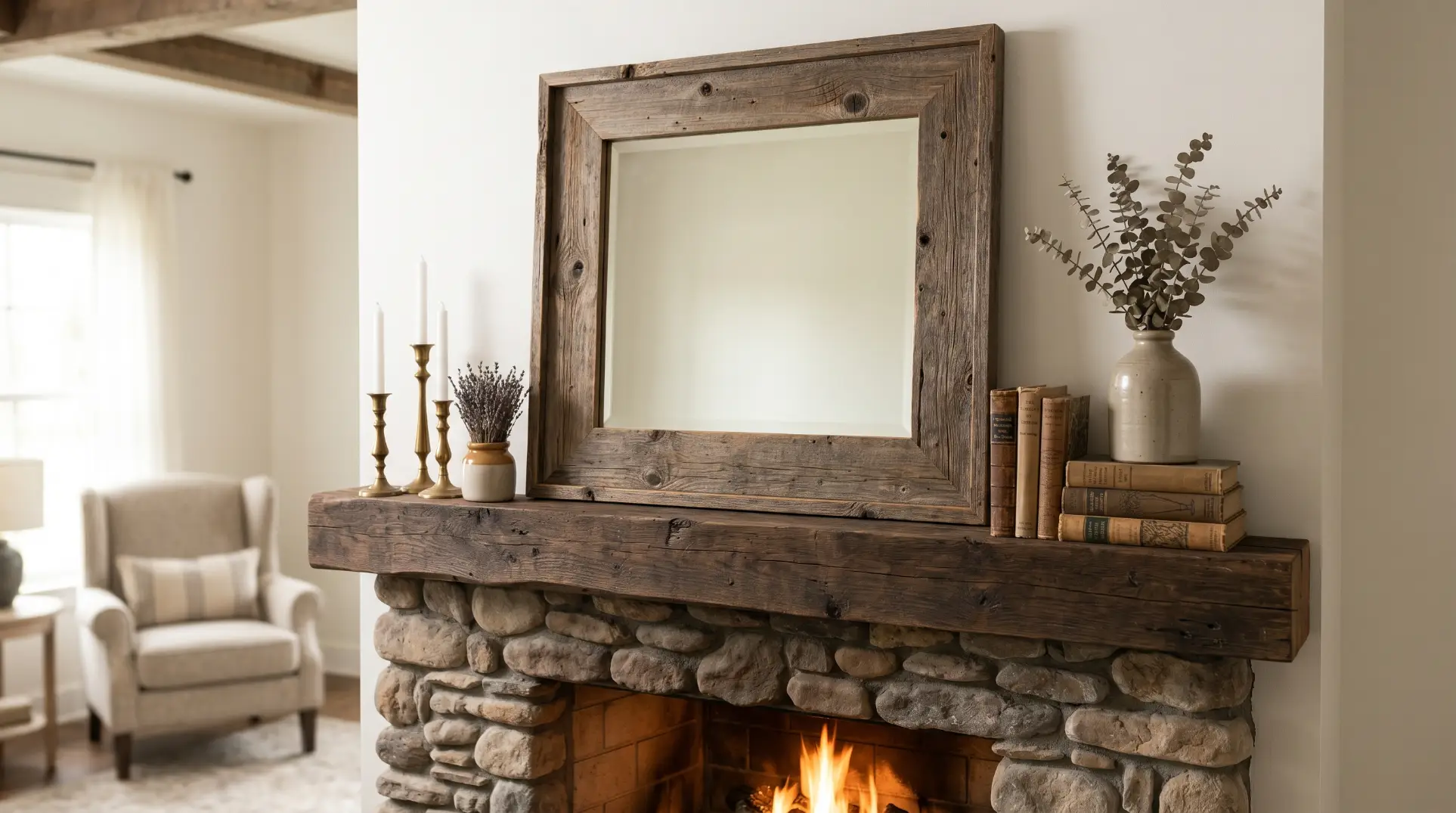
A mirror above the mantel serves double duty in a rustic space. It creates the illusion of depth, reflects natural light across the room, and provides a strong vertical element without adding visual clutter. Frames made from reclaimed wood, wrought iron, or distressed painted wood suit the aesthetic perfectly. A large mirror with a chunky, imperfect frame leans into the raw beauty that defines rustic style.
9. Introduce Galvanized Metal Accents
Galvanized metal is a hallmark of both rustic and farmhouse design. A galvanized pail filled with wildflowers or dried wheat, a metal lantern clustered with candles, or a tin container holding small seasonal items adds texture and an industrial edge that balances the warmth of wood and greenery. The cool gray tone of galvanized metal also complements the neutral, earthy palette that most rustic mantels rely on.
10. Style Seasonally Without Starting from Scratch
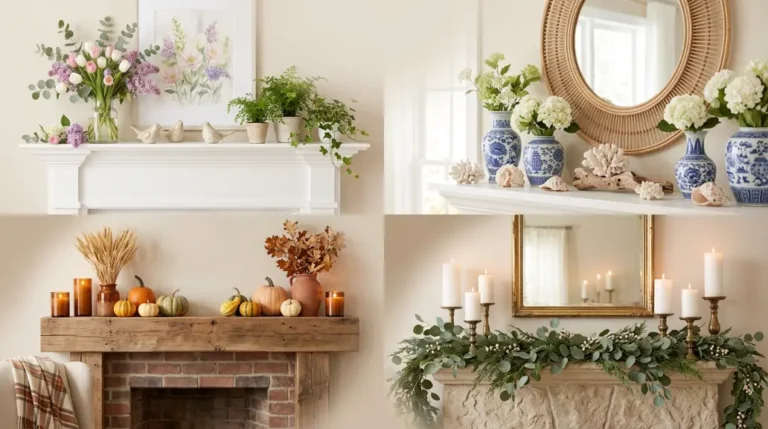
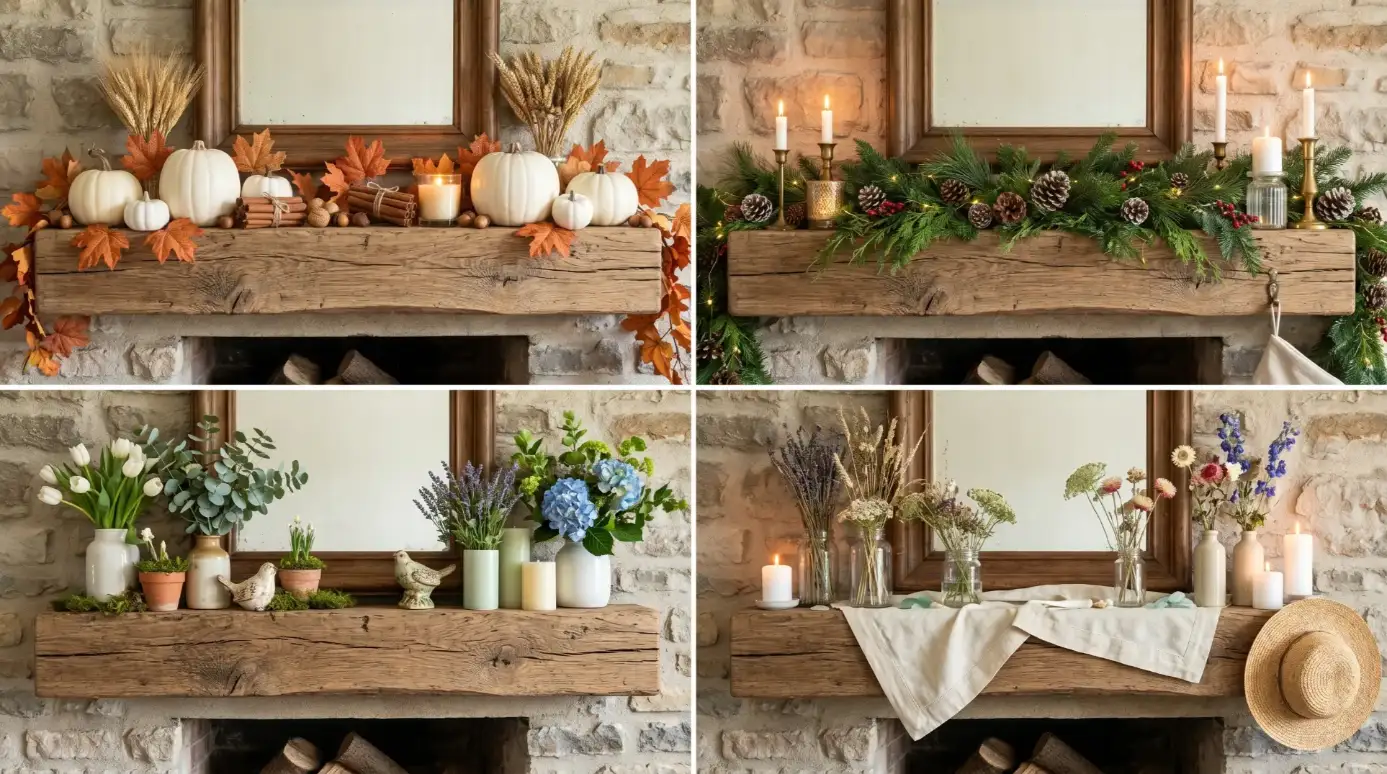
One of the greatest advantages of rustic mantel design is its flexibility. The core elements, a wood anchor, candlesticks, neutral vessels, and natural textures, stay in place year-round. Seasonal updates require only small swaps. In autumn, add white pumpkins, dried orange slices, and cinnamon sticks. In winter, layer in pine cones, berry sprigs, and evergreen garland. In spring, bring in fresh blooms or pastel botanicals. In summer, dried wildflowers and linen accents keep the mantel feeling light and airy. The base remains constant while the mood shifts with the calendar.
11. Use a Live Edge Wood Mantel for Organic Character
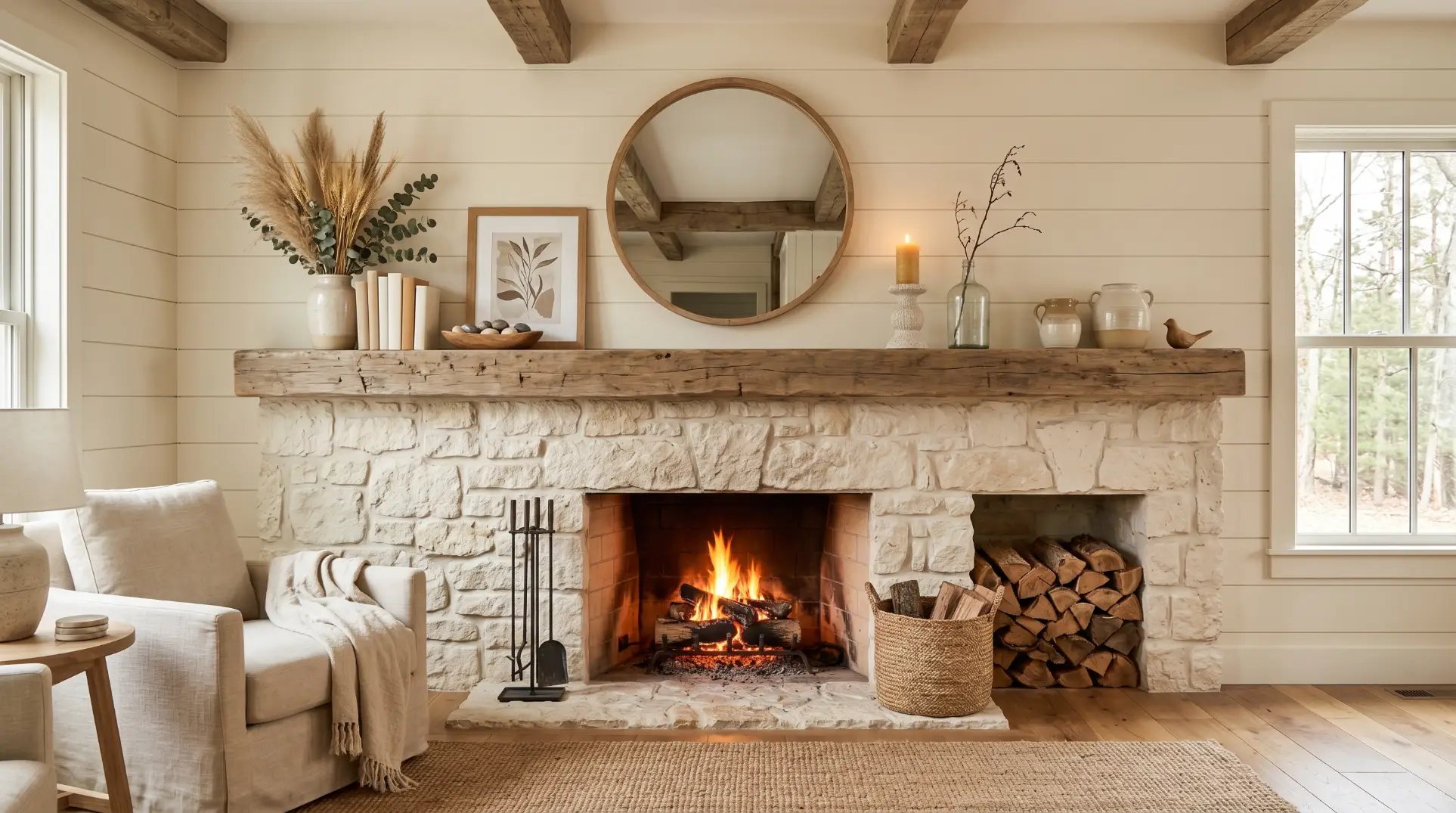
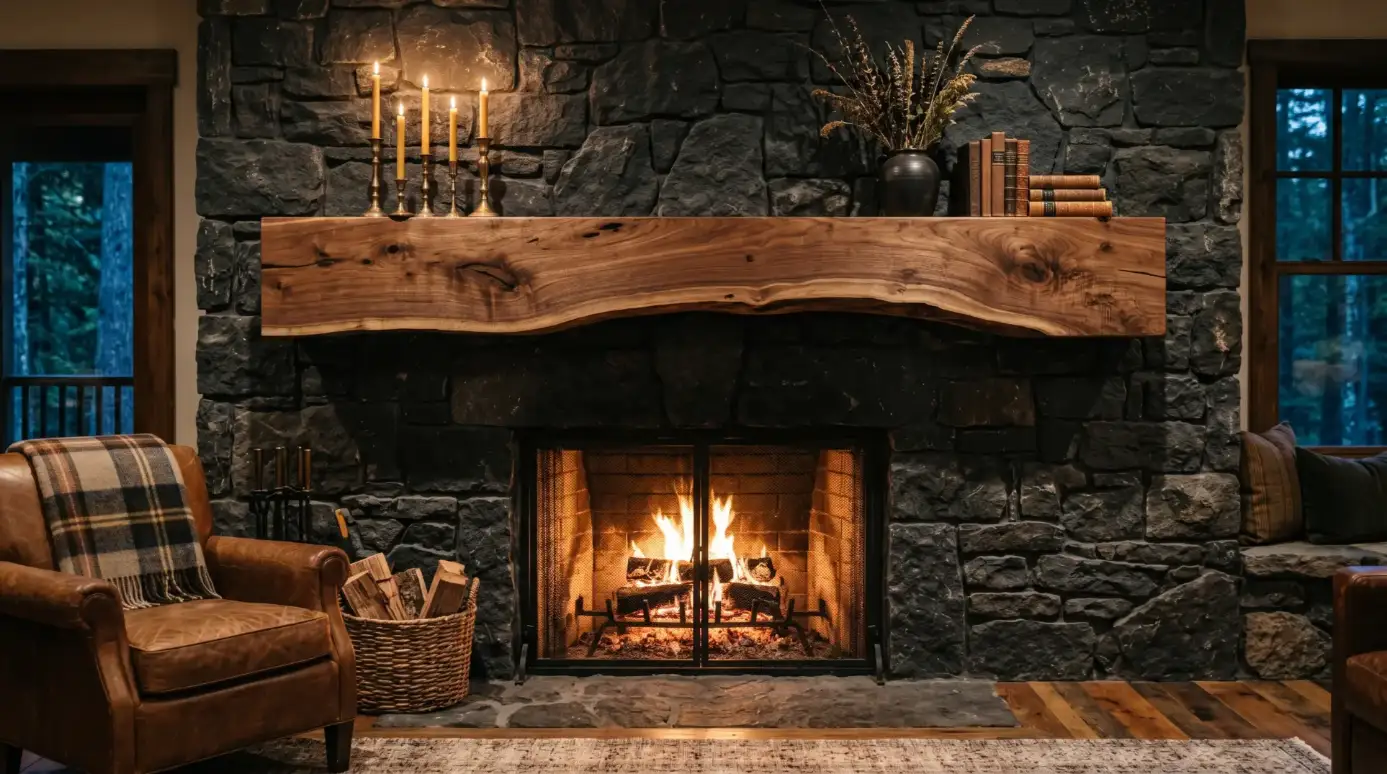
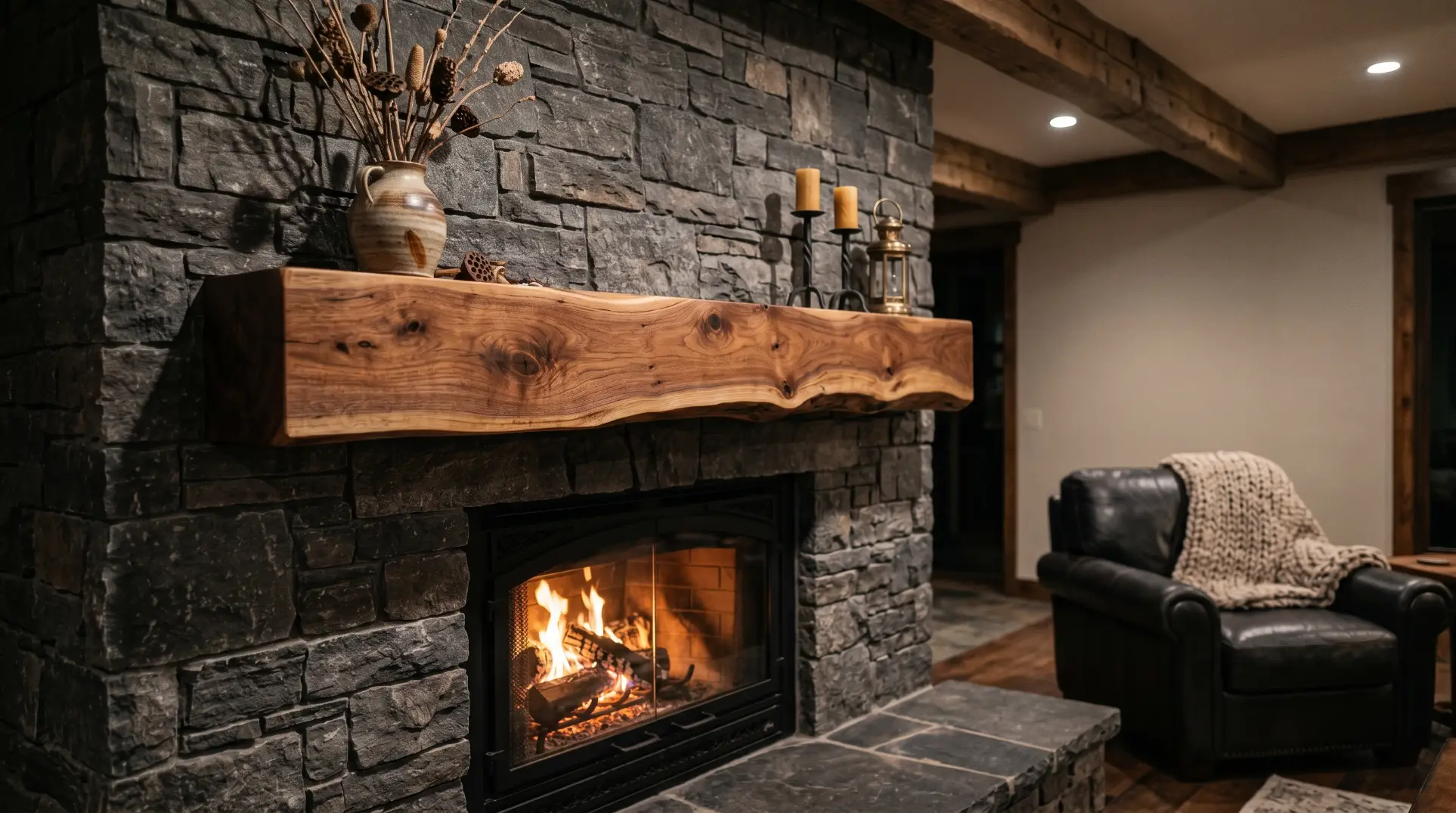
A live edge mantel preserves the natural, irregular contour of the original tree, including curves, knots, and subtle variations in width. No two live edge pieces are identical, which makes them particularly well-suited to rustic spaces where uniqueness is celebrated. Paired with dark stone or a whitewashed brick surround, a live edge mantel becomes a sculptural focal point that requires minimal decoration to make an impact.
12. Display Meaningful Typography and Wooden Signs
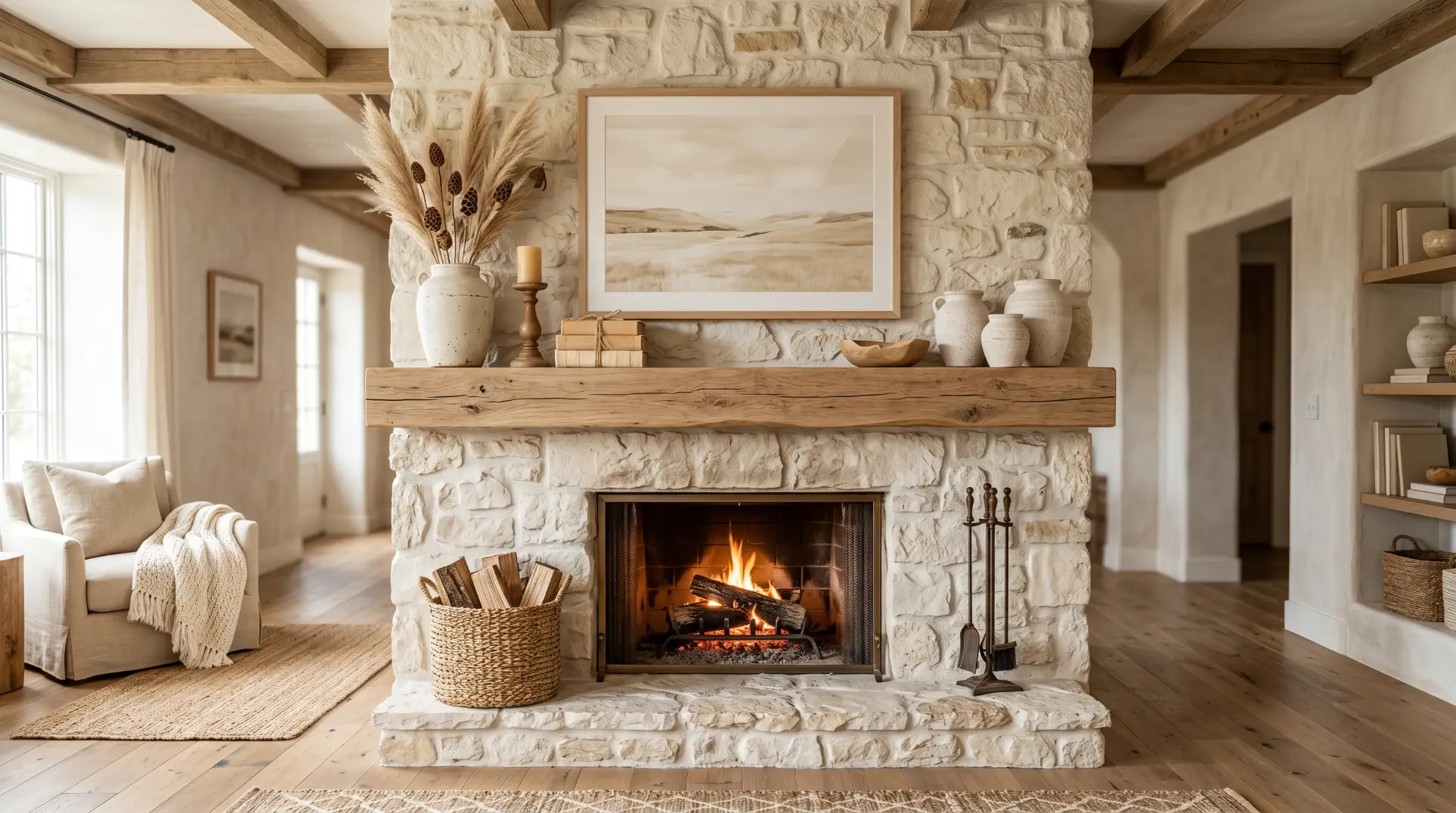
Hand-lettered wooden signs bring warmth and personality to a rustic mantel. A single word like Gather, Home, or Rest can set the tone for the entire room without competing with other elements. Quotes painted on reclaimed wood planks or carved into thick slabs add a handmade quality that mass-produced decor rarely achieves. Typography works best when it is treated as the anchor or used as a secondary piece layered in front of a mirror or larger artwork.
13. Layer in Texture with Woven and Fabric Elements
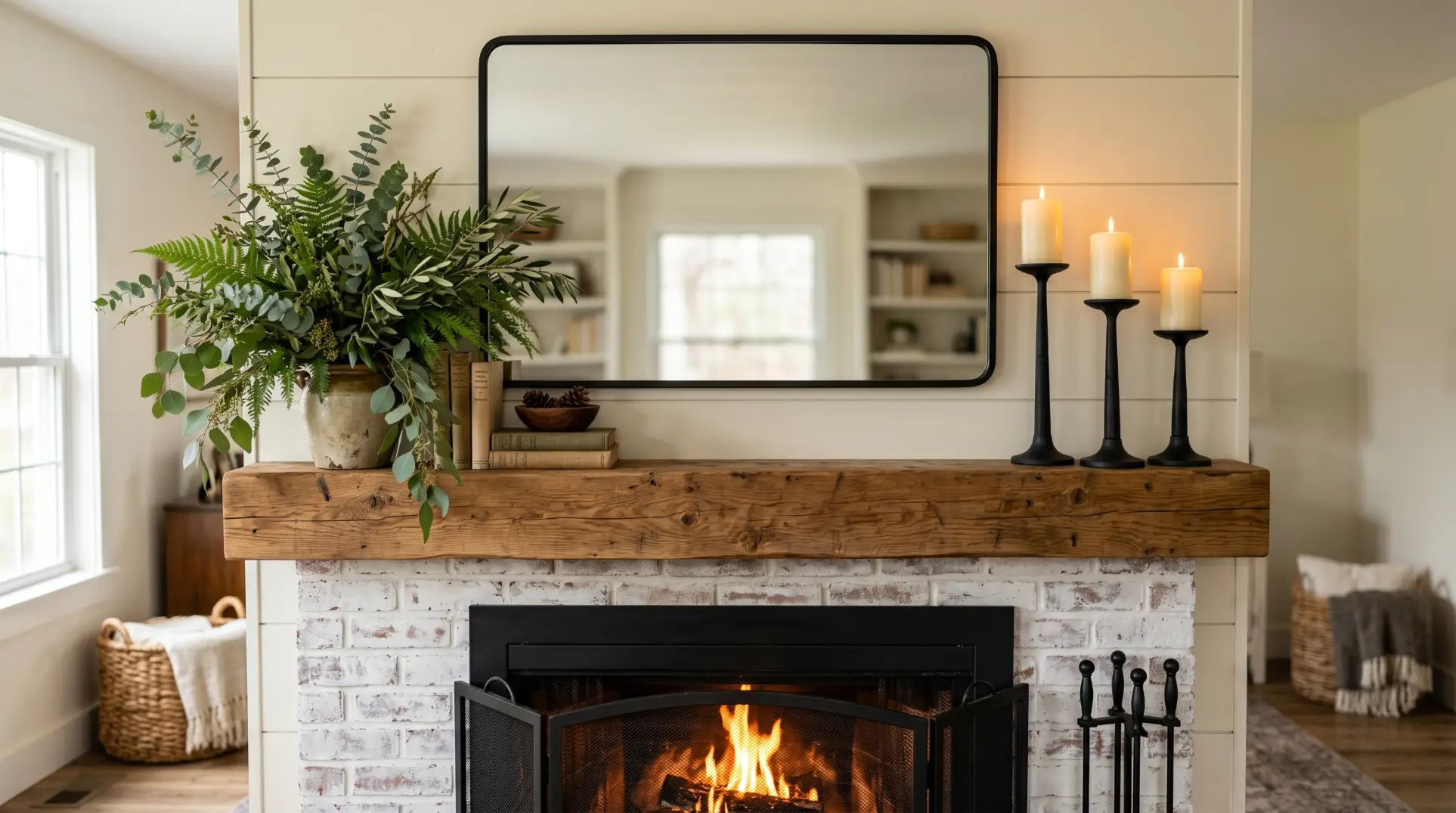
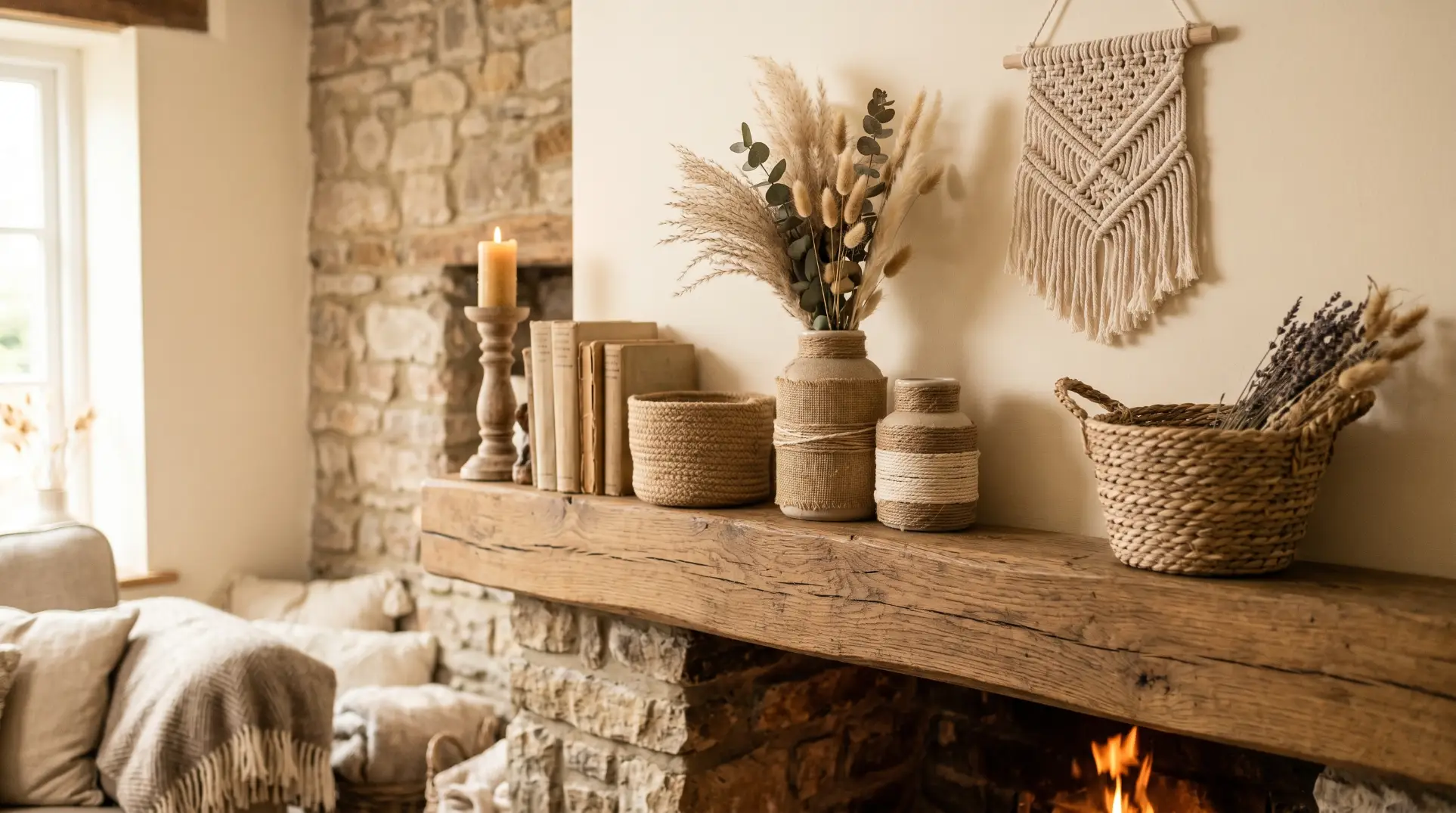
Texture is what separates a flat-looking mantel from one that feels genuinely inviting. Woven baskets, burlap-wrapped vessels, linen ribbon tied around a bundle of botanicals, or a small macrame piece hung from the wall above the mantel all introduce softness that balances the harder surfaces of wood and metal. In rustic decorating, texture does the work that color often does in more maximalist styles.
14. Create a Nature-Inspired Display with Driftwood and Stones
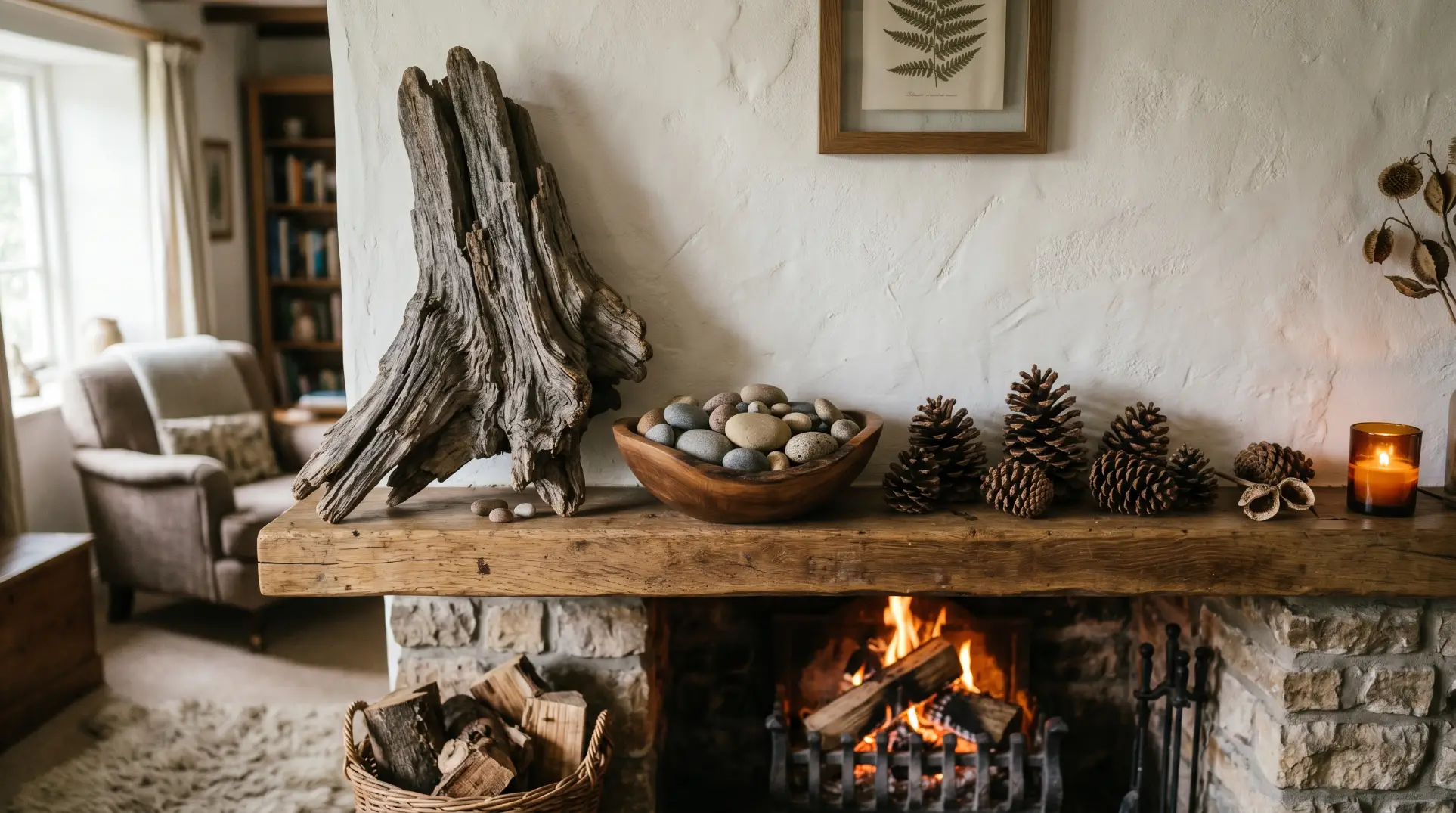
Driftwood pieces, smooth river stones, and pinecones gathered from nature cost nothing and bring an authentic outdoor energy to the mantel shelf. A large piece of driftwood leaned against the wall behind smaller objects, or a collection of smooth stones arranged in a shallow wooden bowl, grounds the display in the natural world. This approach works particularly well in lake houses, mountain cabins, or any home that wants to echo its surrounding landscape.
you may also like this: 18 Stunning Stone Fireplace Ideas for a Cozy & Stylish Home
15. Use a Neutral Color Palette as Your Foundation
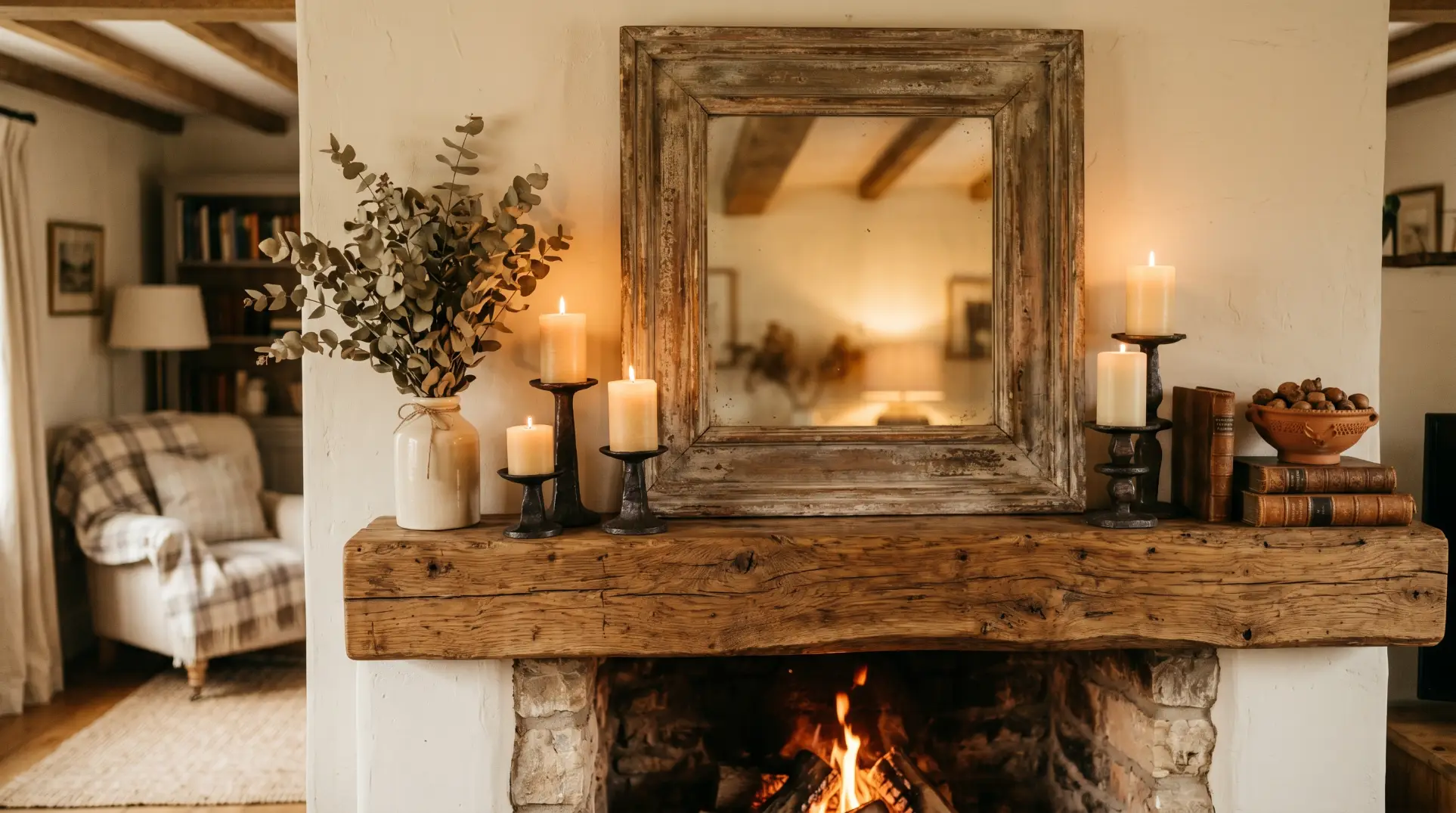
Rustic mantel design rarely depends on bold color. The foundation palette of creams, whites, warm grays, tans, and natural wood tones allows seasonal accents to take center stage without competing with the permanent elements. When the background stays neutral and quiet, a single arrangement of copper-toned autumn leaves or a cluster of deep red berries becomes significantly more impactful. Restraint in the base color choices is what makes the seasonal accents feel intentional rather than cluttered.
16. Mix Matte Black with Natural Wood for a Modern Rustic Look
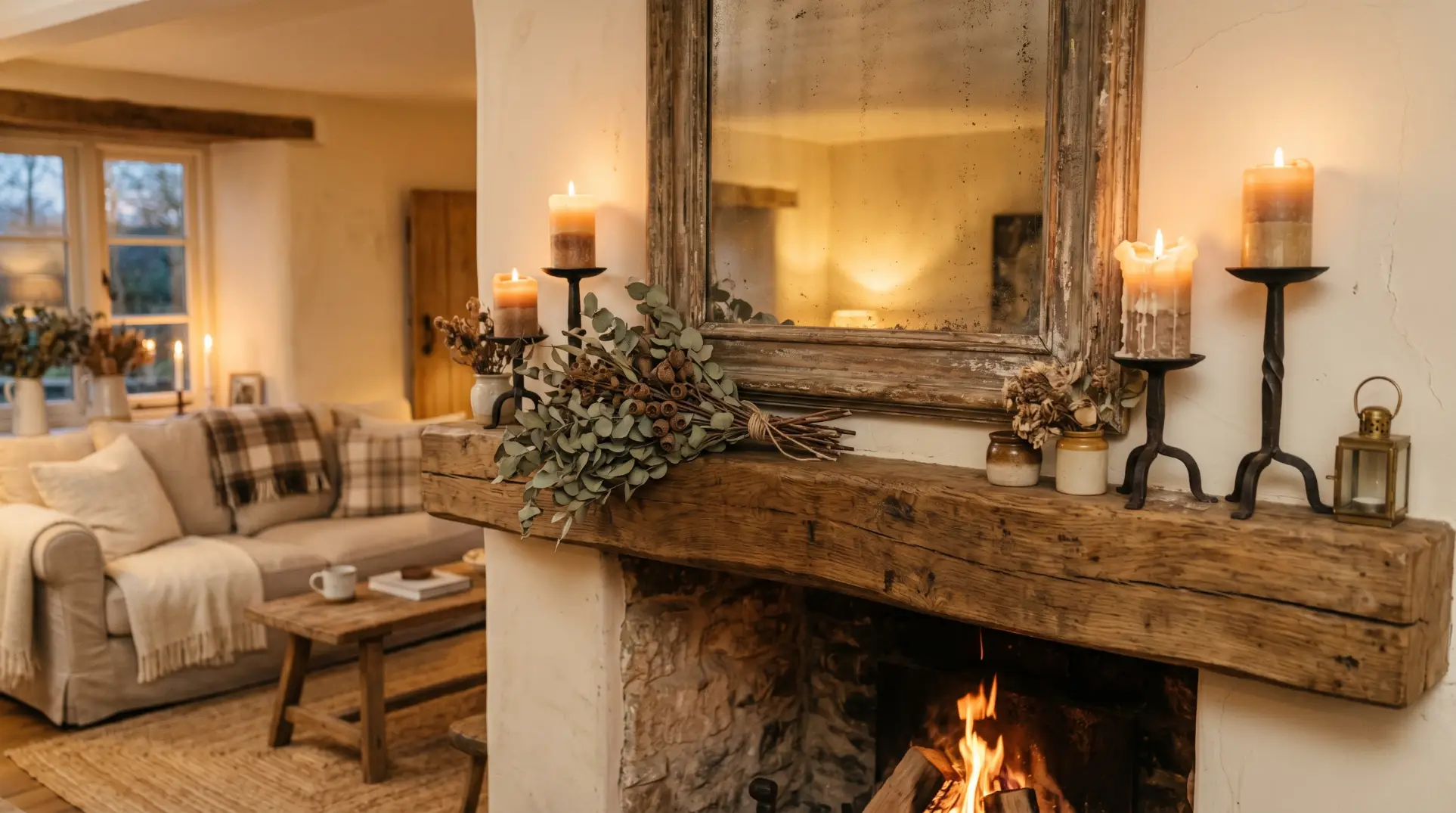
Matte black accents bring a contemporary edge to a rustic mantel without undermining its warmth. Black iron candleholders, a matte black-framed mirror, or a single black ceramic vase alongside raw wood and greenery creates the balance that modern farmhouse design is known for. The contrast between the deep black and the warm wood tones adds sophistication while keeping the overall aesthetic grounded and earthy.
17. Fairy Lights for Everyday Magic
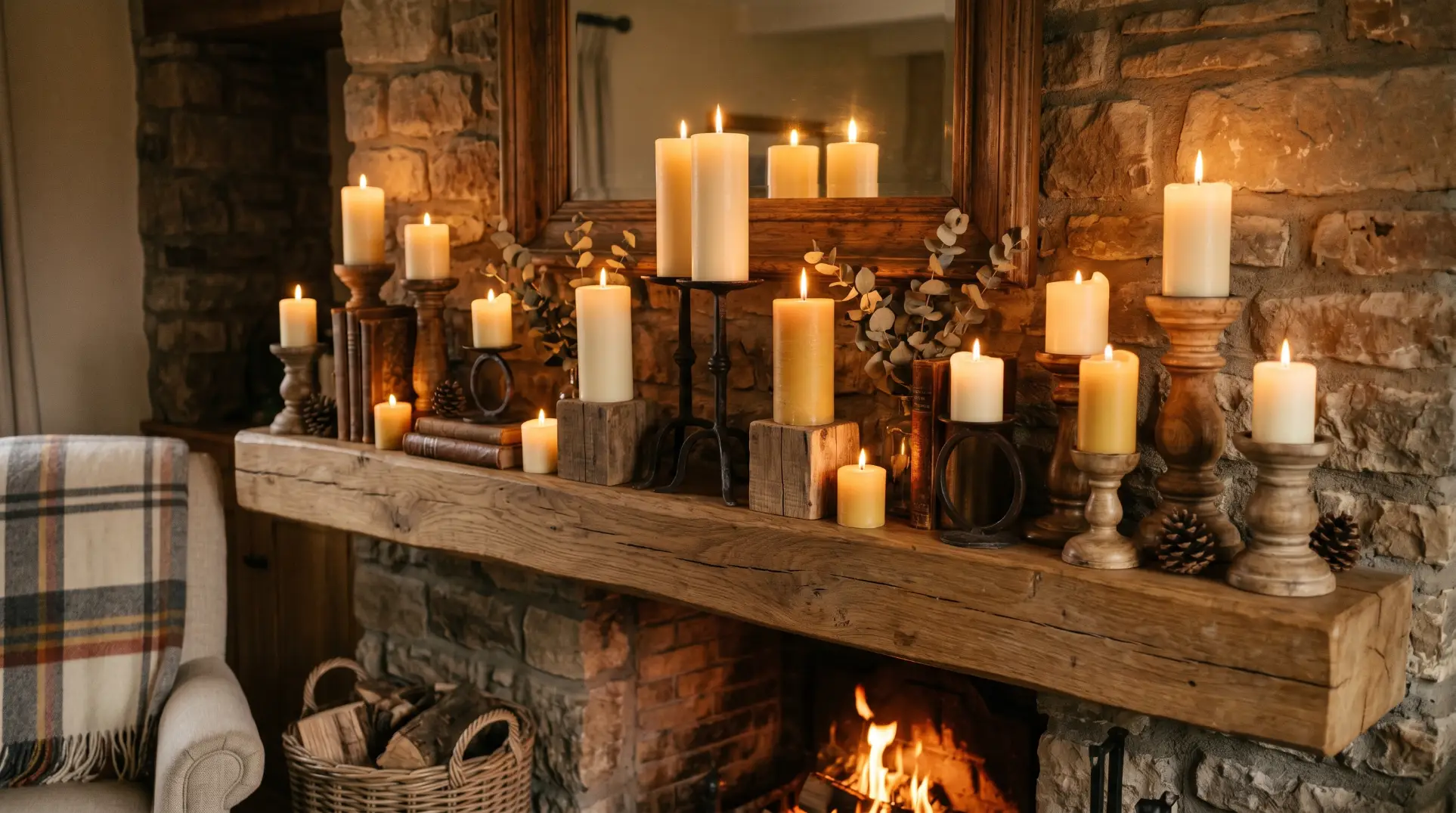
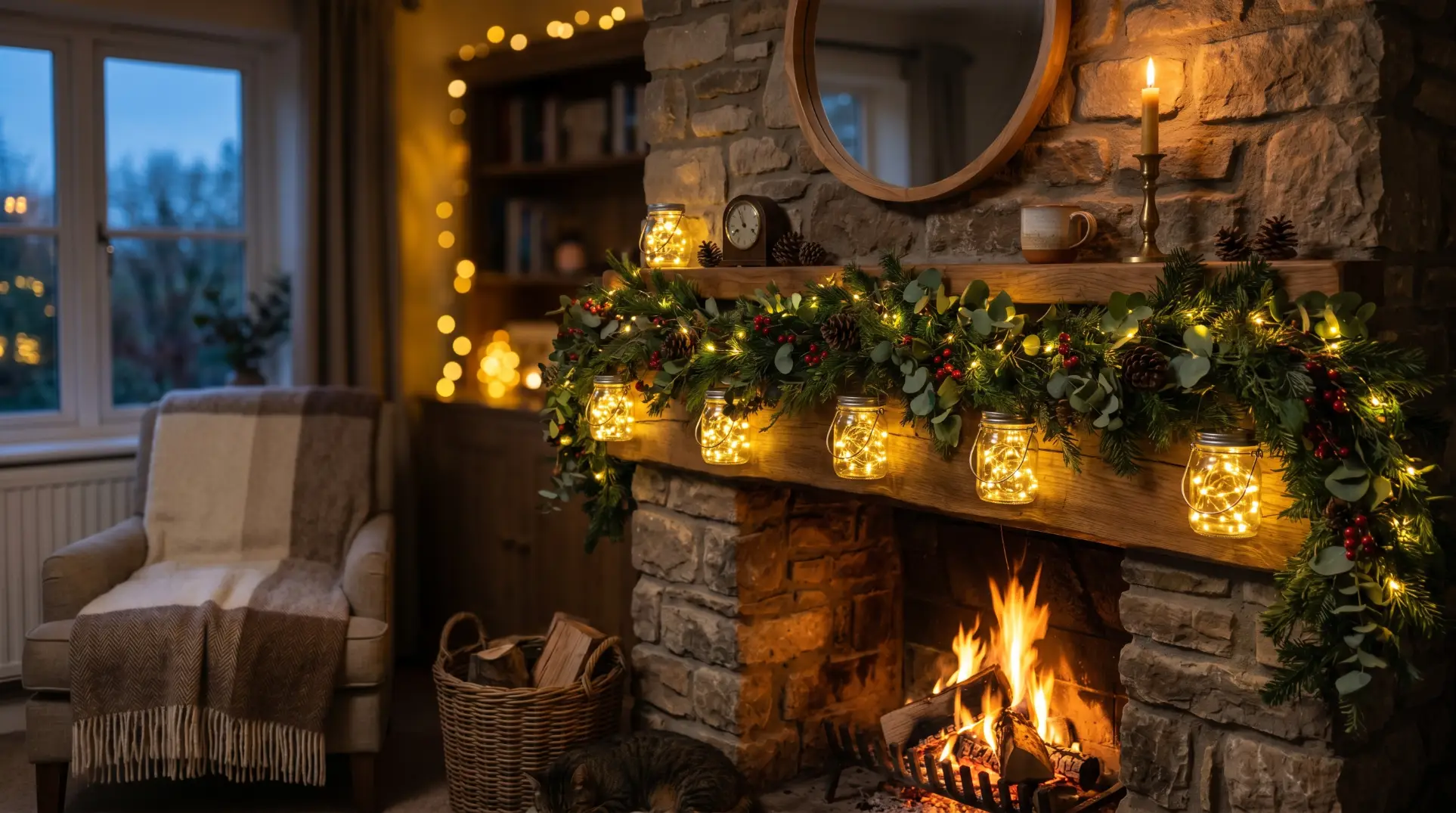
String lights or fairy lights woven through a garland, draped along the back of the mantel shelf, or tucked into a glass vessel create a sense of warmth and whimsy that suits rustic styling beautifully. On a long mantel with substantial depth, a row of small glass jars filled with fairy lights creates a soft, lantern-like glow that elevates the space for everyday use and special occasions alike. This is one of the most budget-friendly and impactful upgrades available.
18. Let the Mantel Reflect Your Personal Story
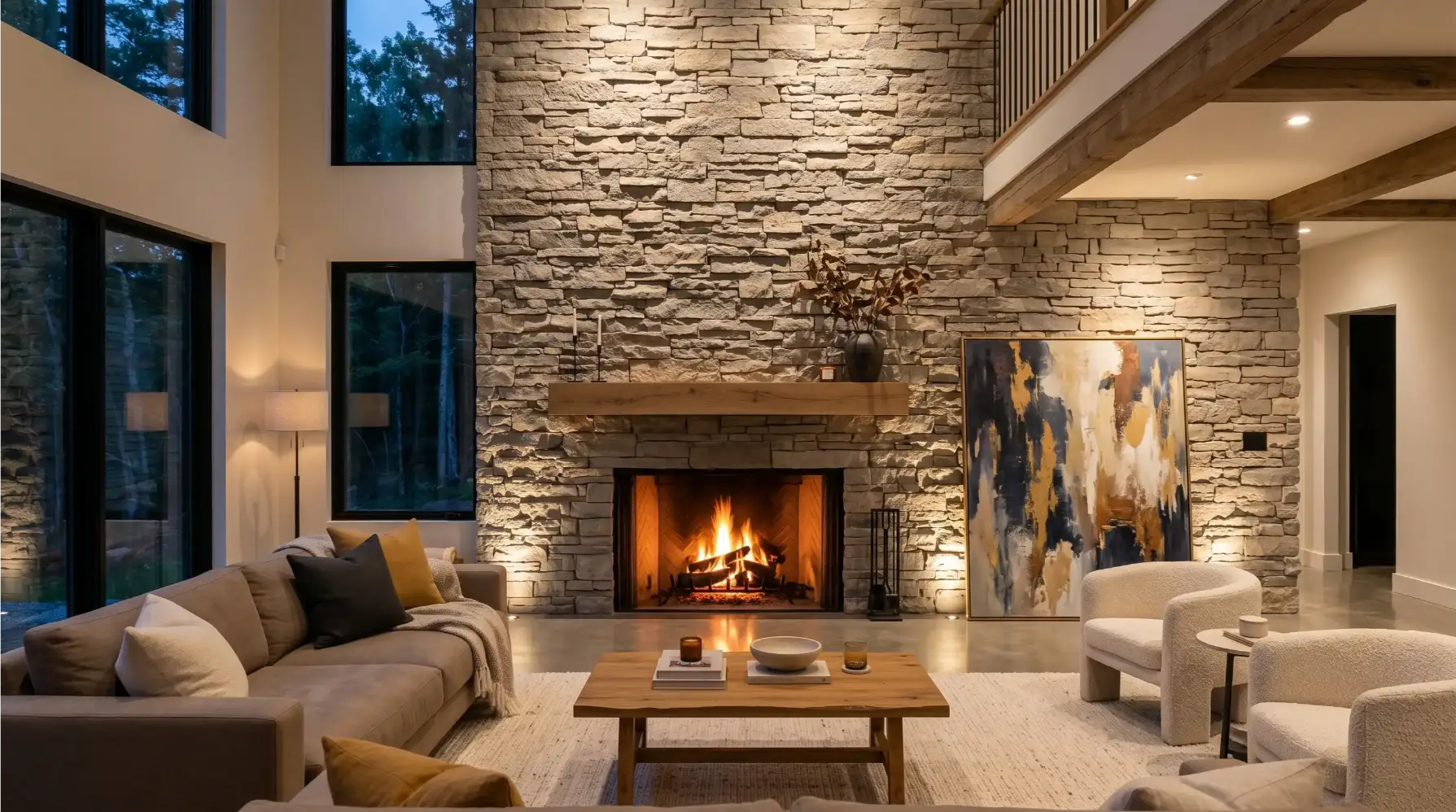
The most memorable rustic mantels are not the ones that look like a showroom display. They are the ones that contain objects with meaning. A small framed photograph in a chunky wood frame, a vintage heirloom passed down through the family, a handmade ceramic piece from a local artisan, or a collection of objects gathered during travels all give the mantel a sense of identity that no purchased arrangement can replicate. Rustic design, at its best, is not about perfection. It celebrates the imperfect, the weathered, and the deeply personal.
you may also like this: 16 Elegant Black Fireplace Ideas Everyone Is Loving Right Now
Bringing It All Together
Rustic mantel decorating is both an art and a practice. The principles are consistent: anchor the display with a strong central piece, build height and balance through thoughtful layering, lean on natural materials and textures, and leave room for the display to breathe. Whether you are working with a grand stone fireplace or a simple painted wood shelf in a modest apartment, these ideas scale to suit any space. Begin with one or two ideas from this list, observe what feels right, and build from there. Over time, a mantel that feels genuinely yours will take shape, one that is warm, layered, and full of character.
Frequently Asked Questions
Q1: What are the best natural materials to use in rustic mantel decorating?
Reclaimed wood, galvanized metal, river stones, driftwood, dried botanicals such as eucalyptus and lavender, pinecones, and raw linen or burlap are among the most effective natural materials for a rustic mantel. They bring texture, warmth, and an authentic connection to the natural world.
Q2: How do I choose an anchor piece for my rustic mantel?
The anchor piece should be the largest and most visually commanding item in the display. A weathered wood framed mirror, an oversized vintage-inspired sign, a large landscape painting, or a repurposed antique window all work well. Choose something that reflects your personal style and sets the overall mood for the mantel.
Q3: How often should I change my rustic mantel decor?
Most designers recommend updating the mantel with each season, four times per year. Keep the core elements in place year-round and swap in seasonal accents such as dried flowers in spring, seashells in summer, small pumpkins in autumn, and pine cones or evergreen sprigs in winter.
Q4: Can I decorate a rustic mantel on a tight budget?
Absolutely. Some of the most effective rustic mantel elements cost very little or nothing at all. Driftwood, stones, pine cones, and dried herbs can be gathered from nature. Thrift stores and estate sales yield vintage finds at minimal cost. A few candles, a bundle of eucalyptus, and one meaningful central piece are all you truly need to create a compelling display.
Q5: What is the rule of three in mantel decorating?
The rule of three suggests grouping decorative objects in sets of odd numbers, with three being the most common. An arrangement of three items at varying heights feels more visually dynamic and natural than an even-numbered grouping. It creates balance without rigidity, which is perfectly aligned with the relaxed spirit of rustic design.