
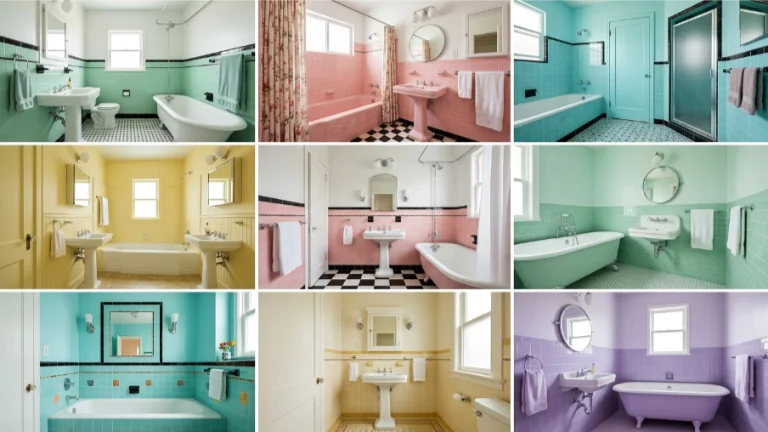
There is something genuinely comforting about a 1950s bathroom. Maybe it is the soft pastel colors that feel warm rather than cold, or the bold tile patterns that have more personality than anything a big-box home store sells today. Whatever the reason, 1950 bathroom ideas have made a full and enthusiastic comeback, and homeowners who once ripped out their vintage tiles are now paying premium prices to recreate exactly what they removed.
Whether you live in a mid-century home with original details worth preserving or you are starting from scratch and want to bring that nostalgic bathroom design into a modern space, this guide covers 17 of the best 1950s bathroom ideas to inspire your remodel. From pastel color schemes and retro tile patterns to vintage fixtures and period-accurate accessories, everything here is practical, achievable, and genuinely worth considering.
17 Best 1950 Bathroom Ideas to Inspire Your Remodel Today
1. Pastel Pink Walls With White Tile
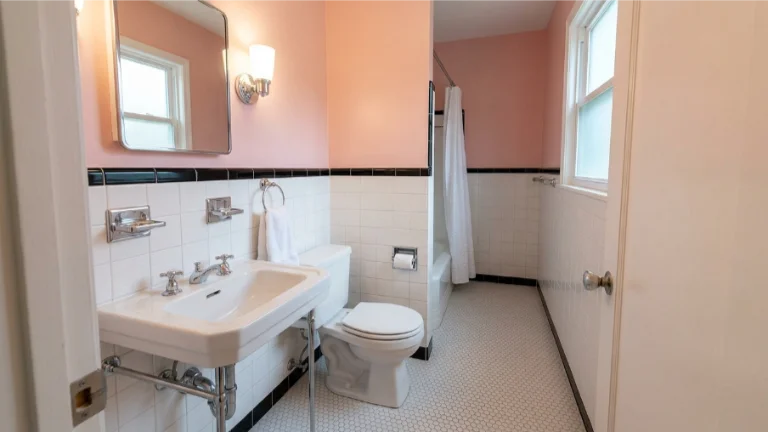
Pink bathrooms are the single most iconic image that comes to mind when anyone pictures 1950 bathroom ideas. The specific shade is important here. This is not a bright hot pink or a dusty blush but a warm, creamy bubble gum pink that was genuinely everywhere in American and European homes during this decade.
Pair pink walls with white ceramic tile laid in a simple horizontal pattern and chrome fixtures for the most authentic retro bathroom decor result. If full pink walls feel too committed, paint just the lower half of the walls in pink and tile the upper half in white, which was also a common period approach and suits smaller bathrooms particularly well.
2. Black and White Checkerboard Floor
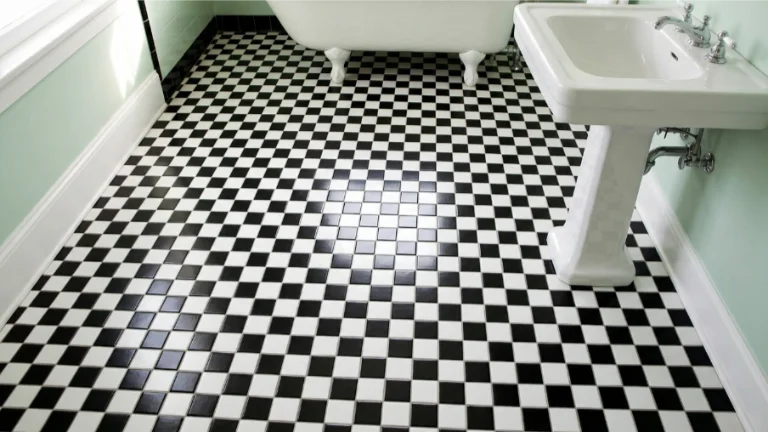
The black and white checkerboard floor is perhaps the most universally recognized element of 1950s interior design, and it translates into bathroom spaces with extraordinary impact. Laid in small two-inch or four-inch squares across the floor, this pattern creates a graphic, high-contrast foundation that anchors the entire room.
Original checkerboard floors were laid in ceramic or vinyl tiles, and both reproduction options are widely available today. For a budget-friendly vintage bathroom remodel, peel-and-stick vinyl checkerboard tiles are available at most home improvement stores and can be installed over an existing floor in a single afternoon without professional help.
3. Mint Green and Chrome Combination
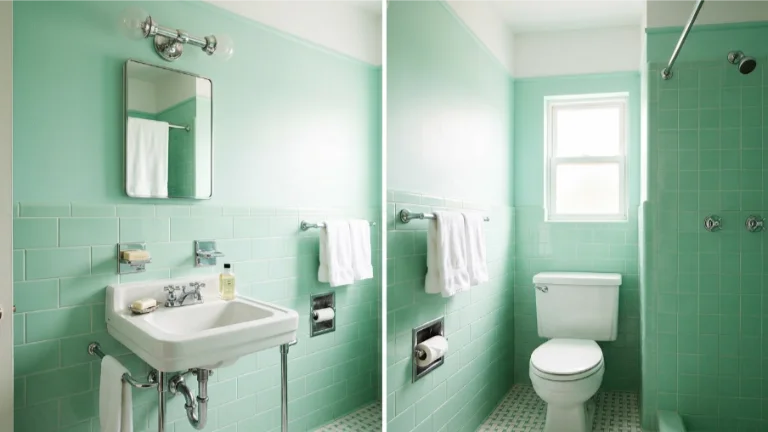
Mint green paired with polished chrome is one of the most refreshing and timelessly elegant retro bathroom color schemes available. The cool, slightly aqua quality of mint green creates a bathroom that feels airy and clean while still carrying the unmistakable warmth of mid-century design.
For the most authentic 1950s bathroom style, use mint green on the walls, white on the ceiling, and introduce chrome through the faucet, towel bars, toilet paper holder, and light fixtures. This combination works particularly well in small bathrooms because the light pastel color keeps the space feeling open while the chrome adds a polished finishing detail.
Quick Reference Table: 1950s Bathroom Style at a Glance
| Design Element | Authentic 1950s Choice | Modern Alternative | Budget Level | Difficulty |
|---|---|---|---|---|
| Wall color | Mint green, pink, sky blue | Pastel paint in period shades | Low | Easy |
| Floor tile | Black and white checkerboard | Vinyl peel-and-stick tile | Low to medium | Easy |
| Wall tile | Subway tile with colored grout | Ceramic subway tile reproduction | Medium | Moderate |
| Fixtures | Chrome faucets and towel bars | Brushed chrome reproductions | Medium | Easy |
| Bathtub | Clawfoot or built-in cast iron | Refinished existing tub | Medium to high | Moderate |
| Vanity | Rounded pedestal sink | Reproduction pedestal sink | Medium | Moderate |
| Accessories | Lucite soap dish, chrome toothbrush holder | Vintage-inspired bathroom sets | Low | Easy |
4. Subway Tile With Colored Grout
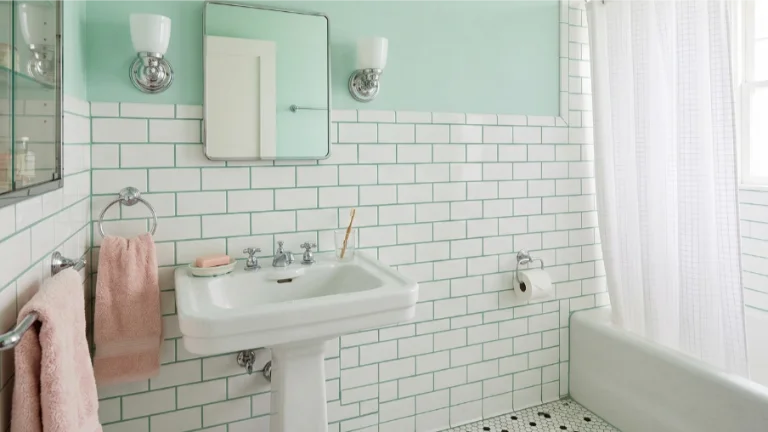
Standard white subway tile becomes a genuinely period-specific design choice when installed with colored grout. In the 1950s, it was common to lay white or pastel-colored subway tile with grout tinted to match or complement the wall color, creating a cohesive, slightly graphic appearance rather than the stark white-on-white look more common in contemporary bathrooms.
Try white subway tile with mint green, pale pink, or powder blue grout for a classic mid-century bathroom look that is achievable on a modest budget. The tile itself is one of the least expensive options available, and tinted grout costs no more than standard white grout, making this one of the most cost-effective authentic 1950s bathroom decor choices on this list.
5. Pedestal Sink With Rounded Edges
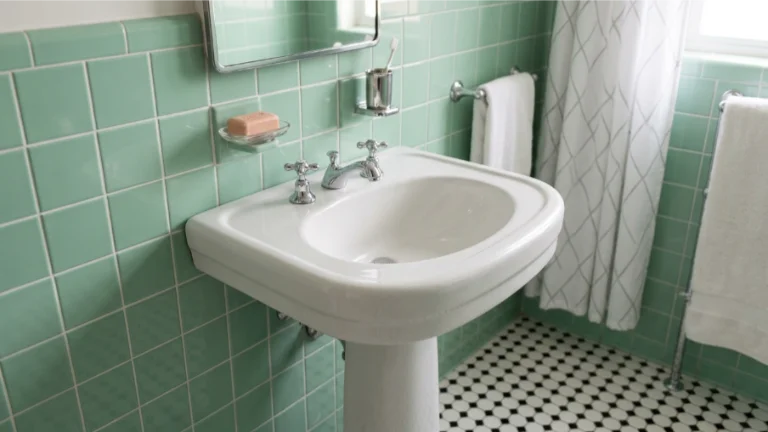
The rounded, softly shaped pedestal sink is a defining fixture of 1950s home bathroom renovation projects. Unlike the sharp-cornered undermount sinks common in contemporary bathrooms, the pedestal sink of this era had gently curved edges and a full rounded basin that gave it a sculptural, almost furniture-like quality.
Reproduction pedestal sinks in period-accurate styles are widely available from bathroom fixture suppliers and can be found at a range of price points. Installing one in place of a standard vanity instantly changes the feel of the entire bathroom because the pedestal sink is such a strong visual signal of the mid-century era.
6. Clawfoot Bathtub as a Focal Point
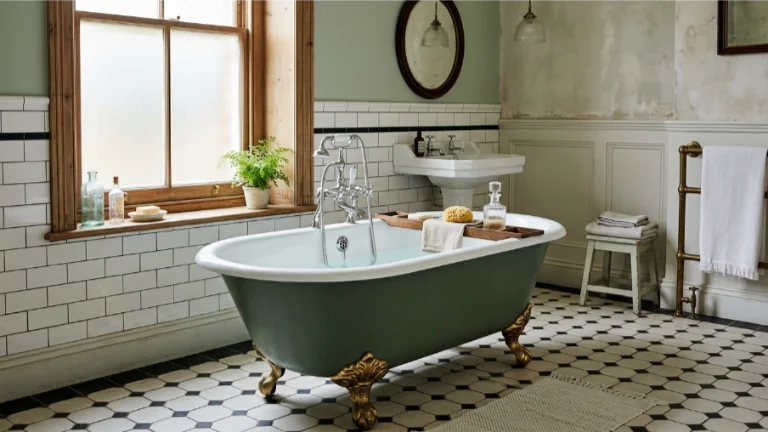
Few single elements transform a bathroom into a genuine vintage bathroom design statement as effectively as a clawfoot tub. These freestanding cast iron baths with their ornate feet and deep soaking basin were a staple of pre-war bathrooms and remained popular through the 1950s in more traditional homes.
Original clawfoot tubs can be found at architectural salvage yards and antique dealers and then refinished to look like new for a fraction of the cost of a new reproduction. The refinishing process involves cleaning, sanding, and applying a new porcelain coating to the interior and repainting the exterior in whatever color suits the bathroom’s color scheme.
7. Two-Tone Tile Walls
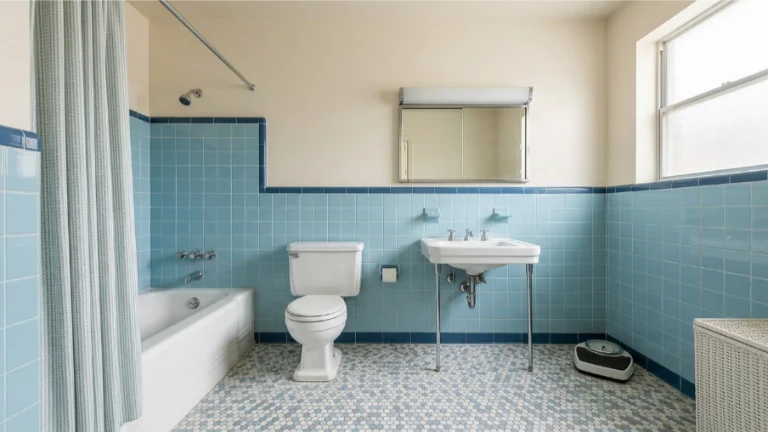
Two-tone tile walls were a defining feature of authentic 1950s bathroom design and remain one of the most visually satisfying vintage tile bathroom approaches available. The typical configuration involved tiling the lower two-thirds of the wall in one color and leaving the upper third painted in a complementary shade, with a decorative border tile or contrasting trim tile marking the transition between the two zones.
Common color combinations included pale yellow tile below with white paint above, pink tile below with mint green above, and pale blue tile below with cream above. Any of these combinations immediately reads as period-accurate and creates a bathroom with genuine retro character.
8. Vintage Hexagon Floor Tile
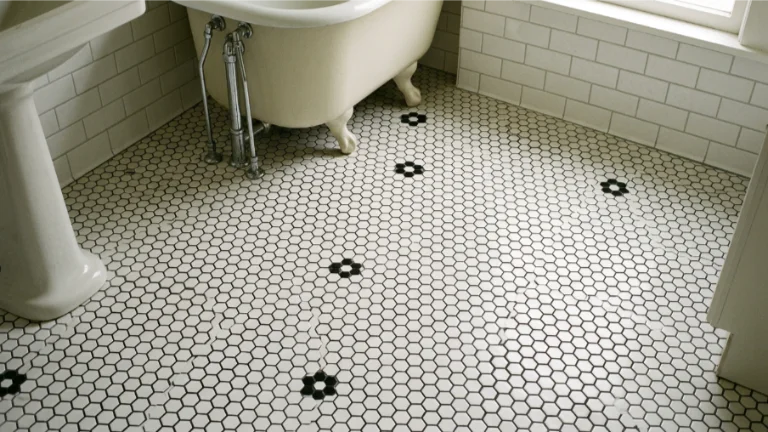
Small hexagon floor tiles were enormously popular in 1950s bathroom design and are experiencing a significant resurgence in contemporary vintage bathroom remodel projects. The small scale of the hexagon pattern creates a sense of intricacy and craftsmanship that larger floor tiles simply cannot replicate.
White hexagon tiles with black grout, pale grey hexagons with white grout, or a mixture of white and black hexagons in a simple pattern are all period-appropriate choices. These tiles are available from most tile suppliers in both ceramic and porcelain, with porcelain being the more durable choice for bathroom floors that see heavy daily use.
9. Pastel Yellow Bathroom With White Fixtures
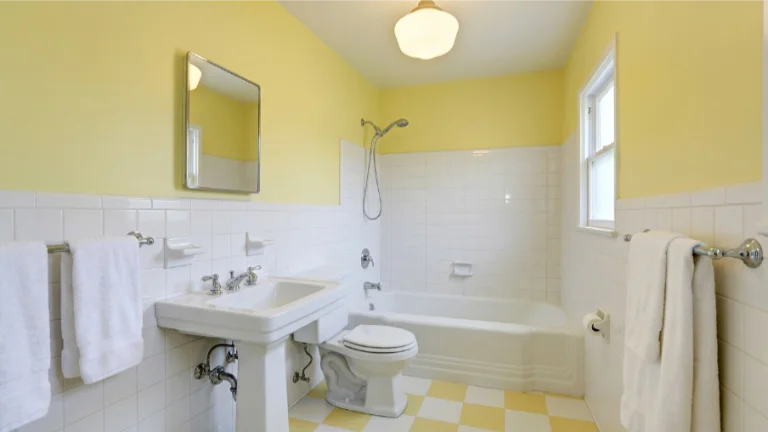
Pale lemon yellow is one of the less commonly reproduced 1950s bathroom colors, which makes it a genuinely distinctive choice for anyone who wants a vintage bathroom that stands slightly apart from the ubiquitous pink and mint options. Yellow bathrooms from this era had a warm, cheerful quality that made them feel sunny even in bathrooms with limited natural light.
Pair pale yellow walls with bright white fixtures, white ceramic tile, and chrome hardware for the cleanest and most period-accurate result. A yellow and white checkerboard floor ties the color story together and completes the retro bathroom makeover without requiring any additional decorative elements.
10. Chrome Fixtures Throughout
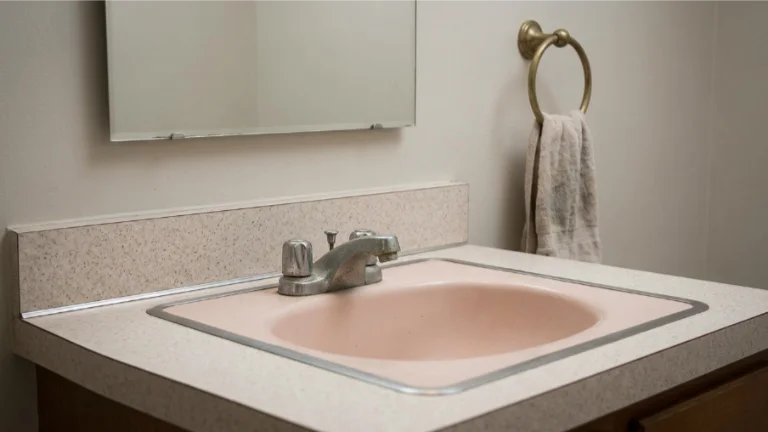
In 1950s home decor, chrome was the hardware finish of choice for virtually everything in the bathroom. Faucets, towel bars, toilet paper holders, soap dishes, toothbrush holders, light fixtures, and mirror frames were all finished in polished chrome that was kept sparkling clean as a matter of household pride.
Replacing all the hardware in a bathroom with matching polished chrome pieces is one of the most cost-effective and impactful vintage bathroom styling tips available. A complete set of chrome bathroom accessories can be purchased for a modest budget and installed without professional help, yet the visual transformation is substantial.
11. Retro Wallpaper as an Accent
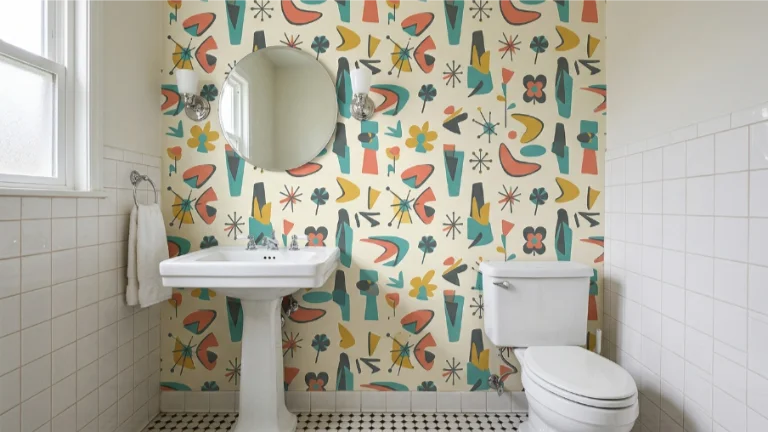
Period-reproduction wallpaper featuring 1950s motifs such as abstract geometric shapes, stylized flowers, boomerang patterns, or atomic-age graphics can add an extraordinary amount of character to a vintage bathroom remodel without requiring any structural changes to the space.
Use retro wallpaper on a single accent wall behind the toilet or vanity rather than papering the entire room, which can feel overwhelming in a smaller space. Several specialty wallpaper companies produce high-quality reproductions of authentic 1950s patterns that are specifically designed for bathroom environments with moisture-resistant coatings.
12. Built-In Tub With Tile Surround
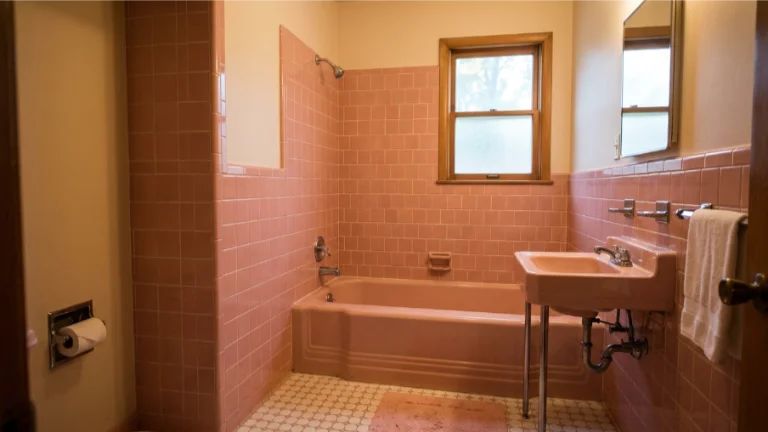
The built-in bathtub with a full ceramic tile surround was the most common bathroom configuration in 1950s homes, and recreating this look is one of the most straightforward ways to achieve an authentic mid-century bathroom renovation. The tile surround typically extended from the tub rim to the ceiling and was laid in a simple stacked or brick pattern in a period-appropriate color.
Pink, mint, pale blue, and white were the most common tile surround colors of this era. Choosing a period color for the tub surround tile and pairing it with contrasting grout in a complementary tone creates a finished look that requires very little additional decoration to feel complete and genuinely retro.
13. Vintage Medicine Cabinet With Mirror
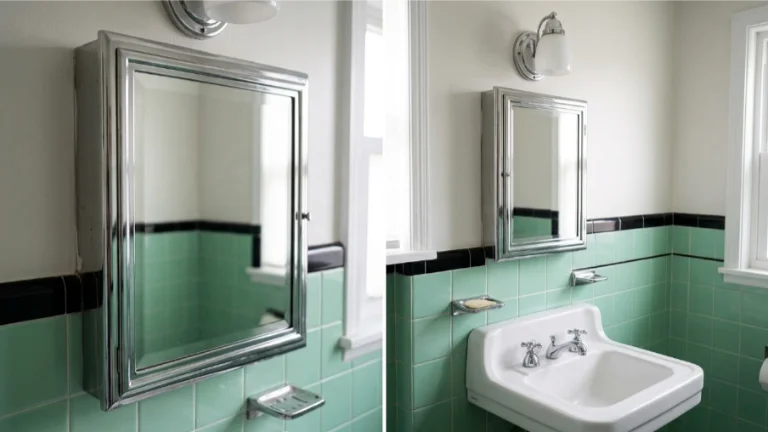
The surface-mounted medicine cabinet with a mirrored front and chrome frame was a standard fixture in 1950s bathrooms and is one of the easiest authentic period details to source and install today. These cabinets provided practical storage behind the mirror surface while adding a clean, structured focal point above the sink.
Original medicine cabinets from this era appear regularly at antique shops, salvage yards, and online vintage marketplaces at very accessible prices. A thorough cleaning, a coat of chrome spray paint on the frame if needed, and new shelf liners inside the cabinet restore these pieces to fully functional and visually period-accurate condition.
14. Powder Blue and White Color Scheme
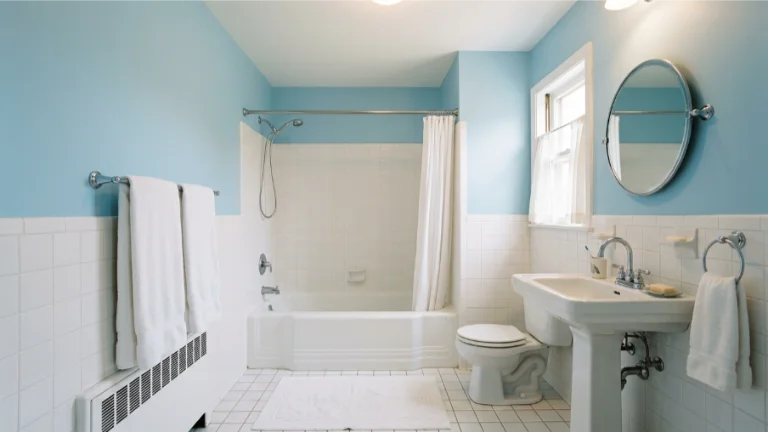
Powder blue is the third member of the classic 1950s pastel bathroom color trinity alongside pink and mint green, and it creates one of the most serene and quietly beautiful retro bathroom color schemes available. The softness of powder blue against bright white fixtures and tile creates a bathroom that feels calm, clean, and genuinely nostalgic.
For the most cohesive result, use powder blue on the walls, white on the ceiling, white ceramic tile on the floor and lower walls, and chrome on all hardware. Add a white or blue bath mat, white cotton towels, and a simple chrome towel ring to complete the look without over-decorating.
15. Decorative Border Tiles
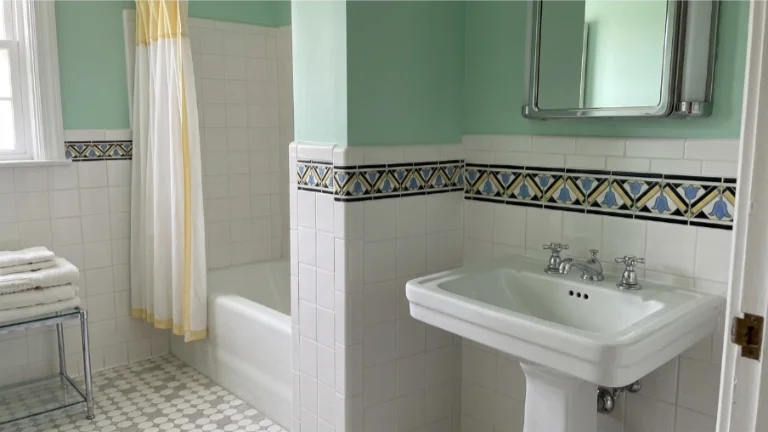
Border tiles were used extensively in 1950s bathroom design to define zones, separate different tile areas, and add decorative detail to otherwise simple tile installations. These narrow accent tiles typically featured geometric patterns, simple floral motifs, or contrasting color bands and were installed horizontally around the perimeter of the room at chair rail height or at the transition between the tiled lower wall and the painted upper wall.
Reproduction border tiles in period-appropriate patterns are available from several specialty tile suppliers and can be added to an existing bathroom renovation without retiling the entire room. Even a single row of decorative border tile at the right height can completely transform the character of a plain tiled bathroom
16. Terrazzo Flooring
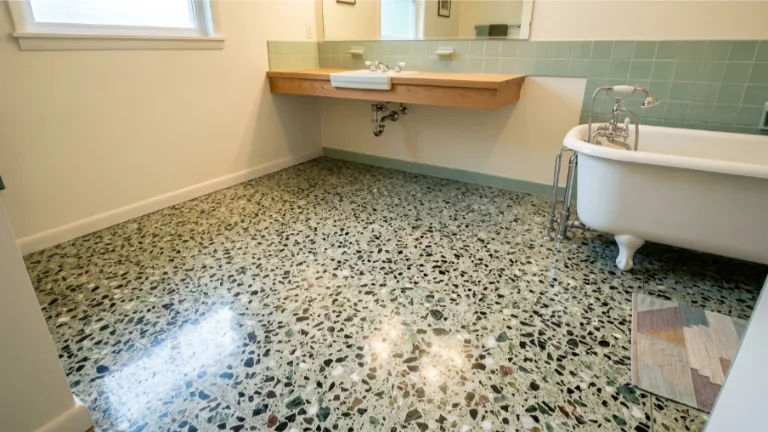
Terrazzo was a widely used flooring material in mid-century bathrooms, particularly in the American South and in commercial buildings that influenced residential design trends of the era. Made from chips of marble, granite, or glass set into cement and then polished smooth, terrazzo creates a floor with extraordinary visual depth and a characteristic speckled appearance that reads as authentically period.
Original terrazzo floors in older homes can be restored rather than replaced, which is both more cost-effective and more environmentally responsible than installing new flooring. A professional terrazzo restoration involves grinding the surface, filling any cracks with matching colored cement, and then polishing the entire floor to a smooth, sealed finish.
you may also like this: 20 Boho Style Bathroom Ideas for Calm Cozy Decor Trend Now
17. Retro Bathroom Accessories and Styling Details
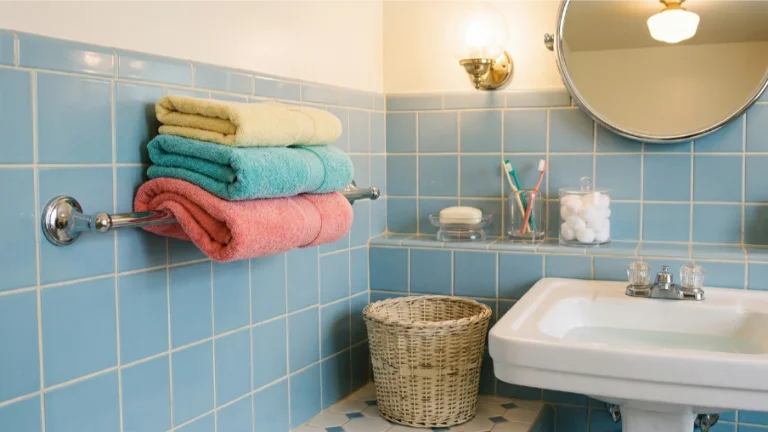
The finishing details are what separate a bathroom that has some vintage elements from one that feels genuinely transported from the 1950s. Retro bathroom accessories from this era had a specific material and form language that is worth understanding before shopping.
Lucite and clear acrylic soap dishes, toothbrush holders, and cotton ball containers were enormously popular in this decade. Wicker wastebaskets with painted finish were another staple. Thick cotton terry towels in period colors such as coral, turquoise, and pale yellow, folded and displayed on a chrome towel bar rather than stuffed into a cabinet, complete the look with minimal expense
Practical Tips for Your 1950s Bathroom Remodel
1. Start With Color
The single most impactful and budget-friendly change you can make toward a 1950 bathroom idea is choosing the right paint color. A can of period-accurate pastel paint costs very little and transforms the feeling of the entire room immediately. Start there before investing in tile or fixtures.
2. Source Vintage Before Buying New
Architectural salvage yards, antique dealers, estate sales, and online vintage marketplaces are excellent sources for authentic 1950s bathroom fixtures and accessories at prices well below reproduction costs. Original chrome fixtures, medicine cabinets, pedestal sinks, and tile in good condition are found regularly at these sources.
3. Do Not Overlook Lighting
Period-accurate lighting makes an enormous difference to the authenticity of a vintage bathroom design. Wall-mounted sconces with frosted glass shades on either side of the medicine cabinet mirror were the standard lighting configuration in 1950s bathrooms and are widely available as reproductions today.
Common Mistakes to Avoid
1. Mixing Too Many Pastel Colors
1950s bathrooms typically used one or two pastel colors in a consistent scheme rather than mixing multiple pastels together. Combining pink walls with mint tile and blue accessories can look chaotic rather than retro. Choose one hero pastel and let white and chrome provide the supporting contrast.
2. Using Modern Hardware Finishes
Matte black, brushed gold, and oil-rubbed bronze hardware finishes are popular in contemporary bathroom design but are completely out of place in an authentic 1950s bathroom. Stick to polished chrome for all hardware and fixtures to maintain period accuracy throughout the space.
3. Ignoring the Ceiling
Period bathrooms almost universally had white ceilings regardless of the wall color, and this detail matters more than it seems. A colored ceiling in a small bathroom can make the space feel heavy and cramped, which is the opposite of the bright, airy quality that made 1950s bathroom design so appealing in its original context.
Conclusion
Recreating a 1950s bathroom is one of the most rewarding remodeling projects a homeowner can take on because the style has such a clear and consistent visual language. Once you understand the core elements, including pastel color schemes, period tile patterns, chrome hardware, rounded fixtures, and specific decorative accessories, putting together an authentic and charming vintage bathroom becomes a straightforward process of making well-informed choices rather than guessing. Whether your budget allows for a full renovation with original clawfoot tubs and terrazzo floors or a simpler refresh with new paint, chrome accessories, and reproduction tiles, the 17 ideas in this guide give you a complete toolkit for creating a bathroom that genuinely honors one of the most beloved design eras in residential history.
Frequently Asked Questions
1. What colors were most common in 1950s bathrooms?
The most common colors in authentic 1950s bathrooms were pastel pink, mint green, powder blue, and pale yellow, always paired with bright white fixtures and chrome hardware. These soft pastel shades were applied to walls, tiles, and sometimes even fixtures in period bathrooms and remain the most reliable color choices for a vintage bathroom remodel today.
2. How do I create a 1950s bathroom on a budget?
The most budget-friendly approach involves painting walls in a period-accurate pastel shade, replacing all hardware with matching polished chrome pieces, adding a black and white checkerboard floor using peel-and-stick vinyl tiles, and sourcing vintage accessories such as a Lucite soap dish and chrome toothbrush holder from antique shops or online marketplaces. These changes can be made for a few hundred dollars and create a significant visual transformation.
3. What kind of tile was used in 1950s bathrooms?
White or pastel-colored subway tile on walls and small hexagon tile or checkerboard ceramic tile on floors were the most common tile choices in 1950s bathrooms. Two-tone tile wall treatments, where the lower two-thirds of the wall was tiled and the upper third was painted, were also very common and are one of the most effective ways to achieve an authentic vintage tile bathroom look.
4. Can I mix 1950s bathroom style with modern conveniences?
Absolutely. The most livable approach to a vintage bathroom remodel involves keeping the visual elements period-accurate while using modern plumbing, electrical, and ventilation systems behind the scenes. A period-accurate pedestal sink can have a modern low-flow faucet installed in a chrome finish. A clawfoot tub can have a handheld shower attachment added. The visual surface reads as authentic 1950s while the underlying systems meet contemporary standards.
5. Where can I find authentic 1950s bathroom fixtures?
Architectural salvage yards are the best source for authentic original fixtures including pedestal sinks, medicine cabinets, chrome hardware sets, and even period tile. Estate sales in older neighborhoods frequently yield 1950s bathroom accessories in excellent condition. Online marketplaces specializing in vintage and antique items are also reliable sources, and several specialist bathroom fixture companies manufacture high-quality reproductions of period-accurate pieces for homeowners who prefer new items with a vintage appearance.