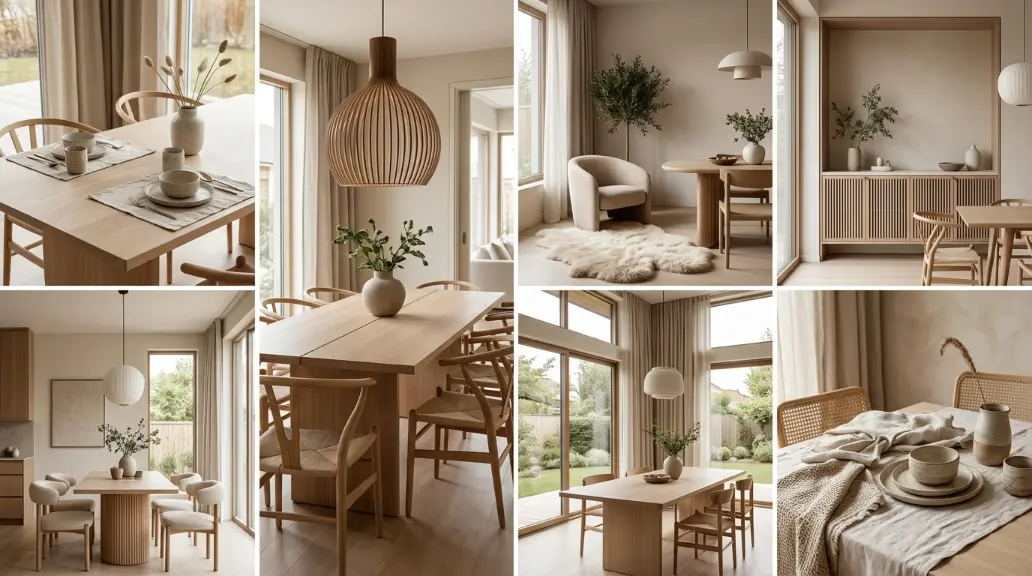
20 Unique Japandi Dining Room Ideas for Modern Homes 2026!
You sit down for dinner, but instead of feeling relaxed, the room feels loud. Too many colors, too many objects, too much going on. You end up eating faster just to leave the space. Sound familiar?
That is exactly why so many people are turning to the Japandi dining room style. It is calm without being cold, minimal without feeling empty, and warm in a way that actually makes you want to stay at the table a little longer.
Japandi is a blend of Japanese and Scandinavian interior philosophy. Japanese design brings quiet elegance, mindful simplicity, and a deep respect for natural materials. Scandinavian design adds that signature coziness, functionality, and soft warmth. Together, they create dining spaces that feel peaceful, grounded, and genuinely beautiful.
This article walks through 20 unique Japandi dining room ideas that suit modern homes in 2026, whether you are starting from scratch or just refreshing what you already have. Each idea is practical, real, and beginner-friendly.
What Makes a Japandi Dining Room Different?
Before jumping into the ideas, it helps to understand what separates a Japandi dining area from a regular minimalist room.
A purely minimalist dining room can sometimes feel clinical. Japandi avoids that by layering natural textures, earthy tones, and organic shapes. The goal is not to strip everything away. The goal is to keep only what feels purposeful and beautiful.
Key qualities of a Japandi dining room:
- Warm neutral color palette: beige, greige, taupe, soft white, muted brown
- Natural wood furniture with clean lines and simple silhouettes
- Earthy dining room tones without being heavy or dark
- Clutter-free surfaces with a few intentional decor pieces
- Soft, warm lighting that creates a cozy atmosphere
- Functional furniture that does not sacrifice comfort for style
20 Unique Japandi Dining Room Ideas
1. Start With a Natural Wood Dining Table
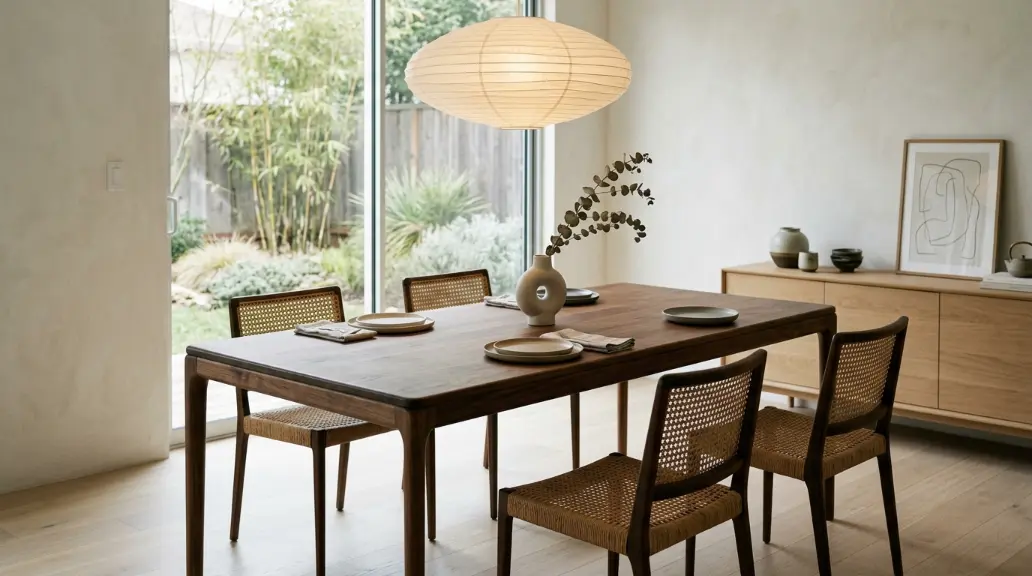
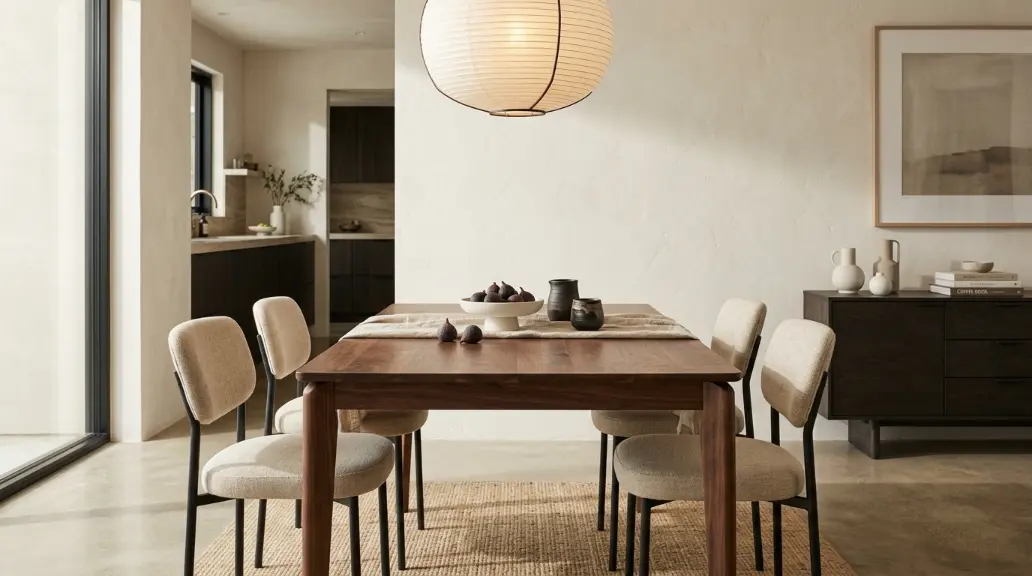
The table is the heart of any dining room, and in a Japandi space, it sets the entire tone. Choose a modern wooden dining table in oak, ash, or birch if you prefer a lighter, airier feel. If you want something richer and more grounded, walnut and smoked oak are trending heavily in 2026 Japandi interiors.
The key is keeping the table shape simple: rectangular or oval works beautifully. Avoid ornate legs or carvings. A slim profile with a smooth, natural grain finish is what gives it that sleek wooden dining table quality without going overboard.
Tip: A live-edge table adds organic character and fits the wabi-sabi spirit of Japandi perfectly.
2. Build a Soft Beige Dining Room Color Palette
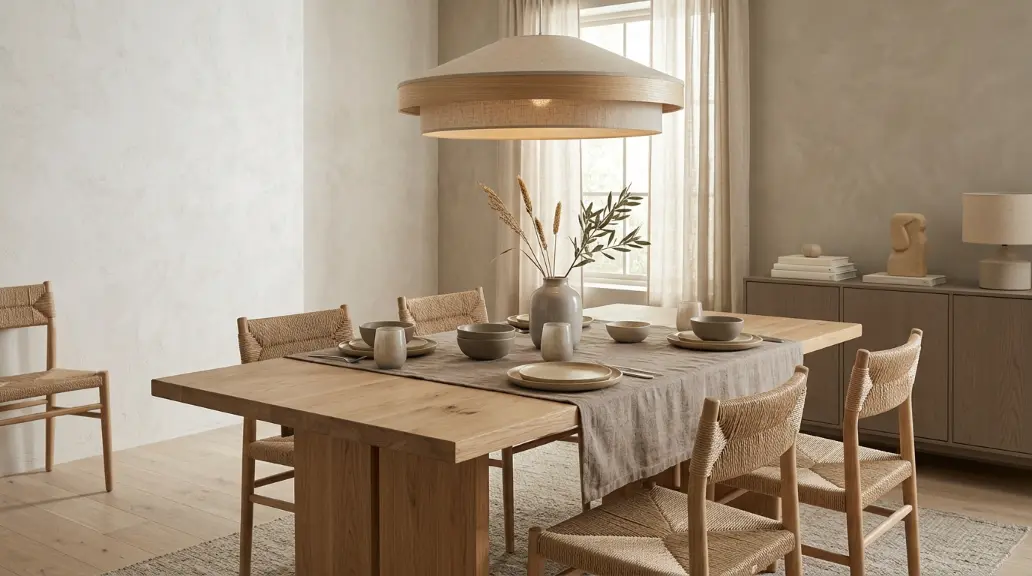
Color is one of the easiest starting points in a Japandi dining area, and it is also where people most often go wrong. Avoid anything too bright, too white, or too stark.
A soft beige dining room palette works as a foundation because it is warm without being yellow, calm without being boring. Layer it with tones like warm greige, oat, sand, and muted taupe. These earthy dining room tones give the space visual depth while keeping everything in harmony.
If you want contrast, add black in very small amounts. A single black vase, a dark-framed mirror, or dark chair legs can anchor the room without breaking the calm.
3. Try Wishbone Chairs for a Classic Japandi Look
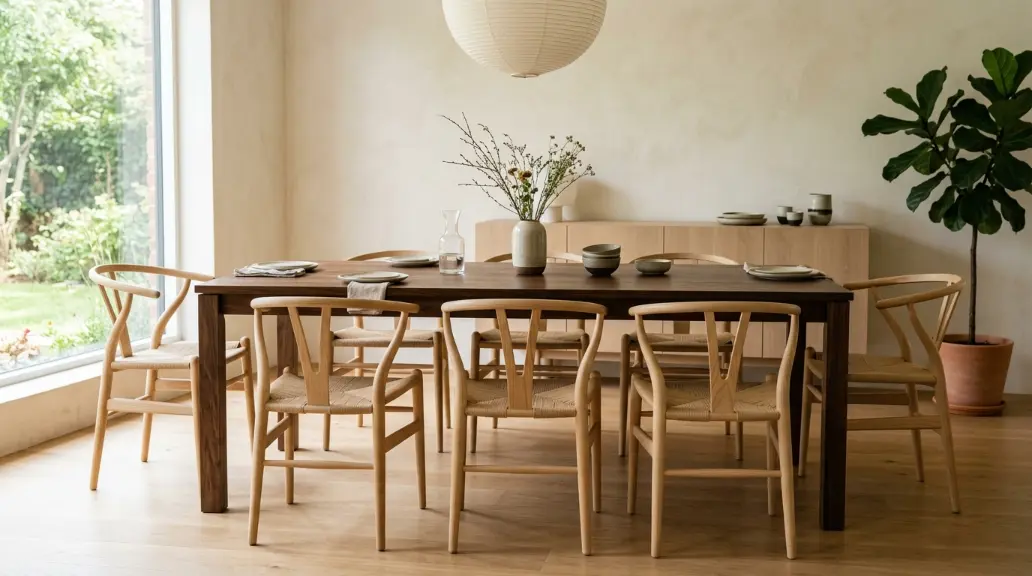
Wishbone chairs are practically a symbol of the Japandi style dining area. Their simple Y-shaped back, curved seat, and slim wooden legs hit every mark: natural material, clean aesthetic, functional, and genuinely comfortable.
You can find them in solid wood or with woven paper cord seats, which adds wonderful texture. Pair them with a light wood table for a cohesive look, or mix a darker walnut table with lighter ash wishbone chairs for a subtle contrast.
Japandi Dining Room Quick-Reference Comparison Table
| Element | Japandi Choice | What to Avoid | Why It Matters | Budget Option |
|---|---|---|---|---|
| Dining Table | Oak, walnut, ash with clean lines | Ornate carvings, glossy lacquer | Sets the tone for the whole room | Thrift store solid wood + light sanding |
| Chairs | Wishbone chairs, linen upholstered seats | Heavily padded, plastic, bold colors | Defines the Japanese-Scandinavian character | IKEA Ekedalen or similar flat-pack wood |
| Color Palette | Beige, greige, warm white, taupe | Bright white, bold accent colors | Creates the calm, grounded atmosphere | Paint one wall in warm neutral tone |
| Lighting | Rattan or wicker pendant, warm bulb | Cold LED, fluorescent overhead | Changes the mood entirely in the evening | Simple paper lantern pendant |
| Rug | Jute, sisal, low-pile wool in neutral tones | Bold pattern, synthetic, too small | Grounds the space and adds warmth | Natural fiber rug from home goods store |
| Table Decor | One ceramic vase, dried stems, candles | Multiple small objects, bright flowers | Keeps the surface clean and intentional | Thrift ceramics in neutral glaze |
| Storage | Low sideboard, hidden drawers | Open shelving overloaded with items | Maintains the clutter-free quality | Repurpose a vintage dresser |
4. Use Pendant Lighting as the Room’s Focal Point
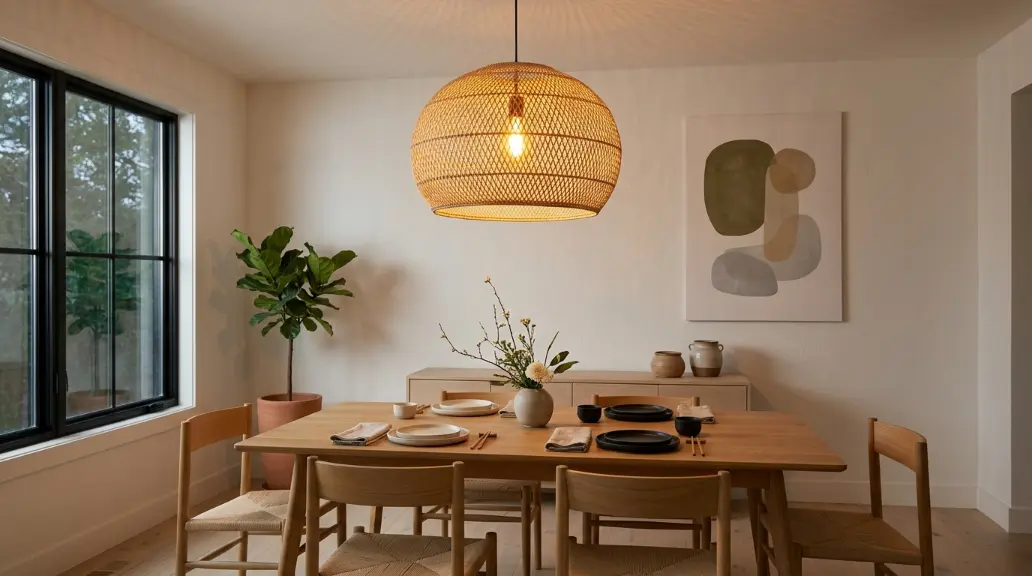
Lighting does more for a Japandi dining room than most people realize. A single pendant lamp over the dining table anchors the space and adds a sense of ritual to mealtimes.
Wicker or rattan pendants are a popular choice because they bring natural texture and cast a warm, diffused glow. Paper lantern styles also work well and stay true to the Japanese side of Japandi. Keep the bulb warm-toned (2700K to 3000K range) so the light feels cozy rather than harsh.
Soft lighting in the dining room is not just about aesthetics. It genuinely changes how the space feels in the evening, making meals feel more intentional and relaxed.
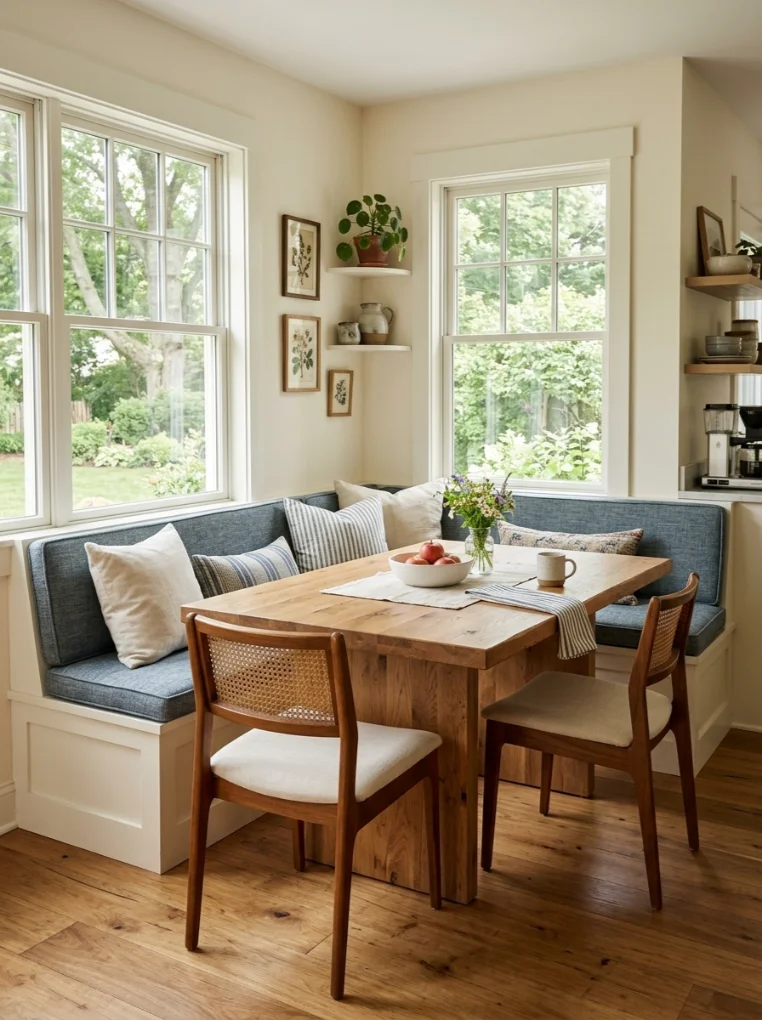
5. Add Bench Seating for Casual Warmth
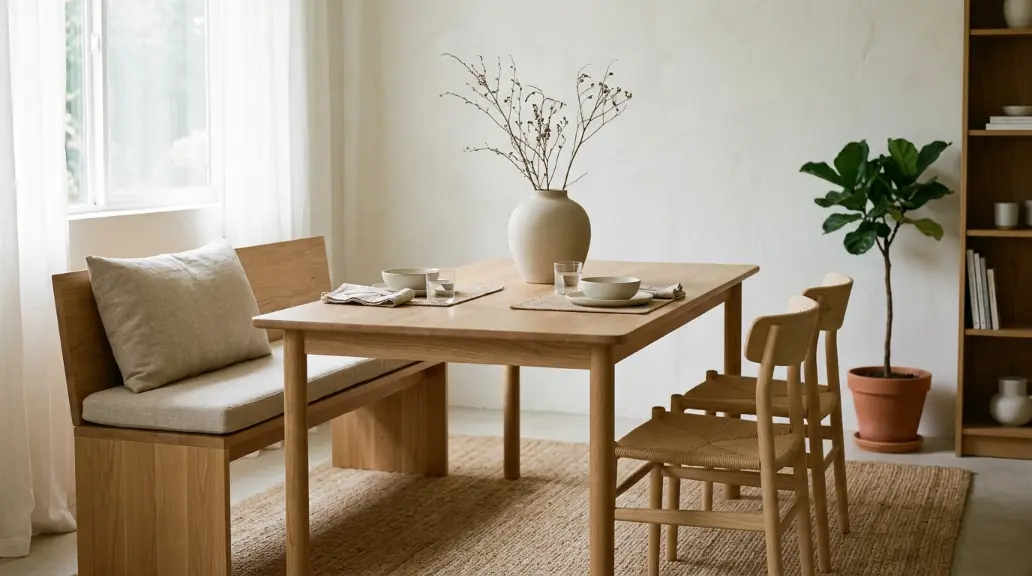
Mixing a bench on one side of the dining table with chairs on the other is a move that works well in Japandi interiors. Benches have a low, grounded quality that fits the Japanese aesthetic, and they are practical for families or small apartments.
A wooden bench with a simple linen seat cushion keeps things in line with the neutral dining room palette. Go for muted beige, oat, or warm gray upholstery rather than anything patterned.
6. Layer Natural Textures Throughout
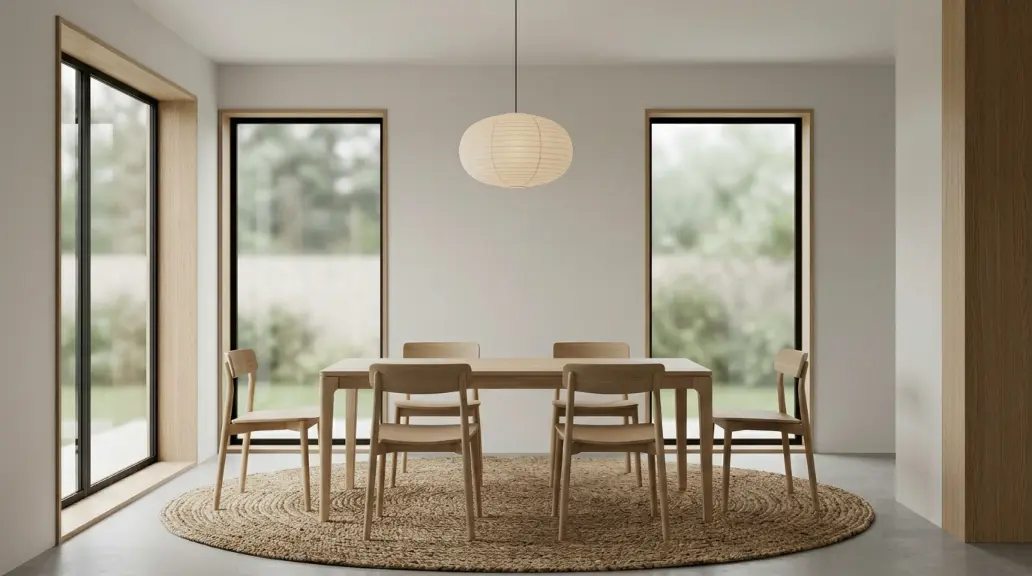
A Japandi dining space can feel flat if you rely only on color. Texture is what adds life to a neutral room.
Think about layering:
- A jute or sisal rug under the dining table
- Linen or cotton seat cushions on chairs
- A textured ceramic vase on the table or sideboard
- Woven placemats or wooden chargers at each place setting
- A boucle or wool throw folded on a bench
These elements create visual interest without adding clutter. Natural texture in home decor is one of the defining qualities of the Japandi look.
7. Keep the Table Decor Minimal But Intentional
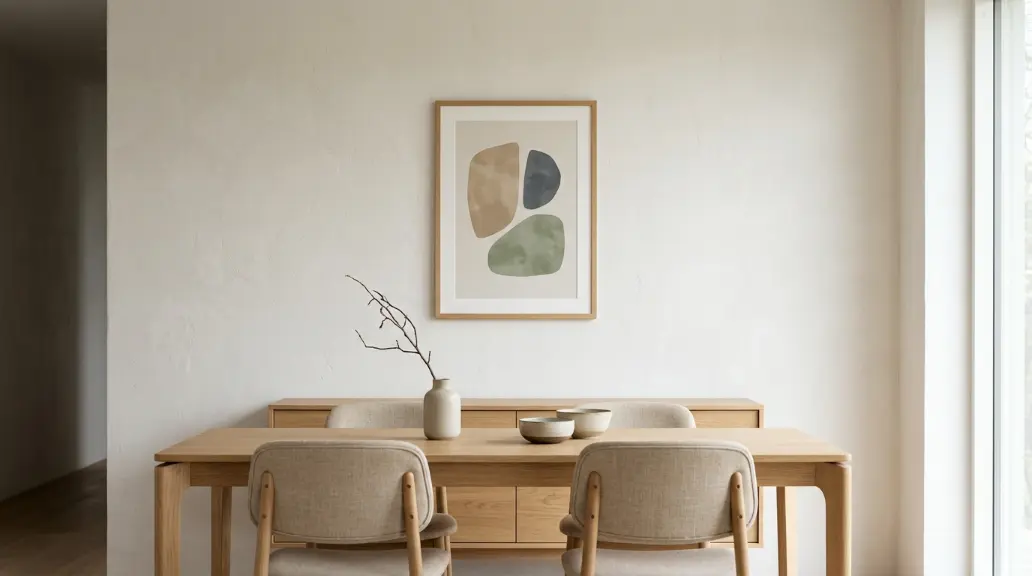
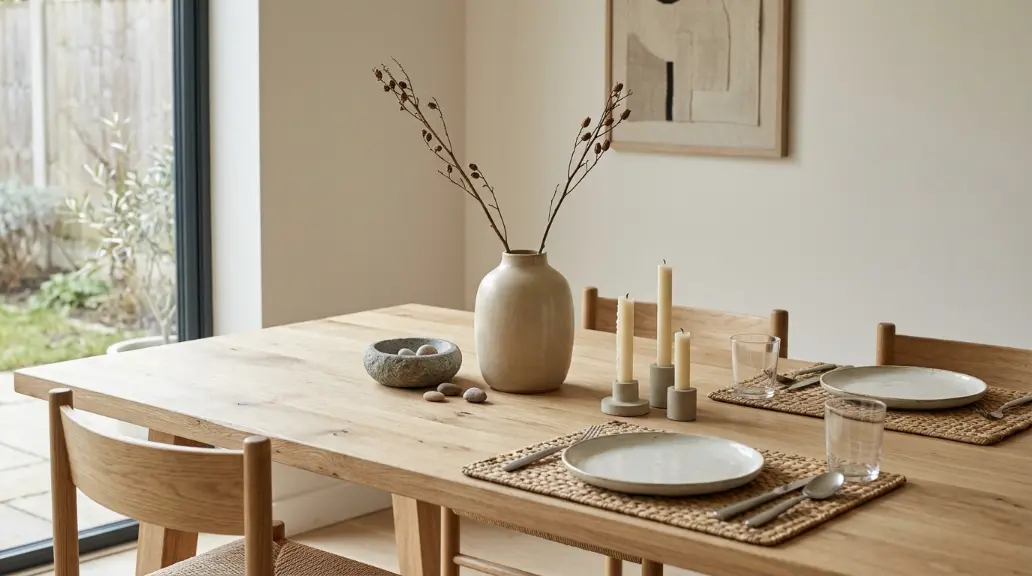
Japandi table decor is about restraint. You do not need a large centerpiece spread. A single ceramic vase with one or two dried stems, a small stone bowl, or a cluster of simple candles is enough.
Choose decor pieces that reflect natural materials: matte ceramic, raw stone, unfinished wood, woven grass. Avoid anything shiny, overly decorative, or color-saturated.
A common mistake is adding too many small objects. In Japandi, one strong piece always beats five mediocre ones.
8. Bring in a Simple Sideboard or Credenza
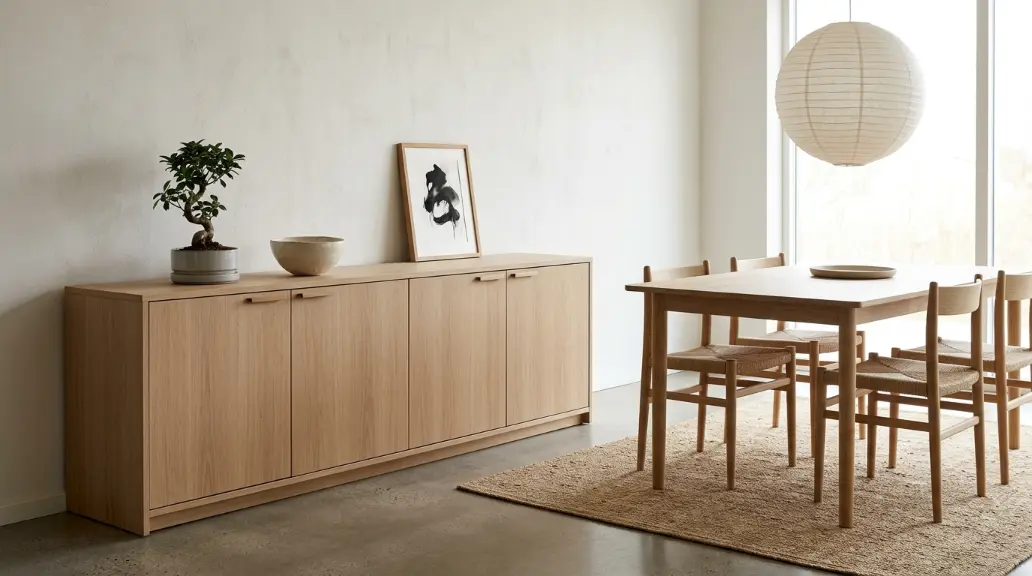
A sideboard along one wall gives you practical storage while keeping the dining room clutter-free. In Japandi style, opt for a low-profile piece with flat-front drawers and minimal hardware. Natural wood with a matte finish is ideal.
Use the top of the sideboard as a simple display surface: a plant, a ceramic bowl, a small framed artwork. Keep it clean and unforced. This approach to functional minimalist decor is central to how the style works.
9. Choose a Muted, Organic Modern Area Rug
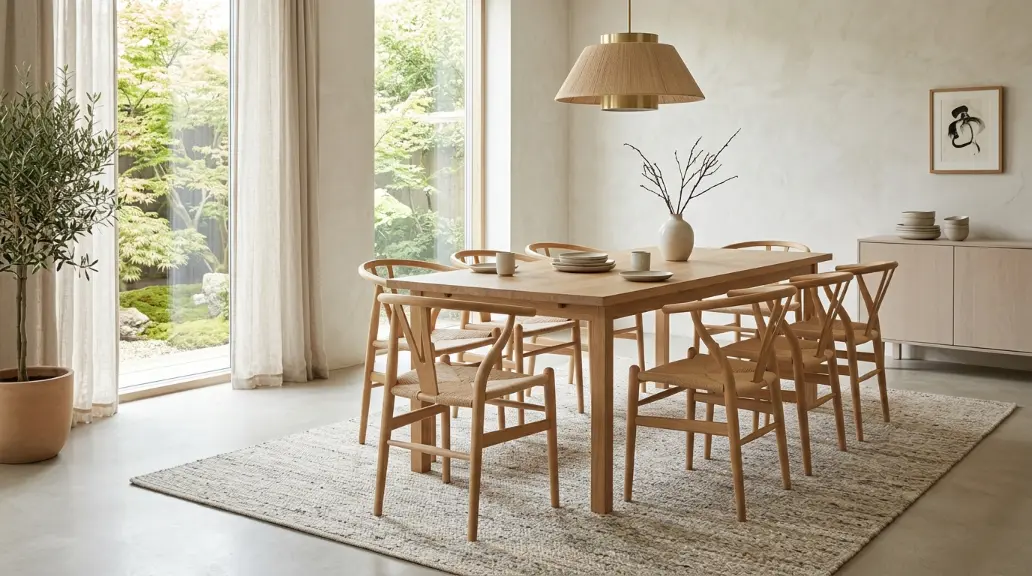
A rug under the dining table grounds the space and adds warmth underfoot. In a Japandi dining room, the rug should be quiet: muted tones, no bold patterns, natural fiber or a low-pile weave.
Jute, sisal, and wool rugs in beige, cream, or soft gray work well. If you prefer some pattern, a simple abstract or geometric design in tones that stay within the neutral dining room palette is fine. Avoid anything with strong color contrast or decorative motifs.
Sizing tip: The rug should be large enough that all chair legs remain on it when chairs are pulled out. A rug that is too small makes the table feel disconnected from the floor.
10. Use Open Shelving to Display With Purpose
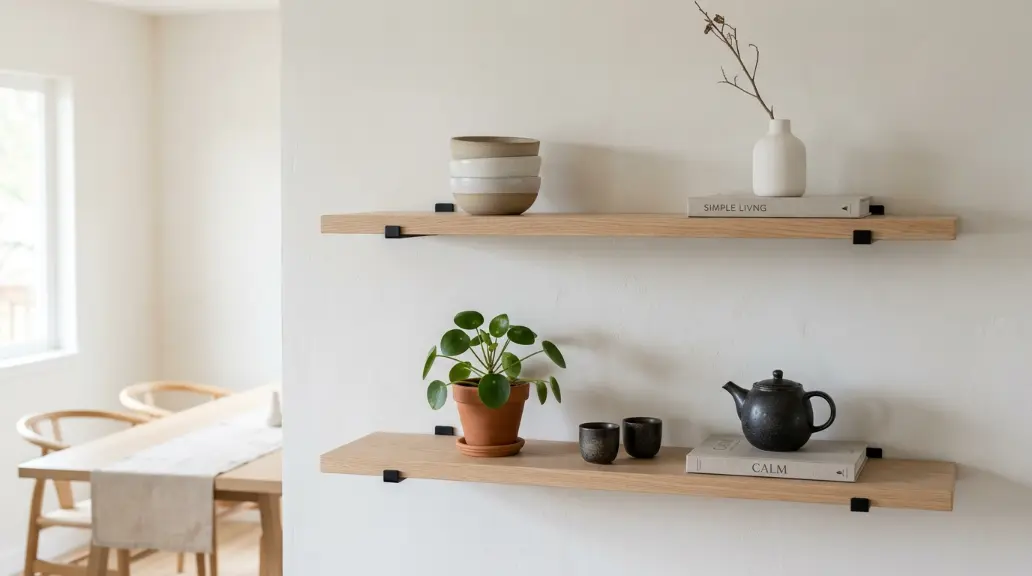
Open shelves on a dining room wall are a beautiful Japandi touch, but only if you style them thoughtfully. This is not about displaying everything you own. Pick a handful of items: a stack of ceramic bowls, a linen-bound book, a simple vase, a small plant.
The shelves themselves should be natural wood, supported by minimal brackets. Keep spacing between items generous so the shelf does not feel crowded. Organized open shelving reflects the clean aesthetic interiors that define this style.
11. Incorporate a Bonsai or Architectural Plant
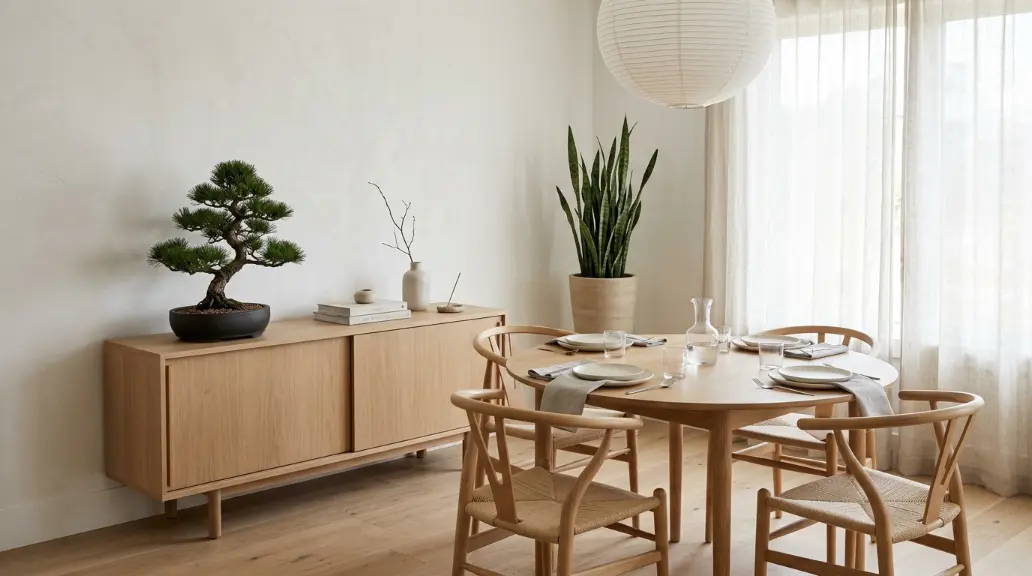
Plants in a Japandi dining area serve a specific purpose. They connect the space to nature without taking over it. A single bonsai plant on a sideboard brings a very strong Japanese reference. A snake plant in the corner adds height and a sculptural quality.
Avoid trailing plants or overly lush arrangements. The goal is a plant that feels intentional, almost architectural. Choose ceramic or clay pots in neutral tones to keep everything cohesive.
12. Frame a Simple Piece of Wall Art
Japandi wall art is understated. A single abstract print in muted tones, a simple botanical illustration, or a piece of calligraphy-style artwork works well. Avoid gallery walls that feel busy, unless every piece shares a very close color palette.
Choose frames in natural wood, black, or warm metal tones. Position the artwork at eye level and leave breathing room around it. A single well-placed piece does more for a Japandi dining room than a full wall of frames.
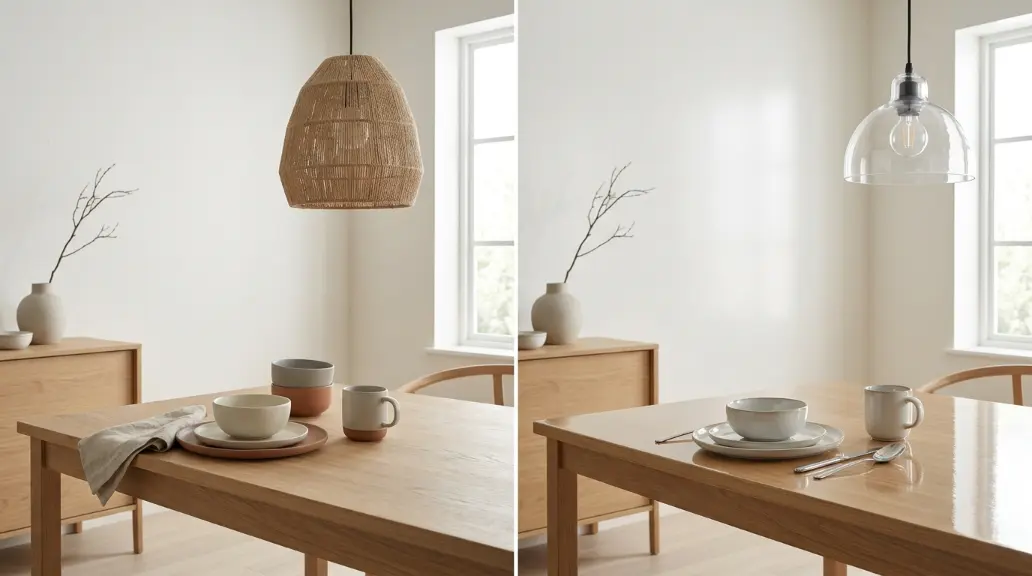
13. Choose Matte Finishes Over Glossy Ones
This is a small detail that makes a big difference. In a modern Japandi home decor setting, matte finishes on furniture, ceramics, and walls feel much more appropriate than gloss or high shine.
Matte surfaces absorb light rather than reflecting it, which contributes to the calm, grounded atmosphere. Look for matte-finish dining tables, matte ceramic tableware, flat-painted walls, and lamps with fabric or woven shades rather than glass.
14. Work With Natural Light Wherever Possible
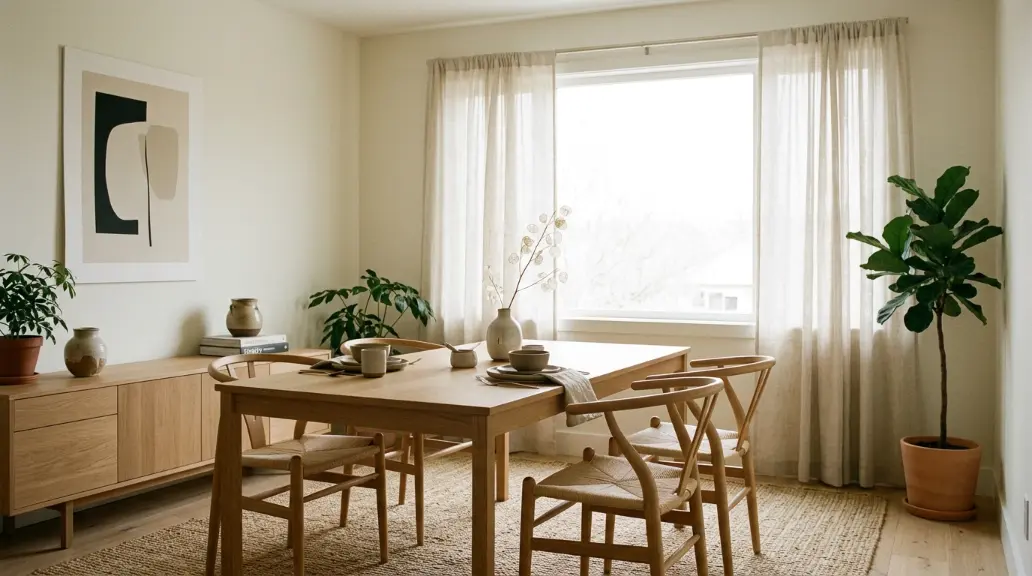
A calming dining room design is always helped by good natural light. Japandi interiors work best with light sheer curtains or simple wooden blinds that let daylight filter in softly without flooding the room.
Avoid heavy drapes in dark colors. If privacy is a concern, opt for linen curtains in natural or off-white tones. They soften the light beautifully and stay within the neutral dining room inspiration palette.
15. Add a Sliding Door or Shoji Screen Divider
If your dining area is part of an open-plan space, a simple room divider can help define the zone without building a wall. A shoji-style screen in white paper and natural wood is a very direct nod to Japanese design and works beautifully in a modern zen dining room.
This also gives the space a more intimate, defined quality that makes meals feel more like a ritual and less like eating in the middle of a large open floor plan.
16. Try Dark Walnut for a Grounded 2026 Approach
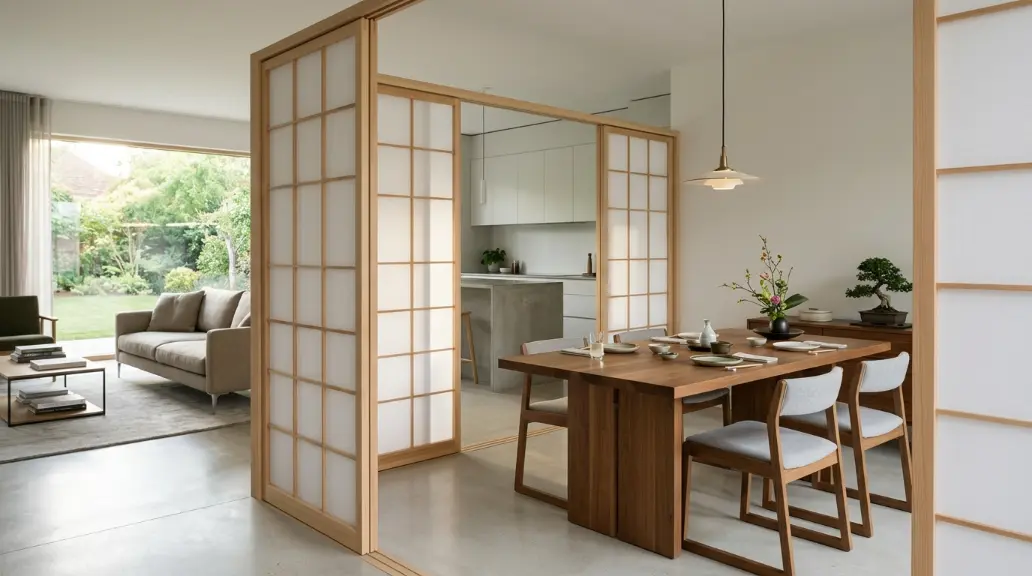
In 2026, Japandi interiors are shifting slightly. While light ash and birch still have their place, darker wood tones like walnut and smoked oak are becoming a defining material choice. A walnut dining table paired with limestone or pale plaster walls creates a richness that feels luxurious without being decorative.
This darker direction suits people who want the contemporary Japandi style without it looking too spare or light. Pair dark wood with warm whites, soft beige, and natural linen to keep the balance.
you may also like this: 19 Modern Farmhouse Dining Room Ideas You’ll Love
17. Layer Lighting From Multiple Sources
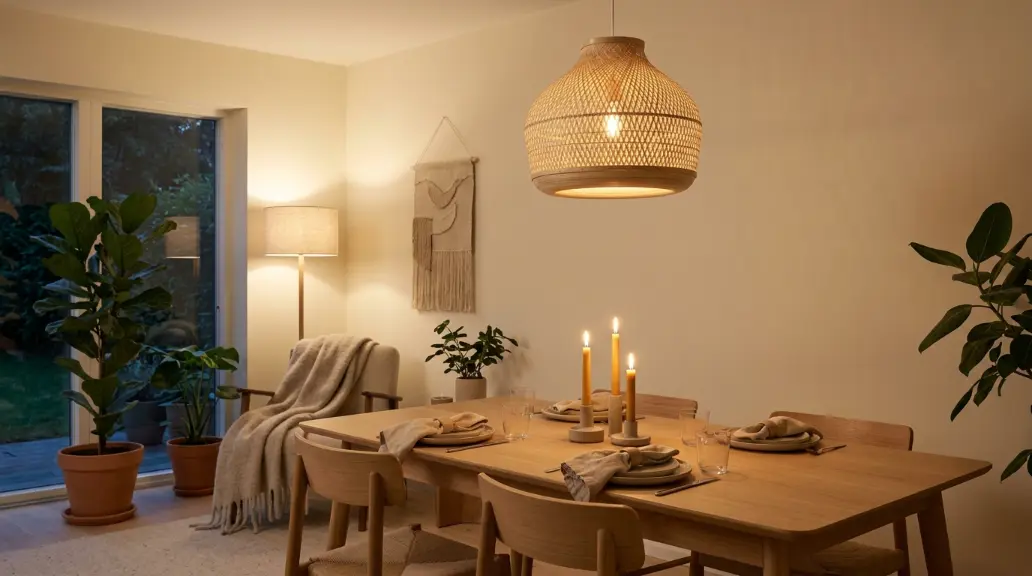
Rather than relying on a single overhead light, think about layers. A pendant over the table, a floor lamp in the corner, and candles on the table at dinner time create a soft, multi-dimensional glow that transforms the dining room in the evening.
This approach to soft lighting in the dining room is very much in keeping with the hygge influence in Japandi. The Danish concept of hygge is all about comfort, warmth, and the feeling of wellbeing that comes from a beautifully lit space.
18. Keep Storage Hidden and Simple
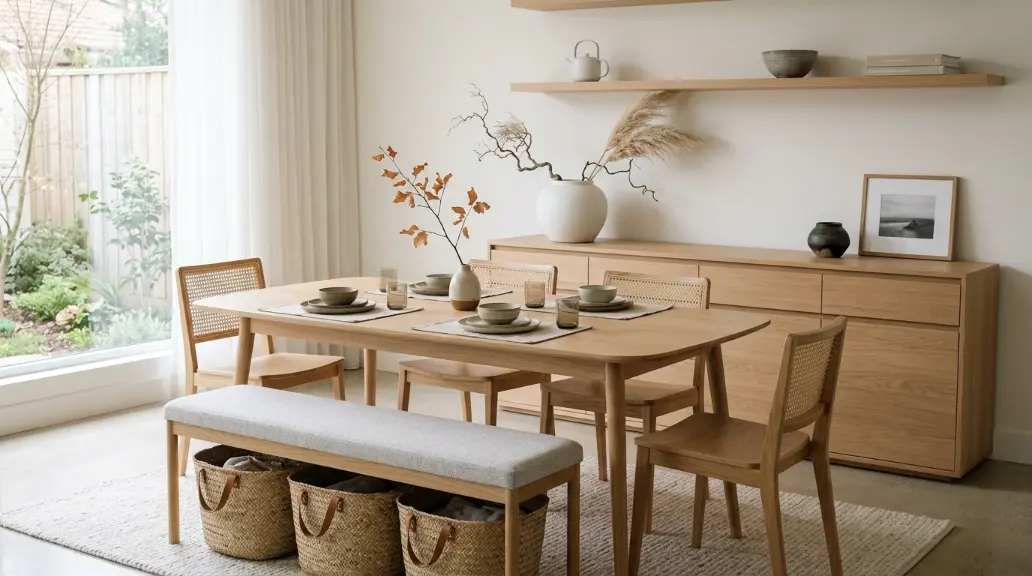
One of the core principles of a clutter-free dining room is keeping non-essential items out of sight. Use a sideboard with closed drawers for extra tableware. Use baskets under a bench for napkins or candles.
Visible storage should be limited and styled carefully. Japandi does not mean you cannot own things. It means what you display is chosen with care.
19. Style the Table for Everyday Beauty
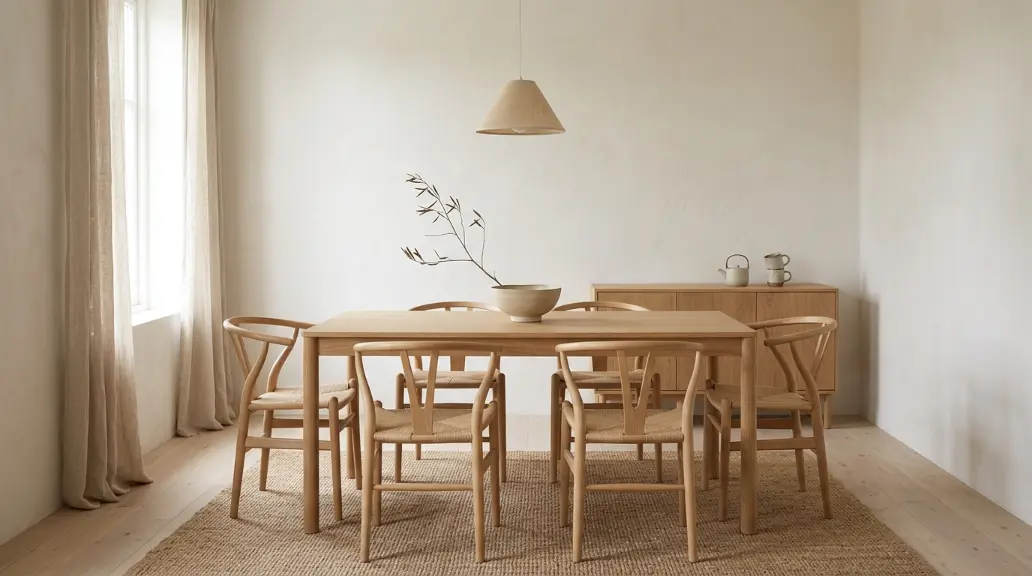
You do not need a special occasion to style your dining table well. In a warm minimal dining setup, daily life becomes part of the aesthetic.
A simple wooden serving board, a few ceramic cups, a small jug of water with lemon slices, and a single candle is all it takes to make an ordinary weeknight dinner feel considered. This is the spirit of wabi-sabi: finding beauty in the simple, the imperfect, and the everyday.
20. Edit More Than You Add
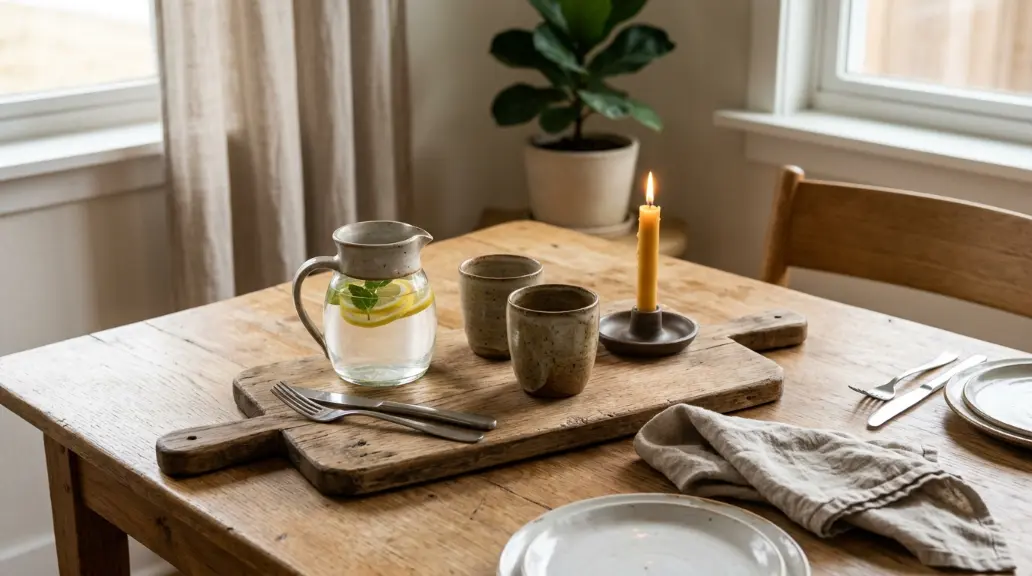
This might be the most important idea of all. Japandi dining spaces look the way they do because of what is not there, just as much as what is.
If your dining room already has good bones (a simple table, natural materials, neutral walls), the most powerful thing you can do is remove. Take two or three things away and see how the room breathes. Japandi home inspiration is really about learning to stop before you feel finished, and trusting that the space will hold its own.
Common Mistakes to Avoid in a Japandi Dining Room
Using too many accent colors. Japandi is not the place for a bold teal cushion or a coral vase. Every piece should feel like it belongs to the same quiet story.
Mixing too many wood tones. Two or three wood tones in the same room is the maximum. More than that and the space starts to feel disjointed rather than cohesive.
Buying furniture that is too large. Japandi is about proportion. Oversized furniture crowds the room and takes away the sense of calm you are trying to create. Measure carefully and leave generous space around the table.
Skipping texture entirely. A room with only flat, smooth surfaces can end up feeling sterile. Natural texture in home decor is what keeps a Japandi room from tipping into cold minimalism.
Over-decorating the table. The dining table in a Japandi room should be close to clear most of the time. A single centerpiece object is more powerful than a collection of small items.
Budget-Friendly Japandi Dining Room Tips
You do not need to spend a lot to achieve this look. Many Japandi elements are actually cheaper than conventional alternatives because simplicity is part of the point.
Start by painting your walls in a warm neutral. This is often the biggest visual change for the least money. Then focus on the table. A second-hand solid wood table that you lightly sand and oil will look more Japandi than a brand new laminate one.
Replace decorative items gradually. Donate anything that does not fit the neutral palette and replace it with one or two quality pieces from a ceramics market or ethical homeware brand. Look for simple linen curtains, natural fiber rugs, and candles in unscented neutral tones.
Lighting is worth investing in slightly more if your budget allows. A single good pendant lamp will change the room more dramatically than many other upgrades.
Conclusion
A Japandi dining room is not about following a trend. It is about creating a space where you genuinely want to spend time, where meals feel unhurried, and where the room itself brings a sense of order and ease to your day.
The ideas in this article are all practical, achievable, and scalable. You do not need to renovate or spend a fortune. Start with your color palette, simplify your table decor, and choose one natural material to anchor the space. Build slowly from there.
The beauty of the Japandi style dining area is that it only gets better the more you edit. Less really is more here, and that is a principle worth carrying into 2026 and beyond.
Frequently Asked Questions
Q1: What colors define a Japandi dining room?
A Japandi dining room uses warm neutral tones: soft beige, greige, taupe, warm white, and muted brown. Occasional dark accents like black or charcoal are used very sparingly. Bright or saturated colors are avoided entirely.
Q2: What type of dining table works best for a Japandi style?
A solid wood dining table with a clean, simple silhouette is the best choice. Oak, ash, and birch suit a lighter aesthetic. Walnut and smoked oak work well for a richer, more grounded look. Avoid glass tops, ornate legs, or high-gloss finishes.
Q3: Can I create a Japandi dining room on a budget?
Yes, completely. Start with a neutral wall paint, source a second-hand solid wood table, and add simple natural decor items like a ceramic vase and dried stems. Swap out synthetic rugs for jute or sisal. The look is built on simplicity, not expensive pieces.
Q4: How is Japandi different from regular Scandinavian design?
Scandinavian design can lean cold and stark. Japandi adds warmth and earthiness through the Japanese concept of wabi-sabi, which celebrates natural imperfection and organic materials. The result is a style that feels more grounded and less clinical than pure Scandinavian minimalism.
Q5: How many decorative items should a Japandi dining table have?
Ideally one to three carefully chosen items. A single ceramic vase, a candle, and perhaps a small wooden tray is already enough. Japandi table decor is about intentional placement rather than abundance. When in doubt, remove rather than add.