

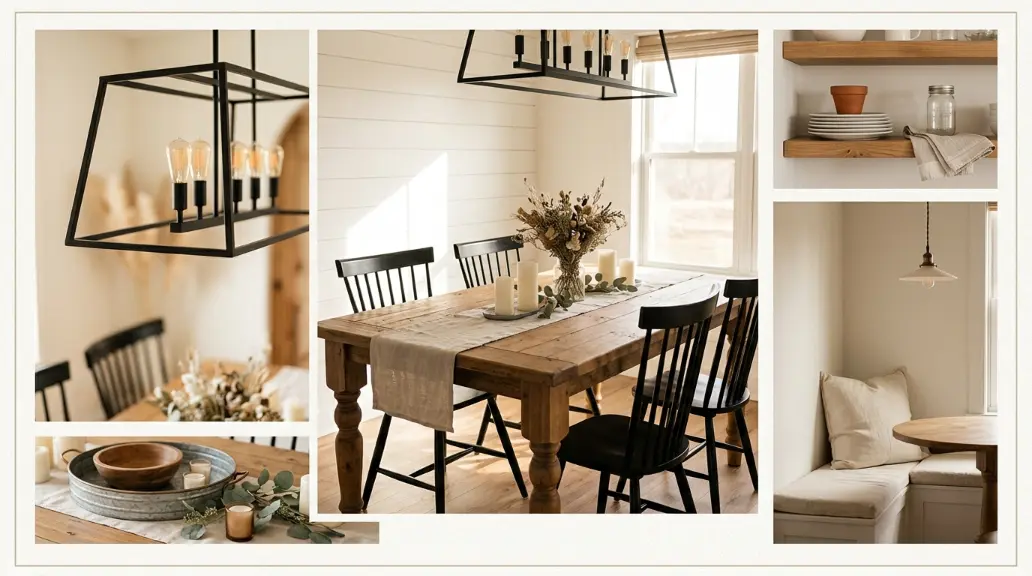
19 Modern Farmhouse Dining Room Ideas You’ll Love
There is something about a farmhouse dining room that just feels right. It feels lived-in, warm, and welcoming without trying too hard. It is the kind of space where family dinners feel a little more special, and casual Sunday breakfasts become something worth remembering.
But here is the challenge most people face: how do you get that warm, cozy farmhouse look without making the room feel like a museum prop or a staged display from a home goods store?
The good news is that modern farmhouse dining room decor has come a long way. Today, the style is about finding the right balance between rustic character and clean, contemporary living. It is softer, more personal, and much more wearable for everyday life.
Whether you are starting fresh, working with what you already have, or planning a full farmhouse dining room makeover, these 19 ideas will give you real, practical inspiration to work with.
1. Start With a Solid Wooden Dining Table
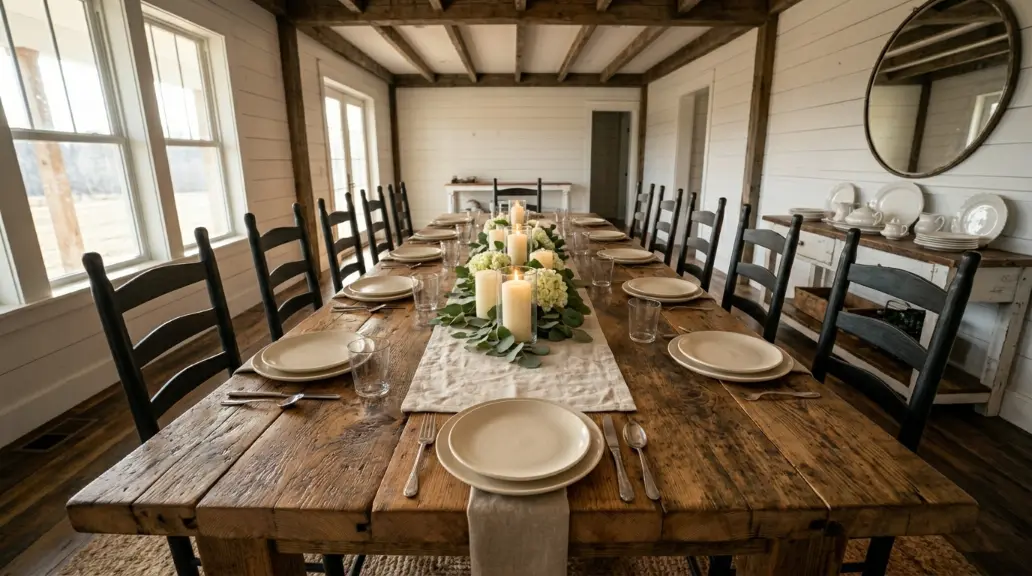
The dining table is the heart of any farmhouse dining room. Everything else builds around it.
A sturdy wooden dining table with thick legs and a natural grain finish immediately sets the farmhouse tone. You do not need it to be perfect or pristine. A little texture, a slight variation in tone, even some wear marks, these things add character rather than taking away from the look.
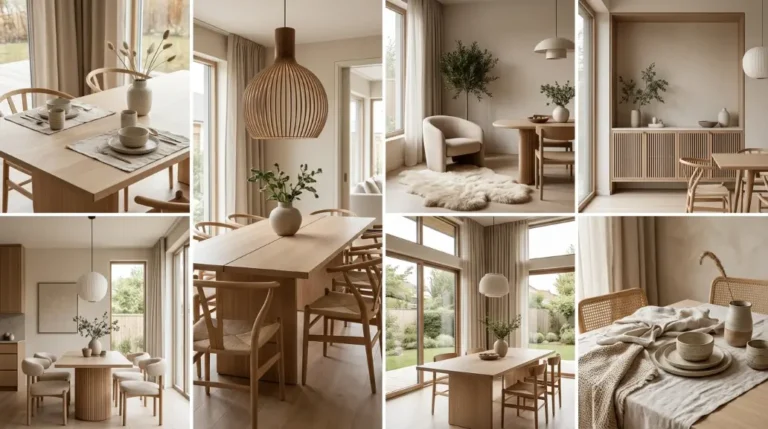
Light oak tables work beautifully for a bright and airy feel. Darker walnut or reclaimed pine pulls the space toward something warmer and more grounded. The size matters too. In a farmhouse style, bigger generally works better. A generous tabletop invites people to gather around it.
Practical tip: If your budget is tight, look for second-hand solid wood tables at estate sales or online marketplaces. A good sanding and a fresh coat of matte stain can completely transform an old table into something that looks intentional and stylish.
2. Mix Seating for a Casual, Collected Look
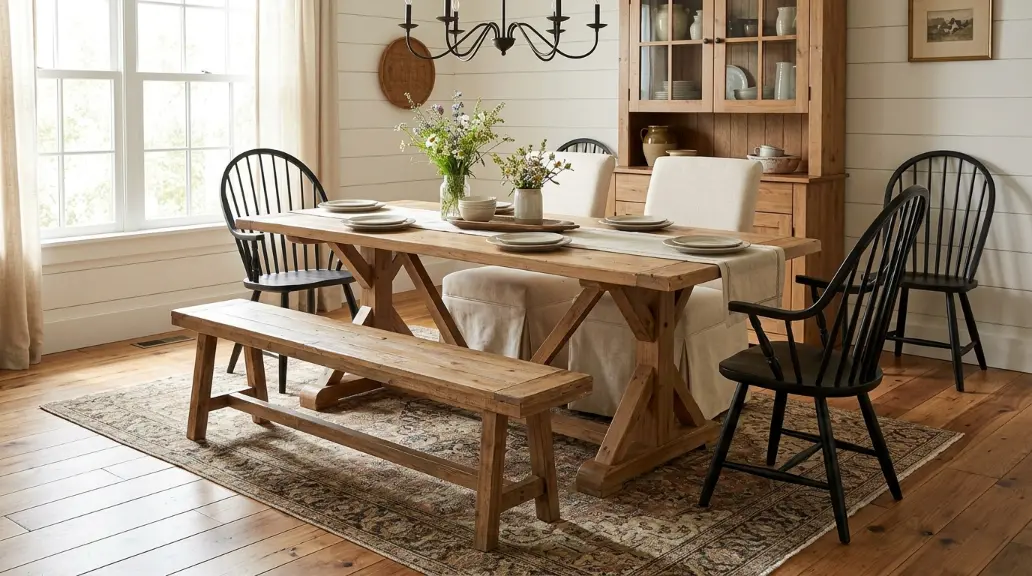
One of the most charming traits of farmhouse dining room ideas is the mix-and-match approach to seating. Instead of a perfectly matched set, try combining a wooden bench on one side of the table with upholstered chairs on the other.
This creates a relaxed, gathered feeling that is more interesting to look at than a uniform set. Black Windsor chairs are a very popular choice for modern farmhouse spaces because they add a slightly formal edge without losing the casual spirit.
Linen or cotton-upholstered chairs in cream, oatmeal, or soft grey also work well. They bring softness and texture to balance the harder wooden elements in the room.
3. Choose a Statement Farmhouse Chandelier
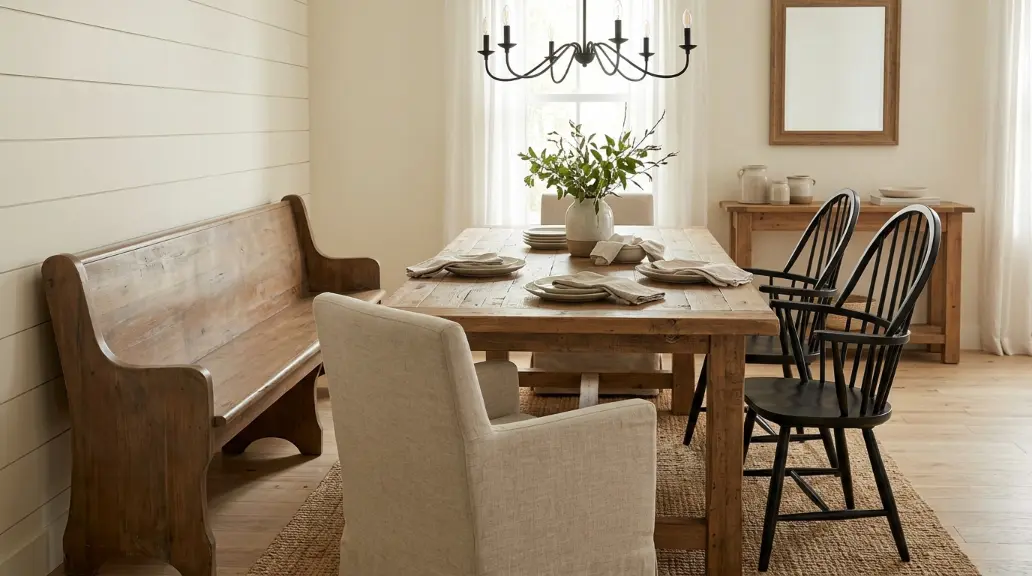
Lighting can make or break a dining room. In a farmhouse setting, the right chandelier does a lot of the visual work.
Farmhouse chandelier ideas tend to fall into a few reliable categories: wagon wheel designs, black metal geometric frames, lantern-style pendants, and wood-and-iron combinations. All of these read as farmhouse while still feeling fresh and current.
The key is scale. Go slightly larger than you think you need. A chandelier that is too small above a big table looks awkward and indecisive. Hang it about 30 to 34 inches above the tabletop for the best proportion.
For a more modern rustic dining room feel, consider a matte black metal chandelier with exposed Edison-style bulbs. It looks bold, clean, and works well against both white shiplap walls and warmer wooden tones.
Quick Reference Table: Farmhouse Dining Room Style Comparison
| Style Variation | Key Materials | Color Palette | Best For | Lighting Choice |
|---|---|---|---|---|
| Classic Farmhouse | Reclaimed wood, linen, wrought iron | Cream, warm white, natural | Traditional homes with character | Wagon wheel chandelier, lanterns |
| Modern Farmhouse | Clean-lined wood, matte black metal, cotton | White, grey, black accents | Contemporary or transitional homes | Geometric black pendant light |
| Rustic Modern | Thick wood slabs, exposed stone, leather | Warm taupes, charcoal, forest tones | Homes with natural materials | Edison bulb pendants, iron fixtures |
| Minimalist Farmhouse | Simple wood, plain linen, sparse decor | White, off-white, soft greige | Small dining rooms, open plan spaces | Single oversized pendant |
| Elegant Farmhouse | Turned wood legs, woven seating, marble | Soft cream, dusty sage, aged white | More formal or larger dining rooms | Antique-style chandelier, sconces |
| Vintage Farmhouse | Antique furniture, aged patina, mixed metals | Warm ivory, dusty rose, sage | Older homes with period character | Vintage-inspired wall sconces |
| Country Modern | Painted wood, casual plaid, layered textiles | Navy, sage, cream, warm wood | Relaxed family dining spaces | Farmhouse drum shade, pendants |
4. Add Shiplap to One Wall
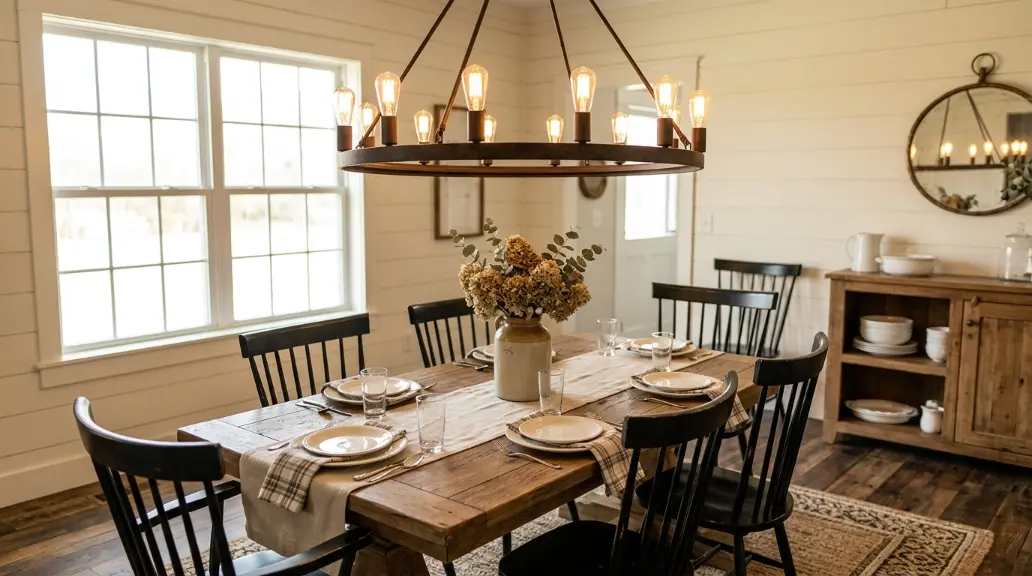
Shiplap dining room walls are practically synonymous with farmhouse style at this point, and for good reason. A single shiplap accent wall adds instant texture, structure, and depth to a room without overwhelming it.
White or off-white shiplap is the most common choice. It reflects light well and gives the room a clean, crisp backdrop. If you want something with a bit more character, try leaving it unpainted and staining it in a natural wood tone for a warm farmhouse interior that leans more rustic.
If you are renting or working on a budget, there are peel-and-stick shiplap panels available that look surprisingly convincing. Full installation is always better for the long term, but it is not the only option.
5. Keep the Color Palette Neutral
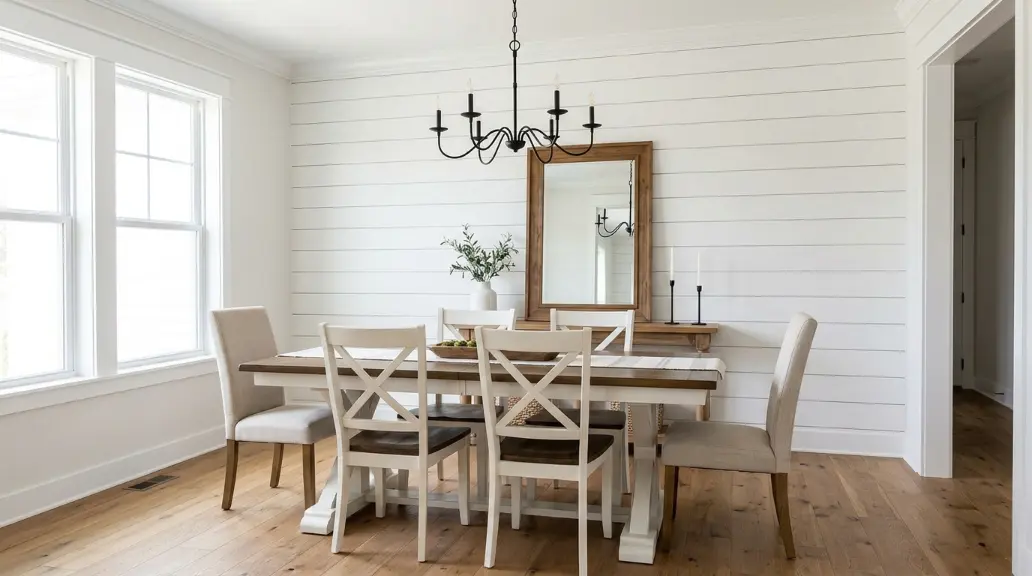
A neutral farmhouse dining room is one of the most enduring and satisfying looks in home decor. Whites, creams, greiges, warm taupes, and soft charcoals form the backbone of most successful farmhouse spaces.
These tones work because they stay calm and do not compete with the natural materials in the room. Wood, linen, woven grass, and aged metal all look their best when the walls and larger surfaces stay quiet.
You can add depth through layering. A warm off-white wall behind a slightly darker cream linen curtain next to a honey-toned wooden floor creates richness without ever stepping outside the neutral palette.
Black is a popular accent in black and white farmhouse decor. Window frames, chair legs, light fixtures, and cabinet hardware in matte black add a grounding contrast that keeps everything from looking too soft or washed out.
6. Style a Simple But Beautiful Centerpiece
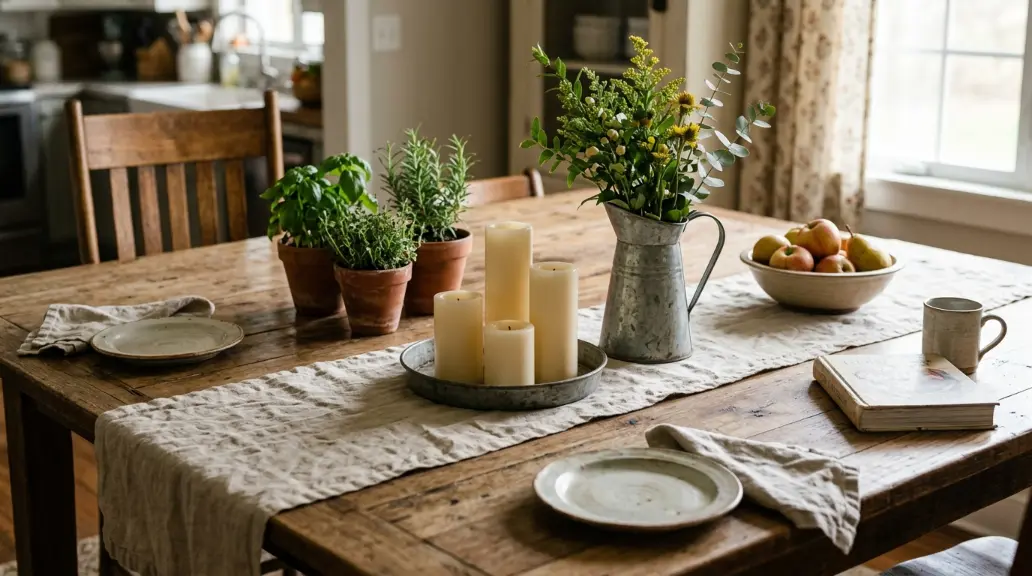
A farmhouse centerpiece does not need to be elaborate. In fact, simpler is almost always better.
Some of the most appealing farmhouse table decor ideas include a long wooden tray filled with pillar candles of varying heights, a galvanized metal pitcher holding seasonal stems, a cluster of small terracotta pots with herbs, or a linen table runner with a simple bowl of fruit at the center.
The goal is to make the table feel lived-in and welcoming, not staged for a photo shoot. Seasonal changes keep it fresh. In autumn, dried wheat stalks, small gourds, and warm amber candles look stunning. In spring, a simple bundle of white tulips in a tall glass vase is all you need.
7. Use Open Shelving for Storage and Display
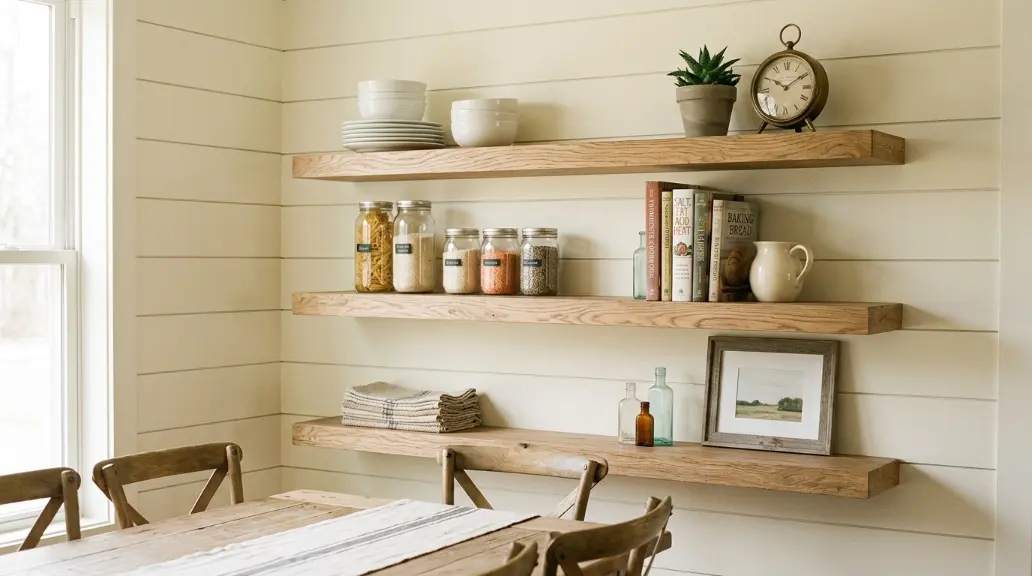
Open shelving in a farmhouse dining room pulls double duty. It gives you practical storage and display space while also adding a layered, collected feel to the room.
Floating wooden shelves in a natural or whitewashed finish are the most common choice. Style them with a mix of functional and decorative items: stacked white plates, glass mason jars, a small potted plant, a vintage-style clock, and a few cookbooks.
The trick to making open shelves look intentional rather than cluttered is to leave some breathing room. You do not have to fill every inch. Negative space is part of the design.
8. Bring In Texture Through Rugs and Linen
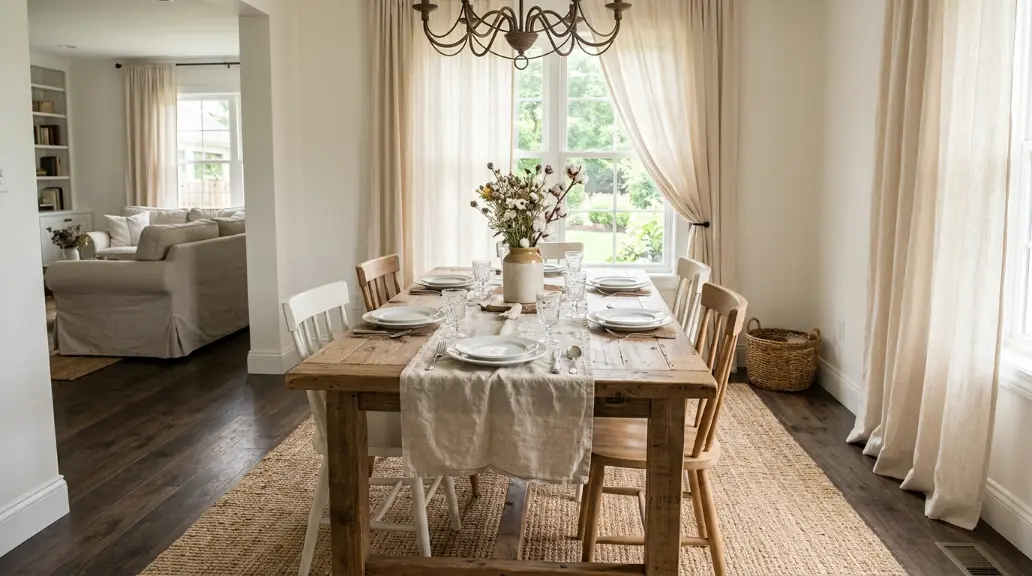
Texture is what makes a farmhouse dining room feel genuinely cozy rather than just decorated. A jute or sisal rug under the dining table adds a natural, earthy base. It also softens the sound in the room and defines the dining zone within a larger open concept dining room layout.
Linen curtains in a soft cream or warm white frame the windows without blocking light. They move gently in a breeze and bring that relaxed, slightly undone quality that is central to the cozy farmhouse dining room aesthetic.
Layer a linen or cotton table runner over a bare wooden table for an easy way to add softness and warmth to the surface.
9. Try a Bench With Storage
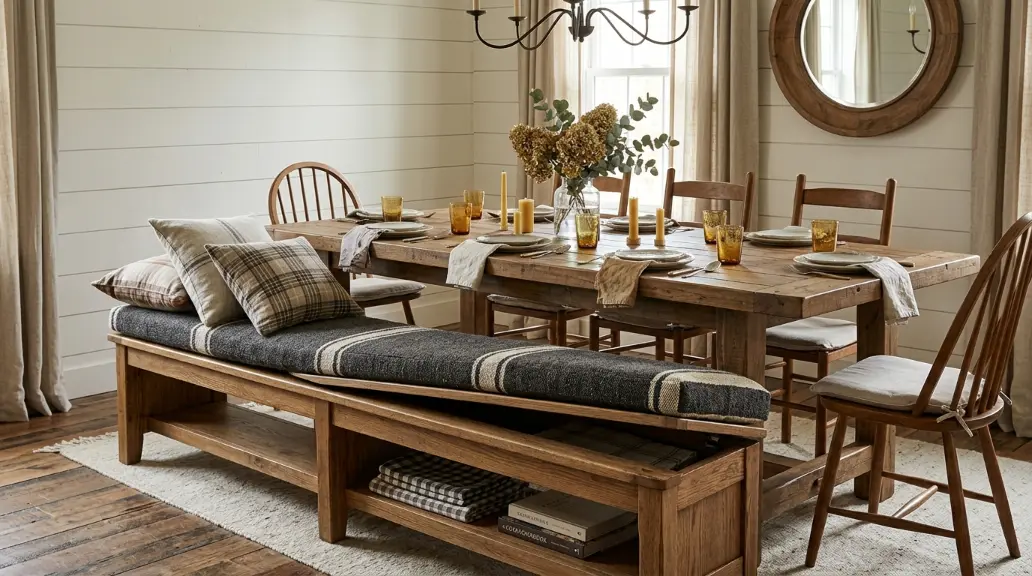
A dining bench is a practical and stylish addition to any farmhouse dining space. It accommodates more people at the table without requiring extra chairs, and it fits naturally into the casual, communal spirit of farmhouse style.
Some benches come with hidden storage inside the seat, which is genuinely useful in smaller spaces. A simple wooden bench with clean lines works well for a minimalist farmhouse decor approach, while a bench with a cushioned seat adds comfort for longer meals and gatherings.
10. Layer Your Lighting
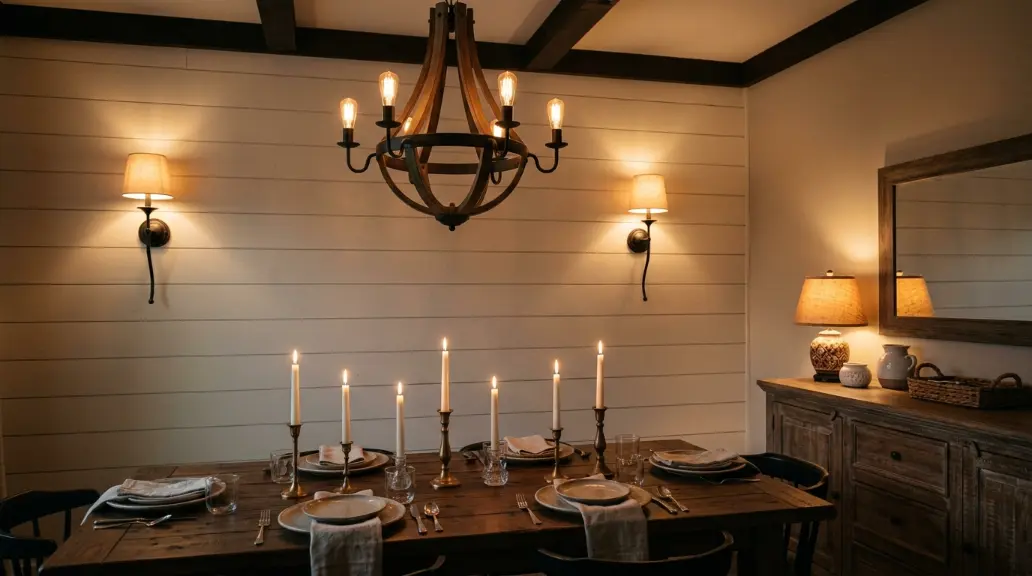
Overhead lighting is important, but layering it with additional sources makes a farmhouse dining room feel much more atmospheric and complete.
Wall sconces on either side of a shiplap accent wall, a small table lamp on a sideboard, and candles on the dining table all contribute to a warm and inviting dining room that feels alive in the evening hours.
Dimmers are one of the best investments you can make. Being able to lower the overhead light during dinner and let the candles do more of the work transforms the mood of the room entirely.
11. Go Vertical With Dining Room Wall Decor
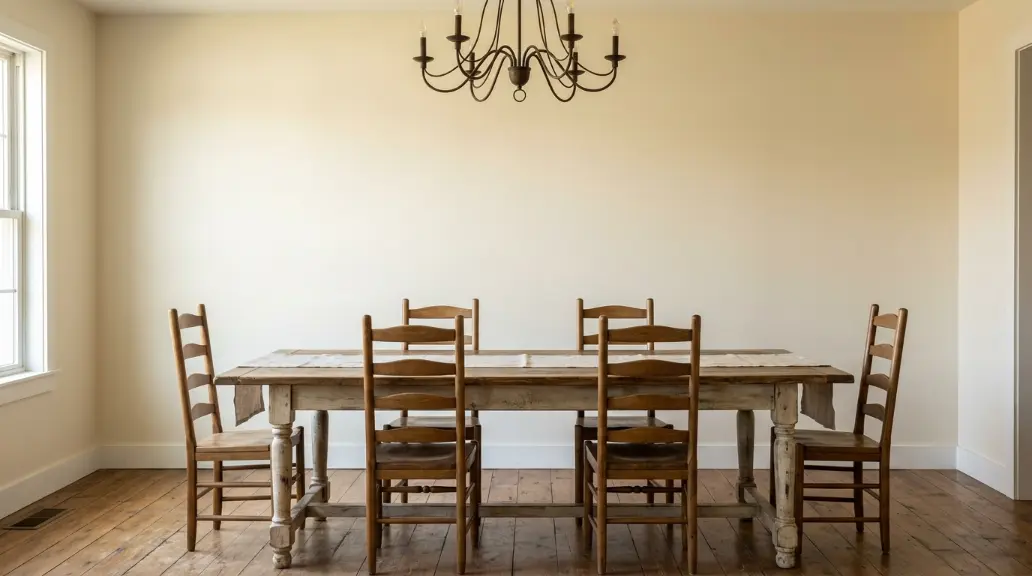
Blank walls in a farmhouse dining room are a missed opportunity. Modern farmhouse wall art ideas range from large-format botanical prints in simple black frames to vintage-style signs, framed mirrors, and gallery walls mixing different textures.
A large framed mirror leaning against a wall or hung above a sideboard makes the room feel bigger and brighter while also adding a slightly elegant note to an otherwise casual space.
For a personal touch, a simple gallery wall using family photos in matching white or natural wood frames looks warm and meaningful without feeling too formal.
12. Paint the Ceiling or Add Beams
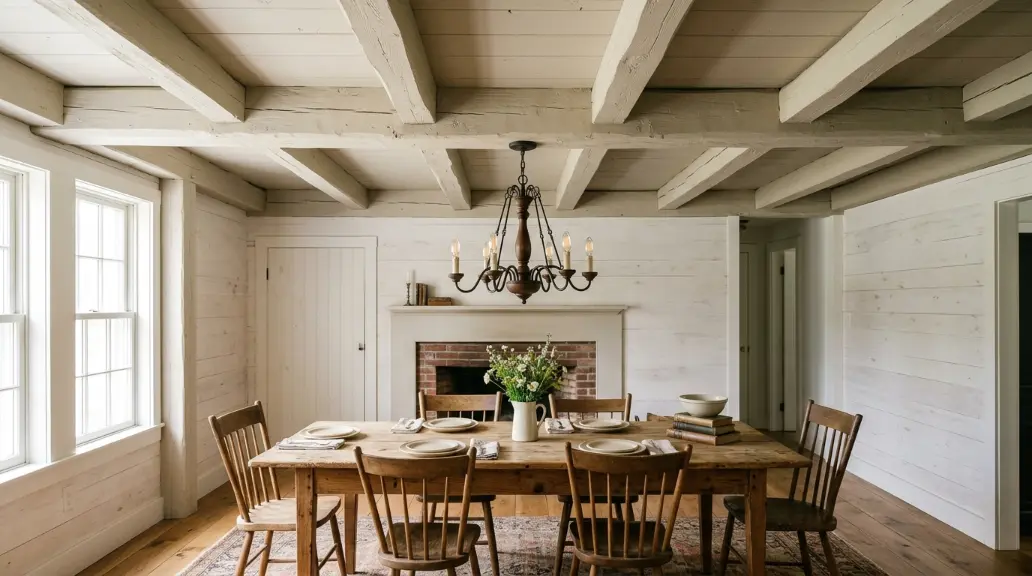
The ceiling is an underused surface in most dining rooms. In a farmhouse interior, painted ceilings or exposed wood beams draw the eye upward and add architectural character that is hard to achieve any other way.
Painted ceilings in a soft warm white or very light greige make the room feel taller and airier. Exposed wooden beams are a signature element of vintage farmhouse style. If your home does not have structural beams, faux wood beams are widely available and, when installed well, look very convincing.
Dark-stained beams against a white ceiling is a classic combination that anchors the room and gives it a grounded, cabin-like quality.
13. Add a Sideboard or Buffet Table
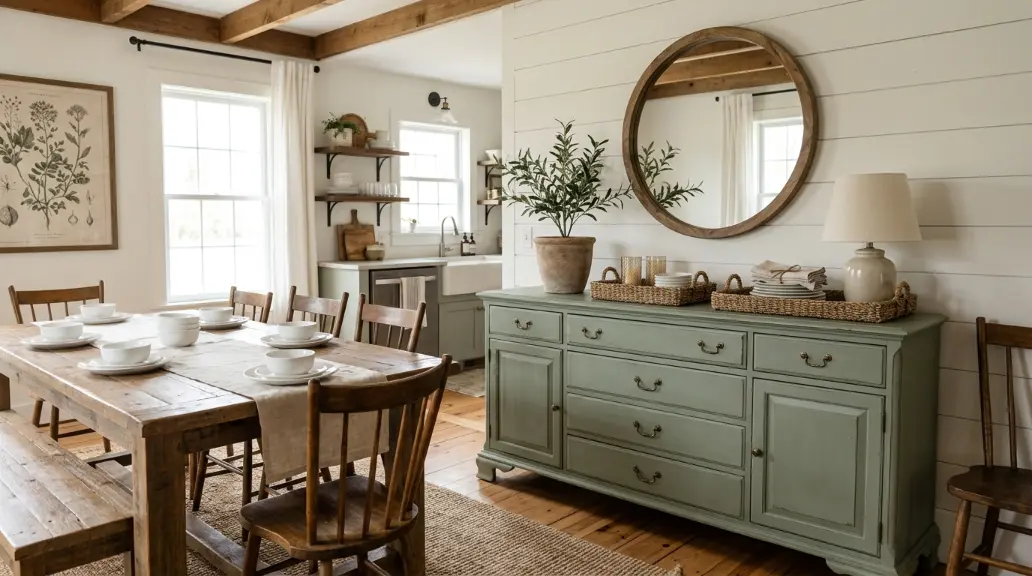
A sideboard or buffet is both practical and visually important in a farmhouse dining room. It provides surface space for serving during meals and storage for linens, candles, and extra tableware.
In farmhouse style, a painted sideboard in white, navy, or sage green works beautifully. A natural wood buffet with simple hardware keeps things warm and unfussy. Style the top with a mirror, a small lamp, a plant, and a tray or two to keep things organized.
14. Incorporate Vintage or Antique Pieces
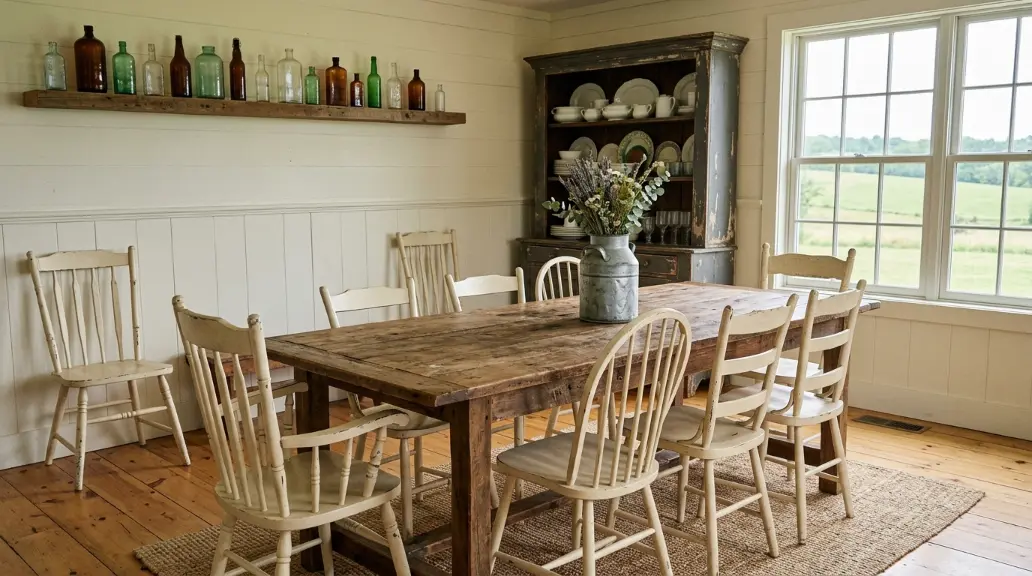
One of the things that separates a well-done farmhouse dining room from a generic one is the inclusion of a few genuinely old or vintage-feeling pieces.
An antique wooden hutch, a set of mismatched vintage chairs painted the same color, an old milk jug repurposed as a vase, or a collection of antique bottles on a shelf all add that sense of history and layering that farmhouse style is really built on.
You do not need to spend a lot. Thrift stores, flea markets, and estate sales are full of pieces that fit naturally into a warm farmhouse interior. The key is choosing things that feel personally meaningful rather than purchasing a full curated set from a single store.
15. Use Plants and Greenery Generously
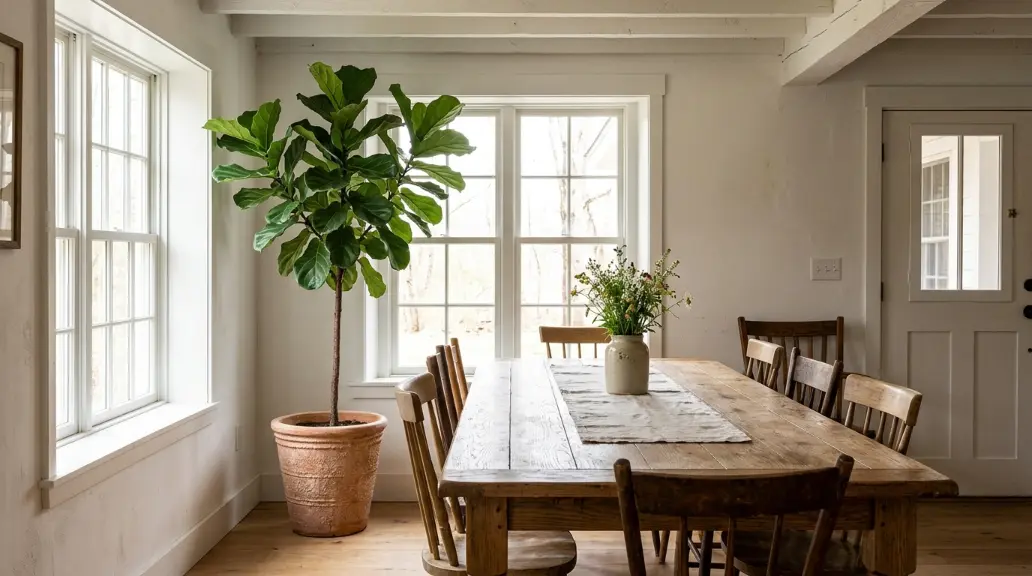
Plants belong in a farmhouse dining room. They add life, softness, and a connection to the natural world that fits perfectly within the farmhouse aesthetic.
A tall, leafy plant like a fiddle leaf fig or a pothos trailing from a high shelf brings organic movement into the room. A simple bunch of eucalyptus hanging from a hook near the window smells wonderful and looks naturally styled.
Even a small succulent arrangement in a terracotta pot on the table adds something that no purely decorative item can match.
16. Consider a Barn Door for the Entry
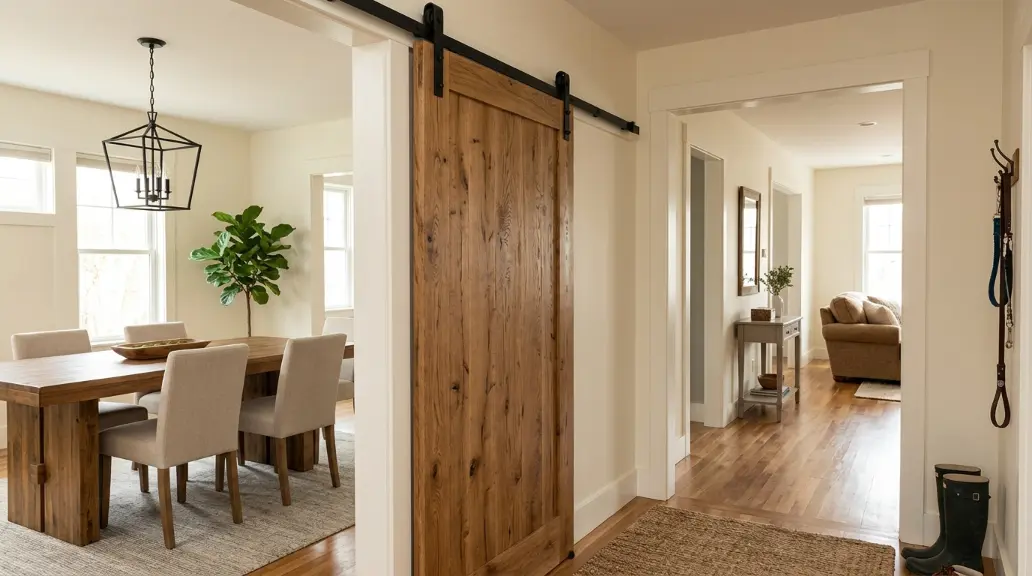
If your dining room opens into a hallway or connects to another living space, a barn door is a functional and visually striking way to define the transition.
Barn doors in a natural wood finish with black hardware are a classic farmhouse element. They do not require any extra floor space to open, which makes them practical in tighter layouts. They also serve as a strong visual anchor, drawing the eye and adding architectural interest to what might otherwise be a plain wall.
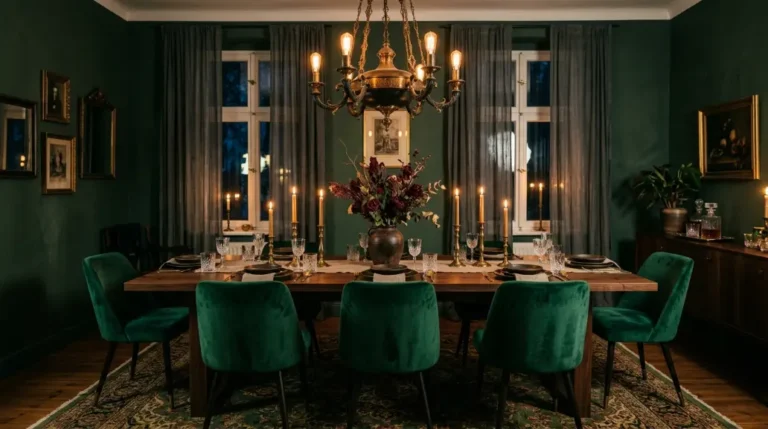
you may also like this: 20 Moody Dining Room Ideas for Cozy Luxury Vibes 2026 Look
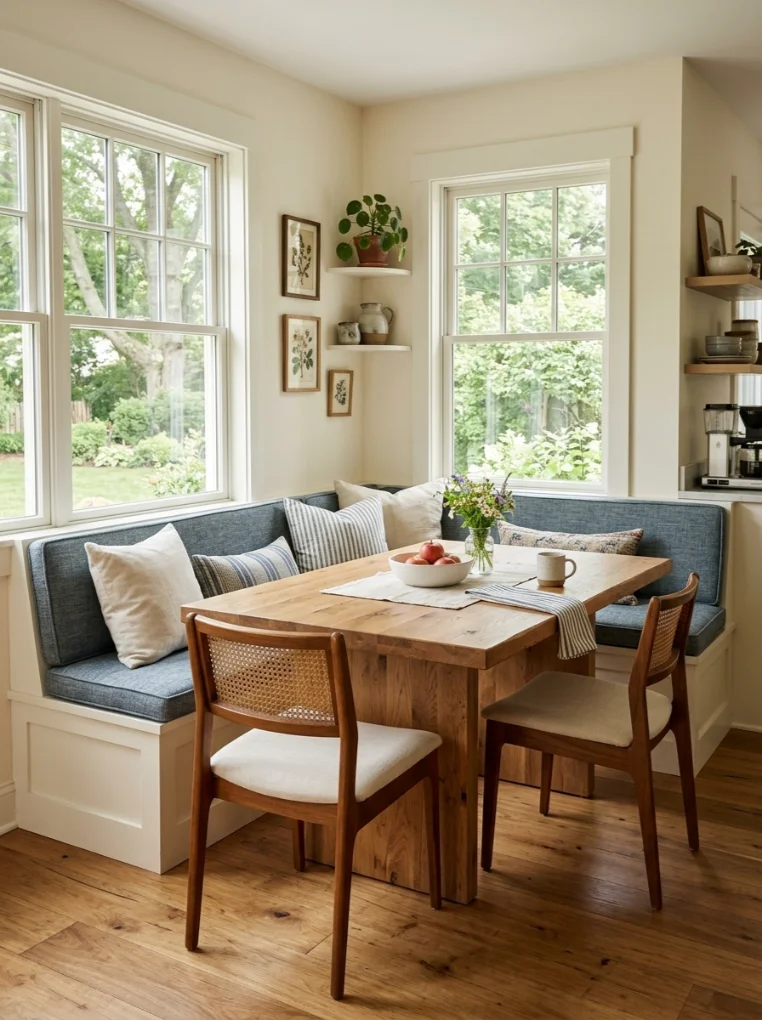
17. Create a Cozy Nook With Built-in Banquette Seating
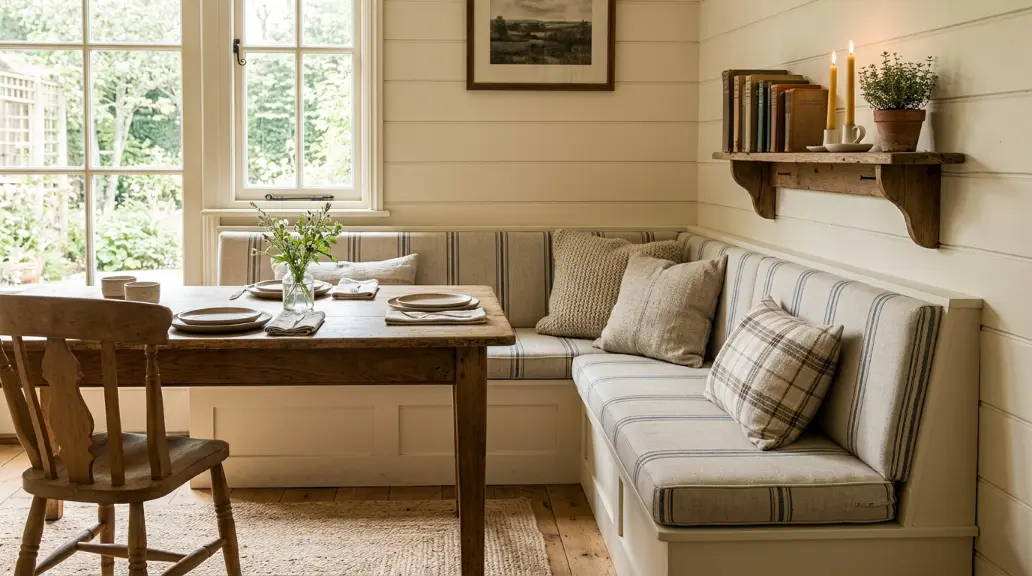
A built-in banquette in the corner of a farmhouse dining room creates a naturally cozy, enclosed feeling that regular chairs simply cannot replicate.
Upholstered in a durable linen or a subtle stripe, a banquette with cushioned seating and a wooden table tucked into the corner feels warm and intentional. It is also a genuinely efficient use of space, especially in smaller dining areas.
Add a few throw pillows in natural textures and a small wall-mounted shelf above for books or candles to complete the nook.
18. Mix Modern and Rustic Elements Thoughtfully
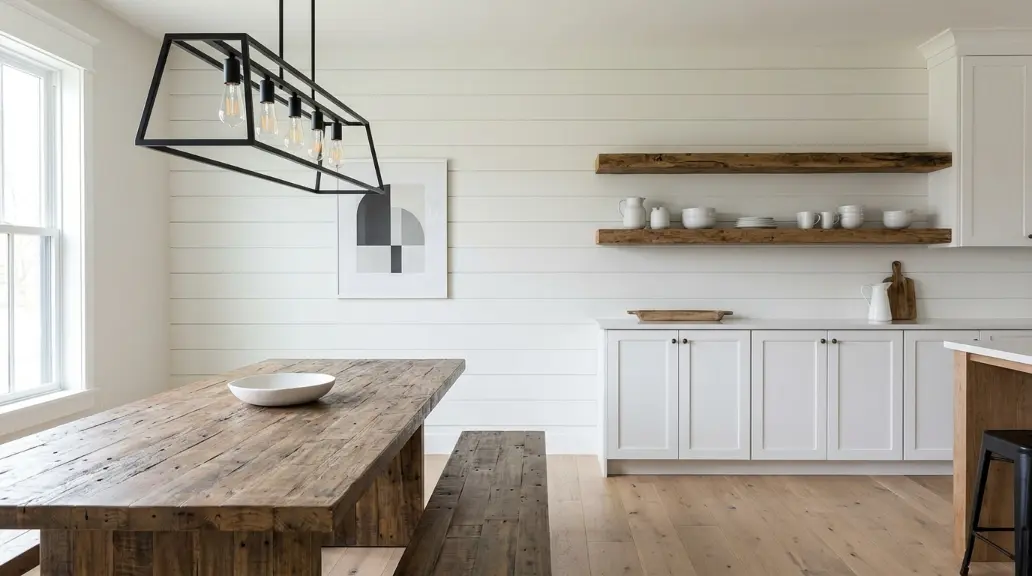
The defining quality of the best modern farmhouse dining rooms is the balance between old and new. The rustic and modern dining room mix works when neither side overwhelms the other.
A sleek, contemporary light fixture above a heavily textured reclaimed wood table. Clean-lined white cabinets next to a rough-hewn wooden shelf. A simple modern artwork on a shiplap wall. These combinations create visual interest because they hold a certain tension between the polished and the imperfect.
The rule of thumb is to let one element be the most rustic in the room, whether that is the table, the wall treatment, or a key piece of furniture, and let everything else be cleaner and more current.
19. Keep It Personal and Unforced
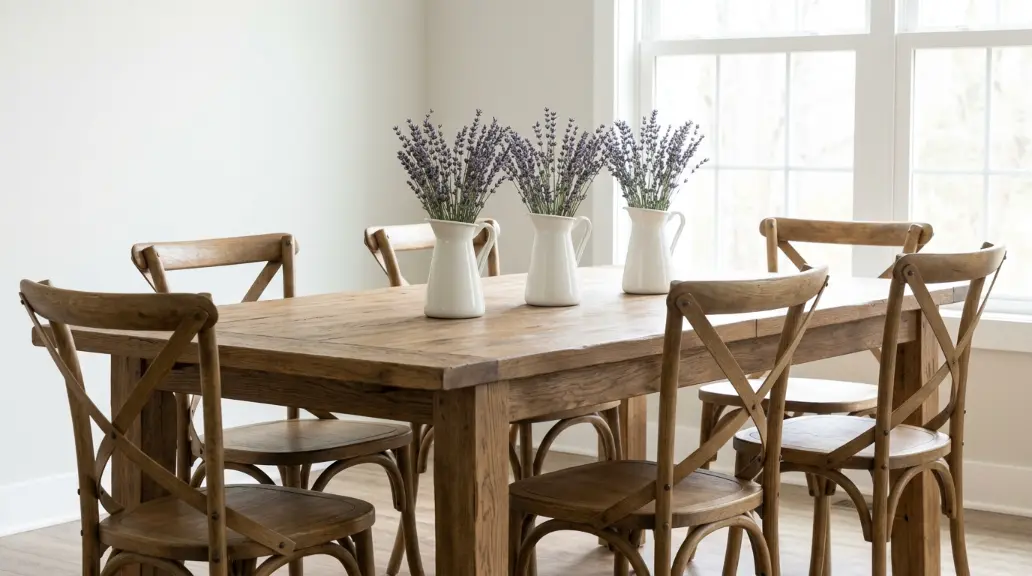
The final and perhaps most important idea for any farmhouse dining room is to let the space feel genuinely yours. The best versions of this style look personal, not purchased. They include things the family has collected over time, things that have meaning, and things that simply feel good to look at every day.
Do not try to recreate a catalog page. Add that old wooden bowl your grandmother gave you. Hang the botanical print you found at a market. Use the mismatched candleholders that have been in your kitchen drawer for years.
A farmhouse dining room with a little imperfection and a lot of warmth will always feel better than a perfectly styled room that nobody actually lives in.
Common Mistakes to Avoid in a Farmhouse Dining Room
Using too many signs and novelty decor. Pre-made word signs and printed farmhouse-themed items can make a space feel themed rather than authentic. Use them sparingly or skip them entirely in favor of more personal, meaningful pieces.
Choosing furniture that is too small. A farmhouse dining table should feel substantial. A table that is too narrow or too short for the room loses the visual weight that makes the style work.
Over-lighting the room. Bright, harsh overhead lighting is the enemy of a warm farmhouse atmosphere. Use warm-toned bulbs (around 2700K) and always install dimmer switches.
Ignoring texture. If every surface in the room is smooth, it will look flat and lifeless. Layer textures through rugs, linen, woven baskets, rough wood, and natural fibers.
Buying everything from the same store. A room that looks like it came entirely from one catalog has none of the collected, personal quality that defines real farmhouse style.
Budget-Friendly Tips for a Farmhouse Dining Room Makeover
You do not need to spend a lot to get a beautiful farmhouse dining room. Here are some practical ways to keep costs down:
- Paint is the most affordable transformation available. A fresh coat of warm white on the walls changes everything.
- Second-hand wooden furniture is often cheaper and better quality than new budget pieces. Sand and refinish rather than replace.
- DIY shiplap using thin plywood cut into planks is a fraction of the cost of real shiplap boards.
- Simple linen curtains from any home goods store pull the room together without requiring custom work.
- Natural elements like branches, stems, dried flowers, and seasonal produce make beautiful and essentially free centerpieces.
Conclusion
A farmhouse dining room is one of the most satisfying spaces to put together because the style rewards honesty and simplicity. It does not require perfection. It does not require a big budget. What it does require is a thoughtful mix of natural materials, warm light, comfortable seating, and a few pieces that genuinely feel like they belong to you.
Whether you lean toward a clean, minimalist farmhouse look or a more textured, vintage-influenced space, the principles are the same: keep it warm, keep it personal, and let the room breathe.
Use these 19 ideas as a starting point, not a checklist. Take what resonates with your space and your taste, and leave the rest. The best farmhouse dining rooms are the ones that look like nobody tried too hard, because nobody did.
Frequently Asked Questions
Q1: What furniture is essential for a farmhouse dining room?
A solid wooden dining table is the most essential piece. After that, a mix of seating, such as wooden chairs and a bench, a simple sideboard or buffet, and a statement light fixture are the core elements that complete the look. You do not need much else to start.
Q2: What colors work best in a modern farmhouse dining room?
Neutral tones work best. Think warm whites, soft creams, greiges, and light taupes for the walls and larger pieces. Add contrast with matte black hardware, dark wood tones, or a subtle navy or sage green on a painted piece of furniture. Avoid anything too bright or saturated, as it tends to clash with the natural materials that define farmhouse style.
Q3: How do I make a small farmhouse dining room feel bigger?
Use a light color palette on the walls and ceiling. Add a large mirror to reflect light and create depth. Choose furniture that is appropriately scaled for the space rather than oversized. A bench instead of chairs on one side of the table takes up less visual space. Keep the decor minimal and focused.
Q4: Can I do farmhouse style in an open concept dining room?
Yes, and it works very well. In an open layout, use a large jute or sisal rug to define the dining zone. Choose a statement chandelier above the table to anchor the space visually. Keep the palette consistent between the dining and living areas so the rooms feel connected rather than competing.
Q5: What are beginner-friendly ways to start a farmhouse dining room?
Start with what you have. Paint the walls a warm white. Add a linen table runner and a simple centerpiece. Swap out light fixtures for something with a farmhouse character. These three changes alone will shift the feel of a room significantly. You can layer in more elements over time as your budget and taste allow.

One Comment