

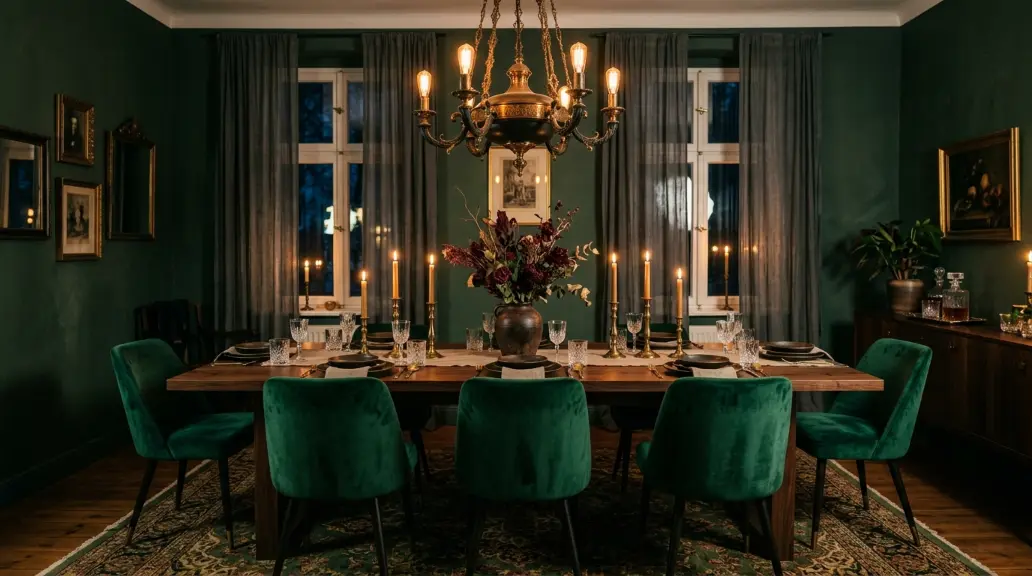
20 Moody Dining Room Ideas for Cozy Luxury Vibes 2026 Look
There is a moment when you sit in a dimly lit restaurant, the warm glow of candles playing off dark walls, and you think: why does my dining room at home never feel like this?
Most dining rooms are bright, practical, and a little forgettable. They are designed to be easy rather than memorable. But if you have ever wanted a space that feels genuinely intimate, a room that makes even a Tuesday dinner feel like a special occasion, then the moody dining room aesthetic is worth your attention.
A moody dining room is not about making things gloomy or dark for the sake of it. It is about creating atmosphere. It is about layering deep colors, thoughtful lighting, and rich textures in a way that makes the room feel like it was designed with intention. Whether you are working with a large formal dining space or a small moody dining room tucked into a corner of your apartment, there are ways to get this look right.
This guide walks you through 20 practical, well-considered ideas for building a cozy luxury dining space in 2026, with advice on what to do, what to avoid, and how to make it work for your home.
What Makes a Dining Room “Moody”?
Before getting into specific ideas, it helps to understand what actually creates the moody dining room effect.
A moody interior is built on three things working together: depth of color, layered light sources, and rich materials. When even one of these is missing, the look falls flat. Dark walls with harsh overhead lighting, for example, will feel more like a cave than a classy dining room setup. But the same dark walls paired with warm candlelight and a statement chandelier? That is where the magic happens.
Moody home interiors have been gaining popularity because dining rooms are typically used in the evening. That makes them the perfect room to experiment with darker, more saturated colors that might feel too heavy in a kitchen or living space.
20 Moody Dining Room Ideas for Cozy, Luxurious Results
1. Go Deep with Dark Forest Green Walls
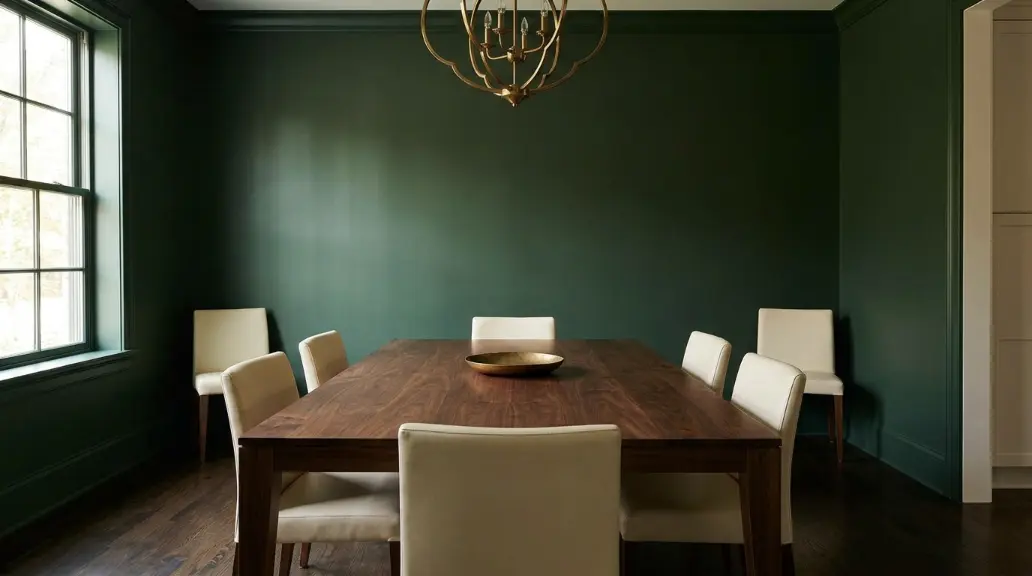
Dark green is one of the most forgiving and beautiful colors for a dramatic dining room. It reads as sophisticated rather than stark, and it has a natural warmth that pure black or charcoal sometimes lacks.
Deep forest greens like Farrow and Ball Bancha, Sherwin-Williams Hunt Club, or Benjamin Moore Backwoods pair well with brass lighting, dark walnut furniture, and cream or ivory upholstery. The combination feels layered and expensive without requiring a complete renovation.
Finish the walls in matte or eggshell for a modern look. Eggshell is especially useful because it picks up candlelight beautifully, giving the room a soft glow during evening meals.
Beginner tip: If you are nervous about committing to full green walls, start by painting a single accent wall behind the dining table. This adds drama without overwhelming a smaller space.
2. Try Black Dining Room Walls with White Trim
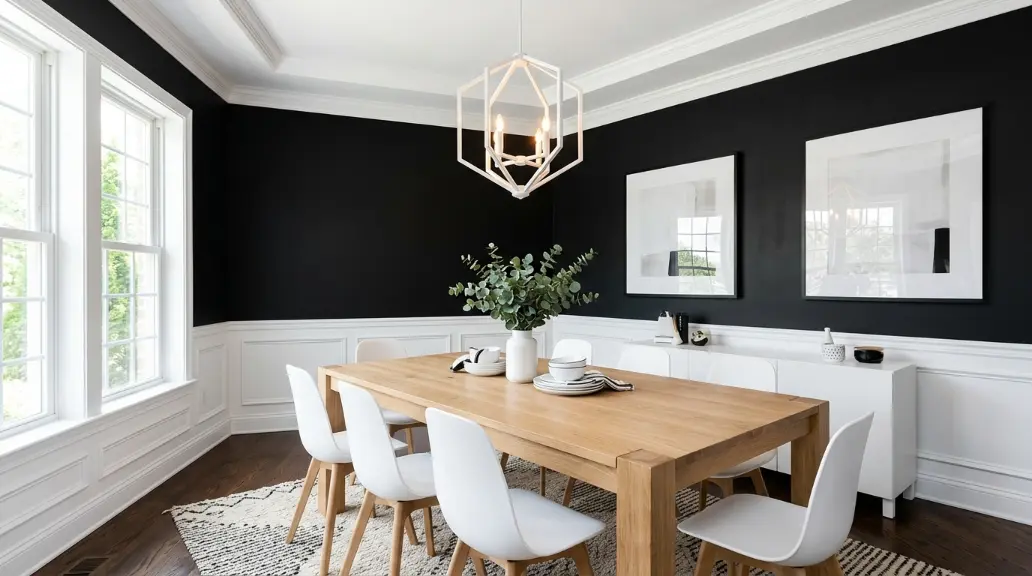
Matte black walls are bold, but they work surprisingly well in dining rooms when balanced correctly. The trick is pairing the black walls with crisp white trim, ceilings, or furniture accents.
This high-contrast approach feels intentional and modern rather than oppressive. The white elements prevent the darkness from swallowing the room, while the black walls give the space a sophisticated backbone.
Black walls also function as the perfect backdrop for art, mirrors, and statement lighting. Everything you place against them stands out beautifully.
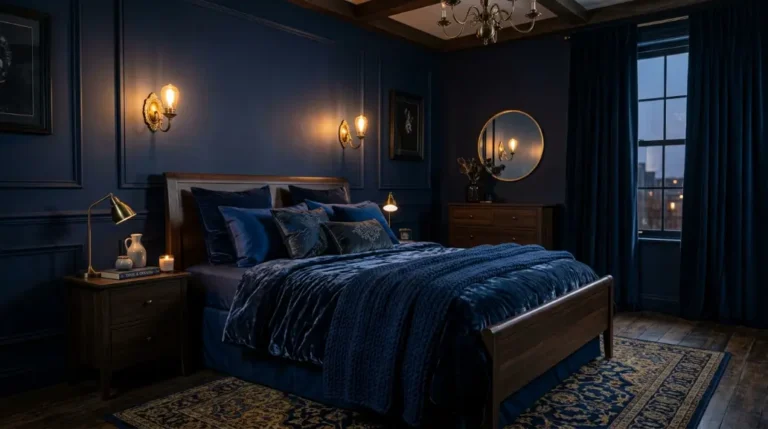
3. Use Navy Blue for Elegant Moody Interiors
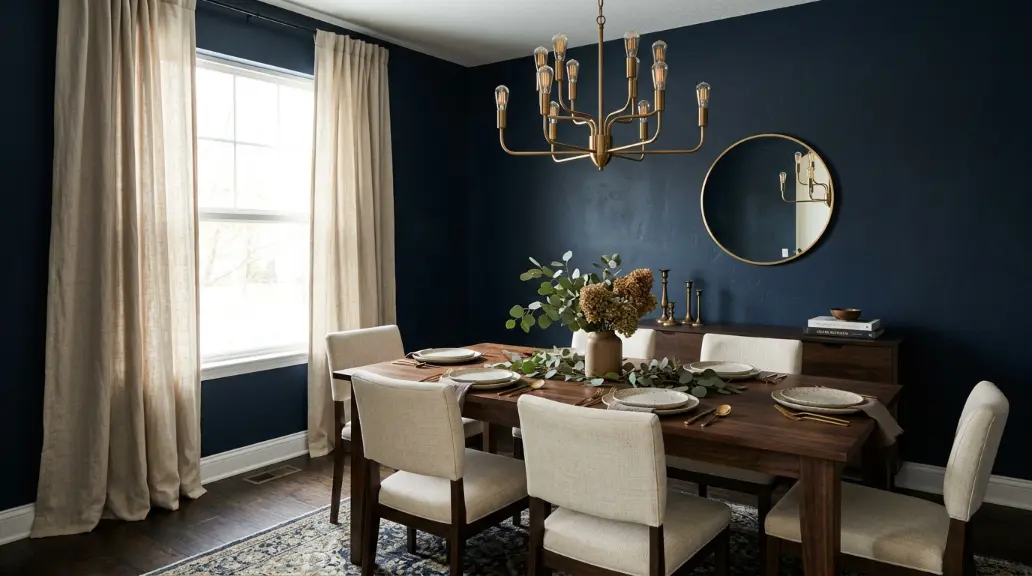
Deep navy is one of the most versatile colors in the dark aesthetic dining room toolkit. It is moody without being harsh and pairs well with almost everything: warm brass, aged gold, natural wood, and cream upholstery.
A navy dining room with a brass chandelier, linen curtains, and a rich wooden table hits the sweet spot between cozy and elegant. This palette is also a good option for rooms with limited natural light, since navy tends to feel warmer than charcoal or black.
Add antique-style mirrors in gold frames to reflect light and make the room feel larger. This is a detail that shows up in many luxury dining room designs and costs far less than you might expect.
Moody Dining Room Style Comparison Table
| Style | Best Wall Color | Key Furniture | Lighting Type | Accent Materials | Best For |
|---|---|---|---|---|---|
| Dark Academia | Deep green or burgundy | Antique wood table, mixed chairs | Brass chandelier, wall sconces | Leather, books, vintage art | Formal or eclectic spaces |
| Modern Moody | Charcoal or matte black | Sleek dark table, upholstered chairs | Sculptural pendant | Concrete, glass, dark steel | Contemporary apartments |
| Luxury Traditional | Deep navy or plum | Carved wood table, velvet chairs | Crystal chandelier | Brass, velvet, silk curtains | Larger formal dining rooms |
| Black and Wood | Matte black or dark gray | Wood table with black chairs | Industrial cage pendant | Natural wood, woven textiles | Modern or transitional homes |
| Dark Earthy | Warm terracotta or moody brown | Rustic wood table, leather chairs | Warm globe pendants | Ceramic, wool rug, natural fiber | Relaxed or boho-leaning spaces |
| Jewel Box | Emerald green or deep teal | Dark lacquered table, gold accents | Gold or brass chandelier | Velvet, metallic wallpaper | Small rooms or bold personalities |
| Dark Farmhouse | Deep sage or forest green | Reclaimed wood table, mixed seating | Simple black pendant | Linen, wool, raw wood | Rustic or country homes |
4. Layer Your Lighting
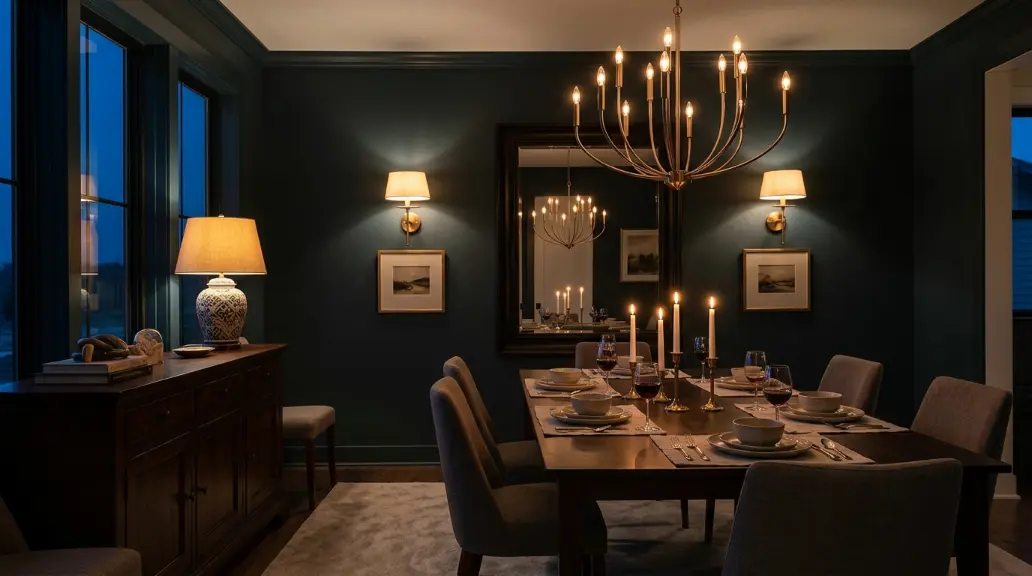
No single change transforms a dining room more effectively than rethinking the lighting. Most dining rooms rely on a single overhead fixture, which creates flat, unflattering light that actively works against the moody atmosphere you are going for.
Instead, build a lighting plan with multiple layers:
A statement chandelier or pendant above the table gives the room its visual anchor and primary light source. Wall sconces on either side of the room add a warm middle layer of light. A table lamp on a sideboard or buffet brings the light down to eye level, which is where it feels most intimate. Candles on the table complete the look during meals.
All overhead fixtures should be on dimmer switches. The ability to lower the lights completely changes the feel of a room. With dimmers, you can go from bright and functional during family dinner to softly lit and atmospheric for a dinner party without changing anything else in the room.
For bulb temperature, always use warm-toned bulbs rated between 2700K and 3000K. This is the amber range that makes skin look good and dark walls feel rich rather than heavy.
5. Choose Dark Wallpaper for Instant Texture
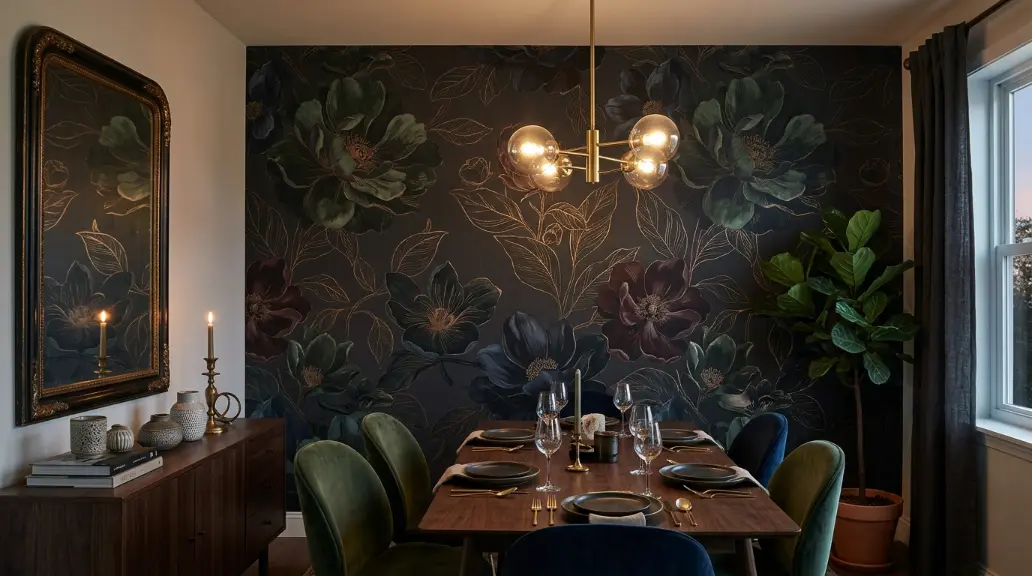
Dark wallpaper is one of the fastest ways to create a dramatic dining room without having to commit to painting. A large-scale botanical print, a deep geometric pattern, or a moody floral design on a dark background adds visual richness that paint simply cannot replicate.
Wallpaper with metallic details, such as gold or silver accents woven into a botanical or abstract design, is particularly effective because it catches the light and shifts as you move through the room. This creates the kind of layered, almost magical quality that characterizes the best moody apartment dining room spaces.
For a smaller room, consider papering just one wall rather than all four. A wallpapered feature wall behind the dining table creates a strong focal point without closing in the space.
6. Add Dark Wood Paneling for a Rich, Textured Look
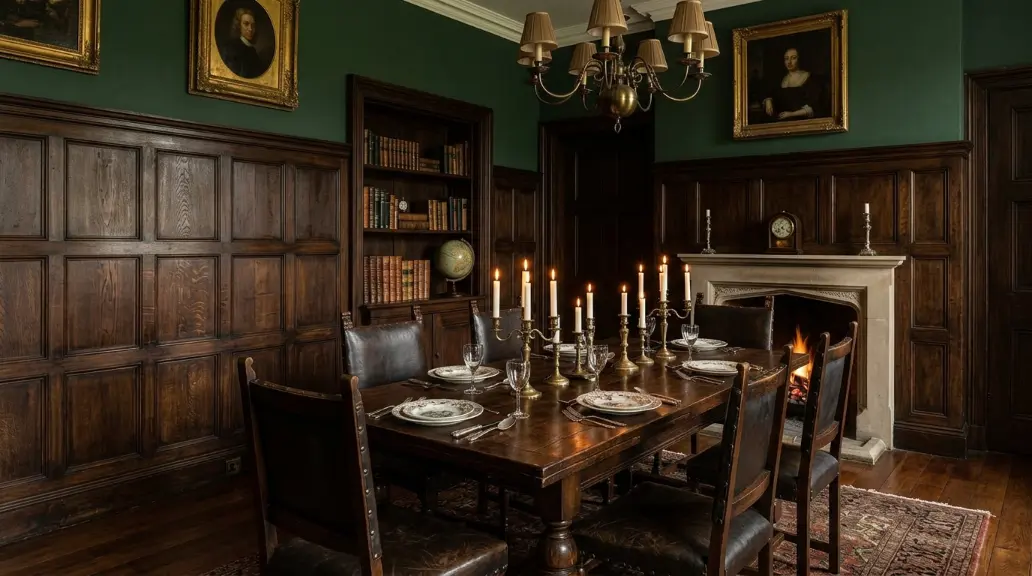
Dark-stained wood paneling is a classic element in vintage dining room decor and dark academia dining room aesthetics. It adds texture and warmth that paint alone cannot provide, and it references the kind of old-world European interiors that form the foundation of the moody design style.
Horizontal shiplap, vertical boards, and traditional wainscoting are all options. Wainscoting in particular works well in dining rooms because it adds architectural interest to the lower half of the wall, leaving the upper half open for paint or wallpaper.
Dark walnut, mahogany, and oak stained deep all work beautifully for this look.
7. Invest in Velvet Dining Chairs
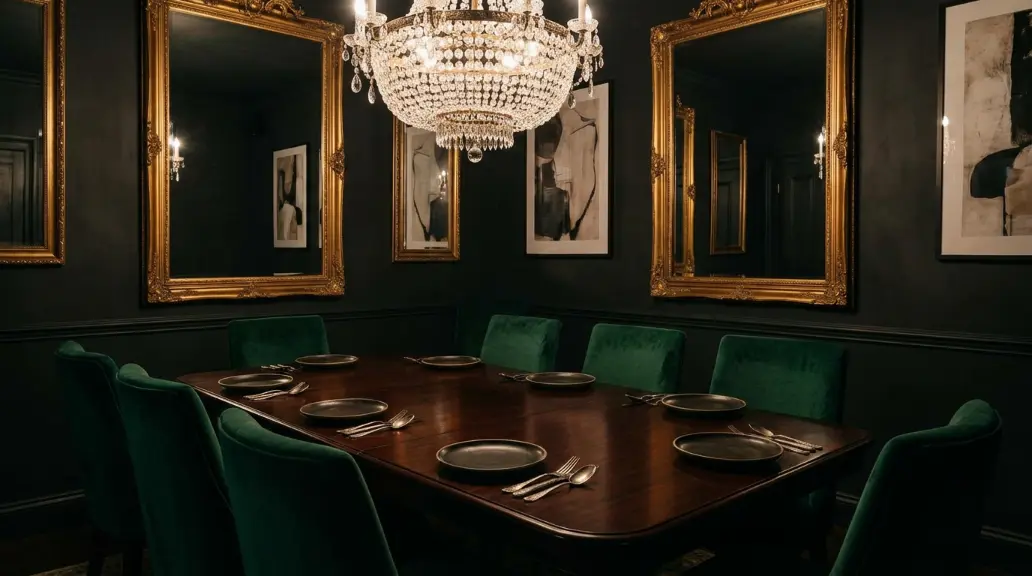
Velvet is the fabric most closely associated with luxury moody dining rooms, and for good reason. It is soft, light-absorbing, and it photographs beautifully. A set of deep jewel-toned velvet chairs around a dark dining table instantly signals that this room was designed with care.
Emerald green, sapphire blue, deep plum, and burgundy velvet all work well in a moody dining room context. If you prefer a more neutral look, charcoal or slate gray velvet has the same luxurious quality with a quieter visual presence.
Practical note: Velvet picks up pet hair and lint more readily than other fabrics. If you have animals or entertain frequently, look for performance velvet, which has a tighter weave and is much easier to keep clean.
8. Use a Statement Chandelier as the Room’s Focal Point

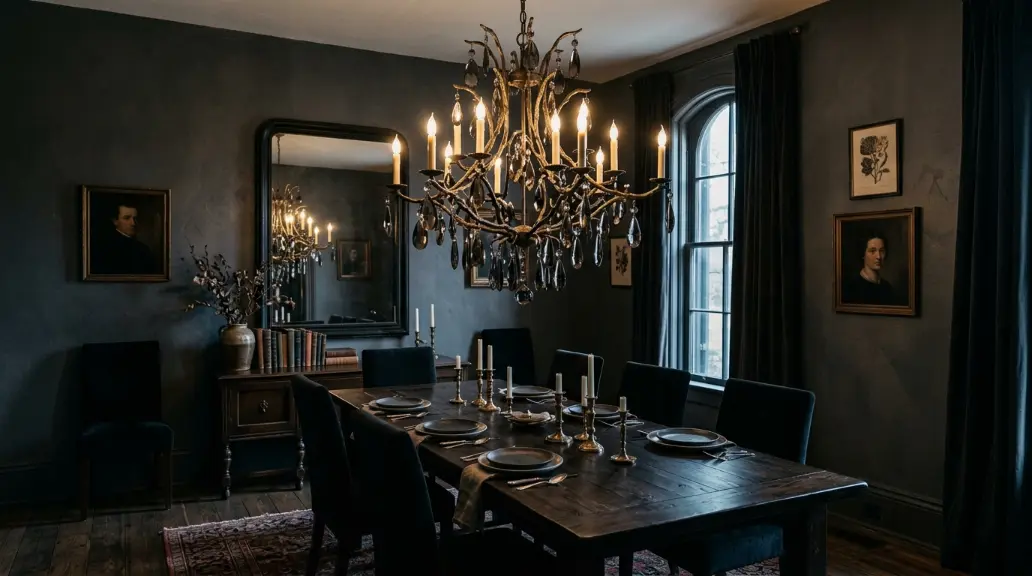
In a moody dining room, the chandelier is not just a light source. It is a piece of sculpture. It is the thing your eyes go to first when you walk into the room, and it sets the tone for everything else.
Oversized chandeliers with brass or aged gold finishes work well with dark walls because they add warmth and contrast. Crystal chandeliers are particularly effective because they refract light in ways that bring animation to a darker space. Industrial-style cage chandeliers suit contemporary moody decor, while tiered candle-style chandeliers suit vintage and dark academia aesthetics.
Scale matters here. A chandelier that is too small for the room will look like an afterthought. As a general rule, add the dimensions of your room in feet, and the result in inches is a starting point for chandelier diameter.
9. Bring in Rich Earthy Tones Through Rugs and Textiles
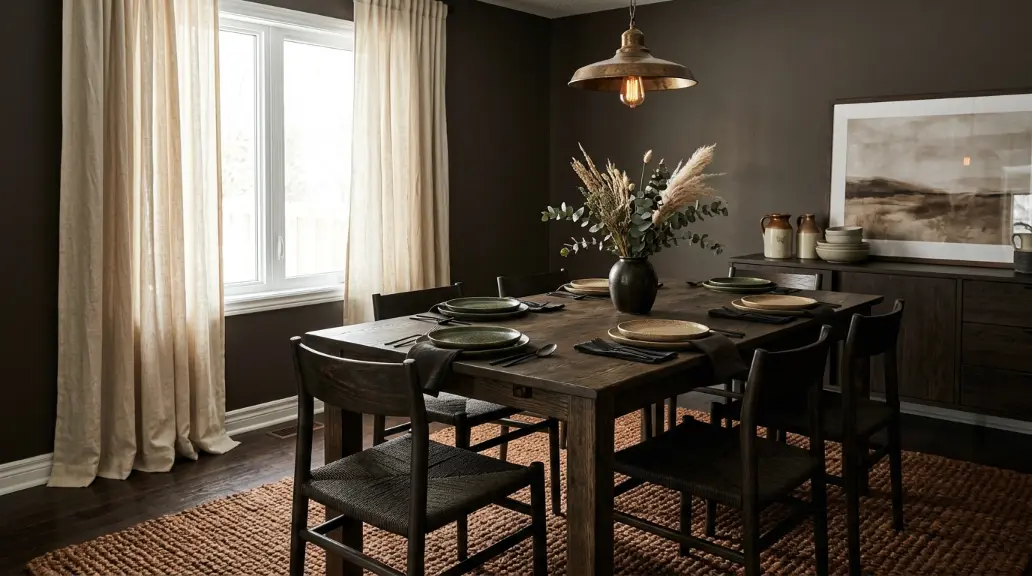
Rich earthy tone dining rooms have a grounded, organic quality that softens the potential severity of dark walls. A wool or jute rug in deep terracotta, rust, or warm brown adds texture underfoot and breaks up the visual weight of dark furniture and dark walls.
Linen curtains in warm cream or ivory are another way to add softness. They filter light gently and provide a neutral counterpoint to the deep tones of the walls and furniture. Avoid blackout curtains in moody dining rooms unless you specifically need them, as they can make the space feel sealed off rather than intimate.
10. Create a Dark Academia Dining Room with Books and Art
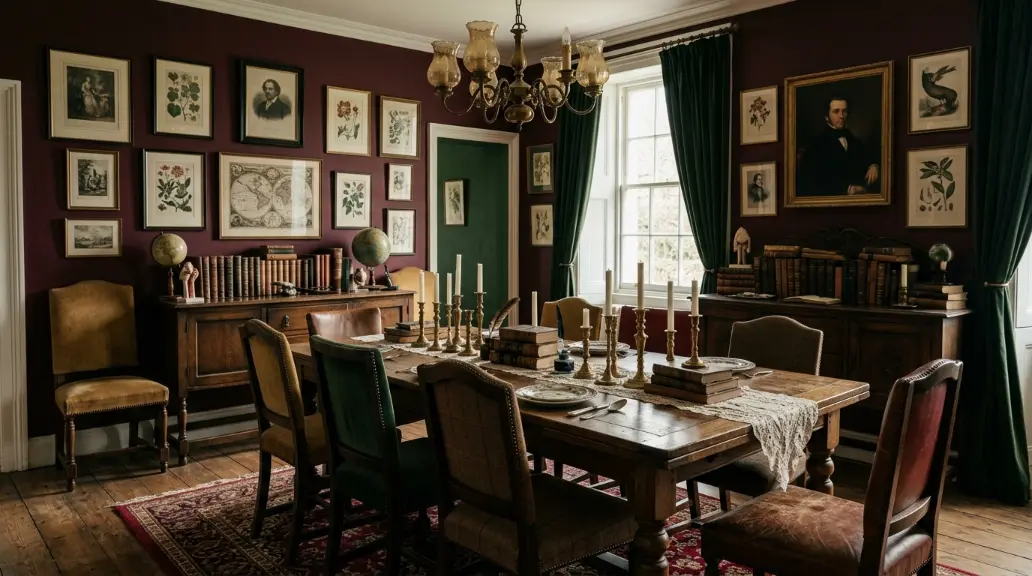
The dark academia aesthetic leans into rich colors, scholarly references, and a sense of collected history. A dining room in this style might combine deep green or burgundy walls with antique-style art prints, brass candlesticks, leather-bound books on a sideboard, and a vintage chandelier overhead.
This is a look that works well with mismatched or collected furniture rather than matching sets. An antique wooden table paired with upholstered chairs in different fabrics, united by a shared color palette, has the kind of layered, lived-in quality that defines dark academia dining rooms.
11. Paint the Ceiling Dark for Unexpected Drama
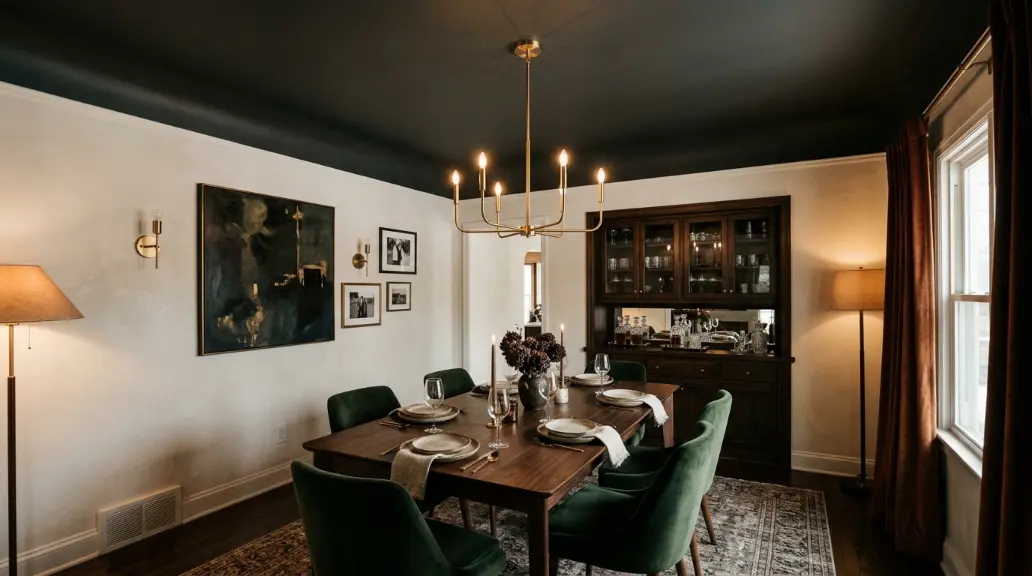
Most people only think about walls when planning a moody dining room. Painting the ceiling in a dark matte shade, however, creates a cocooning, intimate effect that walls alone cannot achieve.
A matte black or deep charcoal ceiling draws the eye upward and makes the room feel more enclosed in a good way, like a private dining room in a luxury restaurant. This works especially well in rooms with lower ceilings, where a standard white ceiling can look stark and unfinished.
Pair a dark ceiling with lighter walls if the idea of going fully dark on all surfaces feels like too much.
12. Use Exposed Brick Painted Dark for an Industrial Edge
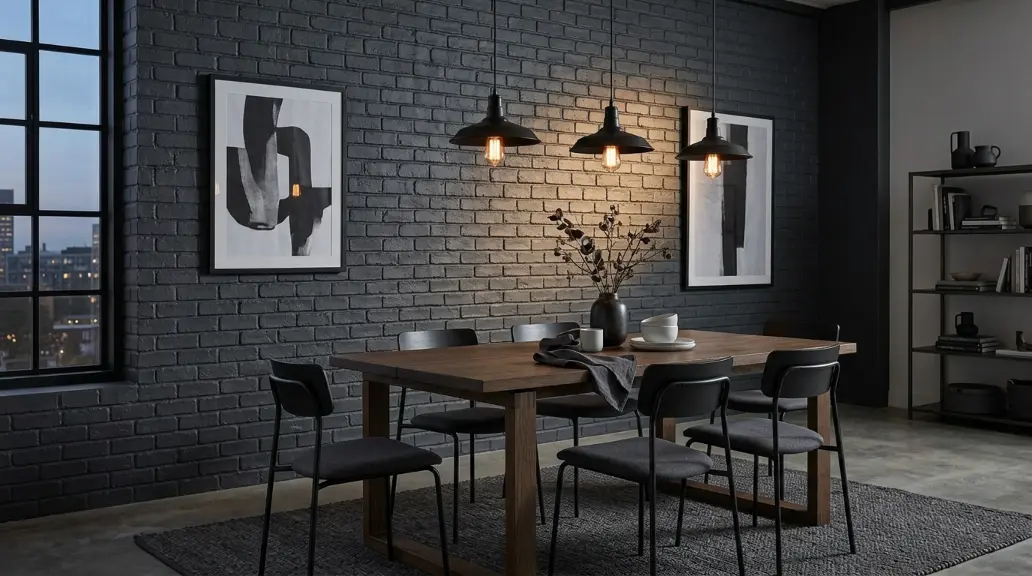
If your dining room has exposed brick, painting it in charcoal, deep navy, or matte black creates a contemporary moody look with a lot of texture built in. The brick pattern remains visible but takes on a completely different quality under the dark paint.
This suits modern loft-style spaces particularly well and pairs naturally with industrial pendant lighting and dark steel furniture frames.
13. Incorporate Jewel-Toned Accents for Color Depth
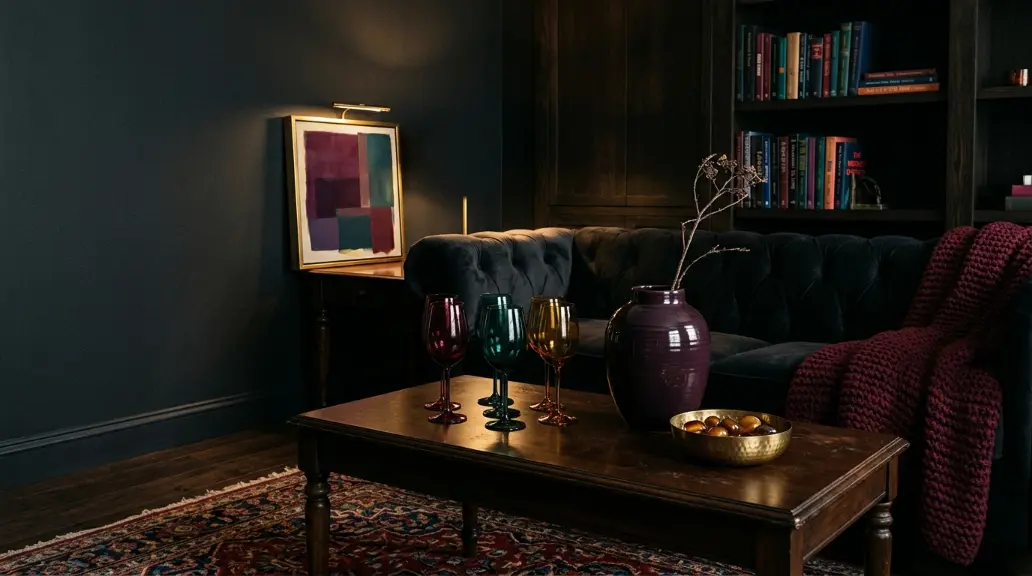
Even in a very dark room, jewel-toned accents add a layer of color interest that prevents the space from feeling flat. Burgundy, deep teal, amber, and plum all work as accent colors against dark walls and dark furniture.
These tones can appear in small items: a set of colored wine glasses, a ceramic vase, a decorative bowl, a patterned rug, or a single artwork with rich colors. None of these things require a significant investment, but together they give the room personality and warmth.
14. Add an Oversized Mirror to Reflect Light
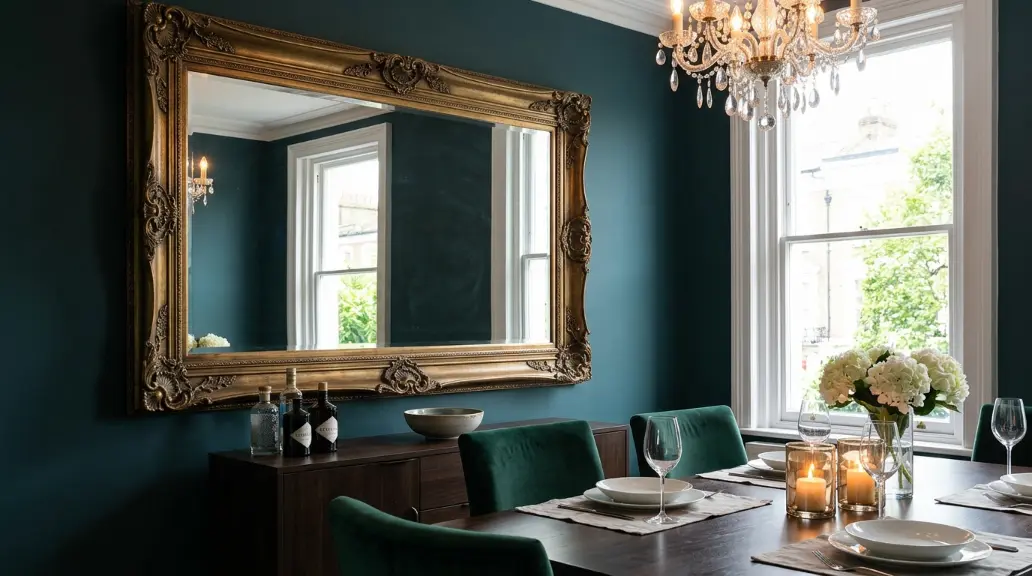
One of the most common concerns about creating a dark and cozy dining room is that it will feel too dark or too small. An oversized mirror is the most effective antidote.
A large mirror in an ornate gold or aged brass frame does two things: it reflects available light back into the room, making the space feel brighter and larger, and it acts as a piece of art in its own right. Place it opposite a window if possible to maximize the amount of natural light it reflects.
Even in a room with very little natural light, a mirror positioned to reflect the chandelier or sconces adds considerable visual interest.
15. Build a Black and Wood Dining Room Palette
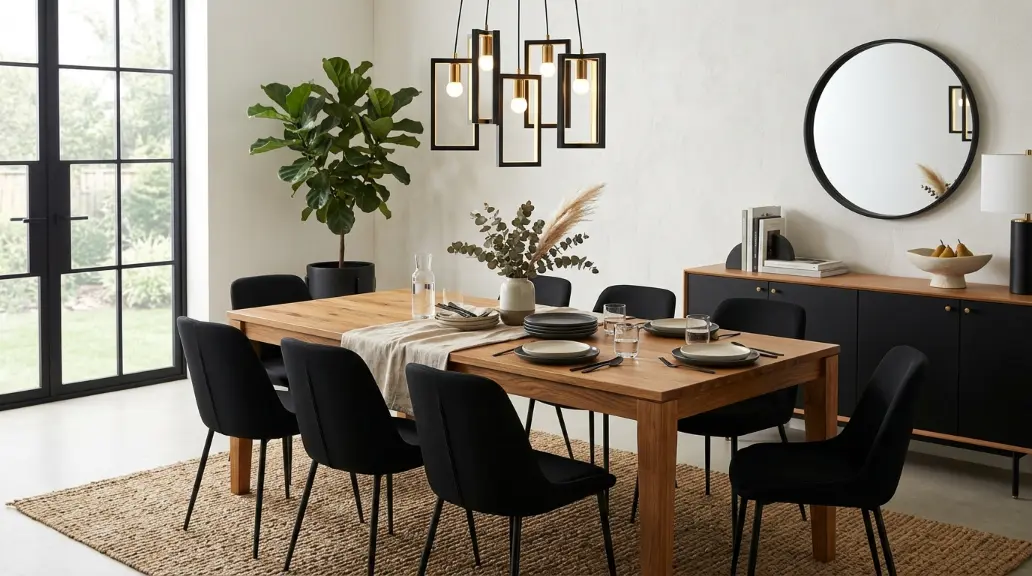
The combination of matte black surfaces and warm natural wood is one of the most reliable palettes for sophisticated dining room decor. It creates contrast without being jarring, and it suits a wide range of styles from contemporary to traditional.
A black dining table with wooden dining chairs, or a wooden table surrounded by black upholstered chairs, works in either direction. Adding brass hardware, warm-toned lighting, and a woven or natural fiber rug completes the look with texture and warmth.
16. Go Bold with Deep Burgundy or Plum Walls
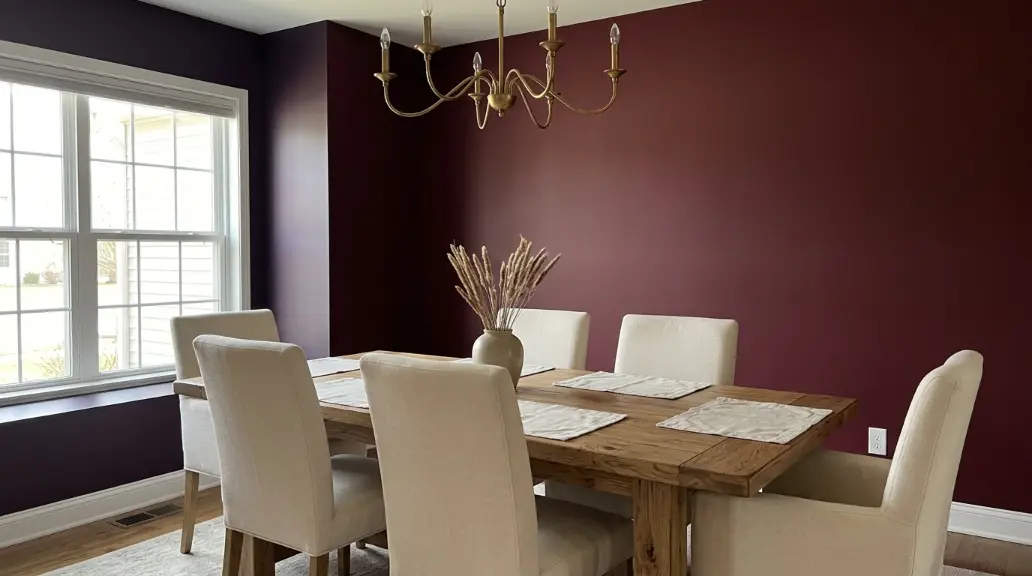
Burgundy and deep plum are among the richest colors available for a warm dining room setup. They have red and violet undertones that make a room feel genuinely warm rather than just dark.
These colors work particularly well in rooms that are used primarily in the evening, as they shift and deepen under artificial light in a way that feels almost theatrical. Pair them with antique gold lighting, natural wood furniture, and cream or blush upholstery for a luxurious, deeply personal look.
17. Design a Small Moody Dining Room Without Fear
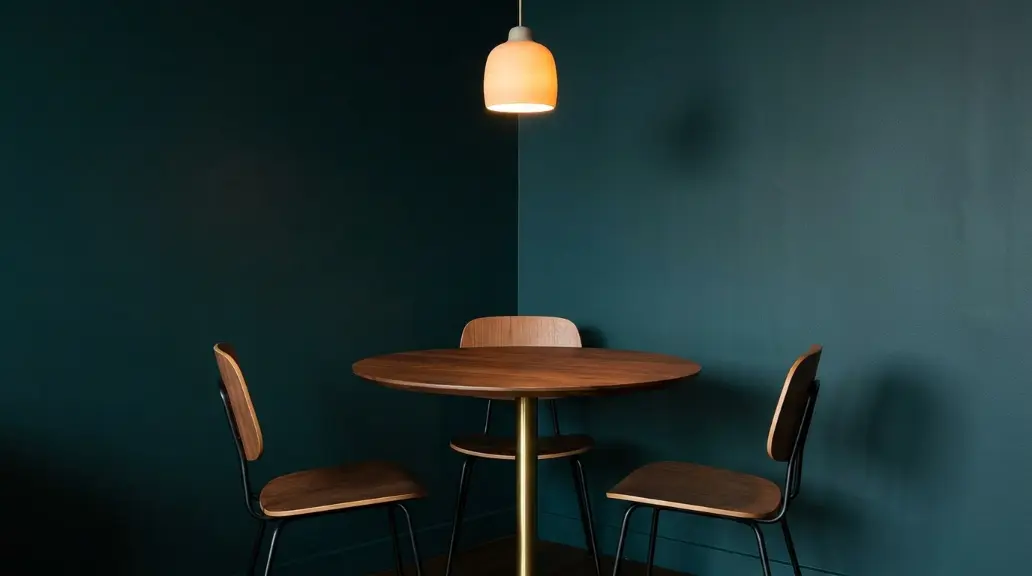
A small dining room can absolutely carry the moody look. In fact, compact spaces often benefit more from the moody treatment because the effect of rich color and warm light is more concentrated.
In a small moody dining room, keep the furniture minimal and appropriately scaled. A round or oval table takes up less visual space than a rectangular one and makes it easier to move around the room. Choose chairs with slender legs rather than heavy upholstered bases to keep the floor plane open.
Use mirrors strategically to create depth, and avoid heavy window treatments that block light. Sheer curtains in a neutral or warm tone allow natural light in during the day while maintaining the overall aesthetic.
18. Incorporate Vintage or Antique Pieces for Character
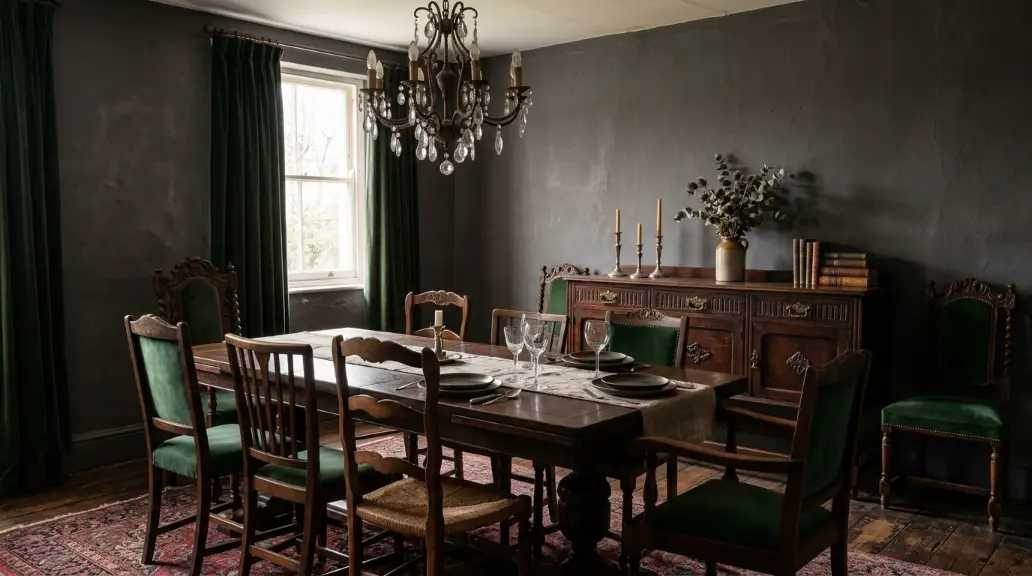
A moody dining room gains a great deal of character from vintage and antique elements. A chandelier found at an antique market, a set of mismatched chairs unified by reupholstering, or a sideboard with original brass hardware all add the kind of history and specificity that makes a room feel genuinely designed rather than assembled from a catalog.
Vintage dining room decor also tends to be more affordable than new designer pieces. A well-chosen antique find can anchor an entire room.
19. Use Dark Plants to Add Life to the Space
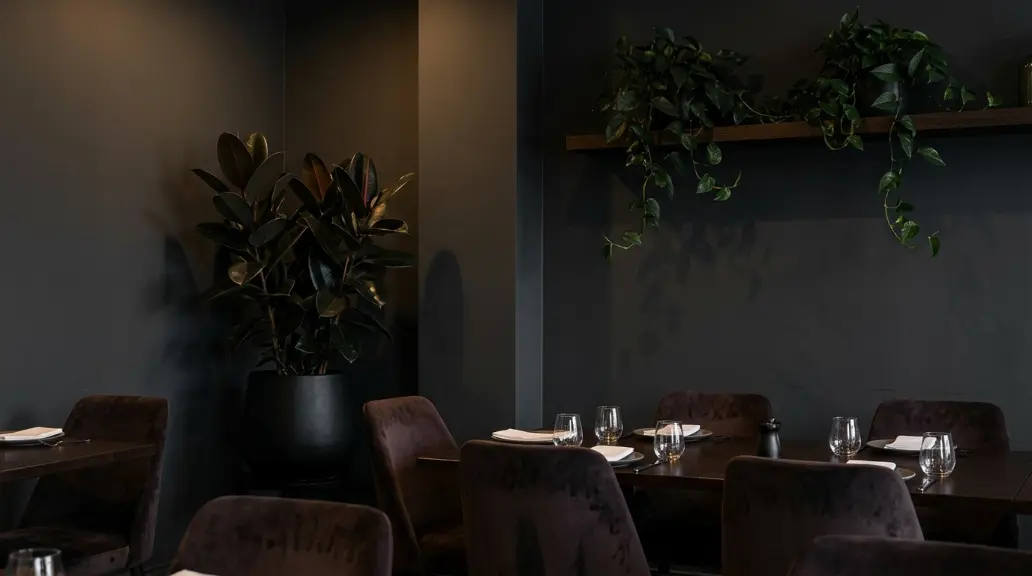
Plants are not usually the first thing people think of when designing a moody dining room, but the right varieties add a lot. Dark-leaved plants like rubber plants, ZZ plants, and burgundy prayer plants complement deep wall colors beautifully and add organic life to the space.
A single large specimen plant in a dark ceramic pot makes a sculptural statement in a corner of the room. A trailing plant on a high shelf or sideboard adds movement and softness.
20. Set the Table as Part of the Design
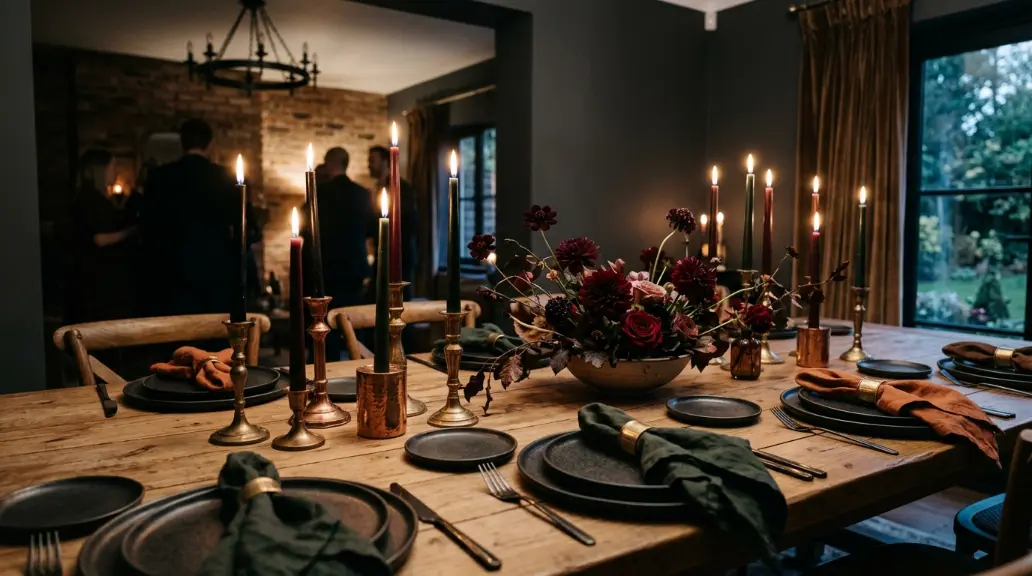
In a dramatic dining room, the table setting is part of the overall look, not just a functional necessity. Dark ceramic plates, aged or hammered metal candleholders, linen napkins in deep earth tones, and a low centerpiece of dark flowers or sculptural branches all reinforce the room’s aesthetic.
This does not have to be expensive. A collection of mismatched dark candles in different heights, for example, costs very little and creates an instant atmosphere. Dark-hued flowers like burgundy dahlias, deep red roses, or chocolate cosmos add richness and life to the table surface.
Common Mistakes to Avoid
Using cool-toned light bulbs. This is the most common error in dark dining rooms. Cool white bulbs make dark walls look blue and the room feel cold. Always use warm bulbs rated between 2700K and 3000K.
Skipping the dimmer switch. Without a dimmer, you cannot shift the room between functional brightness for daytime use and moody evening atmosphere. This one hardware change is worth every penny.
Going too dark on everything. A room that is all dark walls, dark furniture, and dark flooring with no contrast can feel heavy and airless. Always balance the darker elements with at least one or two lighter counterpoints: cream upholstery, a light-toned rug, or white trim.
Choosing the wrong paint finish. High-gloss paint on dark walls can feel jarring and reflects light too sharply. Matte or eggshell finishes give dark colors a more sophisticated, velvety look.
Undersizing the chandelier. A small chandelier in a room with dark walls simply disappears. Scale up your lighting to create the visual impact the room needs.
Forgetting secondary light sources. Relying on a single overhead fixture in a moody dining room will not achieve the layered warmth you are looking for. Add sconces, table lamps, or candles to build depth.
Budget-Friendly Tips for Creating a Moody Dining Room
You do not need to renovate an entire room to achieve a moody, stylish dining space. Paint is the most affordable transformation available. A single can of deep-toned paint and a weekend of work can completely change the feel of a room.
Swapping out light bulbs to warm-toned options costs almost nothing and makes an immediate difference. Adding a secondhand chandelier or a set of antique wall sconces from a thrift store or marketplace can add the kind of character that new fixtures rarely match.
Dark-toned throw cushions on existing chairs, a patterned or richly colored rug, and a few dark ceramic or glass accessories on the table are all low-cost ways to shift the overall mood of a room without major expenditure.
Conclusion
Creating a moody dining room is less about following a formula and more about understanding what creates atmosphere. Deep colors, layered warm lighting, rich textures, and considered details work together to make a room feel intimate, personal, and genuinely beautiful.
Whether you are starting with a full renovation or just looking to shift the feel of an existing space with paint and lighting, the ideas above give you a solid foundation. Start with the changes that feel most manageable, layer in additional elements over time, and pay attention to how the room feels at different times of day and evening.
The best moody dining room is not the darkest or the most dramatic. It is the one that makes the people sitting in it feel like they are somewhere special.
Frequently Asked Questions
Q1: Will dark walls make my small dining room feel too cramped?
Not if you approach it correctly. Dark walls in a small room can actually feel cozy rather than cramped when balanced with good lighting, at least one large mirror, and appropriately scaled furniture. A round or oval table also helps keep the floor space feeling open.
Q2: What is the best dark paint color for a moody dining room?
This depends on your existing light conditions and furniture. Deep forest green, charcoal gray, matte black, and deep navy are all popular and versatile options. If your room receives a lot of natural light, you can go darker without the space feeling heavy. If it is a north-facing or low-light room, a warm-toned dark shade like deep green or burgundy will feel more welcoming than a cool charcoal.
Q3: How do I add light to a moody dining room without ruining the atmosphere?
Layer your light sources rather than increasing the brightness of a single overhead fixture. Wall sconces, table lamps on a sideboard, candles, and a chandelier on a dimmer give you control over the mood at different times. Use warm-toned bulbs throughout to maintain the amber quality that makes dark rooms feel rich rather than gloomy.
Q4: Can I achieve a moody look in a dining room that gets a lot of natural light?
Yes. Moody dining rooms do not require darkness during the day. The look is primarily about the color palette, materials, and atmosphere, which can coexist with natural light. Use sheer curtains or linen drapes to soften direct sunlight without blocking it, and the room will have a natural, layered feel during the day while transforming into a genuinely moody space in the evening.
Q5: What furniture works best in a moody dining room on a budget?
Start with what you have and work with paint and textiles first. If you need new or replacement pieces, look for wooden tables with darker stains at secondhand stores or online marketplaces. Reupholstering existing chairs in a dark velvet or linen fabric is also a cost-effective way to change the feel of your seating. Add brass or dark metal hardware to existing furniture to update its finish without replacing entire pieces.

One Comment