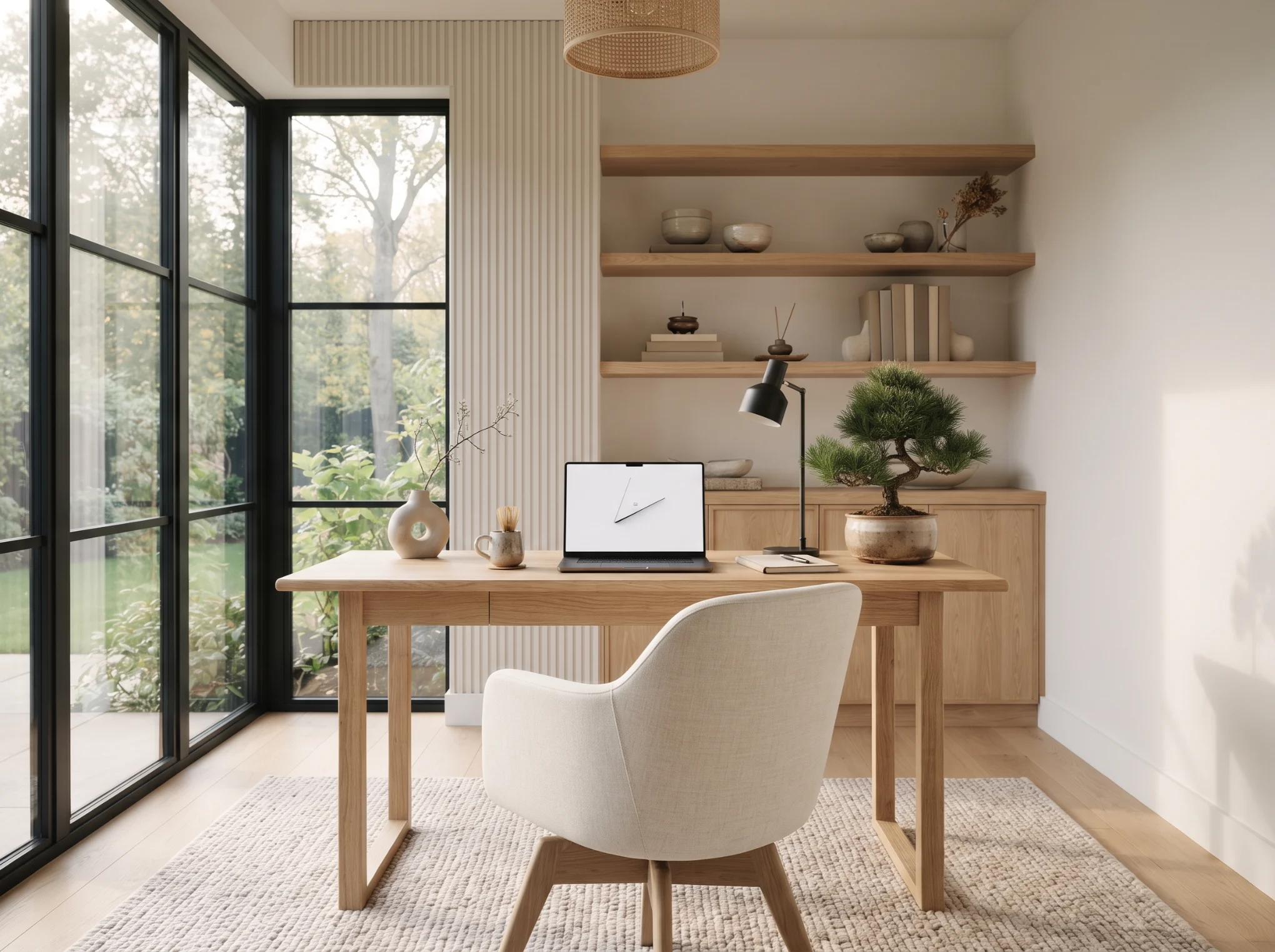
20 Japandi Home Office Makeover Ideas for Modern Living
This article follows that structure while keeping the tone practical and human — not a decor catalog, but something you can actually use.
If your desk feels like a mess of cables, mismatched folders, and a chair that doesn’t match anything else in the room, you’re not alone. A lot of home offices got thrown together in a hurry, and now they just sit there quietly stressing you out every time you open your laptop.
That’s exactly the problem Japandi design solves. It takes the warmth of Japanese minimalism and mixes it with the cozy practicality of Scandinavian style, and the result is a workspace that feels calm instead of chaotic. No harsh colors, no clutter, no visual noise — just wood, light, and a few things you actually need.
Whether you have a whole spare room or just a corner of your bedroom, these 20 Japandi home office ideas will help you build a space that actually makes you want to sit down and work.
What Exactly Is a Japandi Home Office?
A Japandi workspace blends two design philosophies. Japanese minimalism brings the idea of wabi-sabi — finding beauty in simple, imperfect, natural things. Scandinavian design adds function and comfort, so the space still feels warm and livable, not stark or empty.
Put them together and you get a minimalist home office that’s calm without feeling cold. Think light wood, soft neutral tones, natural textures, and furniture that earns its place instead of just filling space.
1. Start With a Neutral Color Palette
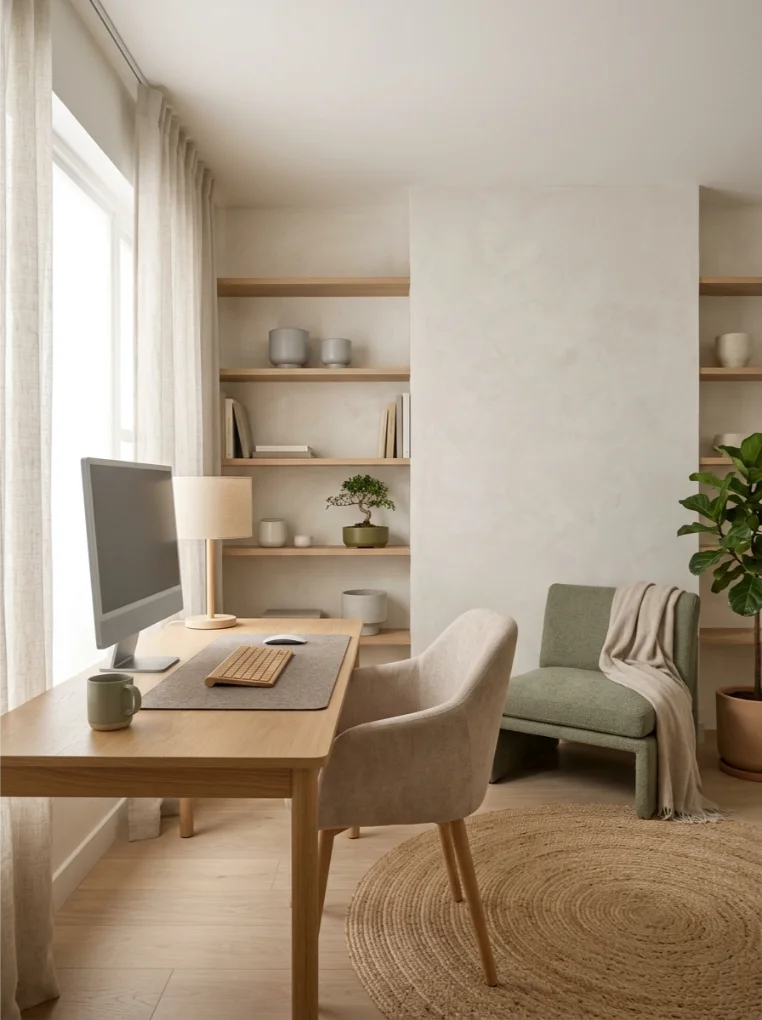
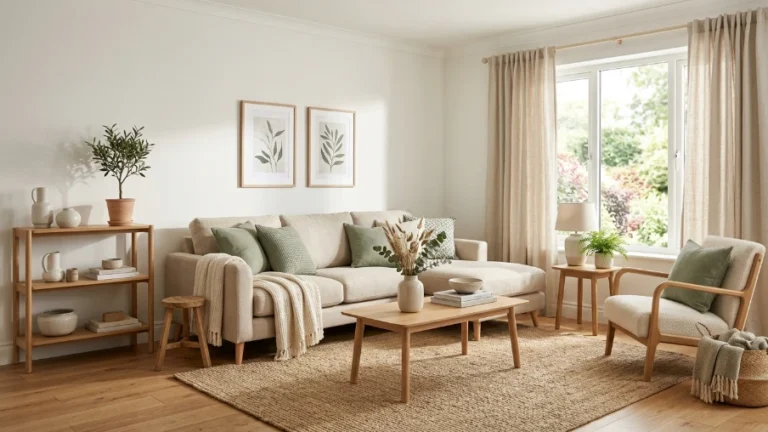
Every Japandi interior design idea starts with color. Stick to whites, warm beiges, soft greys, and muted greens. These shades don’t fight for attention, which means your brain has less to process when you sit down to focus.
Avoid pure white or stark black — they read as cold. Go for warmer, slightly muted versions instead. This neutral office decor base is what makes everything else in the room look intentional rather than random.
2. Choose a Low, Simple Wood Desk
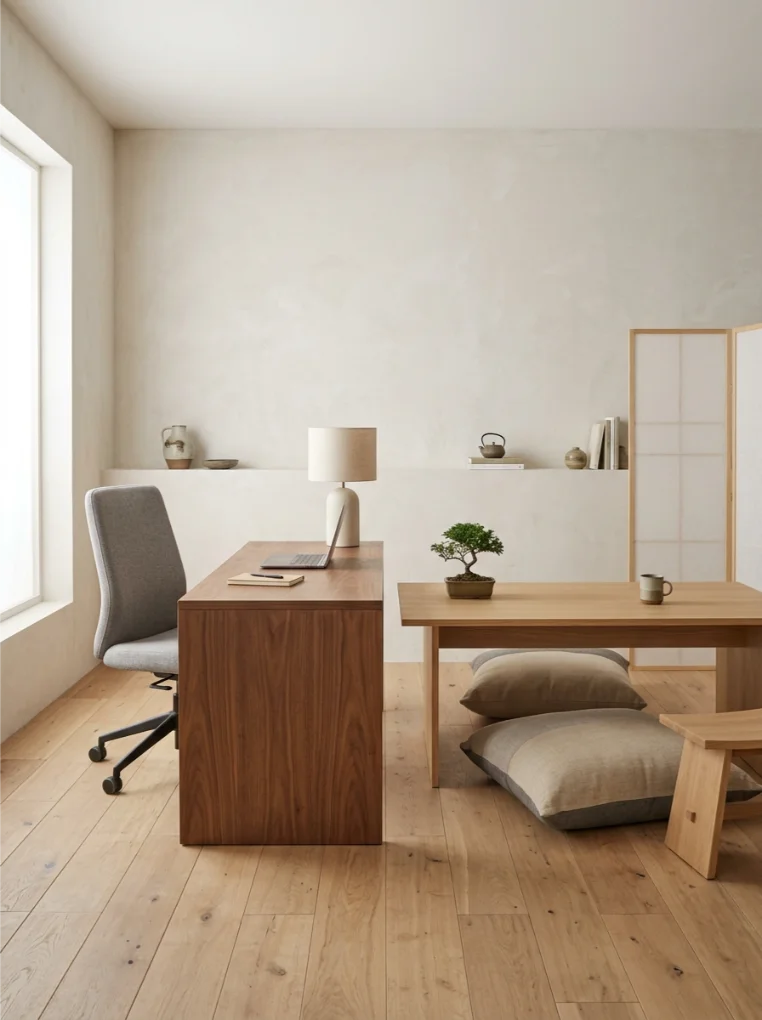
Wood office furniture is the backbone of any Japandi desk setup. Look for a desk with clean lines, light oak or warm walnut finish, and no unnecessary detailing.
A lower-profile desk also echoes traditional Japanese furniture and pairs nicely with a floor cushion or a low chair if you like sitting close to the ground. If that’s too much of a shift, a standard-height desk in the same warm wood tone works just as well.
3. Keep the Chair Comfortable, Not Just Pretty
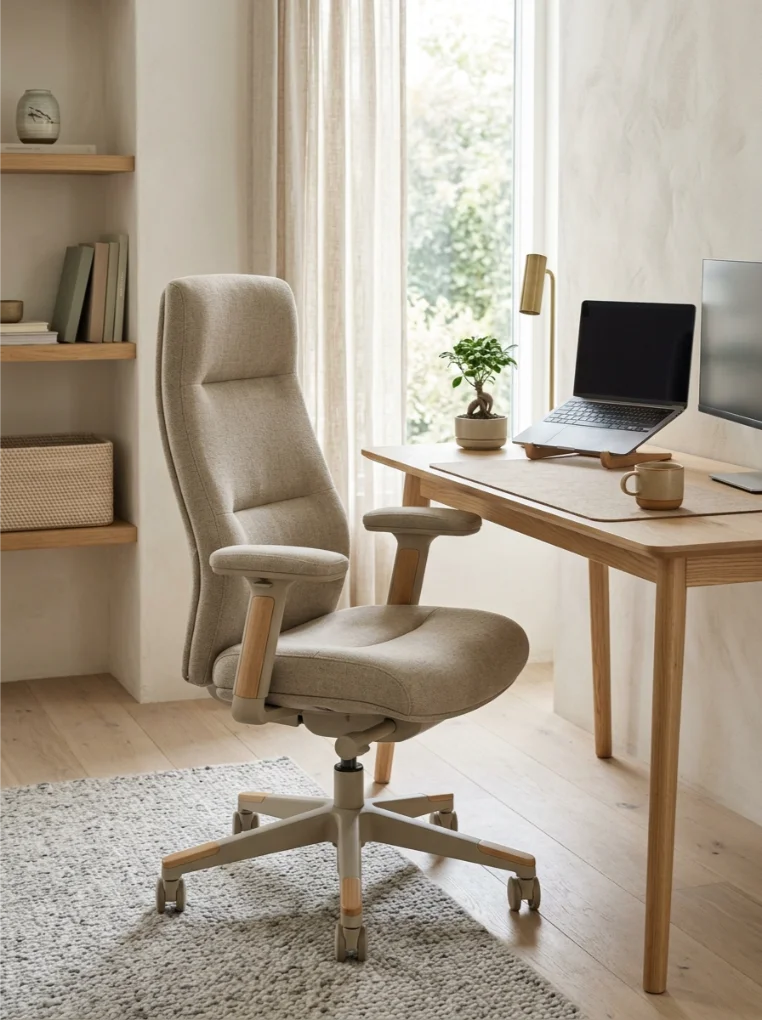
A Japandi workspace still needs to support long work hours, so don’t sacrifice comfort for looks. Choose an ergonomic chair in a muted color — oat, stone, or soft grey — instead of black mesh. Look for one with real back support, and if the frame is wood or has wood accents, even better.
4. Add Warm Wood Tones Everywhere You Can
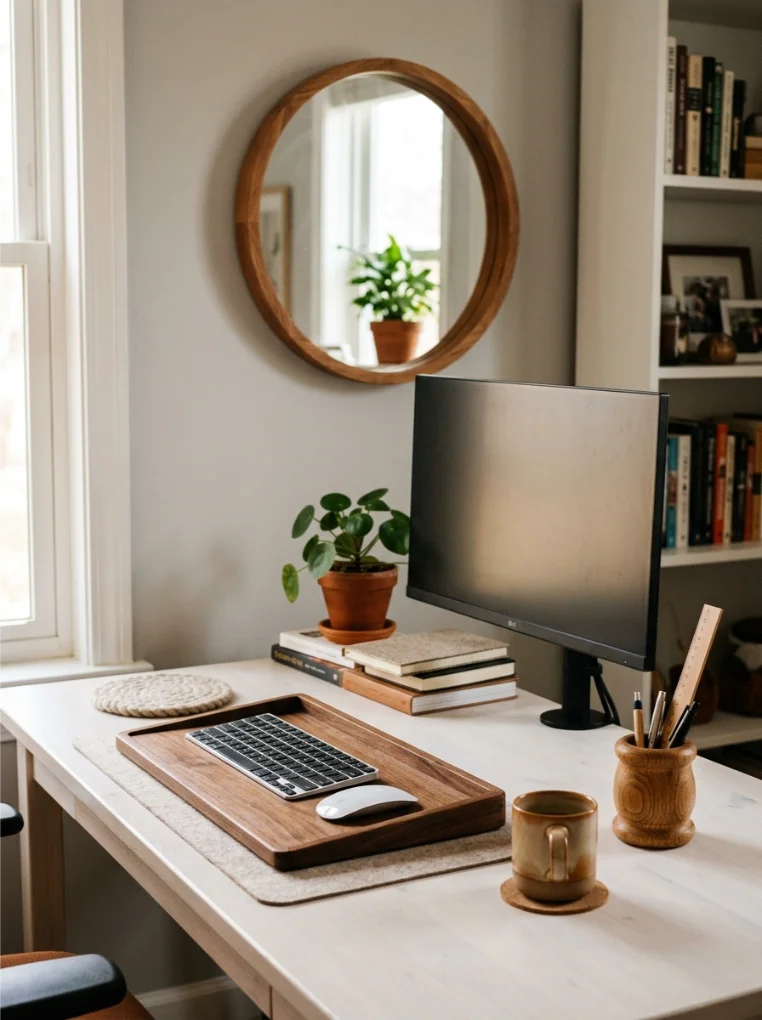
Beyond the desk, look for small ways to bring in warm wood tones: a wooden pen holder, a tray for your keyboard, a simple wood-framed mirror. These small touches tie the whole room together and keep the space feeling grounded.
you may alos like this: https://luxuryhomesdecor.com/masculine-home-office-ideas/
5. Use Floating Shelves Instead of Bulky Cabinets
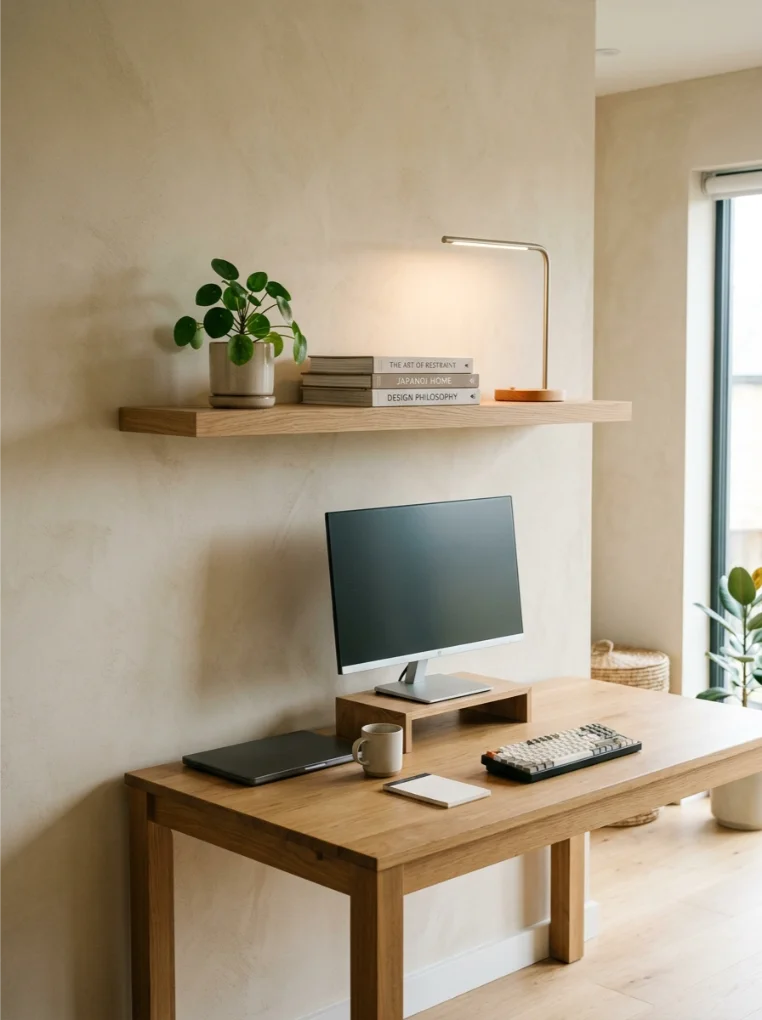
Floating shelves office storage is a Japandi staple because it keeps the floor and walls looking open. Mount one or two shelves above your desk and only display what you actually use — a small plant, a few books, a simple lamp.
The rule here is restraint. If a shelf starts looking crowded, it’s time to edit, not add another shelf.
Quick Reference: Japandi Home Office Elements at a Glance
| Element | Best Materials | Budget-Friendly Option | Placement Tip |
| Desk | Light oak, walnut | Laminate wood-look desk | Near natural light, facing a window if possible |
| Chair | Wood-frame, linen upholstery | Fabric ergonomic chair in neutral tone | Match seat height to desk for good posture |
| Storage | Woven baskets, open shelving | Rattan bins from a home store | Keep visible shelves half-empty, not full |
| Lighting | Paper lantern, matte black task lamp | Warm LED desk lamp | Layer ambient and task lighting |
| Textiles | Linen curtains, cotton cushions | Cotton blend fabrics | Add texture near the window and seating |
| Plants | Snake plant, pothos | Faux plant in ceramic pot | One or two spots only, not scattered |
| Accessories | Bamboo, ceramic, unglazed clay | Bamboo organizers | Keep desktop items to under five pieces |
6. Bring In Woven Storage Baskets
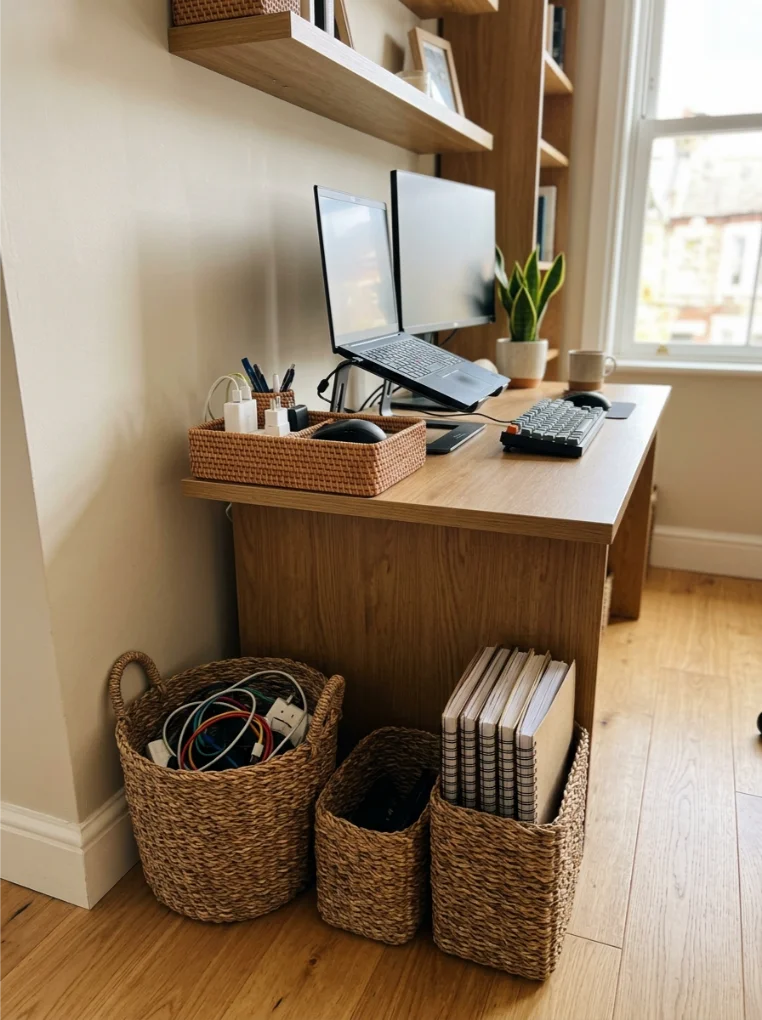
For everything that doesn’t need to be on display — cables, chargers, extra notebooks — use woven storage baskets. They add natural texture without looking messy, and they’re one of the easiest ways to keep a small home office looking tidy without spending much.
7. Layer in Soft, Natural Lighting
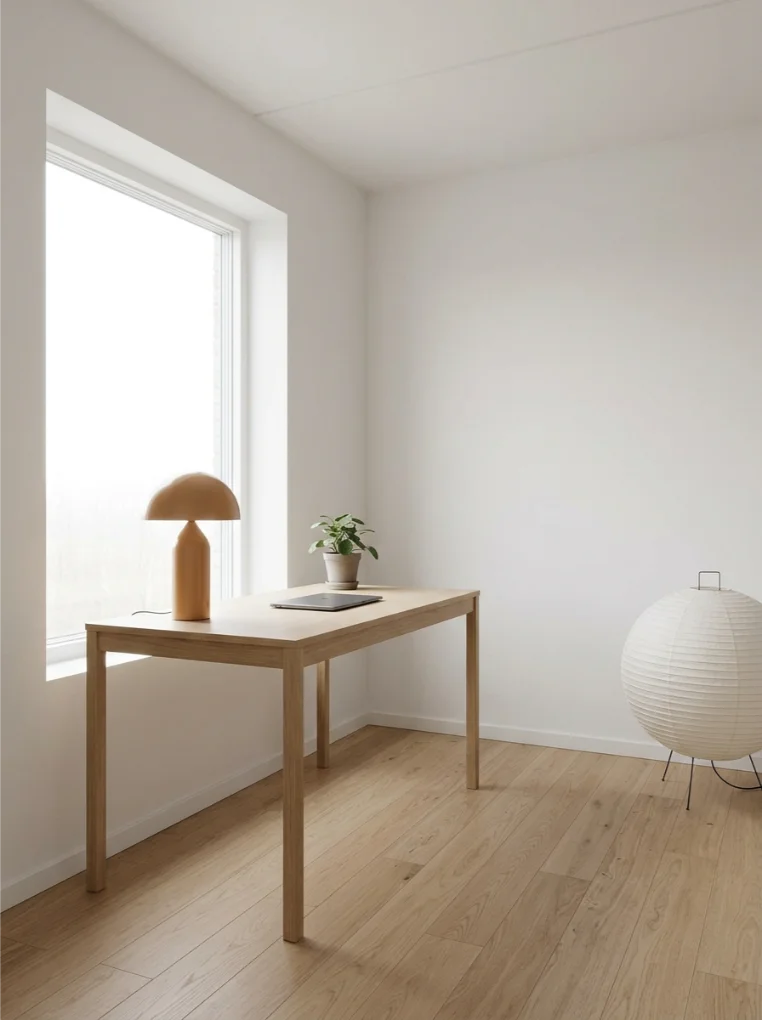
Lighting sets the whole mood of a calm office design. Skip harsh overhead lighting where you can. Instead, layer in a warm desk lamp, natural daylight from an uncovered window, and maybe a paper lantern light for ambient glow in the evening.
If you work at night often, a black matte task lamp with an adjustable arm gives you focused light exactly where you need it without breaking the aesthetic.
8. Add One or Two Indoor Plants
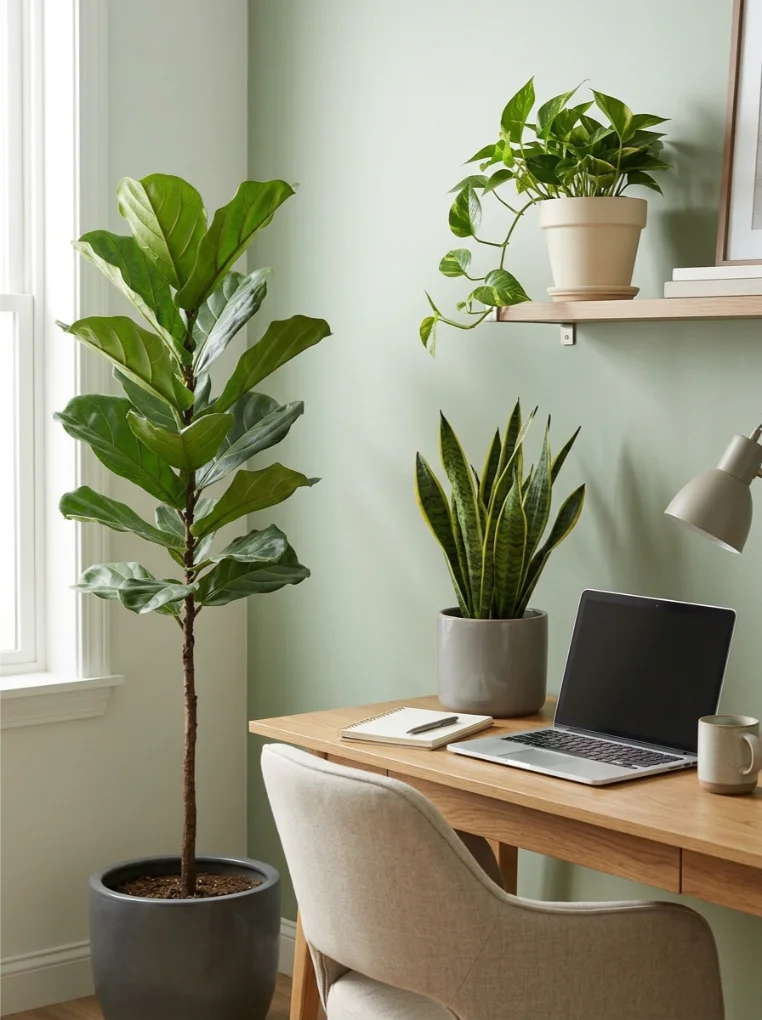
Indoor plants for home office spaces aren’t just decoration — they genuinely make a room feel calmer and improve air quality. A small pothos, a snake plant, or a single tall fiddle leaf fig works well. Stick to one or two plants in simple terracotta or ceramic pots rather than a jungle of greenery, which can start to look busy.
9. Use Linen or Cotton Textures
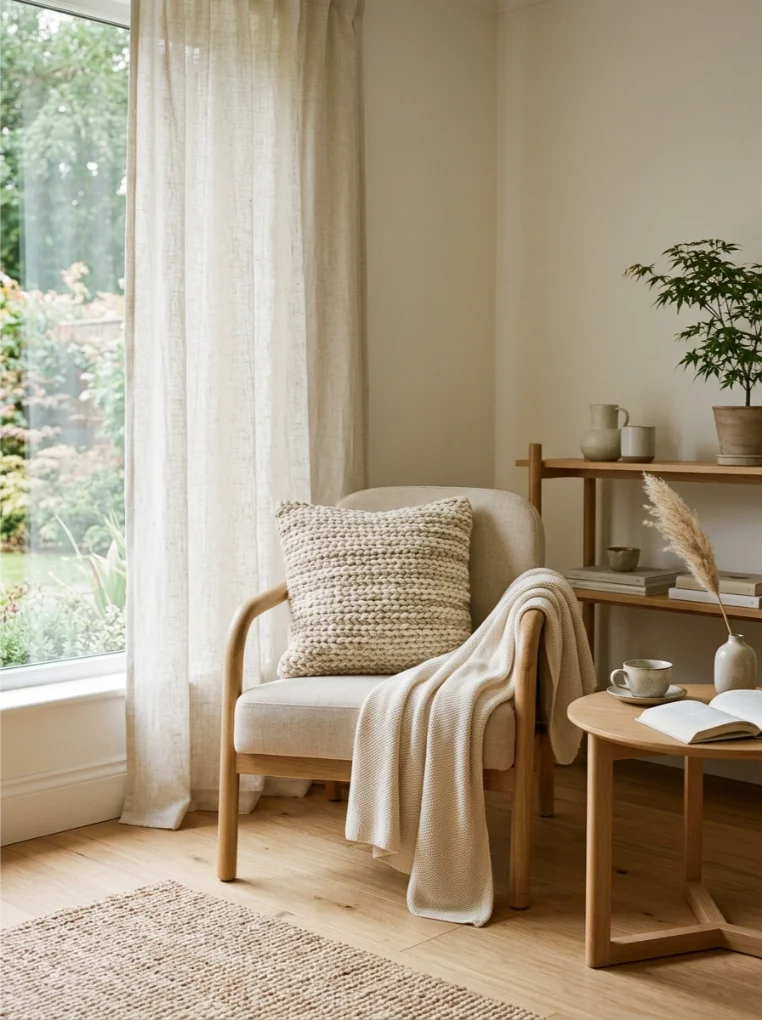
Textured linen decor is what keeps a minimalist room from feeling cold. A linen curtain panel, a woven cushion on your chair, or a cotton throw nearby all add softness. These small textile touches are what make a Japandi room feel lived-in instead of staged.
10. Try a Shoji-Style Screen for Privacy
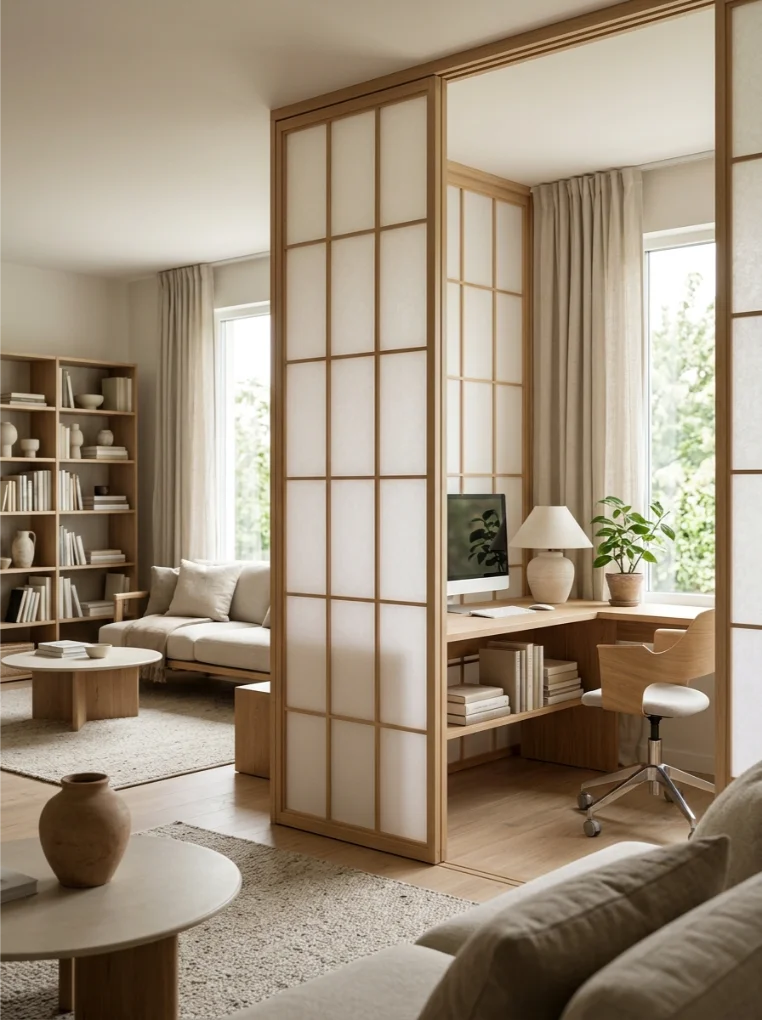
If your office is part of a bigger room, a shoji screen is a classic Japandi room idea that divides space without blocking light. The simple wood frame and translucent panels let you carve out a private work corner while keeping the room feeling open and airy.
11. Keep Your Desktop Clutter-Free
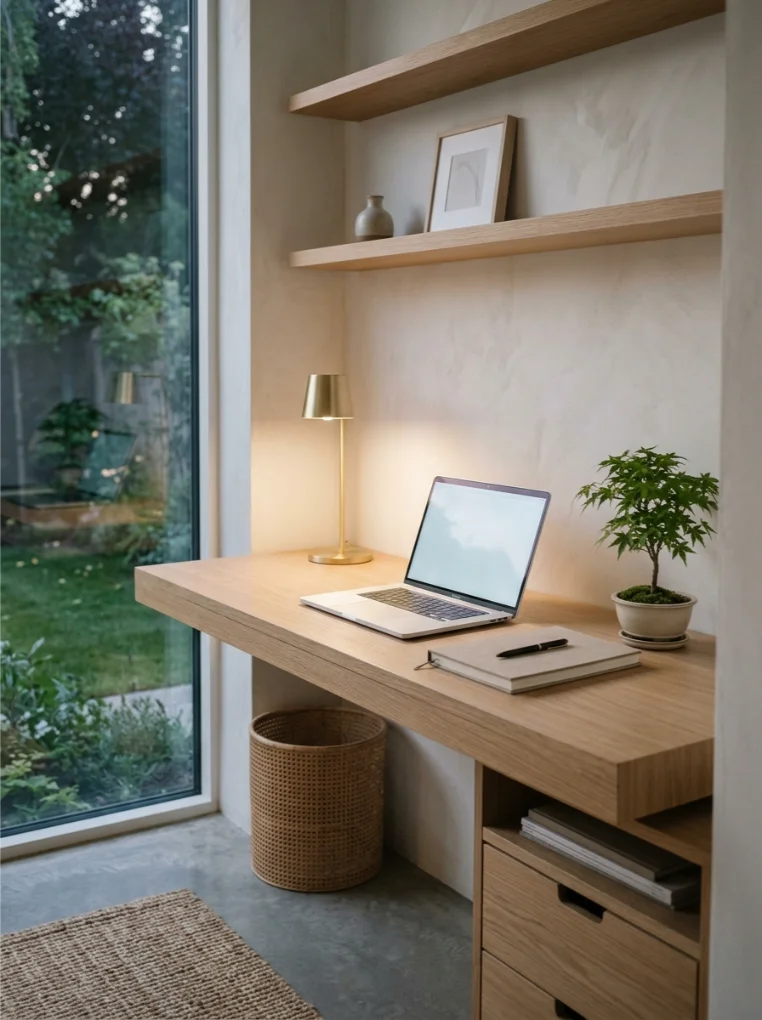
A clutter-free office setup is non-negotiable in Japandi style. At the end of each day, clear your desk down to just the essentials — laptop, one notebook, maybe a small plant. Everything else goes into a drawer or basket. This habit alone will make your space feel twice as calm.
12. Hide Your Cables
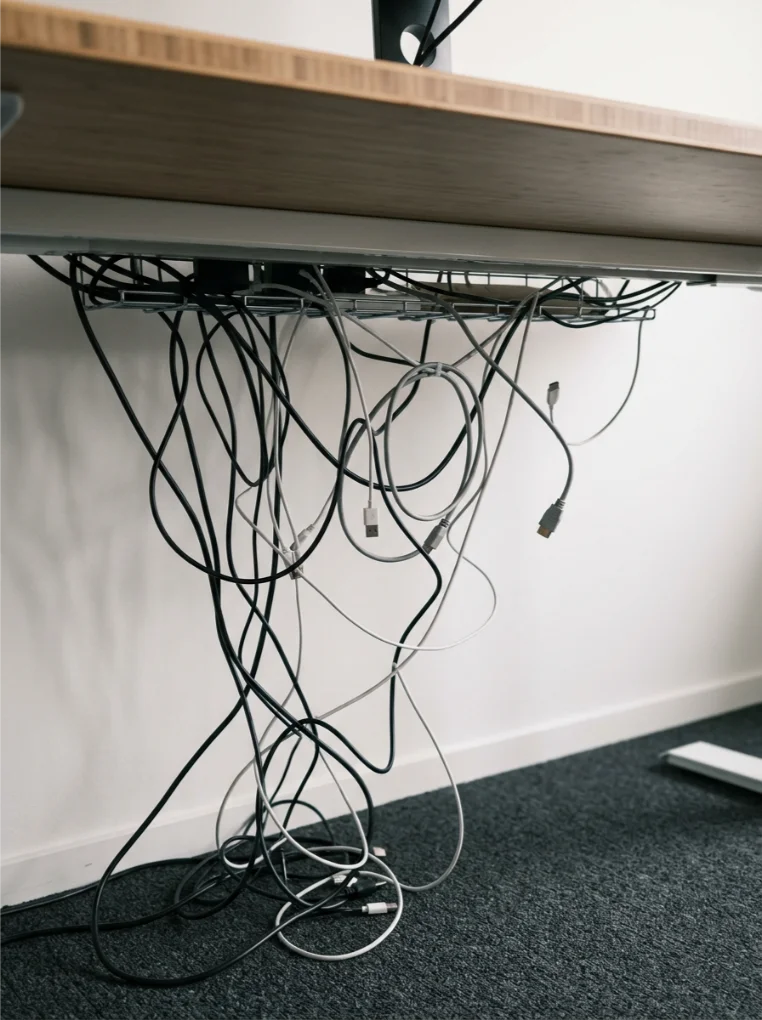
Nothing ruins a clean workspace aesthetic faster than a tangle of visible cords. Use cable clips under your desk, a cable box behind your monitor, or a simple fabric sleeve to bundle everything together. It’s a small fix, but it makes a big visual difference.
13. Choose Bamboo Office Accessories
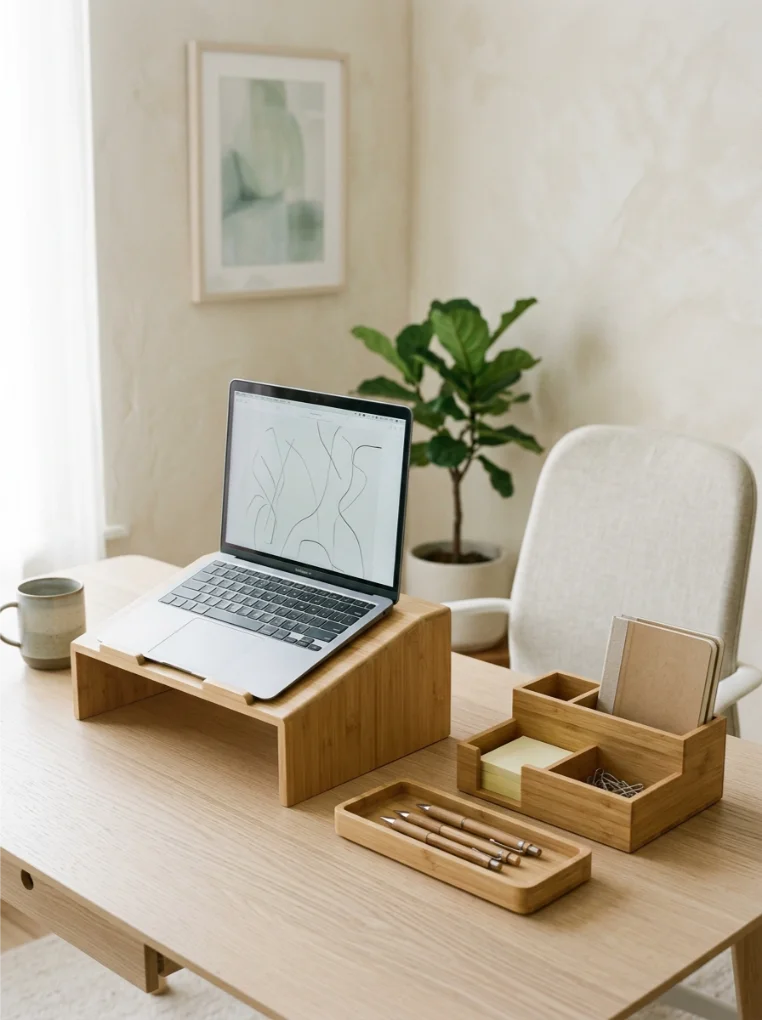
Bamboo office accessories — a bamboo laptop stand, a bamboo pen tray, a small bamboo organizer — are affordable, sustainable, and fit the Japandi palette perfectly. They’re an easy way to swap out plastic desk items for something that actually matches your space.
you may alos like this: https://luxuryhomesdecor.com/masculine-home-office-ideas/
14. Add a Piece of Simple, Meaningful Art
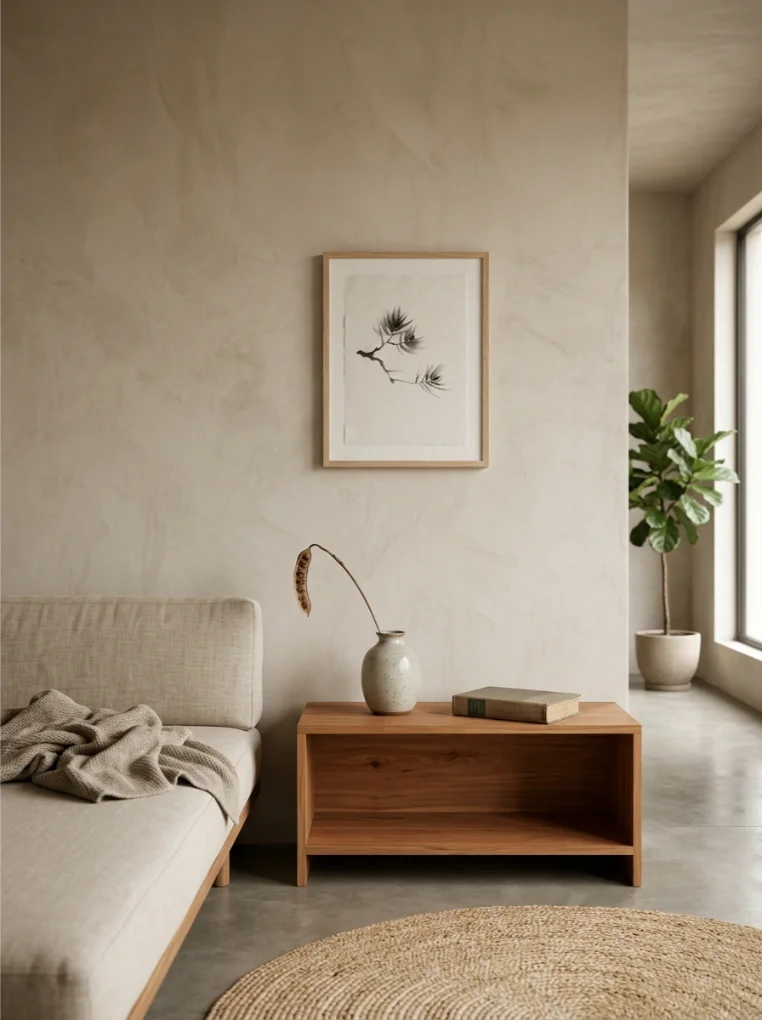
Skip busy gallery walls. One piece of simple art — a minimalist ink painting, a black-and-white photograph, or a small ceramic piece — is enough. Japandi interior design favors quality and meaning over quantity, even in decor.
15. Use Rugs to Define the Space
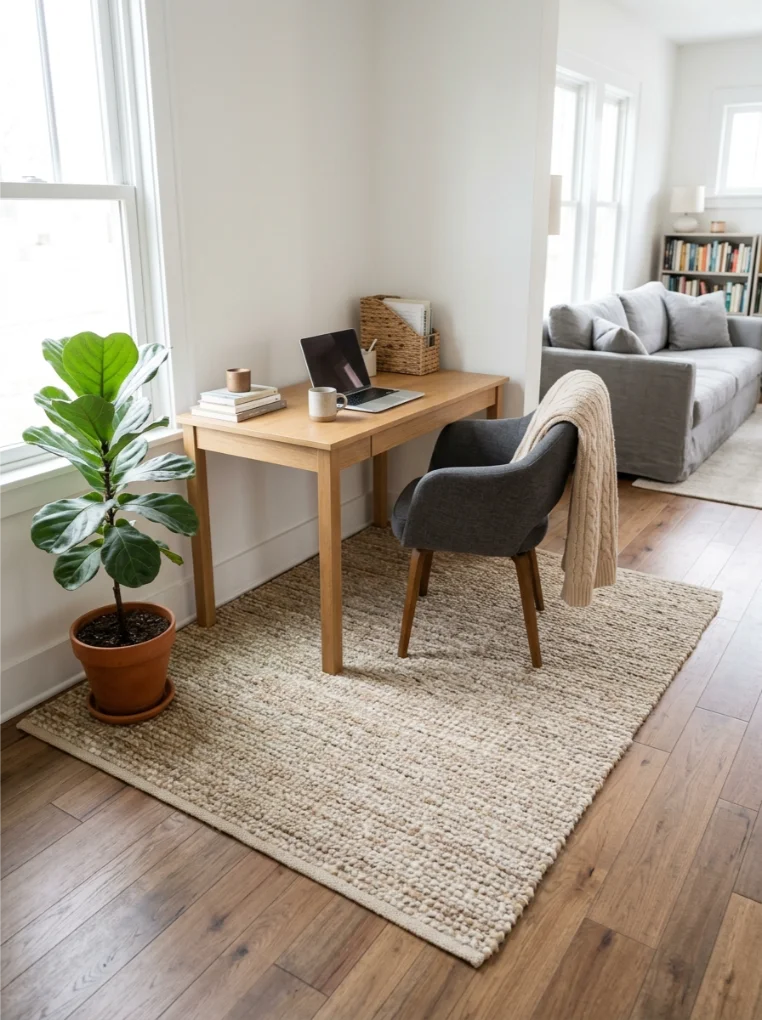
If your office is a corner of another room, a low-pile natural fiber rug helps define the space without adding visual weight. Jute or wool rugs in neutral tones work best and add a bit of warmth underfoot, especially in colder months.
16. Keep Furniture Multi-Functional
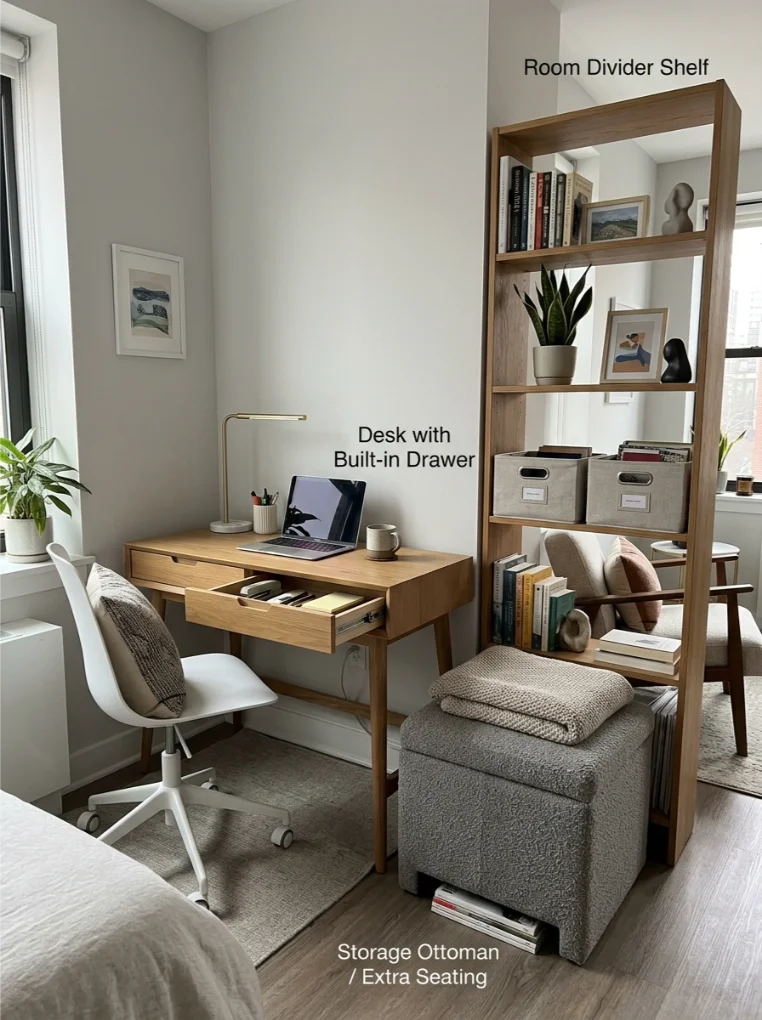
In a small home office, every piece should earn its spot. A storage ottoman that doubles as extra seating, a desk with a built-in drawer, or a shelf that also acts as a room divider — these choices keep the space functional without adding bulk.
you may also like this: https://luxuryhomesdecor.com/difference-between-modern-and-contemporary/
17. Let Natural Light Lead the Layout
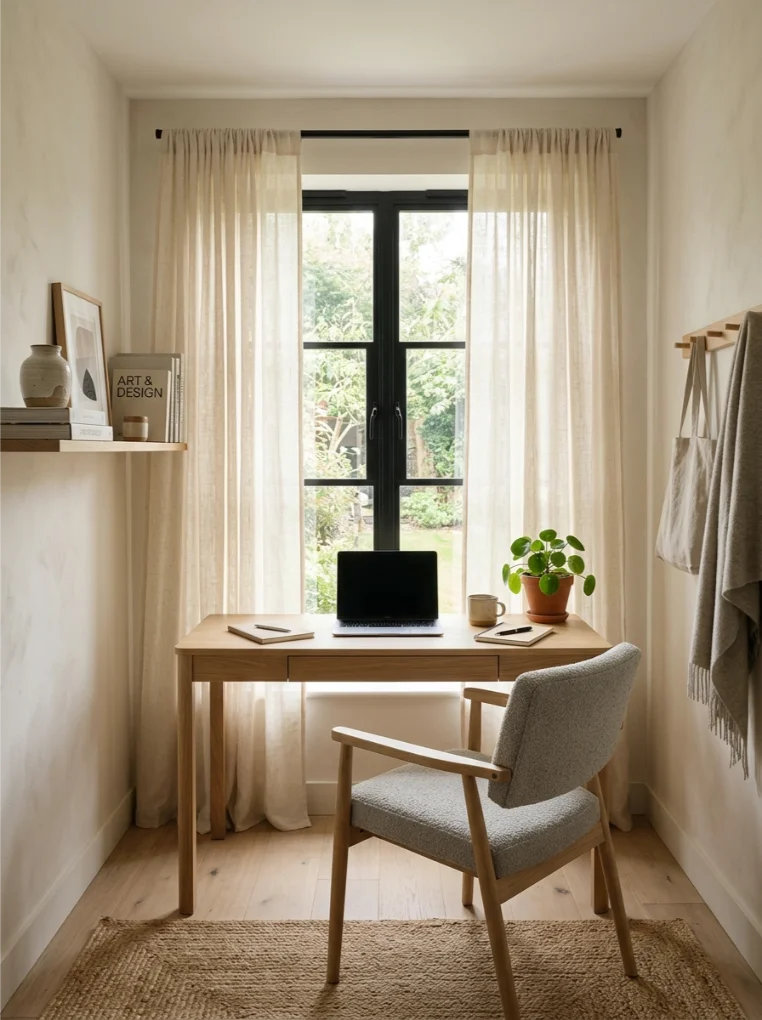
Whenever possible, position your desk near a window rather than facing a blank wall. Natural light supports focus and mood far better than any lamp, and it’s a core part of what makes Japandi spaces feel so calming. If glare is an issue, a sheer linen curtain filters the light without blocking it.
18. Stick to One Accent Color, Not a Whole Palette
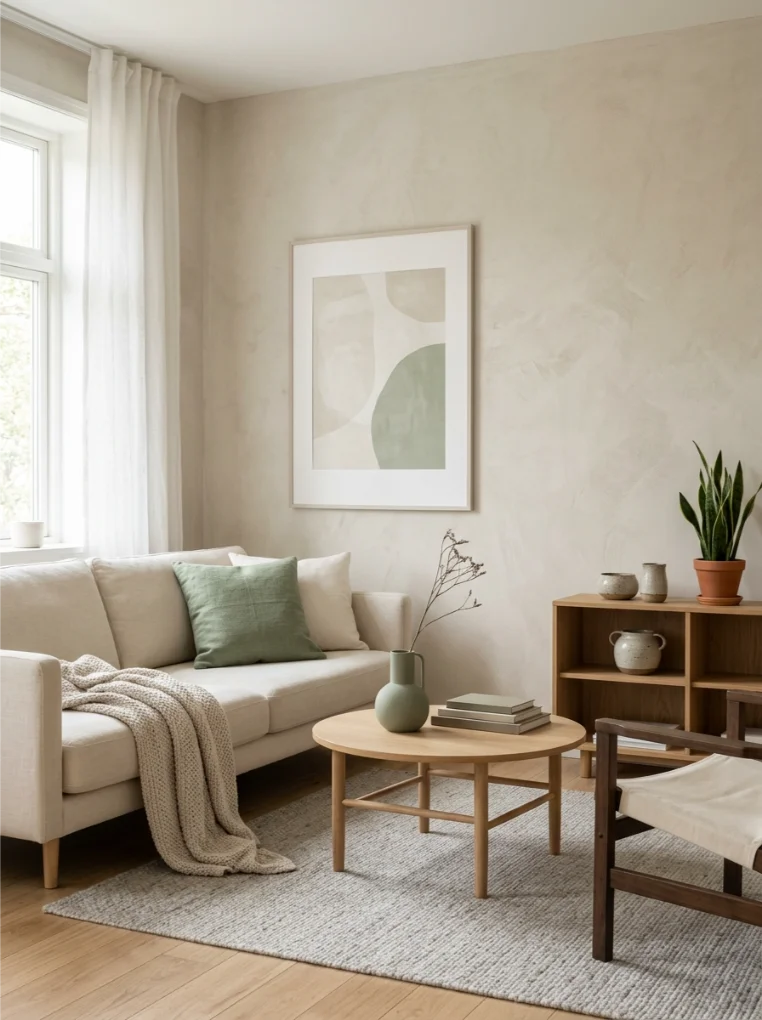
Japandi doesn’t mean everything has to be beige. You can bring in one soft accent — sage green, terracotta, or dusty blue — through a cushion, a small vase, or a piece of art. Just keep it to one consistent accent so the space still feels cohesive.
19. Add a Reading or Break Corner
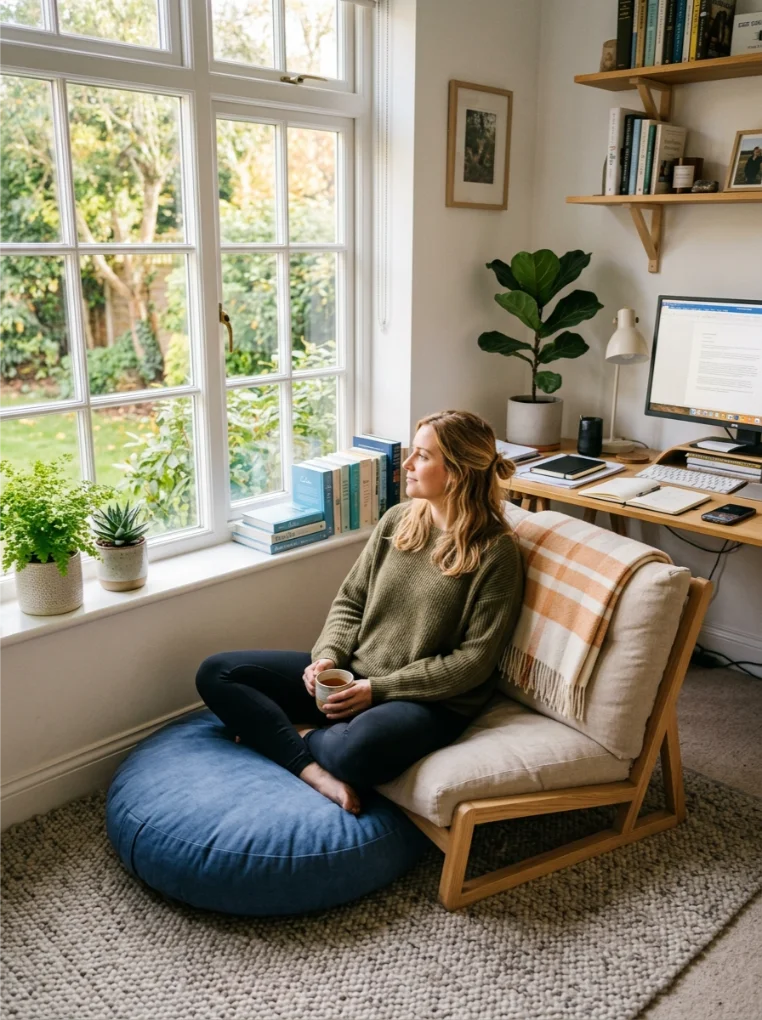
If your room has the space, a small floor cushion or low chair near a window creates a spot to step away from the desk for five minutes. This isn’t just aesthetic — having a designated break spot actually helps you rest better between work sessions instead of scrolling your phone at your desk.
20. Personalize Without Cluttering
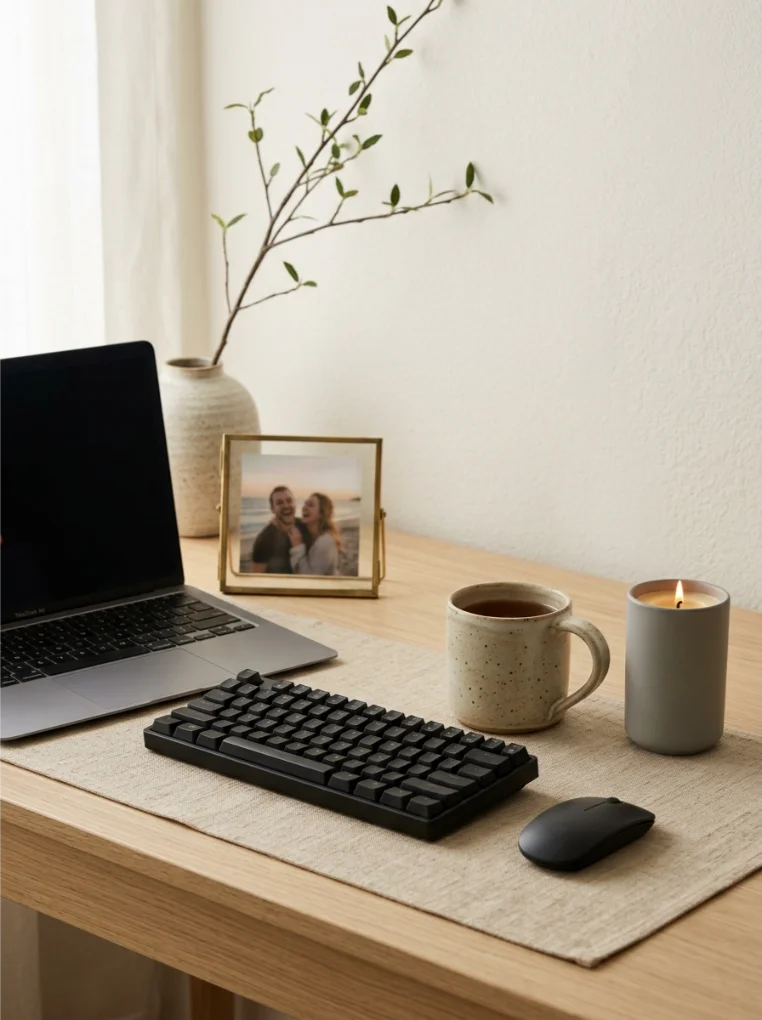
Finally, add a couple of things that feel like you — a small photo, a favorite mug, a candle in a simple ceramic holder. A Japandi workspace shouldn’t feel like a showroom. The goal is a space that’s calm and organized, but still feels like your own.
Common Mistakes to Avoid
- Overbuying decor: Japandi is about restraint. Adding too many “matching” pieces defeats the purpose.
- Choosing style over comfort: A beautiful chair that hurts your back after an hour isn’t worth it.
- Cold, sterile colors: Pure white and grey without any warm wood or texture ends up feeling clinical, not calm.
- Ignoring storage: Without a place for cables, papers, and supplies, even a well-designed room gets messy fast.
- Too much greenery: A few well-placed plants look intentional; a dozen scattered pots look chaotic.
Bringing It All Together
A Japandi home office isn’t about following a strict formula — it’s about creating a space that feels calm enough to actually focus in. Start small if you need to: swap one item, clear your desk, add a plant. You don’t need to redo the whole room in a weekend.
The core idea stays the same no matter how much you change: natural materials, a quiet color palette, useful storage, and only the things you truly need on display. Do that, and your workspace stops being a source of stress and starts being a place you’re glad to sit down at every morning.
Frequently Asked Questions
1. What colors work best for a Japandi home office?
Warm neutrals like beige, oatmeal, soft grey, and muted green work best. Avoid stark white or black, since they can feel cold rather than calm.
2. Is Japandi style expensive to achieve?
Not necessarily. Many Japandi elements — woven baskets, bamboo accessories, linen cushions — are affordable. The look comes more from restraint and consistency than expensive furniture.
3. Can I create a Japandi office in a small space or apartment?
Yes. Japandi actually works well in small spaces because it favors minimal, multi-functional furniture and open shelving instead of bulky storage pieces.
4. What kind of desk suits a Japandi workspace best?
A low-profile desk in light oak or walnut with simple, clean lines fits best. Avoid ornate detailing or dark, heavy furniture.
5. Do I need real plants for a Japandi home office?
Real plants add the most benefit, but a well-made faux plant in a ceramic or terracotta pot works fine if you don’t have natural light or a lot of time for plant care.