Difference Between Modern and Contemporary Design Explained
Modern and contemporary design are two of the most widely used interior design styles across homes, offices, and architectural projects. Although they are often confused with each other, they represent two very different design philosophies. Both styles emphasize simplicity and clean aesthetics, but their origins, principles, and execution methods are not the same.
Modern design comes from a specific historical movement that started in the early twentieth century. It is rooted in the idea that design should be functional, minimal, and free from unnecessary decoration. Every element in modern design serves a clear purpose, and the overall look remains structured and timeless.
Contemporary design, on the other hand, is not fixed to any particular era. It represents the present moment and evolves as trends, technologies, and lifestyles change. Because of this, contemporary interiors always feel fresh, flexible, and updated compared to modern design.
What Is Modern Design?
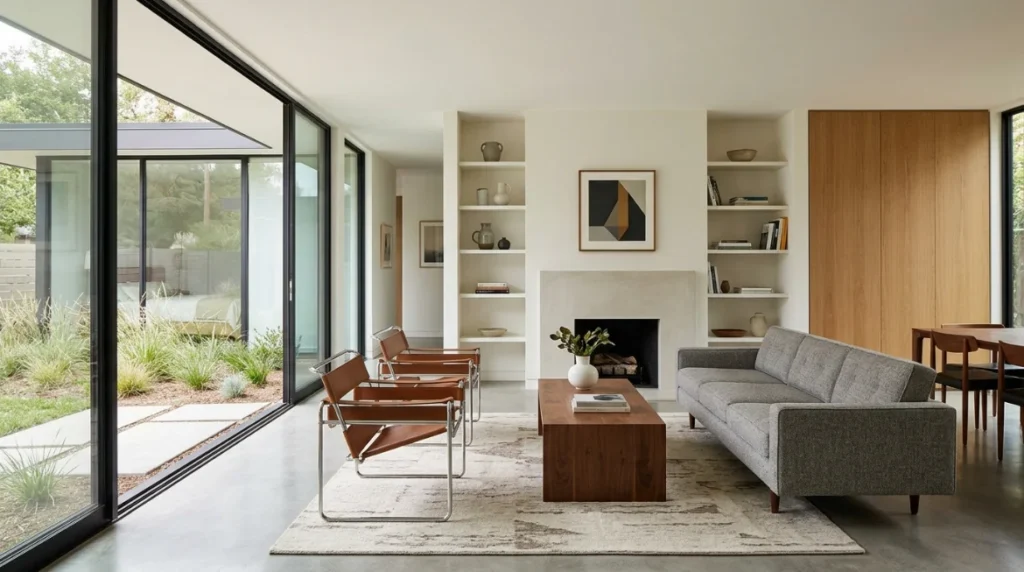
Modern design is a design style that originated in the early 1900s, strongly influenced by the modernist movement. The goal of this movement was to simplify design and remove excessive decoration that was common in earlier architectural styles. Designers focused on creating spaces that were functional, practical, and visually clean.
This style is heavily influenced by movements like Bauhaus and Scandinavian design, which introduced the idea that “form follows function.” This means that every design element should exist for a reason rather than for decoration. As a result, modern interiors are often minimal, structured, and highly functional.
Modern design is still widely used today because of its timeless and calming appearance. It avoids trends and instead focuses on long-lasting principles that do not easily go out of style. This makes it a preferred choice for homeowners who want a stable and consistent interior look.
Characteristics of Modern Design
Modern design follows a clear and consistent set of principles that define its identity. These characteristics make it easy to recognize in any interior space.
- Clean straight lines and geometric shapes
- Neutral and earthy color palette
- Functional furniture with simple forms
- Minimal decorative accessories
- Natural materials like wood, leather, and stone
These elements create a calm and balanced environment that feels organized and uncluttered. Modern design focuses more on usability than decoration, which is why it often feels very practical and efficient.
Modern Architecture and Its Influence
Modern architecture played a major role in shaping modern interior design. Architects during the modernist era introduced flat roofs, open floor plans, and large glass windows to bring natural light into spaces. These features were designed to improve functionality and create a stronger connection between indoor and outdoor environments.
The influence of modern architecture can still be seen today in residential buildings. Clean structures, minimal ornamentation, and geometric shapes remain key elements of modern-style homes. The goal is always to prioritize structure and efficiency over decorative complexity.
Modern design continues to influence furniture and interior layouts as well. Many contemporary homes still borrow modern principles because of their simplicity and timeless appeal.
What Is Contemporary Design?
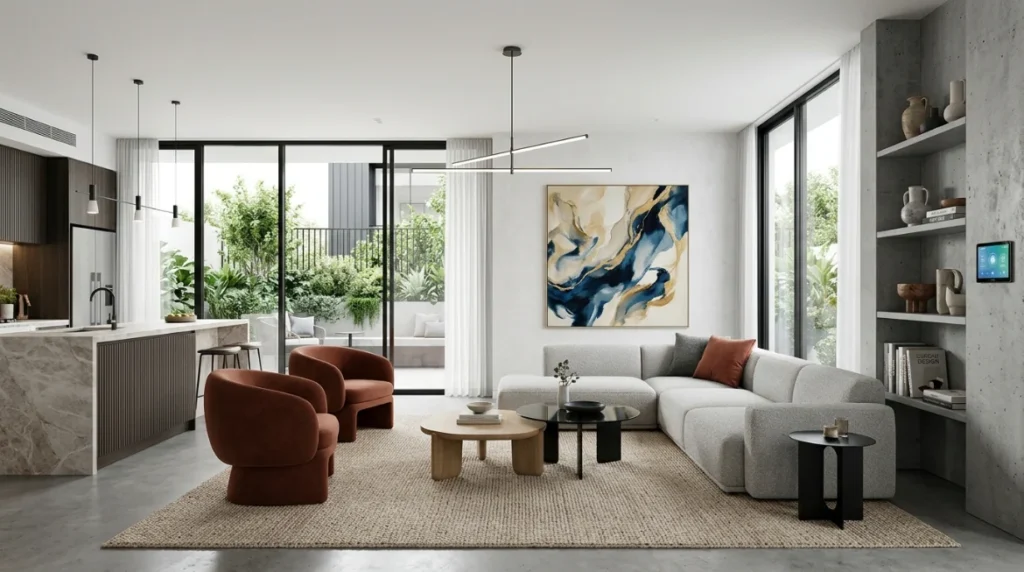
Contemporary design refers to the current and evolving style of interior design. Unlike modern design, it is not tied to a specific historical period. Instead, it changes over time based on new trends, technologies, and cultural influences.
Contemporary interiors often combine different design elements from various styles. It may include modern simplicity, industrial materials, or minimalist features depending on what is currently popular. This flexibility makes contemporary design highly adaptable and widely used in modern homes.
Because contemporary design evolves continuously, it always reflects what is currently relevant in the design world. This makes it feel fresh, updated, and more dynamic compared to modern design.
Characteristics of Contemporary Design
Contemporary design is flexible and ever-changing, which makes it different from fixed design styles. It focuses on current preferences and modern living needs.
- Constantly evolving design approach
- Neutral base with bold accent elements
- Mixed materials and textures
- Focus on comfort and livability
- Open, airy, and flexible spaces
These features allow homeowners to adjust their interiors over time without completely redesigning their space. Contemporary design is ideal for people who like to keep their homes updated with current trends.
Modern vs Contemporary Design Core Differences
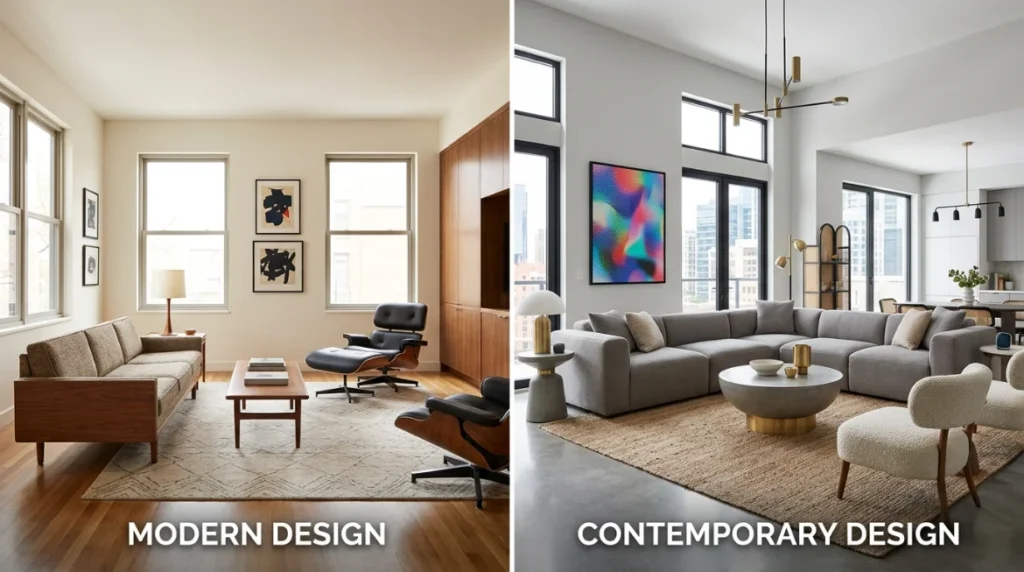
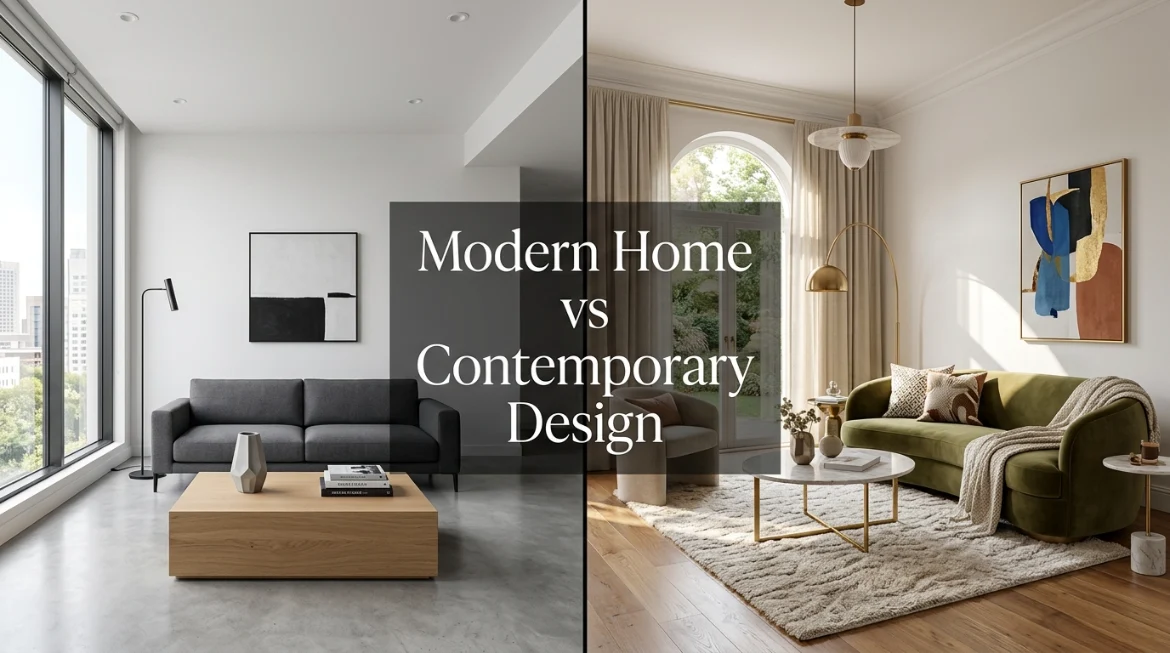
The main difference between modern and contemporary design lies in their nature. Modern design is fixed and based on historical principles, while contemporary design is fluid and changes with time.
Modern interiors are structured, predictable, and timeless. They follow strict rules regarding simplicity and functionality. Contemporary interiors are more flexible, allowing creativity and variation based on current trends.
While modern design focuses on long-term stability, contemporary design focuses on freshness and adaptability. Both styles are popular, but they serve different aesthetic purposes.
Comparison Table
| Feature | Modern Design | Contemporary Design |
|---|---|---|
| Origin | Early 20th century | Present-day trends |
| Style Nature | Fixed | Evolving |
| Color Palette | Neutral tones | Neutral + accent colors |
| Furniture Style | Simple and functional | Trend-based and diverse |
| Materials | Natural materials | Mixed materials |
| Layout | Open and structured | Flexible layouts |
| Design Focus | Functionality | Comfort and trends |
Furniture Differences
Furniture is one of the most noticeable differences between modern and contemporary design. In modern design, furniture is simple, low-profile, and highly functional. Each piece is selected for its purpose rather than decoration.
In contemporary design, furniture tends to be more experimental and expressive. Designers often use unique shapes, bold designs, and mixed materials. Comfort plays a major role, but style and current trends also influence selection.
Modern furniture creates a timeless look, while contemporary furniture reflects current lifestyle preferences and innovations.
Color Schemes
Color usage is another key difference between these two styles. Modern design uses neutral colors such as white, beige, grey, and natural earth tones. These colors create a calm and balanced atmosphere.
Contemporary design also uses neutral bases but often adds bold accent colors to create contrast and visual interest. This makes contemporary interiors feel more dynamic and expressive compared to modern ones.
Color selection plays an important role in defining the mood of a space in both styles.
Lighting and Space Perception
Lighting is essential in both modern and contemporary design, but it is used differently. Modern design focuses on natural light and large open windows to create a bright and airy environment.
Contemporary design uses layered lighting, including ambient, task, and decorative lighting. This creates depth and enhances the overall atmosphere of the space.
Both styles aim to improve space perception, but they use different techniques to achieve it.
Architecture Differences
Modern architecture is known for its simple geometric forms, flat surfaces, and lack of decoration. It focuses on structural clarity and functional design.
Contemporary architecture reflects modern innovations in construction and materials. It often includes curved structures, sustainable designs, and advanced engineering techniques.
Modern architecture remains consistent, while contemporary architecture continues to evolve with time and technology.
How to Choose Between Modern and Contemporary Design
Choosing between modern and contemporary design depends on personal lifestyle and preference. If you prefer a calm, structured, and timeless environment, modern design is a better choice.
If you prefer flexibility, variety, and current trends, contemporary design is more suitable. Many homeowners also combine both styles to create a balanced interior that reflects both stability and modern trends.
Common Mistakes in Mixing Styles
Many homeowners mistakenly mix modern and contemporary elements without planning, which can create a confusing interior.
- Mixing too many design styles randomly
- Ignoring color harmony
- Overdecorating minimal spaces
- Using mismatched furniture styles
- Lack of clear design direction
Avoiding these mistakes helps create a more unified and visually appealing home environment.
Conclusion
Modern and contemporary design are two distinct interior design styles with different philosophies. Modern design is structured, timeless, and based on historical principles, while contemporary design is flexible, evolving, and influenced by current trends.
Understanding these differences allows homeowners to make better design decisions and create interiors that match their personality and lifestyle. Whether you choose modern, contemporary, or a combination of both, the key is maintaining balance, simplicity, and functionality in your space.
FAQs
1. Is modern design still popular today?
Yes, modern design is still widely used due to its timeless and simple aesthetic.
2. What makes contemporary design different?
Contemporary design changes with time and reflects current trends.
3. Can modern and contemporary design be combined?
Yes, many interiors successfully combine both styles.
4. Which style is better for small homes?
Both can work, but modern design often feels more structured and clean.
5. Does contemporary design follow rules?
No strict rules exist; it evolves based on trends and preferences.