19 Bedroom Lighting Ideas for Stylish & Cozy Bedrooms 2026
Your bedroom should be the one place in your home where you can truly relax. But if a single harsh ceiling light is running at full brightness every night, that calm feeling is hard to find. The right bedroom lighting ideas can change everything. A warm lamp on the nightstand, a soft glow behind the headboard, a pendant light that doubles as a design statement these small changes make a room feel completely different.
Whether you are working with a tiny apartment bedroom or a spacious master suite, this guide walks you through 19 practical and stylish bedroom lighting ideas for 2026. There are options for every budget, every style, and every room size, with honest advice to help you get it right the first time.
Understanding Layered Bedroom Lighting
Before jumping into specific ideas, it helps to understand the foundation of any good bedroom lighting design. Professionals call it layered lighting, and it simply means using more than one type of light source in the room. Each layer has a different job.
Ambient Lighting This is your main, room-wide light source. Recessed lighting, flush-mount ceiling fixtures, and ceiling fans with built-in lights all fall into this category. The key is to keep this layer soft and dimmable so it does not feel harsh at night.
Task Lighting Task lighting is focused light for specific activities like reading in bed, getting dressed, or applying makeup at a vanity. Bedside lamps, wall sconces beside the headboard, and adjustable floor lamps all serve this purpose.
Accent Lighting Accent lighting is all about atmosphere. LED strip lights along a headboard, string lights draped along a wall, or a small lamp highlighting artwork are all forms of accent lighting. This layer adds warmth, personality, and visual depth to the room.
The Color Temperature Rule For bedroom lighting, always choose warm white bulbs between 2700K and 3000K. Cooler bulbs above 4000K feel clinical and make relaxation harder. Warm white light encourages your body to wind down at the end of the day.
19 Bedroom Lighting Ideas for 2026
1. Recessed Lighting with a Dimmer Switch
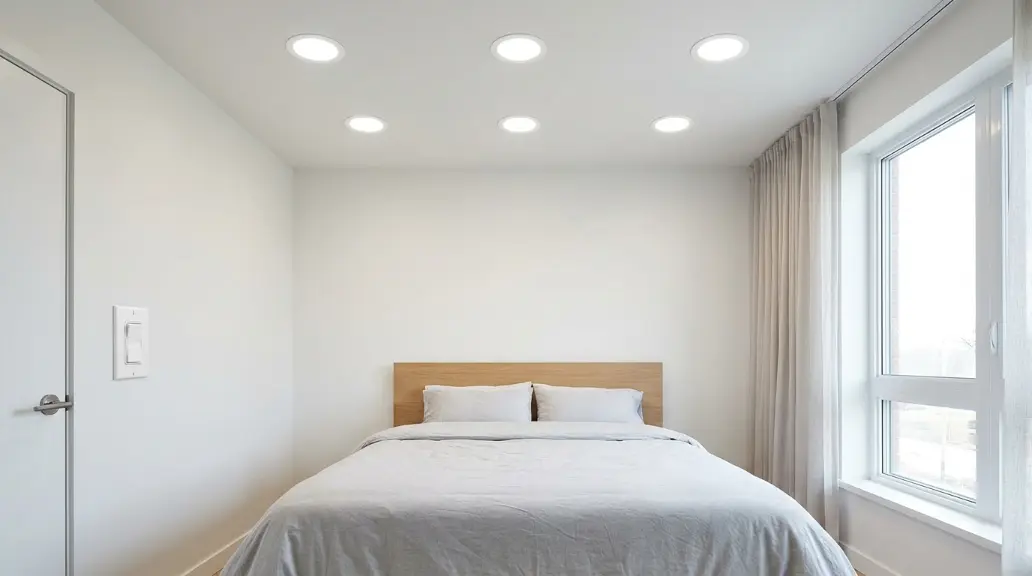
Recessed lighting is one of the cleanest ceiling light options for a bedroom. When paired with a dimmer switch, it gives you full control over brightness throughout the day. Set it bright in the morning, and dial it down to a soft glow in the evening. Position the lights evenly around the room to avoid dark corners.
Tip: Use warm white LED bulbs at 2700K for recessed lights in the bedroom. They are energy-efficient and produce a cozy, hotel-like warmth.
2. Bedside Pendant Lights
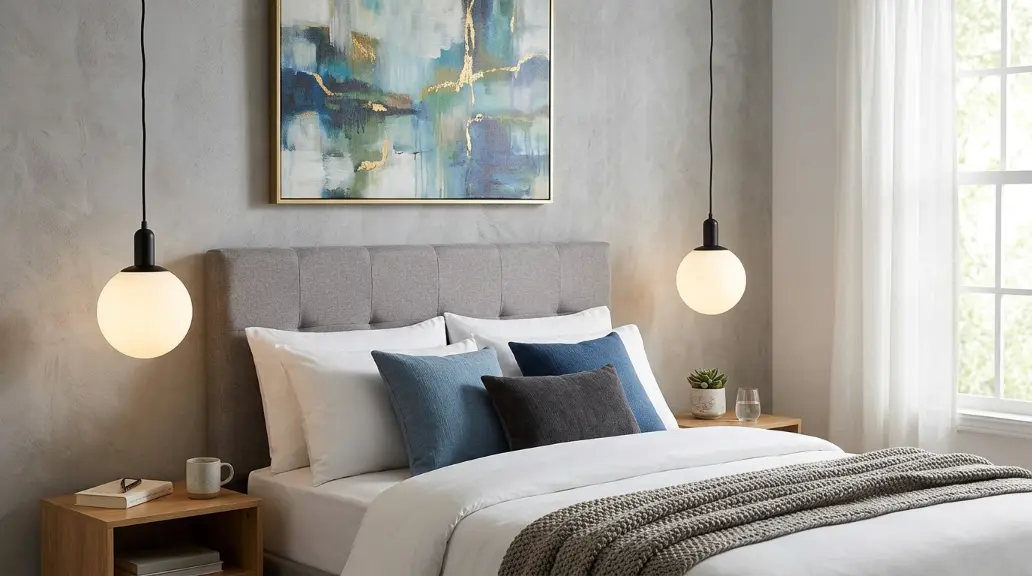
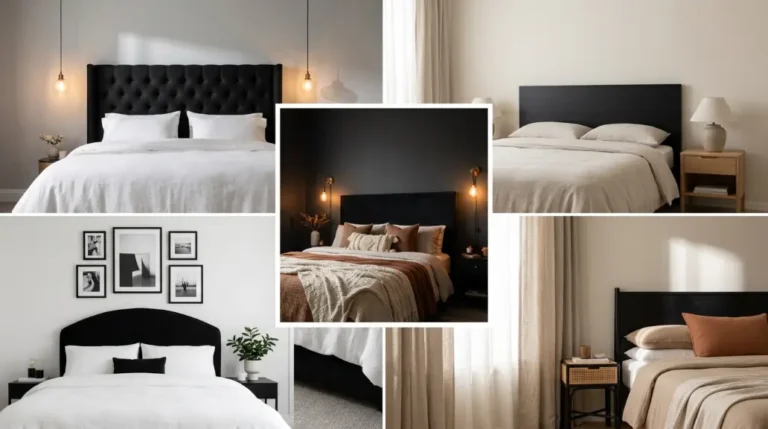
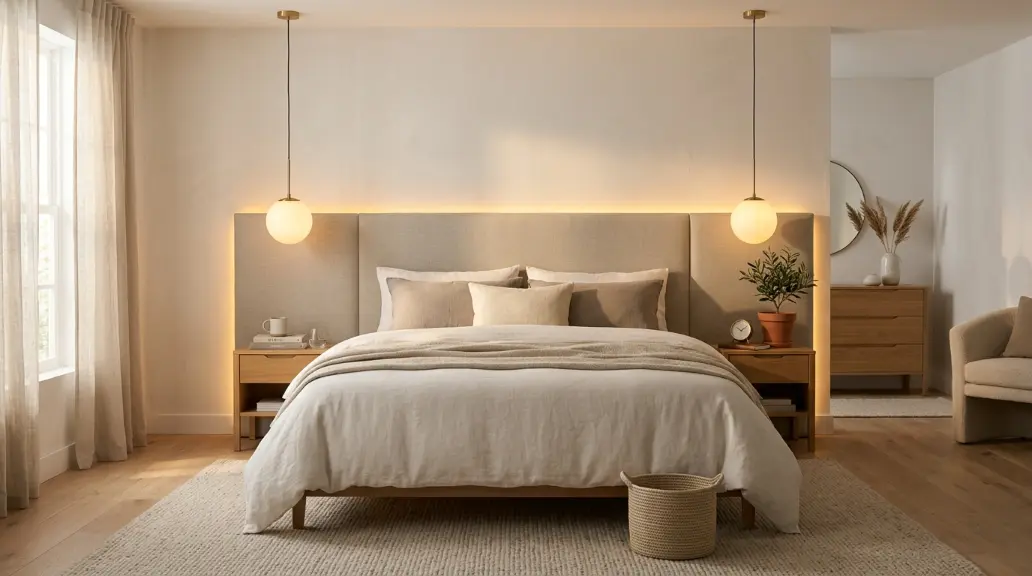
Swapping traditional bedside lamps for hanging pendant lights is one of the biggest bedroom lighting trends in 2026. Pendants hang from the ceiling on either side of the bed, which frees up nightstand space and adds a sculptural, modern touch. Choose pendants with fabric or frosted glass shades to keep the light soft and diffused.
3. Wall Sconces for Reading
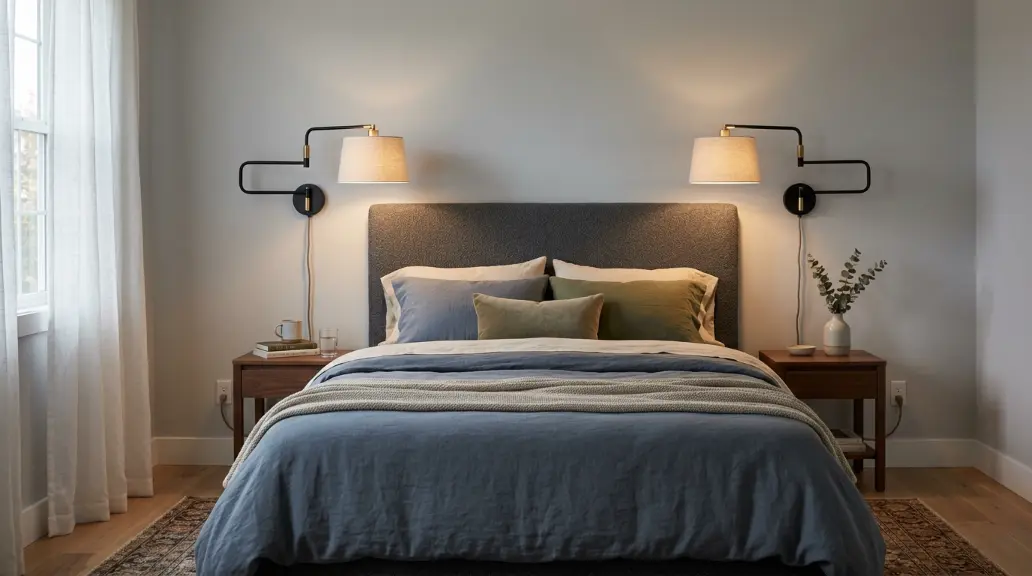
Wall sconces mounted on either side of the headboard are a practical and stylish bedroom wall lighting choice. Swing-arm sconces are particularly useful because you can angle the light exactly where you need it. They keep the nightstand clear and create a symmetrical, polished look. If hardwiring is not an option, plug-in wall sconces work just as well.
Quick Reference Table: Bedroom Lighting at a Glance
| Lighting Type | Best Fixture | Ideal Color Temp | Best For | Dimmable? |
|---|---|---|---|---|
| Ambient Lighting | Recessed lights, flush mounts | 2700K – 3000K | General room illumination | Yes, recommended |
| Task Lighting | Bedside lamps, wall sconces | 2700K – 3000K | Reading, getting dressed | Optional but helpful |
| Accent Lighting | LED strip lights, picture lights | 2700K warm white | Headboard, shelves, decor | Yes, for mood control |
| Mood Lighting | Dimmable pendants, floor lamps | 2200K – 2700K | Evening relaxation, sleep prep | Essential |
| Decorative Lighting | Chandeliers, string lights | Warm white or amber | Visual interest, aesthetic appeal | Preferred |
| Smart Lighting | Smart bulbs, LED panels | Adjustable (tunable) | All-purpose with automation | Built-in |
| Nightstand Lighting | Small table lamps, clip lights | 2700K warm white | Reading, bedtime wind-down | Highly recommended |
4. LED Strip Lights Behind the Headboard
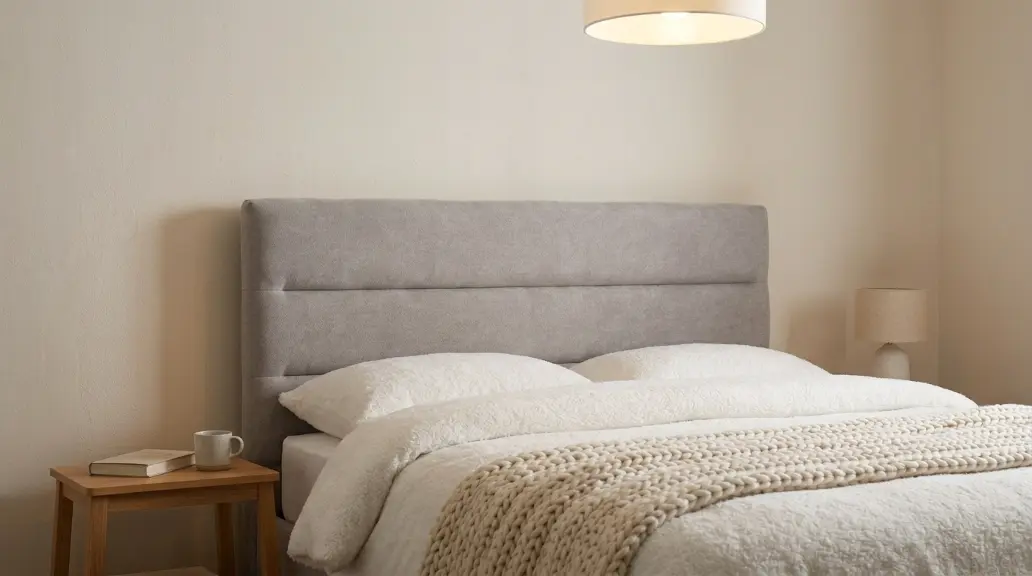
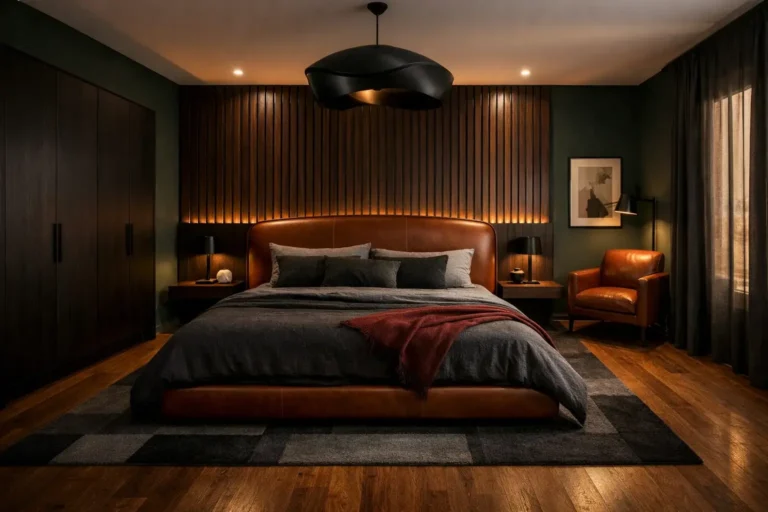
Installing LED bedroom lights along the back of a headboard or along the wall above it creates a backlit effect that looks far more expensive than it is. The soft glow behind the headboard adds depth and warmth to the room, especially in the evening when overhead lights are turned off. Always use warm white or amber LED strips for this.
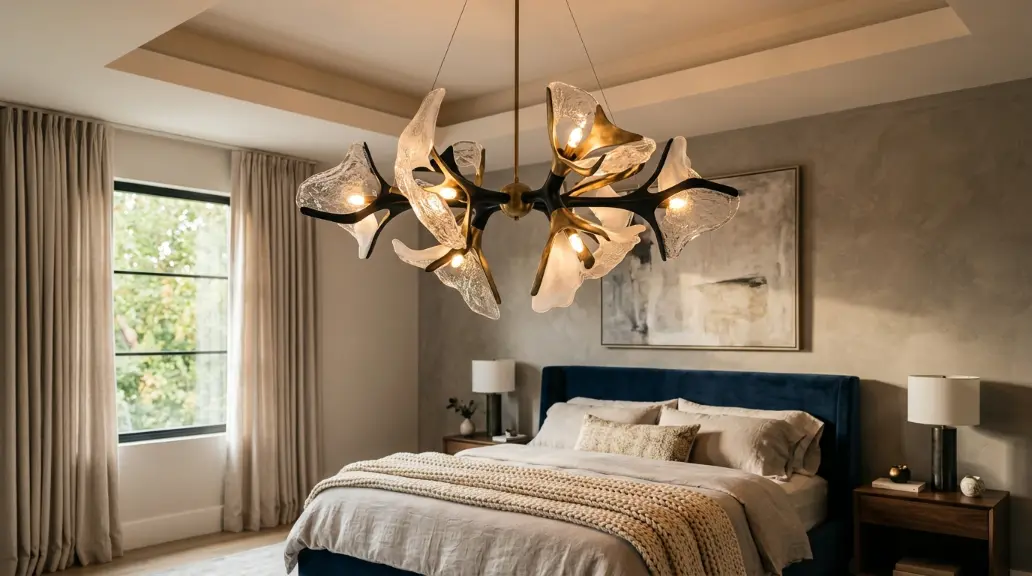
5. A Statement Chandelier
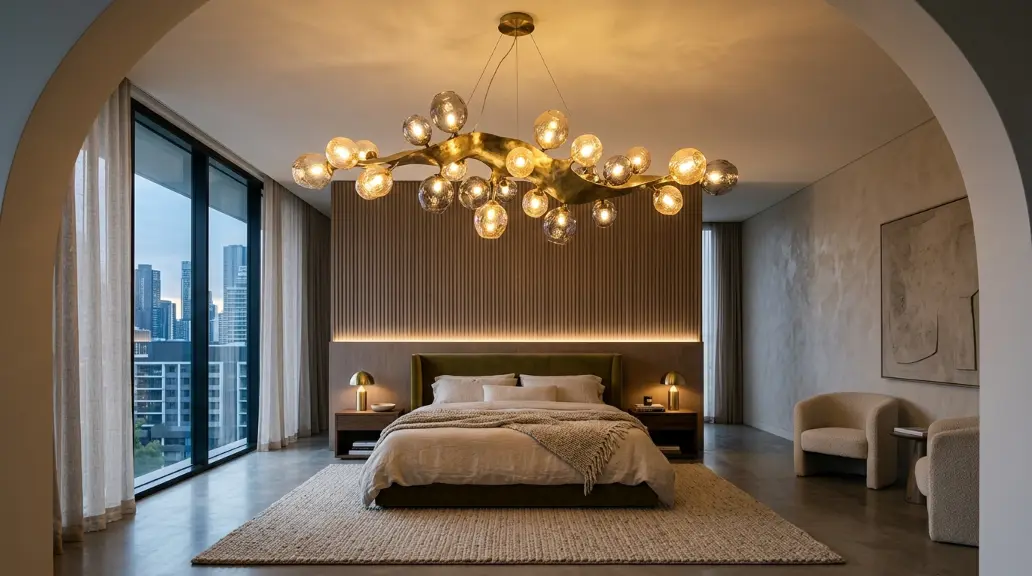
A chandelier in the bedroom instantly adds a sense of luxury bedroom lighting. In 2026, designers are moving away from traditional crystal chandeliers toward sculptural, textured fixtures with warm bulbs. Before buying, measure both the ceiling height and the room dimensions. A general rule is to add the room’s length and width in feet, and that number in inches is a good chandelier diameter.
6. Floor Lamps for Soft Corner Lighting
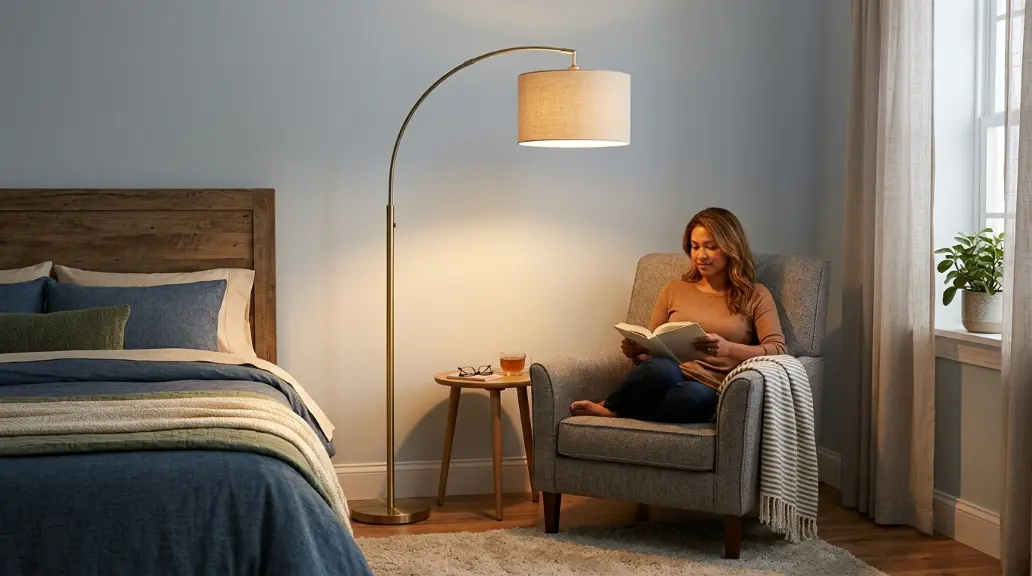
A well-placed floor lamp in the corner of the bedroom adds warm ambient bedroom lighting without ceiling fixtures. Arc-style floor lamps are especially popular because they can be positioned to wash light over a reading chair or the bed itself. They are also easy to move if you rearrange the room.
7. String Lights for a Relaxed Aesthetic
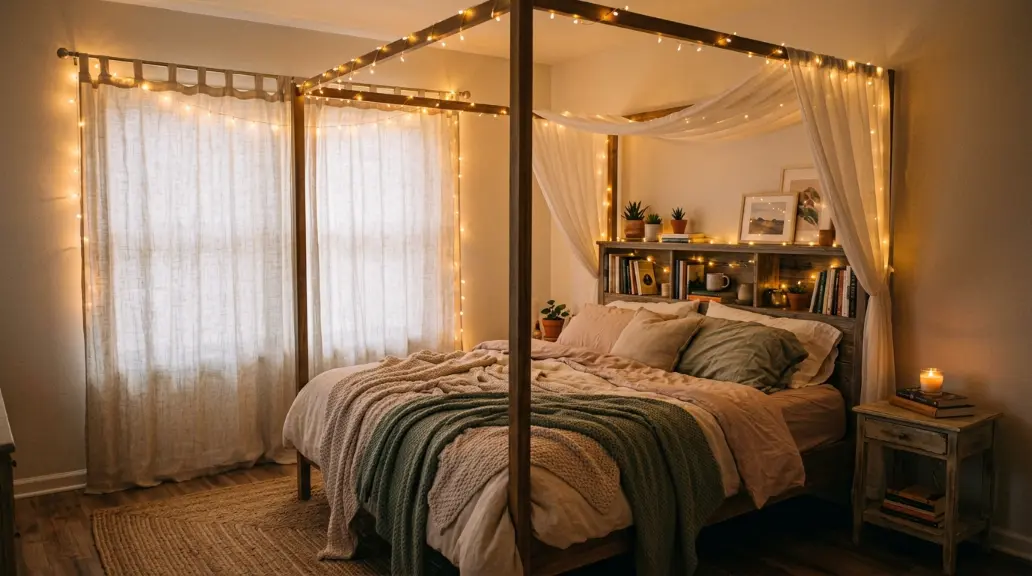
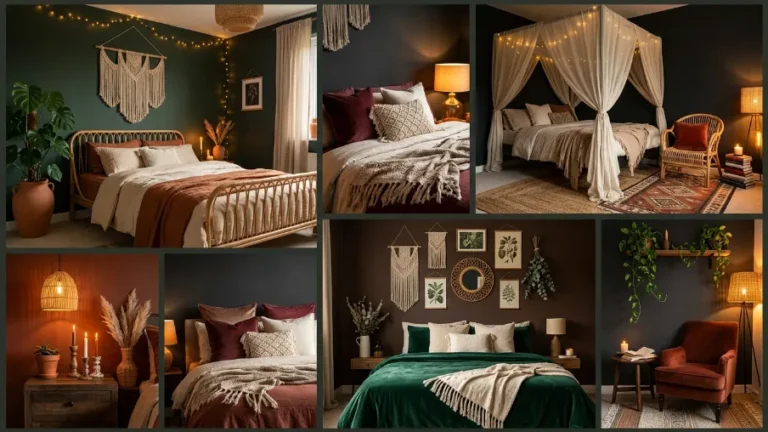
String lights in the bedroom are not just for students or holiday decorating. When used thoughtfully, they create a genuinely warm and aesthetic bedroom lighting effect. Drape them along a canopy frame, behind sheer curtains, or along a bookshelf headboard for a soft, layered glow. Warm amber tones work best.
8. A Backlit Mirror or Vanity
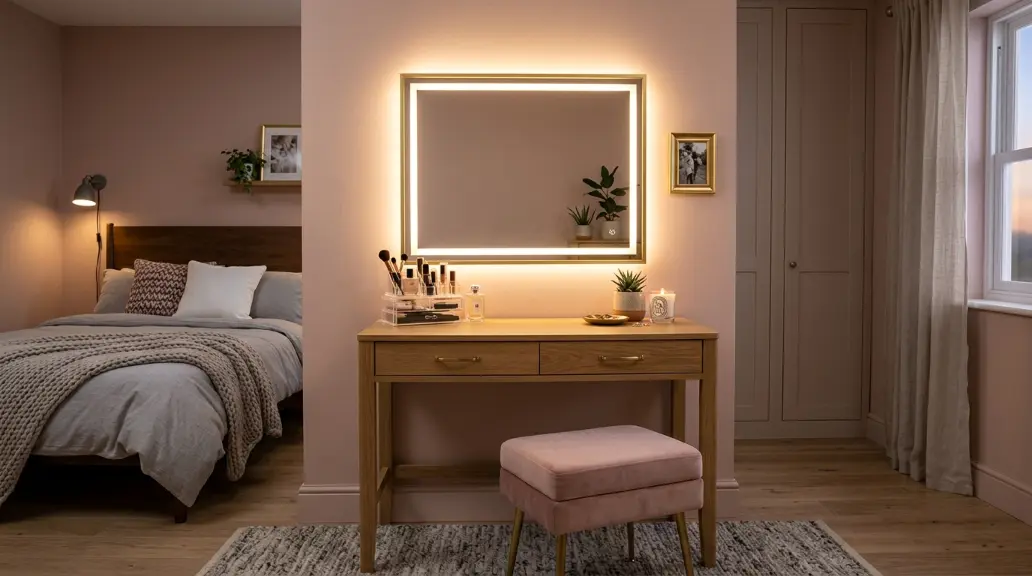
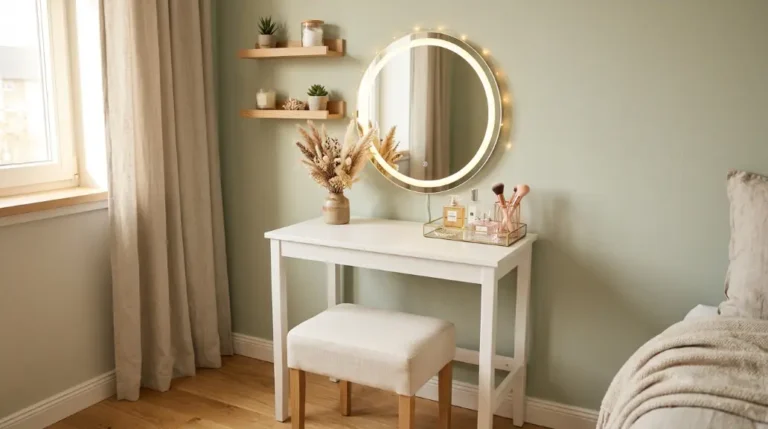
If you have a vanity area or dressing corner in your bedroom, a backlit mirror makes both a functional and decorative statement. The soft ring of light around the mirror frame provides flattering task lighting for getting ready while also working as decorative lighting for the room overall.
9. Smart Lighting for Complete Control
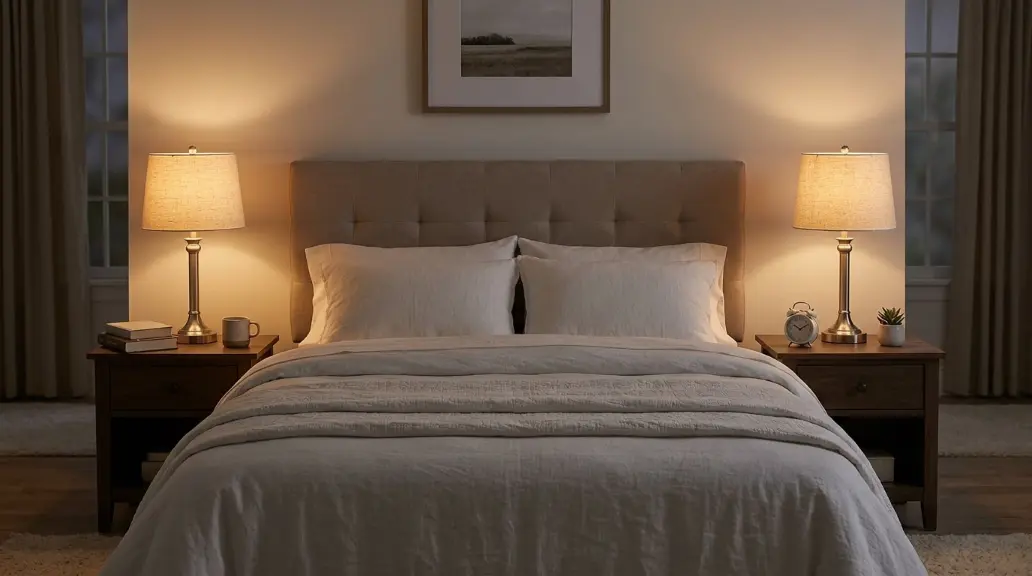
Smart lighting has become an everyday part of bedroom lighting design. With smart bulbs or smart switches, you can control color temperature, brightness, and schedules from your phone or with voice commands. Start with a smart bulb in your bedside lamp. It is an affordable way to test the system before committing to a full setup.
10. Dimmable Bedside Table Lamps
Bedroom lamp ideas do not have to be complicated. A pair of matching dimmable table lamps on either side of the bed is one of the most reliable and classic approaches. They provide warm, focused nightstand lighting and create visual balance on both sides of the room. Look for lamps with fabric or linen shades that diffuse light softly.
11. Cove Lighting Along the Ceiling
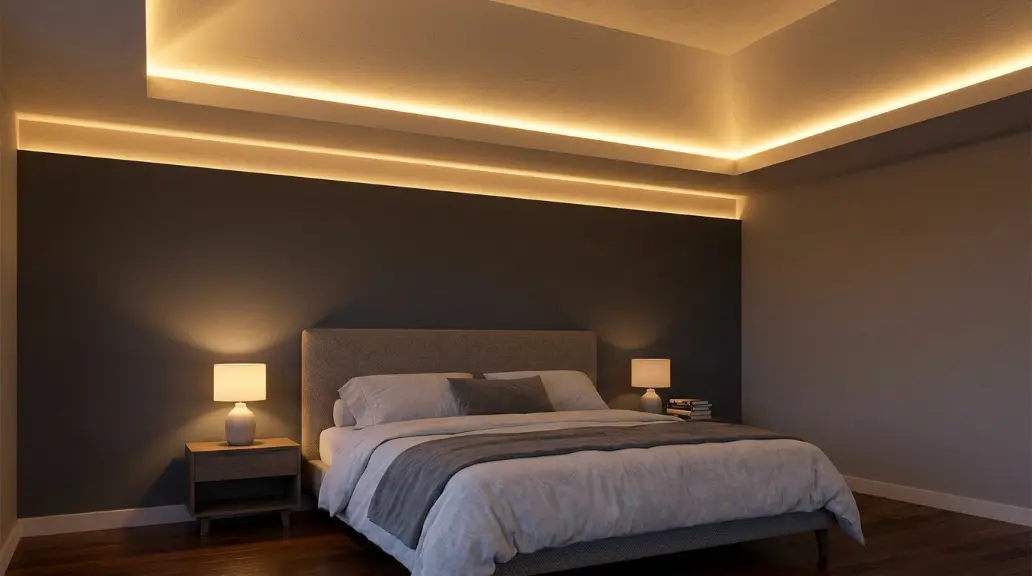
Cove lighting involves installing LED strips inside a recessed ledge near the ceiling so the light washes up or down along the wall. The result is a soft, indirect glow with no visible fixtures. It is one of the most effective ambient bedroom lighting techniques used in high-end interior design, and it is manageable as a weekend DIY project.
12. A Romantic Canopy with Soft Lighting
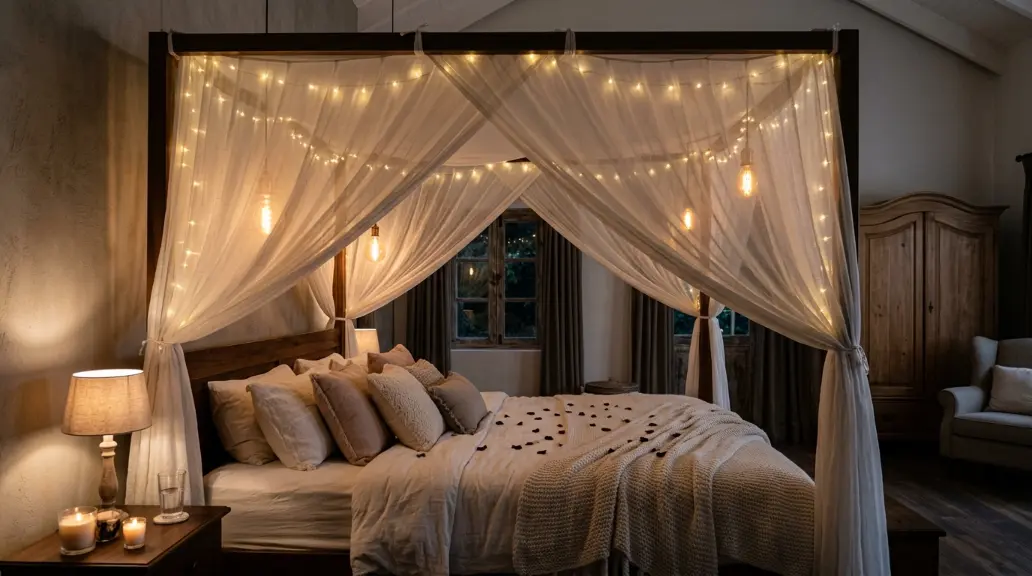
For romantic bedroom lighting, a four-poster bed frame draped with sheer fabric and soft string lights or small pendant lights creates an enclosed, intimate atmosphere. This works particularly well in larger master bedrooms where there is enough ceiling height to pull it off without the room feeling crowded.
13. Under-Bed LED Lighting
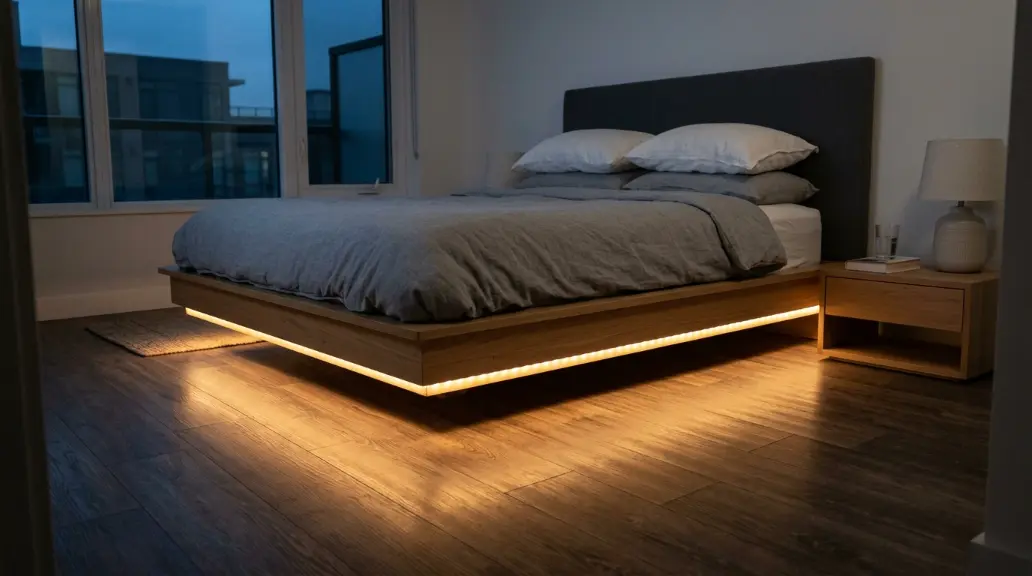
LED strips mounted beneath a floating bed frame create a soft glow along the floor that is both practical and visually striking. It makes the bed appear to float, which is a popular look in modern bedroom lighting right now. It also functions as a gentle nightlight so you are not stumbling around in the dark.
14. A Single Sculptural Pendant for Small Bedrooms
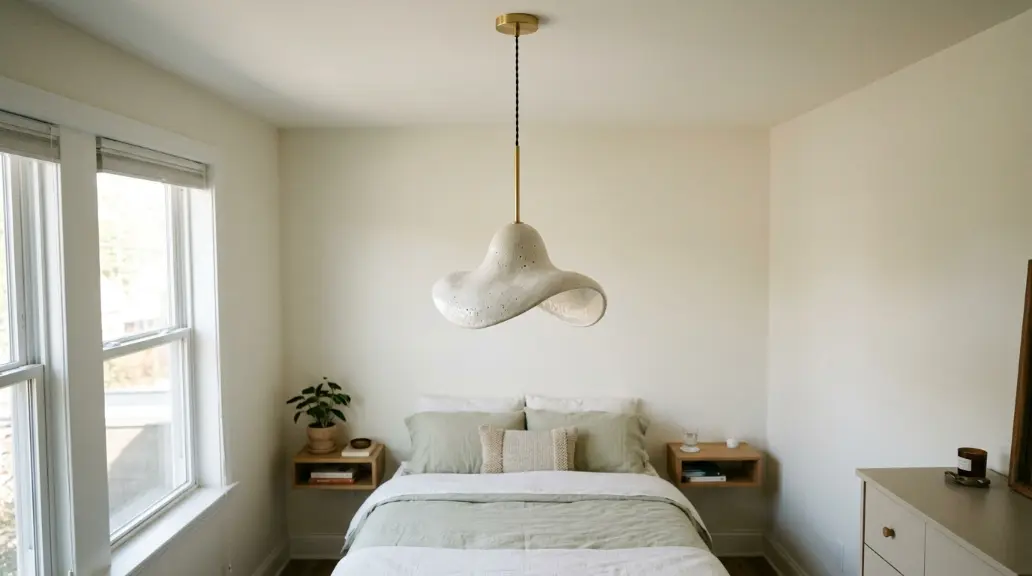
Small bedroom lighting requires a different approach. Hanging a single statement pendant from the center of the ceiling is far more space-efficient than a large chandelier or multiple fixtures. Choose a pendant with an interesting shape or texture to add character without crowding the room visually.
15. Picture Lights and Shelf Lighting
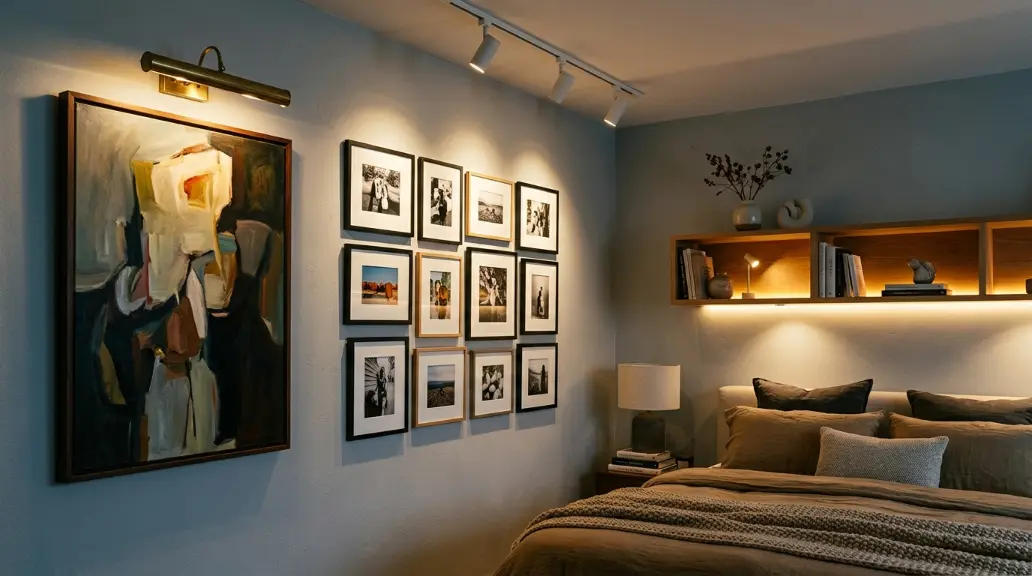
If you have artwork, a gallery wall, or open shelving in your bedroom, small spotlights or picture lights directed at these areas add a polished layer of accent lighting. This technique is borrowed from galleries and hotels, and it works just as well at home.
16. Window Lighting with Layered Curtains
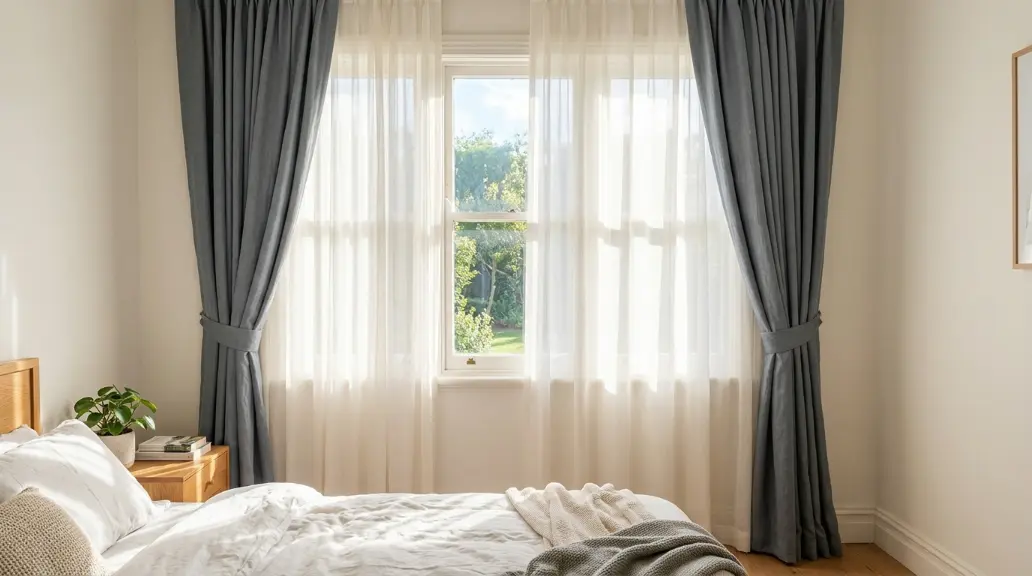
During the day, natural light is always the best bedroom light. To make the most of it, use layered curtains: a sheer inner layer that diffuses daylight softly across the room, and a heavier outer layer for blackout when needed. This approach makes the window itself a light source and keeps the room bright without glare.
17. Lamps with Warm-Tinted Shades
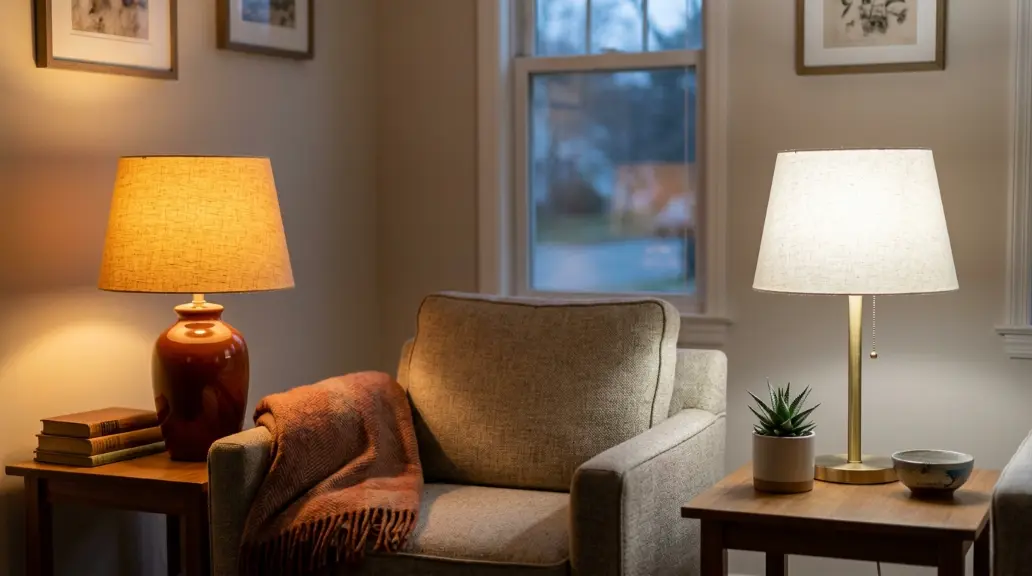
The shade on a lamp matters just as much as the bulb inside it. Lamps with amber, terracotta, or warm linen shades cast a noticeably warmer, softer light than lamps with white or grey shades. If your current lamps feel too cold or clinical, swapping the shade is a simple and affordable fix.
you may also like this: 20 Warm Bedroom Aesthetic Ideas for a Cozy Space 2026
18. Bedroom Pendant Lights in Pairs
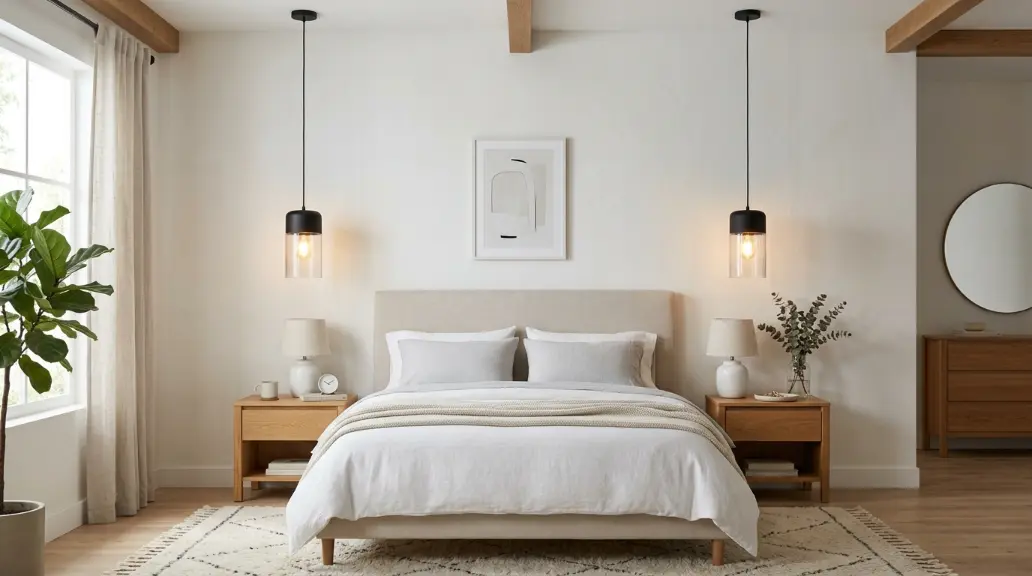
Pairs of matching pendant lights, one on each side of the bed, create a symmetrical and balanced look. Unlike sconces, pendants add height to the room and create a layered vertical effect. They work especially well in rooms with higher ceilings and in minimalist or Scandinavian-style interiors.
19. Luxury Alabaster or Natural Stone Fixtures
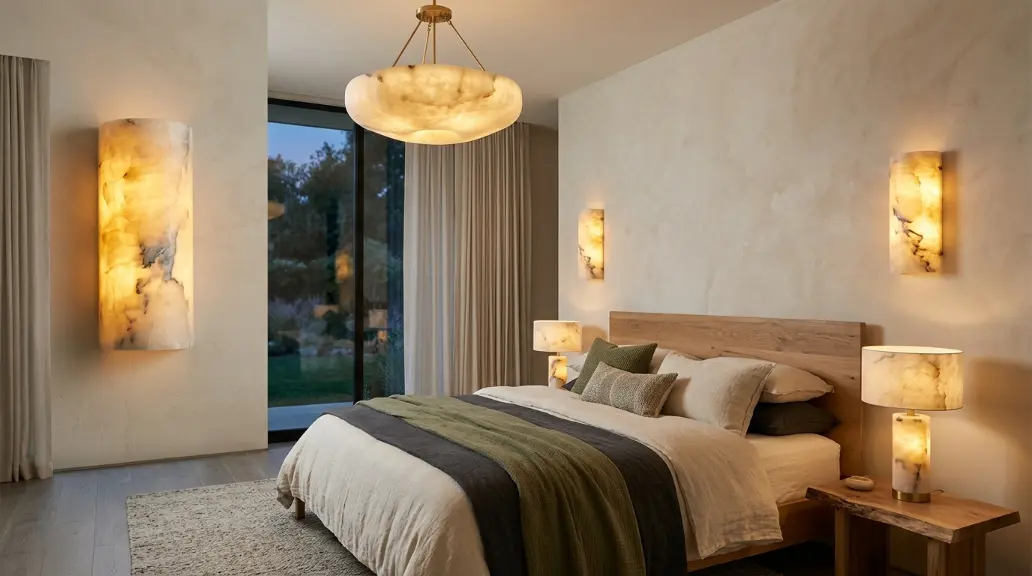
One of the standout bedroom lighting trends of 2026 is the use of natural stone fixtures, particularly alabaster. These materials glow warmly when lit from within, creating a soft, honeyed light that no manufactured shade can quite replicate. Each piece is slightly unique, and the material adds real texture and visual weight to the room. They suit both luxury bedroom lighting setups and organic modern interiors.
Common Bedroom Lighting Mistakes to Avoid
Even with the best intentions, a few missteps can make bedroom lighting feel off. Here are the most common ones:
- Using only one overhead light: A single ceiling fixture creates flat, unflattering light and heavy shadows. Always add at least one or two additional light sources.
- Choosing cool white bulbs: Bulbs above 4000K feel too cold and clinical for a bedroom. Stick to 2700K-3000K.
- Skipping dimmers: Being able to control brightness throughout the day is one of the most practical upgrades you can make. Dimmers are inexpensive and make a significant difference.
- Buying a fixture without checking the scale: A chandelier that is too small for the room will look lost. A pendant that hangs too low will feel intrusive. Always measure before buying.
- Ignoring the nightstand: Nightstand lighting is one of the most used lights in the bedroom. Make sure it is functional, dimmable, and at the right height for reading comfortably in bed.
Lighting Tips for Small Bedrooms
- Use wall-mounted sconces instead of table lamps to keep surfaces clear.
- A single pendant or flush-mount ceiling fixture is cleaner than multiple floor-standing lamps.
- Place mirrors across from light sources to bounce light around the room and make it feel larger.
- LED strip lighting under the bed or along shelves adds warmth without crowding the room.
- Choose fixtures with a slim profile and light, neutral tones to keep the room feeling open.
Budget-Friendly Bedroom Lighting Tips
- Swap old bulbs for warm white LED bulbs. This alone changes the feel of a room significantly.
- Add a dimmer switch to your existing ceiling fixture. Most are simple plug-and-play replacements that cost very little.
- String lights are one of the most affordable ways to add warmth and texture to a bedroom.
- Plug-in wall sconces avoid the cost of an electrician and work just as well as hardwired versions.
- A well-chosen floor lamp can serve as both ambient and task lighting, reducing the need for multiple fixtures.
Final Thoughts
Bedroom lighting ideas are not just about fixtures and bulbs. They are about how you want to feel in the space where you start and end every day. The best approach is always to layer your light sources, choose warm color temperatures, and give yourself the flexibility of dimmers so the room can shift with you throughout the day.
Whether you go with a sculptural chandelier, a pair of pendant lights beside the bed, or simply better bulbs in your existing lamps, small changes to your bedroom lighting design make a real and lasting difference. Start with one layer, see how it feels, and build from there.
A well-lit bedroom is not a luxury. It is one of the simplest investments you can make in how well you rest, relax, and recharge.
Frequently Asked Questions
1. What is the best type of lighting for a bedroom?
The best approach is layered bedroom lighting that combines ambient, task, and accent sources. Use warm white bulbs between 2700K and 3000K, add dimmers where possible, and make sure you have at least a bedside light for reading. A single overhead fixture is never enough on its own.
2. What color temperature is best for bedroom lights?
Warm white light between 2700K and 3000K is ideal for bedrooms. This range creates a relaxing, cozy atmosphere. Avoid bulbs above 4000K in the bedroom, as they tend to feel too bright and clinical for a restful space.
3. Are pendant lights a good choice for bedrooms?
Yes, bedroom pendant lights are an excellent choice, especially as bedside lighting. They hang from the ceiling, freeing up nightstand space, and add a stylish, architectural element to the room. Choose pendants with soft shades for diffused, flattering light.
4. How do I make a small bedroom feel brighter?
Use light-colored lampshades, place mirrors across from light sources to reflect light around the room, and add LED strip lighting under furniture or along shelves. Wall-mounted sconces keep nightstands clear and help the room feel less crowded. Also make sure you are using the brightest appropriate warm white bulbs in your fixtures.
5. Are LED bedroom lights good for sleep?
LED bedroom lights are excellent for sleep when used correctly. Choose warm white LEDs at 2700K and use dimmable versions so you can reduce brightness in the evening. Avoid blue-tinted LEDs above 4000K in the bedroom, as cool light suppresses melatonin and makes it harder to wind down at night.