

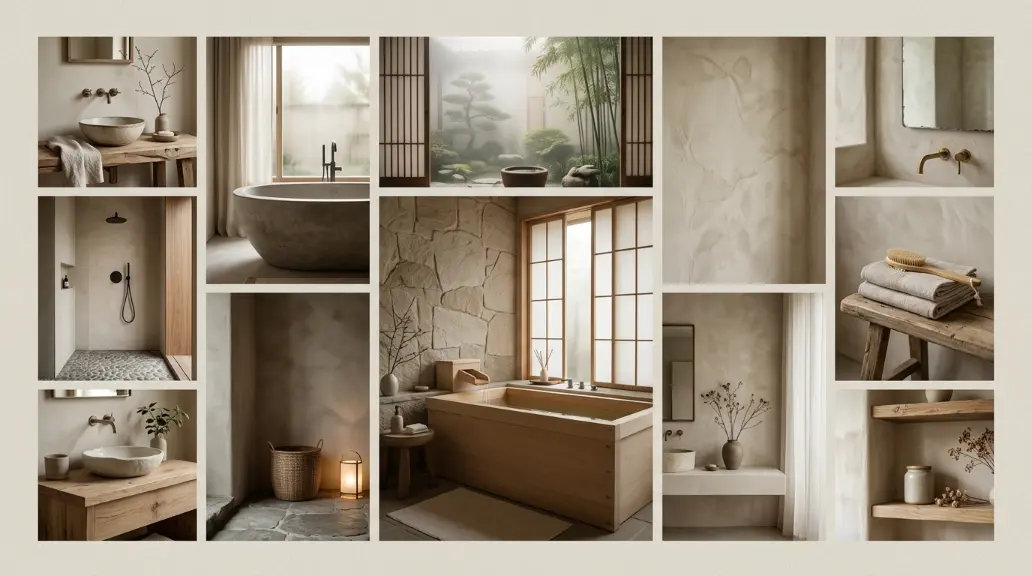
18 Wabi Sabi Bathroom Ideas for Peaceful Minimal Living
There is a quiet kind of beauty that does not announce itself. It exists in the grain of weathered wood, in the uneven glaze of a handmade bowl, and in the soft shadow a single candle throws across a stone wall. This is the heart of wabi sabi, a centuries-old Japanese philosophy that finds meaning in imperfection, transience, and simplicity. Applied to the home, and specifically to the bathroom, it offers something most modern interiors desperately lack: genuine calm.
Wabi sabi is more than just a design trend. It is a mindset. It is about embracing simplicity, celebrating the beauty of natural imperfections, and finding peace in the unfinished. Your bathroom can become far more than a functional room. With the right approach, it transforms into a daily sanctuary where you reset, breathe, and reconnect with yourself. This article presents 18 wabi sabi bathroom ideas grounded in real design principles, covering materials, color, light, texture, and layout so you can build a space that feels authentically peaceful.
1. Choose Natural Materials Over Manufactured Finishes
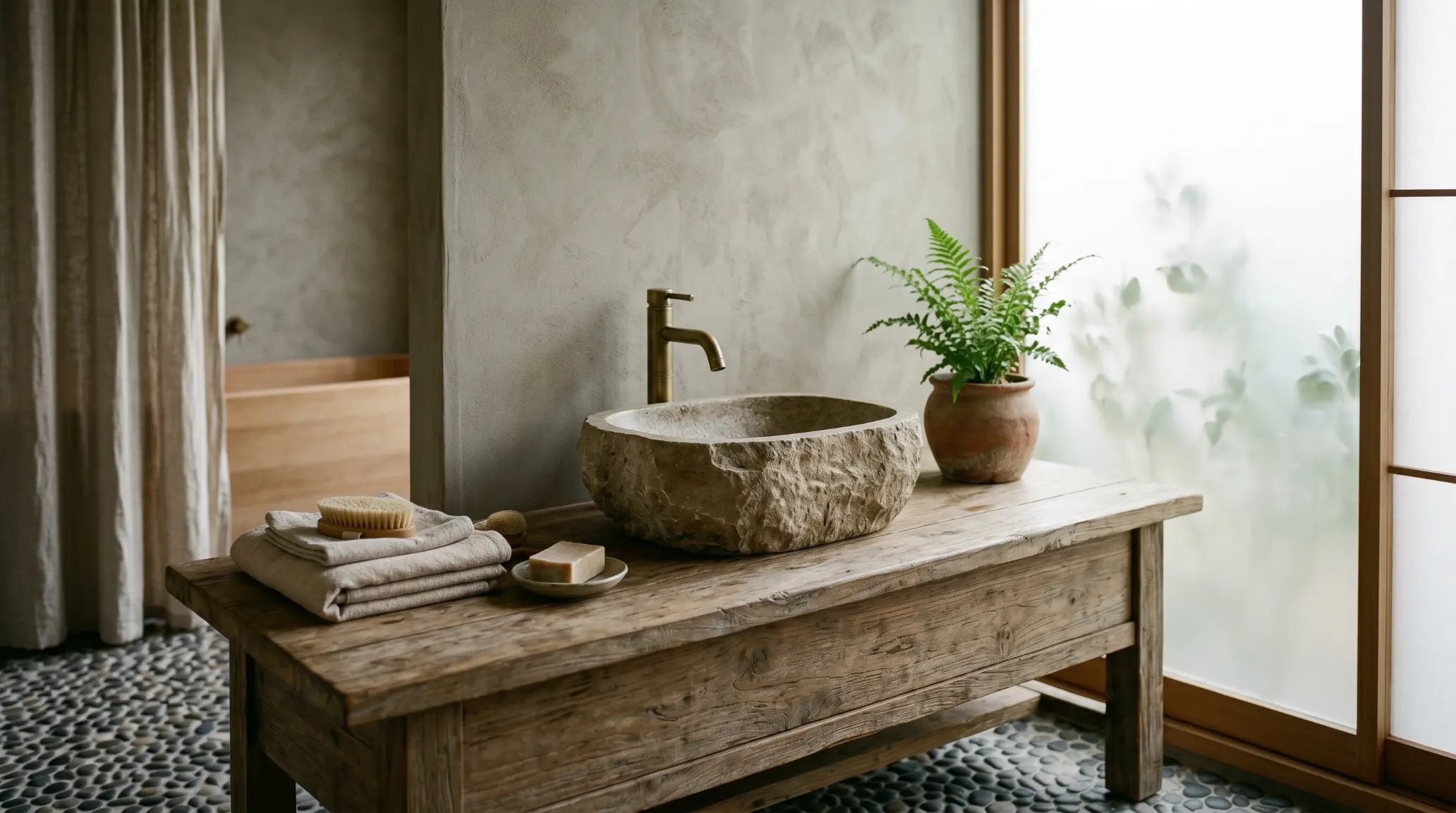
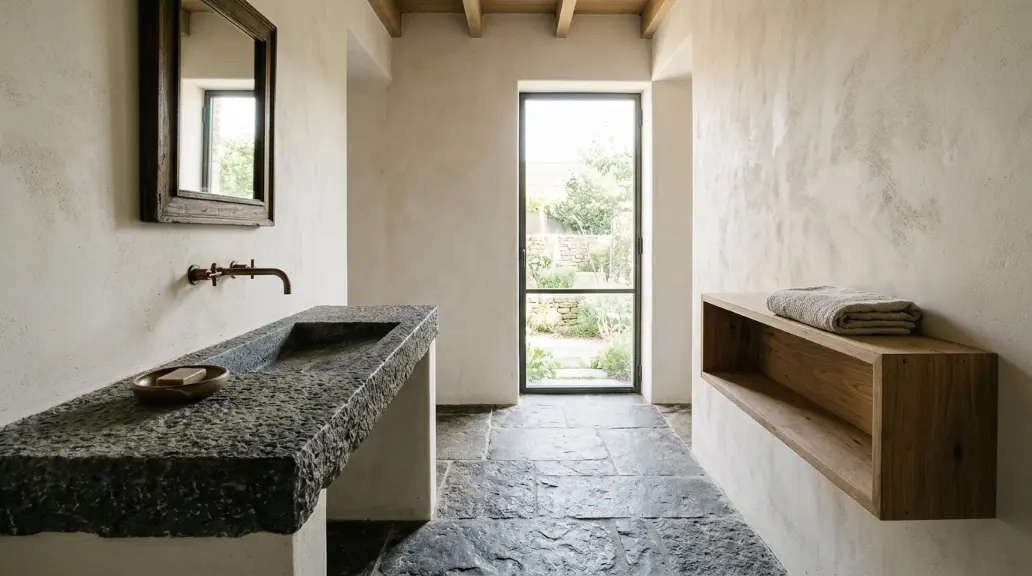
For a wabi sabi bathroom, that means choosing materials that feel real and natural, such as textured stone countertops, weathered wood vanities, or ceramic tiles with unique little variations. Skip the shiny, factory-made finishes and go for pieces that tell a story. A teak vanity with visible grain, a concrete basin showing natural variation, or a stone shelf with its raw edge intact all carry the kind of character that polished surfaces simply cannot replicate.
2. Embrace an Earthy, Muted Color Palette
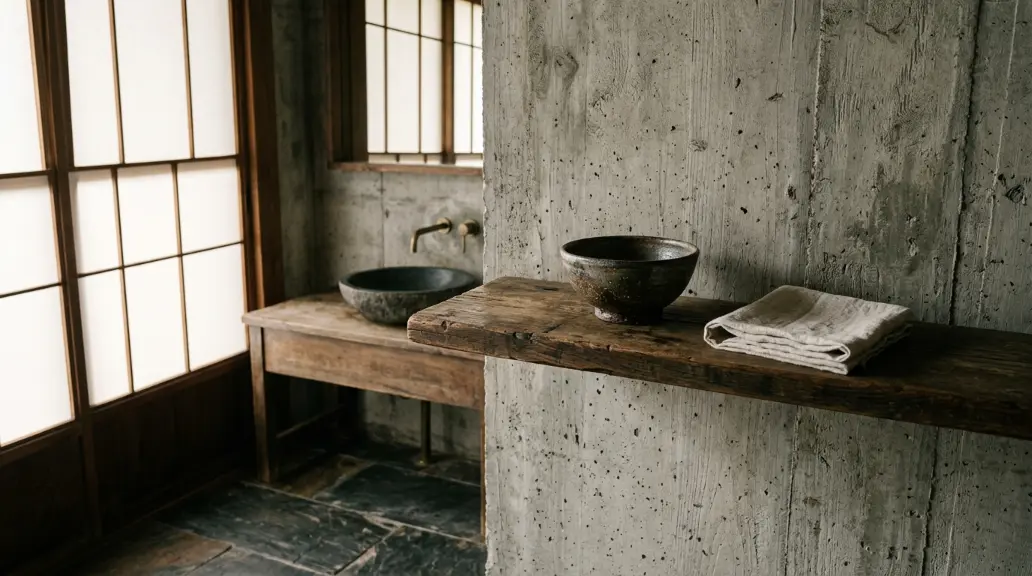
Stick to neutral, earthy tones like beige, gray, or soft browns to keep things soothing. These tones do not compete for attention. They settle the eye and slow the mind. Off-white walls paired with warm taupe textiles and a clay-toned floor create a bathroom that feels both grounded and spacious, even in a modest footprint.
3. Let Imperfections Stay Visible
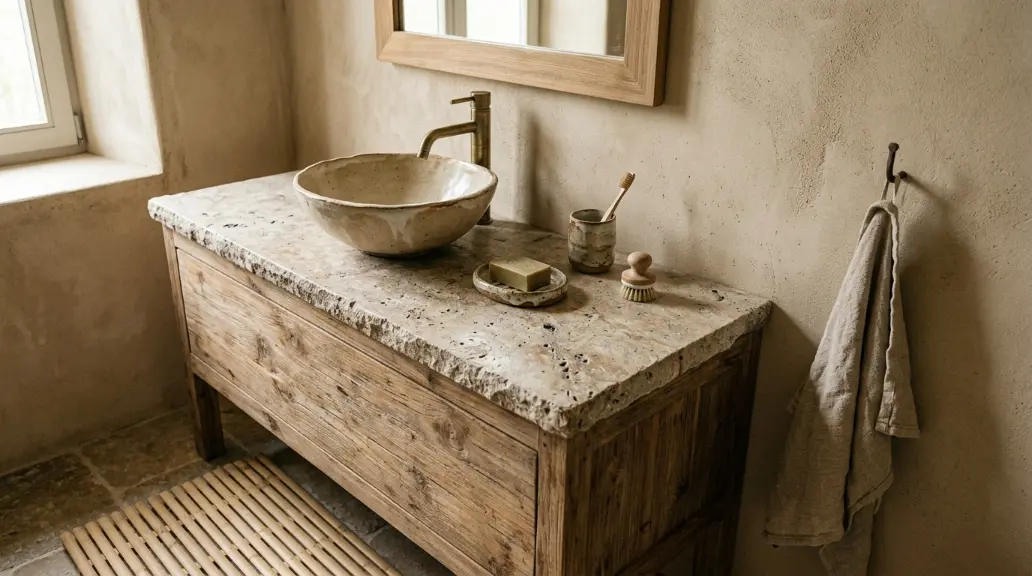
One of the most liberating aspects of this philosophy is its rejection of perfection. Embrace the beauty of imperfections, like cracked ceramics or uneven textures. In line with wabi sabi design, the Japanese art of Kintsugi highlights cracks by sealing repairs with gold lacquer. A slightly uneven tile, a handthrown soap dish with irregular edges, or a wooden shelf showing age rings all add richness that a catalog-perfect bathroom never achieves.
Wabi Sabi Bathroom Design Elements Comparison Guide
| Element Type | Best Material Options | Style Impact | Maintenance Level | Overall Feel |
|---|---|---|---|---|
| Natural Materials | Wood, Stone, Concrete | Strong | Medium | Warm & Organic |
| Color Palette | Beige, Taupe, Soft Brown | Medium | Low | Calm & Relaxing |
| Textures | Linen, Pebbles, Ceramics | Medium-High | Low | Soft & Layered |
| Lighting | Warm Lamps, Candles | Medium | Low | Cozy & Peaceful |
| Fixtures | Brass, Copper | Medium | Medium | Aged & Authentic |
| Decor Style | Minimal, Handmade Items | High | Low | Simple & Natural |
4. Install a Freestanding Soaking Tub
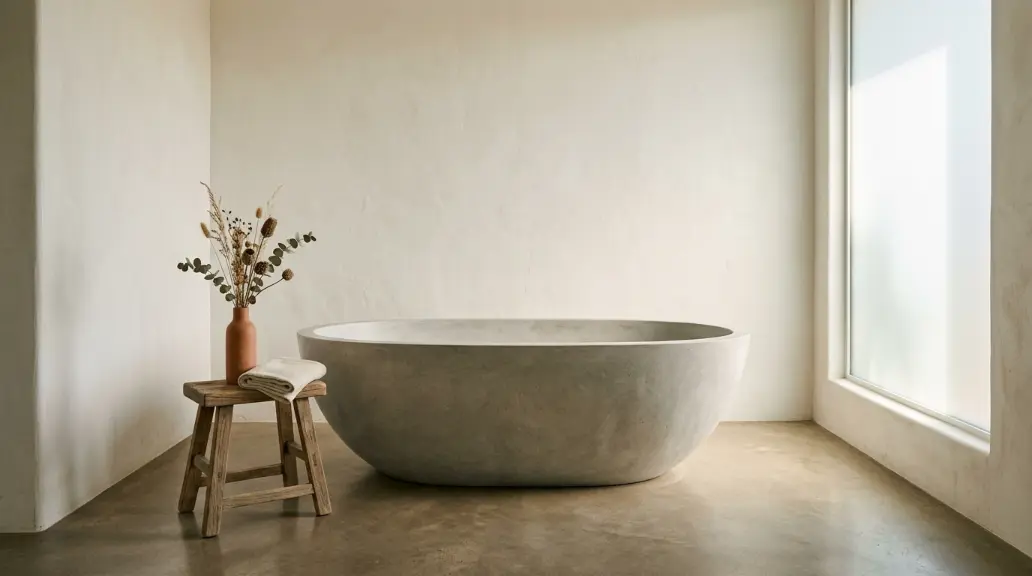
Known for healing benefits that go far beyond washing up, soaking tubs make for wabi sabi-appropriate additions. A simple oval tub in matte stone or concrete anchors the room with quiet authority. Pair it with a small wooden stool, a bundle of dried botanicals, and nothing else. The restraint is the point.
5. Use Weathered Wood as a Structural Element
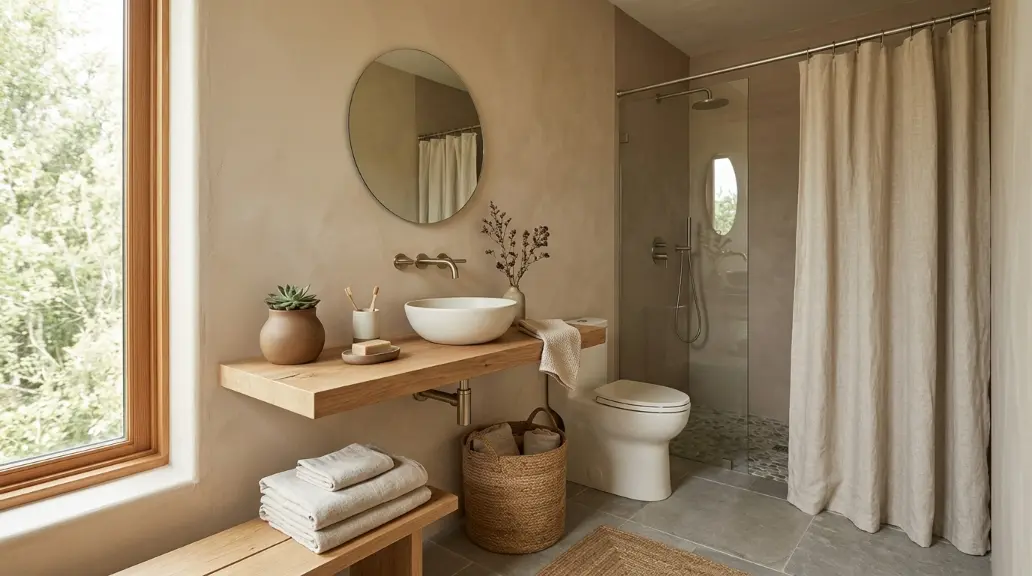
Teak wood brings the outdoors in while offering natural moisture resistance, making teak vanities or accessories like bath mats a smart, safe choice for this wet environment. Bamboo is equally effective, offering its own distinctive grain pattern and resistance to moisture. Either material introduces warmth that no paint color can fully replicate.
6. Opt for Handmade Ceramic Accessories
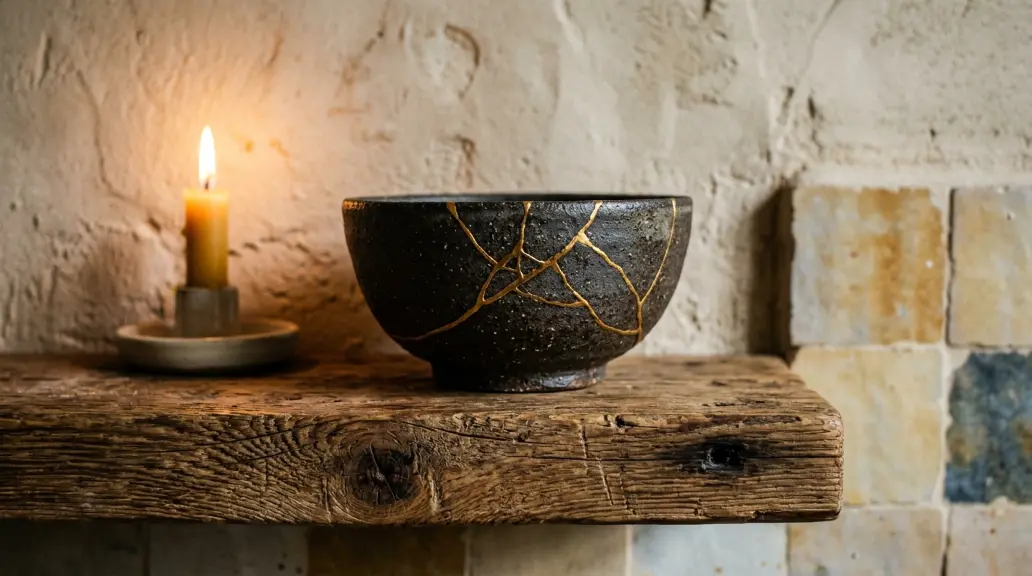
Pick uplifting natural tones, stone or concrete countertops, and handmade decor like ceramic soap holders. A handmade ceramic cup for toothbrushes, a misshapen but beautiful tray for skincare, or an uneven bowl used as a catch-all beside the sink all bring texture and humanity into a space that could otherwise feel sterile.
7. Layer Different Natural Textures
Textures such as pebbled floors, linen curtains, and brushed metal fixtures invite touch and add visual warmth to the space. The interplay of different textures provides a subtle complexity that enriches the experience without overwhelming the senses. Think rough stone alongside smooth linen, or coarse jute beside polished copper. The contrast is calming rather than chaotic.
8. Install Soft, Warm Lighting
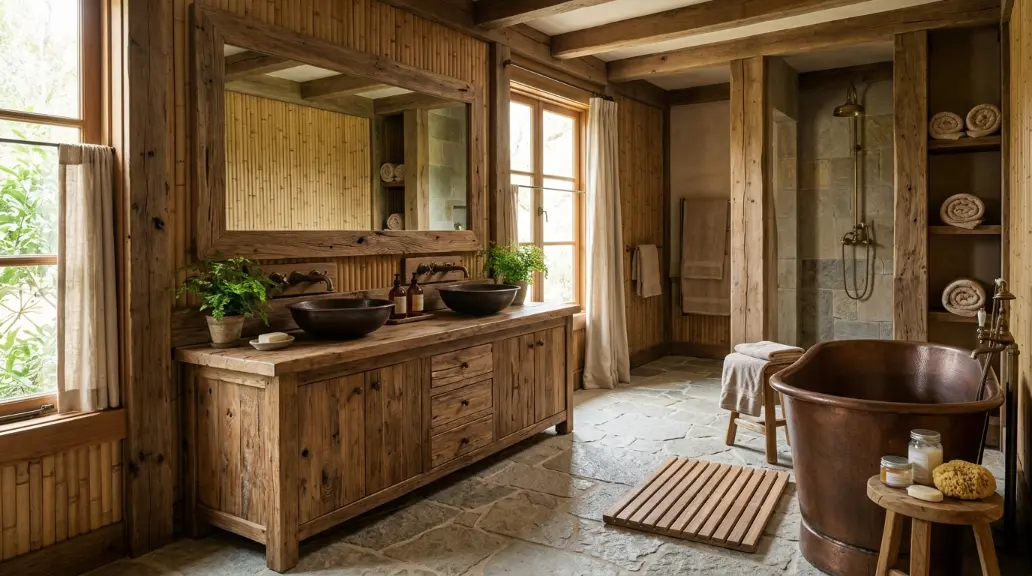
By using soft lantern lighting, wabi sabi bathrooms can feel more like a peaceful retreat. The gentle glow creates a soothing setting that encourages relaxation and adds a sense of tranquility to everyday routines. Replace harsh overhead lighting with wall-mounted sconces, paper lanterns, or candle holders placed at counter level. The lower the light source, the more intimate the atmosphere.
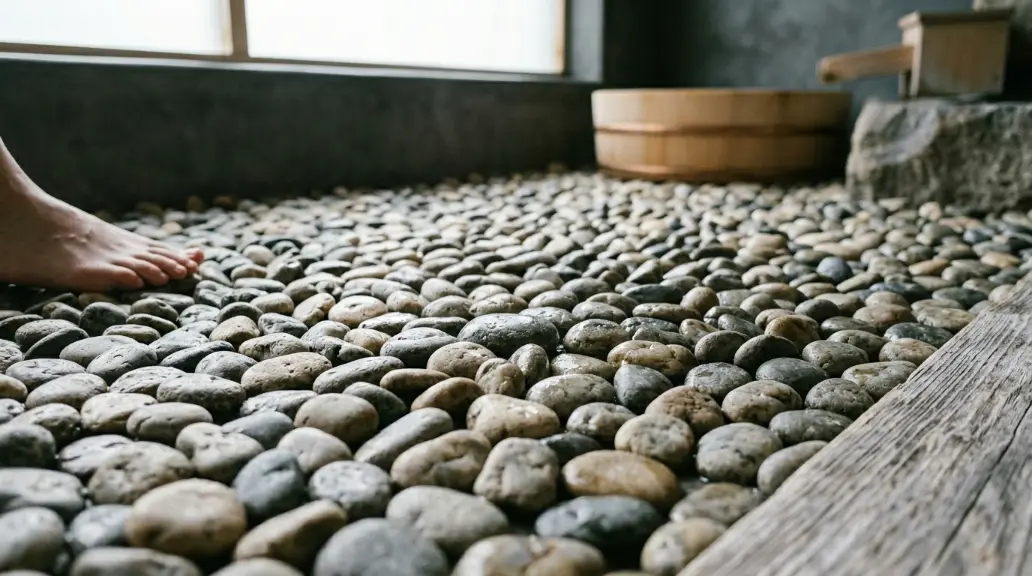
9. Incorporate River Pebbles on the Floor
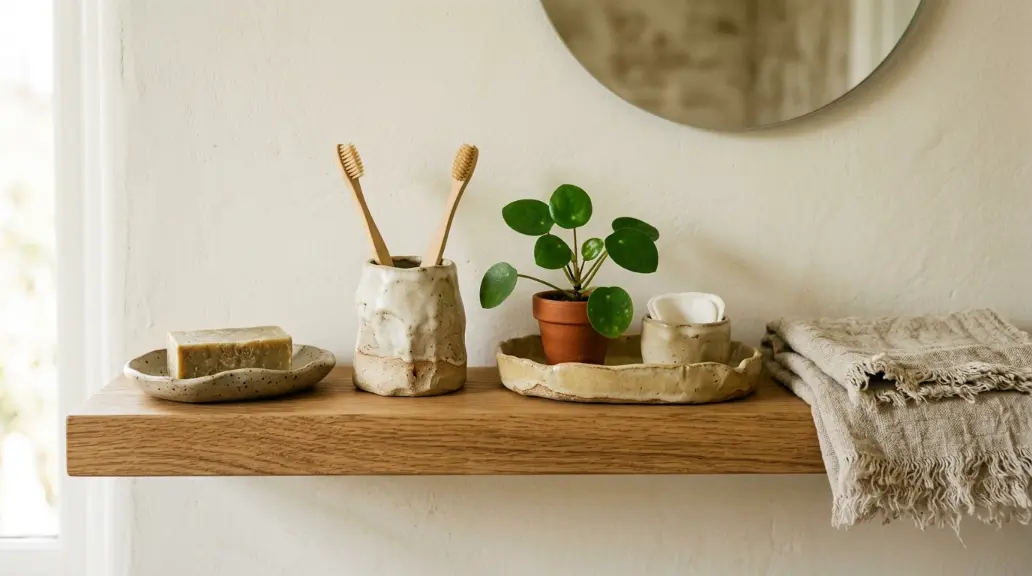
A wabi sabi bathroom featuring a floor of smooth river pebbles massages the feet and provides a natural, grounding element. Even a small pebble mat placed in front of the shower or tub creates a sensory connection to the natural world that tile cannot offer. The slight variation in each stone is precisely what makes this choice authentic to the philosophy.
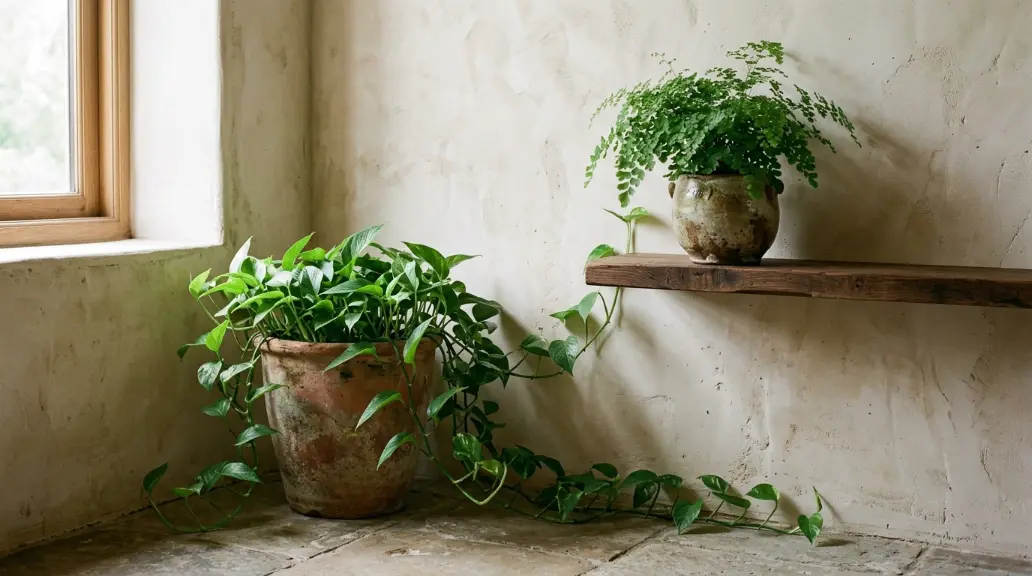
10. Add a Living Plant or Two
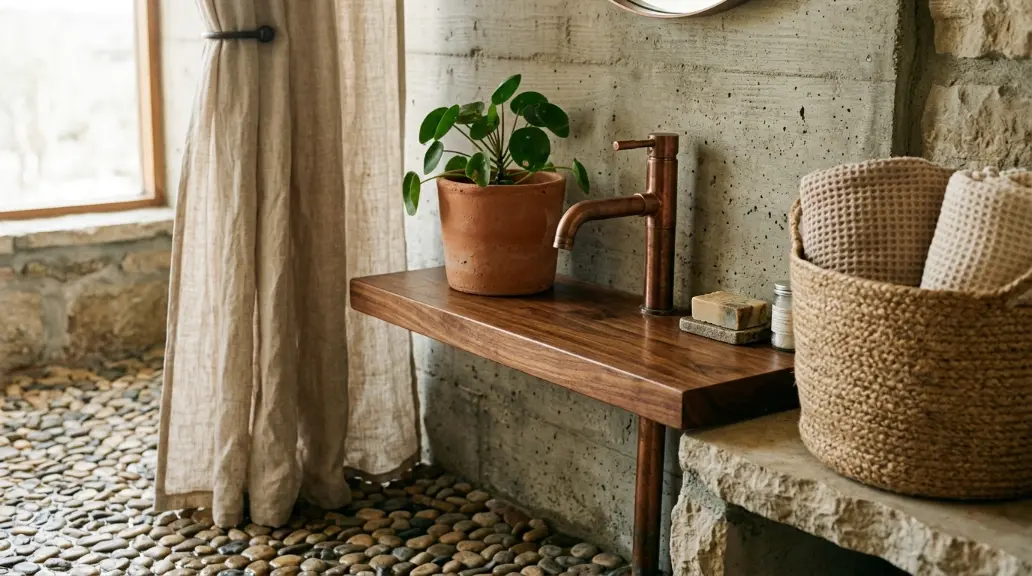
Add one or two potted plants to invigorate the look, but vary heights if adding more than one. One oversized indoor plant and a moisture-loving mini fern in organic pots will add a special touch. A trailing pothos in a rough terracotta pot, or a single bamboo stalk in a narrow stone vessel, brings life into the room without overcrowding it.
11. Use Aged Brass or Copper Fixtures
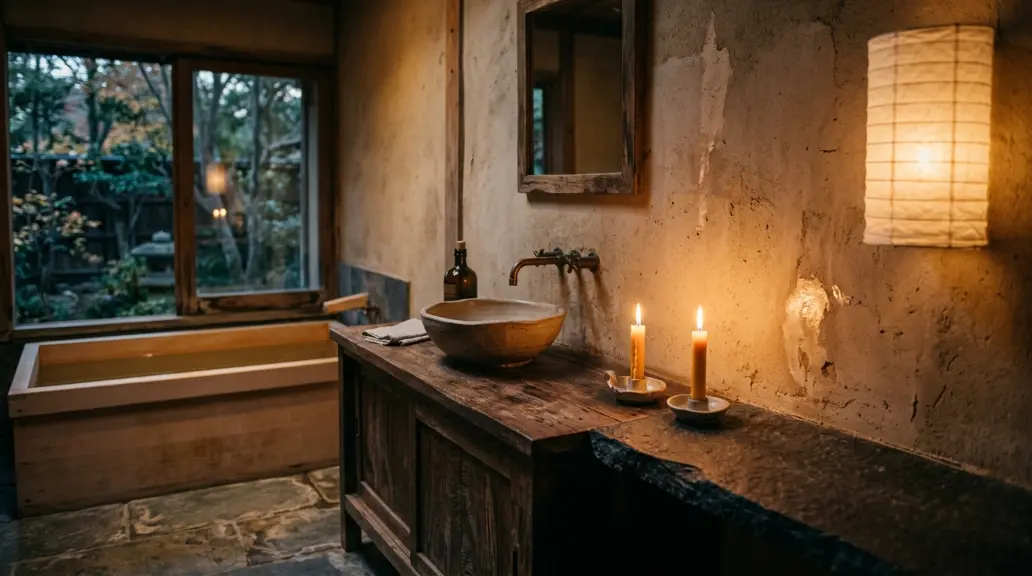
Brass develops a natural patina over time, which adds depth and character instead of looking worn out. This aging process fits perfectly with the idea of appreciating materials as they change. Copper fixtures are equally appropriate. Rather than viewing the gradual shift in color as deterioration, wabi sabi encourages seeing it as the material telling its own story over time.
12. Hang a Linen Shower Curtain
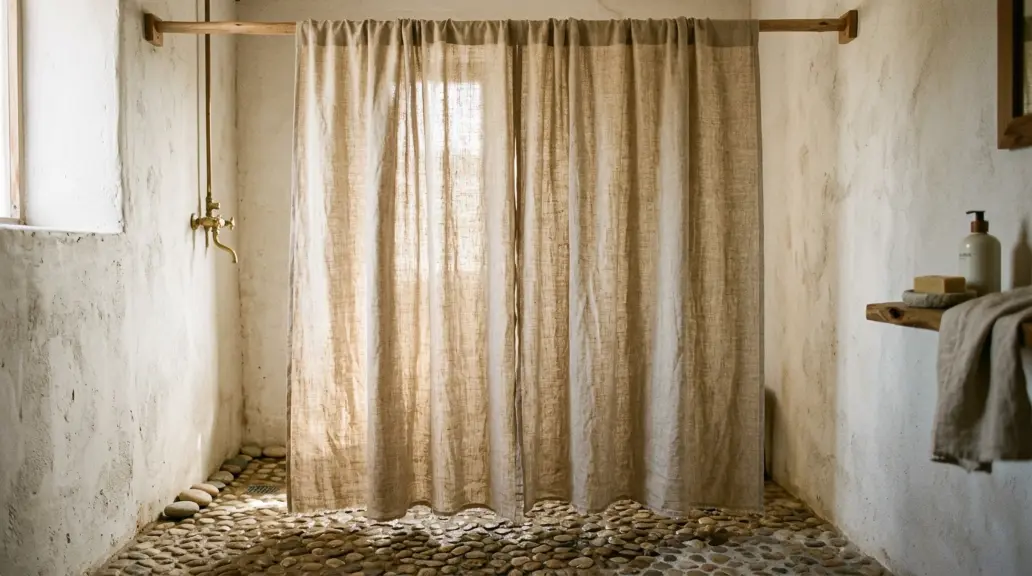
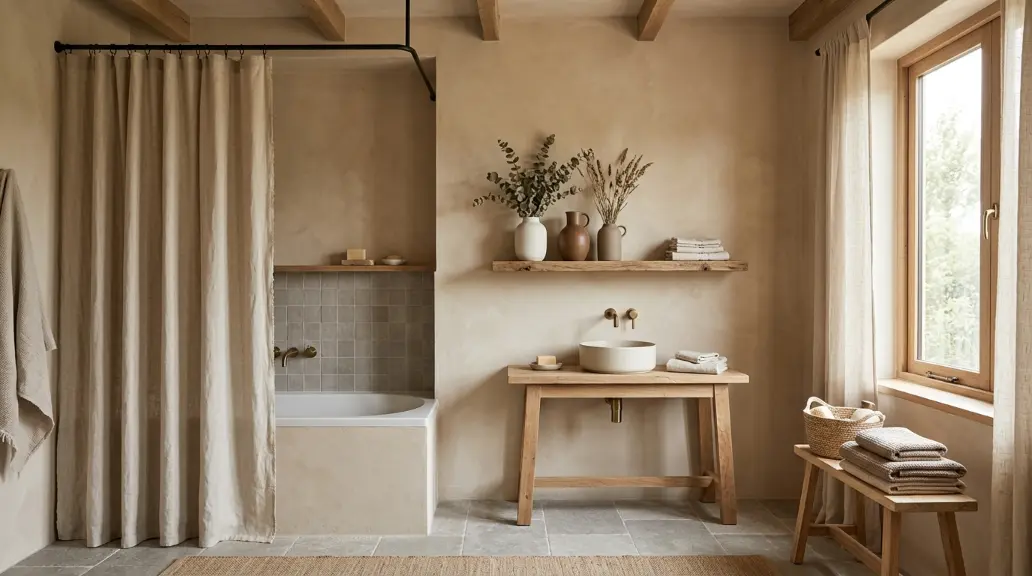
Linen is one of the most wabi sabi-appropriate textiles available. It wrinkles naturally, softens with each wash, and carries an organic quality that polyester blends cannot match. A natural, undyed linen shower curtain diffuses light gently and introduces a sense of relaxed warmth that transforms even an ordinary shower into something more considered.
13. Declutter Aggressively
In line with the approach of Japanese minimalism, eliminate unnecessary belongings until you are down to what you need, from functionality to well-being. A wabi sabi bathroom does not hide clutter behind closed doors. It simply holds less. This means reducing products on the counter, keeping shelves to one or two curated objects, and choosing open storage only when what is stored is worth seeing.
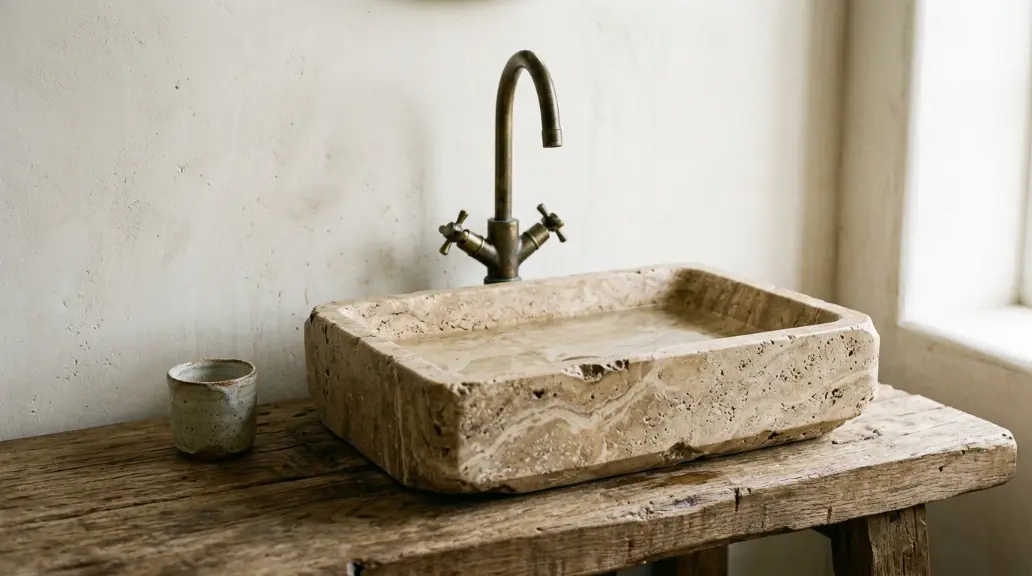
14. Introduce a Stone Basin Sink
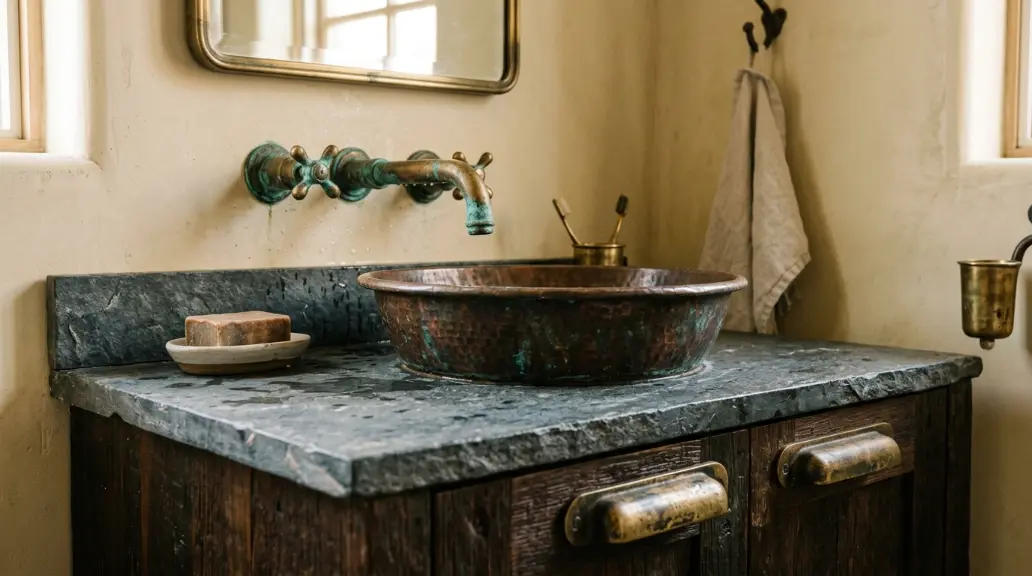
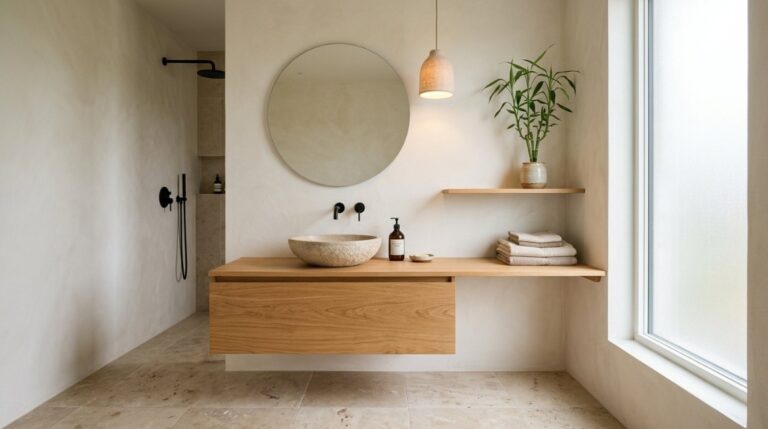
Stone sinks bring an organic presence to the bathroom. Whether carved from a single block of marble, travertine, or sandstone, a vessel sink placed atop a simple wooden console grounds the entire room in natural material. No other single element makes a stronger statement with less effort.
15. Create a Japandi Fusion Approach
Combining Japandi design with wabi sabi bathrooms creates a balanced style that feels both modern and natural. Japandi interiors focus on clean lines and minimal forms, while wabi sabi emphasizes rustic textures and the beauty of imperfection. Together, they form a harmonious blend of simplicity and warmth. This hybrid style is particularly effective in smaller bathrooms where restraint is necessary by default.
16. Display a Single Piece of Meaningful Artwork
A wabi sabi bathroom is not bare. It is considered. One piece of art, perhaps a simple ink brushstroke print in a plain frame, a small woven wall hanging, or a pressed botanical behind glass, adds intention without decoration becoming distraction. The key is choosing one thing you genuinely find beautiful and giving it space to breathe.
17. Use Open Wooden Shelving Sparingly
A cabinet in wood-look is ideal. The natural look of wood brings warmth and simplicity to the room. A single floating wooden shelf holding one folded linen towel, a small plant, and a ceramic candle holder communicates abundance through restraint. What is not on the shelf matters as much as what is.
18. Let Natural Light Lead the Design
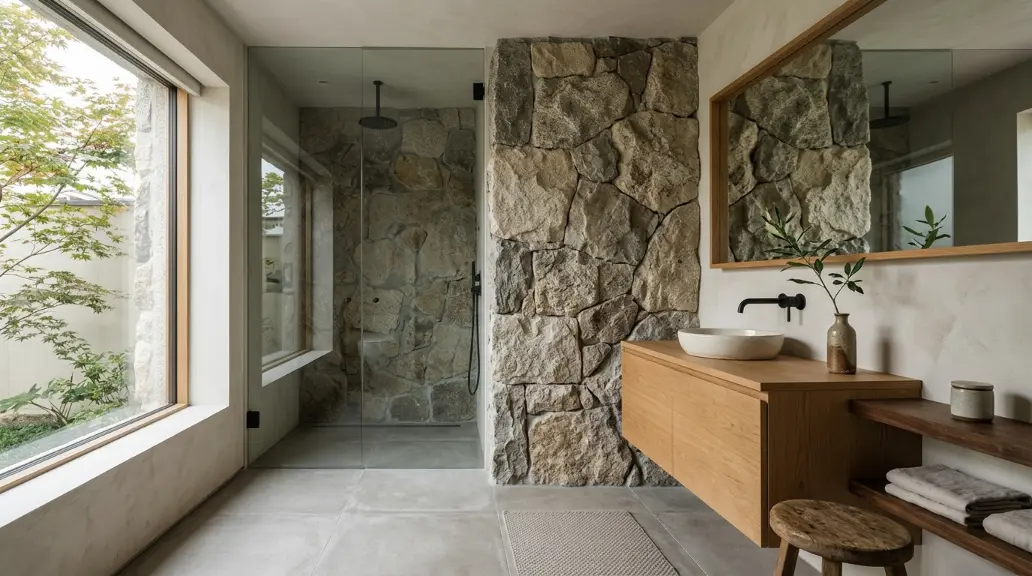
Abundant natural light floods the room, fostering a connection with the outdoors and promoting tranquility and peace. If your bathroom has a window, make it the focal point rather than an afterthought. Avoid heavy curtains that block daylight. Frosted glass offers privacy while still inviting the quality of natural light that no artificial source can replicate.
A wabi sabi bathroom is designed to bring calm, simplicity, and a strong connection to nature into everyday life. This style focuses on natural bathroom decor, organic materials, and earthy bathroom colors that create a soft and peaceful atmosphere. From stone sinks and wooden vanities to handmade ceramics and linen textiles, every detail plays a role in shaping a space that feels grounded and real. Many modern homeowners are now choosing wabi sabi interior design because it offers a refreshing alternative to overly polished spaces. By using natural textures in bathroom design and keeping the layout simple, even small bathrooms can feel more open, warm, and relaxing.
A Closing Thought on Imperfect Beauty
A wabi sabi bathroom is designed around simplicity, natural materials, and the beauty of imperfection. Instead of striving for flawless finishes, this style focuses on creating a space that feels peaceful and connected to nature. Even small imperfections can add character and warmth to the room.
The most important shift wabi sabi asks of you is not decorative. It is perceptual. Once you begin to see beauty in the worn edge, the uneven glaze, and the material allowed to age naturally, the entire act of designing a bathroom changes. You stop chasing an ideal and start building something true. That is what makes a wabi sabi bathroom so enduringly satisfying to live with.
Conclusion
Frequently Asked Questions
Q1: What is a wabi sabi bathroom?
A wabi sabi bathroom is a space designed around the Japanese philosophy of finding beauty in imperfection, simplicity, and natural materials. It prioritizes earthy tones, handmade elements, natural textures, and minimal clutter over polished, manufactured finishes.
Q2: What materials are best for a wabi sabi bathroom?
The most fitting materials include teak or bamboo wood, stone or concrete sinks, handmade ceramics, linen textiles, river pebbles, and aged metals like copper or brass. These materials are valued precisely because they develop character over time rather than maintaining a factory-fresh appearance.
Q3: Can a small bathroom be styled in the wabi sabi way?
Absolutely. In fact, small bathrooms often benefit most from this approach. The philosophy of less being more means a compact space with a few well-chosen natural elements and minimal clutter can feel far more serene than a large bathroom that is overstuffed with decoration.
Q4: What colors work best in a wabi sabi bathroom?
Soft neutrals work best: warm whites, muted beige, clay, taupe, stone gray, and soft brown. These tones support a calm atmosphere and allow the texture of natural materials to become the visual interest rather than color itself.
Q5: How is wabi sabi different from regular minimalism?
Regular minimalism tends toward precision and clinical cleanliness. Wabi sabi shares the preference for simplicity but adds warmth, organic imperfection, and a connection to nature. Where minimalism might choose a sleek white countertop, wabi sabi chooses a stone surface with visible variation and texture.


One Comment