

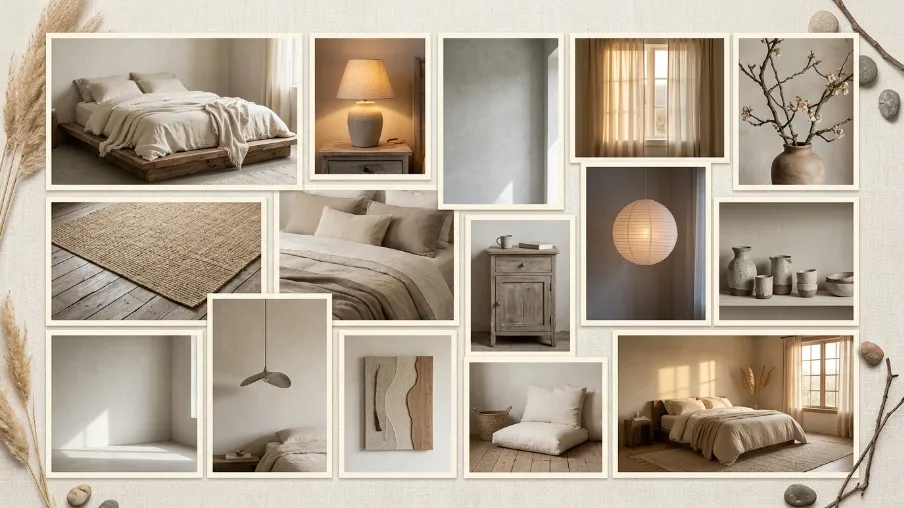
15 Wabi Sabi Bedroom Ideas for Calm Minimal Cozy Styles Now
In a world that constantly pushes toward more, brighter, and louder, the wabi sabi bedroom stands as a quiet and deliberate act of resistance. Rooted in 16th-century Japanese philosophy, wabi sabi is built on two simple but profound ideas. Wabi refers to simplicity and authenticity, while sabi speaks to the beauty that emerges through the passage of time. Together, they form a design philosophy that does not chase perfection but finds extraordinary beauty in imperfection, transience, and natural simplicity.
What Is Wabi Sabi and Why Your Bedroom Needs It
The bedroom is the most personal room in any home, and it is precisely where the wabi sabi aesthetic performs at its highest level. A wabi sabi style bedroom does not try to impress. It invites you to slow down, breathe, and rest in a space that feels genuinely alive with texture, warmth, and quiet intention. Whether you are drawn to a minimalist wabi sabi bedroom with bare walls and raw wood floors, or a cozy wabi sabi bedroom decor layered with linen and handwoven textiles, this guide covers fifteen ideas that bring the philosophy fully to life.
The Philosophy Behind Wabi Sabi Interior Bedroom Design
Before making any design decisions, understanding the philosophy helps enormously. Wabi sabi can be traced back to the 16th century and is rooted in Japanese philosophy, which focuses on embracing the imperfections of life and finding the beauty in them. Wabi means simple, authentic, or fresh, while sabi means the evolution of time.
This is not a trend. It is a mindset that translates directly into design choices. Wabi sabi is a traditional Japanese idea that finds beauty in things that are imperfect and temporary. It encourages us to enjoy the simple, rustic, and real parts of life, embracing flaws and the passage of time as important to beauty. When applied to the bedroom, the result is a calm wabi sabi bedroom setup that feels more like a sanctuary than a styled space.
15 Wabi Sabi Bedroom Ideas to Transform Your Space
1 Reclaimed Wood Bed Frame
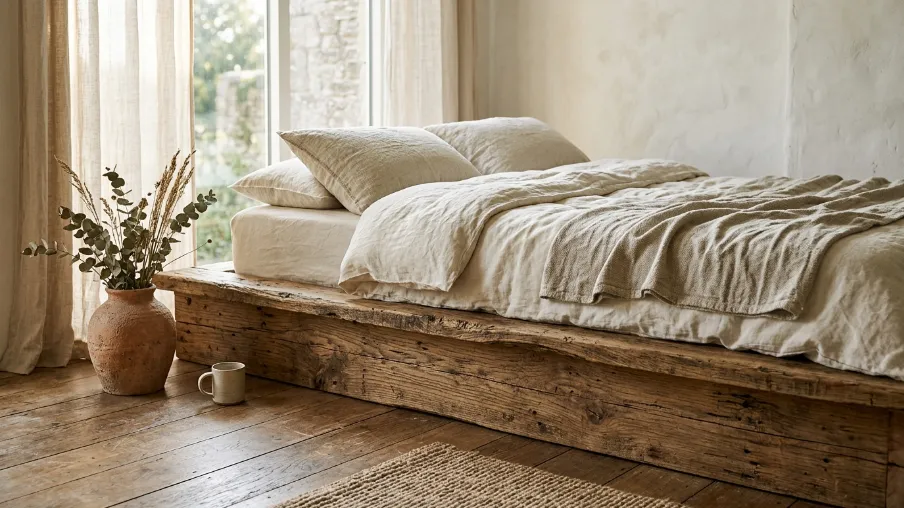
A low-profile wabi sabi bed frame crafted from reclaimed wood anchors your bedroom with rustic charm. Its imperfections, like scratches or faded paint, bring character, making it a standout in a wabi sabi style bedroom. The uneven grain, the subtle knots, and the history embedded in every plank are precisely what make this piece the foundation of an earthy wabi sabi bedroom look.
2 Linen Bedding in Neutral Tones
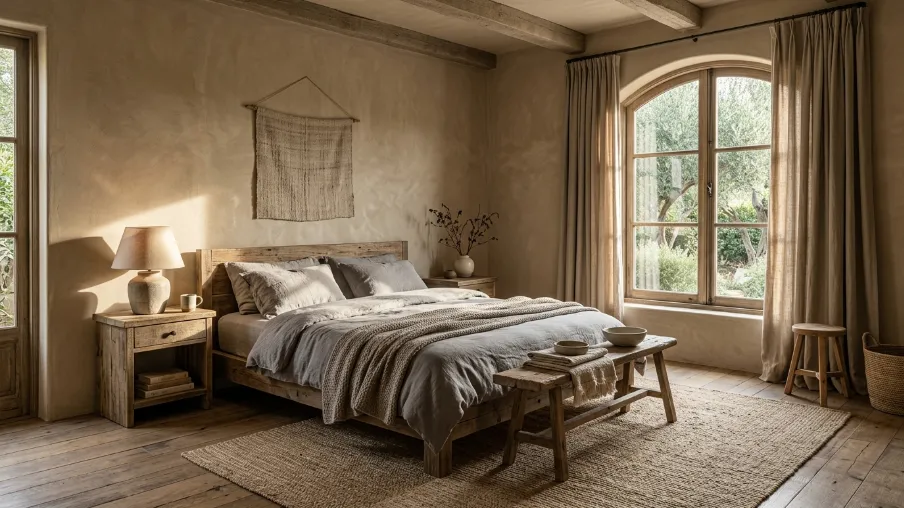
Start with pure linen bedding that grows softer with each wash, revealing the fabric’s living quality. Natural linen in shades of warm white, undyed cream, or soft sand is the single most effective textile choice for a cozy wabi sabi bedroom decor. Its natural wrinkles are not a flaw to iron away but a signature of the style itself.
3 Earthy Neutral Color Palette
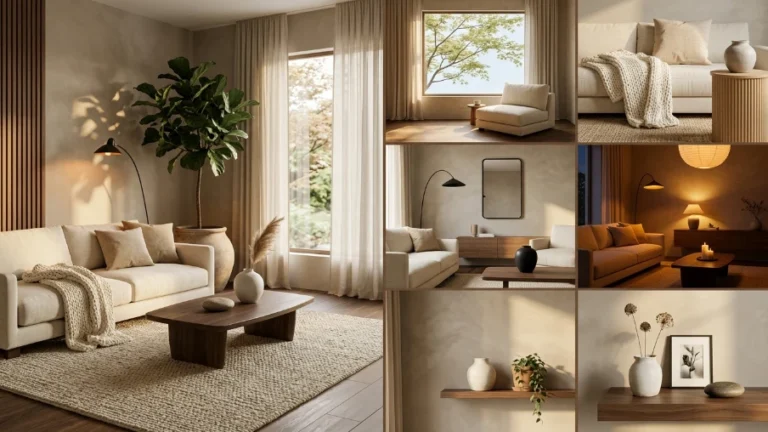
Keep your color palette muted and earthy, focusing on shades like sandy brown, gray, burnt orange, and saturated green. A natural wabi sabi bedroom style avoids bold contrasts and synthetic pigments entirely. The walls, textiles, and furniture all pull from the same quiet family of tones, creating a room that feels cohesive, calm, and deeply grounded.
Wabi Sabi Bedroom Quick Reference Table
| Design Element | Best Choice | What to Avoid |
|---|---|---|
| Bed Frame | Reclaimed wood, low platform | Glossy finishes, metal frames |
| Bedding | Natural linen, unbleached cotton | Synthetic fabrics, bright patterns |
| Wall Color | Limewash, muted beige, soft clay | Bold colors, high-gloss paint |
| Lighting | Paper lanterns, ceramic lamps | Harsh overhead lights, LED strips |
| Flooring | Jute rug, natural fiber mat | Synthetic rugs, patterned carpets |
| Decor | Handmade pottery, dried branches | Mass-produced figurines, plastic items |
| Curtains | Unbleached linen, raw cotton | Heavy drapes, patterned polyester |
| Furniture | Weathered wood, vintage pieces | Matching furniture sets, chrome legs |
| Color Palette | Beige, taupe, stone, warm gray | Neon, white-bright, bold contrasts |
| Plants | Bonsai, twisted branch, dried grass | Artificial plants, oversized tropicals |
4 Handcrafted Ceramic Lamp
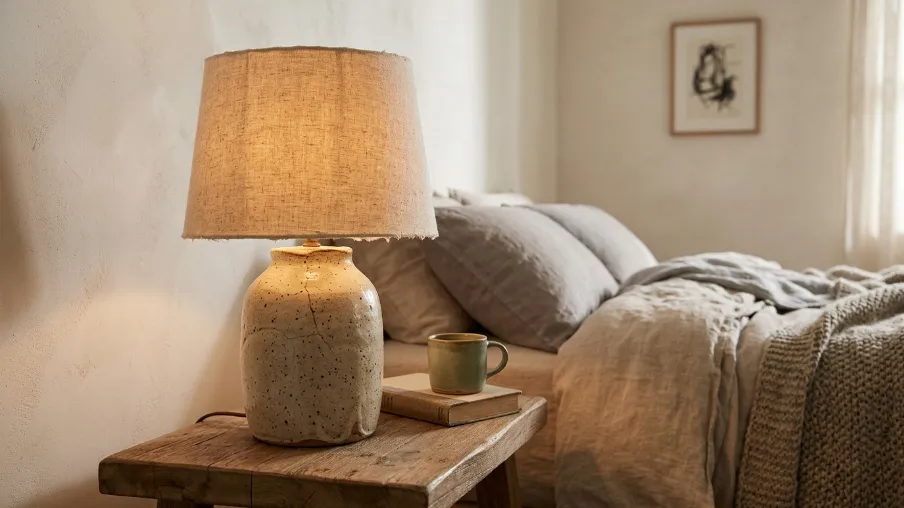
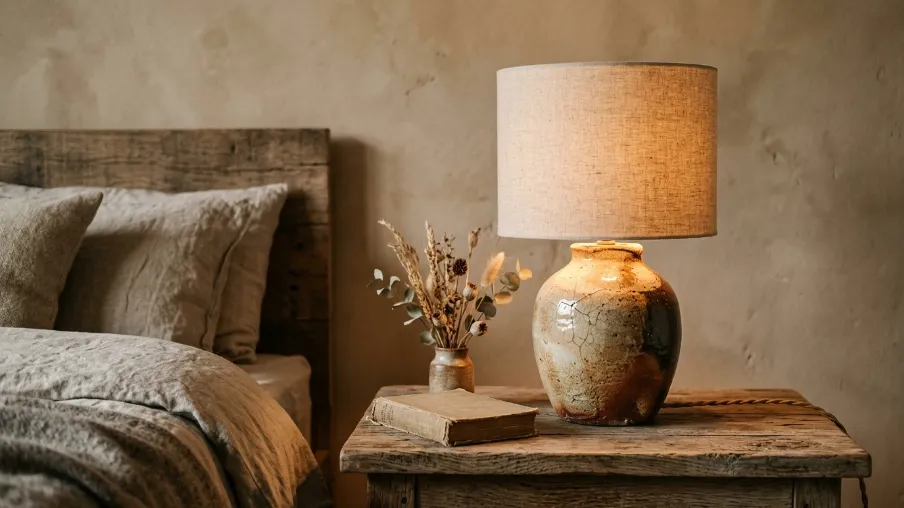
A handcrafted ceramic lamp with slight cracks or flaws casts a gentle glow, perfect for wabi sabi furniture design. The lamp’s imperfections add character, aligning with wabi sabi’s focus on handmade beauty. This small touch transforms your bedroom into a cozy, soulful retreat. Look for artisanal pieces at local markets or independent makers rather than large retailers.
5 Limewash Textured Walls
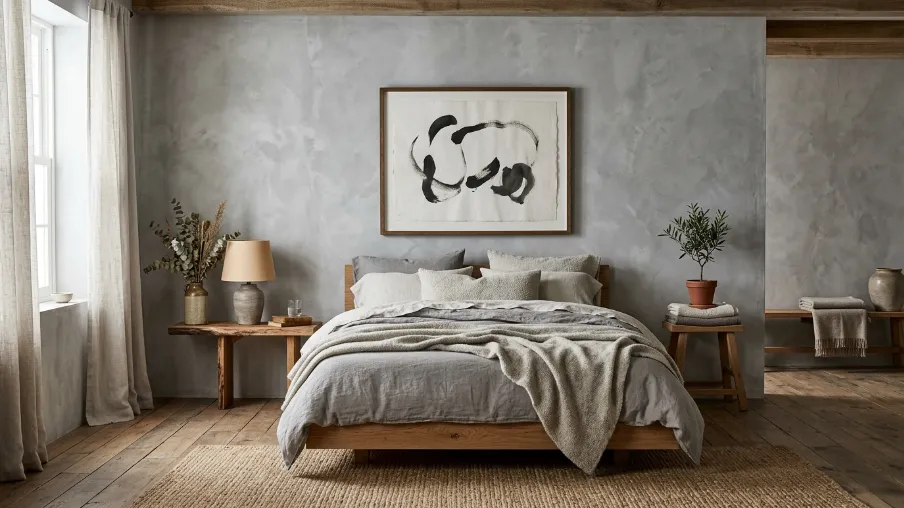
Limewash paint in soft gray creates textured, imperfect walls for a modern wabi sabi interiors bedroom. The uneven finish adds depth, serving as a serene backdrop that highlights natural furniture. This wall treatment is one of the most visually striking yet affordable ways to introduce authentic wabi sabi aesthetic bedroom character into an otherwise plain room.
6 Low Platform Bed with Floor Cushions
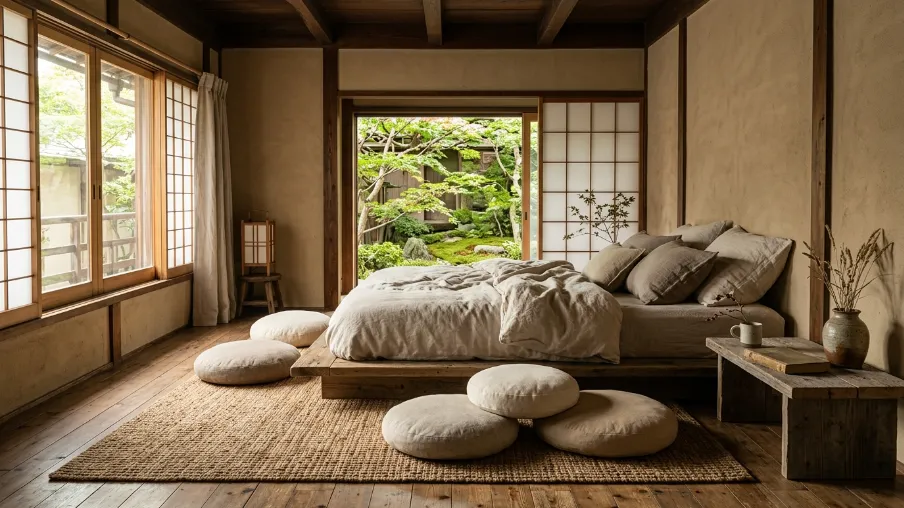
Low-profile furniture creates visual space and promotes groundedness, essential to wabi sabi design. Select a platform bed crafted from reclaimed wood that sits close to the floor. Add floor cushions in natural fibers for flexible seating. This grounded arrangement is central to the japanese bedroom design influence that runs through every corner of the wabi sabi style.
7 Natural Botanical Accents
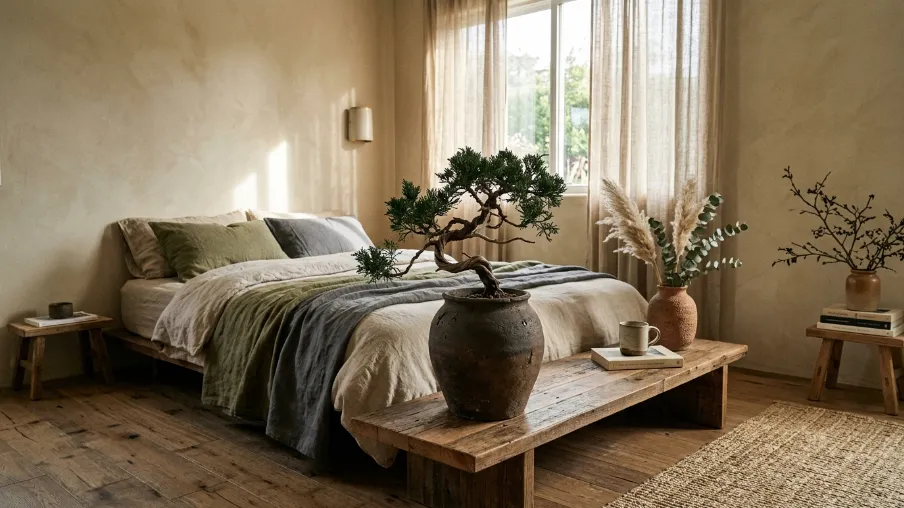
A single bonsai or twisted branch in a clay vase brings nature into your wabi sabi bedroom design. This biophilic touch connects your space to the outdoors, enhancing the calming vibe. Choose a simple, imperfect vase to echo wabi sabi’s love for natural flaws. Dried pampas grass, eucalyptus stems, and foraged branches all work equally well as minimal home decoration style elements.
8 Handwoven Jute Rug
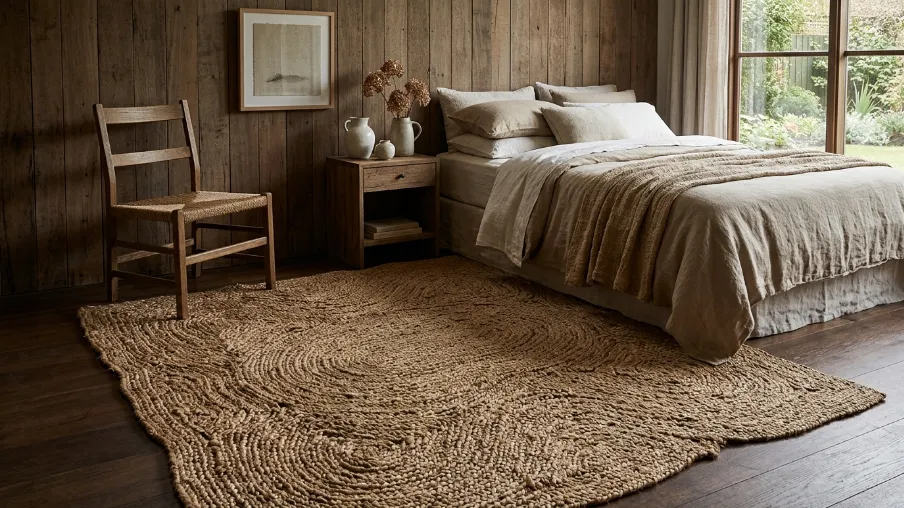
Add a handwoven jute rug to ground the space with organic patterns. A natural fiber rug introduces the kind of imperfect texture that defines rustic wabi sabi bedroom aesthetics perfectly. Its irregular weave, its earthy color, and its tactile quality underfoot all contribute to the simple living bedroom style that wabi sabi celebrates.
9 Soft Layered Lighting
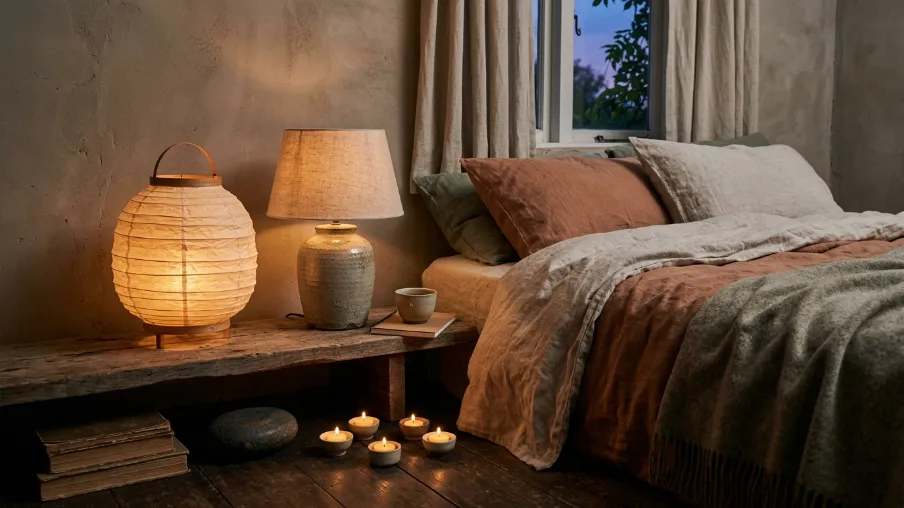
Choose soft, diffused lighting with paper lanterns or linen lampshades. This gentle lighting will create a warm and inviting feel within your wabi sabi interior. Keep it to the minimum by using statement lights strategically and sparingly. Soft lighting bedroom ideas in the wabi sabi context always prioritize warmth over brightness, creating the kind of ambient glow that encourages rest and reflection in equal measure.
10 Weathered Vintage Nightstand
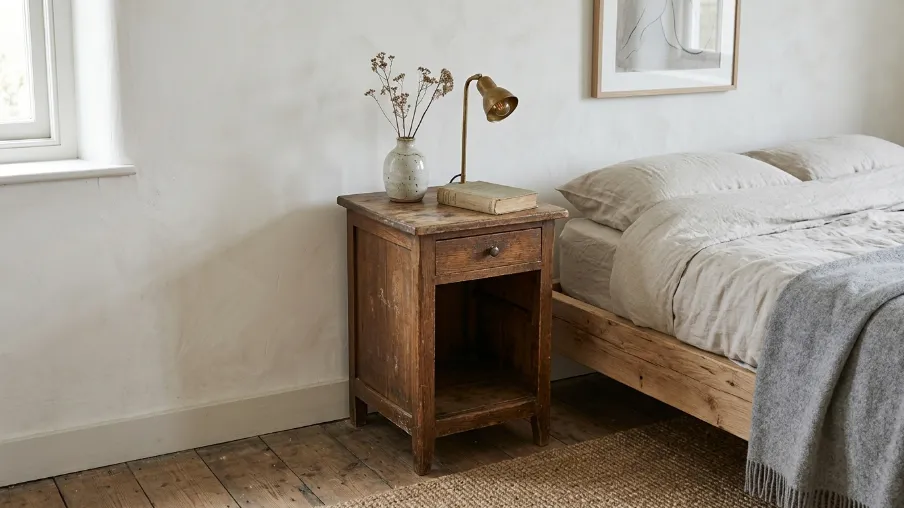
The nightstand’s history adds depth, aligning with wabi sabi’s focus on authenticity. Seek vintage or weathered wood pieces and keep minimal decor on top for simplicity. Adds character through imperfections and is budget-friendly with thrifted finds. A single aged wooden nightstand with a worn surface tells a story that no factory-produced piece ever could in a simple wabi sabi bedroom design.
11 Unbleached Linen Curtains
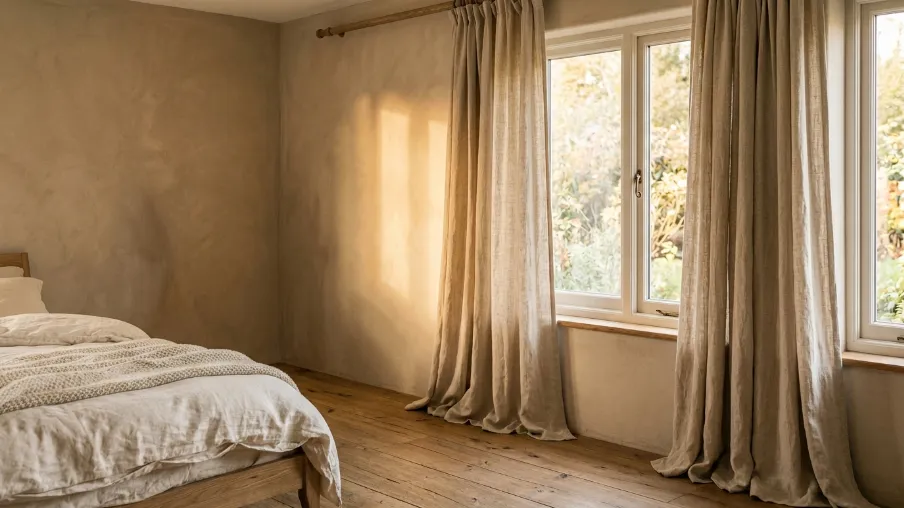
Layered textiles create warmth without clutter. Linen curtains that fall softly with natural wrinkles make the space look lived-in, comfortable, and effortless. Unbleached or naturally dyed linen curtains filter daylight into the soft, warm glow that defines the peaceful home aesthetic of a well-executed wabi sabi interior bedroom.
12 Handmade Pottery and Ceramics
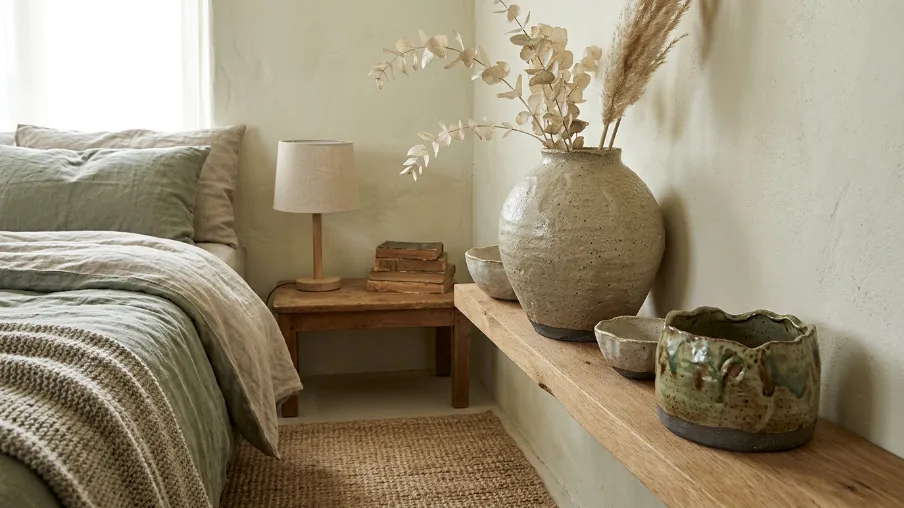
Decorate your space with textured stoneware or rough-hewn pottery. Handmade decor bedroom pieces with uneven glazes, irregular rims, or visible finger marks are not flawed objects in a wabi sabi context. They are exactly the kind of imperfect beauty bedroom style that the philosophy celebrates most openly and sincerely.
13 Negative Space as Intentional Design
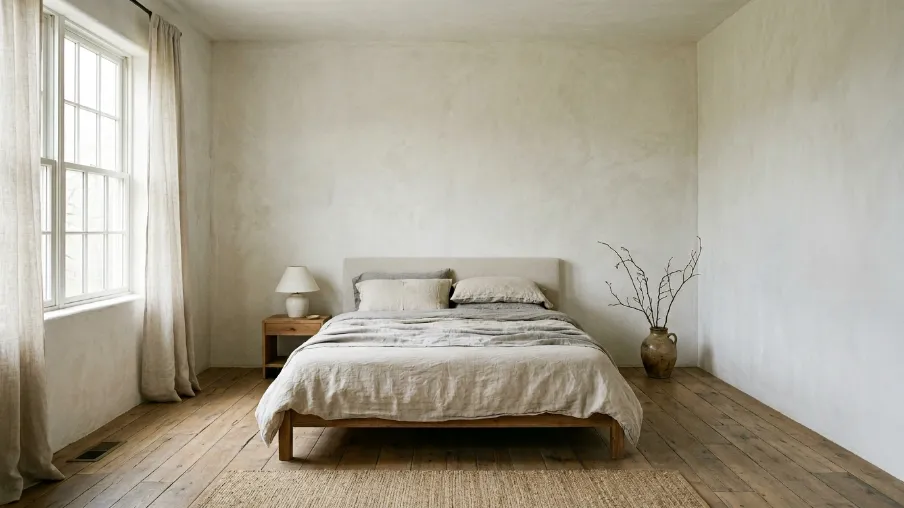
Negative space refers to the spaces in a room that are intentionally left empty and unoccupied. With such spaces, the room feels more spacious and less cluttered, which also helps our eyes to relax. In a calm wabi sabi bedroom setup, the empty wall, the bare corner, and the unoccupied shelf are not design oversights. They are deliberate contributions to the overall sense of breathing room and visual stillness.
14 Asymmetrical Arrangements
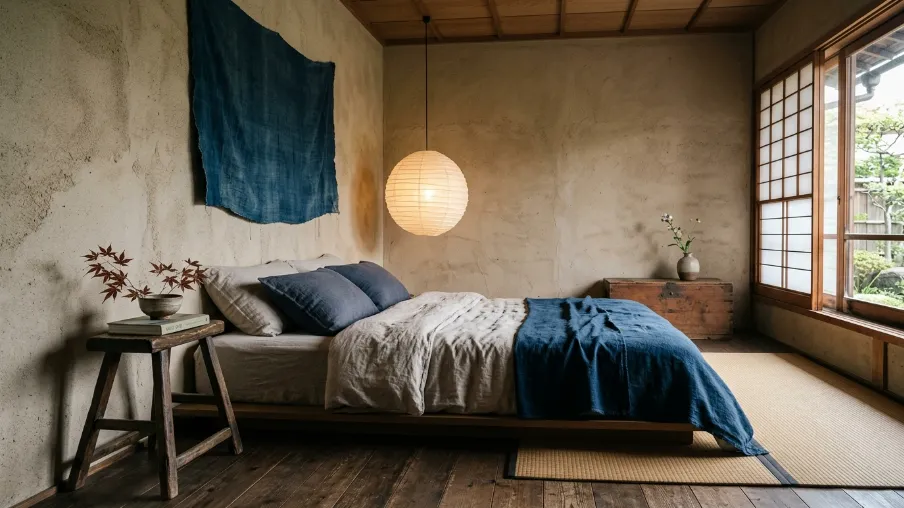
Wabi sabi design embraces the dynamic energy of asymmetrical arrangements. Rather than pairing identical lamps on each side of the bed or arranging furniture in perfect bilateral symmetry, the japanese wabi sabi bedroom embraces imbalance as a source of visual interest. One pendant light offset to one side, a single stool rather than a matching pair, these small asymmetries feel organic and deeply intentional.
you may also like this: 17 Cool Modern Mens Bedroom Ideas for a Masculine Setup 2026
15 Minimalist Wabi Sabi Artwork
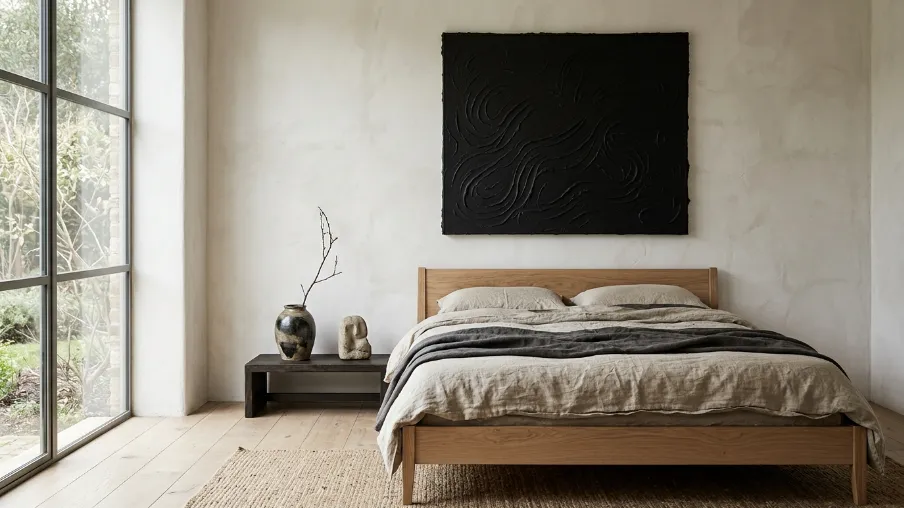
Wabi sabi design comes alive with artwork. These pieces are captivating because they contrast with expected prints and trendy decor. An all-black canvas with relief swirls, unique nature-inspired abstracts with subtle flaws, or irregularly shaped sculptures reflect the imperfect beauty of wabi sabi. One carefully chosen piece of minimalist wabi sabi bedroom art carries infinitely more meaning than a gallery wall filled with matching prints.
How to Choose the Right Wabi Sabi Style for Your Bedroom
Not every wabi sabi bedroom looks the same, and that variety is part of what makes the philosophy so accessible. A modern wabi sabi bedroom leans toward cleaner lines with natural materials and a restrained palette. A rustic wabi sabi bedroom embraces more visible texture, heavier wood, and a warmer overall tone. The earthy wabi sabi bedroom look prioritizes clay, stone, and soil-inspired colors above all else.
Key materials like raw wood with visible grain, handmade clay and ceramics, and stone with natural variations work exceptionally well in the bedroom space. Choosing two or three of these materials and allowing them to anchor the room produces a result that feels genuinely cohesive rather than assembled from separate trends.
Common Mistakes to Avoid in a Wabi Sabi Bedroom
The most frequent error people make when attempting a wabi sabi aesthetic bedroom is confusing it with simply bare or unfinished design. Glossy finishes, chrome, bright metal legs, or high-gloss MDF disrupt the natural calm of wabi sabi interiors. Instead, choose matte finishes and quiet colors that blend into the environment.
Equally important is avoiding the impulse to fill every surface. Simplify your space by decluttering and keeping only what is useful and brings joy. A minimalist area leads to a lighter mind. In the wabi sabi interior bedroom, restraint is always the correct instinct.
Conclusion
The wabi sabi bedroom is not a design project with a finish line. It is an ongoing relationship with the space around you, one that deepens as materials age, textiles soften, and objects accumulate the quiet patina of daily life. The fifteen ideas presented throughout this article represent the full range of what this philosophy can do within a bedroom, from the structural foundation of a reclaimed wood bed frame to the most delicate detail of a single handmade ceramic on an otherwise bare nightstand.
What makes the wabi sabi bedroom so enduringly relevant in 2026 is precisely what made it compelling in the 16th century. It offers a genuine alternative to perfection, a space where the imperfect is not only accepted but genuinely celebrated. If your bedroom currently feels too polished, too curated, or too disconnected from the natural world, the wabi sabi aesthetic offers a path back to something quieter, warmer, and far more honest. Begin with one element, allow it to breathe, and let the philosophy guide the rest.
Frequently Asked Questions
Q1. What is the basic meaning of wabi sabi in bedroom design?
Wabi sabi in bedroom design means embracing natural materials, imperfect objects, muted earthy tones, and intentional simplicity. It finds beauty in things that are aged, handmade, or naturally flawed rather than factory-perfect and uniform.
Q2. What colors work best in a wabi sabi bedroom?
The ideal wabi sabi bedroom color palette includes warm neutrals such as beige, taupe, soft clay, warm gray, stone, and off-white. These muted tones create a soothing and grounded atmosphere while allowing natural textures to take center stage.
Q3. Can a small bedroom use the wabi sabi style effectively?
Yes. Wabi sabi’s minimalist principles work especially well in smaller bedrooms. Low-profile furniture, negative space, and a restrained neutral palette all work together to make compact rooms feel more open, calm, and intentionally designed.
Q4. What is the difference between wabi sabi and Japandi bedroom styles?
Wabi sabi celebrates imperfection, natural aging, and rustic organic textures. Japandi blends Japanese minimalism with Scandinavian functionality, emphasizing cleaner lines and a more structured modern aesthetic. Wabi sabi is warmer and more rustic, while Japandi is sleeker and more precise.
Q5. How do I start creating a wabi sabi bedroom on a limited budget?
Begin with what you already own. Repurpose aged wooden furniture, swap synthetic bedding for natural linen, add a single handmade pottery piece, and introduce a dried branch or botanical element. Wabi sabi values authenticity over expense, making it one of the most budget-accessible interior design philosophies available.

One Comment