17 Chic Maximalist Living Room Ideas to Transform Your Space
If you have ever walked into a room and immediately felt something, a sense of warmth, personality, and life, chances are it was not a plain white minimal space. It was probably full of color, layered textures, interesting art, and pieces that told a story.
That is exactly what a maximalist living room does. It pulls you in.
For a long time, minimalism dominated interior design conversations. Clean lines, empty surfaces, and neutral palettes were the standard. But more and more people are realizing that their homes feel cold, bland, or like a showroom rather than a space they actually live in.
Maximalism is the answer to that feeling.
A maximalist living room is not about throwing everything at the wall and hoping it works. It is about layering color, pattern, texture, and personal pieces in a way that feels curated and expressive, not chaotic. Think of it as decorating with intention but without the rules.
Whether you are starting from scratch or looking to add more personality to what you already have, these 17 chic maximalist living room ideas will give you real, practical inspiration to work with.
1. Start With a Bold, Dramatic Wall Color
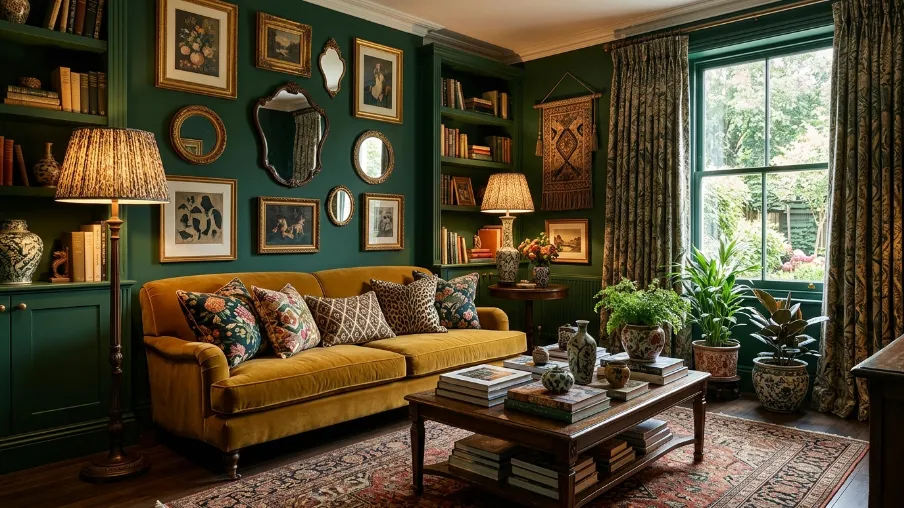
The walls set the tone for everything else in the room. In a maximalist living room, a plain white wall often works against you because it provides no foundation for the layers you want to build.
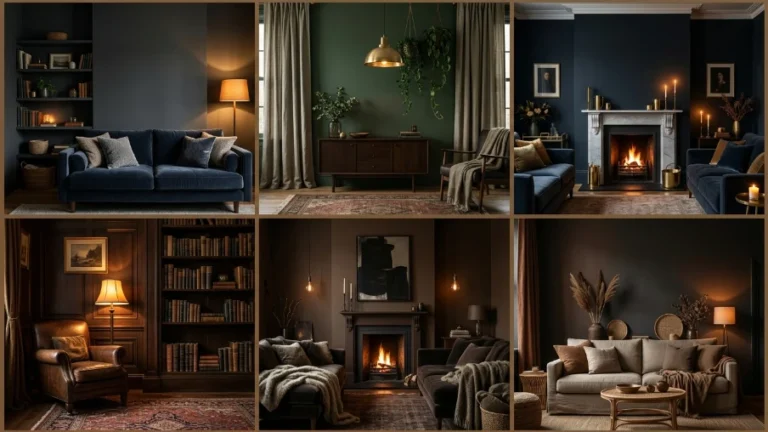
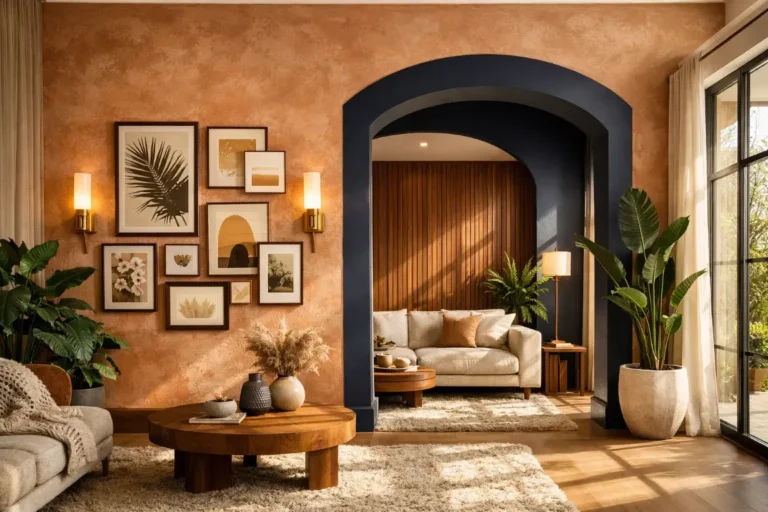
Consider painting your walls a deep, rich tone like forest green, sapphire blue, terracotta, or even a moody charcoal. These bold color palettes instantly create a sense of depth and drama without adding a single piece of furniture.
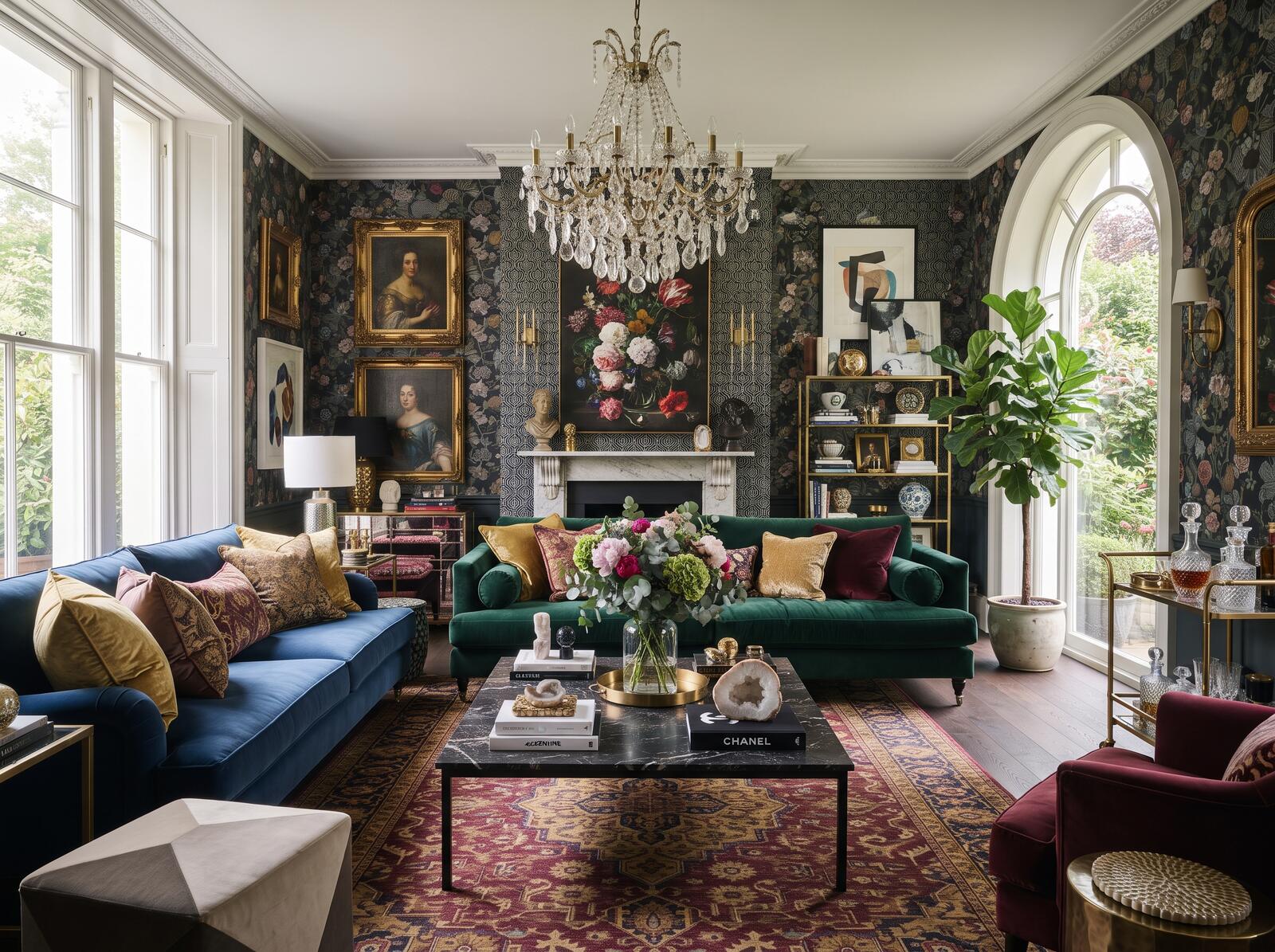
If paint feels too permanent, patterned wallpaper with large-scale florals, geometric prints, or vintage botanicals is a fantastic alternative. A single statement wall covered in bold wallpaper can anchor the entire room and set the creative direction for everything else.
2. Layer Multiple Rugs for Depth and Texture
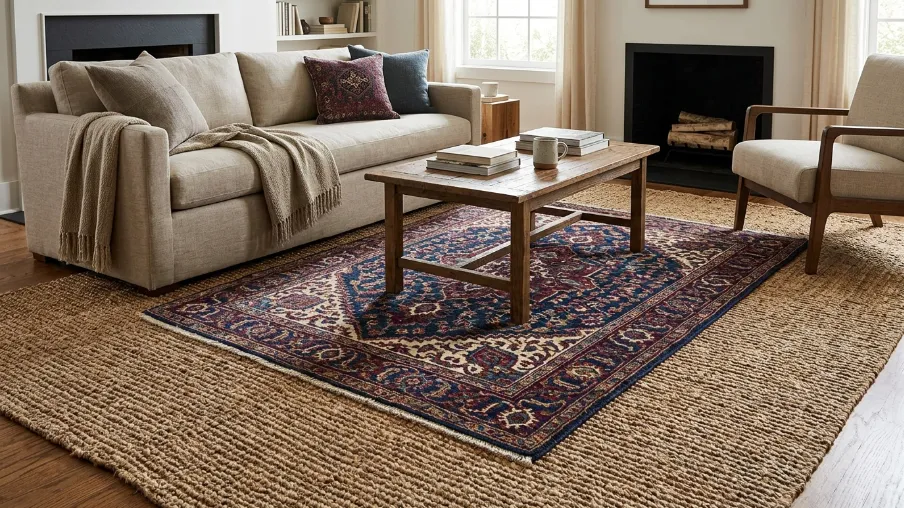
One of the simplest ways to add richness to a living room floor is to layer rugs on top of each other. A large, neutral jute or sisal rug as a base, topped with a smaller patterned or colorful rug, creates immediate visual interest.
This technique adds rich textures to the space and helps define different zones within the room. It also makes the floor feel warm and intentional rather than bare or afterthought-ish.
Mix materials freely here. A woven rug under a plush velvet-toned floor cushion or a geometric rug layered over a plain wool base both work beautifully.
3. Build a Gallery Wall That Tells Your Story
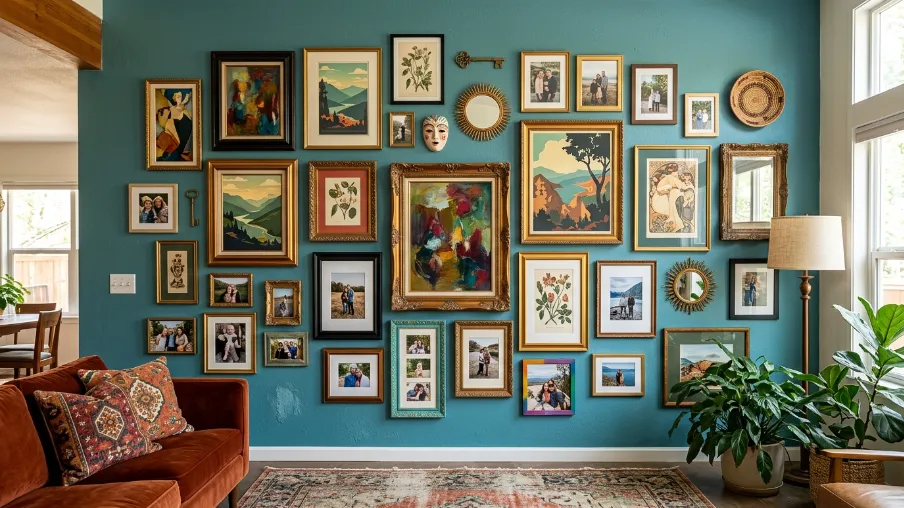
Gallery walls are practically a signature element of eclectic living room design. They fill vertical space in a way that feels personal, creative, and completely unique to whoever lives there.
The key to a great gallery wall in a maximalist space is variety. Mix frame styles and sizes, from ornate gilded frames to simple black ones. Include original artwork, vintage posters, printed photographs, mirrors, and even small sculptural pieces mounted flat against the wall.
Do not worry about perfect symmetry. The most interesting gallery walls have an organic, slightly unpredictable arrangement that draws the eye around the room rather than holding it in one place.
you may alos like this: https://luxuryhomesdecor.com/boho-coastal-bedroom-ideas/
4. Choose a Statement Sofa as Your Anchor Piece
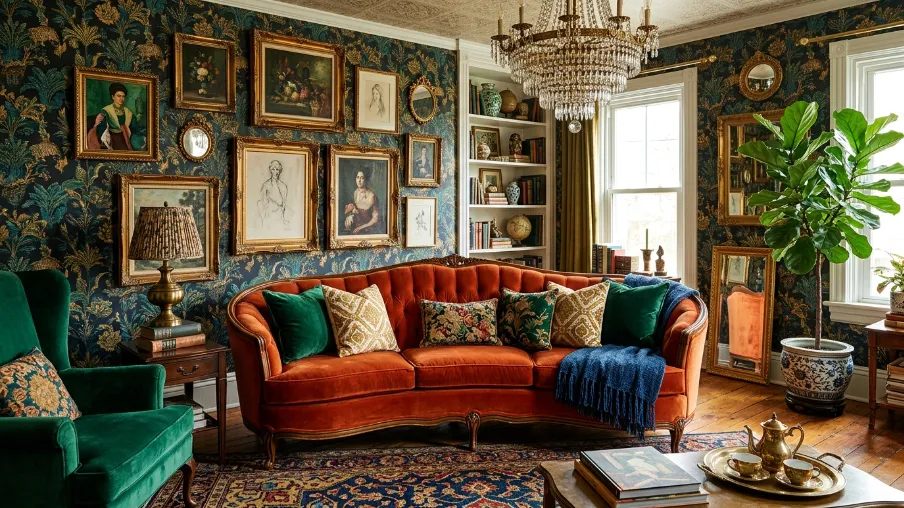
In most living rooms, the sofa is the largest piece of furniture. In a maximalist living room, it should also be the boldest.
Consider a sofa in a rich jewel tone, deep teal, velvet emerald, burnt orange, or dusty plum. If you prefer something more neutral in the sofa itself, a heavily patterned fabric with florals or geometric designs works just as well.
The sofa anchors the entire room visually, so choosing one with real personality gives you something to build the rest of the decor around. Pair it with throw pillows in contrasting patterns and textures to layer the look further.
Quick Reference: Maximalist Living Room Elements at a Glance
| Design Element | What It Does | Best For | Budget Level | Beginner Friendly |
|---|---|---|---|---|
| Bold Wall Color / Wallpaper | Sets the mood and creates depth | Dramatic, high-impact look | Low to Mid | Yes |
| Gallery Wall | Fills vertical space with personality | Art lovers, eclectic style | Low | Yes |
| Statement Sofa | Anchors the room with color or pattern | Any maximalist style | Mid to High | Yes |
| Layered Rugs | Adds texture and warmth to floors | Cozy, layered interiors | Low to Mid | Yes |
| Mixed Pattern Textiles | Creates visual richness through fabrics | Eclectic, colorful rooms | Low | Yes |
| Statement Lighting | Draws the eye up, adds drama | Luxury or artistic spaces | Mid to High | Moderate |
| Curated Shelf Displays | Showcases collections and personality | Vintage, artistic styles | Low | Yes |
5. Mix Patterns Without Fear
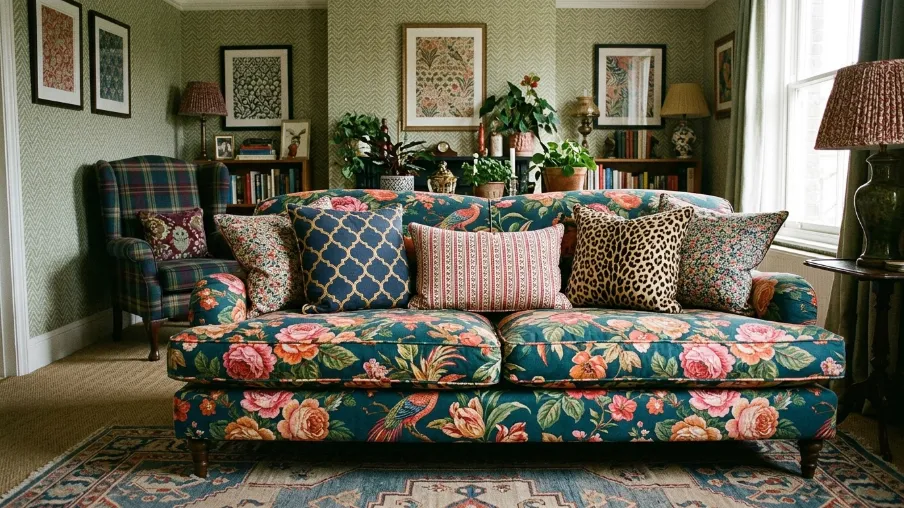
Pattern mixing is one of those things that sounds complicated but becomes intuitive once you understand the basic approach. In a maximalist living room, layering different prints is not only acceptable, it is encouraged.
The trick is to vary the scale of your patterns. Pair a large-scale floral with a smaller geometric print and a simple stripe. This way the patterns complement each other rather than competing. Keep a shared color running through all of them to hold the overall look together.
Patterns can appear on throw pillows, curtains, rugs, upholstered chairs, wallpaper, or even a painted floor. The more surfaces you bring pattern onto, the more layered and expressive the room feels.
6. Use Velvet and Jewel Tones Generously
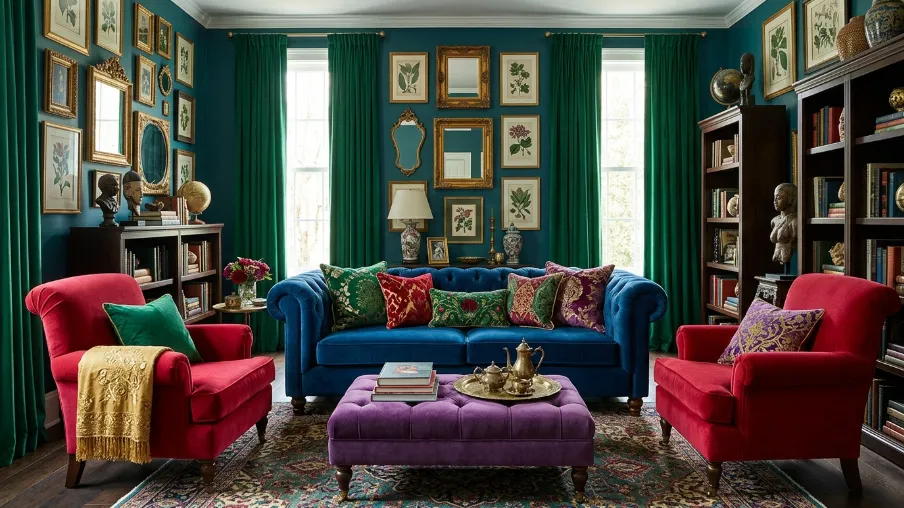
Velvet is a maximalist fabric. It catches light, reads as luxurious, and instantly adds warmth to a space. In a colorful living room, velvet furniture or soft furnishings in jewel tones like sapphire, ruby, amethyst, or gold create that luxurious, lived-in richness that defines the style.
A velvet armchair in a bold color, a velvet bench at the base of a sofa, or velvet curtains in a deep jewel shade all contribute to the sense of luxury living room decor without requiring a huge budget. Velvet is widely available at accessible price points, which makes it one of the most impactful budget-friendly choices in maximalist decorating.
7. Stack and Layer Your Coffee Table
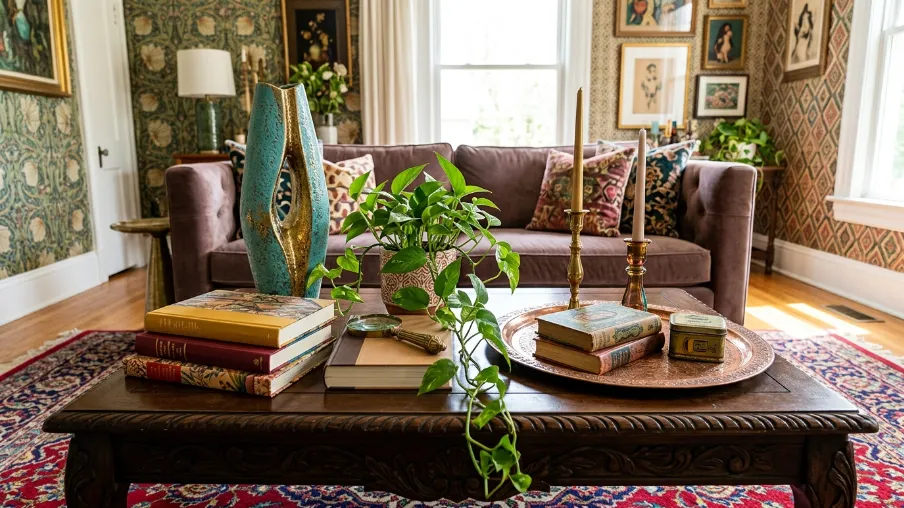
The coffee table in a maximalist living room is not a blank surface. It is a curated display. Stack books in complementary colors, add a sculptural vase, tuck in a candle or two, and include something unexpected like a small vintage object or a trailing plant.
Grouping items in odd numbers, particularly threes and fives, tends to look more natural and visually interesting than even groupings. Vary the heights of your objects so the display has dimension rather than sitting flat.
This kind of layered home decor detail makes the room feel genuinely lived in and personal rather than staged.
8. Add Statement Lighting as Decor
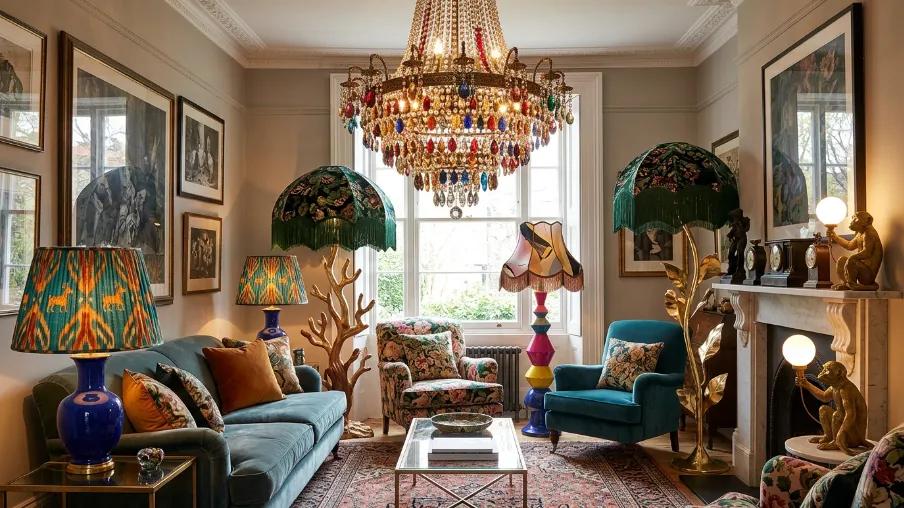
Lighting in a maximalist living room does much more than illuminate the space. It adds drama, personality, and vertical interest.
A large, ornate chandelier above the seating area draws the eye up and creates an immediate focal point. Floor lamps with sculptural bases or unusual shapes add interest at eye level. Table lamps in bold colors or with patterned shades contribute to the overall layered look.
Mixing different types of lighting, overhead, floor, and table, creates a warm and layered atmosphere that feels inviting rather than harsh. This is especially effective in artistic living room designs where every element is expected to contribute to the visual story.
9. Go for a Vintage-Inspired Living Room Feel
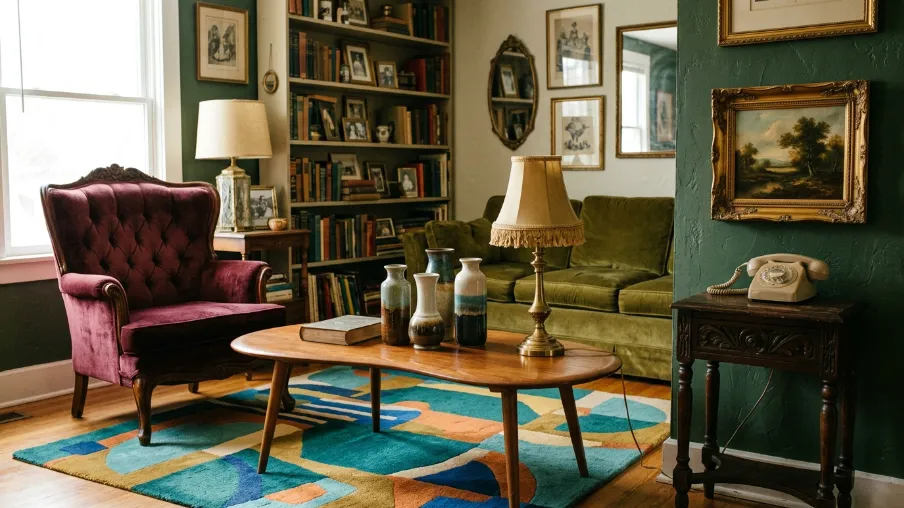
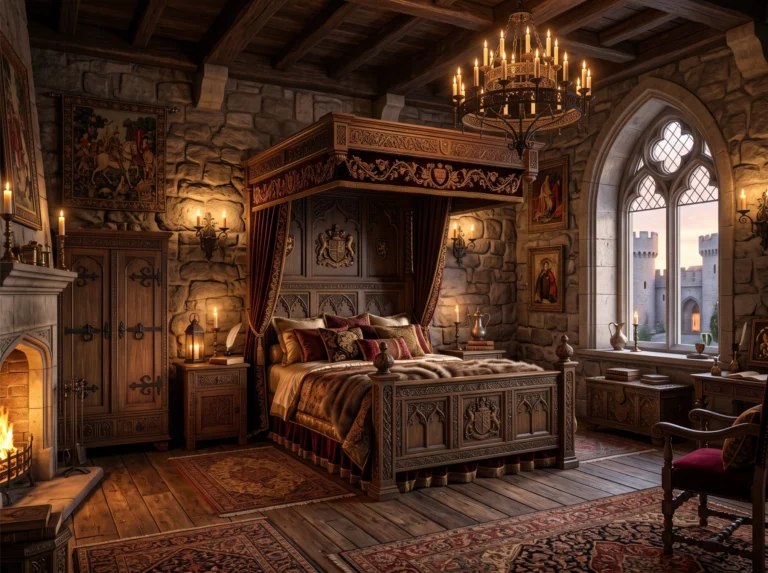
One of the most charming expressions of bold living room design is the vintage-inspired approach. Mixing pieces from different eras, a Victorian armchair alongside a mid-century coffee table and a contemporary rug, creates that eclectic, curated quality that makes a maximalist room feel genuinely interesting.
Thrift stores, flea markets, and antique shops are some of the best sources for this kind of decorating. A carved wooden side table, a collection of mismatched ceramic vases, or a vintage oil painting found secondhand can add more character than expensive new pieces ever could.
10. Embrace a Rich, Jewel-Toned Color Palette
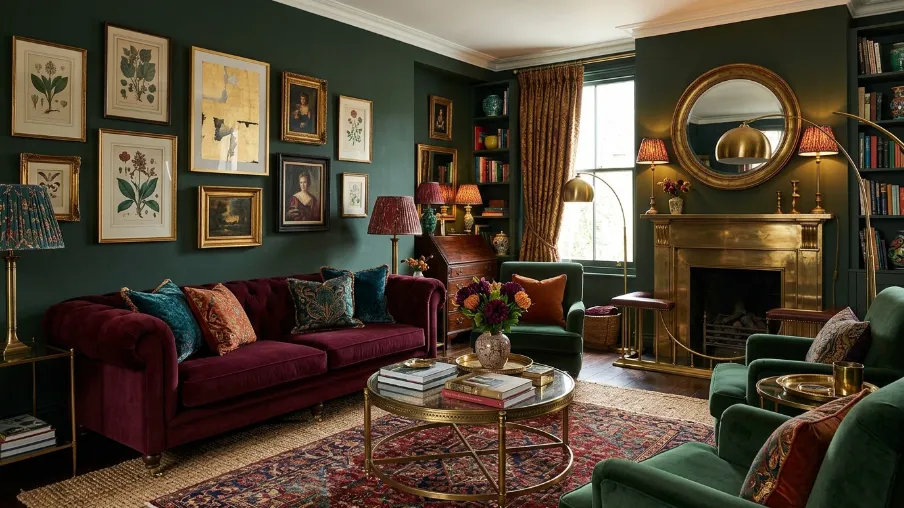
If you are working with a bold color palette, consider choosing three to four shades that feel connected and building the room around those. Deep teal, burnt orange, and gold work together beautifully. Burgundy, forest green, and brass create a warm, opulent feel. Royal blue, coral, and white give a more playful but still vibrant result.
Having a color direction does not limit creativity in a colorful living room. It actually makes the overall space feel more intentional and visually cohesive, which is what separates beautiful maximalism from overwhelm.
11. Display Your Collections with Confidence
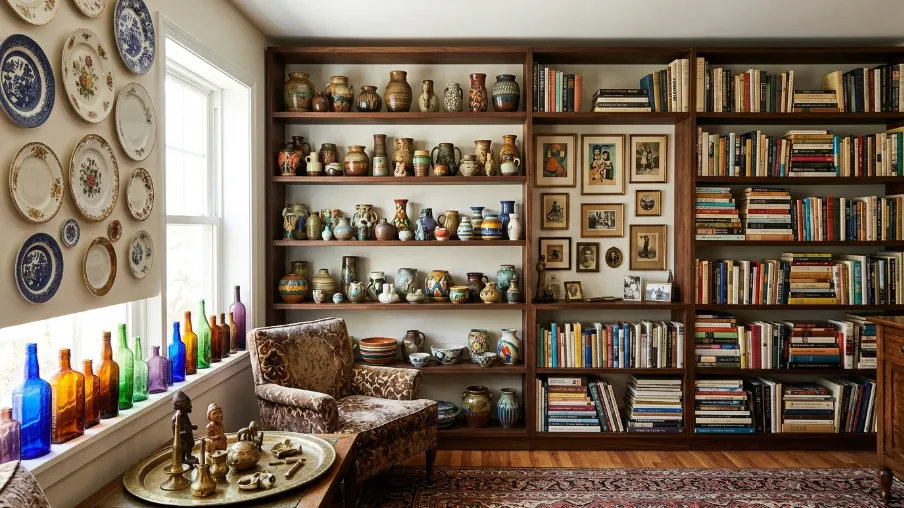
Maximalism actively celebrates collections. A shelf full of ceramic objects, a wall covered in vintage plates, a windowsill lined with colored glass bottles, these are not clutter. They are curated home decor at its most personal.
The key to displaying collections well is grouping like items together. Mixing everything in one undifferentiated pile looks chaotic. Grouping your ceramics on one shelf, your books on another, and your small sculptures on a tray on the coffee table gives each collection its own moment while contributing to the rich overall feel of the room.
12. Bring In Plants and Natural Elements
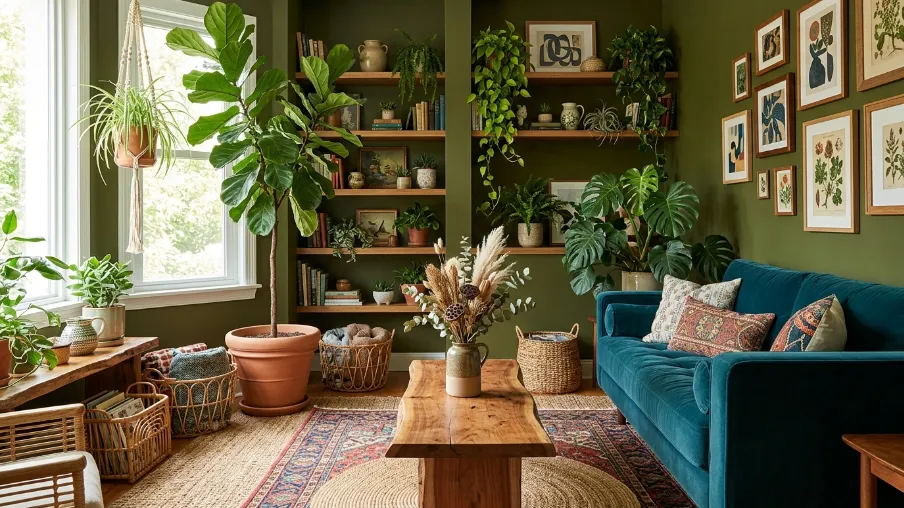
Even in the most dramatically decorated maximalist living room, plants add an organic softness that keeps the space from feeling overwhelming. A large floor plant like a fiddle leaf fig or a monstera adds scale and color without competing with the rest of the decor.
Smaller potted plants on shelves, trailing plants from high surfaces, and dried botanicals in vases all contribute to a layered, expressive look. In modern maximalism particularly, mixing natural textures like rattan, jute, wood, and stone alongside rich fabrics and bold colors creates a grounded, balanced feel even within a very full room.
13. Use Patterned or Colorful Curtains
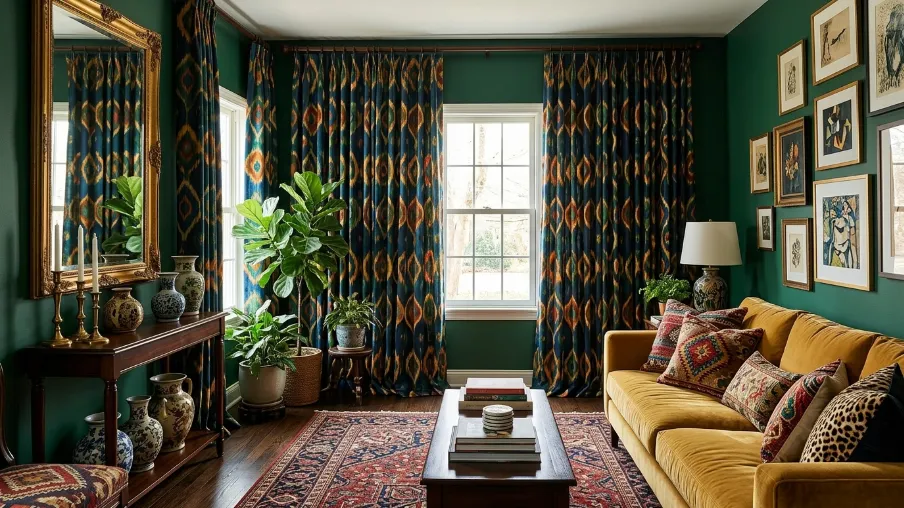
Curtains in a maximalist living room deserve the same attention as any other design element. Floor-to-ceiling curtains in a bold color or a large-scale print add vertical drama and soften the overall look.
If your walls are already busy with wallpaper or art, choose curtains in a color that picks up one of the shades from the room without adding a competing print. If your walls are relatively calm, curtains in a striking floral, stripe, or geometric pattern can carry significant visual weight on their own.
Either way, keep curtains long and full. Short or skimpy curtains undercut the generous, layered quality that expressive interior style is known for.
14. Add Mirrors to Multiply the Visual Richness
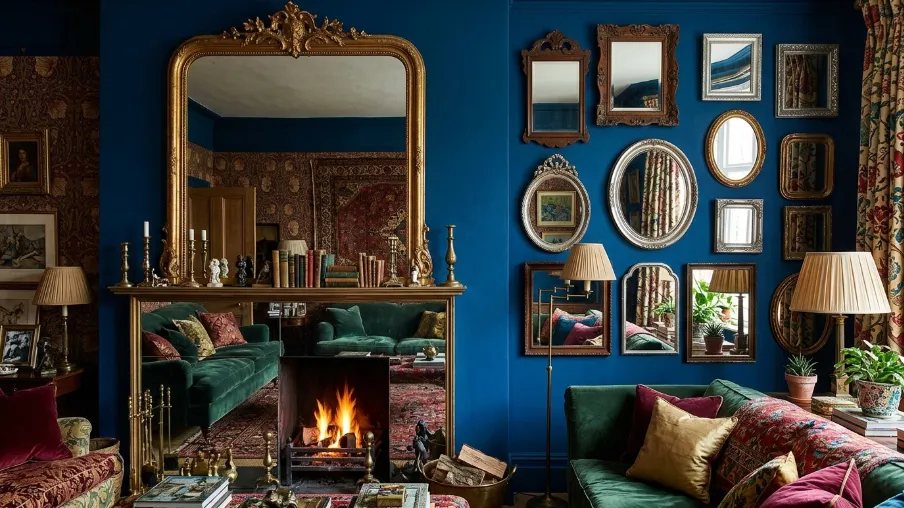
Mirrors in a maximalist space do something very useful. They reflect the colors, textures, and layers you have already created, essentially multiplying the visual richness of the room without adding more objects.
An oversized ornate mirror above the fireplace or behind the sofa creates depth and drama. A grouping of smaller mismatched mirrors on a wall contributes to a gallery wall effect with extra light. In a darker, moodily painted maximalist room, mirrors also help to keep the space from feeling too closed in.
15. Try a Monochromatic Maximalist Approach
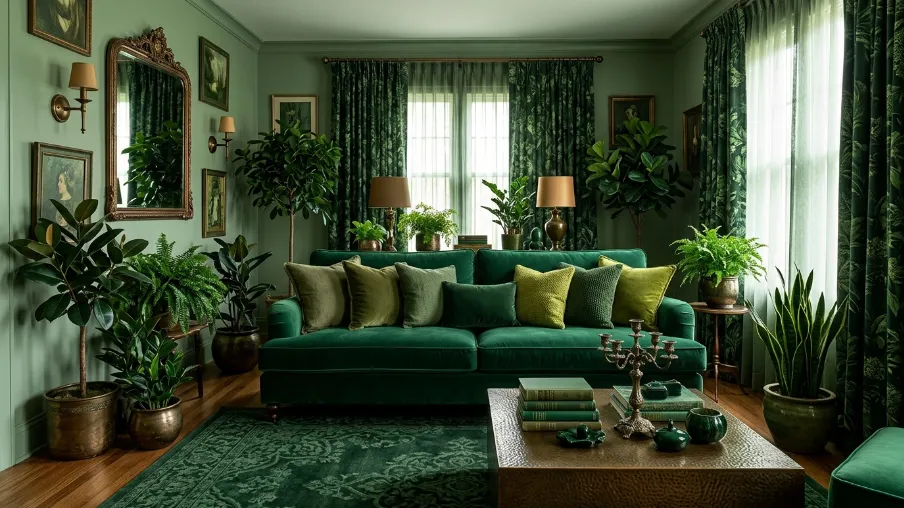
Not all maximalist living rooms rely on multiple colors. A monochromatic maximalist space takes one color and layers it across every surface in different shades, textures, and materials.
An all-green room with sage walls, an emerald velvet sofa, olive throw pillows, dark green plants, and bronze accents is incredibly rich and complex despite technically being one color family. This approach is particularly useful if you want the depth and personality of maximalism without the visual noise of many competing colors.
It is also a strong entry point for beginners who love the idea of bold living room design but are not sure where to start.
16. Make the Most of Small Spaces
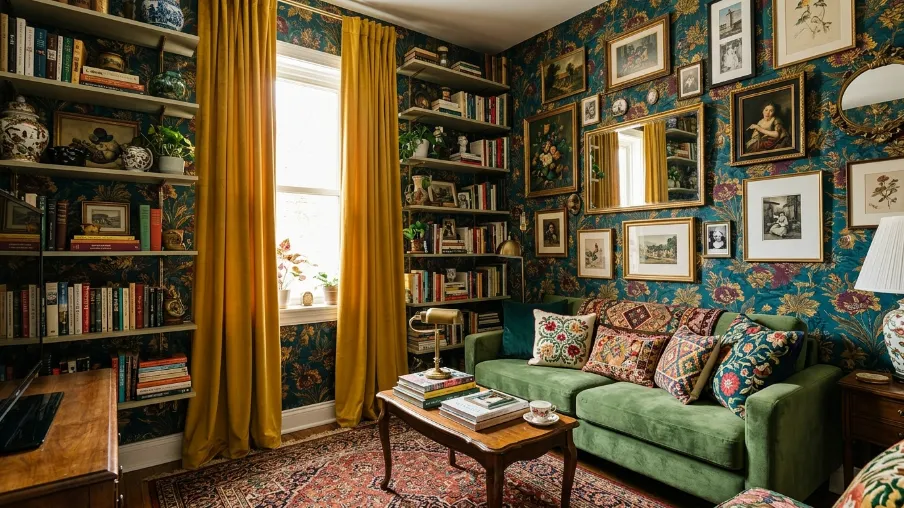
A common concern about maximalist decor is that it will overwhelm a small living room. In reality, maximalism can work beautifully in compact spaces if you approach it thoughtfully.
Bold wallpaper or a rich paint color in a small room actually creates a cozy, intimate feel rather than making it feel smaller. Maximalist decor for small living rooms works best when you focus on vertical space. Tall bookshelves, floor-to-ceiling curtains, and high-mounted gallery walls all draw the eye upward and make the room feel larger while adding plenty of personality.
Keep furniture scaled appropriately for the room, but do not hold back on color, pattern, or decorative accents.
you may alos like this: https://luxuryhomesdecor.com/boho-coastal-bedroom-ideas/
17. Let the Room Evolve Over Time
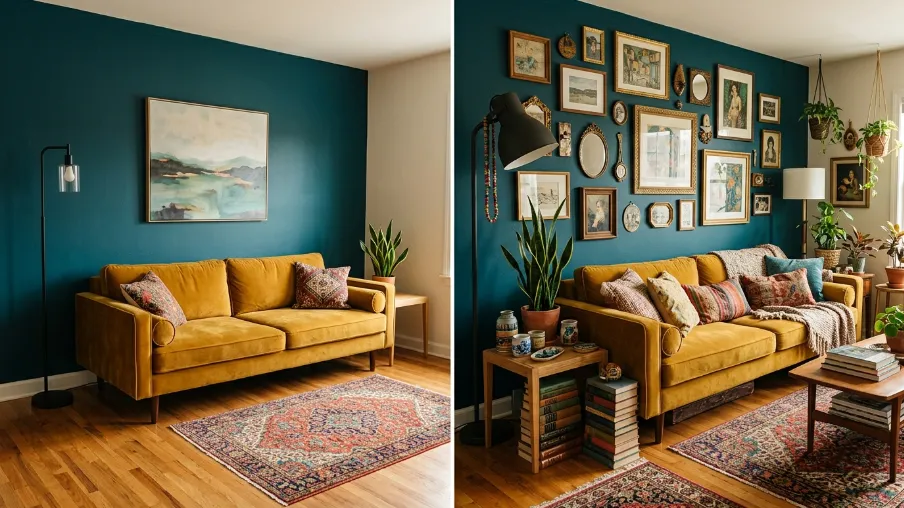
Perhaps the most important thing about a maximalist living room is that it does not need to be complete all at once. The best maximalist spaces are built slowly, through collected pieces, trips to markets, gifts, travels, and finds that accumulate meaning over time.
Start with a wall color and a statement sofa. Add a rug and some throw pillows. Build a gallery wall gradually. Add plants, books, and objects as you find them. This organic approach produces rooms that feel genuinely personal and authentic rather than styled for a magazine spread.
Dramatic interior design at its best is a living process, not a one-time project.
How to Decorate a Maximalist Living Room Without It Looking Cluttered
This is the question most people have, and it is a fair one. The line between a beautifully layered room and a chaotic one is real.
A few principles make all the difference.
Start with a color anchor. Choose two or three main colors and let everything else connect back to those. Even in a room with twenty different patterns, shared color creates cohesion.
Group, do not scatter. Collections and decorative objects look intentional when grouped together. The same number of items scattered randomly across every surface looks messy.
Give the eye a place to rest. Not every surface needs to be at maximum density. A plain patch of wall between two busy sections, or a simple solid cushion between two patterned ones, gives visual breathing room without diminishing the overall richness.
Limit competing focal points. As interior designers point out, when every piece is trying to be the star, the room loses its impact. Choose one or two genuine focal points, a gallery wall, a statement sofa, a fireplace surround, and let everything else support rather than compete.
Common Maximalist Decorating Mistakes to Avoid
Even with great instincts, a few common errors can tip a maximalist living room from chic to overwhelming.
Mixing too many bold patterns at the same scale creates visual chaos. Vary the scale of your prints so they work together rather than fight each other.
Ignoring a color connection between pieces means the room looks random rather than curated. Even in the most eclectic space, some shared color thread holds things together.
Buying everything at once produces a staged look rather than a personal one. Maximalist rooms build up over time. Give yours the chance to develop naturally.
Forgetting about lighting is a mistake that affects the entire atmosphere. Without layered lighting, even the most beautifully decorated room can feel flat and uninviting in the evening.
Overcrowding furniture instead of decor is another issue. A room full of large furniture pieces with no breathing space feels cramped. Choose fewer furniture pieces and fill the room with decorative layers instead.
Budget-Friendly Tips for a Maximalist Living Room
You do not need a large budget to create a vibrant, layered space. Some of the best maximalist decorating strategies are actually low cost.
Thrift stores and secondhand markets are goldmines for vintage-inspired pieces, ceramic collections, old frames, and interesting furniture finds at a fraction of retail prices.
Paint is one of the most affordable ways to make a dramatic change. A bold wall color costs relatively little but completely transforms a room.
Swap out throw pillows in new patterns and colors between seasons to refresh the look without replacing anything major.
Start a gallery wall with prints you find online and frame yourself. Mixing inexpensive printed art with one or two more meaningful pieces creates the same eclectic quality as a fully curated collection.
Conclusion
A maximalist living room is one of the most personal and rewarding spaces you can create. It is a room that reflects who you are, what you love, and what you have collected throughout your life. It is full of color, texture, pattern, and personality, and it feels genuinely alive in a way that sparse, minimal spaces often do not.
The ideas in this guide cover everything from bold wall colors and gallery walls to layered rugs, statement furniture, and vintage finds. You do not need to use all of them at once. Start with one or two that feel right for your space and your style, then build from there.
The best maximalist living rooms are not finished overnight. They grow over time, and that process is part of what makes them so satisfying.
Frequently Asked Questions
Q1: What is the difference between maximalism and clutter?
Maximalism is intentional layering of color, pattern, texture, and personal pieces that feel curated and connected. Clutter is an accumulation of items without visual purpose or organization. The key difference is intention. Every piece in a well-done maximalist room feels like it belongs there.
Q2: Can maximalism work in a small living room?
Yes, absolutely. Bold colors and large-scale patterns can actually make a small room feel more intimate and special rather than cramped. Focus on vertical space with tall shelves and high-mounted artwork, keep furniture proportionate to the room, and do not hold back on decorative layers.
Q3: How do I mix patterns without the room looking too busy?
Vary the scale of your patterns. Pair a large floral with a smaller geometric and a simple stripe. Keep a shared color running through all the patterns to tie them together. Limit yourself to two or three very bold patterns and let the rest of the room support them with texture rather than competing prints.
Q4: What colors work best in a maximalist living room?
Jewel tones like sapphire blue, emerald green, ruby red, and deep gold are classic maximalist choices. Earthy, rich palettes combining terracotta, mustard, and forest green also work beautifully. The most important thing is choosing colors that feel connected to each other so the room reads as cohesive rather than random.
Q5: How do I start decorating a maximalist living room as a beginner?
Begin with one bold choice, either a statement wall color or a richly colored sofa. Then layer from there: add patterned throw pillows, a textured rug, some plants, and start a small gallery wall. Build slowly and let the room develop over time rather than trying to complete the whole look at once.