20 Beautiful Corner Dining Nook Ideas You’ll Love
If you’ve ever stood in your kitchen staring at that awkward, empty corner wondering what to do with it, you’re not alone. That unused space is quietly begging to become something useful — and a corner dining nook might be exactly the answer you’ve been looking for.
A well-planned dining nook does more than fill empty space. It gives your family a spot for quick breakfasts, homework sessions, coffee chats, and slow Sunday mornings. Whether you live in a tiny apartment or a full-sized farmhouse, there’s a nook style that fits your layout, your budget, and your taste.
In this guide, you’ll find twenty corner dining nook ideas, along with practical tips on seating, materials, and layout so you can actually plan one instead of just admiring it on a screen.
Why a Corner Dining Nook Works So Well
Before jumping into the ideas, it helps to understand why this layout has become so popular in kitchens and small homes.
A corner breakfast nook uses space that would otherwise sit empty — an underused wall junction, an alcove near a window, or the gap next to a kitchen island. Instead of pushing a bulky dining table into the middle of the room, you tuck seating along two walls and free up walking space everywhere else.
This is especially useful for small kitchen dining areas, apartments, and open concept dining spaces where every square foot counts. A built-in dining bench or banquette also tends to seat more people per square foot than a traditional table-and-chairs setup, since you’re not losing space to chair legs sticking out on all sides.
1. Classic Built-In Banquette Seating
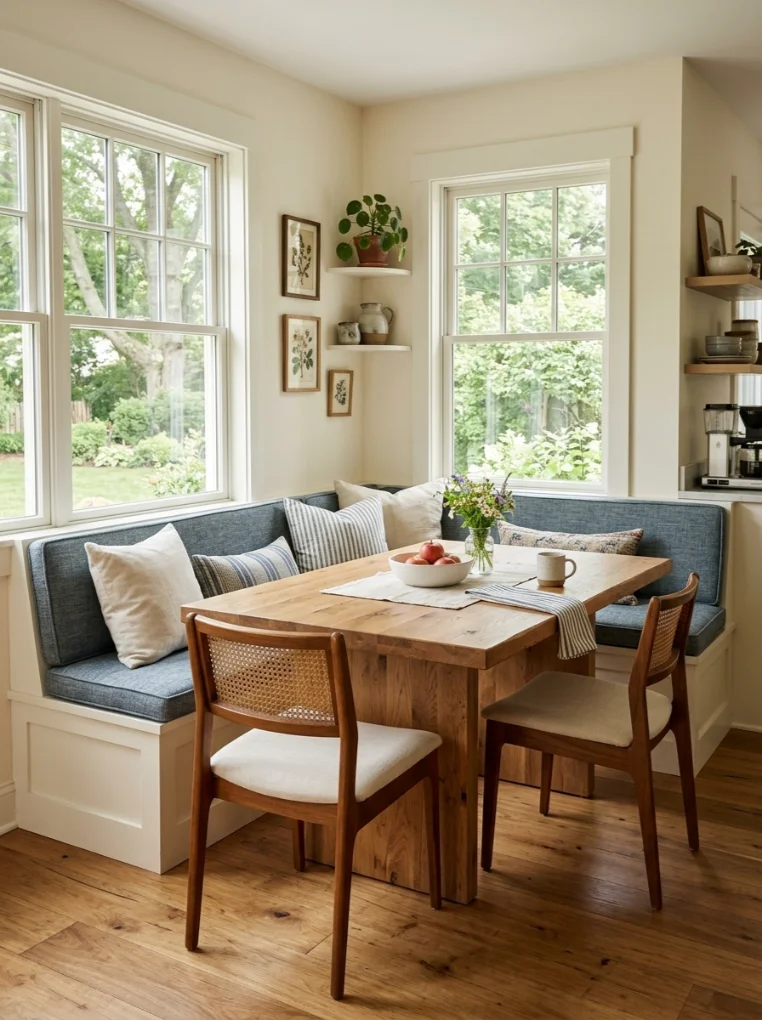
A built-in banquette is the most requested style for a reason. It’s a fixed bench, usually upholstered, that wraps around two or three sides of a corner. Pair it with a wooden table and a couple of movable chairs on the open side, and you’ve got flexible seating for both everyday meals and guests.
2. Window Seat Dining Nook
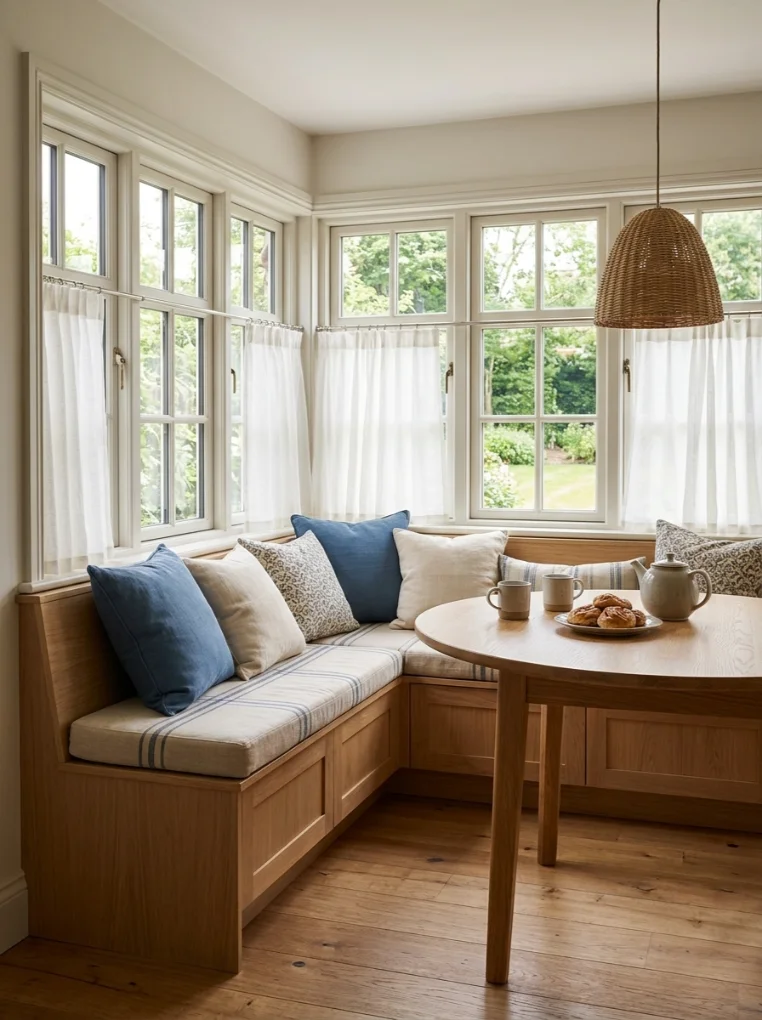
If your kitchen corner happens to sit under a window, don’t waste it. A window seat dining nook combines natural light with comfortable seating, making mealtimes feel less like a chore and more like something to look forward to.
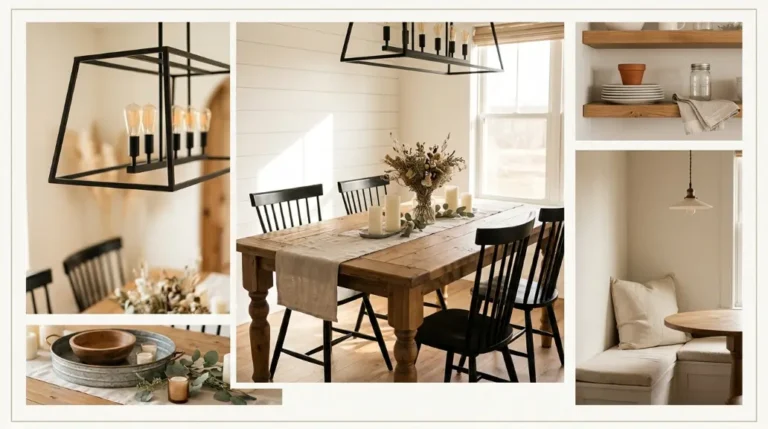
3. Farmhouse Dining Nook
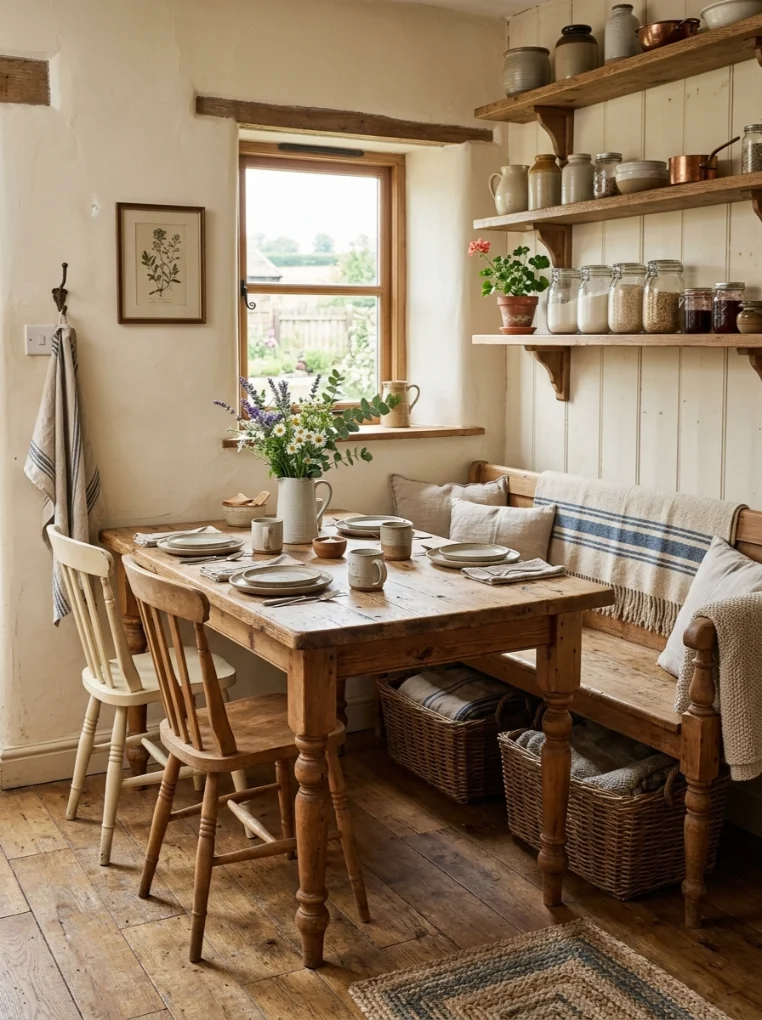
A farmhouse dining nook leans on warm wood tones, simple lines, and a slightly worn, lived-in feel. Think a chunky wood table, a bench with turned legs or plank detailing, and woven baskets tucked underneath for extra storage.
This style pairs beautifully with open shelving nearby, so you can display stoneware or mason jars without it feeling cluttered.
you may also like this: https://luxuryhomesdecor.com/modern-farmhouse-dining-room-ideas/
4. Scandinavian Dining Nook
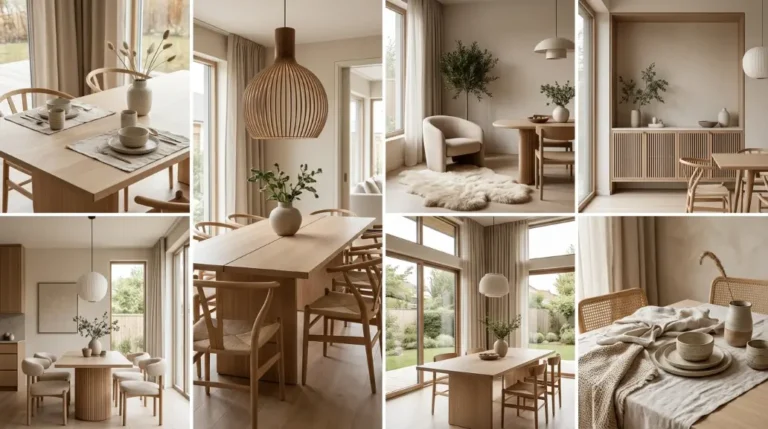
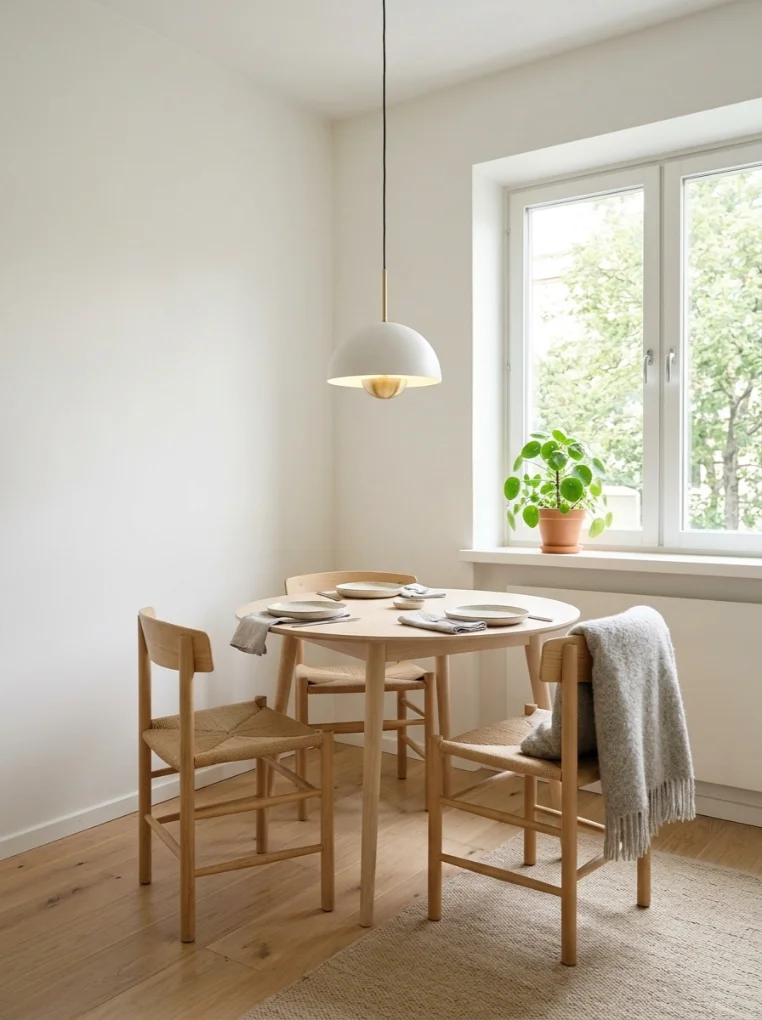
Scandinavian dining nook ideas focus on light wood, white or soft neutral walls, and clean, uncomplicated furniture shapes. The goal is a calm, airy feeling rather than a busy one.
5. Modern Dining Nook With Bold Color
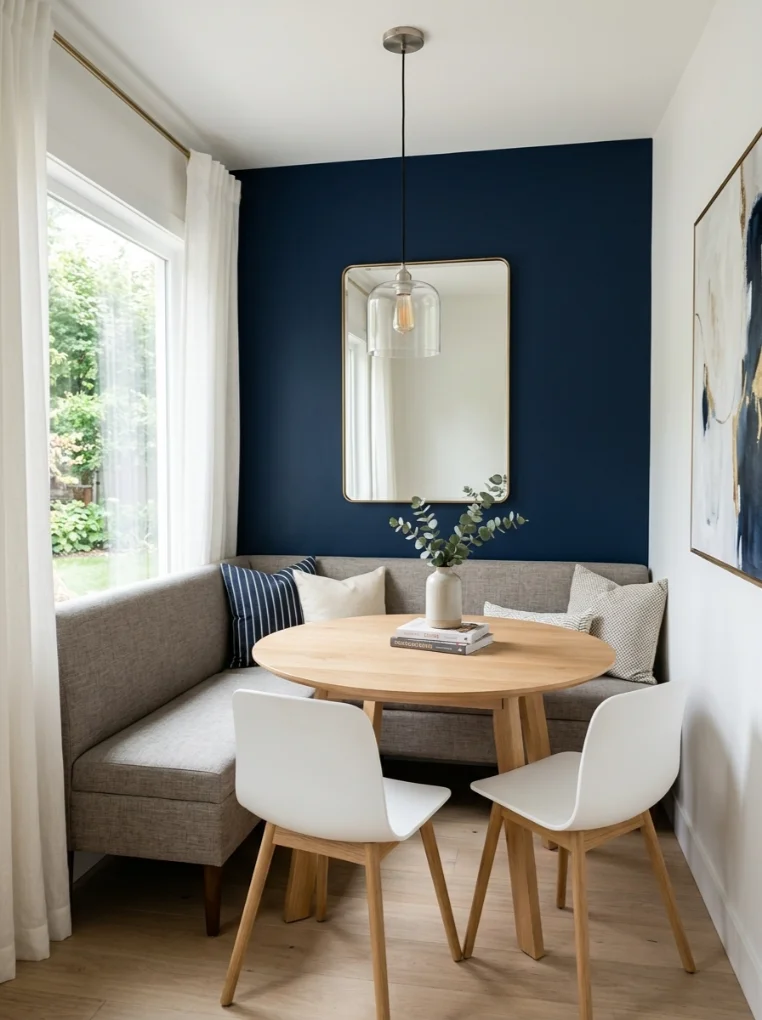
Not every nook needs to be neutral. A modern dining nook can use a deep navy, forest green, or terracotta accent wall behind the bench to give the space personality. Balance the bold color with plain white or wood furniture so the room doesn’t feel overwhelming.
Quick Comparison: Choosing the Right Dining Nook Style
| Style | Best For | Seating Type | Typical Budget | Maintenance Level |
| Farmhouse | Family kitchens, warm spaces | Wood bench with cushions | Moderate | Low |
| Scandinavian | Small, bright apartments | Light wood bench or chairs | Moderate | Low |
| Rustic | Homes with natural, textured decor | Reclaimed wood bench | Low to moderate | Moderate |
| Modern/Contemporary | Sleek, updated kitchens | Upholstered banquette | High | Moderate |
| Minimalist | Compact spaces, calm interiors | Simple bench or two chairs | Low | Low |
| Custom banquette | Odd-shaped or tight corners | Built-in upholstered bench | High | Moderate |
| DIY nook | Budget-conscious homeowners | Plywood bench with cushion | Low | Low to moderate |
6. Minimalist Dining Space
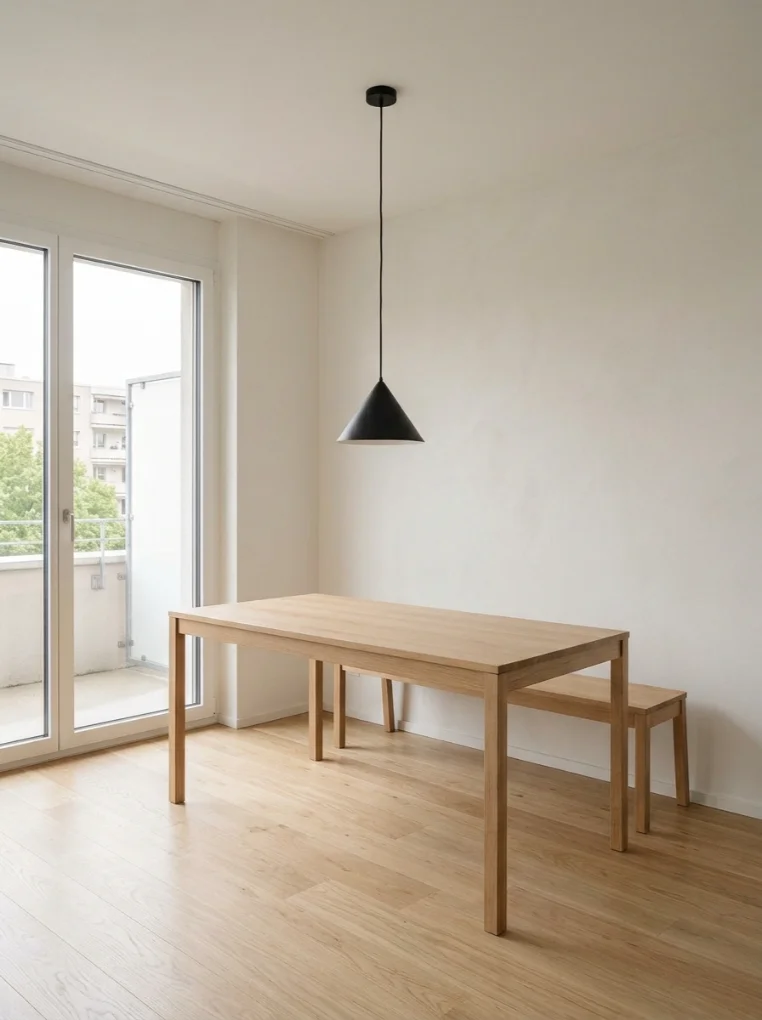
A minimalist dining space strips things back to the essentials: one bench, one table, one light fixture. There’s no clutter, no extra decor competing for attention. This works particularly well in small apartments where visual calm matters as much as physical space.
7. Rustic Dining Nook With Reclaimed Wood
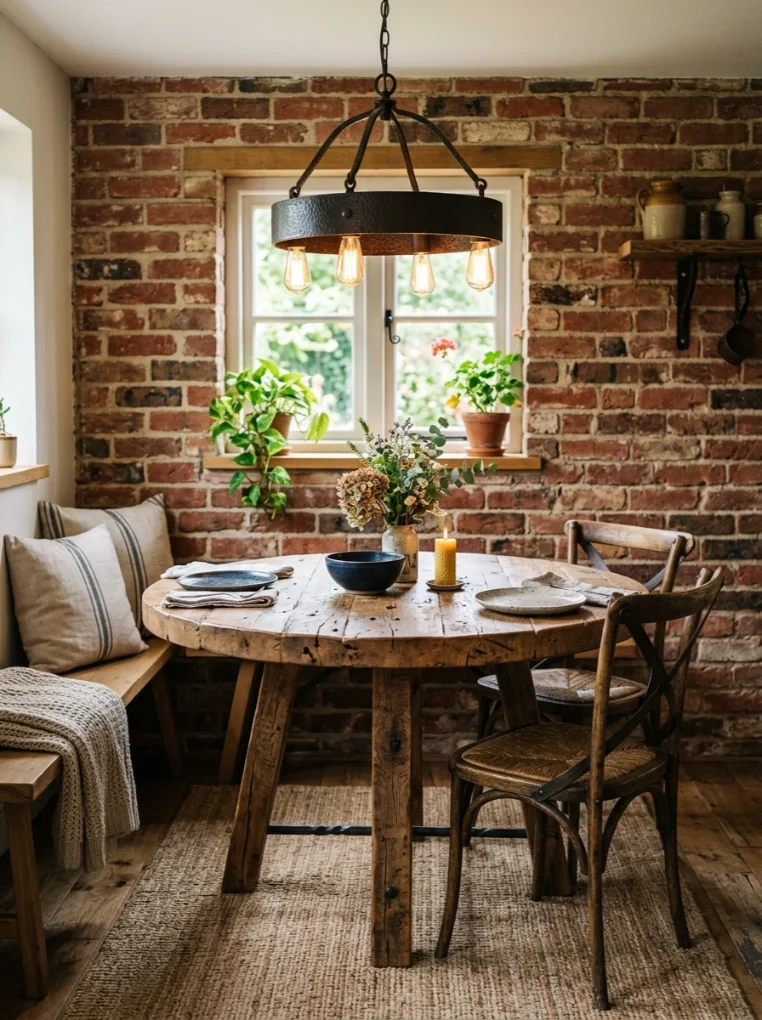
For a rustic dining nook, reclaimed or distressed wood is the star. A rough-sawn tabletop, an exposed brick accent wall, or wrought iron light fixtures all add texture and warmth without much effort.
8. Contemporary Breakfast Nook
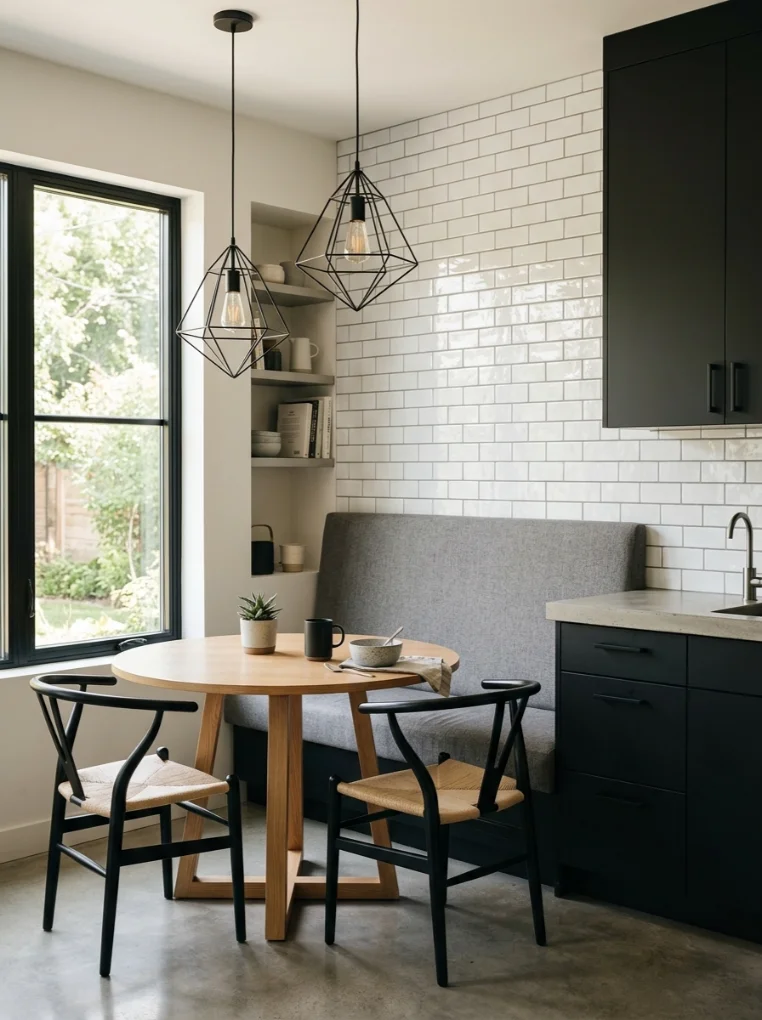
A contemporary breakfast nook favors sleek surfaces — think matte black hardware, glossy tile backsplash, and geometric light fixtures. This style suits homes that already lean modern in their kitchen design, keeping the whole space visually consistent.
9. Small Dining Nook for Apartments
Living in a compact space doesn’t mean you have to skip a dining nook altogether. A small dining nook can work in just a few square feet using a drop-leaf or round table paired with two slim chairs or a narrow bench along the wall.
Round tables are especially good for apartment dining ideas since they avoid sharp corners in tight walkways.
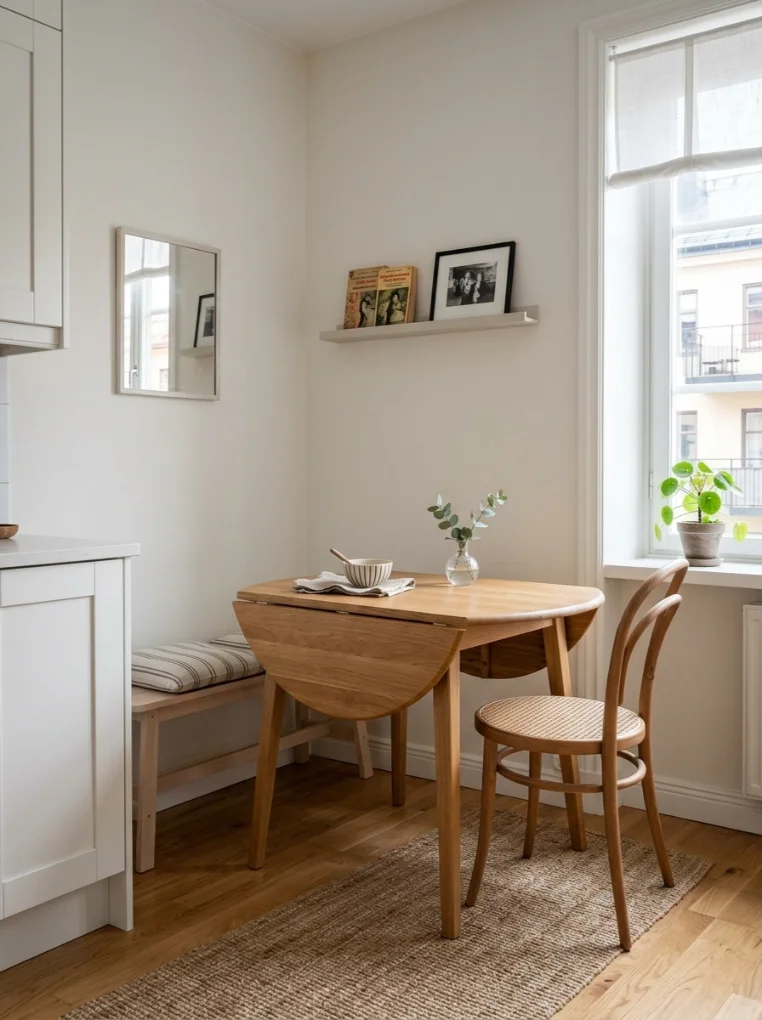
10. Corner Bench Seating With Hidden Storage
One of the smartest upgrades you can make is choosing corner bench seating with a lift-up seat or drawers underneath. This turns wasted space into storage for table linens, extra dishware, or kids’ art supplies — genuinely useful in a small kitchen dining setup.
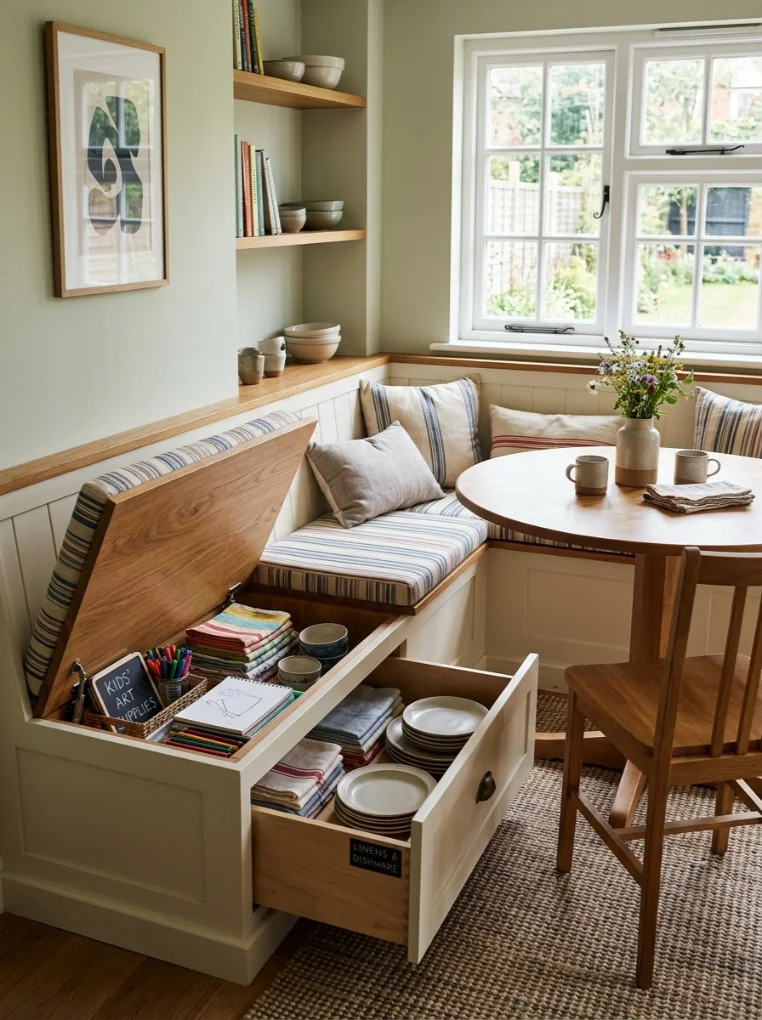
11. Upholstered Dining Bench for Comfort
Hard wooden benches look nice in photos but aren’t always fun to sit on for long. An upholstered dining bench with a supportive cushion and a low back makes the nook far more comfortable for everyday use, especially if your family lingers over meals.
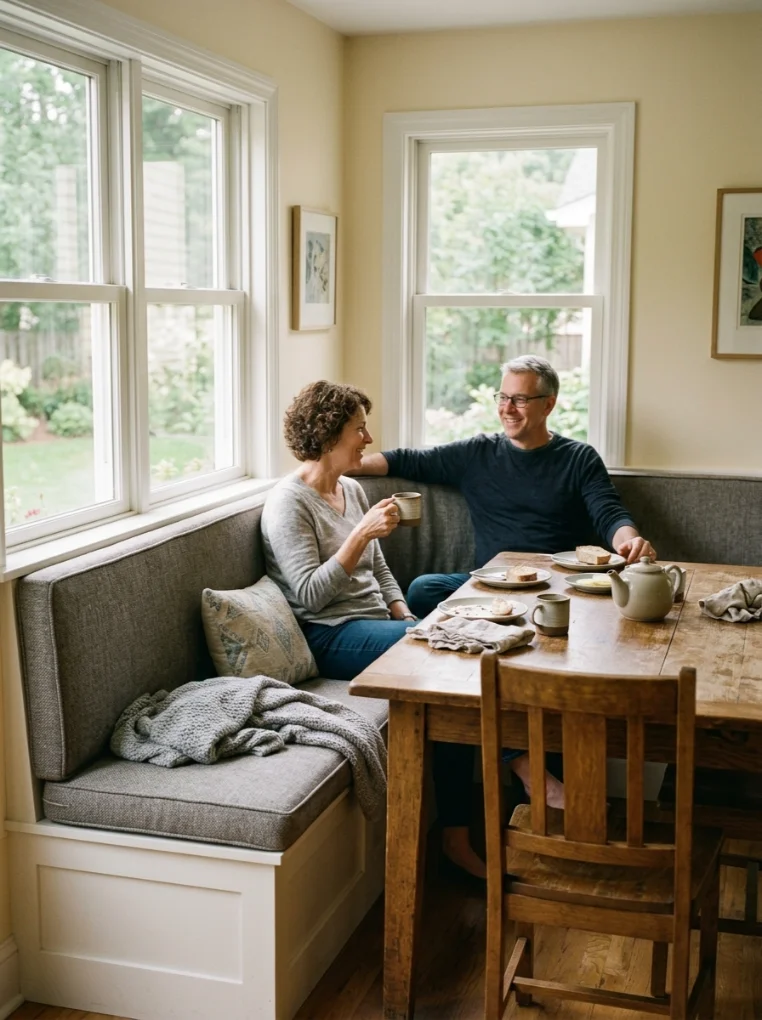
12. Two-Sided L-Shaped Bench
An L-shaped bench that hugs both walls of a corner is one of the most space-saving dining area layouts available. It maximizes seating capacity while keeping the center of the room open, which is ideal if your kitchen doubles as a walkway.
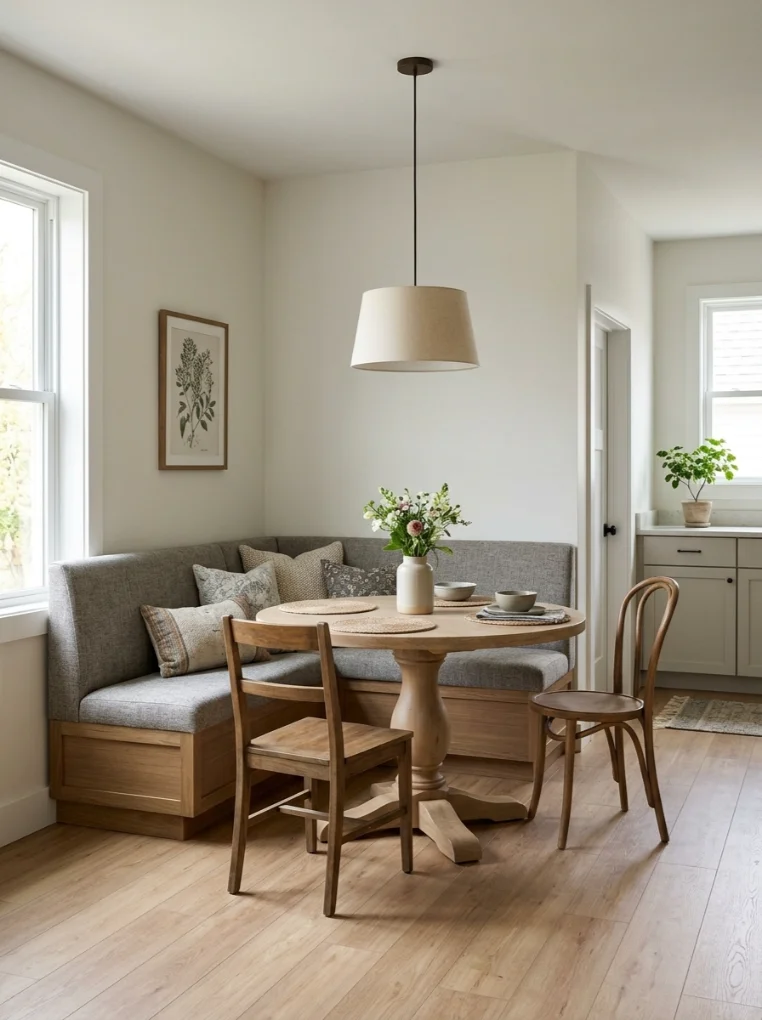
13. Custom Banquette Seating Built to Fit
If your corner has an odd shape or unusual dimensions, custom banquette seating solves the problem completely. A carpenter can build the bench to match your exact wall angles, cabinet heights, and window placement, so nothing feels squeezed in or mismatched.
This costs more than a store-bought bench, but it’s worth it when a standard size simply won’t fit.
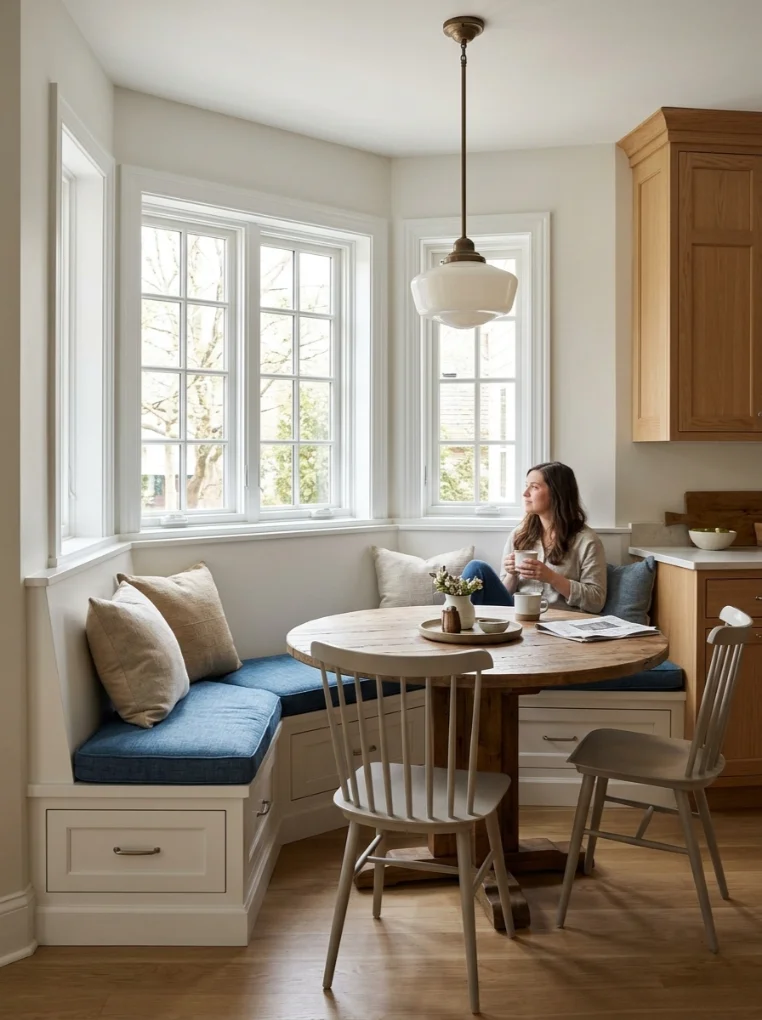
14. DIY Dining Nook on a Budget
You don’t need a big budget to build a dining nook. A DIY dining nook can be as simple as building a plywood bench frame, adding a foam cushion, and covering it with fabric from a home store. Paint the frame to match your cabinets, and it will look like it was always part of the kitchen.
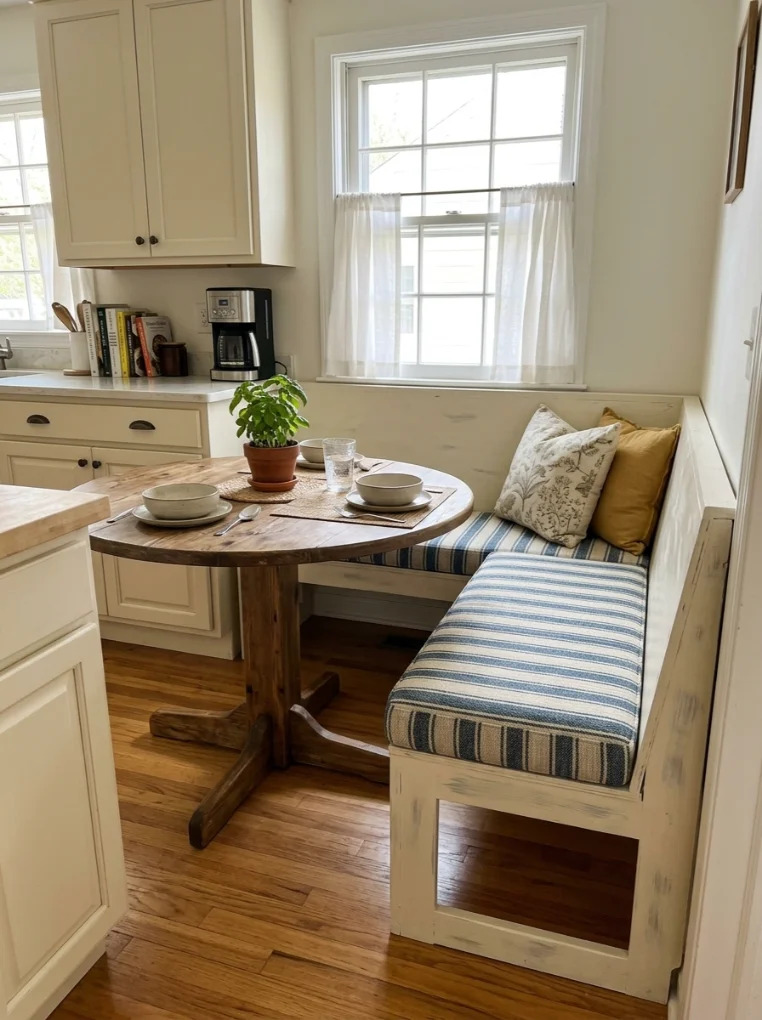
you may also like this: https://luxuryhomesdecor.com/modern-farmhouse-dining-room-ideas/
15. Round Table Dining Nook
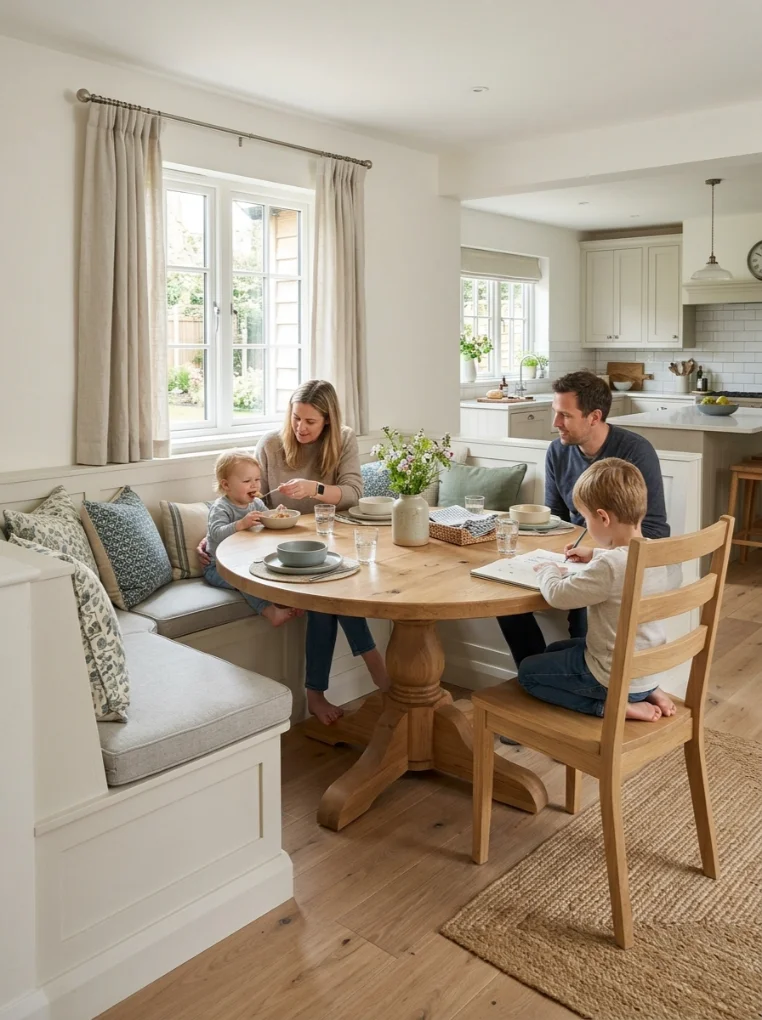
Pairing a round table with corner seating softens the whole look of the space and makes it easier to move around, since there are no sharp edges to bump into. This is a smart choice for family dining spaces with young kids.
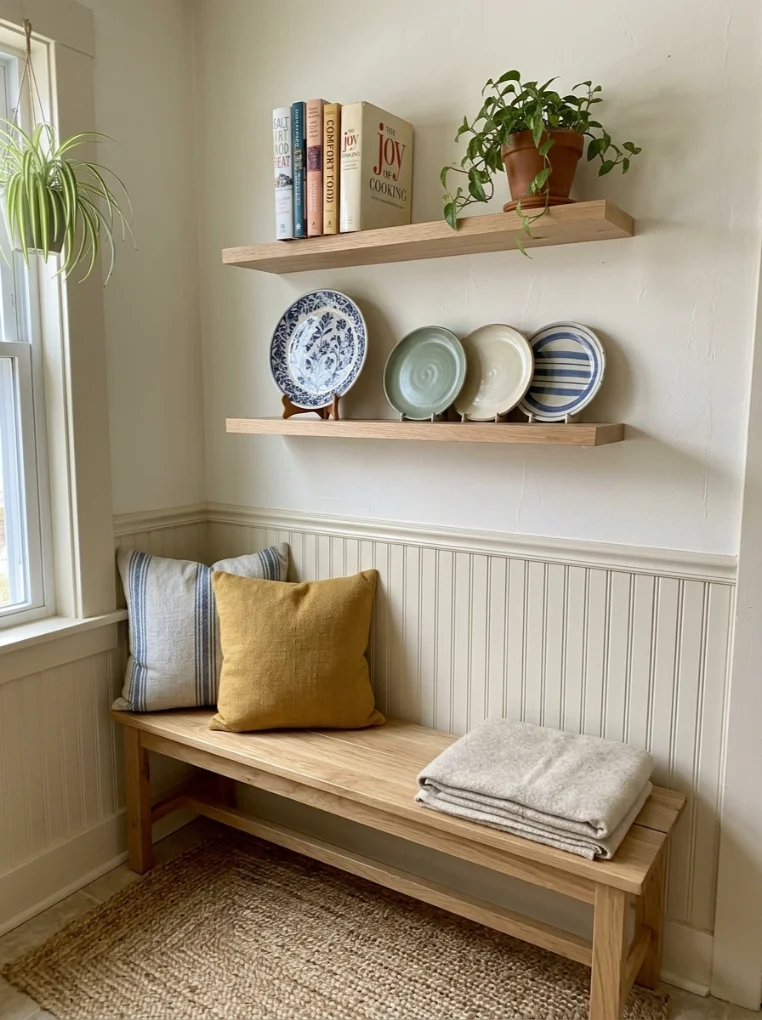
16. Dining Nook With Open Shelving Above
Adding a shelf or two above the bench gives you a spot for cookbooks, plants, or decorative plates without taking up floor space. Keep it simple — three or four items per shelf is usually enough before it starts looking cluttered.
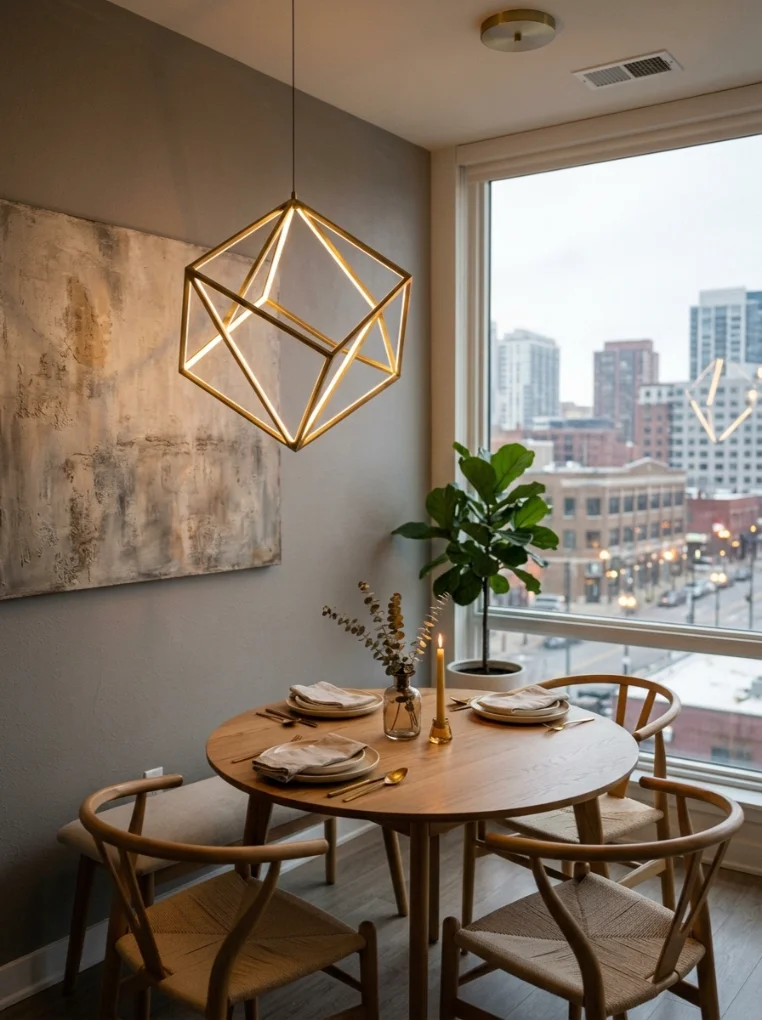
17. Elegant Dining Corner With Statement Lighting
Sometimes the fastest way to upgrade a dining corner is through lighting. A single statement pendant, or a cluster of three smaller ones, instantly makes the space feel intentional and finished rather than like an afterthought.
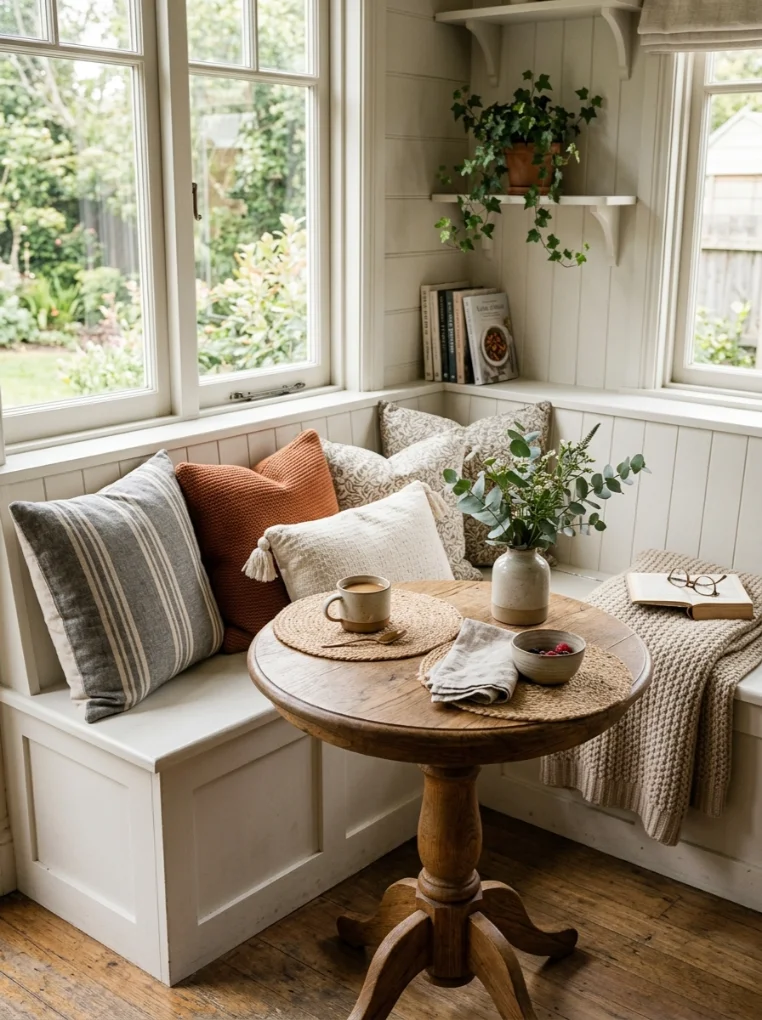
18. Cozy Kitchen Nook With Layered Textiles
For a cozy kitchen nook, layer a few cushions, a folded throw blanket, and a woven placemat or two. These small textile touches make the bench inviting rather than stiff, and they’re easy to swap out by season.
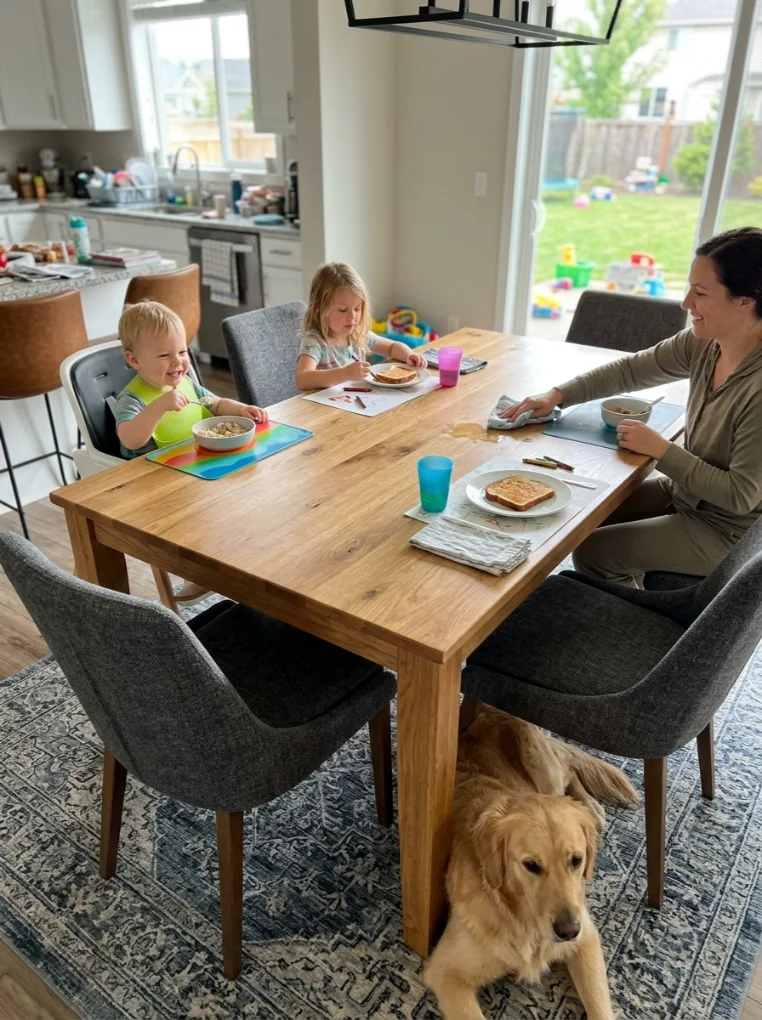
19. Family Dining Space With Durable Materials
If young kids or pets are part of daily life, prioritize function over delicate finishes. Choose a stain-resistant fabric, a sealed wood table, and washable rugs underneath. A family dining space should hold up to daily use, not just look good on day one.
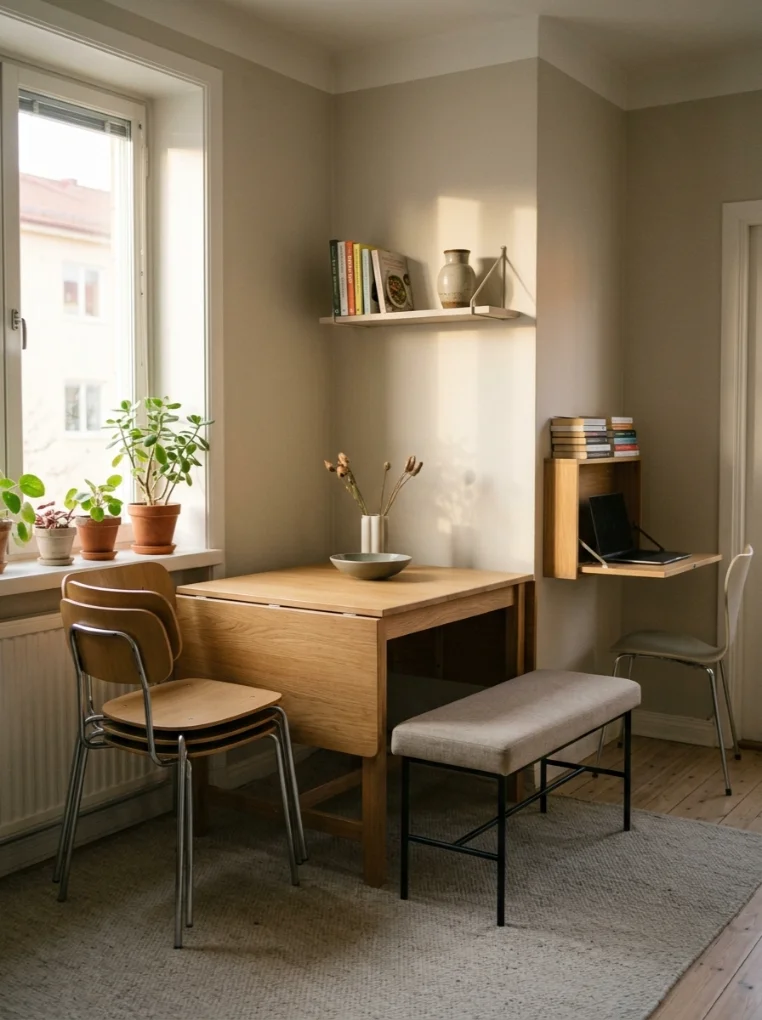
20. Compact Dining Furniture for Multi-Purpose Rooms
In homes where the dining nook shares space with a home office or reading corner, compact dining furniture — a foldable table leaf, stackable chairs, or a slim bench — keeps the area flexible. This way, the nook can shift roles throughout the day without feeling cramped.
Common Mistakes to Avoid With a Dining Nook
- Choosing a table too large for the bench. Leave at least 18 to 20 inches of legroom between the bench and table edge so people can sit comfortably.
- Skipping storage under the seat. If your bench has empty space underneath, add a lift-up lid or drawers rather than leaving it wasted.
- Ignoring lighting. A dim corner feels forgotten. A single well-placed fixture changes the whole mood of the nook.
- Using fabric that isn’t practical. A beautiful linen cushion looks great until the first juice spill. Pick performance fabric if the nook gets daily use.
- Forgetting cushion thickness. A cushion under two inches thick usually isn’t comfortable for longer meals. Aim for three to four inches of supportive foam.
Styling Tips for a Dining Nook That Feels Finished
- Keep the color palette to two or three main tones so the small space doesn’t feel busy.
- Add one plant or a small vase of flowers for a lived-in feel without extra clutter.
- Mix textures — a wood table, a woven basket, a soft cushion — rather than matching everything exactly.
- If your nook is against a wall, hang art or a mirror at eye level for someone sitting down, not standing up.
- Round rugs under round tables, rectangular rugs under bench seating — matching shapes keeps the layout visually balanced.
Final Thoughts
A corner dining nook is one of those upgrades that quietly changes how a home functions. It turns an awkward, unused corner into the spot where mornings start and evenings wind down. Whether you go with a simple DIY bench, a farmhouse-style built-in, or a fully custom banquette, the most important thing is choosing a layout that actually fits how your household eats, gathers, and lives day to day.
Start small if you need to — a cushion and a secondhand bench can go a long way — and build up from there as your space and budget allow.
Frequently Asked Questions
1. How much space do I need for a corner dining nook? A small nook can work in as little as 6 to 7 feet of combined wall length, though 8 to 10 feet gives more comfortable seating and legroom for four people.
2. Is a built-in banquette worth the cost compared to regular chairs? For tight or oddly shaped corners, yes. A built-in bench uses space more efficiently and often seats more people, though standard chairs are cheaper and easier to replace individually.
3. What’s the best table shape for a small dining nook? Round or oval tables tend to work best in small spaces since they don’t have sharp corners that get in the way of walking around the room.
4. How do I make bench seating more comfortable? Use a cushion that’s at least three inches thick, add a few back pillows, and choose a fabric with a bit of give rather than a stiff, tightly woven material.
5. Can I build a dining nook without hiring a contractor? Yes, many homeowners build a basic bench frame themselves using plywood and simple tools. It’s a good weekend project if your corner isn’t an unusual shape, though custom-built corners with tricky angles are easier to leave to a professional.