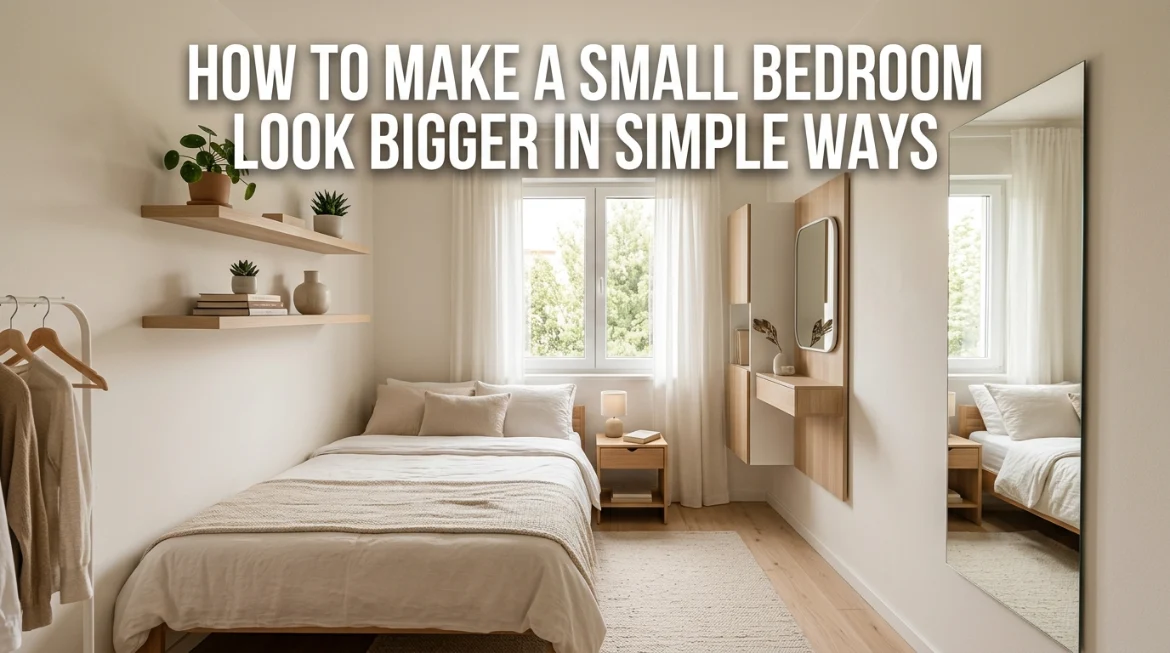
How to Make a Small Bedroom Look Bigger in Simple Ways
A small bedroom can often feel limited, cramped, and less comfortable than a larger space. Many people face this issue, especially in apartments or modern homes where room sizes are compact. However, a small bedroom does not have to feel small visually. With the right design approach, it can look open, airy, and much more spacious than its actual size.
Interior design is not only about space; it is about perception. When you control light, color, furniture placement, and visual balance, you can completely change how a room feels. Even a tiny bedroom can start looking stylish and well-organized with the right methods.
The goal is to avoid overcrowding and instead focus on smart choices that create openness. Every design decision plays a role in how the brain interprets space.
A well-planned small bedroom is not about adding more items but about using fewer, smarter elements that work together.
1. Plan a Smart Layout
The layout of a bedroom is the foundation of how spacious it feels. If furniture is placed randomly, the room automatically feels smaller and more congested. A proper layout ensures smooth movement and visual balance.
In small bedrooms, the bed should always be positioned first because it is the largest element. Once the bed is placed correctly, other furniture should be arranged around it in a way that does not block pathways or light sources.
Avoid pushing everything against walls without planning, because that often creates awkward empty spaces and tight corners.
A smart layout improves both functionality and visual flow, making the room feel naturally bigger.
2. Keep Furniture Placement Minimal and Purposeful
Furniture plays a major role in space perception. Too much furniture makes a small bedroom feel crowded, while carefully chosen pieces create openness. Every item in the room should have a clear purpose.
Instead of multiple bulky items, it is better to choose fewer but functional pieces. Storage beds, floating tables, and wall-mounted shelves are excellent choices for compact spaces.
The goal is to reduce visual weight and increase open floor area, which helps the room feel more spacious.
Furniture with slim designs also contributes to a cleaner and more modern appearance.
3. Use Light and Neutral Colors
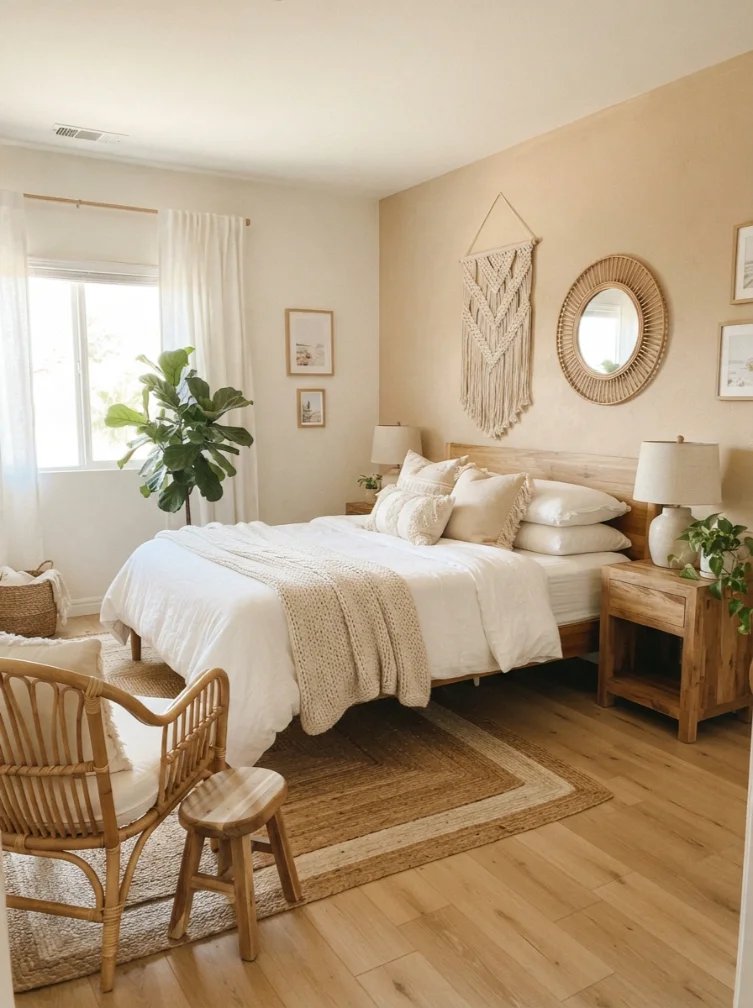
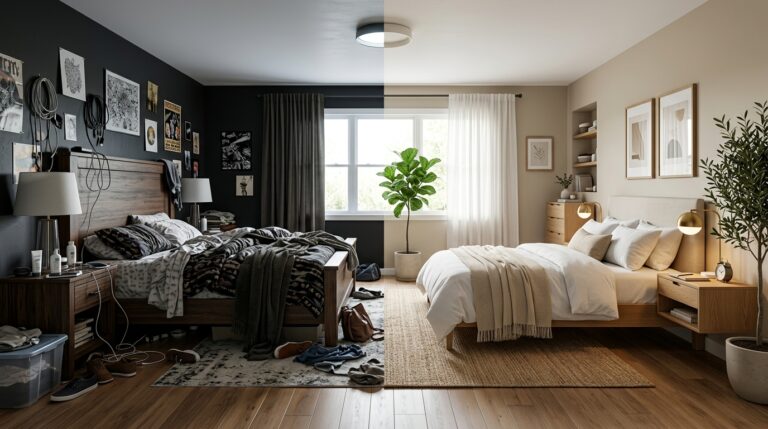
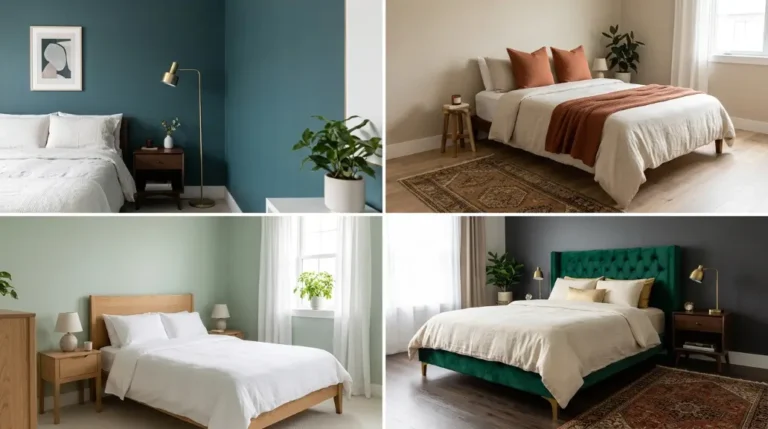
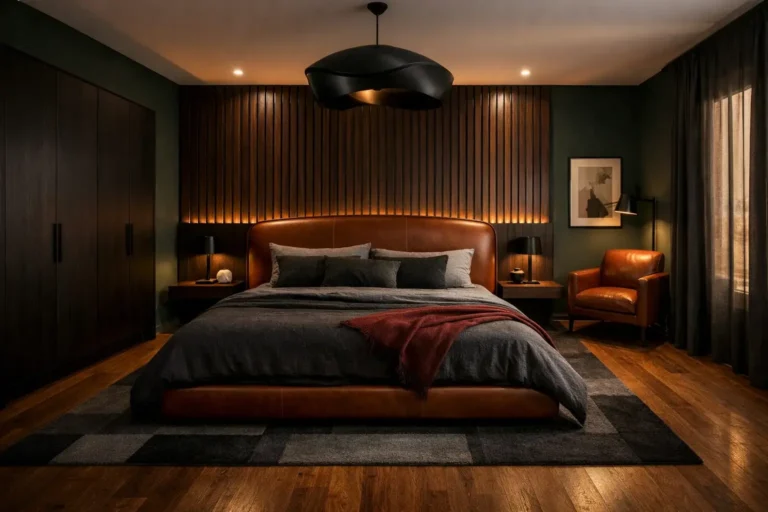
Color has a powerful psychological effect on space perception. Dark colors absorb light and make rooms feel smaller, while light colors reflect light and create openness. That is why neutral tones are widely used in small bedroom design.
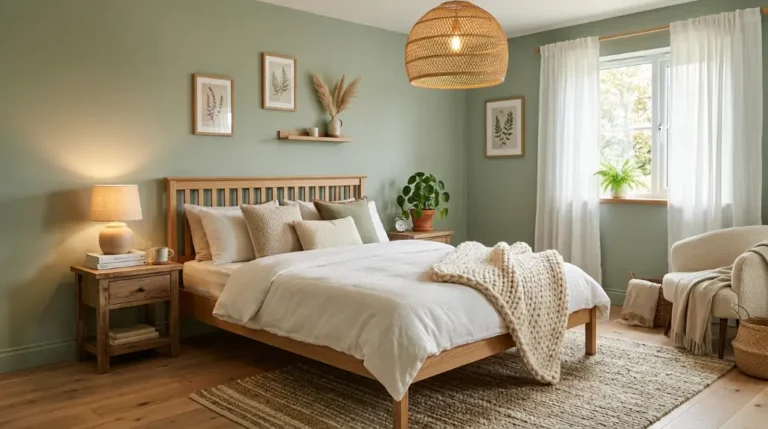
Shades like white, beige, and light grey help walls appear farther away than they actually are. This creates an illusion of depth and space.
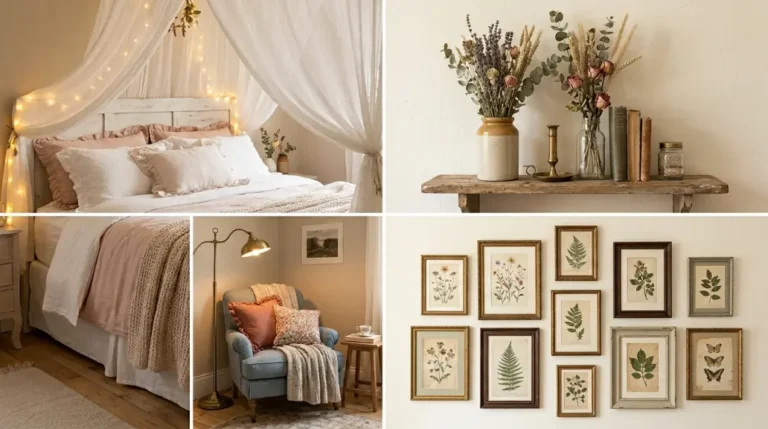
Soft pastel tones can also be used to add warmth without making the room feel heavy or closed.
Choosing the right color palette is one of the simplest ways to visually expand a small bedroom.
4. Maximize Natural Light
Natural light is one of the strongest elements in interior design. A bright room always feels larger and more welcoming compared to a dark one. In small bedrooms, maximizing natural light is essential.
Windows should remain open and unobstructed as much as possible. Heavy curtains or large furniture blocking sunlight can make the room feel smaller and dull.
Using light curtains or sheer fabrics allows sunlight to enter while maintaining privacy.
Natural brightness reduces shadows and creates a clean, open atmosphere.
Space-Saving Design Comparison Table
| Design Element | Poor Choice ❌ | Better Choice ✔ | Effect on Space |
|---|---|---|---|
| Furniture Size | Large bulky furniture | Compact multi-functional furniture | Increases open floor area |
| Colors | Dark, heavy tones | Light neutral tones | Makes room look brighter & bigger |
| Lighting | Single overhead light | Layered warm lighting | Adds depth & softness |
| Storage | Open clutter | Hidden & vertical storage | Creates clean visual space |
| Curtains | Heavy dark curtains | Light sheer curtains | Improves natural light flow |
| Mirrors | No mirrors | Strategic mirror placement | Creates illusion of depth |
5. Use Mirrors for Space Illusion
Mirrors are one of the most effective tools for making a small bedroom look bigger. They reflect both light and space, which creates a strong illusion of depth.
When placed strategically, mirrors can visually double the size of a room. A mirror opposite a window reflects natural light and spreads brightness throughout the space.
Vertical mirrors also help create height illusion, making ceilings appear taller than they are.
This simple design trick is widely used in modern compact interior design.
6. Choose Compact and Smart Furniture
Furniture size must match room size. Oversized furniture can dominate a small bedroom and make it feel tighter than it actually is. That is why compact and functional furniture is always recommended.
Modern small bedroom designs focus on multi-functional furniture that saves space while maintaining usability. Storage beds and wall-mounted units are perfect examples.
Furniture with open legs or floating designs also creates visual openness, which helps reduce heaviness in the room.
The right furniture selection can completely transform a small space.
7. Use Vertical Storage Solutions
When floor space is limited, vertical space becomes extremely valuable. Walls provide an excellent opportunity for storage without reducing movement area.
Tall shelves, wall-mounted cabinets, and hanging organizers help keep the floor clear and organized. This improves both functionality and visual clarity.
Vertical storage also draws the eye upward, which creates the illusion of a taller and larger room.
8. Keep the Room Decluttered
Clutter is one of the biggest reasons a small bedroom feels even smaller. When too many items are visible, the room becomes visually heavy and stressful.
A clean and organized space always feels more open and relaxing. Keeping only essential items in sight helps improve visual flow.
Hidden storage solutions are very useful for maintaining a clutter-free environment.
Decluttering is not just cleaning—it is a design strategy for better space perception.
9. Improve Lighting Layers
Lighting affects mood, depth, and space perception. A single light source often creates flat and dull visuals, which makes a room feel smaller.
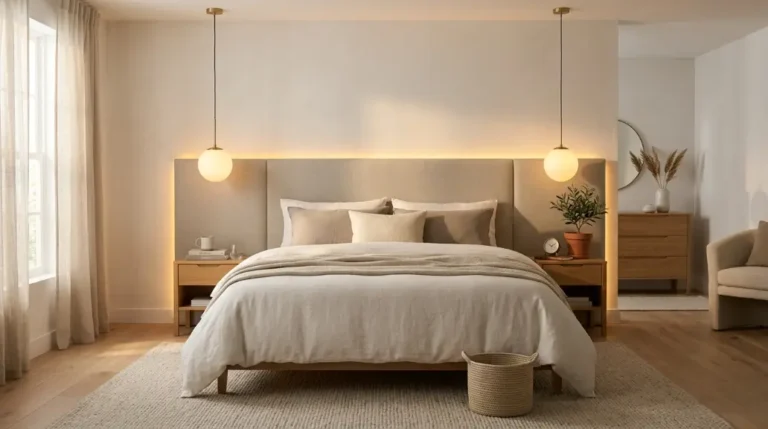
Layered lighting includes ceiling lights, bedside lamps, and ambient lighting. This combination creates depth and makes the room feel more dynamic.
Warm lighting is especially effective in bedrooms because it creates comfort and softness.
Good lighting design can completely change how large or small a space feels.
10. Use Curtains and Rugs Wisely
Soft furnishings like curtains and rugs play an important role in bedroom design. If used incorrectly, they can make a small room feel even smaller.
Lightweight curtains that hang from ceiling to floor create a height illusion. Rugs help define areas and add warmth without overcrowding the space.
The key is to maintain simplicity and color consistency so everything feels connected.
11. Create a Clear Focal Point
A well-designed bedroom always has a focal point. In most cases, the bed serves this purpose. A clear focal point helps organize visual attention and reduces confusion in the space.
A headboard wall, lighting feature, or simple wall design can highlight this area.
When the eye knows where to focus, the room feels more structured and spacious.
12. Maintain Balance and Simplicity
Balance is the final and most important principle in small bedroom design. Every element should contribute to either functionality or visual harmony.
Too many decorations or mismatched elements can destroy the sense of space.
A simple and balanced design always feels larger, cleaner, and more comfortable.
Conclusion
A small bedroom does not have to feel small. With the right combination of layout, lighting, furniture, and color, you can completely change how the space is perceived.
The key is to keep things simple, organized, and visually balanced. Instead of filling the room with more items, focus on making smarter design choices.
When everything works together properly, even the smallest bedroom can feel open, stylish, and comfortable.
FAQs
1. How can I make a small bedroom look bigger quickly?
Use light colors, mirrors, and proper lighting to instantly create space illusion.
2. What furniture is best for small bedrooms?
Compact, multi-functional, and storage-based furniture works best.
3. Do mirrors really make a bedroom look bigger?
Yes, mirrors reflect light and create depth, making the room appear larger.
4. What colors are best for small bedrooms?
White, beige, light grey, and soft pastel shades are ideal.
5. What is the most important factor in small bedroom design?
Lighting and layout are the most important for space perception.