16 Stunning Cozy Earthy Living Room Ideas You’ll Love 2026
There is a certain kind of living room that makes you want to stay. The kind where you walk in, drop onto the sofa, and feel yourself genuinely relax rather than just physically sit down. It is warm without being heavy, natural without looking rustic, and calm without being boring.
That is the feeling a cozy earthy living room creates, and it is not a coincidence. It comes from deliberate choices about color, material, texture, and light. Choices that bring the outside world indoors, that ground the space in natural tones, and that layer comfort on top of comfort until the room feels less like a designed interior and more like somewhere that simply belongs to you.
The good news is that achieving this kind of living room is far more accessible than most people assume. You do not need a full renovation, expensive furniture, or an interior designer. Many of the most effective changes are small, affordable, and easy to apply. You just need to know where to start.
Here are 16 stunning cozy earthy living room ideas for 2026 that cover everything from color choices and furniture to lighting, plants, and the small layered details that bring it all together.
1. Build Your Color Palette Around Warm Earth Tones
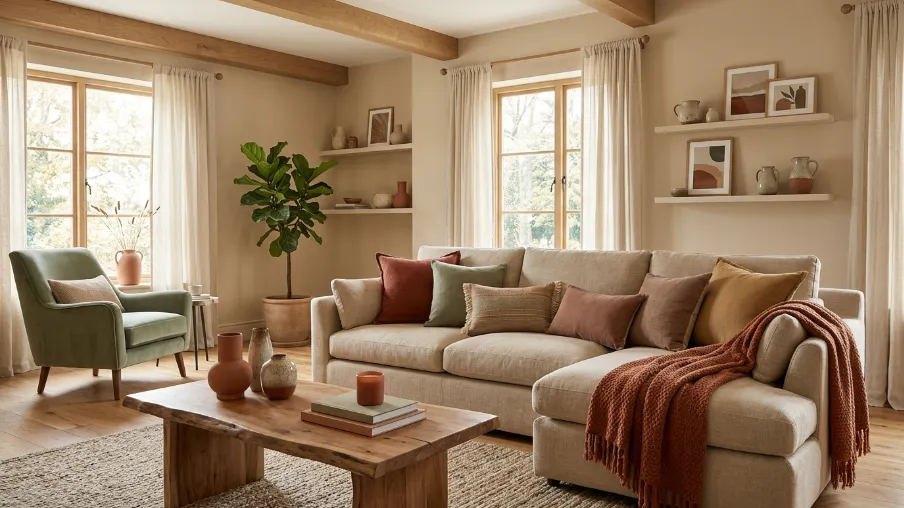
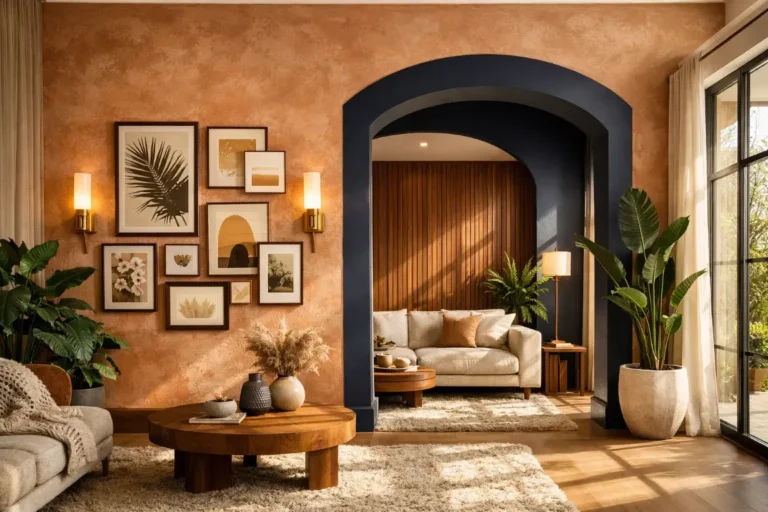
The color palette is where every cozy earthy living room begins, and getting this right makes everything else fall into place much more easily. The best earthy living room colors include sage green, terracotta, clay, and muted ochres, shades that provide calm, restorative energy and pair naturally with organic textures.
Warm neutrals like beige, warm white, oatmeal, and soft taupe form the most flexible base for an earthy palette because they sit quietly in the background and allow richer accent tones to stand out without competing. Start with walls and large upholstered pieces in these neutral tones, then layer in deeper earth colors through cushions, throws, rugs, and decorative accessories.
Terracotta deserves special attention as an accent color. Terracotta is having a major moment right now, along with clay tones that carry that sun-dried warmth. These earthy hues deliver instant warmth without overpowering smaller rooms. Even small amounts of terracotta, a few cushions, a ceramic pot, or a single accent wall, have a significant warming effect on the overall space.
2. Choose a Linen Sofa as the Anchor Piece
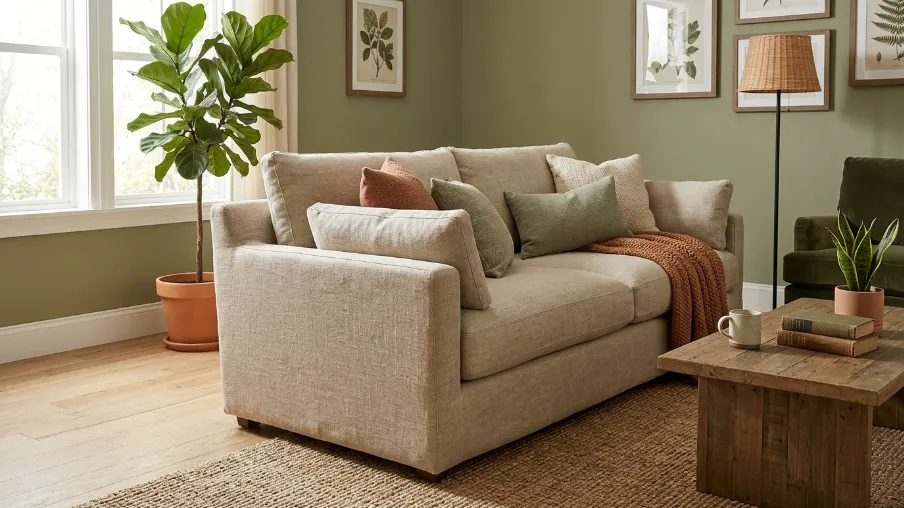
The sofa is the largest and most visually dominant piece in most living rooms, which means it does more to set the overall tone of the space than any other single item. For a cozy earthy living room, a linen sofa in a warm neutral tone is one of the strongest foundational choices available.
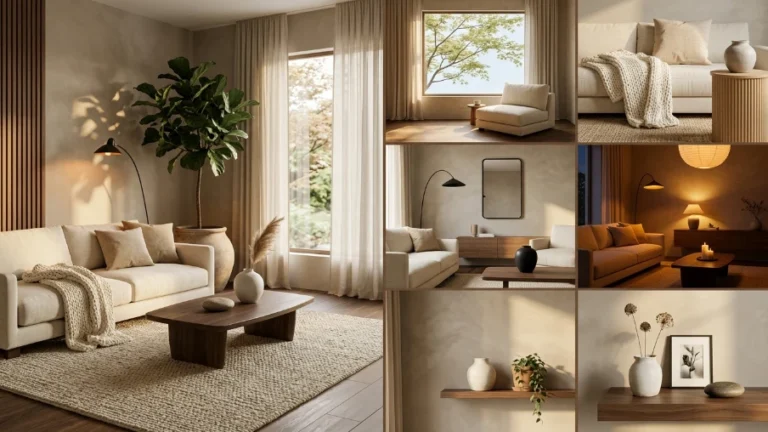
Linen has a natural, slightly textured quality that reads as both relaxed and refined. It carries warmth without heaviness, and its slightly imperfect weave gives it an organic quality that fits naturally into an earthy aesthetic. A linen sofa in oatmeal, warm ivory, natural tan, or soft camel provides a calm, grounded base that works with almost every earthy accent color.
If a full linen sofa is outside your current budget, a slipcover in a linen-blend fabric is a genuinely effective and affordable alternative. Many slipcovers now come in high-quality natural fabrics that transform the look of an existing sofa without requiring a full replacement.
3. Bring in Natural Wood Throughout the Room
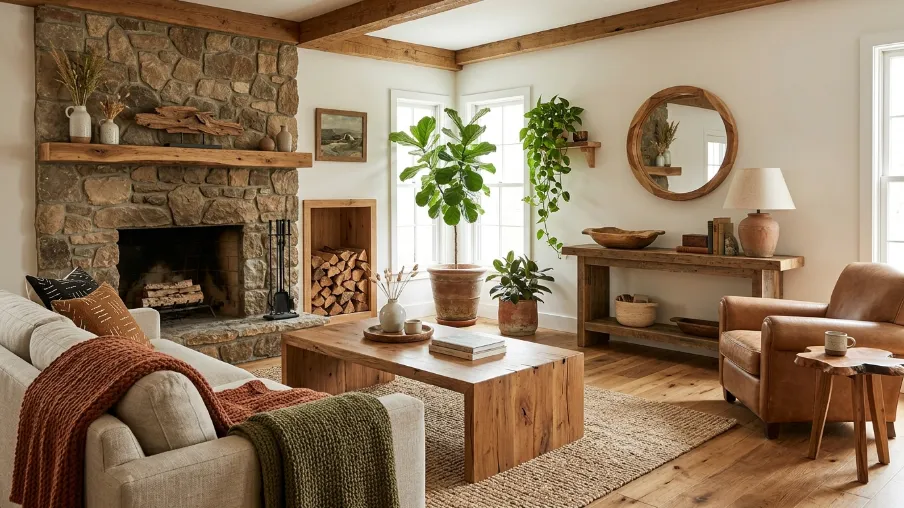
Natural wood is one of the most essential materials in a cozy earthy living room because it introduces warmth, grain, and an organic quality that no synthetic material can replicate. Stone accents, a natural wood coffee table, and large indoor plants create a peaceful atmosphere that feels grounded and serene, with textures doing most of the visual work from the woven rug underfoot to the sculptural pieces on the console.
A solid wood coffee table with visible grain is one of the highest-impact single purchases for an earthy living room. The natural variation in wood grain creates visual interest and warmth that polished or painted surfaces simply cannot provide. Reclaimed wood pieces carry even more character because of the natural marks and variation that come from previous use.
Beyond the coffee table, natural wood appears through shelving, side tables, picture frames, decorative bowls, and even architectural details like exposed ceiling beams. The more wood surfaces present in a living room, the warmer and more grounded the overall atmosphere tends to feel.
4. Layer Multiple Textures for Depth and Comfort
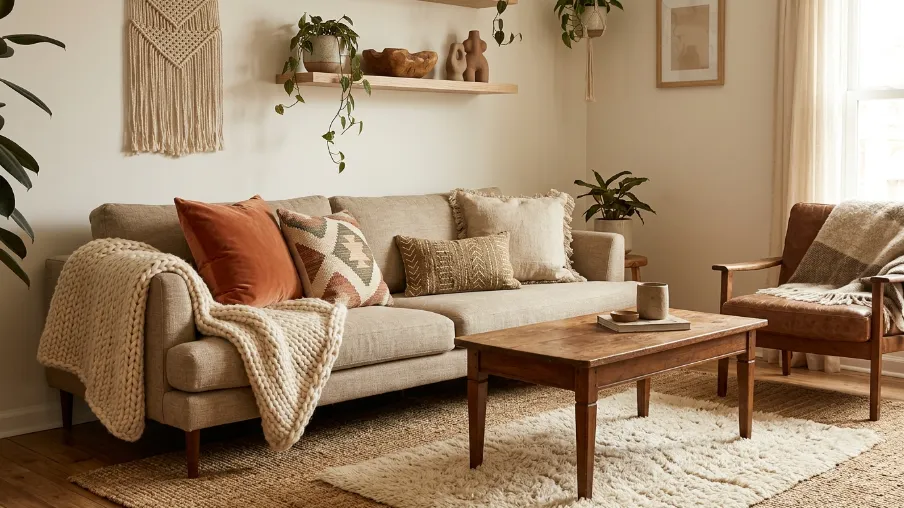
Texture is the single most important tool for creating a cozy earthy living room, and layering it generously throughout the space is what separates rooms that feel genuinely warm from rooms that are simply decorated in earthy colors. Texture is your best friend when creating a cozy living room. Chunky knit blankets, soft velvet cushions, and plush area rugs underfoot all contribute to that layered, warm feeling.
In a cozy earthy living room, texture layering typically works across several surfaces at once. The sofa holds cushions in mixed fabrics: a linen cushion alongside a velvet one, a woven cotton cover next to a chunky knit. A throw draped casually over the arm of the sofa adds another layer. The floor holds one or two layered rugs in different weaves and pile heights. The walls hold woven pieces, natural wood shelving, and organic-form decorative objects.
The key to making texture layering look intentional rather than cluttered is keeping the color palette cohesive. When all the different textures share a similar warm, earthy tone range, the variety of materials creates richness without visual noise.
Cozy Earthy Living Room Quick-Reference Guide
| Design Element | Best Choice | Color Direction | Budget Option | Overall Effect |
|---|---|---|---|---|
| Wall Color | Warm beige, soft clay, sage green, warm white | Earthy neutrals and muted tones | Paint one feature wall in terracotta or sage | Sets the warm, grounded mood of the room |
| Sofa | Linen or cotton in warm neutral tone | Oatmeal, camel, warm ivory, natural tan | Add a linen slipcover to existing sofa | Anchors the earthy palette naturally |
| Coffee Table | Solid natural wood with visible grain | Warm wood tones, walnut, oak, reclaimed | Thrifted solid wood table refinished | Adds organic warmth and visual anchor |
| Rugs | Layered jute base with woven accent rug | Natural, warm tan, rust, cream | Flat-weave jute rug from home store | Adds texture, warmth, and definition |
| Lighting | Warm-toned table lamps, rattan pendants | Amber, golden, warm white bulbs | Replace bulbs with warm-tone LED options | Creates intimate, cozy ambiance |
| Plants | Large leafy statement plant plus smaller accents | Deep green, natural | Pothos or snake plant in terracotta pot | Softens hard lines, adds life and color |
| Accessories | Woven baskets, ceramic pottery, wooden objects | Earthy neutrals, terracotta, rust, sage | Thrifted ceramics and woven pieces | Completes the natural, layered look |
5. Use Soft Warm Lighting at Multiple Heights
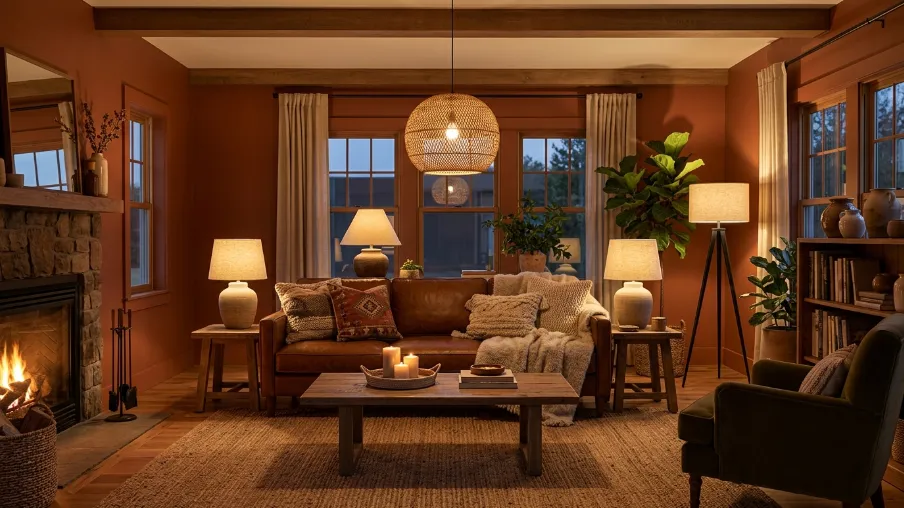
Lighting transforms the mood of a cozy earthy living room more than most people initially account for, and the approach here is fundamentally different from simply having enough light to see by. Adding warm lighting at different heights rather than relying on overhead fixtures is one of the most effective ways to create the cozy, grounded atmosphere that characterizes earthy living rooms in 2026.
Overhead lighting in a living room tends to flatten the space and wash out the warmth of earthy tones. Table lamps placed at sofa and chair height create pools of warm light that feel intimate and personal. A floor lamp in a corner adds a soft background glow that makes the walls and textures read more richly. A rattan or woven pendant light over a coffee table or reading area adds both warm light and natural texture in one piece.
The bulb temperature matters significantly. Warm white or soft white bulbs in the 2700K range produce the amber, golden tone that makes an earthy living room feel genuinely warm. Cooler white bulbs create a clinical quality that works against the natural, cozy aesthetic entirely.
6. Add a Natural Wood Coffee Table as the Room’s Focal Point
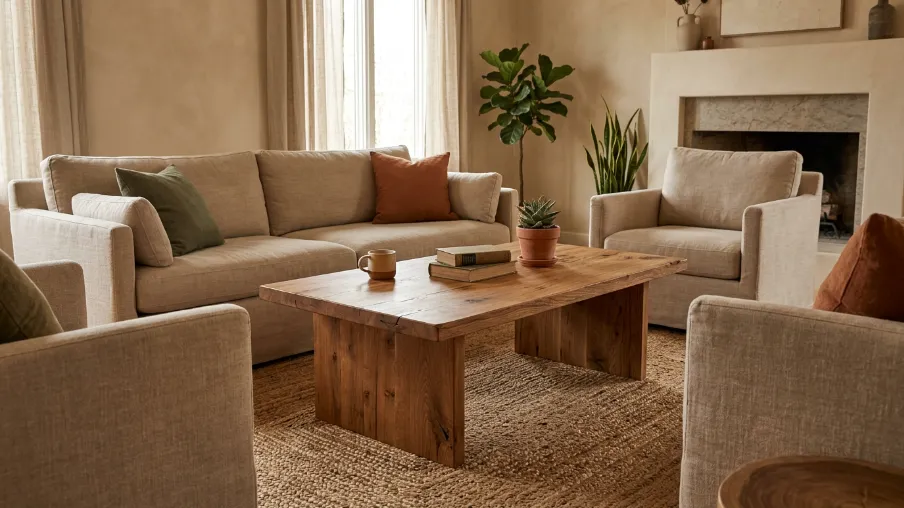
A natural wood coffee table does more than provide a surface. In a cozy earthy living room, it serves as the organic anchor that draws the rest of the room together. Its position at the center of the seating arrangement means it is consistently visible from every seat in the room, which gives it an outsized influence on how the overall space feels.
Choose a coffee table in a warm wood tone: walnut, oak, teak, or reclaimed pine all work well. The grain of the wood should be visible rather than painted or heavily lacquered over. A slightly raw, natural finish carries far more warmth and character than a perfectly polished surface.
Style the table simply. A small ceramic bowl, a stack of books with natural or earthy-toned covers, a candle in a simple holder, and a small plant or dried botanical arrangement are all you need. Overcrowding the coffee table works against the calm, grounded quality that makes earthy living rooms feel so appealing.
7. Incorporate Indoor Plants as Living Decor
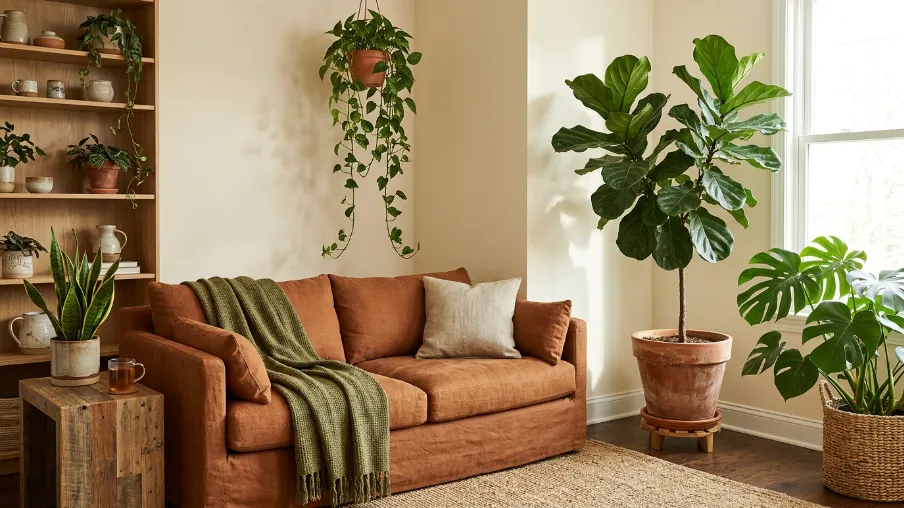
Indoor plants are one of the most powerful tools for creating a nature-inspired living room, and in a cozy earthy space they serve a double purpose: they add genuine living color and they soften the hard edges of furniture and architecture in a way that nothing else quite replicates.
A large statement plant, a fiddle-leaf fig, a monstera, a large pothos, or a sculptural snake plant, placed in a terracotta or woven pot in a corner or beside a sofa creates an immediate sense of life and natural energy in the room. The deep green of plant foliage reads beautifully against warm neutral walls and earthy-toned furniture.
Smaller plants on shelves, side tables, and windowsills reinforce the botanical quality of the space without requiring significant additional investment. Even two or three well-placed plants in complementary pots create a noticeably warmer and more organic atmosphere than a room with no plant life at all.
8. Choose Woven Textures for a Natural, Handcrafted Quality
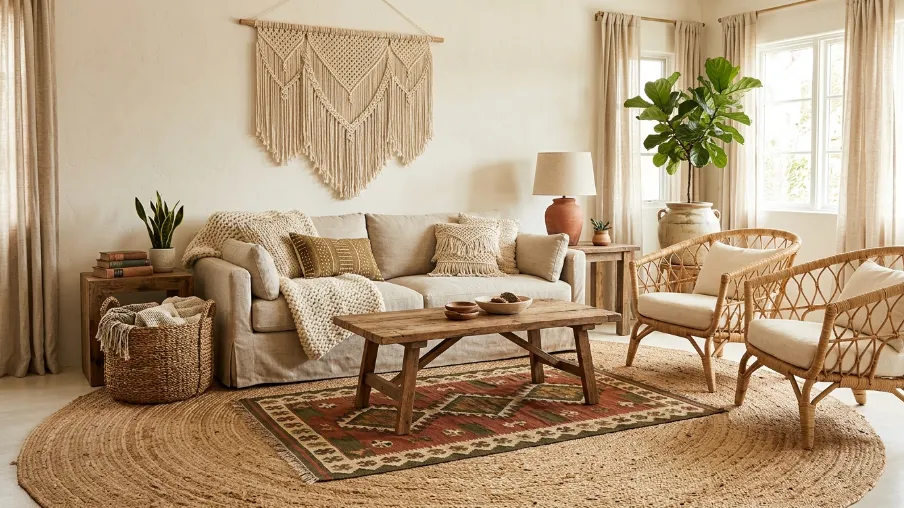
Woven texture home decor is central to the cozy earthy living room aesthetic because woven materials carry a handmade, natural quality that machine-produced materials simply do not have. Jute, rattan, seagrass, macrame, and hand-woven textiles all contribute to this quality in different ways.
A large jute rug is one of the most effective and budget-friendly woven additions to an earthy living room. Its natural, slightly rough texture adds warmth and definition to the floor area while keeping the color palette firmly within the earthy neutral range. Layering a smaller woven or kilim-pattern rug over the jute creates additional depth and pattern without disrupting the overall natural feel.
Woven baskets used as storage, rattan pendant lights, macrame wall hangings, and hand-woven cushion covers all add to the cumulative woven texture quality of the space. The more varied the weave styles present in the room, the richer and more layered the overall atmosphere tends to feel.
9. Create a Cozy Fireplace as the Heart of the Room
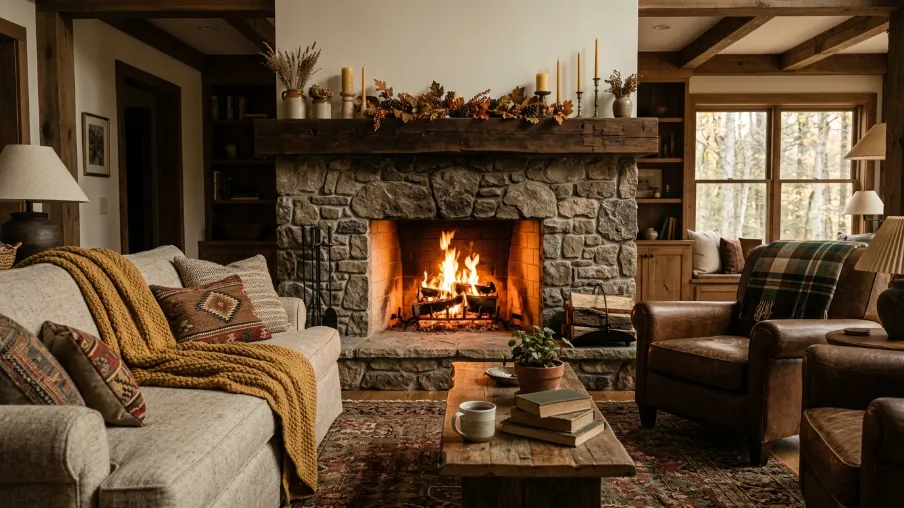
A fireplace, when present, should always be treated as the natural focal point of a cozy earthy living room. It provides warmth both literally and visually, and arranging the seating to face it creates an instinctively cozy gathering orientation that makes the whole room feel more inviting. If you have a fireplace, use it as a natural focal point. Decorate the mantel with seasonal touches, candles, or a garland, and arrange seating to face it to take full advantage of the warmth it provides.
The fireplace surround itself is an opportunity to introduce natural materials. A stone or brick surround feels organic and grounded. A wooden mantel in a warm tone adds richness. Even a simple painted mantel in a warm white or clay tone looks more earthy than a stark, cold white.
For rooms without a working fireplace, a candle arrangement or a stack of firewood logs in a woven basket placed in front of a decorative fireplace opening creates a similar visual warmth and focal point quality without requiring any structural changes.
10. Style with Terracotta Accents Throughout
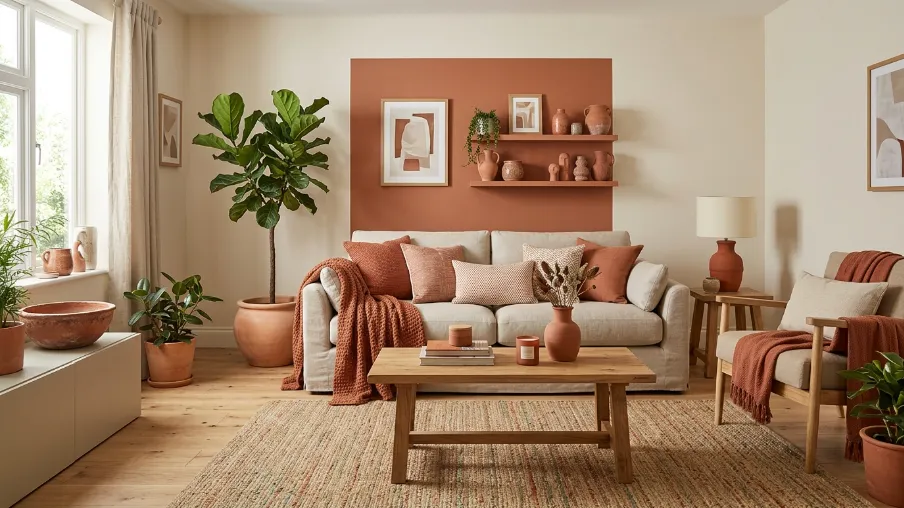
Terracotta is one of the defining accent tones in the 2026 earthy living room aesthetic, and it works so well because it brings a warmth and a sense of sun-baked earthiness that very few other colors can match in the same way.
Terracotta living room accents can be introduced through ceramic pots and vases, cushions, a woven throw, a side table lamp base, or even a small accent wall. Each addition brings a warm, orange-red tone that sits naturally alongside beige, cream, sage green, warm brown, and natural wood tones.
One of the most budget-friendly ways to use terracotta effectively is through plant pots. Unglazed terracotta pots are widely available at very low cost and look genuinely beautiful in an earthy living room setting. A collection of three terracotta pots in varying sizes on a shelf or coffee table creates a strong earthy accent without any significant investment.
11. Introduce Stone and Organic Materials
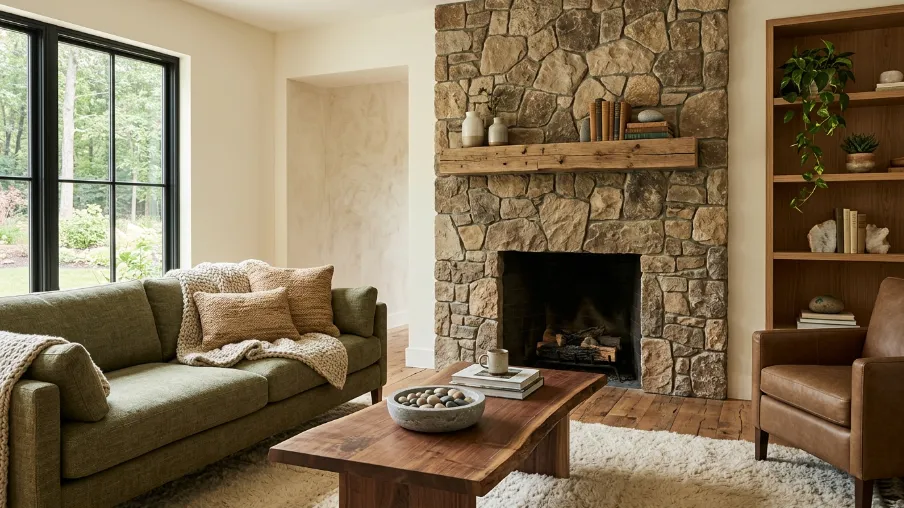
Stone and wood interiors represent the most grounded end of the earthy living room spectrum, and even small amounts of stone introduce a cool, natural weight that contrasts beautifully with the warmth of wood tones and textile layers.
Stone can appear in a living room through a fireplace surround, a stone-topped side table or coffee table, decorative stone bowls and objects, or stone-textured wall panels. Even a few smooth river stones used as paperweights or as part of a shelf styling arrangement contribute to the organic, nature-connected feeling of the space.
Alongside stone, other organic materials like dried botanicals, woven grass objects, ceramic vessels with natural glazes, and raw linen add to the same earthy, grounded quality. The principle is to choose materials that could plausibly have come from the natural world rather than from a manufacturing process.
12. Use a Neutral Beige Living Room as Your Foundation
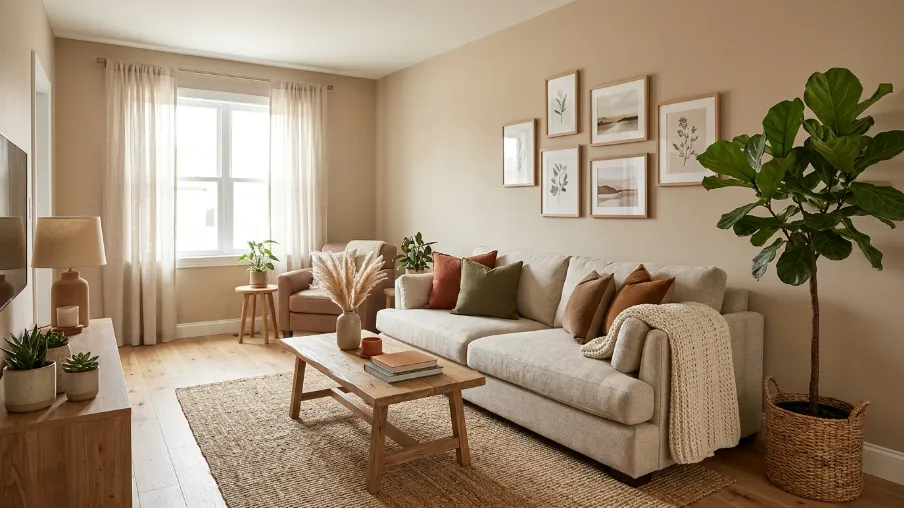
A beige living room foundation is one of the most versatile and forgiving approaches to building a cozy earthy space, particularly for people who are uncertain about committing to a stronger earthy tone on the walls. Warm earth tones like beiges, soft browns, and warm whites work beautifully in a cozy living room, creating that warm, inviting environment that makes people want to stay.
Beige walls create a warm, neutral backdrop that makes every earthy accent color look better than it would against a cooler or starker white. Terracotta cushions read richer, natural wood looks warmer, and plant greens appear more vivid against a beige background than against a cold white one.
The key to making a beige living room feel interesting rather than plain is the layering. Beige walls with beige furniture and beige accessories produces a flat, uninteresting result. Beige walls with a variety of warm tones, natural textures, wood pieces, and plant life creates a space that feels calm, cohesive, and genuinely beautiful.
13. Add a Rustic Modern Living Room Feel with Mixed Materials
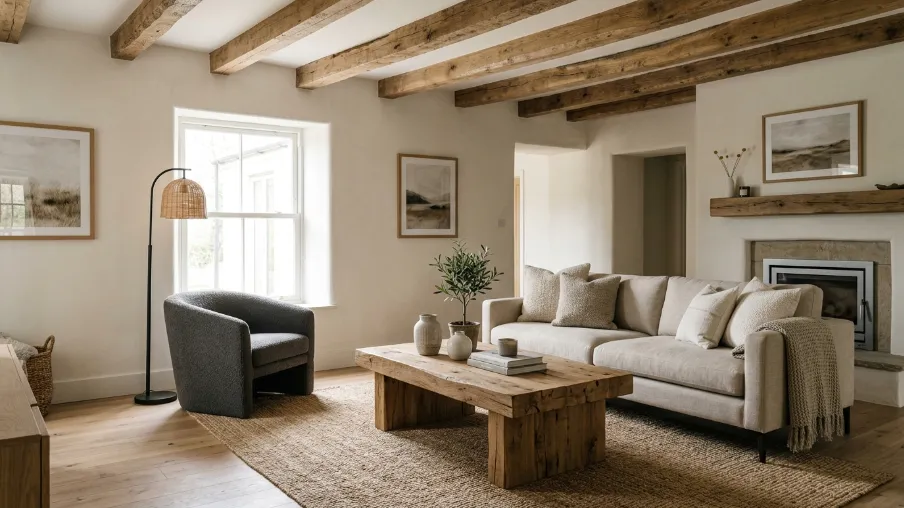
The rustic modern approach to earthy living room design mixes the warmth and imperfection of natural materials with the cleaner lines of contemporary furniture, creating a result that feels both grounded and current. Rustic wooden ceiling beams create a warm, grounded feeling reminiscent of sun-drenched Mediterranean spaces, while a chunky wooden coffee table adds a handcrafted, organic modern touch alongside neutral walls that keep the mood cozy and calm.
In practice, this means pairing a clean-lined linen sofa with a rough-hewn wooden coffee table, or placing a contemporary low-profile armchair beside a rattan floor lamp. The contrast between the refined and the raw is what gives rustic modern its distinctive quality.
This approach also works well for people who want an earthy living room but are concerned about the space looking too rural or old-fashioned. The contemporary furniture elements keep the room feeling current while the natural materials provide the warmth and character.
14. Keep the Boho Earthy Direction with Layered Accessories
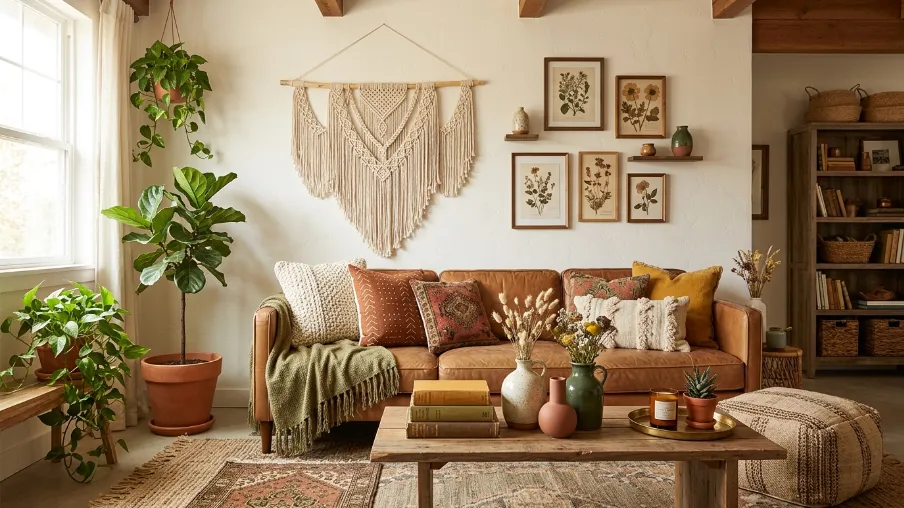
A boho earthy living room takes the foundational elements of the earthy aesthetic and adds more personality, pattern, and collected character. It sits between the cleaner organic modern approach and the more expressive bohemian interior, creating a warm, textured space that feels genuinely personal.
Layered accessories in a boho earthy living room include macrame wall hangings, a gallery of framed botanical prints, a collection of mismatched ceramic vases, woven cushion covers in varied patterns, and stacked books with earthy-toned spines. The key is mixing materials and patterns while keeping the color palette cohesive within the earthy range.
Vintage and thrifted pieces fit naturally into a boho earthy living room because they carry a character and history that new pieces rarely replicate. A thrifted ceramic bowl, a vintage woven rug, or a pre-loved wooden side table can add as much to the room’s character as any new purchase.
15. Use Sustainable and Organic Home Decor Materials
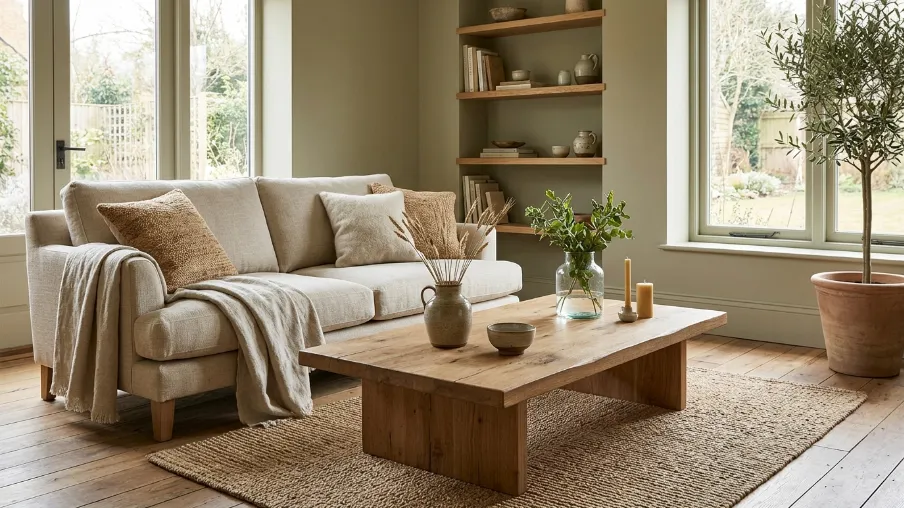
Sustainable home decor style aligns naturally with the cozy earthy living room aesthetic because the materials that are best for the environment tend to be the same ones that look and feel most organic. Organic cotton, linen, FSC-certified wood, natural jute, recycled glass, and non-toxic paint all contribute to a living room that feels genuinely connected to the natural world rather than manufactured.
Choosing sustainable materials also tends to produce better-looking results over time. Natural fabrics develop a soft, lived-in quality as they age. Solid wood furniture gains character. Ceramic pieces carry the individual marks of handcraft that machine-made items lack entirely.
For beginners, sustainable swaps can be made gradually. Replacing synthetic cushion covers with organic cotton or linen ones, choosing a solid wood piece over an MDF alternative, or picking up a handmade ceramic from a local maker are all small steps that cumulatively add up to a living room that feels genuinely natural and considered.
you may also like this: 20 Modern Rustic Living Room Unique Ideas for Cozy Style
16. Style Your Shelves with Natural, Earthy Objects
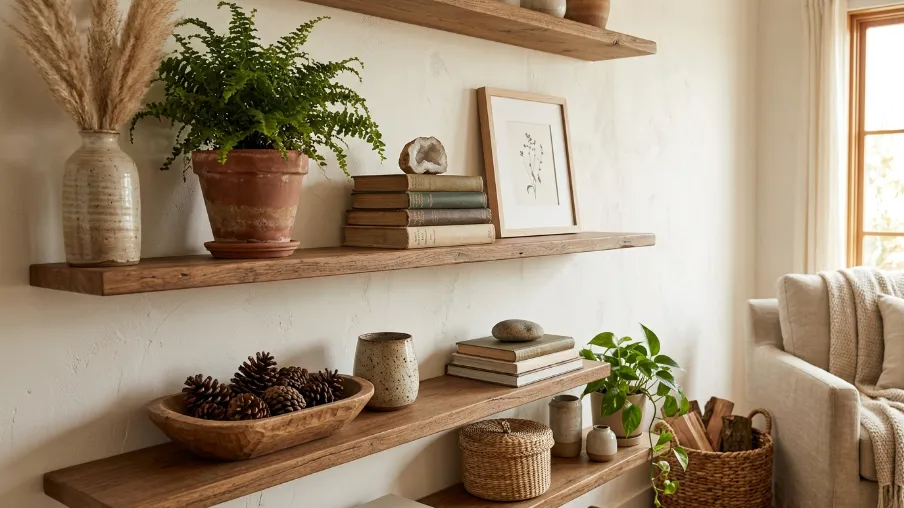
Shelf styling in a cozy earthy living room is one of the most accessible and enjoyable ways to add personality and depth to the space. Well-styled shelves in an earthy palette create a visual richness that cannot be achieved through furniture choices alone.
The formula for earthy shelf styling typically involves mixing heights, materials, and types of objects. A tall plant or dried botanical arrangement provides height. A stack of books in muted tones provides horizontal weight. A ceramic vessel, a wooden bowl, or a woven basket adds texture. A small framed print or a natural stone object adds a final layer of detail.
The spacing between objects matters as much as the objects themselves. Leaving some breathing room between pieces prevents the shelf from feeling cluttered and allows each individual item to register properly. A well-styled earthy shelf should look collected and personal, not like a showroom display or an overcrowded surface.
Common Cozy Earthy Living Room Mistakes to Avoid
Knowing what tends to go wrong helps you get better results with less effort. Here are the most common mistakes worth avoiding when building a cozy earthy living room.
Using too many different earthy tones at once. The earthy palette works best when it stays cohesive. Combining terracotta, olive green, mustard yellow, rust orange, and chocolate brown all in the same space can feel chaotic rather than warm. Choose two or three core earthy tones and build around those consistently.
Ignoring the lighting. Cool white overhead lighting in an earthy living room immediately cancels out the warmth created by the colors and materials. Switching to warm-toned bulbs and adding multiple light sources at different heights makes a significant difference to how the entire room feels.
Over-accessorizing every surface. Earthy living rooms work because they feel calm and grounded. Covering every surface with objects and accessories disrupts that calm quality. Style selectively, leave some surfaces clear, and resist the urge to fill every available space.
Choosing synthetic materials over natural ones. Polyester cushions, synthetic rugs, and plastic accessories work against the natural, organic quality of the earthy aesthetic. Even small swaps toward natural materials like linen, cotton, jute, and wood make a noticeable difference in how genuine the overall look feels.
Forgetting scale. A very small rug in a large room, or a tiny plant on a large empty shelf, looks lost rather than styled. Scale your key pieces to the size of the room and the surfaces they sit on. A large jute rug that properly fills the seating area, and a statement plant tall enough to register in a corner, will always look more considered than undersized equivalents.
Conclusion
A cozy earthy living room is one of the most rewarding interior projects to take on because the result genuinely changes how the space feels to spend time in. When the colors are warm, the materials are natural, the textures are layered, and the lighting is gentle and amber-toned, a living room stops being just a room and starts being somewhere you actually want to be.
The 16 ideas here cover every major element of the cozy earthy living room, from foundational color choices and furniture to lighting, plants, accessories, and the layered details that bring the whole picture together. You do not need to apply all of them at once. Start with the changes that feel most accessible, whether that is a new warm-toned bulb, a linen cushion cover, a terracotta plant pot, or a jute rug, and build from there.
The most successful cozy earthy living rooms work because they acknowledge how you actually use your space. Warm colors, natural materials, and furniture chosen with intention create rooms that serve real life, not just the camera. That is exactly the kind of living room worth building toward.
Frequently Asked Questions
Q1. What colors work best for a cozy earthy living room?
Warm neutrals like beige, oatmeal, warm white, and soft taupe work best as the base palette. Terracotta, sage green, clay, muted ochre, and warm chocolate brown are the strongest earthy accent tones for 2026. The most effective approach is to use neutrals on walls and large furniture pieces, then layer the richer earthy tones through cushions, throws, rugs, and accessories.
Q2. What materials are most important for an earthy living room?
Natural wood, linen, cotton, jute, rattan, stone, and ceramic are the core materials of a cozy earthy living room. These materials share an organic quality that carries warmth and character that synthetic alternatives cannot replicate. Prioritize natural fabrics for upholstery and soft furnishings, solid wood for furniture, and woven natural fiber for rugs and baskets.
Q3. How do I make a living room feel cozy without major renovation?
The most impactful non-renovation changes are lighting, textiles, and plants. Switching to warm-toned bulbs and adding a table lamp or floor lamp immediately changes the mood. Adding a jute rug, layering cushions and throws in warm earthy tones, and bringing in one or two well-placed plants creates a significantly cozier atmosphere without touching the walls or furniture.
Q4. What is organic modern interior design and how does it relate to earthy living rooms?
Organic modern interior design combines the clean, uncluttered lines of contemporary design with natural materials, warm tones, and organic shapes. It is closely related to the cozy earthy living room aesthetic because both prioritize natural materials, warm neutral palettes, and a sense of connection to the natural world. The main difference is that organic modern tends to be slightly more minimal and contemporary in its furniture choices, while earthy living rooms can accommodate more layering and collected character.
Q5. How do I style an earthy living room on a limited budget?
Start with the changes that have the highest visual impact for the lowest cost. A new warm-toned light bulb costs almost nothing and immediately changes the mood. Terracotta plant pots are widely available at low prices and add significant earthy warmth. A simple jute rug from a discount home store transforms the floor area. Thrift stores and secondhand markets are excellent sources for natural wood furniture, ceramic pieces, and woven textiles at a fraction of retail prices. Building gradually with genuine natural materials always produces better results than buying many inexpensive synthetic pieces at once.