20 Japandi Bathroom Ideas for a Calm and Stylish Space
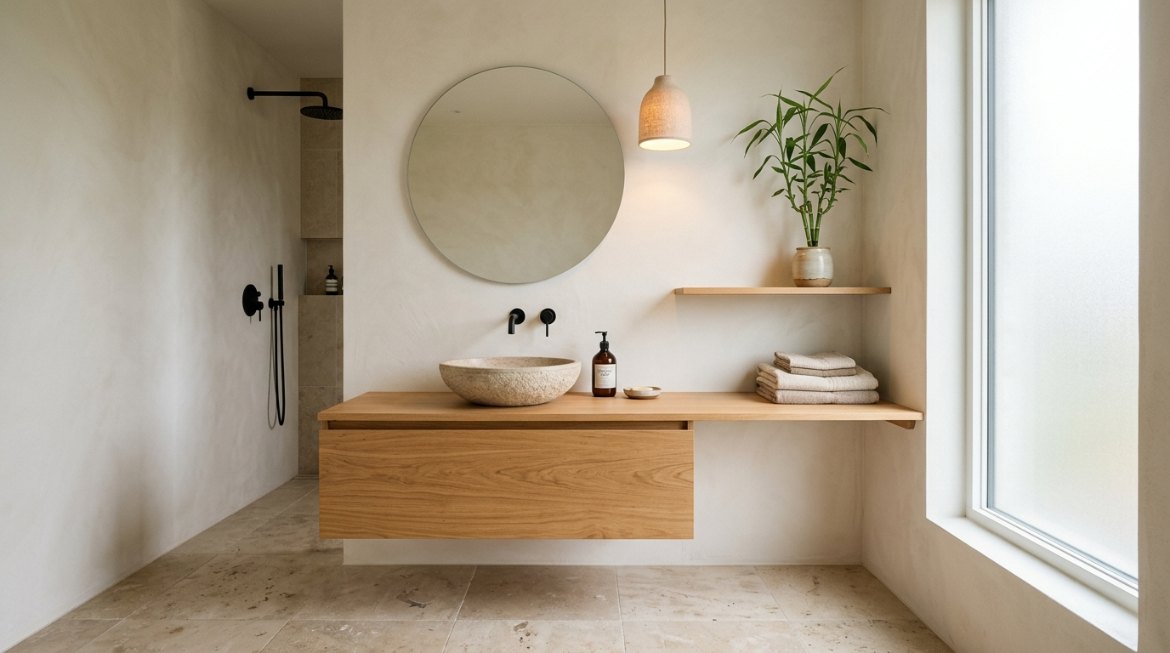
There is something deeply satisfying about walking into a bathroom that feels quiet, clean, and genuinely restful. No clutter on the counter. No harsh lighting. Just warm wood tones, soft neutral walls, and a sense that the whole space was designed to help you breathe.
That is exactly what Japandi bathroom design does for a home.
If you have been scrolling through Pinterest and falling in love with bathrooms that feel like a private spa, there is a good chance most of those images follow the Japandi style. It is one of the most popular bathroom aesthetics right now, and for good reason. It is practical, beautiful, and genuinely calming to live with every day.
In this article, you will find 20 Japandi bathroom ideas that range from simple decor swaps to full design overhauls. Whether you have a tiny apartment bathroom or a spacious ensuite, these ideas will help you create a space that feels serene, stylish, and very intentional.
What Is Japandi Style and Why Does It Work So Well in Bathrooms?
Japandi is a blend of Japanese and Scandinavian design. Both styles share a deep respect for simplicity, natural materials, and functional beauty, which is what makes them such a natural pairing.
Japanese design brings in the concept of wabi-sabi, which is the idea of finding beauty in imperfection and impermanence. Think handcrafted textures, earthy tones, and quiet spaces that encourage stillness.
Scandinavian design contributes hygge, the Danish idea of warmth and coziness. Think soft lighting, functional furniture, and a home that feels welcoming rather than sterile.
When you combine these two philosophies in a bathroom, you get a space that is both minimal and warm. It avoids the cold feel of ultra-modern design and the visual noise of maximalist styles. The result is a calm bathroom aesthetic that works in almost any home, at almost any budget.
20 Japandi Bathroom Ideas to Try at Home
1. Start With a Warm Neutral Color Palette
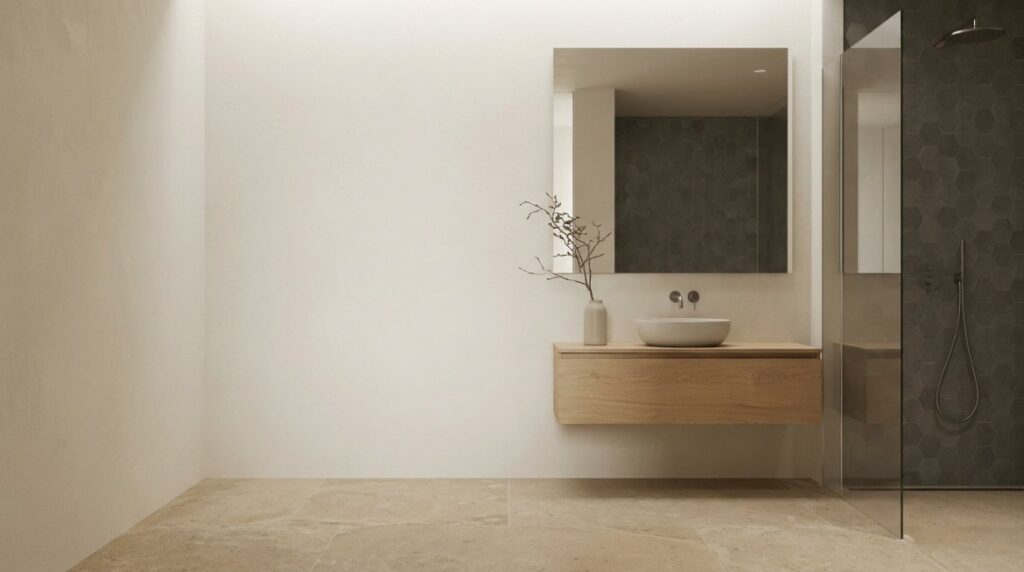
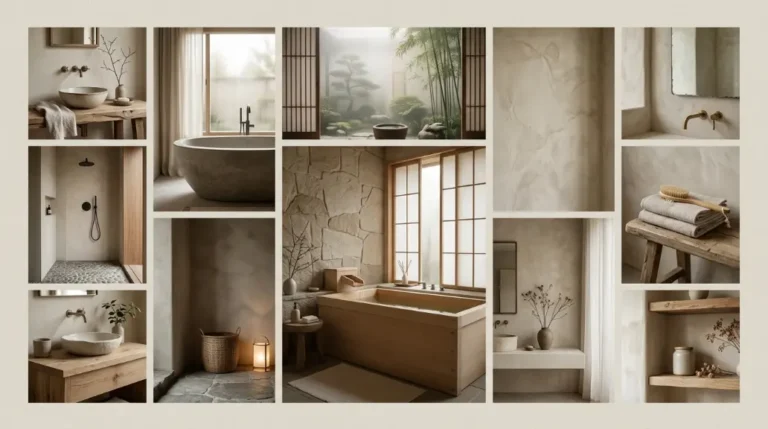
The foundation of any Japandi style bathroom is the color palette. Think off-white, warm beige, soft taupe, sandy stone, and muted charcoal. These tones are inspired by the natural world and create an uncluttered bathroom space that feels restful from the moment you step inside.
Avoid stark white. While white is clean and bright, it can feel too clinical for the Japandi look. Instead, choose cream walls, warm greige tiles, or soft linen-toned paint. If you want to add depth, a darker accent wall in slate grey or deep olive works well.
Quick tip: Keep your walls, floor, and large surfaces within the same color family. This creates a cohesive, seamless feel that makes even a small Japandi bathroom appear larger and more relaxed.
2. Use a Warm Wood Vanity as the Focal Point
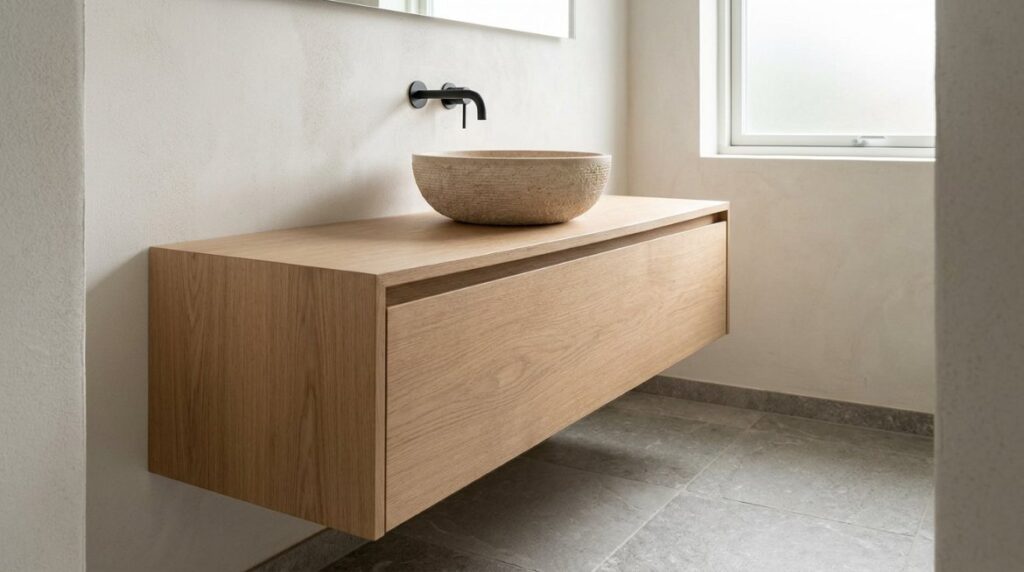
Nothing says Japandi bathroom design quite like a warm wood vanity. Light wood cabinetry in oak, ash, or walnut brings natural warmth to the space without overwhelming the neutral palette.
A floating bathroom vanity works particularly well because it creates a sense of openness. By lifting the cabinet off the floor, the room feels airier and easier to keep clean. Pair it with a simple stone basin or white ceramic sink to complete the look.
If you are working with a budget, even a basic flat-pack vanity can be updated with a wood-effect wrap or a coat of warm matte paint. The key is to keep the lines clean and avoid ornate hardware.
3. Bring in Natural Stone Textures
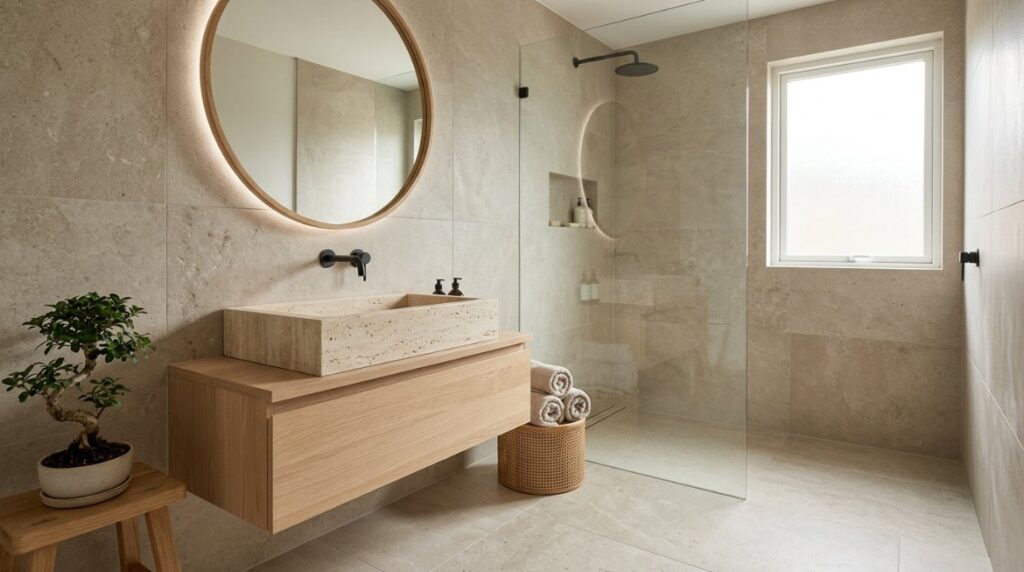
Stone is one of the most important natural materials in Japandi bathroom decor. A stone sink bathroom looks instantly elevated and spa-like without requiring a complicated design plan.
You do not need to go full marble. Travertine, limestone, slate, and textured concrete-look tiles all work beautifully in a Japandi space. Large format tiles in warm stone tones are a popular choice for floors and shower walls because they create clean, uninterrupted surfaces.
A stone basin or stone-effect countertop on your vanity adds that tactile, organic quality that makes a modern Japandi bathroom feel handcrafted rather than mass-produced.
4. Choose Matte Black Fixtures
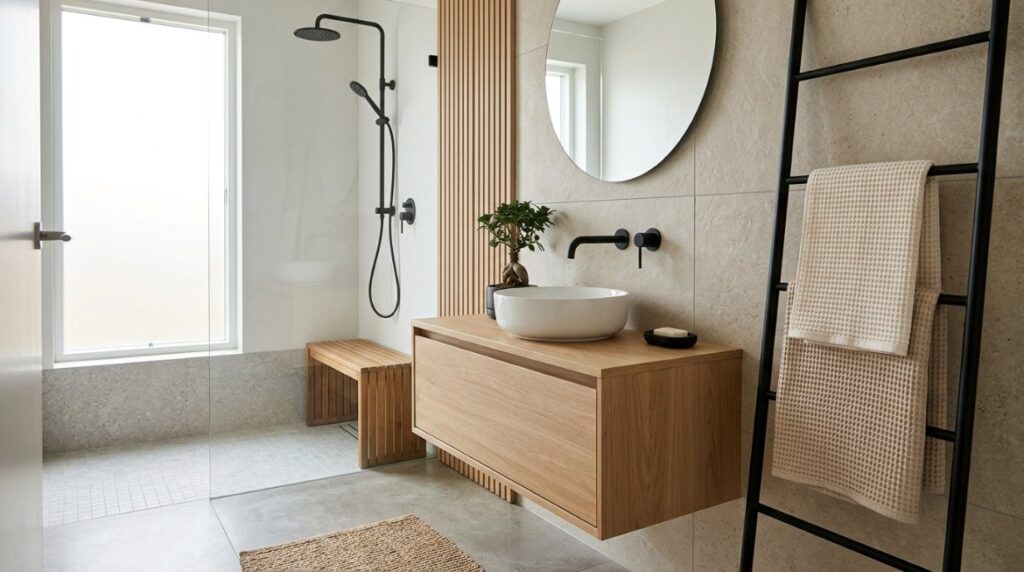
Matte black fixtures are one of the defining features of contemporary Japandi bathroom style. They add a quiet contrast to warm wood and neutral tones without demanding attention.
Swap out shiny chrome taps and towel rails for matte black alternatives. This single change can completely transform the look of a bathroom without any structural work. Matte finishes also tend to show fewer water spots, which makes them practical as well as stylish.
Brushed brass is another option that works well in warmer, cozier Japandi bathrooms. It adds a touch of richness without straying into traditional or ornate territory.
Japandi Bathroom Quick Reference: Elements at a Glance
| Element | Japandi Style Choice | What to Avoid | Budget Option | Premium Option |
|---|---|---|---|---|
| Color Palette | Off-white, warm beige, soft taupe, charcoal | Bright whites, bold colors, mixed tones | Repaint walls in neutral tones | Natural plaster or limewash finish |
| Vanity | Floating wood vanity, light oak or walnut | Heavy ornate cabinets, chrome handles | IKEA flat-pack with wood wrap | Custom light wood cabinetry |
| Fixtures | Matte black taps, brushed brass accents | Polished chrome, elaborate faucet styles | Spray-paint existing fixtures matte black | Solid brass or Japanese-style fittings |
| Flooring | Large format stone tile, warm concrete look | Small mosaic tiles, busy patterns | Vinyl stone-look planks | Honed travertine or terrazzo |
| Lighting | Soft warm LED, pendant over bathtub | Cool white bulbs, too many spotlights | Warm-toned bulb swap, paper lantern shade | Recessed warm lighting + wooden pendant |
| Storage | Hidden cabinets, floating shelves, minimal display | Open cluttered shelves, plastic organizers | Woven baskets, simple wooden tray | Built-in recessed niche or bespoke shelving |
5. Add a Freestanding Bathtub for a Spa-Like Focal Point
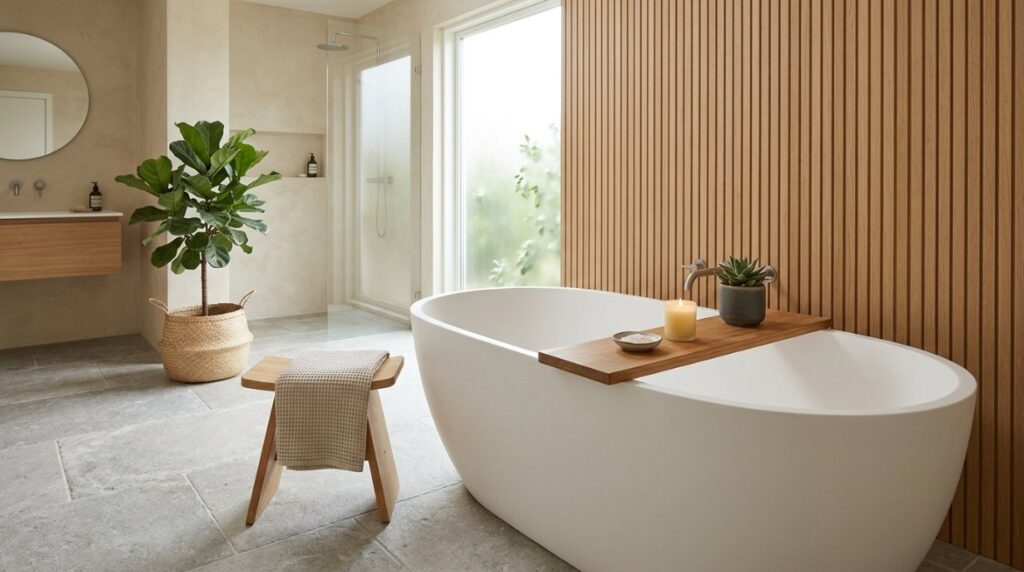
If your bathroom has the space, a freestanding bathtub is one of the most impactful things you can add for a modern spa bathroom feel. In Japandi design, the bath is often treated as the centrepiece of the room, much the way a beautiful piece of furniture anchors a living room.
Simple oval or rectangular freestanding tubs in matte white or stone-finish work best. Avoid overly curved or decorative styles that compete with the clean lines of the rest of the room.
Place a small wooden bath tray across the tub with a single plant, a candle, and perhaps a simple ceramic dish. This adds warmth and a sense of ritual without cluttering the space.
6. Use Soft, Warm Lighting
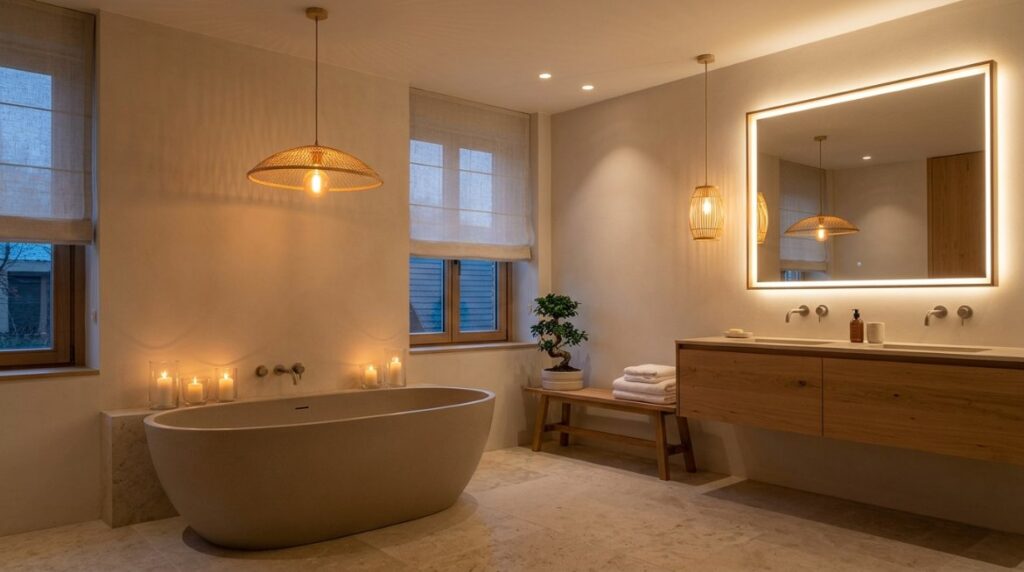
Lighting has an enormous impact on how a bathroom feels. Bright, cool overhead lighting can make a space feel like an office rather than a retreat. Soft lighting in a bathroom, especially warm-toned LED bulbs with a lower colour temperature, creates the relaxing bathroom retreat atmosphere that Japandi is known for.
Layer your lighting where possible. Recessed ceiling lights for general use, a warm pendant above the bath or beside the mirror, and even candles for evenings. This layered approach mirrors the way light moves in nature and adds enormous depth to the space.
For mirrors, choose one with warm integrated lighting rather than cold strip lights. This makes a practical difference for everyday tasks while keeping the aesthetic warm and gentle.
7. Keep Surfaces Completely Clear
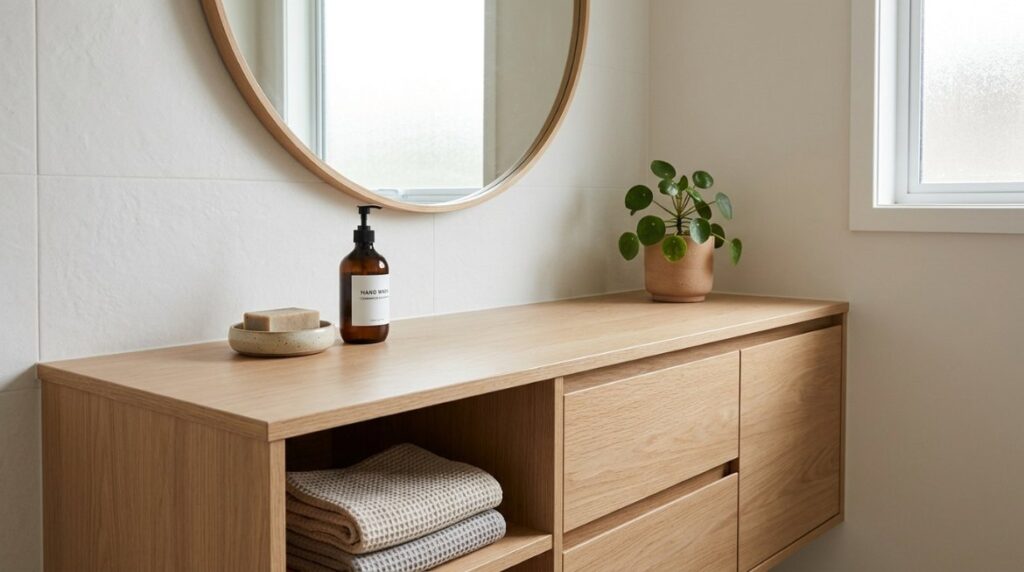
One of the most important principles in Japandi bathroom inspiration is the idea of an uncluttered bathroom space. This does not mean the bathroom needs to look empty or cold. It means everything has a place, and what you display on surfaces is intentional.
Clear your countertops of everything except one or two items you use daily. Store everything else behind cabinet doors or inside drawers. A single ceramic soap dish, a small plant, and your hand wash are enough on the counter.
This minimalist approach not only looks better, it is also much easier to clean and maintain. Clutter creates stress, even when we do not realize it. An empty counter genuinely makes the bathroom feel more restful.
8. Incorporate Bamboo Accessories
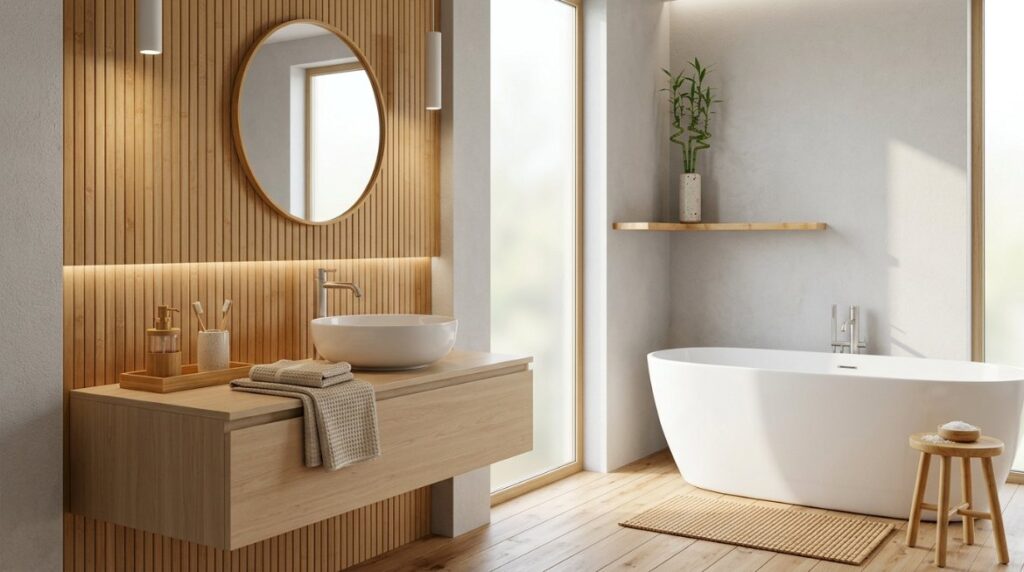
Bamboo is one of the most versatile and affordable natural materials you can use in a Japandi bathroom. Bamboo accessories such as a soap dispenser tray, a toothbrush holder, a small shelf, or a bath mat instantly connect the space to nature.
Bamboo also works well as a structural material. Bamboo slat walls or paneling create beautiful textured wall finishes that add visual interest without overwhelming the neutral color palette. These panels are available in a range of natural tones and are relatively easy to install.
If you prefer a simpler approach, a small bamboo plant in a slim ceramic pot on a corner shelf adds life and warmth to the space at very little cost.
9. Layer in Organic Textures
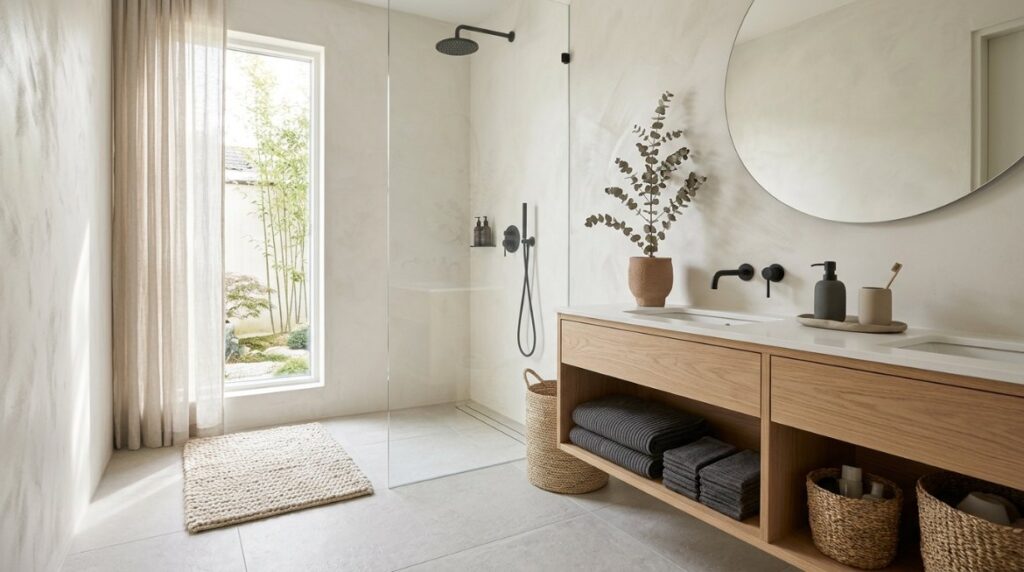
A Japandi bathroom that feels truly special usually has a thoughtful layering of organic textures. This prevents the space from feeling flat or one-dimensional while keeping it within the quiet, neutral aesthetic.
Consider ribbed linen towels, a chunky cotton bath mat, woven storage baskets, and unglazed ceramic accessories. Each of these adds a slightly different surface quality, and together they create a rich but harmonious space.
Textured wall finishes are another way to add depth. Limewash paint, textured plaster, or matte tiles with a slightly rough surface all catch the light differently throughout the day and make the room feel alive and interesting.
10. Maximize Natural Light
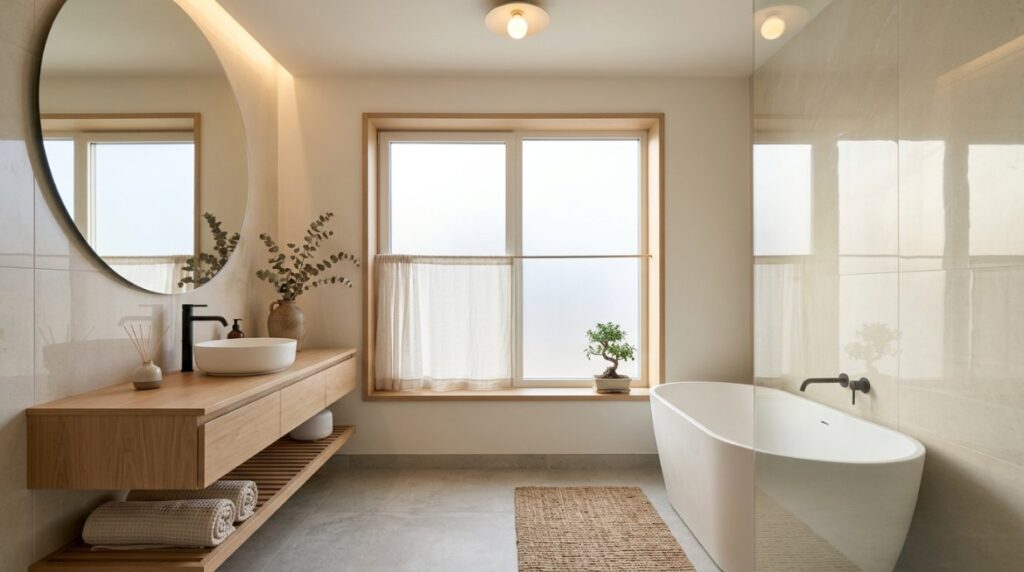
Natural light is a cornerstone of both Japanese and Scandinavian design. In a Japandi bathroom, the goal is to let as much daylight in as possible while maintaining privacy.
If you have a window, keep it dressed simply. Frosted glass, sheer linen panels, or a simple wooden blind allow light in without sacrificing privacy. Avoid heavy curtains or fussy Roman blinds that feel out of place in a minimalist bathroom design.
If your bathroom has no window, focus on making the most of the light you have. Large mirrors, glossy stone tiles that reflect light, and warm artificial lighting can all compensate for limited natural light. A skylight is worth considering in a renovation if it is structurally possible.
11. Add a Statement Mirror
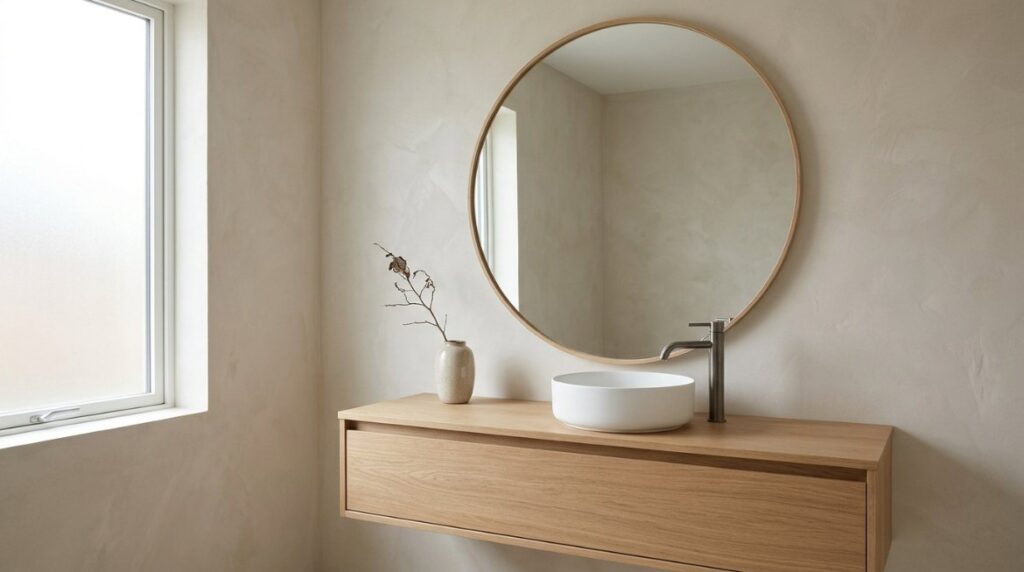
A well-chosen mirror can pull an entire Japandi bathroom design together. Round mirrors with thin wooden frames, simple rectangular mirrors with warm metal edges, or backlit mirrors with a minimal silhouette all work beautifully in this style.
Avoid ornate or heavily decorated mirror frames. The frame should complement the vanity and fixtures rather than draw attention to itself. A mirror that extends almost the full width of the vanity creates a sense of proportion and makes the room feel balanced and spacious.
For smaller bathrooms, a full-length narrow mirror on one wall can make the space feel significantly taller and more open without any structural changes.
12. Use Floating Shelves Sparingly
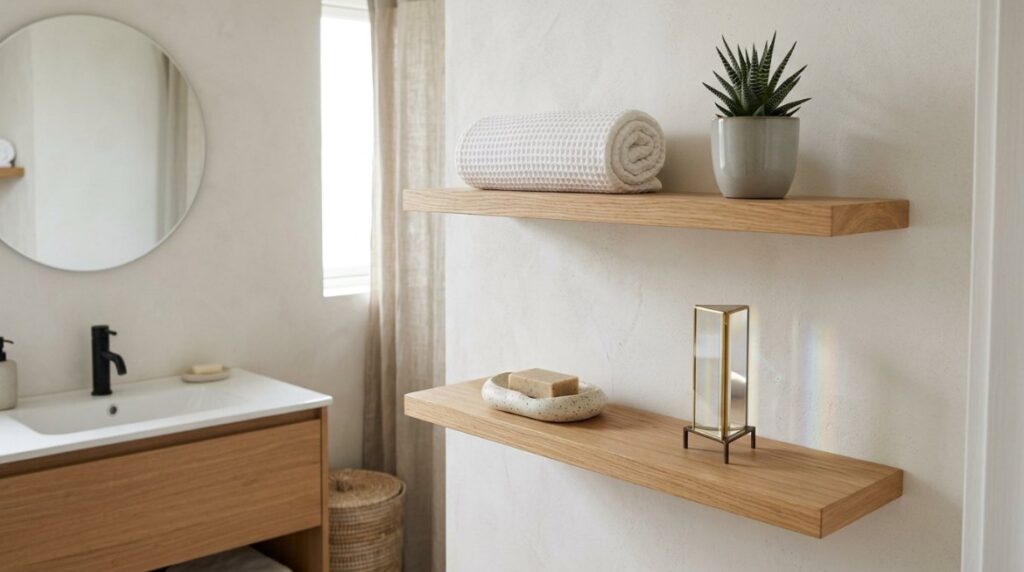
Open shelving is often overused in bathrooms, leading to a cluttered look that is the opposite of Japandi bathroom decor. However, one or two well-placed floating shelves in a natural wood or matte black finish can add both function and beauty to the space.
On a floating shelf, display only a small number of items: a ceramic dish, a single rolled towel, a small plant, or a handmade pottery piece. The shelf should look curated rather than filled. Think gallery wall rather than storage rack.
Keep shelves at eye level or above for the cleanest visual effect. Shelves placed too low can make a small bathroom feel hemmed in.
13. Include Indoor Plants
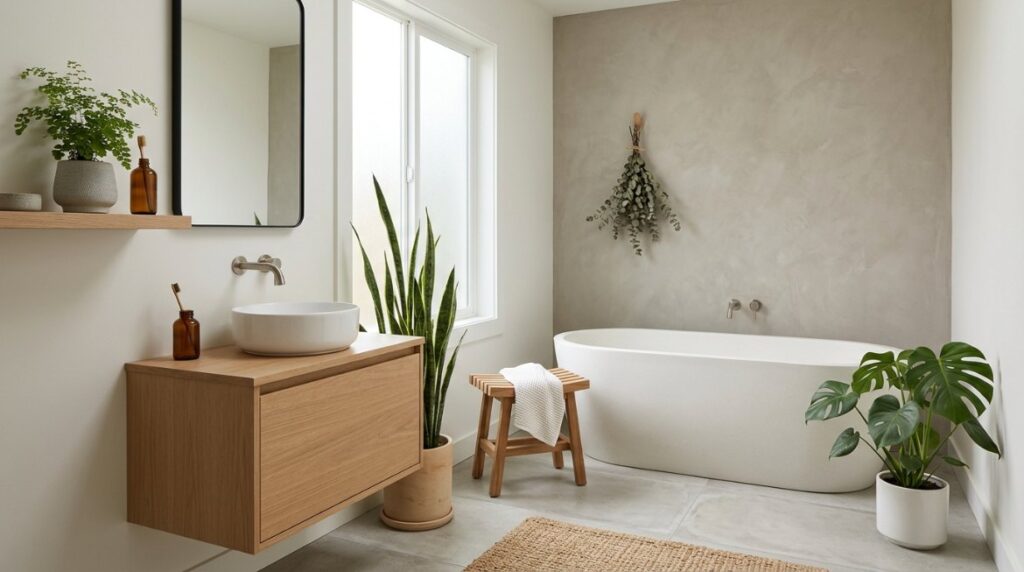
Plants are a simple and affordable way to bring the Japandi zen bathroom atmosphere to life. They soften hard surfaces, add natural color, and have a proven calming effect in interior spaces.
Some of the best plants for a Japandi bathroom include bamboo, small ferns, monstera, snake plants, and eucalyptus. These all do well in humid environments and add different textures and shapes that complement the natural materials in the room.
Place a single plant on a shelf or in a corner. A slim, tall plant in a simple ceramic or stone pot works particularly well against a bare wall. Avoid clustering too many plants together, as this can tip the balance from serene to busy.
14. Opt for a Minimal Shower Design
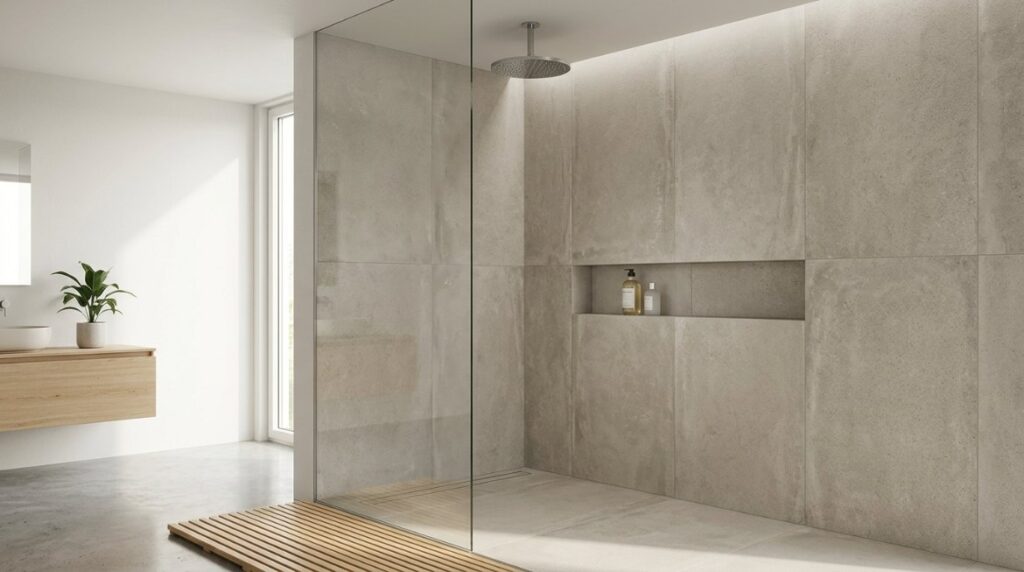
A Japandi shower should feel clean, open, and completely free of unnecessary details. Frameless glass shower enclosures work well because they allow the eye to travel through the space without visual interruption.
Use large format stone or concrete-look tiles on shower walls to minimize grout lines and create a sense of calm. A rain shower head mounted directly in the ceiling is a popular choice that reinforces the spa-like bathroom experience.
Keep shower accessories to an absolute minimum. A single niche built into the wall for shampoo and soap eliminates the need for cluttered shower caddies. Choose one or two quality products displayed neatly rather than a crowded shelf.
15. Choose Sustainable Materials
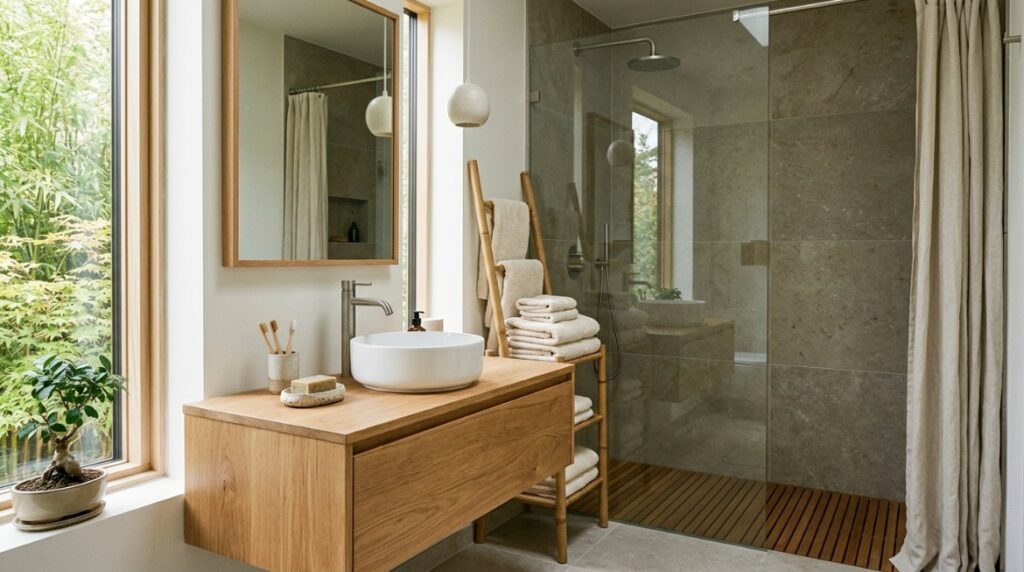
Japandi design is rooted in a respect for nature, which naturally aligns with a sustainable bathroom design approach. When choosing materials and products for your bathroom, think about longevity and environmental impact alongside aesthetics.
Solid wood vanities last far longer than MDF alternatives. Natural stone tiles may cost more upfront but they do not fade, chip, or look dated over time. Organic cotton towels, bamboo accessories, and ceramic soap dishes are all durable, sustainable choices that align with the Japandi philosophy.
Avoid synthetic materials like plastic shower curtains or faux wood finishes where possible. The real versions may cost a little more, but they age beautifully and feel genuinely different to touch and use.
16. Create a Japandi Bathroom in a Small Space
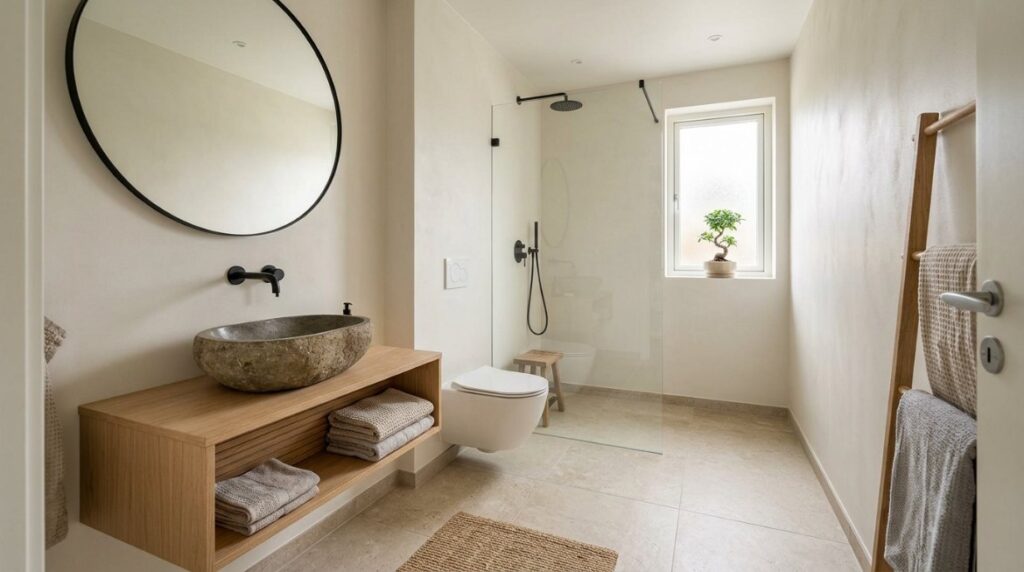
One of the best things about Japandi bathroom ideas for small spaces is that the style actually suits compact bathrooms very well. The minimalist principles of decluttering, using natural light, and keeping surfaces clear all make a small room feel significantly larger.
In a small Japandi bathroom, stick to a single neutral color throughout the walls, floor, and ceiling. This eliminates visual breaks that make a room feel smaller. A floating vanity creates the illusion of floor space, and a wall-mounted toilet does the same.
Choose one statement piece, whether that is a beautiful stone basin, a bold mirror, or a single large format floor tile, and keep everything else simple around it.
17. Add Wabi-Sabi Details
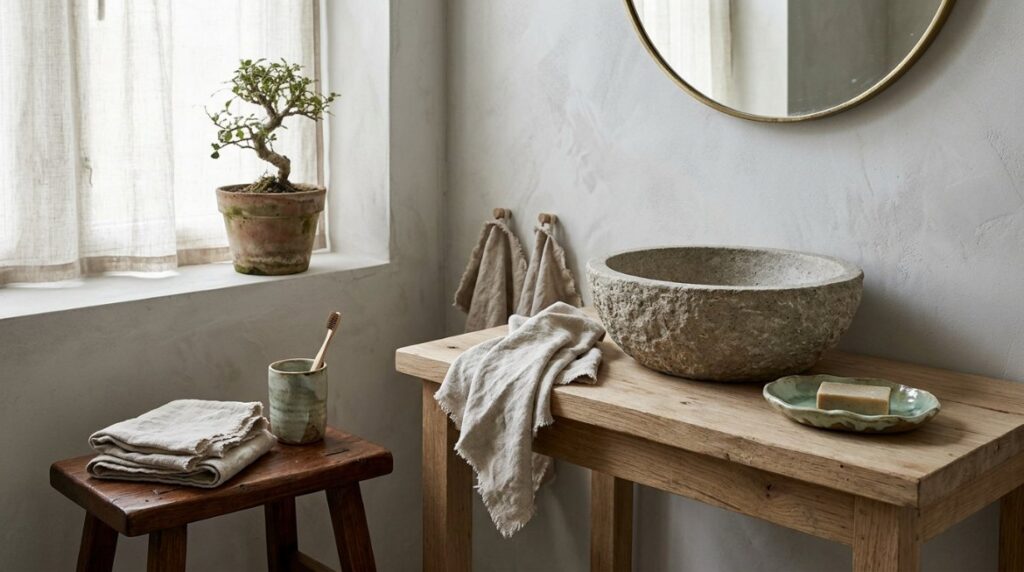
Wabi-sabi is a Japanese philosophy that finds beauty in imperfection, natural aging, and the handmade. It is an important part of the Japandi aesthetic and prevents the style from feeling too polished or commercial.
Look for wabi-sabi details in handmade ceramics with uneven glazes, linen towels with raw edges, rough-textured stone basins, or a wooden stool with natural grain and slight imperfections. These pieces bring soul to a space and make it feel genuinely personal rather than showroom-perfect.
You do not need to hunt for antiques or spend a lot of money. Many artisan ceramicists sell through online markets and their pieces add far more character to a bathroom than anything mass-produced.
you may also like this: 18 Wabi Sabi Bathroom Ideas for Peaceful Minimal Living
18. Use Recessed Storage to Eliminate Clutter
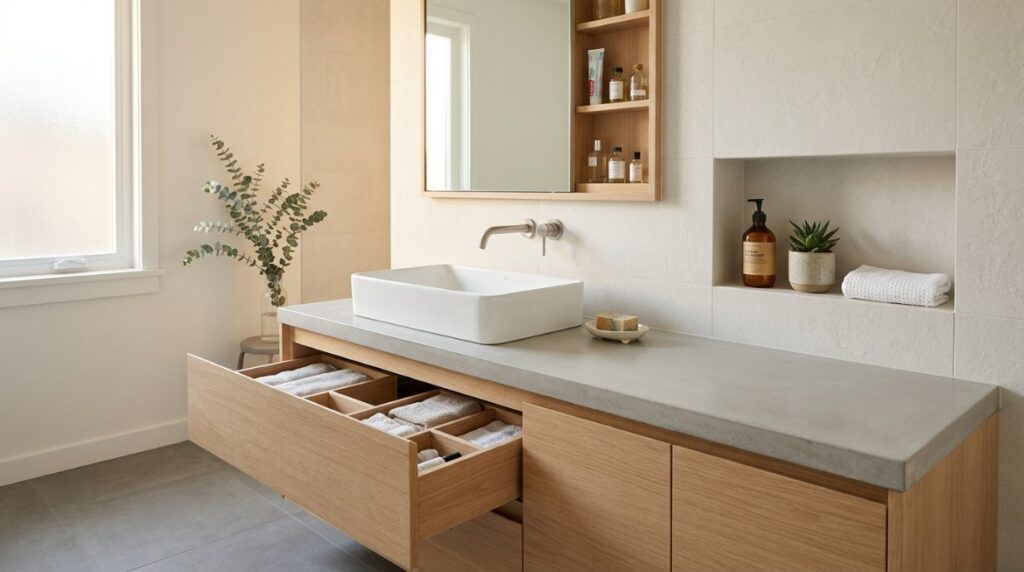
Smart storage is essential in a zen-inspired bathroom. Recessed niches in shower walls, medicine cabinets behind mirrors, and hidden storage drawers in vanity units all keep everyday items out of sight without sacrificing accessibility.
A recessed niche beside the sink can hold hand soap, a small plant, and one or two daily essentials. This removes the need for a cluttered countertop while adding an architectural detail to the wall.
Consider a full-length mirrored cabinet above or beside the vanity. From the front it looks like a simple mirror, but it holds everything from cotton pads to spare toiletries behind closed doors.
19. Layer Soft Textiles for Warmth
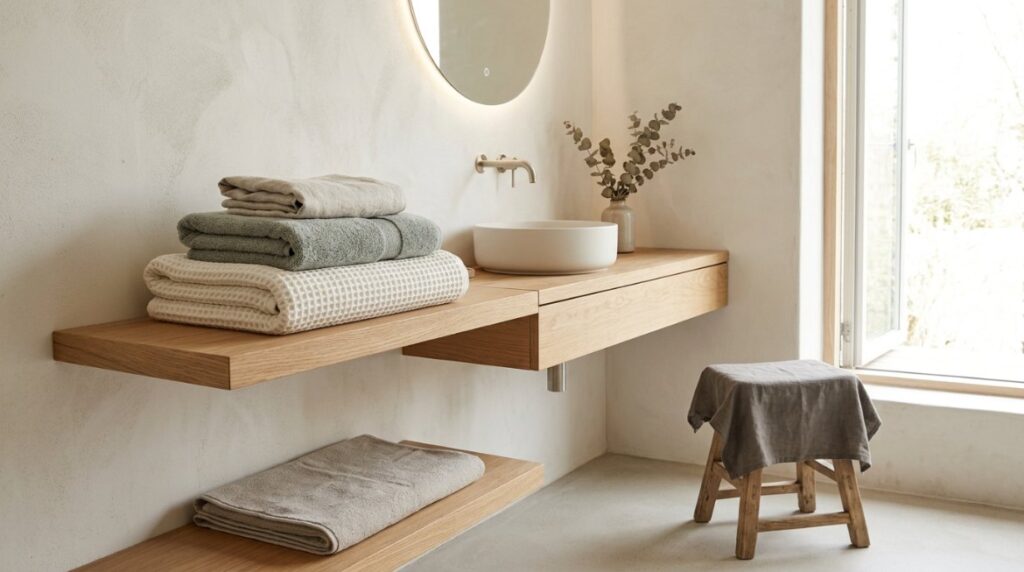
Textiles bring the Scandinavian hygge element into the bathroom and soften what could otherwise feel like a cold, hard space. Layering towels, bath mats, and even a simple linen stool cover adds warmth and comfort to a Japandi bathroom design.
Stick to natural fibres: organic cotton, linen, and bamboo terry. Choose tones that sit within your neutral color palette: oatmeal, stone, dusty sage, warm white, or charcoal. Avoid bright colours or busy patterns.
Stack two or three folded towels on a wooden shelf rather than hanging them on a rail. This creates a hotel-like visual that is both practical and very much in keeping with the Japandi spa bathroom aesthetic.
20. Keep Decor Intentional and Minimal
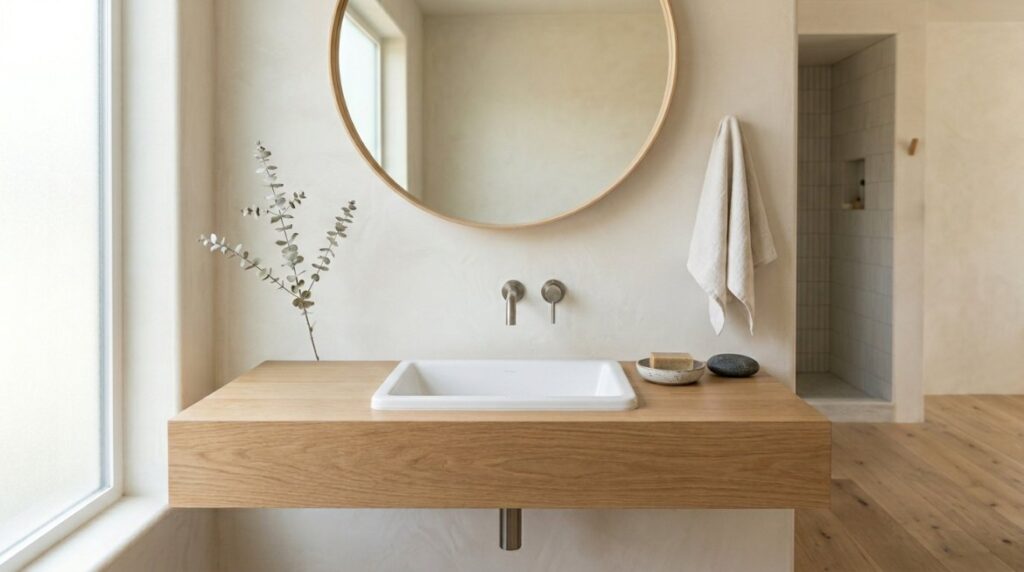
The final and perhaps most important idea is simply this: less is more. A Japandi bathroom works best when every item in the room has been chosen deliberately and serves either a practical purpose or brings genuine visual joy.
Before adding anything to the space, ask yourself whether it earns its place. A single bud vase with a dried eucalyptus stem, a smooth river stone on the counter, or one handthrown ceramic dish. These quiet details speak louder than a shelf full of decorative objects.
Japandi is not about achieving a magazine-perfect bathroom. It is about creating a space that feels genuinely calm to be in. When you strip back the unnecessary, what remains feels more meaningful.
Common Mistakes to Avoid in a Japandi Bathroom
Mixing Too Many Wood Tones
One of the most common mistakes in Japandi bathroom design is combining multiple different wood stains. Light oak vanity, dark mahogany shelf, honey-toned bamboo accessories. The result feels chaotic. Stick to one wood tone and use it consistently throughout the room.
Going Too Cold or Too Minimal
Japandi is warm and inviting. If your bathroom starts to feel cold, stark, or hospital-like, you have probably gone too far in the minimalist direction. Add a plant, a textured towel, or a warm-toned candle to bring softness back into the space.
Choosing the Wrong White
Pure, bright white paint reads as clinical in a Japandi bathroom. Always choose warm whites with undertones of cream, sand, or blush. Test paint samples in the actual room before committing, as the colour will look different depending on the natural light available.
Overloading Open Shelves
Open shelving only works in a Japandi bathroom when it is treated with great restraint. Three items on a shelf is usually the maximum before it starts to look cluttered. When in doubt, remove something rather than adding more.
Ignoring Lighting Temperature
Installing cool-white LED bulbs is one of the easiest ways to ruin an otherwise beautiful Japandi bathroom. Always choose warm white bulbs (2700K to 3000K colour temperature) for ceiling lights, mirror lights, and any other artificial light in the space.
How to Maintain Your Japandi Bathroom
The good news about a minimalist Japandi bathroom is that it is genuinely easier to maintain than a busy, cluttered one. With fewer items on display and natural materials that age well, daily upkeep is straightforward.
- Wipe down stone tiles and stone basins weekly with a pH-neutral cleaner. Avoid harsh chemical sprays that can damage natural surfaces.
- Oil wooden vanities and shelves every few months to keep the wood from drying out and cracking. A simple natural wood oil applied with a cloth takes only a few minutes.
- Clean matte black fixtures with a soft cloth and warm water. Matte finishes can be scratched by abrasive cleaners, so avoid anything harsh.
- Replace plants as needed. If a plant starts to look unhealthy, remove it rather than letting it sit as a dying decoration. A bare shelf looks better than a struggling plant.
- Re-edit the space every season. Remove anything that has crept back onto the countertops. Return to the original clear, calm state that makes the bathroom feel like a retreat.
Final Thoughts
A Japandi bathroom does not have to be expensive or complicated. At its heart, this style is about choosing natural materials, maintaining a calm color palette, removing what you do not need, and being intentional about what you keep.
Whether you start with a new vanity, a coat of warm neutral paint, or simply clearing your counter and adding a single plant, each small step moves the space closer to that serene bathroom atmosphere that makes the whole of Japandi design so appealing.
Start small, stay consistent, and let the space breathe. That is really all a Japandi bathroom needs.
Frequently Asked Questions
Q1: What is the difference between Japandi and minimalist bathroom design?
Minimalist design is about stripping a space back to its barest essentials, which can sometimes result in a cold or austere feel. Japandi bathroom design follows minimalist principles but adds warmth through natural materials, organic textures, and earthy tones. The result feels calm and inviting rather than empty or impersonal.
Q2: Can I create a Japandi bathroom on a small budget?
Yes, absolutely. Some of the most effective Japandi bathroom changes cost very little. Repainting walls in a warm neutral tone, swapping out chrome fixtures for matte black alternatives, adding a bamboo accessory set, and clearing countertop clutter can all transform a bathroom without a large investment.
Q3: What colors work best in a Japandi bathroom?
Warm neutrals are the foundation of a Japandi color palette. Off-white, soft beige, warm taupe, sandy stone, sage, and muted charcoal all work well. Avoid pure white, which feels too clinical, and avoid bright or saturated colors, which break the calm aesthetic.
Q4: Is Japandi style suitable for small bathrooms?
Japandi is actually an excellent style for small bathrooms. The emphasis on decluttering, using light tones, maximizing natural light, and choosing floating furniture all make a compact bathroom feel more open and spacious. A small Japandi bathroom can feel far more generous than a larger bathroom filled with heavy furniture and busy decoration.
Q5: What plants are best for a Japandi bathroom?
Bamboo, snake plants, monstera, small ferns, peace lilies, and eucalyptus all work well in Japandi bathrooms. These plants thrive in humid environments and add natural texture without demanding too much space. Choose a single statement plant in a simple ceramic or stone pot rather than grouping many plants together.