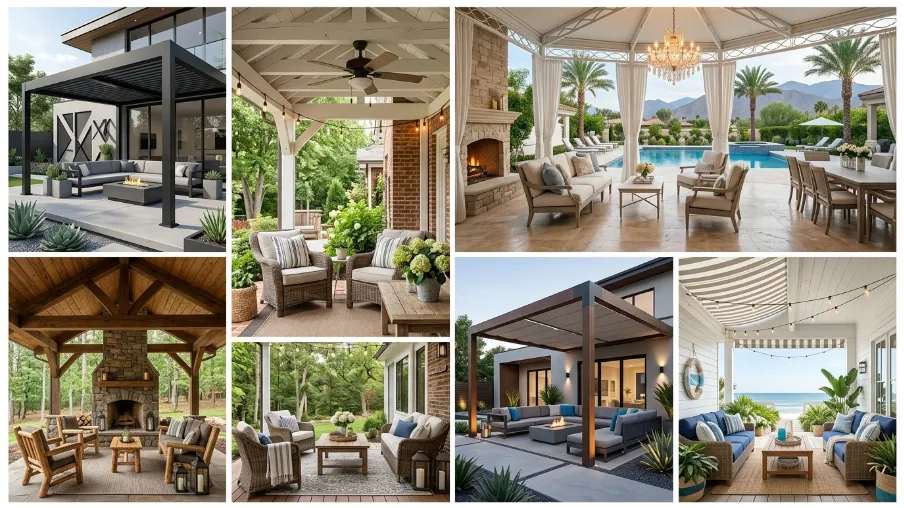
17 Covered Patio Design Ideas for a Stylish Outdoor Space
Most backyards have a patio. Far fewer backyards have a patio that actually gets used consistently throughout the year. The difference between the two is almost always a roof.
An uncovered patio is dependent entirely on the weather. A covered patio is a genuine outdoor room that functions in rain, intense sun, light wind, and everything in between. It is the difference between a space you step out onto occasionally and a space that becomes a natural extension of how you live at home.
Covered patio design sits at the intersection of architecture, interior design, and landscape planning, which makes it one of the most rewarding home improvement projects available to homeowners. Whether you are starting from bare concrete or rethinking an existing structure, these 17 covered patio design ideas cover every scale, budget, and aesthetic preference to help you build an outdoor space that you will genuinely use and genuinely love.
Understanding Covered Patio Basics Before You Plan
Before choosing a design direction, it helps to understand the key decisions that shape every covered patio project.
The most fundamental choice is between a solid roof and an open or semi-open structure. A solid roof, whether flat, pitched, or sloped, provides complete weather protection and suits climates with frequent rain. An open pergola structure with beams and no infill provides shade and a visual sense of enclosure without blocking rain, which suits drier climates where shade rather than rain protection is the primary concern. A louvered or retractable roof system sits between the two, offering adjustable coverage depending on conditions.
The second key decision is whether the structure attaches to the house or stands independently. An attached covered patio shares the house wall as one support side and typically feels like a natural extension of the interior living space. A freestanding structure in the middle or far end of the yard creates a separate destination within the garden that functions more independently.
Check local building codes and permit requirements before beginning any patio cover project. Many jurisdictions require permits for permanent covered structures above a certain size, and compliance from the beginning saves significant complication and cost later.
17 Covered Patio Design Ideas for a Stylish Outdoor Space
1. Classic Pergola Patio Design
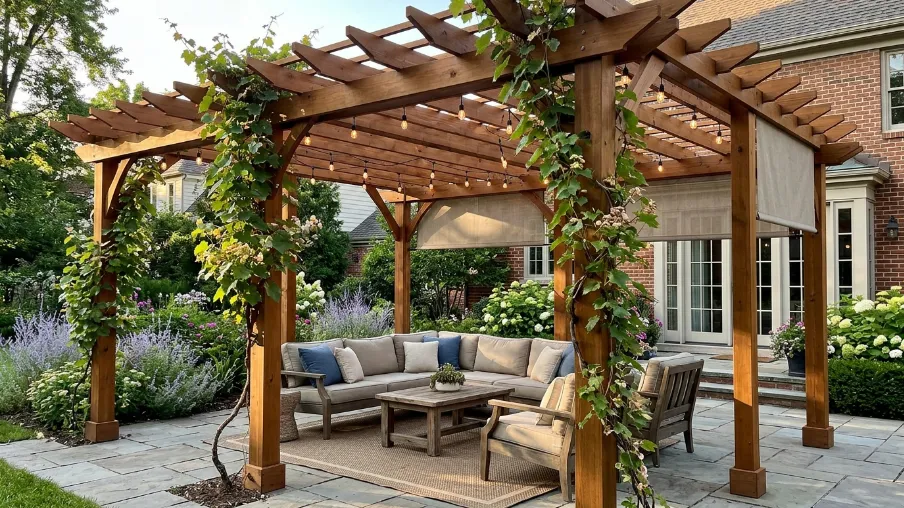
A pergola is the most widely used patio cover structure in residential outdoor design and its enduring popularity is well-earned. The open beam structure provides a visual ceiling that creates a sense of enclosure and defined space without blocking air circulation or completely eliminating the feeling of being outdoors.
A classic pergola patio design uses evenly spaced overhead beams supported by four or more posts, creating a grid-like ceiling that suits both modern and traditional home exteriors depending on the material and finish chosen. Stained cedar or natural wood pergolas suit traditional and farmhouse aesthetics. Powder-coated steel or aluminum pergolas suit contemporary and minimalist exterior design.
Climbing plants trained across the overhead beams, string lights woven between the rafters, and a comfortable lounge set beneath create a complete outdoor living space that feels genuinely finished without requiring a solid roof structure. For climates where occasional rain is a concern, shade sail panels or a retractable canopy can be added within the pergola frame for supplementary coverage.
2. Modern Covered Patio with Solid Flat Roof
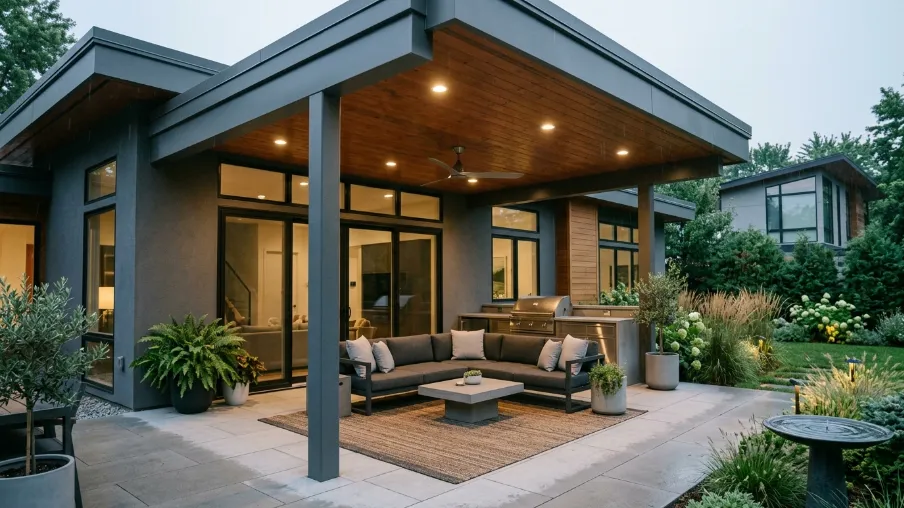
A solid flat roof patio cover creates the cleanest and most architecturally integrated covered outdoor space, particularly on modern and contemporary homes where the horizontal lines of a flat roof extend the home’s design language directly into the backyard.
A flat roof covered patio design typically uses steel or aluminum beams supporting a solid panel ceiling in Colorbond, polycarbonate, or timber decking material. The ceiling can be finished with recessed lighting, a ceiling fan, and painted or stained to match the house interior if a truly indoor-outdoor connection is the design goal.
The practical advantage of a solid flat roof over a pergola is complete weather protection that allows the covered patio to be used in rain without any supplementary additions. This makes it the most functional option for climates with regular rainfall and for homeowners who want the outdoor space to function as a genuine additional room rather than a fair-weather luxury.
3. Covered Patio with Outdoor Kitchen
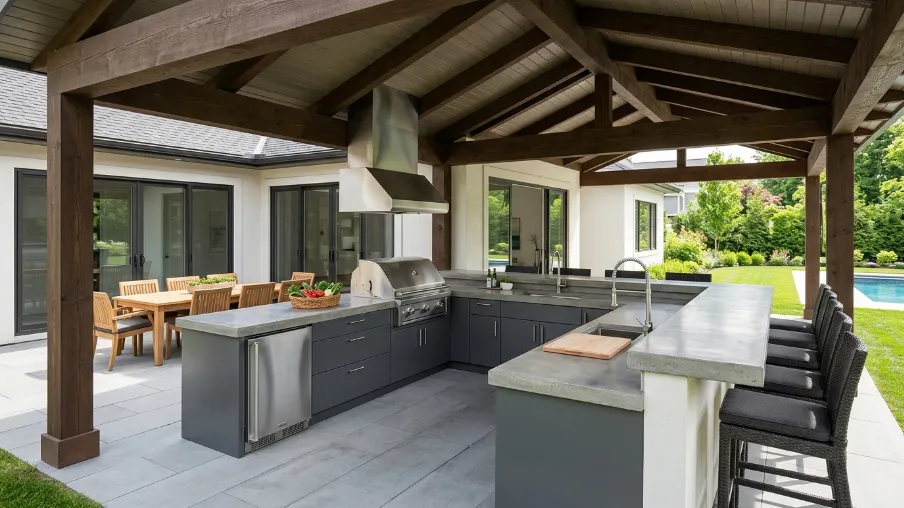
Integrating an outdoor kitchen into a covered patio design transforms the space from a seating area into a complete entertainment destination. A covered patio with an outdoor kitchen accommodates cooking, dining, and socializing in a single outdoor room that keeps the interior of the home completely clear during gatherings.
The basic outdoor kitchen setup within a covered patio includes a built-in grill, a preparation counter in stone or concrete, a sink with outdoor plumbing, and storage cabinets in marine-grade or powder-coated materials. A bar-height counter along one edge with bar stools on the guest-facing side creates a social cooking environment where guests can interact with the cook rather than waiting separately at a dining table.
The covered roof structure above an outdoor kitchen is functionally important rather than purely aesthetic. It protects the appliances and cabinetry from direct rain exposure and reduces the UV degradation that outdoor materials experience without shade overhead.
Quick Reference Table: Covered Patio Design Options at a Glance
| Cover Type | Weather Protection | Best Climate | Aesthetic | Budget Level |
|---|---|---|---|---|
| Classic Pergola | Shade only | Dry and warm | Traditional and modern | Low to medium |
| Solid Flat Roof | Full rain and sun | All climates | Modern and contemporary | Medium to high |
| Pitched Solid Roof | Full rain and sun | All climates | Traditional and farmhouse | Medium to high |
| Louvered Roof | Adjustable coverage | Variable climates | Modern and luxury | High |
| Shade Sail | Partial sun only | Hot and dry | Casual and modern | Low |
| Polycarbonate Roof | Full rain, diffused sun | Rainy climates | Practical and modern | Medium |
| Retractable Awning | Adjustable sun and rain | Variable | Flexible and casual | Medium |
4. Farmhouse Covered Patio with Pitched Roof
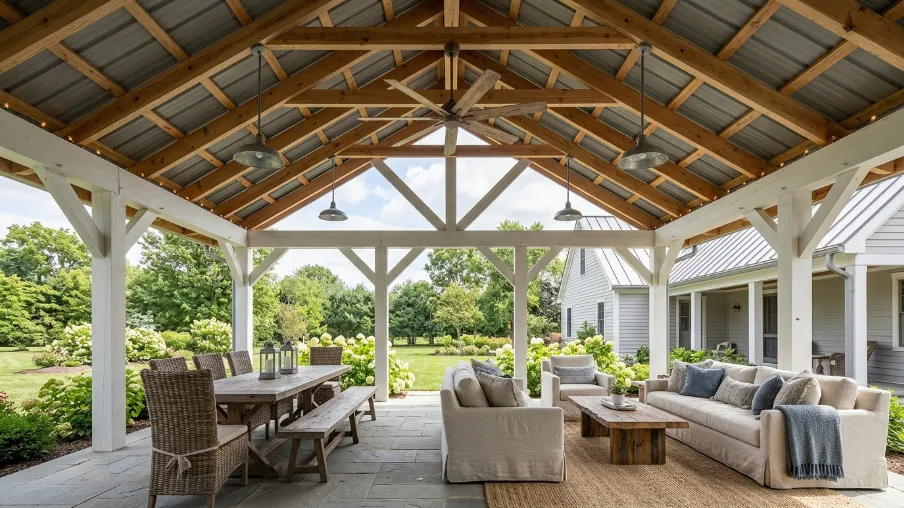
A pitched roof covered patio creates one of the most substantial and visually impressive covered outdoor structures available to homeowners, and the farmhouse interpretation of this style, with exposed timber rafters, corrugated metal or terracotta tile roofing, and white painted posts, is among the most requested patio design aesthetics in 2026.
The pitched roof covered patio design suits traditional, craftsman, and farmhouse-style homes particularly well because the roofline echoes the language of the main house rather than appearing as a structurally disconnected addition. The height created by the pitched ceiling inside the covered patio also produces a more generous, airy feel than a flat or low-profile roof structure.
Exposed ceiling beams, a ceiling fan with a natural wood blade, pendant lights hung from the ridge beam, and a mix of comfortable upholstered outdoor furniture and a farmhouse dining table create a complete outdoor room under this roof structure that suits both daily family use and large-scale entertaining.
5. Small Covered Patio Ideas for Compact Backyards
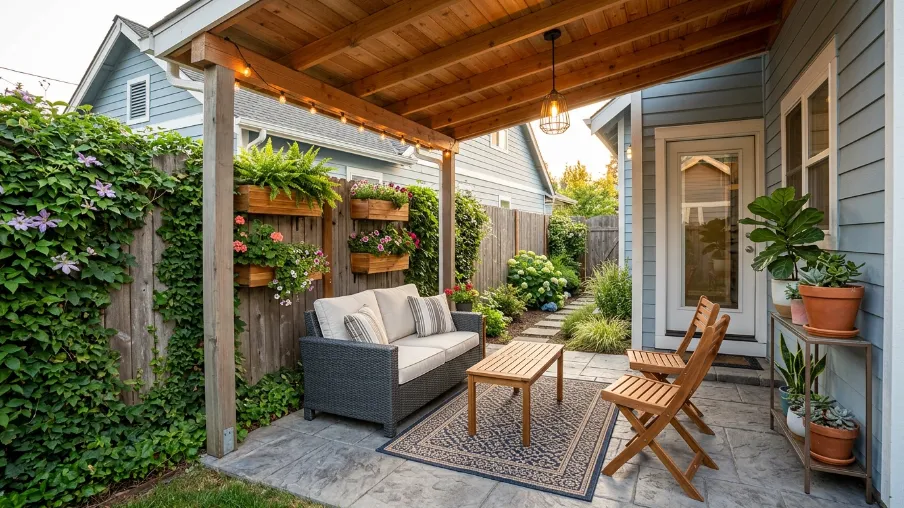
A compact backyard does not preclude a covered patio. Some of the most thoughtfully designed covered outdoor spaces are small ones where every element has been considered carefully to make the most of limited square footage.
A small covered patio design for a compact yard might consist of an eight-by-ten-foot attached pergola or solid roof structure directly off the back door, furnished with a two-seater outdoor sofa, a narrow coffee table, and two side chairs that can be rearranged for different configurations. Wall-mounted planters on the boundary fence, a slim outdoor rug, and a ceiling-mounted pendant light complete the space without adding any floor-space footprint.
The key principle for small covered patio design is vertical layering. Using the walls and ceiling surfaces for storage, lighting, plants, and decorative elements keeps the floor plan clear for comfortable movement and furniture arrangement.
6. Covered Patio with Louvered Roof
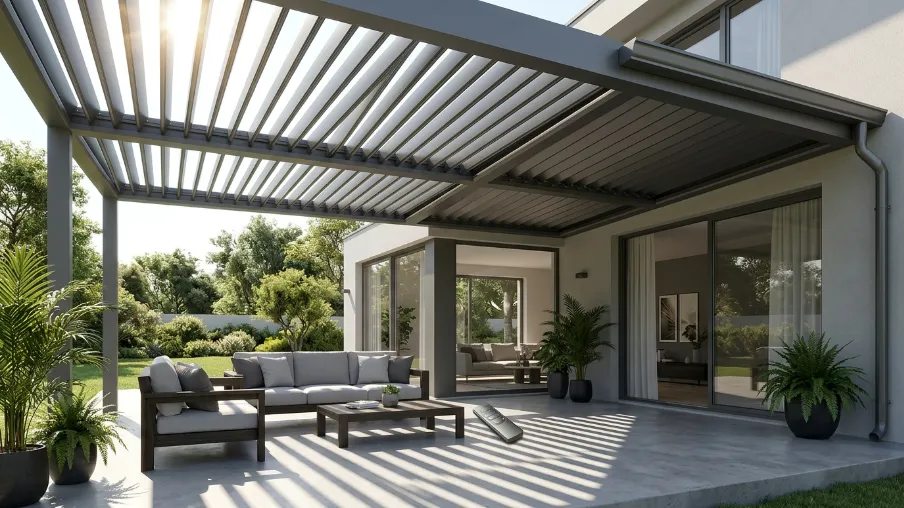
A louvered roof system is the most flexible and functionally sophisticated covered patio design option currently available. The roof consists of adjustable aluminum slats that rotate from open to closed at the turn of a switch or the press of a button, allowing you to control the level of shade, ventilation, and rain protection at any moment depending on conditions and preference.
In full-open position, a louvered roof functions like a pergola, allowing sunlight and air to pass freely through. In full-closed position, it provides complete rain protection equivalent to a solid roof. The range of partially open positions between these extremes creates a precision of environmental control that no other patio cover system achieves.
Louvered roof systems suit modern and contemporary covered patio aesthetics best because their clean aluminum profiles and precise mechanical operation are most consistent with a minimalist design language. They represent a higher initial investment than most other patio cover options but deliver a functional versatility that typically justifies the cost for homeowners in variable climates.
7. Covered Patio with String Lights and Ceiling Fan
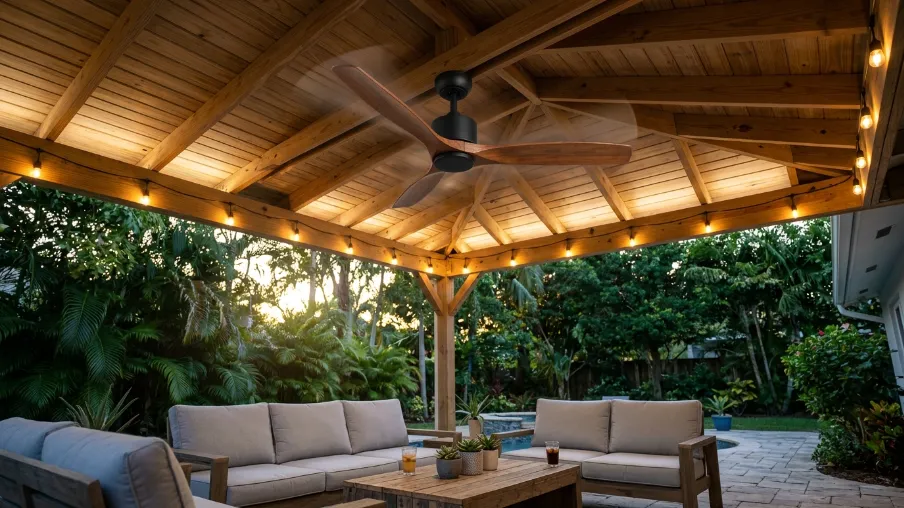
A ceiling fan installed within a covered patio roof structure is one of the most practically valuable additions for hot and humid climates, as it creates air movement that significantly reduces the perceived temperature beneath the roof and helps manage the insects that still air tends to attract.
Pair a ceiling fan with string lights or integrated LED panels in the covered patio ceiling for a lighting and comfort solution that addresses both the functional and atmospheric qualities of the space simultaneously. A wet-rated ceiling fan with a natural wood or matte black blade finish suits most covered patio aesthetics and operates safely in the moisture-adjacent outdoor environment.
The combination of a ceiling fan for daytime comfort and warm string lights for evening atmosphere creates a covered patio that is genuinely comfortable and inviting across all hours of the day, which makes the investment in the overall structure significantly more worthwhile.
8. Covered Patio with Outdoor Fireplace
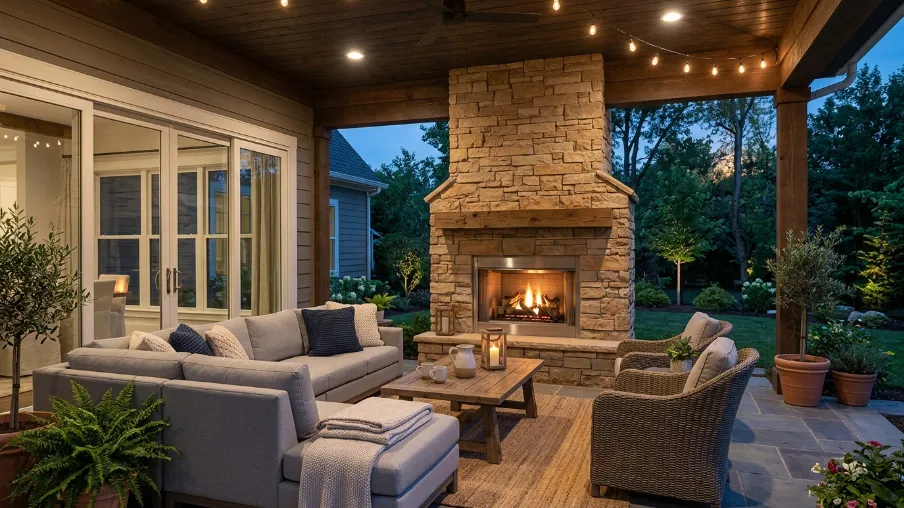
An outdoor fireplace built into or positioned within a covered patio design extends the usability of the space into cooler months and evenings when an uncovered or unheated patio would be too cold for comfortable outdoor sitting. A fireplace also creates a natural focal point around which furniture can be arranged, giving the covered patio a clear visual and social center.
Built-in stone or brick outdoor fireplaces suit farmhouse and traditional covered patio designs. Sleek concrete or plaster-rendered fireplaces suit modern and contemporary outdoor spaces. Gas fireplaces are the most practical option for covered patio use because they ignite instantly, produce no ash or embers, and are significantly safer under a covered roof structure than wood-burning alternatives.
Always verify that a covered patio structure meets local ventilation requirements before installing a combustion appliance beneath it, and ensure the ceiling material above the fireplace is adequately rated for heat exposure.
9. Rustic Covered Patio with Natural Materials
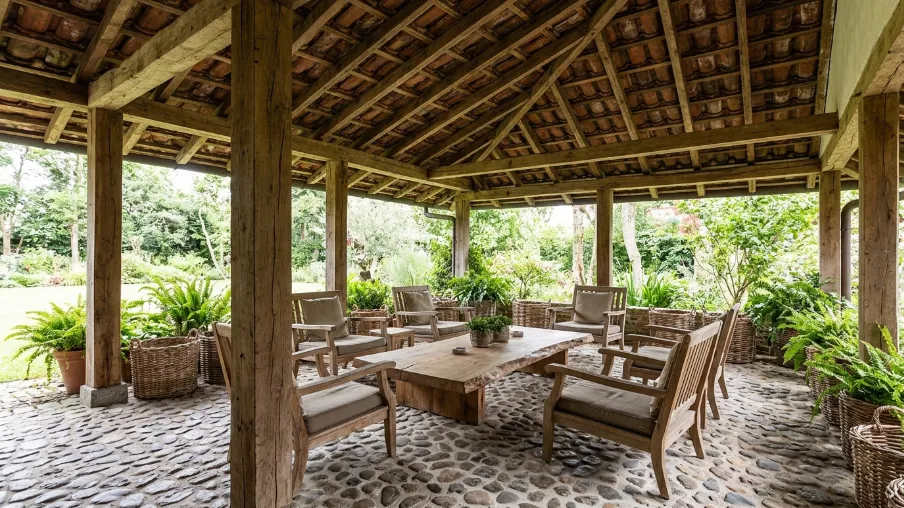
A rustic covered patio design uses natural materials throughout to create a warm, organic outdoor space that feels connected to the landscape rather than imposed upon it. Rough-sawn timber posts and beams, river stone or brick flooring, a corrugated or clay tile roof, and weathered wood furniture create the material language of a rustic covered outdoor room.
Natural materials suit most landscape settings but work particularly well in properties with established trees, garden beds, or rural surroundings where a heavily manufactured aesthetic would create a jarring visual disconnect. The natural textures and tones of timber, stone, and terracotta read as belonging in the outdoor context in a way that powder-coated metal and polished concrete sometimes do not.
Maintain natural timber elements annually with a quality outdoor oil or sealant to prevent weathering, checking and replacing any structural posts or beams that develop significant moisture damage before they compromise the structural integrity of the covered patio.
10. Modern Covered Patio with Polished Concrete Floor
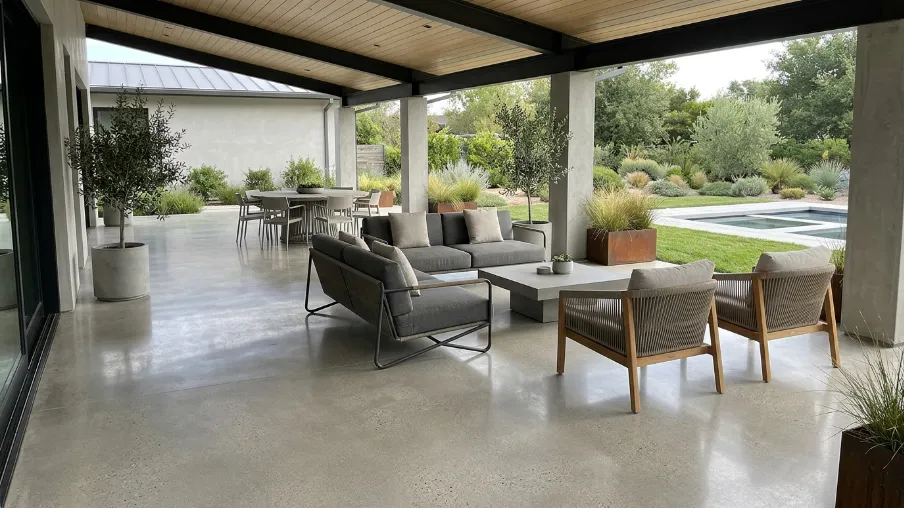
Polished or sealed concrete is one of the most practical and visually current flooring choices for a covered patio design because it is completely weather-resistant, requires minimal maintenance, and suits modern and contemporary home exteriors with equal ease. A large-format concrete slab finished with a penetrating sealer creates a smooth, reflective surface that amplifies the light quality within the covered space.
Concrete floors suit covered patios particularly well because the constant presence of outdoor furniture, foot traffic, and exposure to soil and moisture that would damage other flooring materials simply does not affect a properly sealed concrete surface. Paired with modern furniture in clean lines and neutral tones, polished concrete under a flat or sloped covered roof creates a cohesive, magazine-quality outdoor space.
11. Covered Patio as an Outdoor Entertainment Space
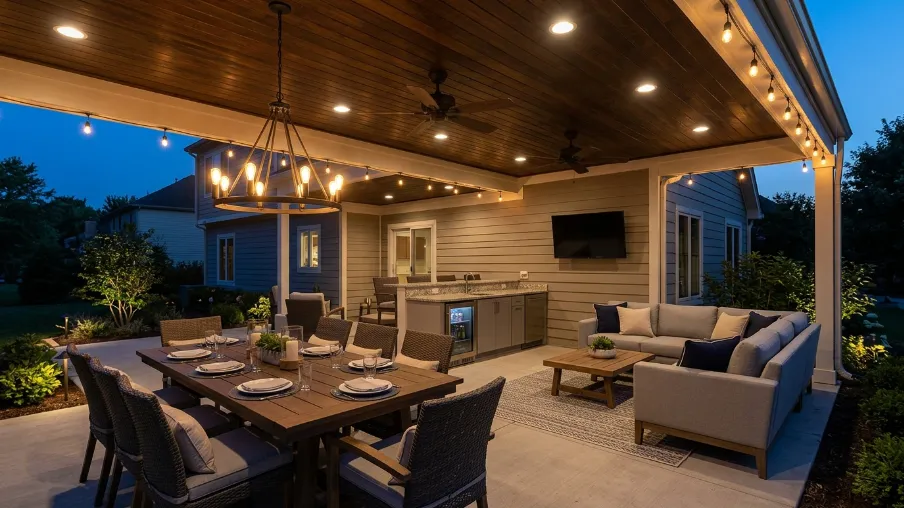
Designing a covered patio specifically as an entertainment space requires planning the layout around the activities it will need to support: dining, socializing, cooking, and potentially outdoor media viewing.
An outdoor entertainment space covered patio design typically allocates distinct zones within the covered area for each activity. A dining zone with a weather-resistant table and chairs for six to eight people, a lounge zone with a sofa and coffee table for relaxed conversation, and a preparation or bar zone with counter space and a small refrigerator create three functional areas within a single covered structure.
Good outdoor lighting design is essential for an entertainment-focused covered patio. Overhead pendant lights or a chandelier-style fixture over the dining table, recessed lighting in the ceiling for general illumination, and subtle landscape lighting at the perimeter of the structure create the layered lighting quality that makes the space feel genuinely welcoming after dark.
12. Covered Patio with Polycarbonate Roof
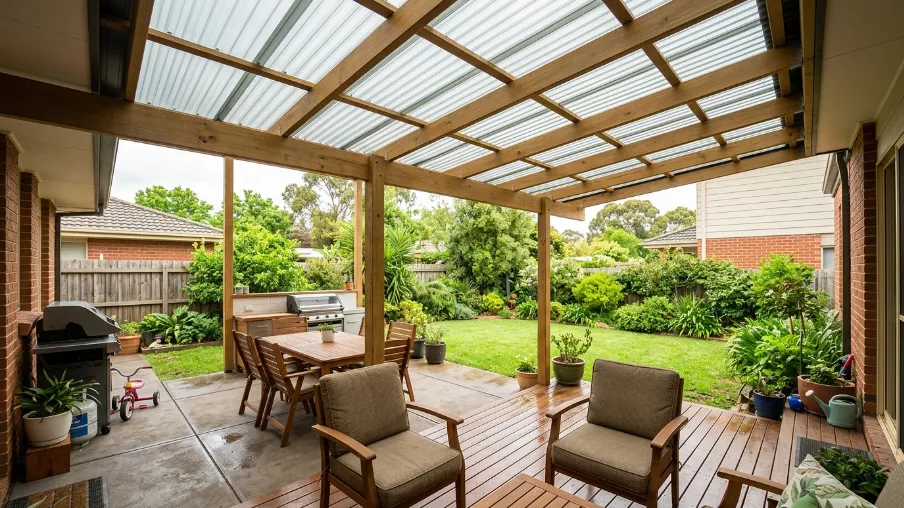
A polycarbonate roof panel system is the most budget-friendly option for achieving complete rain protection on a covered patio while still allowing natural light to filter through the roof surface. Twin-wall or multi-wall polycarbonate panels transmit diffused light through their translucent surface, which creates a bright, well-lit covered space that does not have the dark, cave-like quality that solid timber or metal roofing can produce in areas with limited sun exposure.
Polycarbonate roofing suits practical, family-focused covered patio designs where weather protection and natural light are the primary functional priorities rather than aesthetic refinement. It works particularly well over covered patio extensions in temperate climates where rain is frequent but sun is valuable enough to preserve wherever possible.
13. Covered Patio with Decorative Lighting
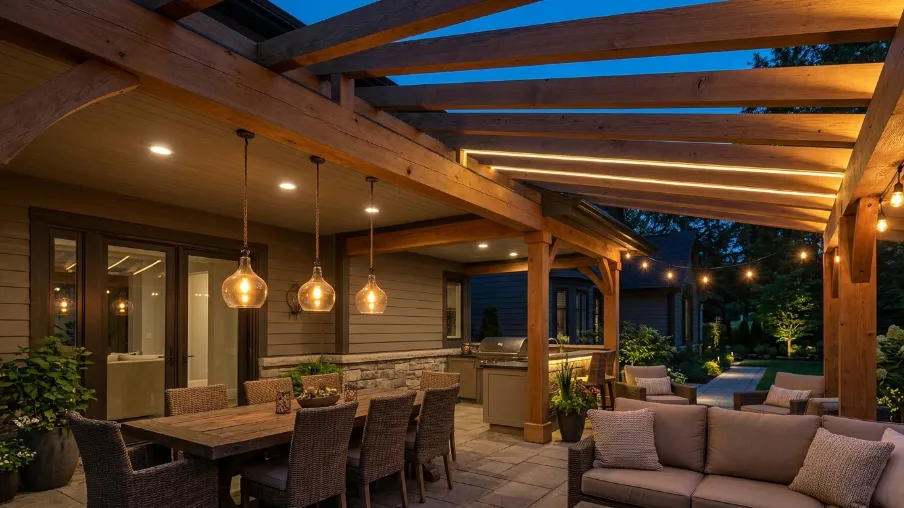
Decorative lighting within a covered patio design does more work than functional illumination alone. The choice of light fixtures, their placement, and the warmth of the bulb temperature all contribute to the overall atmosphere of the space in ways that furniture and decor cannot replicate.
Pendant lights hung at varying heights from a timber pergola beam create an intimate, restaurant-quality atmosphere beneath an open or covered structure. Recessed LED downlights installed in a solid roof panel system provide even, practical task lighting for dining and cooking areas. Strip lighting installed along the underside of beams or rafters creates a subtle, architectural glow that defines the structure without overwhelming the space.
All lighting installed in a covered patio must be rated for damp or wet locations depending on the level of weather exposure the specific installation position receives. Indoor-rated fixtures used in outdoor settings deteriorate quickly and create genuine safety risks.
14. Covered Backyard Patio with Garden Integration
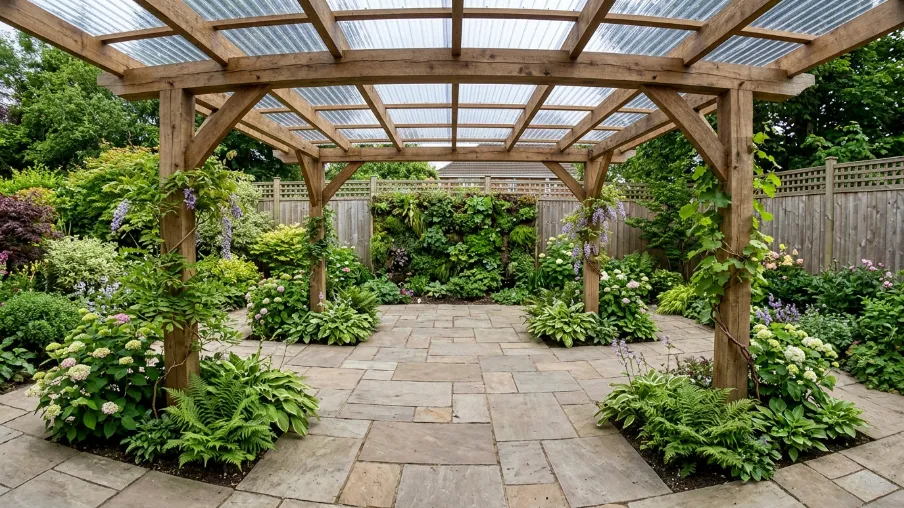
The most visually harmonious covered patios are those where the boundary between the built structure and the surrounding garden is deliberately blurred through thoughtful landscape integration. Planting beds running along the base of pergola posts, climbing plants trained up support columns, a living garden wall on the boundary fence visible from the covered seating area, and potted specimens placed within the covered space itself all contribute to a covered patio that feels like it belongs within the garden rather than sitting on top of it.
Garden integration requires some forward planning because structural plantings like climbing vines and trained shrubs take time to establish. Plant these elements immediately after the covered patio structure is complete so they are well-established and visually contributing to the overall design within two to three seasons.
15. Covered Patio with Outdoor Lounge Setting
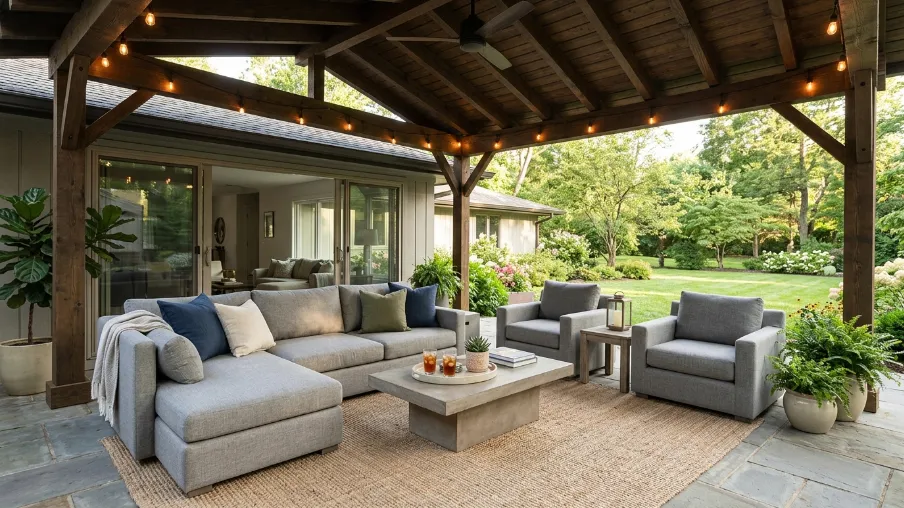
A covered patio designed specifically as an outdoor lounge prioritizes deep, comfortable seating and a relaxed, residential atmosphere over the practicality of dining or cooking functions. A modular outdoor sofa in a weather-resistant fabric, a low outdoor coffee table in concrete or stone, and two or three accompanying armchairs create a lounge zone beneath a covered roof that functions with the comfort and character of an indoor living room.
The covered roof structure is essential to making an outdoor lounge work in practice because it protects the upholstered furniture from rain and UV exposure that would otherwise require constant covering, storage, and maintenance of the soft furnishings. Under a covered roof, outdoor-rated upholstered lounge furniture can be left in place year-round in most climates with only routine seasonal cleaning required.
16. Covered Patio Extension with Glass Walls
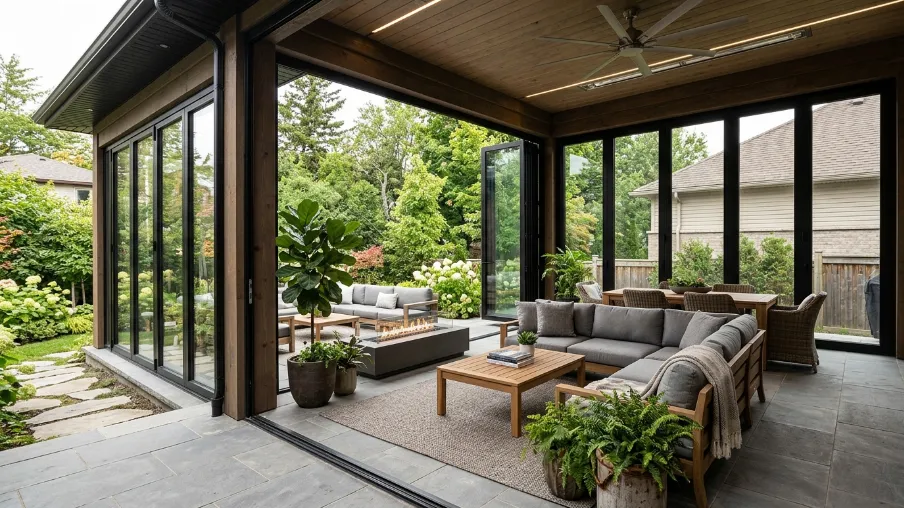
A covered patio design that incorporates retractable or fixed glass wall panels on one or two sides creates a transitional space that sits between a fully open outdoor room and an enclosed glass extension. The glass panels provide significant wind and rain protection while maintaining the visual and physical connection to the garden that makes the outdoor space feel different from an interior room.
This is one of the most sophisticated and investment-intensive covered patio designs on this list, but it delivers a genuinely year-round outdoor room that extends the usable living area of the home across most of the calendar year regardless of weather. Bi-fold or sliding glass door systems allow the walls to be fully opened during good weather and fully closed during cold or wet periods.
you may also like this: 18 Boho Patio Decor Ideas for a Cozy and Stylish Space Now
17. Covered Patio with Shade Sail Accents
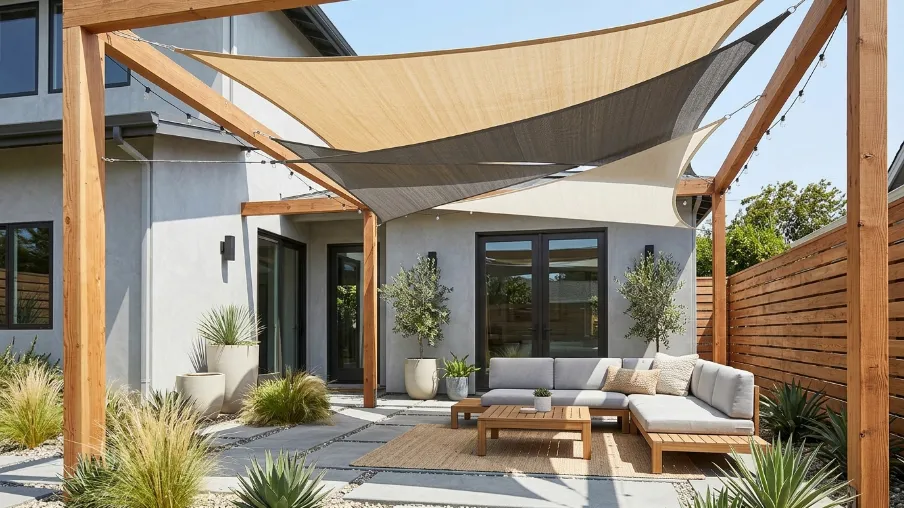
Shade sails are the most affordable and visually lightweight patio shade solution available, and used within or alongside a partial pergola structure, they create a layered, contemporary outdoor design that suits casual and modern backyards particularly well.
A triangular or rectangular shade sail in a UV-resistant fabric stretched between pergola posts or fixed points on the house exterior and fence creates dappled, directional shade that moves slightly in the breeze and creates a sense of lightness that solid roof structures cannot replicate. Multiple overlapping shade sails at slightly different heights and angles create an especially interesting ceiling plane that suits contemporary and Mediterranean-inspired covered patio aesthetics.
Shade sails are not waterproof in most cases and suit dry climates or areas where rain protection is a secondary concern. For climates where rain is frequent, shade sails work best as supplementary shade elements within a partially covered patio rather than as the sole roof structure.
Covered Patio Design Mistakes to Avoid
Building too small for the intended use is the most common covered patio design mistake. A covered patio that barely fits the furniture needed for its purpose feels cramped and does not get used as a result. Always plan the covered area based on the furniture layout you intend rather than the minimum footprint you could get away with.
Underestimating the importance of drainage is a practical oversight with consequences that become apparent only after the first significant rain. The patio floor must slope very slightly away from the house to prevent water pooling under the covered structure. Plan this during construction rather than attempting to correct it afterward.
Choosing furniture before finalizing the roof height creates proportion problems that are difficult to resolve. Confirm the ceiling height of the covered structure before purchasing any furniture, since a low ceiling with tall furniture creates a visually compressed and physically uncomfortable covered space.
Conclusion
A well-designed covered patio genuinely changes how much you use your outdoor space and how much you enjoy spending time at home. The structure creates weather independence that an open patio cannot provide, and the design decisions made within that structure determine whether the space feels like a genuine outdoor room or simply a functional utility extension of the house.
The 17 ideas in this guide cover the full range of covered patio design directions from a simple pergola with string lights to a fully equipped outdoor entertainment space with a kitchen, lounge, and integrated lighting. Choose the direction that suits your home’s architecture, your backyard’s dimensions, and how you realistically want to use the space, and build from there. The result will be an outdoor area that earns its place as one of the most used and most valued parts of your home.
Frequently Asked Questions
Q1. What is the most affordable covered patio option?
A basic timber pergola with shade sails or a polycarbonate roof panel system represents the most budget-friendly path to a covered outdoor space. Both options can be installed by competent DIY homeowners, further reducing cost compared to professionally built solid roof structures.
Q2. Do I need a permit to build a covered patio?
Permit requirements vary significantly by location and by the size and type of structure being built. Most jurisdictions require permits for permanent covered structures above a certain square footage threshold, particularly for solid roof additions. Always check local building codes before beginning any covered patio project.
Q3. What is the best roof material for a covered patio?
The best material depends on your priorities. Solid timber or metal roofing provides complete weather protection and suits most aesthetics. Polycarbonate panels provide weather protection while allowing natural light through. Louvered aluminum systems provide the most flexibility. Pergola beams with no infill provide shade without rain protection.
Q4. How do I choose the right furniture for a covered patio?
Choose furniture proportional to the covered floor area, leaving enough clearance around each piece for comfortable movement. Select materials specifically rated for outdoor use, including weather-resistant fabrics, powder-coated metals, and treated timber. Confirm all furniture fits comfortably within the covered area before purchasing.
Q5. Can a covered patio add value to my home?
A well-built covered patio is one of the home improvements most consistently associated with increased resale value because it adds functional living area, improves the home’s outdoor appeal, and suits the buyer preference for usable outdoor spaces that has strengthened significantly in recent years.