18 Indoor Pond Ideas to Create a Peaceful Home Retreat
There is something deeply calming about the sound of water. It slows you down. It quiets the noise. And while most people associate that feeling with a backyard garden or a weekend trip somewhere peaceful, you do not actually need to leave your home to get it.
An indoor pond brings that same calm energy right into your living space. Whether you live in a compact apartment or a larger house, there are indoor pond ideas that can work for your situation, your budget, and your style. From a simple tabletop water garden to a built-in floor pond with koi, the options range from beginner-friendly to truly impressive.
This guide walks you through 18 creative indoor pond ideas, along with practical advice on plants, filtration, lighting, and maintenance. By the end, you will have a clear picture of what is possible and how to get started.
Why Add an Indoor Pond to Your Home?
Before jumping into the ideas, it helps to understand why so many homeowners are choosing to bring water indoors. The benefits go well beyond aesthetics.
The gentle movement of water has a real calming effect. Studies show that water sounds reduce stress and lower anxiety. An indoor pond essentially turns your living room or entryway into a natural retreat.
Beyond relaxation, aquatic plants help filter indoor air. They absorb carbon dioxide and release oxygen, so a well-planted indoor water garden can quietly improve the air quality of the room it sits in.
From a design standpoint, a decorative indoor pond becomes an immediate focal point. Guests notice it. It adds texture, movement, and natural beauty that no painting or piece of furniture can replicate.
18 Indoor Pond Ideas Worth Trying
1. Simple Tabletop Pond
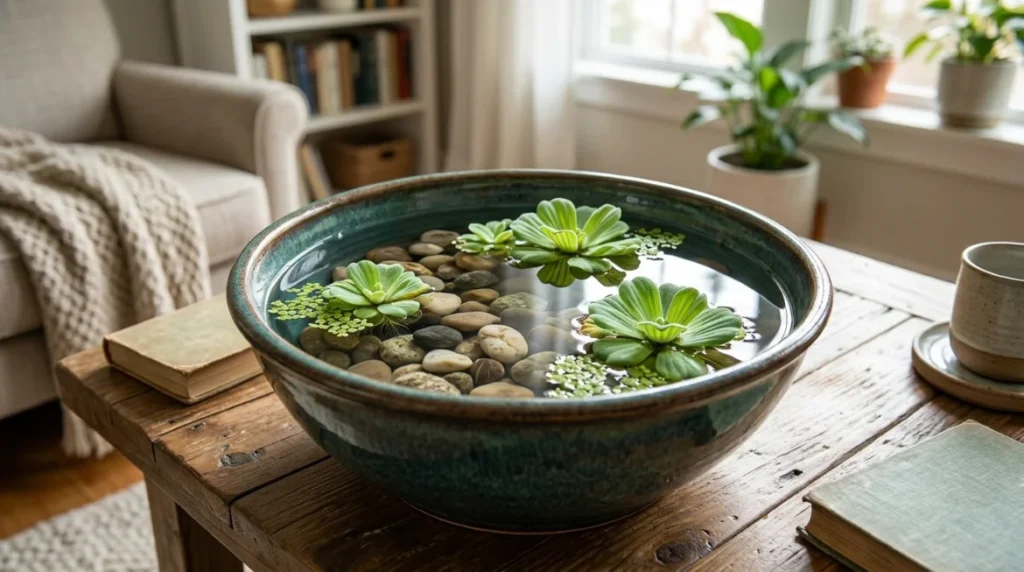
This is the easiest starting point for anyone new to indoor water features. A wide ceramic bowl, a glass container, or even a large decorative pot can become a small indoor pond. Fill it with water, add a handful of smooth pebbles, drop in a few floating plants like water lettuce or duckweed, and place it on a coffee table or shelf.
No pump is required for the smallest versions. For a little movement, a tiny submersible fountain pump costing around $15 to $30 works perfectly. This is a true mini indoor pond that anyone can set up in under an hour.
2. Raised Wooden Pond
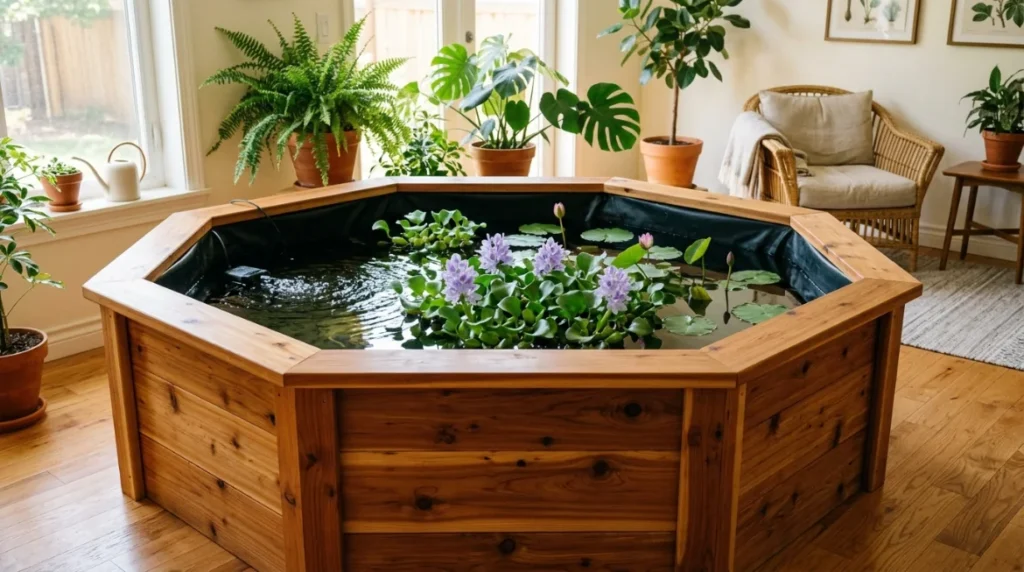
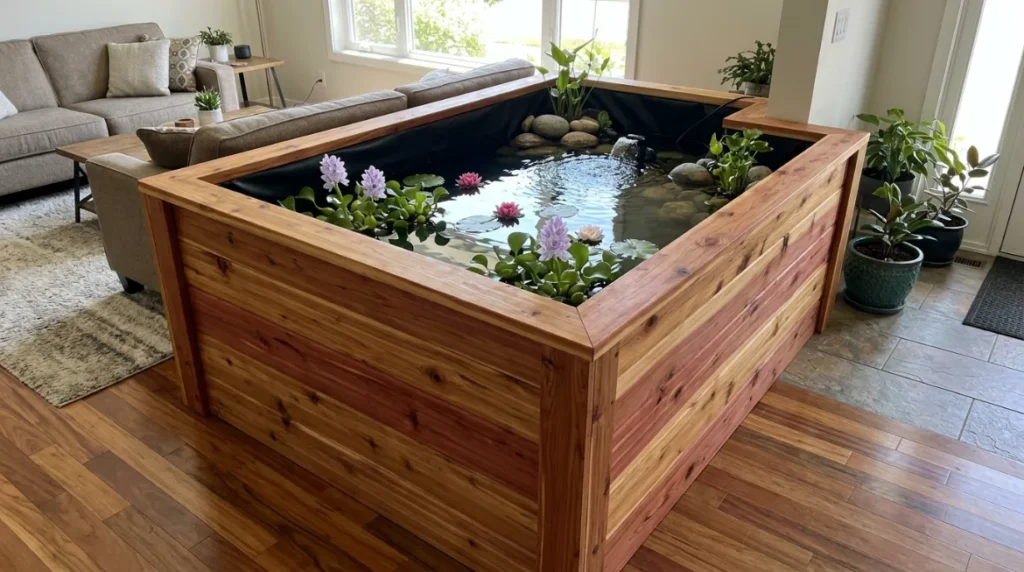
A raised wooden pond sits above floor level, making it both accessible and visually striking. Cedar and redwood are the most popular choices because they resist moisture and last well indoors. This style works beautifully in living rooms, sunrooms, and entryways where it can act as a room divider or a standalone piece.
Line the interior with a flexible pond liner, add a small submersible pump, and plant it with water hyacinths or small lotus varieties. The warm texture of wood against the cool stillness of water creates a contrast that feels both natural and intentional.
3. In-Ground Floor Pond
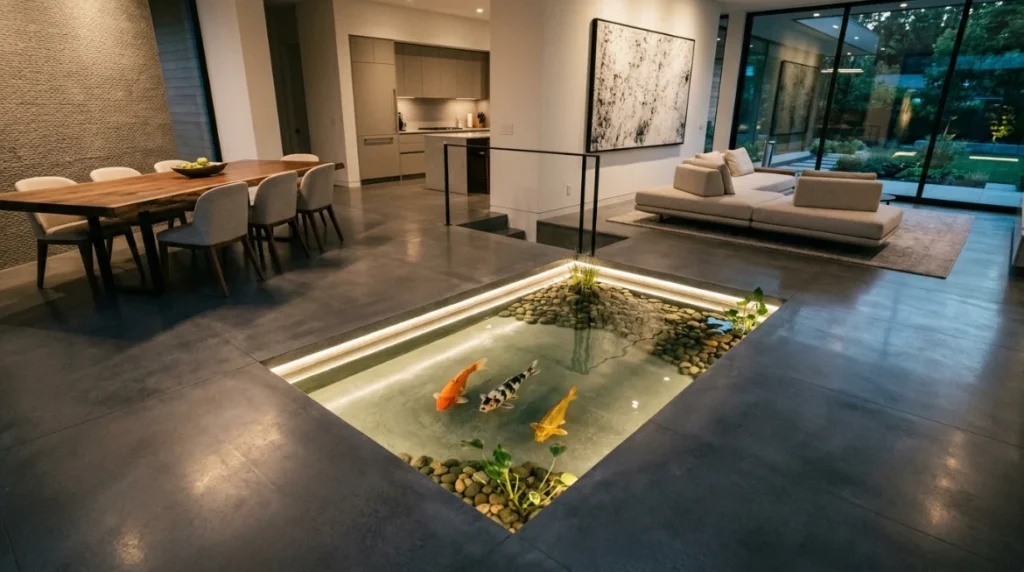
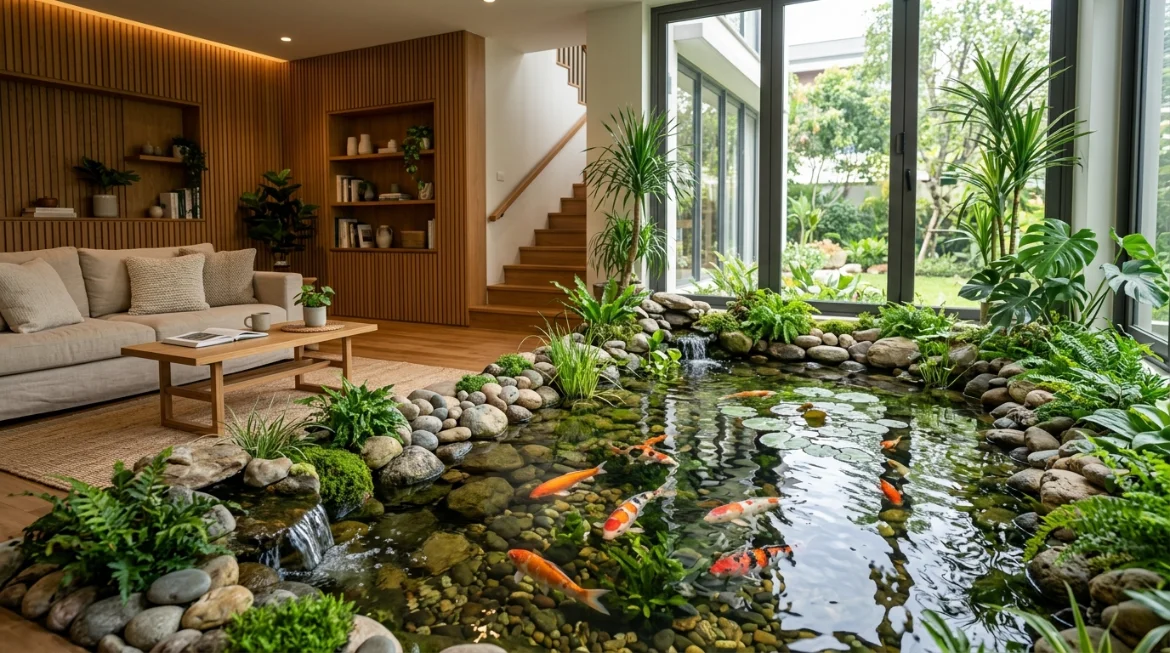
For homeowners willing to do some renovation work, an in-ground floor pond is one of the most dramatic indoor pond ideas available. The pond sits flush with the floor, creating a seamless, modern look that feels like the water is simply part of the room’s architecture.
This style works best in open-plan spaces with tiled or concrete floors. You will need professional installation for waterproofing and structural support, but the result is unlike anything else. Add underwater lighting and a few koi, and the pond becomes the most talked-about feature in your home.
4. Indoor Koi Pond
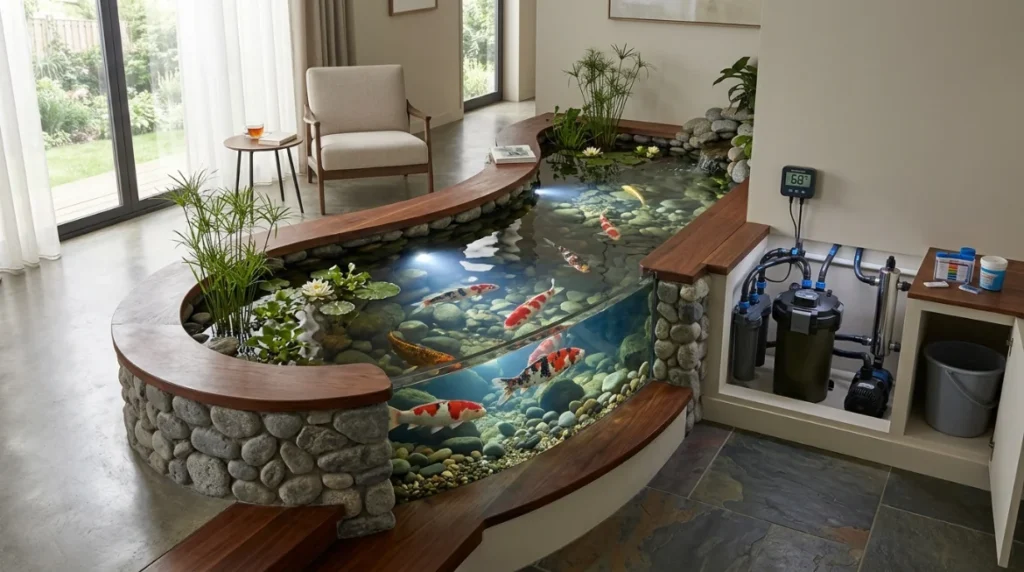
An indoor koi pond is a serious project, but also one of the most rewarding. Koi bring color, movement, and a meditative quality to any room. However, they have specific needs. You will need a minimum water depth of around three feet, a strong filtration system, and stable water temperatures between 59 and 77 degrees Fahrenheit.
The indoor koi pond setup requires a proper indoor pond filtration system with both mechanical and biological filtration. Regular water testing and partial water changes every one to two weeks are part of the routine. If you are serious about keeping koi, budget for both setup and ongoing care.
Indoor Pond Quick-Reference Comparison Table
| Pond Type | Size | Approx. Cost | Maintenance | Best For |
|---|---|---|---|---|
| Tabletop / Container | Very Small | $20 – $100 | Very Low | Beginners, renters, small apartments |
| Raised Wooden Pond | Small – Medium | $200 – $800 | Low – Medium | Living rooms, sunrooms, entryways |
| In-Ground Floor Pond | Medium – Large | $500 – $3,000+ | Medium – High | Open-plan homes, renovations |
| Indoor Koi Pond | Medium – Large | $1,000 – $5,000+ | High | Dedicated spaces, serious hobbyists |
| Wall-Mounted Pond | Small | $300 – $1,200 | Medium | Hallways, accent walls, small rooms |
| Under-Stair Pond | Small – Medium | $400 – $1,500 | Medium | Homes with open staircase areas |
| Zen / Natural Stone Pond | Medium | $600 – $2,500 | Medium | Meditation rooms, Japanese-style interiors |
5. Indoor Pond with Waterfall
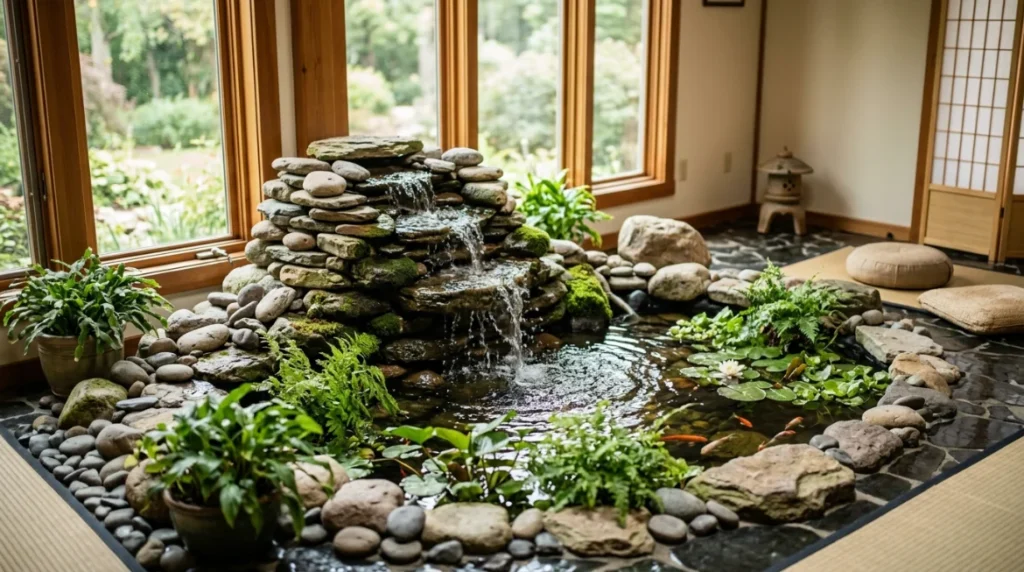
Adding a waterfall to your indoor pond brings both sound and movement. Even a small cascade over flat stones creates that signature water sound that makes a space feel alive. Natural stone indoor pond designs with a built-in waterfall are particularly popular in Japanese-inspired interiors and meditation rooms.
You can build a simple waterfall structure using flat river rocks stacked at different heights, with a submersible pump pushing water up to the top. The water tumbles back down and recirculates. It also helps with aeration, which benefits both fish and plants.
6. Zen Garden Pond
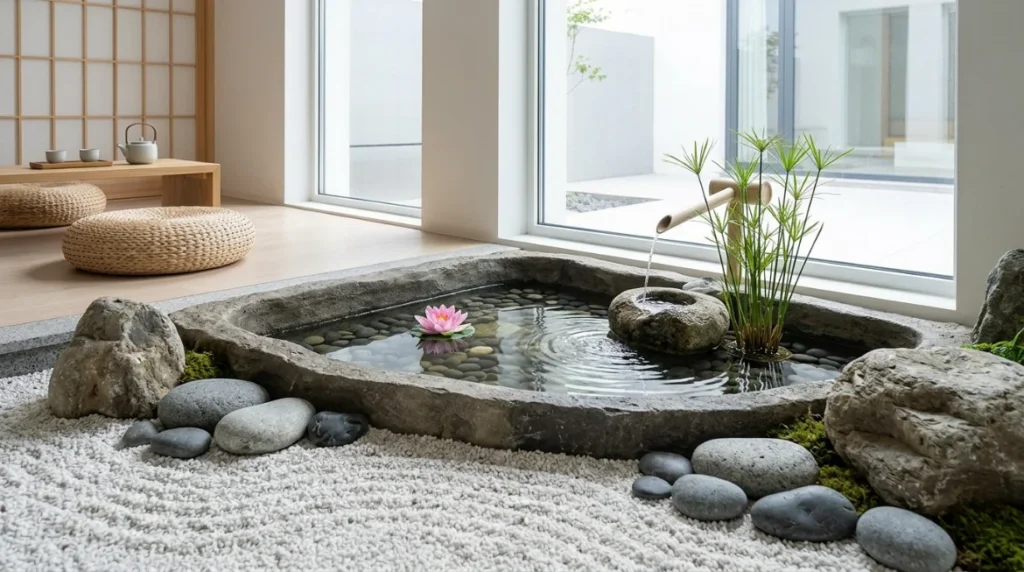
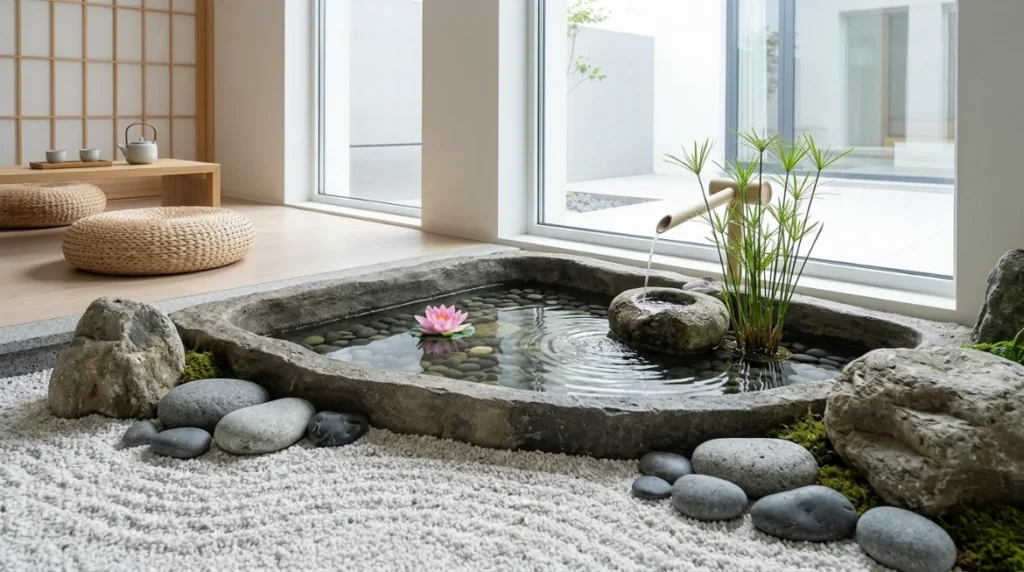
A Zen garden pond combines the stillness of a dry rock garden with the gentle movement of water. Think smooth river stones, bamboo accents, carefully placed boulders, and a small pool of clear water at the center. This indoor pond design suits meditation spaces, reading nooks, and minimal interiors.
Plant choices here tend to be restrained. A single lotus, a clump of papyrus, or a few water irises keep the look clean. The goal is visual calm, not abundance.
7. Under-Stair Pond
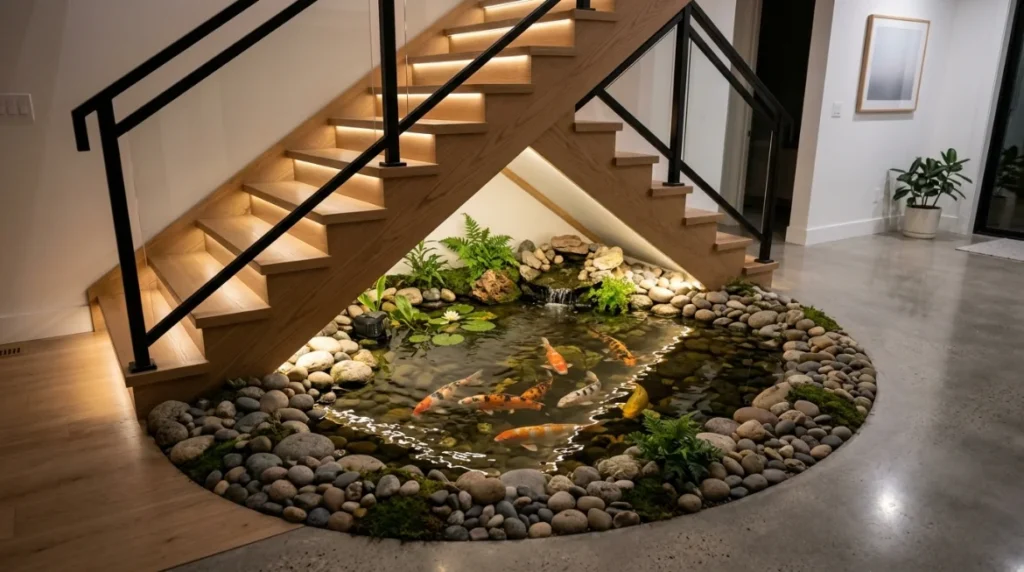
The awkward space under a staircase is one of the most underused areas in a home. Turning it into a small indoor pond is a creative and practical solution. A gently curved pond fitted beneath the stairs, with rounded river stones and a few koi, gives the space purpose and a visual payoff that guests consistently notice.
Keep the surrounding area clutter-free so the pond can breathe. Good indoor pond lighting installed above or around the water adds depth and makes fish visible even in the evening.
8. Wall-Mounted Pond
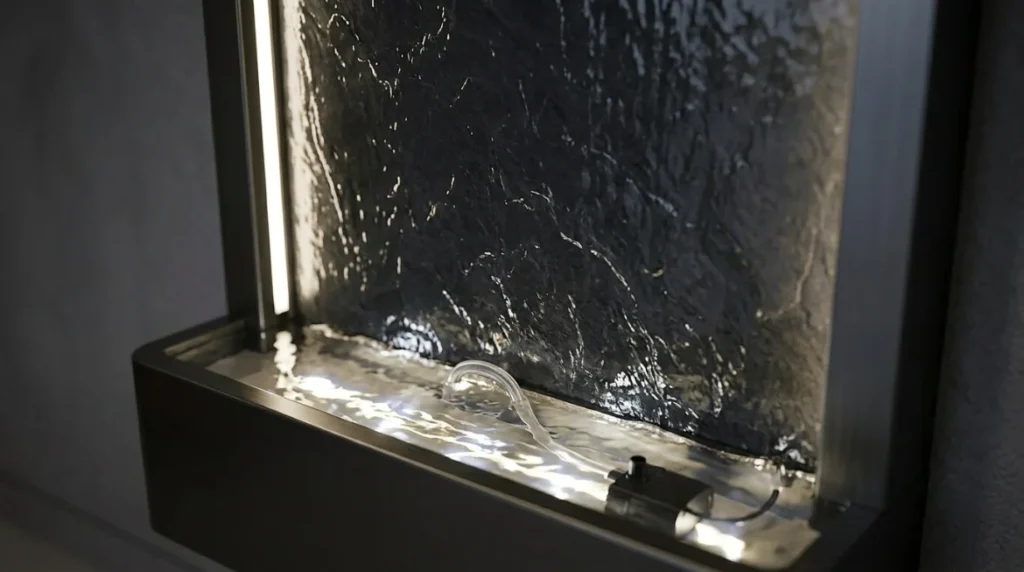
A wall-mounted pond is essentially a vertical water feature. These are often narrow, rectangular panels of water that hang on the wall like living artwork. Water flows down a smooth surface, sometimes over glass or polished stone, and collects in a small reservoir at the bottom before being pumped back up.
This indoor water feature works well in hallways, behind sofas, or as a statement piece in a minimalist dining room. Because it takes up no floor space, it is one of the best indoor pond ideas for small spaces.
9. Aquarium-Style Pond
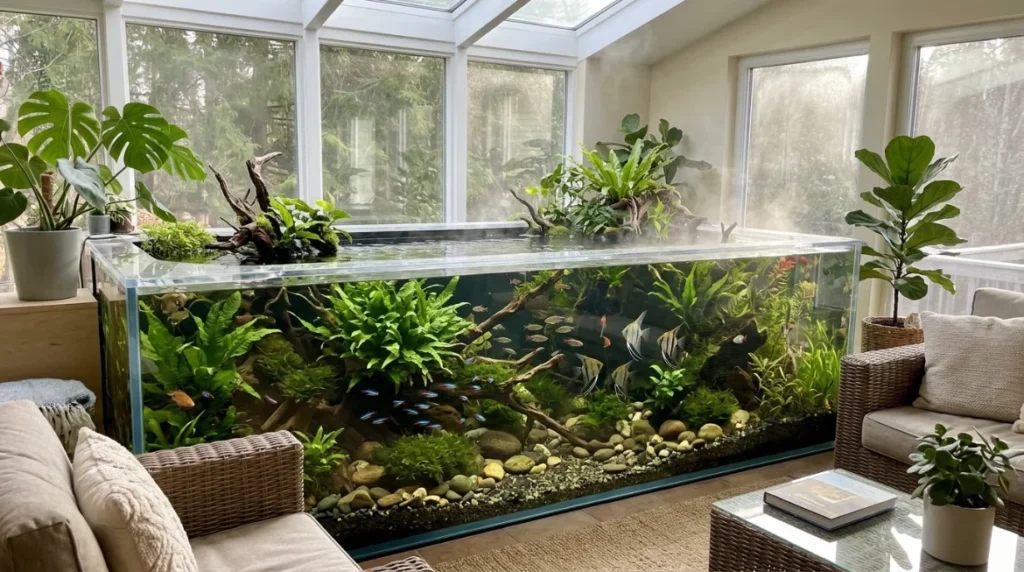
An aquarium pond setup blends the concept of a traditional fish tank with the open, natural feel of a pond. These are often custom-built with glass or acrylic walls, allowing you to see the pond from the side as well as from above. You can create a planted aquascape inside with mosses, ferns, and small tropical fish sharing the space.
This style works well in sunrooms or larger living areas with enough natural light for plants. Stable temperatures between 75 and 82 degrees Fahrenheit suit tropical species like angelfish and tetras.
10. Natural Stone Pond
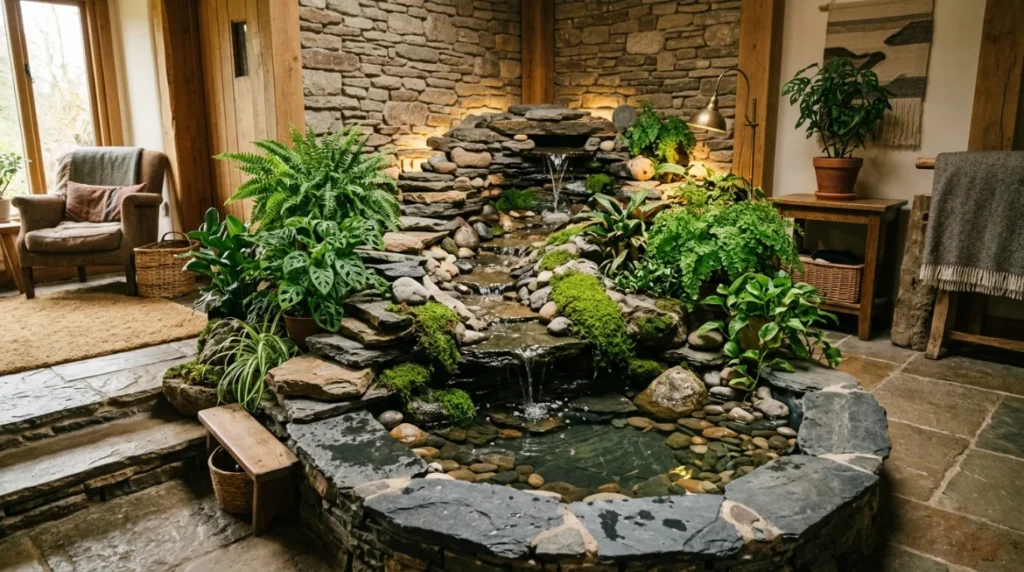
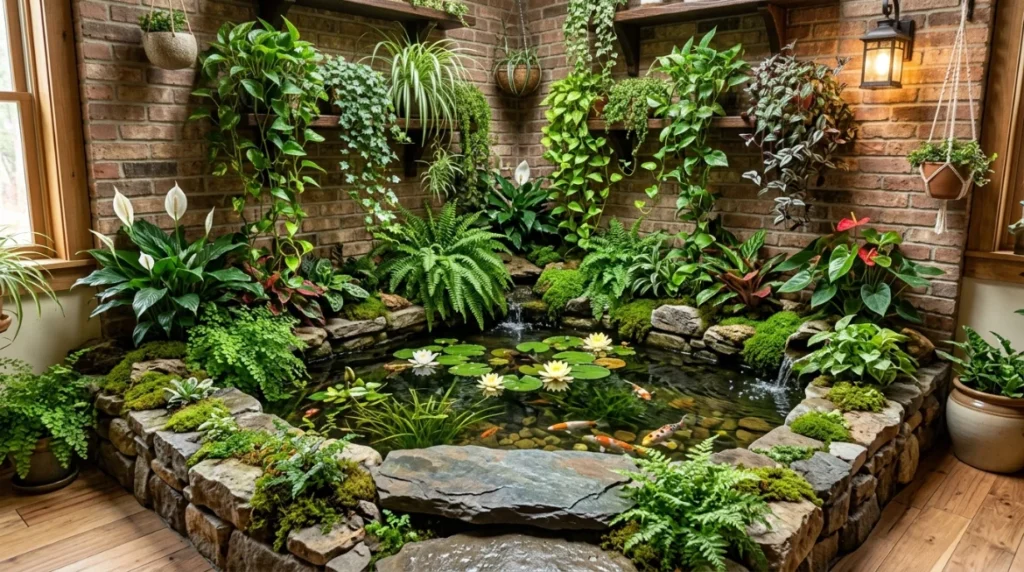
A natural stone indoor pond uses layered rocks, slate, or flagstone to create the impression of a mountain stream captured inside your home. Water trickles between the stones, collecting in a lower basin before recirculating.
This style suits rustic, earthy, or organic interiors. Pair it with houseplants growing around the edges, some trailing moss, and indirect warm lighting to complete the look. It photographs beautifully for Pinterest and social media.
11. Living Room Focal Pond
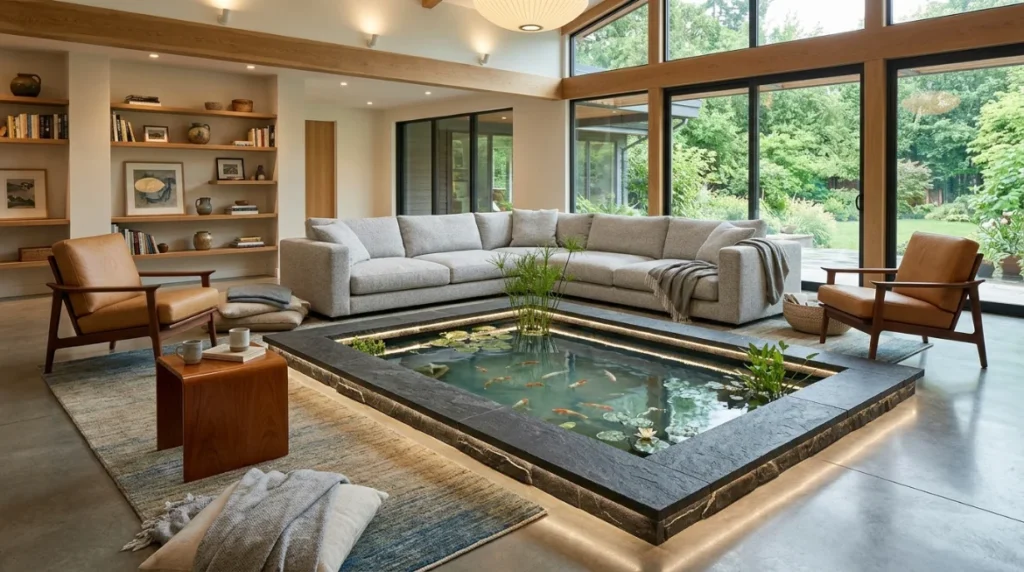
Rather than tucking the pond into a corner, this idea places it front and center in the living room. The pond becomes the room’s anchor, with furniture arranged around it rather than around a coffee table or fireplace. This works in larger living rooms where there is enough floor space to feel generous.
Choose a shape that complements your layout. Rectangular ponds suit modern, structured rooms. Curved or organic shapes work better in relaxed, eclectic spaces.
12. Entryway Pond
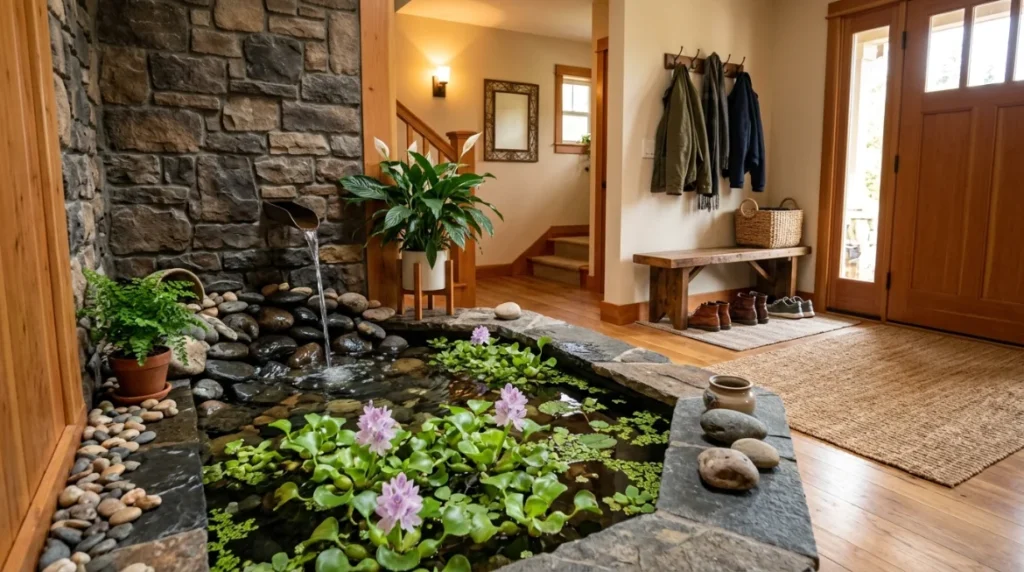
A small indoor pond in the entryway creates an immediate impression. Guests step inside and are greeted by the sound of water, the sight of floating plants or fish, and a sense of calm before they have even taken off their shoes.
Keep this one low-maintenance. A simple recirculating fountain pond with water hyacinths and no fish requires minimal care and looks polished year-round.
13. Bedroom Water Garden
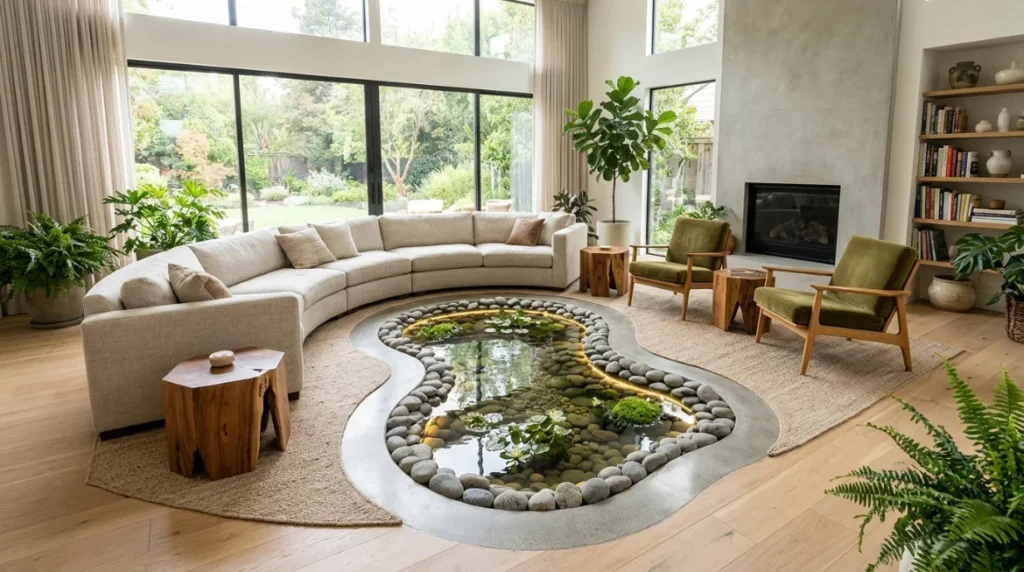
A very small indoor water garden in a bedroom acts as a natural white noise machine while you sleep. The gentle sound of moving water masks background noise and promotes deeper rest. A tabletop version or compact container pond works well here.
Avoid fish in a bedroom pond unless filtration is very efficient. Focus instead on plants like water lettuce, dwarf papyrus, or small water lilies.
14. Courtyard or Sunroom Pond
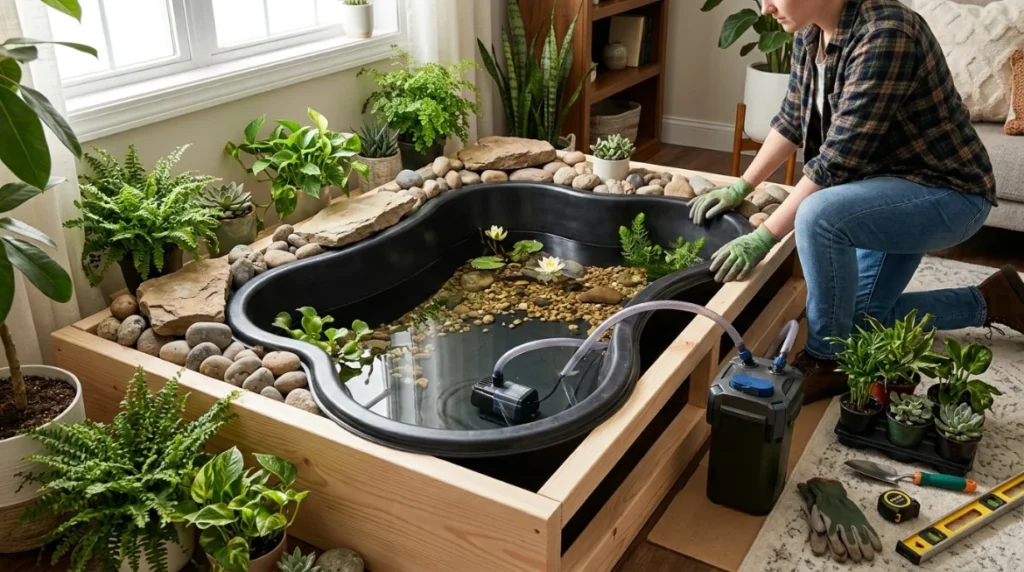
A sunroom gives you access to natural light, which opens up more plant options. Water lilies, lotus, and taro all need good light levels to thrive. A larger pond in a light-filled sunroom can support a full indoor pond ecosystem with fish, snails, floating plants, and submerged plants all working together.
This is the closest you can get to a true outdoor garden pond without going outside.
15. DIY Indoor Pond with Preformed Liner
A preformed pond liner is one of the most beginner-friendly ways to build a DIY indoor pond. These rigid plastic or fiberglass shapes come in various sizes. Place them in a prepared space, connect a pump and filter, add substrate and plants, and you are done.
Surround the liner with decorative stones, potted plants, or wooden framing to make it look custom-built. It is a great first project for anyone wanting to try indoor pond installation without major construction.
16. Eco-Friendly Solar-Powered Pond
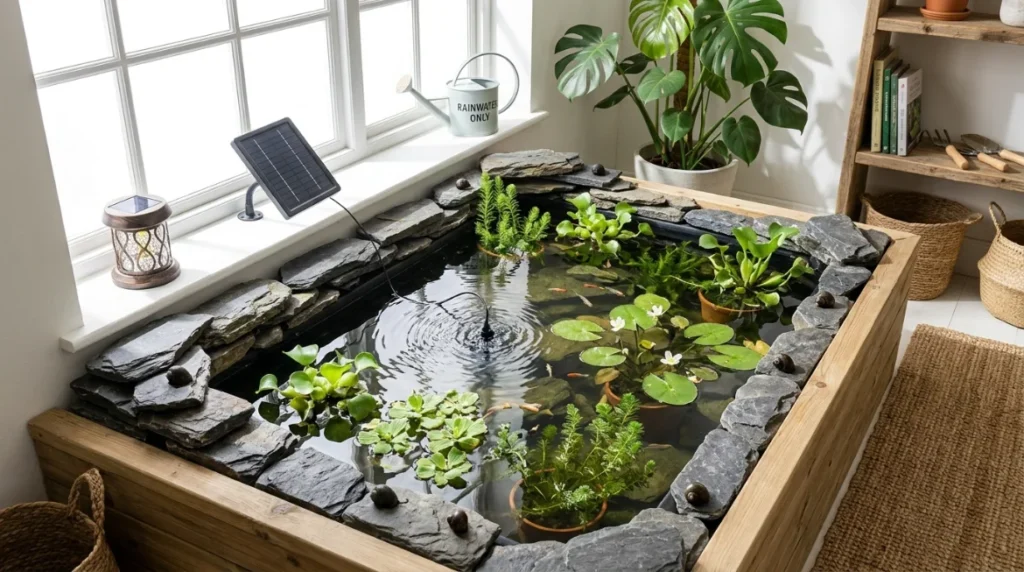
An eco-friendly indoor pond uses solar-powered pumps for water circulation and solar lighting for nighttime illumination. Small solar pumps work well for indoor ponds placed near windows with strong natural light.
This approach reduces electricity costs. Fill the pond with collected rainwater when possible, add native aquatic plants, and skip chemical treatments. A balanced indoor pond ecosystem with snails, plants, and small fish can essentially manage itself with minimal effort.
17. Corner Pond with Landscaping
A corner pond makes excellent use of a dead zone in a room. Build a small pond into a corner and surround it with indoor pond landscaping: ferns, peace lilies, mosses, and trailing plants cascading from shelves or mounted on the wall above.
The combination of water and surrounding greenery creates a layered, immersive look that feels like a private corner of a botanical garden. Add a small stepping stone over the water for extra visual interest.
18. Modern Minimalist Pond
A modern indoor pond strips everything back to essentials. Clean geometric lines, a single species of aquatic plant, dark or white substrate, and no clutter. This design suits contemporary interiors where simplicity is the aesthetic.
A rectangular concrete or resin basin with crystal-clear water, a handful of black pebbles, and one elegant lotus or water iris can look extraordinarily sophisticated. The restraint is the point.
Best Plants for Indoor Ponds
Plants are not just decorative in a pond. They play a real role in water quality, oxygenation, and ecosystem balance.
Floating Plants
Water lettuce, duckweed, and water hyacinth are excellent floating plants for indoor ponds. They absorb excess nutrients from the water, which naturally reduces algae growth. Water hyacinth is particularly good at filtering water and produces beautiful purple flowers.
Submerged Plants
Hornwort and anacharis are classic submerged plants that oxygenate the water and provide shelter for fish. They are easy to maintain and very hard to kill in the right conditions.
Marginal Plants
Papyrus, water iris, and taro grow at the edges of ponds with their roots in water and foliage above the surface. Dwarf papyrus is especially well-suited to indoor ponds because it stays compact and tolerates lower light levels.
Pond Lily
Pygmy water lilies work well in smaller indoor ponds. They need at least four to six hours of bright light daily, making them best suited to sunrooms or ponds near large windows.
Indoor Pond Filtration: What You Actually Need
A good indoor pond filtration system is the backbone of a healthy pond. Without it, water turns green, fish get sick, and the whole setup becomes a problem.
Mechanical filtration removes physical debris like fish waste, uneaten food, and dead plant matter. A basic filter sponge or foam pad handles this job. It needs cleaning every four to six weeks.
Biological filtration uses beneficial bacteria to break down harmful ammonia and nitrites from fish waste. This is handled by filter media like ceramic rings or bio balls inside your filter unit.
For a small indoor fish pond, a combined pump and filter unit costing between $50 and $300 is usually sufficient. Make sure the pump circulates your entire pond volume at least once per hour.
For an indoor koi pond, stronger filtration with UV clarification is essential. Koi produce significantly more waste than smaller fish, and ammonia levels can spike quickly without adequate filtration.
Indoor Pond Lighting Ideas
Good indoor pond lighting transforms the look of the water after dark. Submersible LED lights at the bottom of the pond create a glowing effect that adds depth and movement.
Warm white or soft blue LED colors work best for most interior styles. Avoid harsh bright white, which feels clinical rather than atmospheric. For a Zen or natural stone pond, warm amber lighting feels most appropriate.
Overhead lighting positioned above the pond highlights water movement and makes fish more visible. Track lighting or pendant lights adjusted to point at the water surface work very effectively without any waterproofing.
Indoor Pond Maintenance Tips
Keeping an indoor pond healthy does not have to be complicated. A consistent routine makes all the difference.
- Test your water weekly if you have fish. Monitor ammonia, nitrite, nitrate, and pH. Test kits cost between $10 and $40.
- Change 10 to 20 percent of the water every one to two weeks. Use dechlorinated water or let tap water sit for 24 hours before adding it.
- Clean your filter media every four to six weeks using pond water, not tap water. Tap water kills beneficial bacteria.
- Trim aquatic plants regularly to prevent them from overtaking the pond surface and blocking light.
- Skim surface debris every few days to prevent organic matter from decomposing in the water.
- Check your pump and filter monthly to confirm they are running correctly.
Indoor ponds generally cost less to maintain than outdoor ponds because they are not exposed to weather or falling leaves.
Common Mistakes to Avoid
Overstocking with fish: Too many fish in a small volume of water creates waste faster than your filter can handle. Start with fewer fish than you think you need.
Skipping filtration for fish ponds: Even a small indoor fish pond needs filtration. Without it, ammonia builds up and fish become stressed or die within days.
Placing the pond in full shade: Most aquatic plants need some light. A pond in a completely dark corner will struggle to maintain healthy plant growth.
Ignoring humidity: An indoor pond adds moisture to the air. In a poorly ventilated room, this can encourage mold on nearby walls or furniture. Keep the room well-ventilated.
Choosing the wrong location: Avoid placing a pond directly under air conditioning vents or heaters, as temperature swings stress fish and disrupt plant growth.
How Much Does an Indoor Pond Cost?
Indoor pond costs vary widely depending on size, materials, and whether you hire professional help.
A simple tabletop or container pond can be set up for as little as $20 to $100, including a small pump and a few plants. This is the most accessible entry point for anyone curious about indoor water features.
A small raised wooden pond or preformed liner pond typically costs between $200 and $800 for materials, plus whatever you spend on plants and fish.
A built-in or in-ground indoor pond with professional installation can range from $500 to $3,000 or more. An indoor koi pond with proper filtration and depth can cost between $1,000 and $5,000 or higher for larger setups.
Ongoing maintenance costs are generally low for indoor ponds. A small plant-only setup costs almost nothing beyond occasional water top-ups and plant trimming.
Final Thoughts
An indoor pond is one of the most genuinely transformative things you can add to a home. It changes the atmosphere of a room in a way that furniture and paint simply cannot. The sound of moving water, the sight of fish, the greenery of aquatic plants, and the feeling of a living ecosystem inside your own four walls create something that goes beyond decoration.
The good news is that you do not need a large space or a large budget to start. A simple tabletop water garden gives you a meaningful taste of what indoor pond living feels like before you commit to a larger project.
Start small, learn the basics of indoor pond filtration and plant care, and let the project grow with your confidence. Whether your style is modern minimalist, Zen-inspired, or lush and naturalistic, there is an indoor pond idea in this list that fits your home perfectly.
Frequently Asked Questions
1. What is the easiest indoor pond to start with?
A tabletop or container pond is the simplest starting point. All you need is a wide bowl, water, a few smooth pebbles, and floating plants like water lettuce or duckweed. A small submersible fountain pump adds gentle movement. No construction or professional help is needed.
2. Do indoor ponds need a filtration system?
It depends on whether you have fish. A plant-only indoor water garden can stay healthy without a filter with regular water changes. However, any indoor fish pond, and especially an indoor koi pond, absolutely needs a filtration system to remove waste and maintain safe water chemistry.
3. What are the best plants for an indoor pond?
Good beginner choices include water lettuce, water hyacinth, duckweed, dwarf papyrus, and hornwort. Water hyacinth is particularly effective at filtering water naturally. For a more decorative look, pygmy water lilies and water iris add color and texture. Most indoor pond plants need a few hours of bright or indirect light daily.
4. How much maintenance does an indoor pond require?
A plant-only indoor water garden needs very little care beyond occasional plant trimming and partial water changes every few weeks. A fish pond requires more attention: weekly water testing, bi-weekly water changes, and monthly filter cleaning. An indoor koi pond demands the highest level of care with strong filtration and regular monitoring.
5. Can an indoor pond work in a small apartment?
Absolutely. Some of the best indoor pond ideas for small spaces involve tabletop containers, wall-mounted water features, or compact corner ponds that take up very little floor space. A wall-mounted pond is an excellent option for apartments because it adds a water feature without occupying any usable floor area. Start small and see how it fits your lifestyle before investing in something larger.