

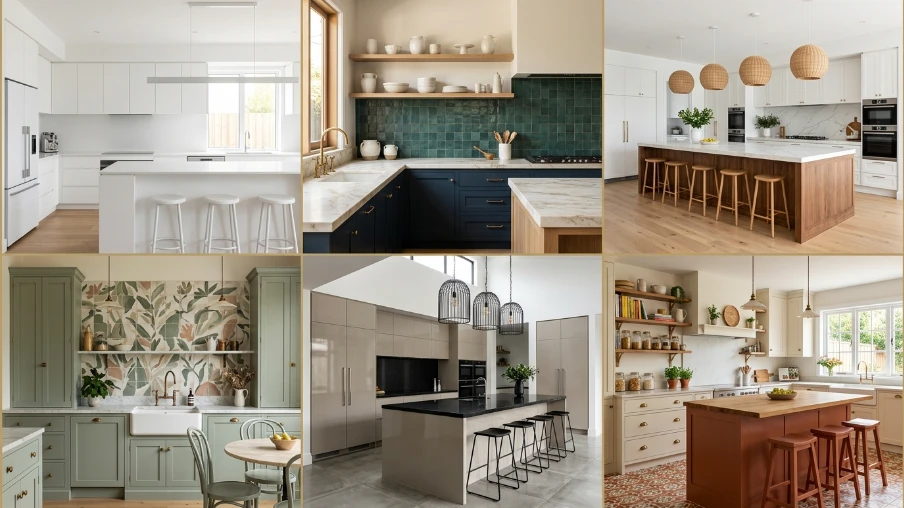
17 Stunning Kitchen Design Ideas to Transform Your Space 2026
The kitchen is the room that most homeowners think about longest when planning a renovation and feel the most strongly about when it finally comes together. It is not just a cooking space. It is where most of the real daily life of a home happens, where people gather on slow Sunday mornings, where children do homework while dinner is being made, where conversations happen that would not have happened anywhere else.
Getting the kitchen design right matters more than almost any other room in the house because the space is used constantly and its quality, or lack of it, is felt every single day rather than occasionally. A kitchen that functions beautifully and looks considered is one of the most genuinely worthwhile investments a homeowner can make.
These 17 kitchen design ideas for 2026 cover every style direction, budget range, and practical concern you might be working with, from a complete luxury kitchen renovation to small but impactful changes that cost very little and make a genuine difference to how the space feels and functions.
1. Minimalist White Kitchen with Handle-Less Cabinets
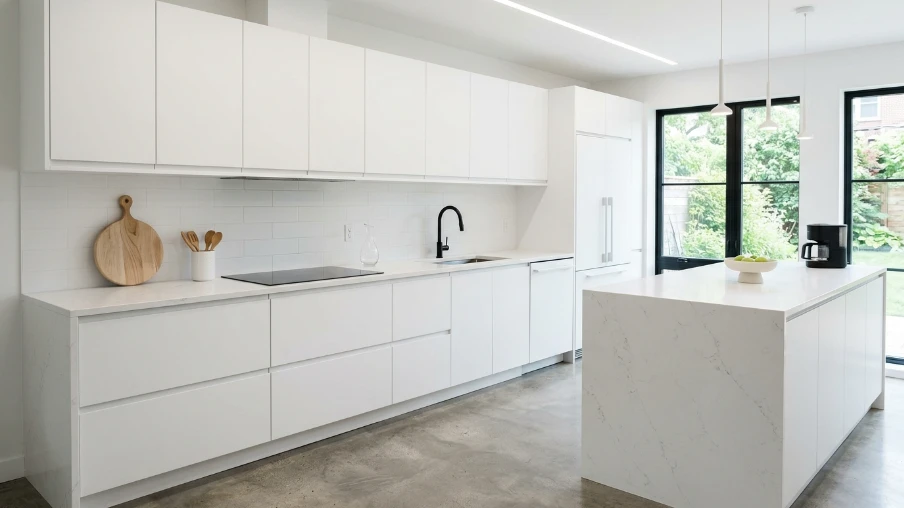
A minimalist white kitchen with flat-front, handle-less cabinet doors is one of the most consistently requested modern kitchen design ideas because it creates a clean, calm cooking space that never feels visually cluttered regardless of what is happening on the counters and in the sink.
Handle-less cabinets use push-to-open mechanisms or routed grip channels along the top or bottom of the door rather than protruding hardware, which creates a completely smooth cabinet face that contributes to the overall sleek, uninterrupted surface quality of the minimalist aesthetic.
The white palette requires some practical consideration. Fingerprints, grease marks, and general daily use marks are more visible on white than on mid-tone or dark cabinetry, which means regular wiping is necessary to maintain the clean appearance that makes a white kitchen worth choosing. Matte white finishes are more forgiving than high gloss in terms of visible marks and fingerprints.
2. Dark Cabinetry Kitchen with Brass Hardware
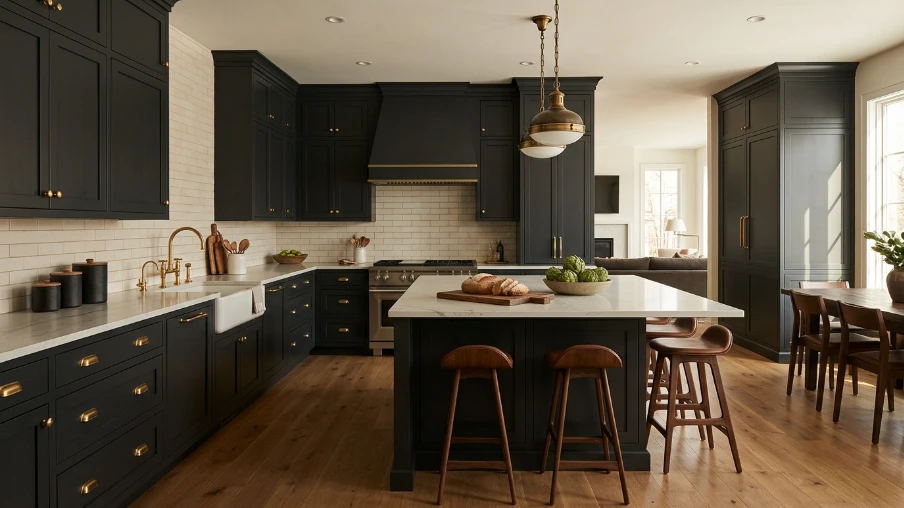
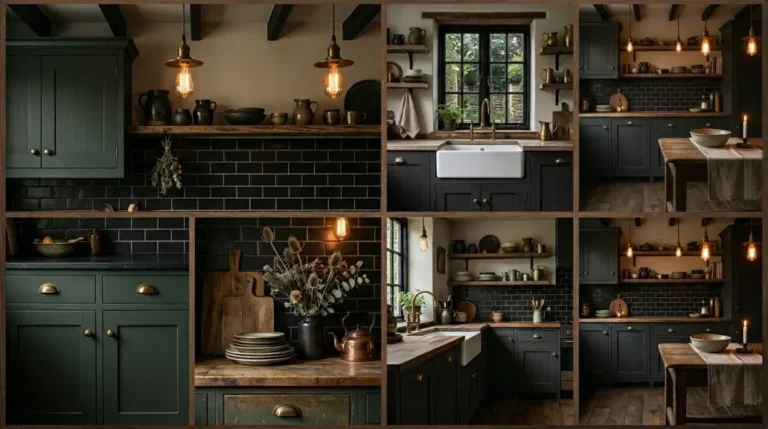
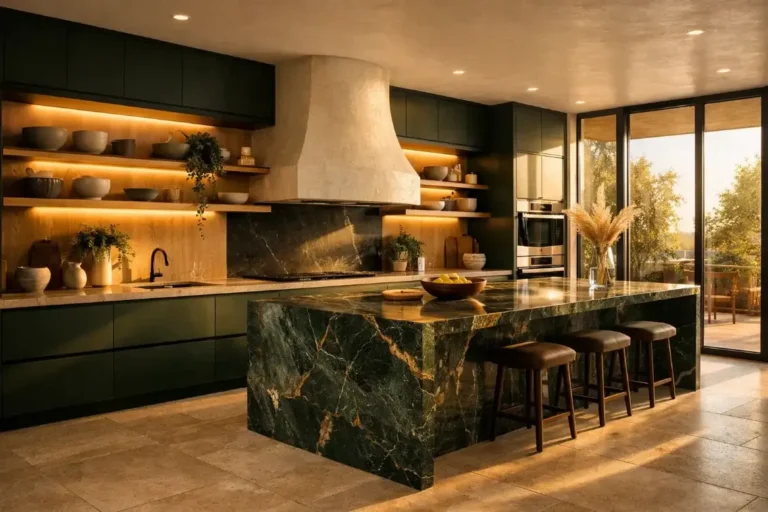
Deep charcoal, navy, forest green, or near-black cabinet finishes paired with warm brass hardware is one of the most impactful and currently relevant kitchen design ideas for homeowners who want a kitchen that feels genuinely sophisticated and visually distinctive rather than safe and neutral.
Dark cabinetry creates a rich, enveloping atmosphere in a kitchen that lighter finishes cannot replicate, and the warmth of brass hardware against the depth of a dark cabinet color creates a material combination with genuine visual luxury. This design approach works particularly well in larger kitchens where the dark color does not visually compress the space, and in open plan settings where the kitchen is viewed from the living area as a coherent design statement.
Pair dark lower cabinets with lighter upper cabinets or open shelving above to prevent the kitchen from feeling entirely enclosed, and install adequate lighting under the upper cabinets to keep the work surface well-lit.
3. Open Concept Kitchen with Island
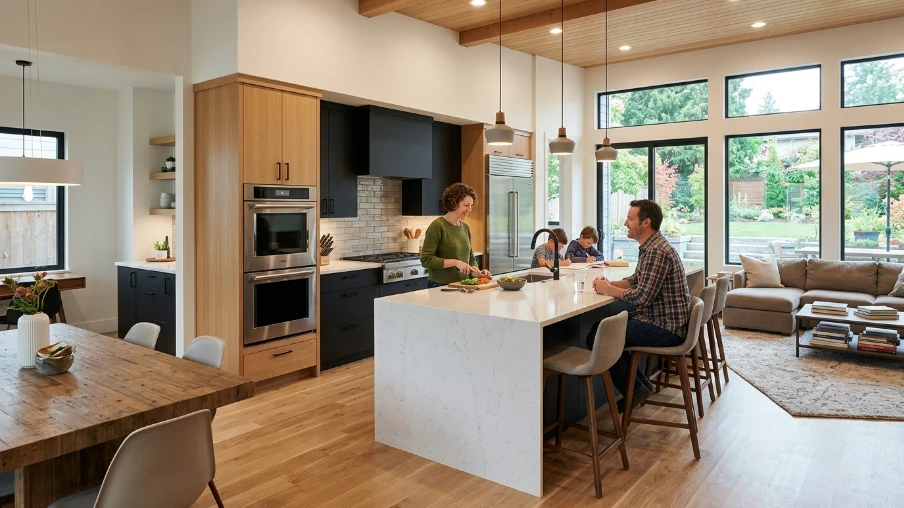
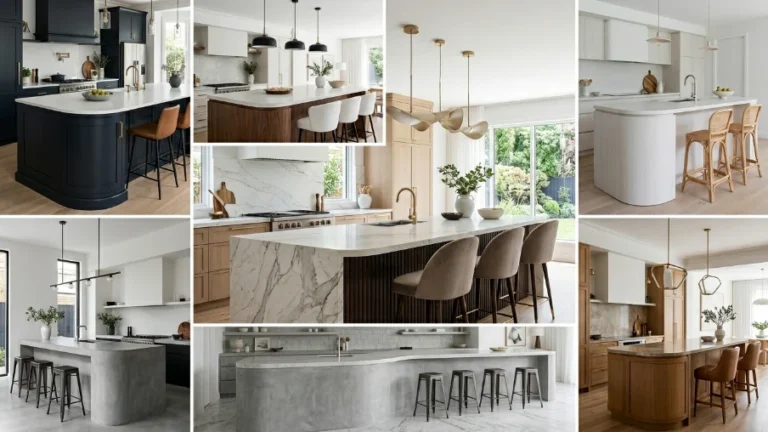
An open concept kitchen that removes the wall between the kitchen and the adjacent living or dining space creates the most socially connected and spatially generous kitchen environment possible. The kitchen island in an open plan setting serves as both a practical work surface and a natural boundary that defines the kitchen zone without the visual closure of a wall.
A well-designed open concept kitchen with an island creates a space where cooking, dining, and living happen simultaneously and comfortably, which suits modern family life and entertaining habits better than the closed kitchen of previous decades.
The island in an open concept kitchen needs to work harder than a standard island because it is visible from multiple angles and serves multiple functions simultaneously. Plan the island to include storage below, a work surface of appropriate size, seating on the living room side, and potentially an integrated sink or hob depending on the plumbing and ventilation possibilities.
4. Farmhouse Kitchen with Shaker Cabinets
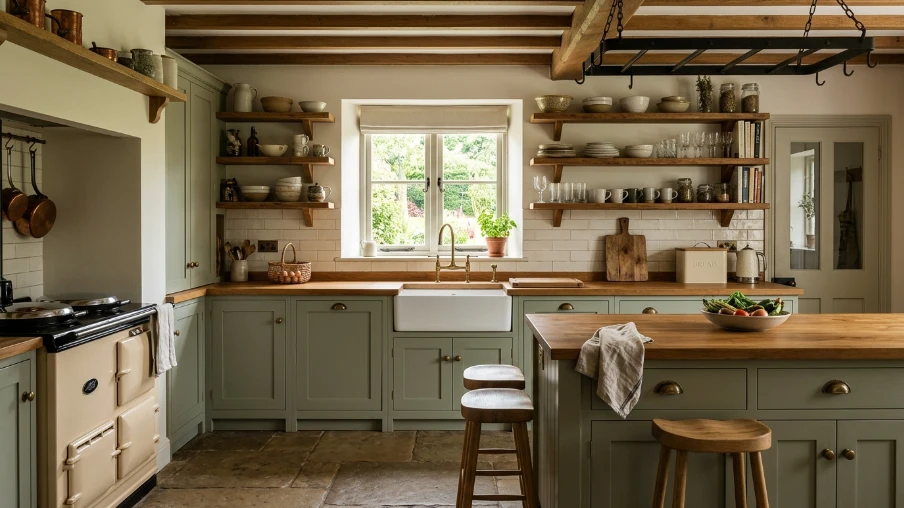
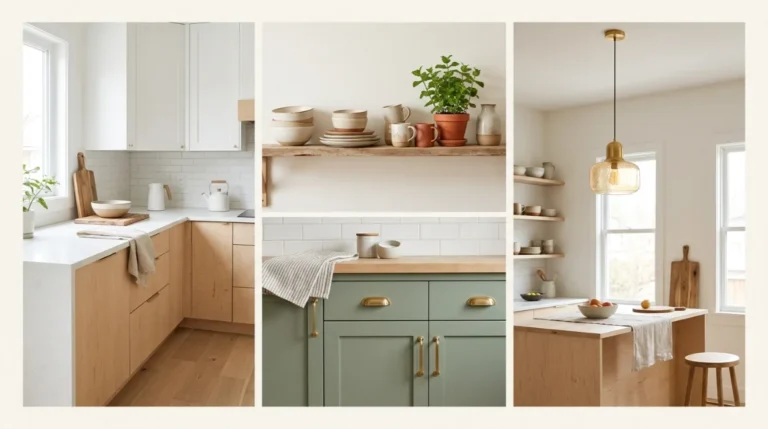
A farmhouse kitchen combining shaker-style cabinets, a butler’s sink, open shelving, and warm natural materials creates a kitchen design that feels genuinely warm, characterful, and resistant to the passing of trends in a way that more fashion-driven kitchen aesthetics do not always achieve.
Shaker cabinets, characterized by their simple recessed panel door design, are the single most popular cabinet style in residential kitchen design and have maintained that position for decades because the clean, modest proportions suit both traditional and contemporary kitchen contexts.
Pair white or cream shaker cabinets with a deep butler’s sink in ceramic or fireclay, open shelving in natural timber above the counter on one wall, and a stone or quartz countertop in a warm cream or grey tone for a complete farmhouse kitchen design that feels both aspirational and genuinely livable.
Quick Reference Table: Kitchen Design Ideas at a Glance
| Design Style | Cabinet Style | Countertop | Key Feature | Best For |
|---|---|---|---|---|
| Minimalist White | Handle-less flat | White quartz | Clean uninterrupted surfaces | Modern apartments |
| Dark Cabinetry | Flat or shaker | Marble or quartz | Brass hardware contrast | Larger homes |
| Farmhouse | Shaker style | Stone or quartz | Butler sink and open shelving | Family homes |
| Open Concept | Any style | Waterfall island | Kitchen island seating | Entertaining homes |
| Scandinavian | Simple flat | Light wood or quartz | Natural wood accents | Minimal modern homes |
| Luxury Contemporary | Custom handleless | Marble slab | Statement lighting | High-end renovations |
| Small Kitchen | Wall mounted | Compact stone | Space-saving solutions | Apartments and studios |
5. Scandinavian Kitchen Design
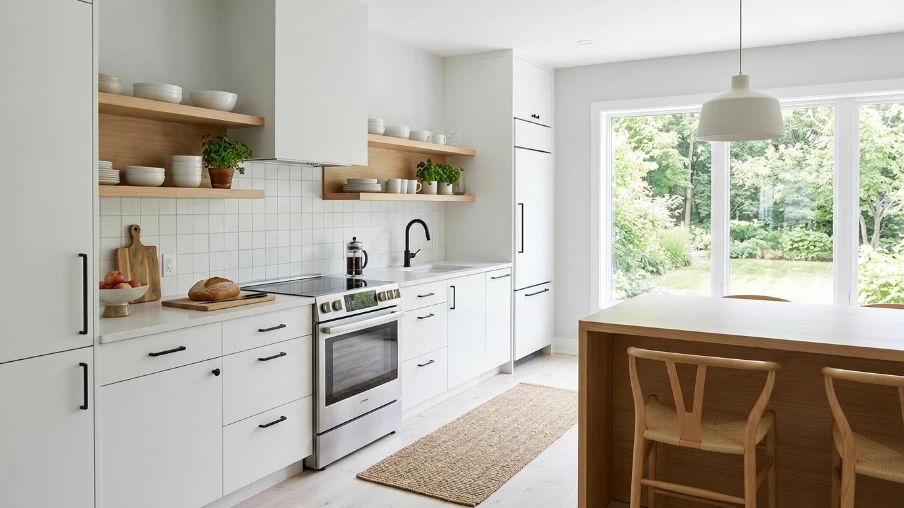
Scandinavian kitchen design applies the same principles of simplicity, natural materials, and functional beauty that define the broader Nordic interior design tradition to the kitchen context. The result is a kitchen that feels both contemporary and warm, clean and characterful, in a combination that few other design aesthetics achieve as naturally.
A Scandinavian kitchen design typically uses white or very light grey flat-front cabinetry, natural light wood accents on open shelving, a countertop in light stone or white quartz, simple matte black hardware, and abundant natural light as the primary atmospheric element.
The kitchen workflow in a Scandinavian design is given as much attention as the aesthetics, with storage systems that keep everything visible and accessible without cluttering the surfaces. Open shelving with deliberately arranged crockery, utensils, and small plants contributes to the organized, curated quality that distinguishes a genuinely Scandinavian kitchen from simply a light-colored one.
6. Luxury Kitchen with Marble Countertops
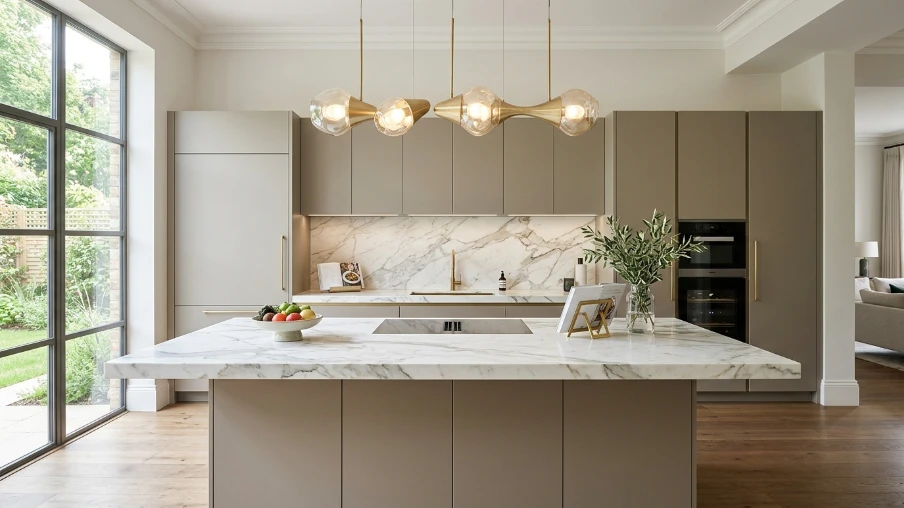
A luxury kitchen design centered on marble countertops represents the highest-investment and highest-visual-impact direction in the kitchen design ideas spectrum. Genuine marble, or a high-quality marble-effect quartz that replicates the visual of natural stone, creates a cooking surface with a depth, variation, and natural beauty that no other material replicates.
For a complete luxury kitchen design in 2026, pair marble or marble-effect countertops with custom handleless cabinetry in a sophisticated neutral, soft white, warm greige, or pale sage, and install a statement pendant lighting arrangement above the kitchen island that draws the eye upward and creates a designed quality at the ceiling level that standard downlighting alone does not achieve.
The practical consideration with natural marble is its porosity and susceptibility to staining from acidic foods, oils, and red wine. Sealing the stone regularly and cleaning spills immediately preserves the surface quality over time, but homeowners who cook intensively may prefer a marble-effect engineered quartz that delivers the same visual result with superior stain resistance.
7. Two-Tone Kitchen Cabinet Design
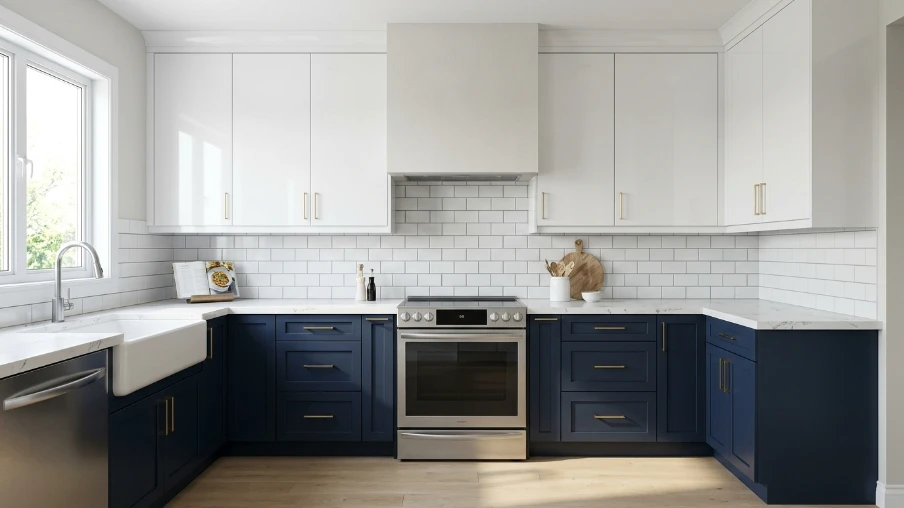
Two-tone cabinetry, where the lower cabinets and the upper cabinets or kitchen island are finished in different but coordinating colors or materials, is one of the most impactful and currently relevant kitchen design ideas because it creates visual depth and interest without requiring a complete departure from the structured, cohesive appearance that most homeowners want from their kitchen.
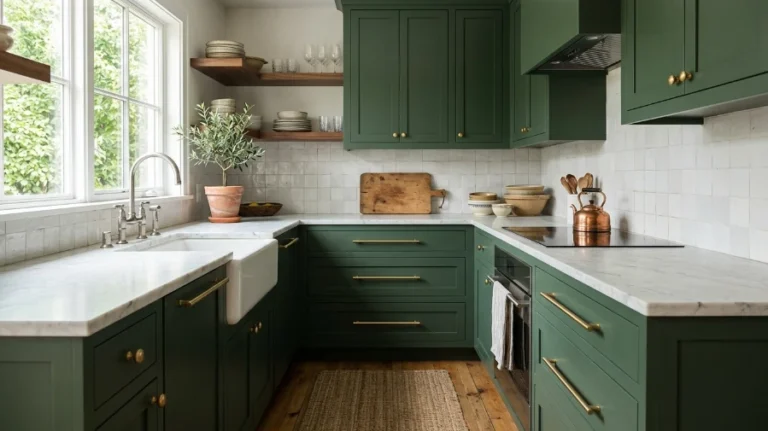
The most requested two-tone combinations in 2026 include navy lower cabinets with white upper cabinets, forest green lower cabinets with cream or natural wood upper shelving, and warm charcoal lower cabinets with light grey upper cabinets. All three combinations create a clear visual distinction between the two zones while maintaining a cohesive color palette that ties the kitchen together.
The island, when present, provides a third opportunity for color variation. A darker island against lighter perimeter cabinetry or a natural wood-toned island against painted cabinetry creates a particularly successful focal point in the kitchen layout.
8. Small Kitchen Design with Smart Storage
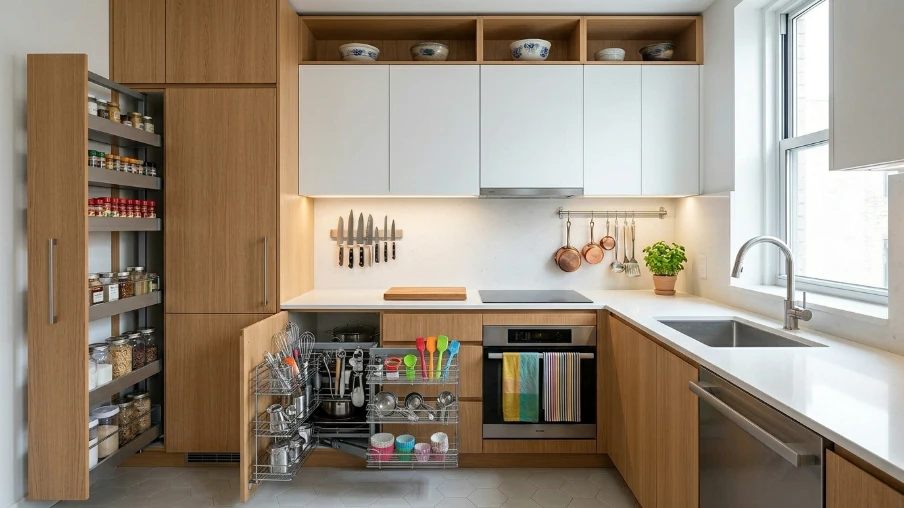
A small kitchen design requires a specific and disciplined approach to storage because every cubic inch of available space needs to earn its place. The most effective small kitchen design ideas in 2026 focus on vertical storage that extends cabinetry all the way to the ceiling, pull-out internal drawer systems that make deep cabinet interiors fully accessible, and integrated appliances that maintain a consistent, uninterrupted cabinet face across the kitchen.
Wall-mounted magnetic knife strips, hanging pot rails, door-mounted spice racks, and pull-out corner cabinet carousels all contribute to a small kitchen storage system that accommodates a full functional kitchen inventory without sacrificing any counter space to freestanding equipment or cluttered surface storage.
Light colors, reflective surfaces, and good lighting work together to make a small kitchen feel more generous than its actual dimensions suggest. A continuous countertop in a light stone, uninterrupted by appliances or storage elements, creates the visual impression of more surface space than a fragmented counter arrangement of the same overall length.
9. Kitchen with Open Shelving
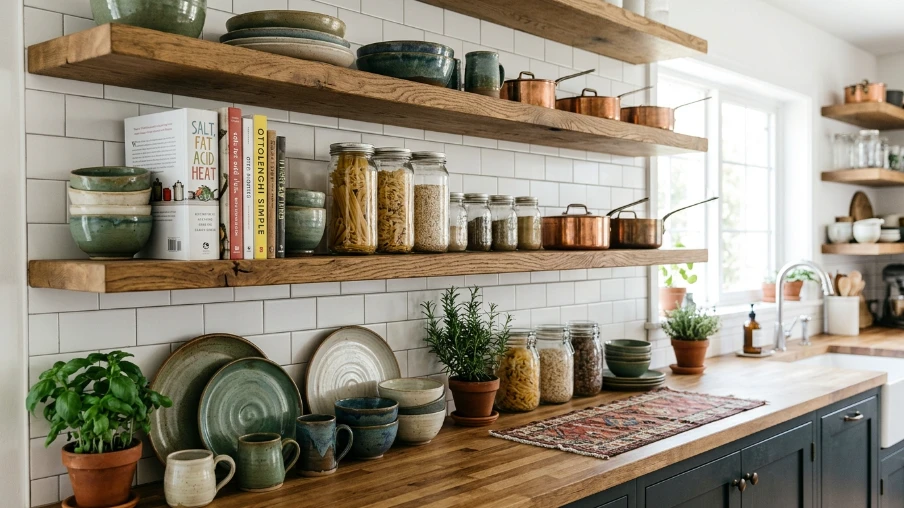
Open shelving in place of or alongside upper wall cabinets creates a more visually open, relaxed, and characterful kitchen interior than closed cabinet storage alone provides. The shelves create an opportunity to display quality cookware, artisanal ceramics, cookbooks, and small plants in a way that contributes to the kitchen’s visual warmth and personality.
The practical reality of open shelving in a kitchen is that the displayed items require regular cleaning because kitchen grease, steam, and general daily cooking activity settle on everything at shelf height over time. Open shelving works best for items that are used daily and therefore cleaned regularly as part of their use cycle, and is less practical for items stored primarily as display that might accumulate kitchen grease between uses.
A hybrid approach, with closed lower cabinets and open upper shelving rather than all open or all closed, provides the visual benefit of open shelving while maintaining the dust and grease protection of closed storage for less frequently used items.
10. Kitchen Backsplash as a Design Statement
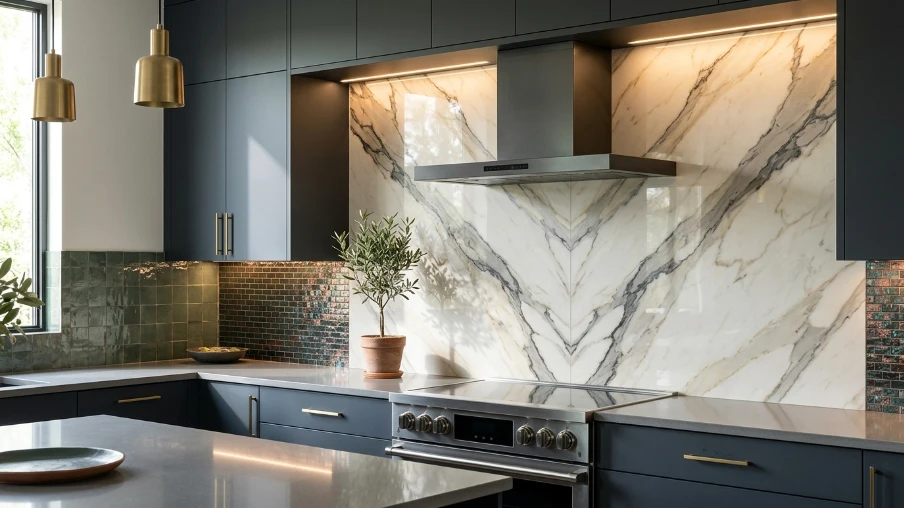
A backsplash that goes beyond purely functional splash protection to become a genuine design statement is one of the most cost-effective ways to transform the character of a kitchen without a complete renovation. The backsplash occupies a consistently visible wall area behind the cooking zone that draws the eye naturally in any kitchen interior.
Popular statement backsplash choices for 2026 include large format marble or stone-effect tiles in a book-matched arrangement that creates a dramatically veined surface, handmade ceramic tiles in a warm terracotta or deep sage color, Zellige tiles in their characteristic glossy, slightly irregular surface, and full-height glass mosaic panels in a metallic or iridescent finish.
The backsplash is also one of the most accessible areas of the kitchen for a budget-conscious design update because the surface area is relatively small compared to cabinetry and flooring, which means a premium tile material that would be prohibitively expensive across a full floor can be specified for the backsplash alone at a manageable cost.
11. Kitchen Island with Waterfall Countertop
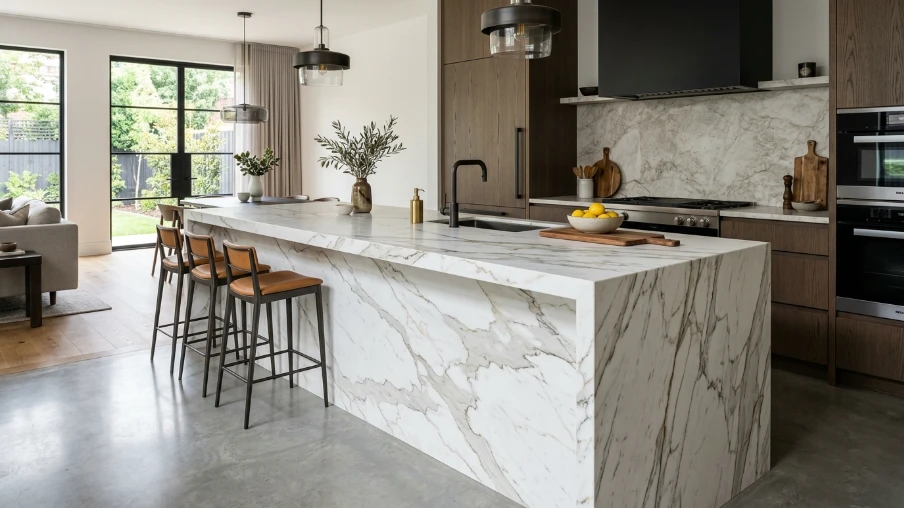
A kitchen island with a waterfall countertop edge, where the countertop material continues vertically down the side panels of the island to the floor rather than stopping at the cabinet edge, is one of the most specifically architectural and luxurious kitchen design details available in contemporary home design.
The waterfall edge creates a continuous, sculptural surface from the top of the island down to the floor on one or both sides, giving the island the visual quality of a single carved piece rather than a counter sitting on top of a cabinet base. In genuine marble or a high-quality marble-effect quartz, the waterfall edge reveals the stone’s internal character on the vertical surface as well as the horizontal top, creating an island that reads as a piece of furniture-scale art in the kitchen.
12. Kitchen Lighting Design
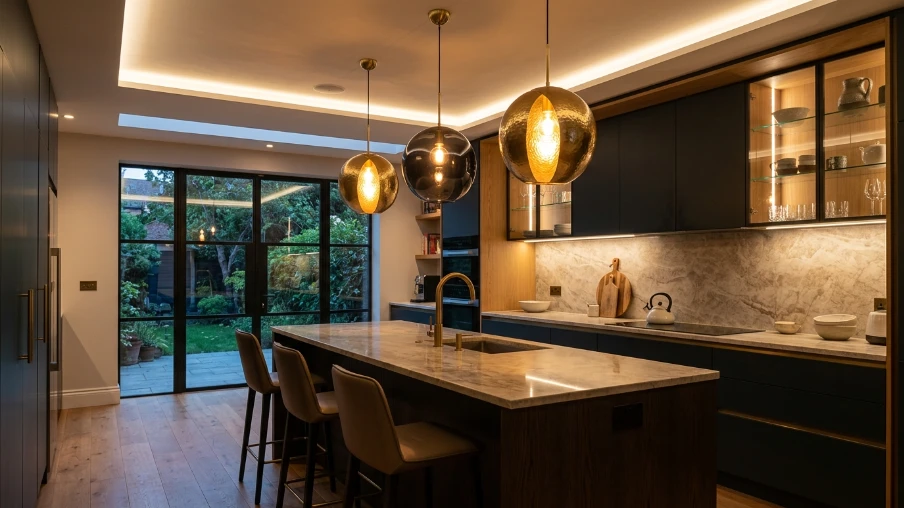
Lighting in a kitchen is a layered system rather than a single solution, and getting the lighting design right makes an enormous difference to both the functionality and the atmosphere of the space. A well-lit kitchen combines three distinct lighting types: task lighting that directly illuminates work surfaces, ambient lighting that provides the overall illumination level for the room, and accent or decorative lighting that creates atmosphere and visual interest.
Pendant lights above a kitchen island are the most visible and design-impactful lighting choice in a contemporary kitchen. A group of three pendants hung at varying heights, or a single large statement pendant in a bold material like rattan, smoked glass, or sculptural brass, creates a focal point above the island that anchors the kitchen’s visual composition from above.
Under-cabinet LED strips illuminate the work surface directly and eliminate the shadow that upper cabinets cast over the counter below, which is one of the most practically valuable and proportionally affordable kitchen lighting additions available for a kitchen improvement project.
13. Modular Kitchen Design
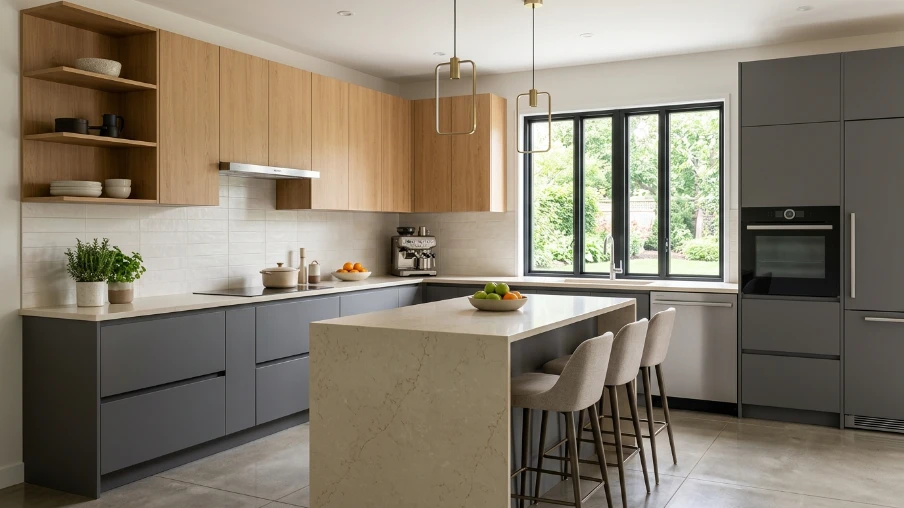
A modular kitchen design uses pre-manufactured cabinet units in standard sizes that are combined and configured to suit the specific dimensions and layout of the kitchen space. Modular kitchens are the most budget-accessible approach to a complete kitchen design because the pre-manufactured components reduce the custom fabrication cost that bespoke cabinetry requires.
In 2026, modular kitchen design has significantly improved from the purely functional, visually limited options of previous decades. Quality modular kitchen systems are available in a full range of door finishes, hardware options, and configuration possibilities that can produce results visually comparable to custom installations at substantially lower cost.
14. Kitchen with Natural Wood Accents
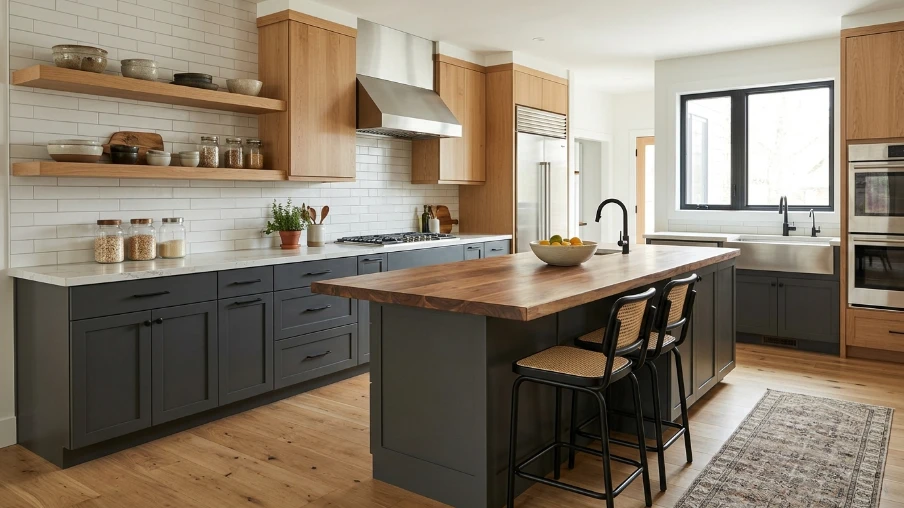
Incorporating natural wood elements into a kitchen design adds warmth and organic texture that painted cabinetry and stone surfaces alone cannot provide. Floating timber shelves against a white or painted wall, a natural wood countertop on a kitchen island while the perimeter uses stone, timber flooring that contrasts with painted lower cabinets, or timber-fronted drawer sections within otherwise painted cabinetry all introduce the warmth of natural wood in ways that range from a small accent to a major design element.
Warm oak, walnut, and white oak are the most popular timber species for kitchen accents in contemporary design because they suit both light and dark surrounding palettes and add the organic quality that increasingly characterizes the most aspirational kitchen interiors of 2026.
15. Open Plan Kitchen with Dining Integration
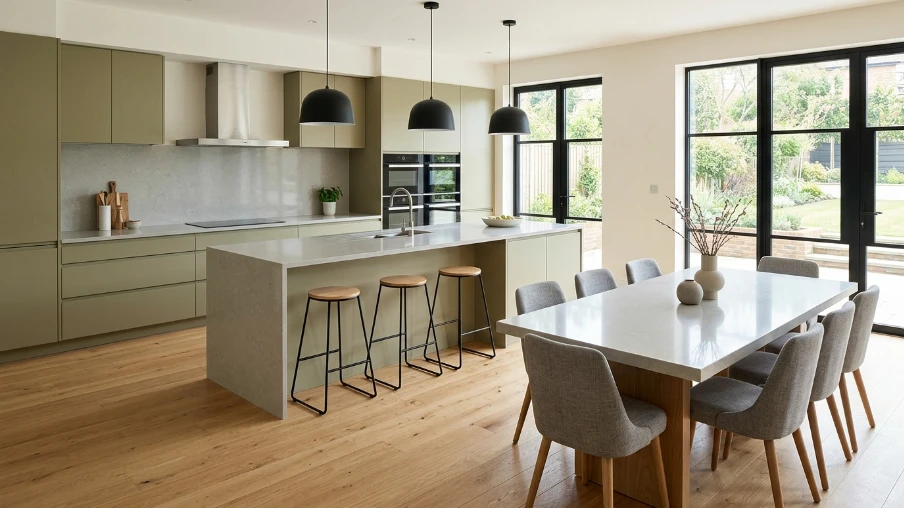
A kitchen that integrates seamlessly with an adjacent dining space through a consistent flooring material, a shared design palette, and a kitchen island or breakfast bar that bridges the two zones creates one of the most genuinely social and family-friendly kitchen design configurations available. The open plan kitchen and dining integration allows the kitchen to participate in the full life of the home rather than operating as a separate service area isolated from the household’s social activity.
Design the kitchen and dining zones as a single space rather than as two separate rooms joined at a wall opening. Use a consistent countertop material for the kitchen island and the dining table for a unified material language across the space, or choose materials that are clearly distinct but tonally coordinated so both zones feel like intentional parts of one larger design.
16. Kitchen with Integrated Appliances
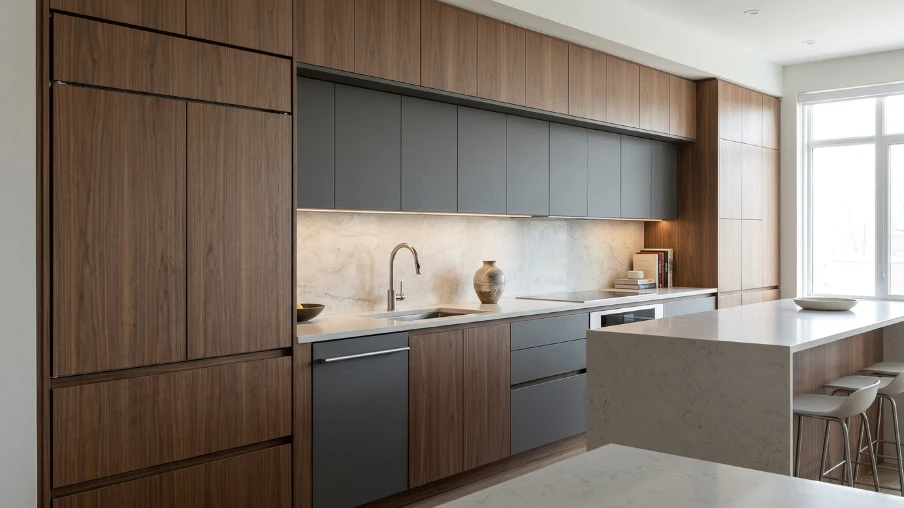
Fully integrated appliances, where the refrigerator, dishwasher, and other major kitchen appliances are concealed behind cabinet doors that match the surrounding cabinetry finish, create the most architecturally resolved and visually uninterrupted kitchen design possible. When the appliances disappear behind matching cabinet panels, the kitchen reads as a cohesive designed surface rather than a collection of functional equipment arranged around a room.
Integrated appliances are typically higher in cost than freestanding equivalents because of the custom panel fabrication and the premium placed on the integrated models themselves. The investment is worthwhile in kitchens where the visual continuity of the cabinet surface is a primary design priority, and it adds genuine value to the home in the property market because integrated kitchen specifications are consistently associated with premium residential design.
you may also like this: 18 Unique Kitchen Trends Ideas Modern Style Designs 2026
17. Timeless Kitchen Design with Classic Elements
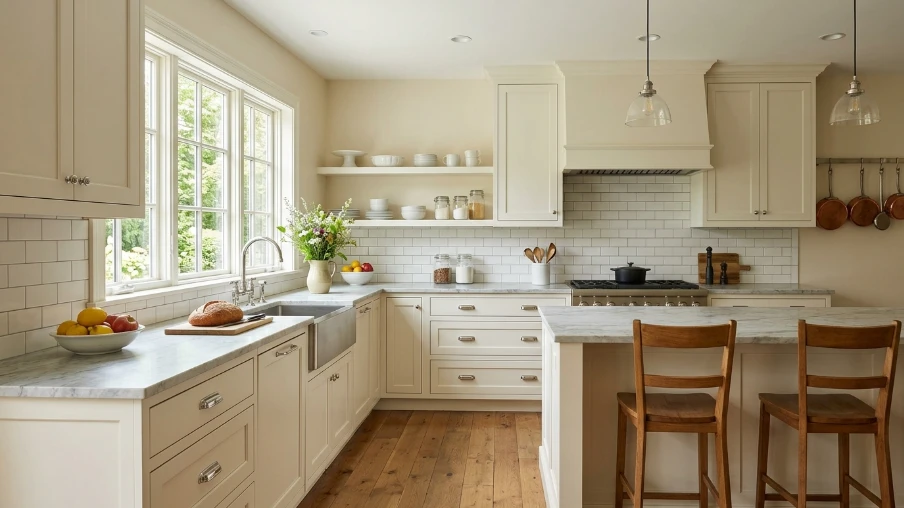
A timeless kitchen design deliberately avoids trend-specific choices in favor of classic elements that will read as appropriate and well-considered across decades rather than appearing dated within a few years of the renovation. Shaker cabinets, natural stone countertops, subway tile backsplashes, unlacquered brass or polished chrome hardware, and a neutral color palette of white, cream, and warm grey are the foundational elements of a kitchen design that holds its quality and appeal over time.
The timeless approach does not mean boring or uninspired. It means making choices that prioritize quality of material, precision of craftsmanship, and fundamental proportional balance over the momentary appeal of a specific trend. A kitchen built on these principles will look as good in fifteen years as it does in the first week after the renovation is complete, which is the most genuinely valuable outcome any kitchen design investment can achieve.
Planning Your Kitchen Renovation: Practical Advice
A kitchen renovation is one of the most significant and potentially disruptive home improvement projects available, and the planning stage determines the quality of the outcome as much as the execution.
Set a Realistic Budget with a Contingency
Kitchen renovation costs consistently exceed initial estimates because of the complexity of the work involved, the number of trades required, and the inevitable discoveries that arise when existing structures are opened up. Build a contingency of fifteen to twenty percent into the overall budget to accommodate these unexpected costs without derailing the project.
Plan the Layout Before Choosing Finishes
The kitchen layout determines the functionality of the space for as long as you own the home. Getting the layout right, specifically the work triangle efficiency, the traffic flow through the space, and the position of the island relative to the cooking zone, matters more than any finish choice. Spend more time planning the layout and less time on early fixture selection until the layout is confirmed.
Common Kitchen Design Mistakes
Underestimating storage needs is the most universal kitchen design mistake. Plan for more storage than you currently think you need because the items that accumulate in a kitchen over time always exceed the initial estimate. Every unused corner, wall space above the counter, and base cabinet depth should have a specific storage solution assigned to it before the design is finalized.
Choosing trendy finishes over timeless quality is the second most common mistake. A finish that photographs well but proves difficult to maintain, or that appears dated within five years, represents a poor long-term investment regardless of how much it costs. Choose quality of material and construction first, then select the specific color or finish within that quality tier.
Conclusion
Kitchen design ideas in 2026 span an extraordinary range of styles, budgets, and practical approaches, from the complete luxury marble and custom cabinetry renovation to the targeted improvements of new lighting, open shelving, and a statement backsplash tile that transform a tired kitchen without the full project investment.
The most satisfying kitchen designs are those that begin with an honest understanding of how the space is actually used, proceed with a clear plan for the layout and storage before making any finish choices, and maintain a focus on quality of material and construction over trend-specific selections. The result is a kitchen that works beautifully every day and looks exactly as good in a decade as it does on the day it is completed.
Frequently Asked Questions
Q1. What is the most popular kitchen design style in 2026?
Modern minimalist kitchens with clean lines, integrated appliances, and handle-less cabinetry in neutral tones remain the most requested style in 2026. Two-tone cabinetry, natural wood accents, and statement backsplash tiles are the most popular design additions within that broader minimal aesthetic.
Q2. What countertop material is best for a kitchen?
Quartz engineered stone is the most practical choice for busy household kitchens because it is non-porous, requires no sealing, and resists staining from everyday kitchen use. Genuine marble is the most visually luxurious but requires more maintenance. Compact laminate offers the most budget-friendly option with reasonable durability.
Q3. How do I make a small kitchen look bigger?
Use light colors on cabinets and walls, extend cabinetry all the way to the ceiling to use vertical space efficiently, choose a continuous countertop in a light stone without breaks, install under-cabinet lighting to eliminate shadows, and use reflective surfaces like gloss tiles or lacquered cabinet finishes to bounce light around the space.
Q4. Is an open plan kitchen worth it?
For most modern households, yes. An open plan kitchen creates a more socially connected living environment, makes smaller homes feel significantly more generous, and suits contemporary family lifestyles where multiple activities happen simultaneously. The primary practical consideration is kitchen noise and cooking smells spreading into living areas, which can be managed through a quality ventilation system.
Q5. How long does a kitchen renovation typically take?
A complete kitchen renovation including structural changes, plumbing, electrical, and a full installation typically takes four to eight weeks from start to finish depending on the scale of the project and the availability of tradespeople. Planning, ordering, and lead times for custom cabinetry and appliances typically add eight to twelve weeks before the physical work begins.

One Comment