18 Scandinavian Kitchen Ideas for a Cozy Modern Home
There is something quietly beautiful about a Scandinavian kitchen. It does not try too hard. There are no loud colors fighting for attention, no cluttered counters piled with gadgets, and no complicated patterns competing for space. Instead, everything feels calm, clean, and just right.
If your kitchen feels overwhelming, messy, or just lacks that warm and welcoming energy you want, Nordic kitchen decor ideas might be exactly what you have been looking for. The Scandinavian kitchen design philosophy is built on three simple principles: light, function, and comfort. And the best part? You do not need to spend a fortune to bring this style into your home.
Whether you have a large open kitchen or a small tight space, whether you are starting fresh or just refreshing what you already have, these 18 Scandinavian kitchen ideas will give you the inspiration and practical direction you need to create a space that feels both beautiful and genuinely liveable.
What Makes a Kitchen Truly Scandinavian?
Before we get into the ideas themselves, it helps to understand what actually defines a Scandinavian style kitchen. This is not just about white walls and wooden floors. It is a mindset that puts people first.
The Scandinavian countries — Sweden, Norway, Denmark, Finland, and Iceland — developed this approach to design out of necessity. Long, dark winters meant that interiors had to work harder to feel warm and bright. The result was a design culture that valued natural light, simple forms, honest materials, and a clutter-free kitchen design above all else.
In practical terms, this means you will typically find:
- A neutral color kitchen palette (whites, creams, soft grays, warm beiges)
- Natural wood kitchen elements like oak, birch, or pine
- Clean lines and sleek cabinet kitchen designs with minimal hardware
- Functional kitchen layouts that prioritize ease of movement
- Smart kitchen storage solutions that keep surfaces clear
1. Start With a White and Wood Base
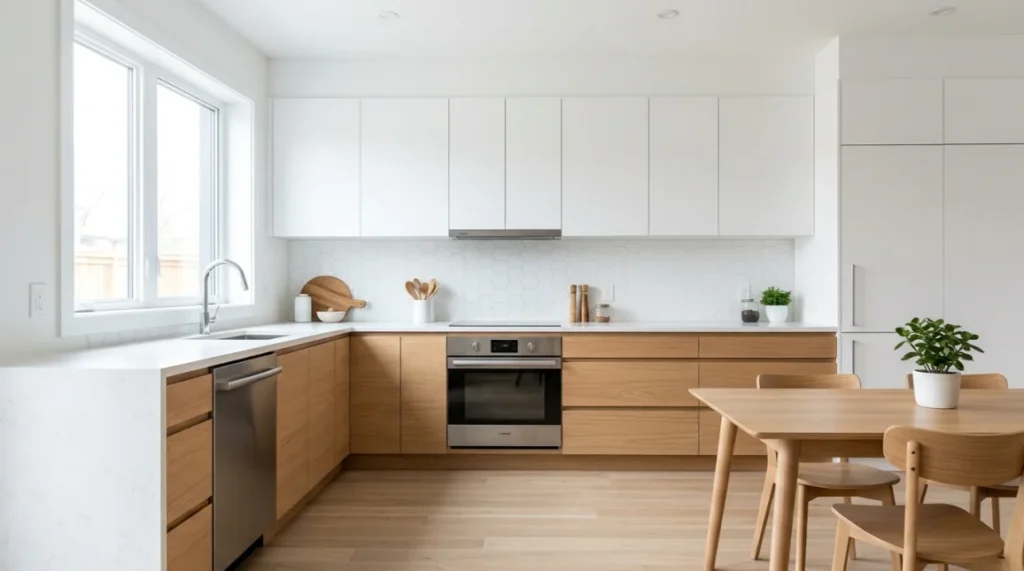
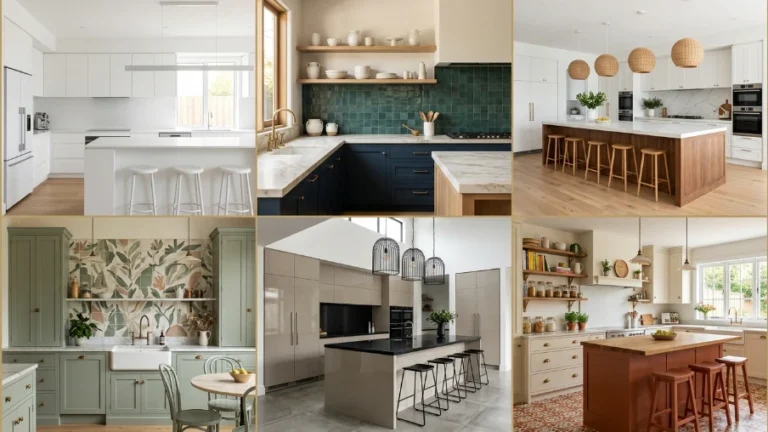
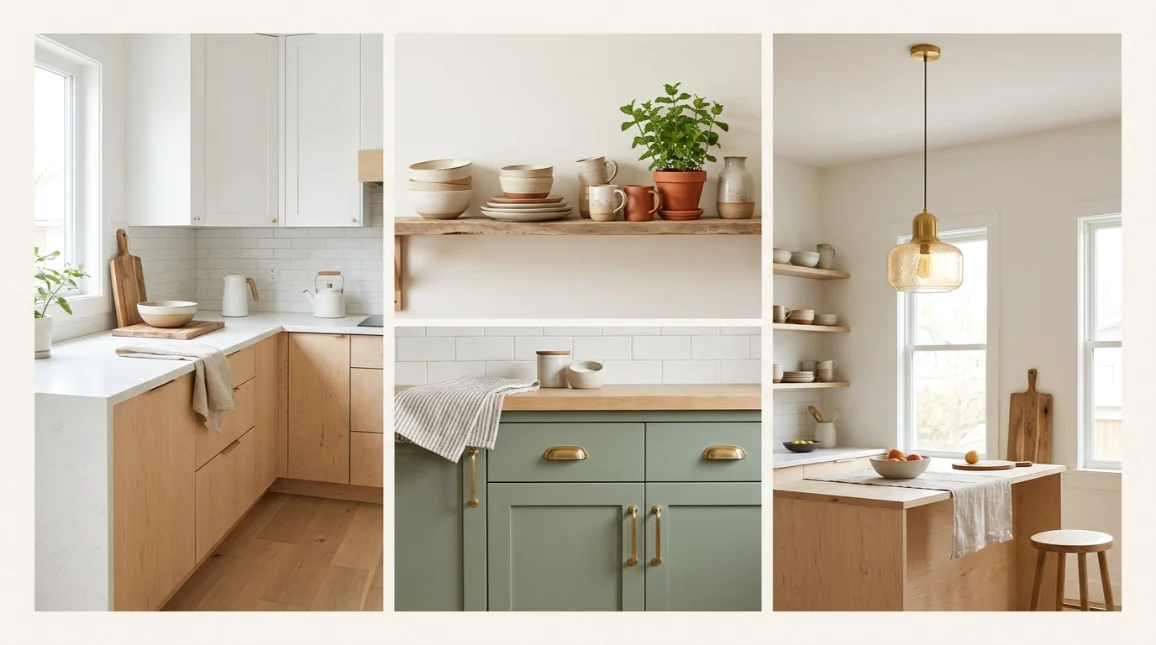
The white and wood kitchen combination is the foundation of almost every modern Scandinavian kitchen. White reflects light and makes a space feel bigger, while wood adds warmth and prevents the room from feeling cold or clinical.
You do not need to go all white. Consider white upper cabinets paired with light wood kitchen cabinets on the lower half. This creates visual contrast without breaking the calm, neutral feeling that is so central to Scandinavian kitchen inspiration.
Tip: Choose matte white finishes over glossy ones. Matte surfaces feel softer and more natural, which fits the Nordic aesthetic much better.
2. Keep the Color Palette Calm and Neutral
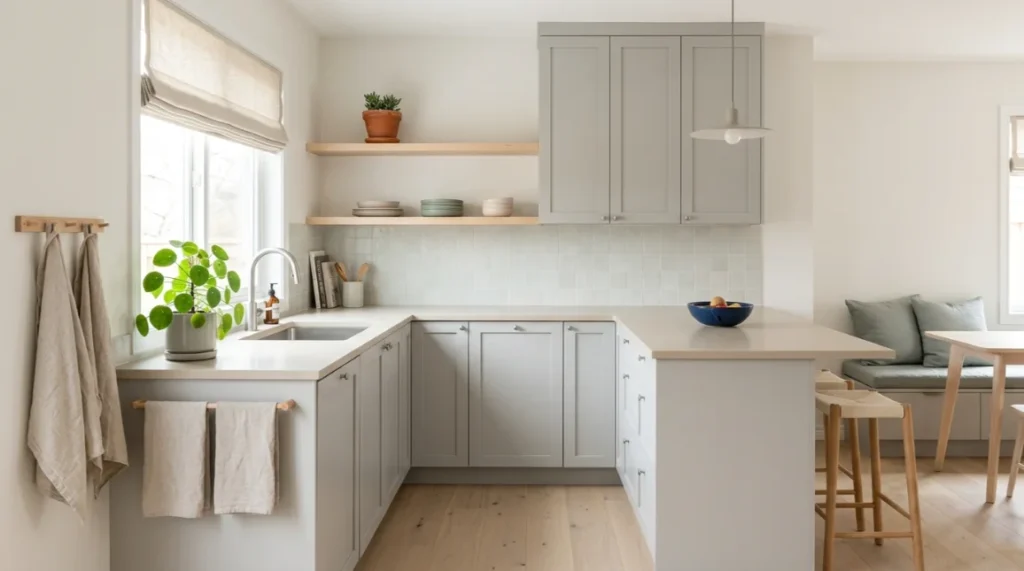
The Scandinavian kitchen color palette is not just about white. Soft gray, warm sand, dusty sage, and pale blush all work beautifully in a Nordic kitchen. The key is to keep things muted and cohesive.
A warm neutral kitchen decor feels welcoming rather than sterile. Think of the color of birch bark, morning fog, or natural linen. These are your guides.
If you want to bring in a bit of color, use it in small doses. A single terracotta pot on a shelf, a soft green plant, or a navy blue ceramic bowl can add life without overwhelming the clean kitchen aesthetics you are trying to build.
3. Use Flat-Panel or Handleless Cabinets
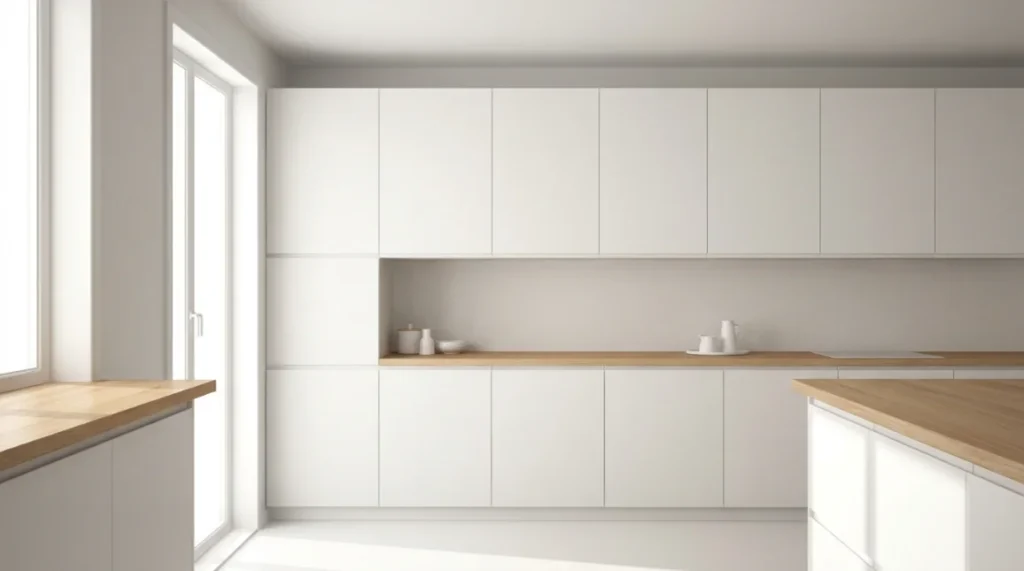
One of the most recognizable features of a Scandinavian kitchen design is the cabinet style. Flat-panel doors with simple lines and either no hardware at all or very minimal, understated handles are the norm.
Handleless push-to-open cabinets are especially popular in a sleek kitchen design because they give the space an almost seamless look. Nothing breaks up the surface. Nothing catches dust or grime either, which is a practical bonus.
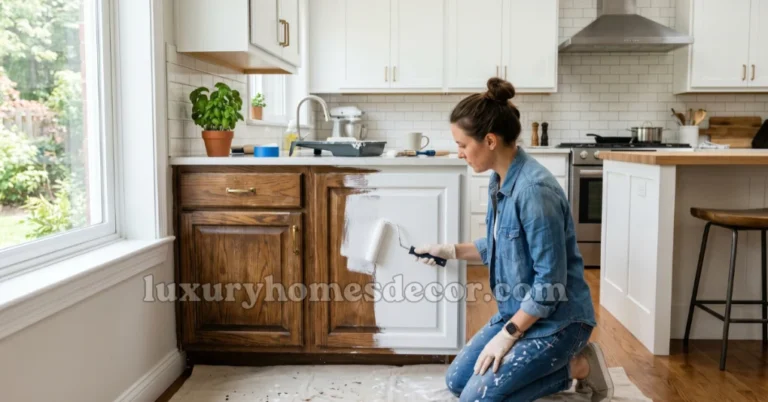
If your budget does not allow for a full cabinet replacement, simply replacing old ornate hardware with slim, matte black or brushed brass bar pulls can instantly shift the feel of your kitchen toward a more Nordic kitchen decor vibe.
4. Let Natural Light Do the Work
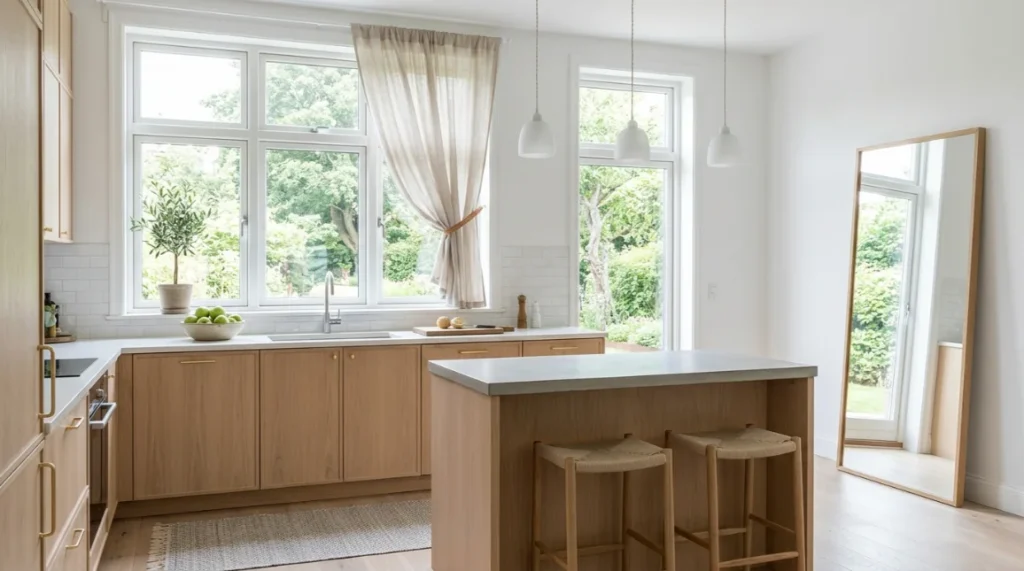
Natural light is non-negotiable in a light and airy kitchen with Scandinavian roots. Where possible, keep windows unobstructed. Skip heavy curtains and opt for sheer linen panels or nothing at all if privacy allows.
Bright kitchen interiors feel more spacious, more energizing, and more welcoming. Position your work areas near windows when you can, and use mirrors or reflective surfaces to carry light further into the room.
If your kitchen lacks natural light, this is where your choice of white walls and light-toned finishes becomes even more important. Every surface that reflects light is doing the work that a window would otherwise do.
Quick Comparison: Scandinavian Kitchen Styles at a Glance
| Style Variation | Key Features | Best For | Color Palette | Budget Level |
|---|---|---|---|---|
| Classic Scandinavian | White cabinets, light wood, minimal hardware | All home sizes | White, cream, pale gray | Low to mid |
| Modern Nordic | Flat-panel doors, stone countertops, statement lighting | Open plan spaces | White, charcoal, warm gray | Mid to high |
| Cozy Hygge Kitchen | Warm textures, soft lighting, natural materials | Family homes | Cream, warm beige, sage | Low to mid |
| Scandinavian Farmhouse | Shaker cabinets, farmhouse sink, wood shelves | Larger kitchens | White, wood tones, soft black | Mid |
| Small Space Nordic | Vertical storage, light surfaces, fold-down seating | Apartments, small homes | White, pale wood, off-white | Low to mid |
| Minimalist Scandi | Handleless cabinets, hidden storage, bare surfaces | Modern urban homes | White, stone gray, matte black | Mid to high |
| Budget Nordic Refresh | Painted cabinets, new hardware, decluttered surfaces | Any existing kitchen | White or soft gray over existing | Low |
5. Invest in Thoughtful Scandinavian Kitchen Lighting
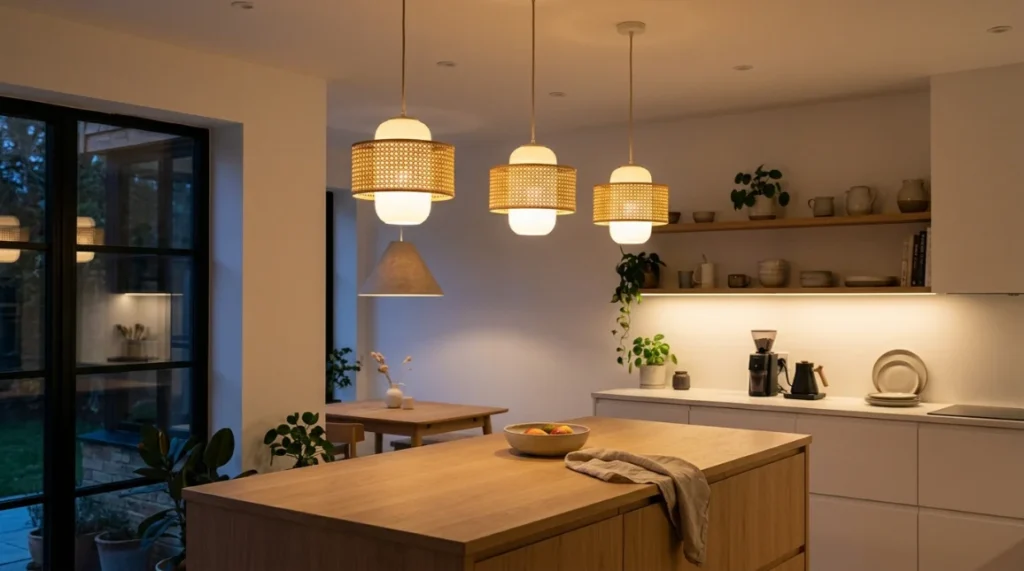
When natural light fades, your artificial lighting needs to carry the room. Scandinavian kitchen lighting ideas tend to focus on layered light sources rather than one single overhead fixture.
A few things that work well:
- Pendant lights over an island or dining table (simple globe or cone shapes work best)
- Under-cabinet strip lights for task lighting on the countertop
- Warm-toned bulbs (2700K to 3000K) rather than cool white LED strips
The goal is to create a cozy minimalist kitchen atmosphere in the evenings, not a cold, clinical brightness. Statement pendant lights with natural materials like rattan, linen, or opal glass are a popular and timeless choice in Nordic interiors.
6. Embrace Open Shelving (But Keep It Curated)

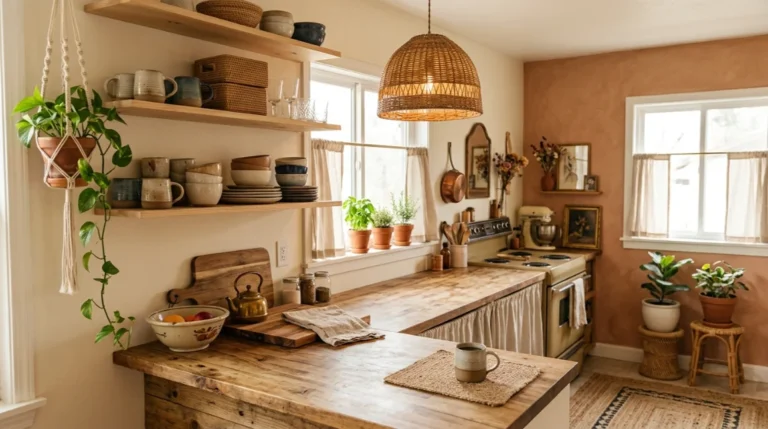
Open shelving is a signature feature of Scandinavian home decor. It adds visual interest, keeps things accessible, and gives you a chance to display items that add personality to your space.
The important word here is curated. Open shelves only look good when they are intentionally styled. A few simple rules:
- Keep everyday items in closed cabinets
- Display only things you actually use or genuinely love
- Use a consistent palette for your displayed items (all white ceramics, for example)
- Leave some breathing room between items — do not pack every inch
7. Bring In Natural Materials
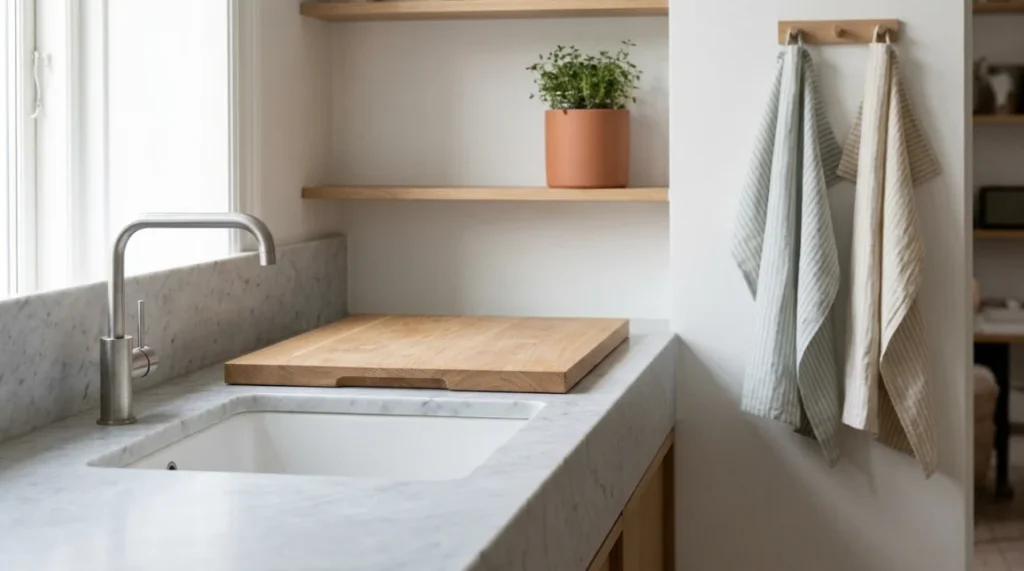
Natural materials in the kitchen are central to achieving an authentic Scandinavian look. Wood is the most obvious choice, but there are others worth considering.
Stone countertops in pale gray or white marble tones bring texture and a sense of timelessness. Linen or cotton dish towels hanging from a simple hook add softness. A terracotta or stoneware pot on a shelf introduces an earthy element that feels grounded.
The key is to choose materials that feel honest. In Scandinavian kitchen design, there is a strong preference for things that look like what they actually are — wood that looks like wood, stone that looks like stone, not synthetic imitations.
8. Design a Functional Kitchen Layout First
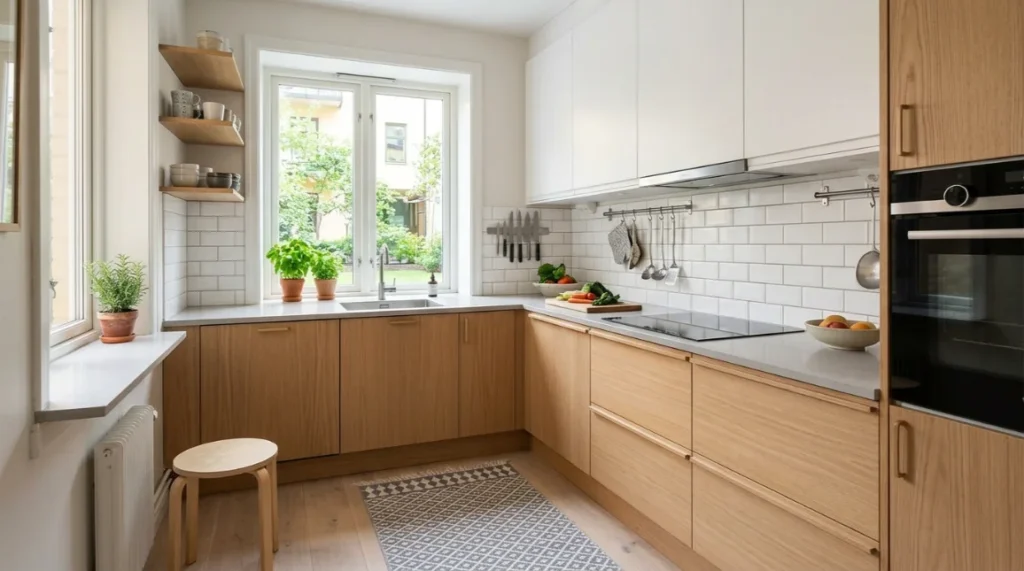
A beautiful kitchen that is difficult to cook in goes against everything Scandinavian design stands for. Before thinking about how things look, think about how they work.
The classic functional kitchen layout works around the kitchen triangle: the distance between your sink, stove, and refrigerator. In a Scandinavian kitchen, this triangle should be kept tight and unobstructed.
For small Scandinavian kitchen spaces, a galley layout (two parallel counters) or an L-shaped counter often works best. It keeps everything within easy reach and maximizes the limited square footage without making the room feel cramped.
9. Tackle Storage With Purpose
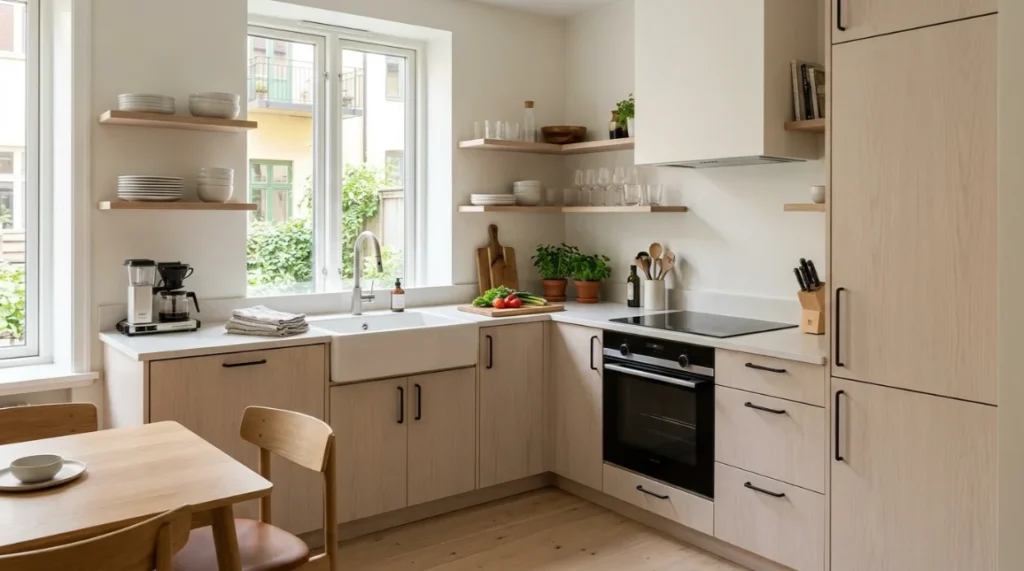
Scandinavian kitchen organization tips start with one core idea: everything needs a place, and that place should make sense. Random storage that is hard to access does not count.
Some practical kitchen storage solutions worth considering:
- Deep drawers instead of base cabinets with shelves (much easier to access pots and pans)
- A pegboard or magnetic strip for knives and utensils
- Uniform containers and jars to store dry goods (labels optional, visual calm is the goal)
- Hidden pull-out bins for waste and recycling so they disappear from view
10. Go Minimal With Countertop Decor
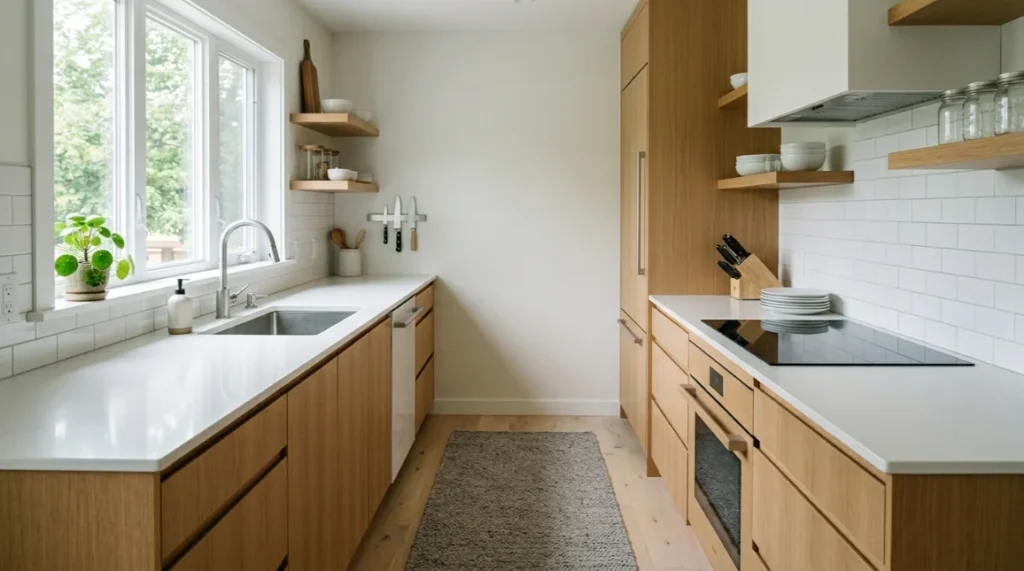
One of the most powerful Nordic kitchen decor ideas is also the simplest: clear your counters. A clutter free kitchen design is not just aesthetically pleasing — it also makes cooking more efficient and cleaning much faster.
Keep only what you use daily on the counter. A kettle, a cutting board, a small herb plant, and a ceramic utensil holder are more than enough. Everything else can live in a drawer or cabinet.
Common mistake: Many people clear their counters but leave too many appliances plugged in and visible. Tuck the toaster and blender away when not in use and you will immediately notice how much calmer the space feels.
11. Try a Muted Green or Sage Cabinet Color
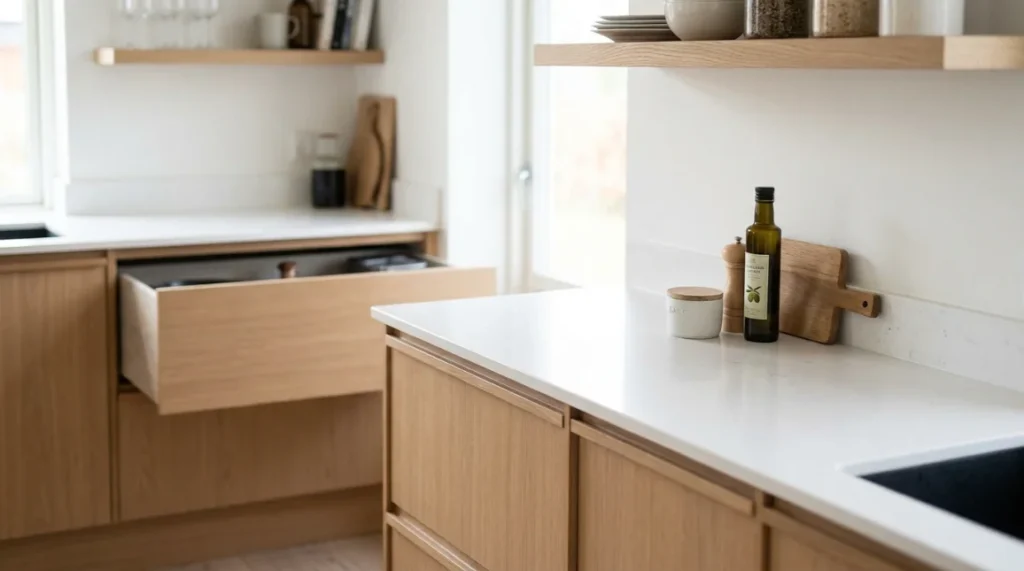
While white is the most popular choice, minimalist Scandinavian kitchen design absolutely welcomes soft muted colors on cabinetry. Dusty sage green, soft olive, and muted slate blue all work beautifully in a Nordic context.
These colors keep the calm, understated feeling while adding a gentle natural warmth. They pair especially well with brass hardware and light wood countertops.
If you are nervous about committing to color on all cabinets, try it on the lower cabinets only while keeping the uppers white. This approach is popular in contemporary Scandinavian kitchen layouts and adds depth without being overwhelming.
12. Add Texture Through Soft Furnishings
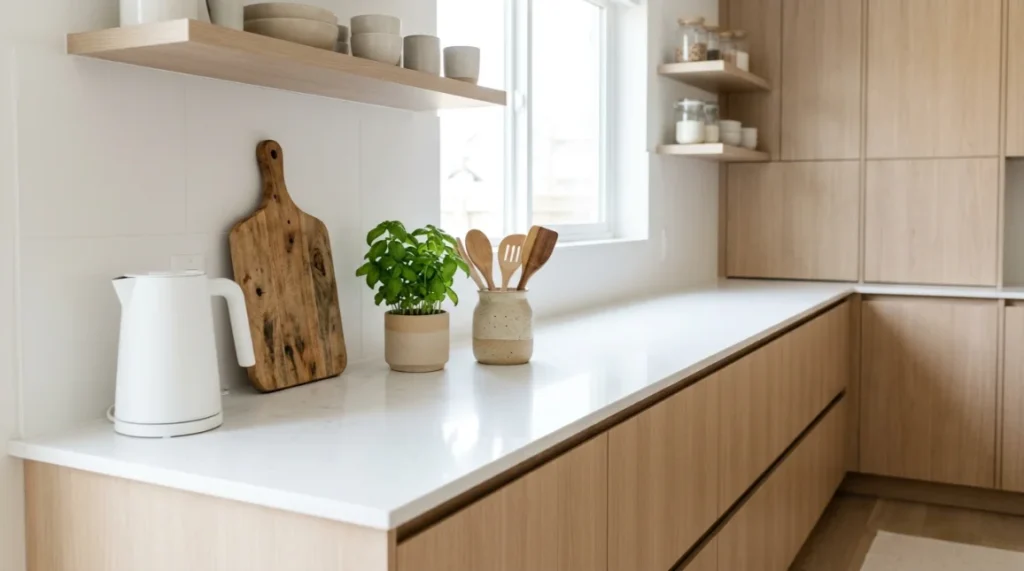
A cozy kitchen interior in the Scandinavian tradition is never completely cold or hard-edged. Texture plays a huge role in making a space feel warm and lived-in.
Simple ways to add texture without breaking the clean aesthetic:
- A woven or jute rug under the kitchen table
- Linen or cotton curtains at the window
- Wicker or rattan baskets for storage
- Wooden cutting boards displayed on the counter as decor
13. Incorporate Plants and Greenery
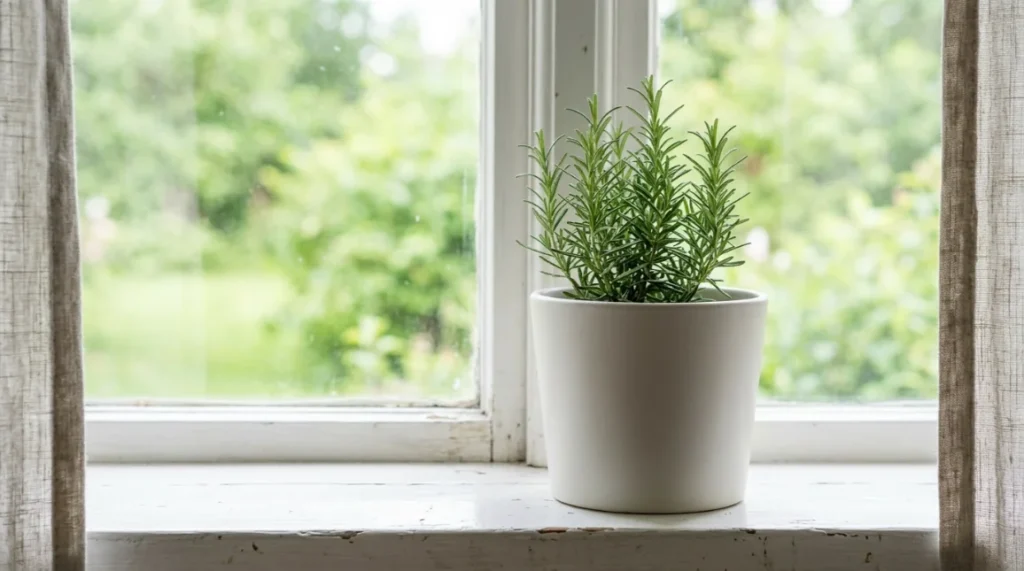
Nothing makes a Scandinavian kitchen feel more alive than a few well-placed plants. Greenery connects the interior to nature, which is a deeply important value in Nordic design.
You do not need a garden’s worth of plants. A single potted herb on the windowsill, a trailing pothos on a shelf, or a small succulent on the counter is enough. Keep it simple and genuine.
Herbs like rosemary, thyme, and basil also serve a practical purpose in the kitchen, which aligns perfectly with the Scandinavian preference for things that are both beautiful and useful.
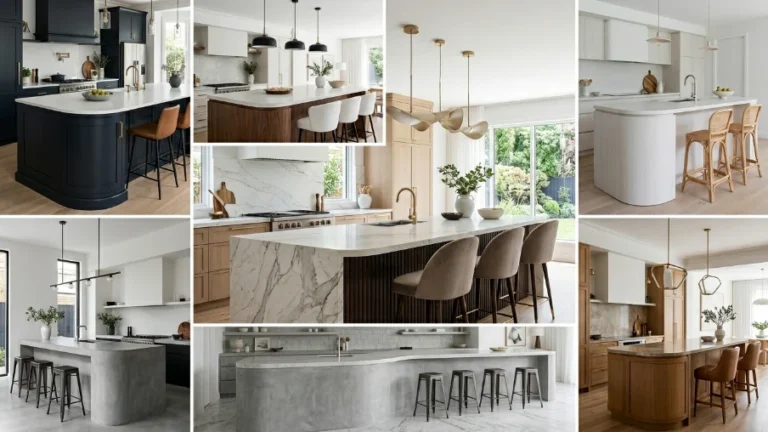
14. Consider a Kitchen Island for Flow and Function
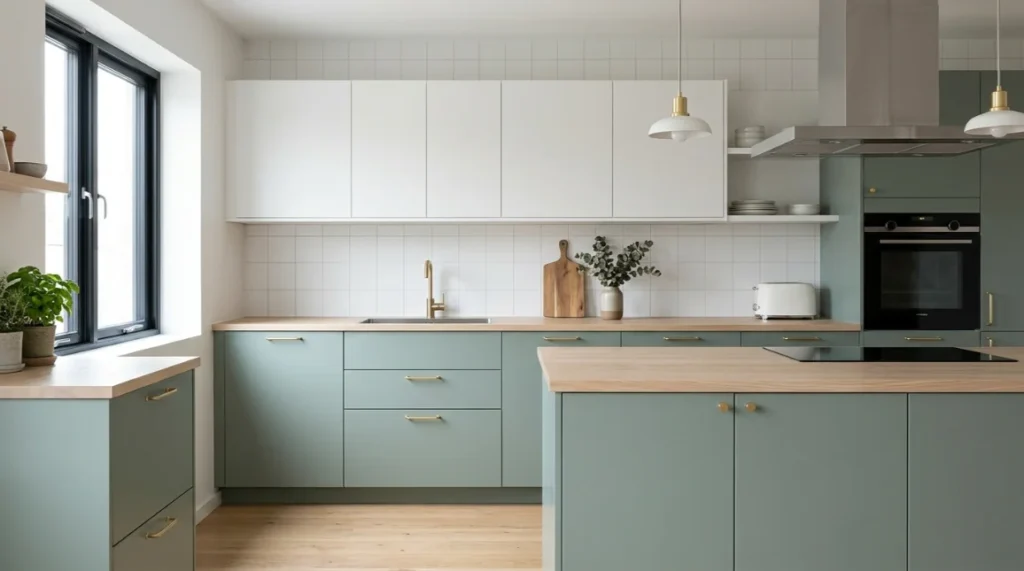
An open concept kitchen with a central island is one of the most popular modern Nordic kitchen trends. An island gives you extra workspace, a place for casual seating, and a natural gathering point in the kitchen.
In a Scandinavian context, the island should be clean and purposeful. Keep the top clear as much as possible. Choose materials that match or complement the rest of the kitchen — a butcher block top for warmth, or a stone surface for a sleeker look.
For smaller kitchens, a mobile island or a simple butcher block cart on wheels gives you the flexibility of extra surface space without permanently committing to a fixed structure.
15. Use a Simple and Elegant Backsplash
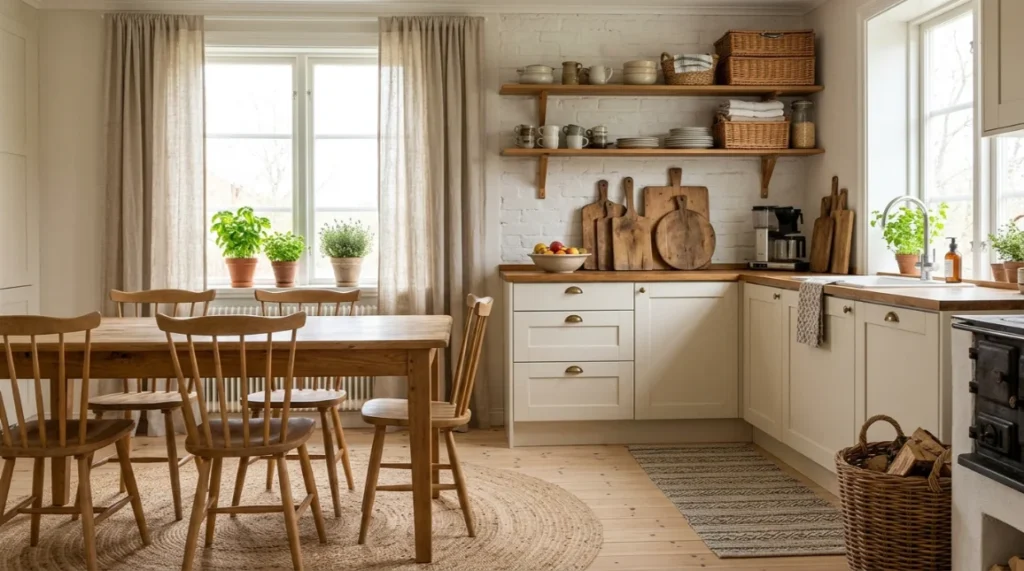
The backsplash in a simple and elegant kitchen should add subtle texture or pattern without demanding attention. Subway tiles in white or soft gray are a longtime favorite in Scandinavian kitchen design because they are classic, easy to clean, and blend into the background.
Other good options include:
- Large format stone-look tiles in a pale tone
- Thin brick tiles in white or off-white
- Simple panel systems in light wood for a warmer, more contemporary feel
Avoid anything too busy, patterned, or colorful. The backsplash should read as a quiet backdrop, not a focal point.
you may also like this: 18 Unique Kitchen Trends Ideas Modern Style Designs 2026
16. Scandinavian Kitchen on a Budget
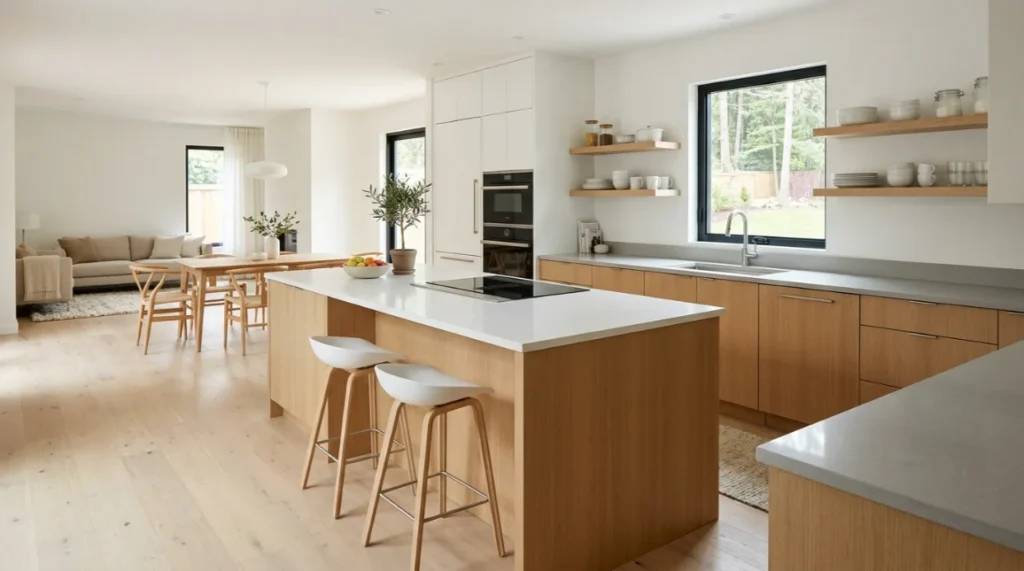
Good news: Scandinavian kitchen decor on a budget is entirely achievable. The style itself is built on restraint, which means you actually spend less, not more, when you do it right.
Budget-friendly ways to get the look:
- Paint existing cabinets in a matte white or soft gray (a fraction of the cost of new cabinets)
- Swap out cabinet hardware for simple bar pulls in matte black or brushed brass
- Declutter ruthlessly — this costs nothing and has an enormous visual impact
- Add a simple pendant light over the table or counter for instant Nordic atmosphere
- Use uniform glass jars for dry goods on open shelves — both practical and visually clean
17. Blend Modern Farmhouse With Scandinavian Style
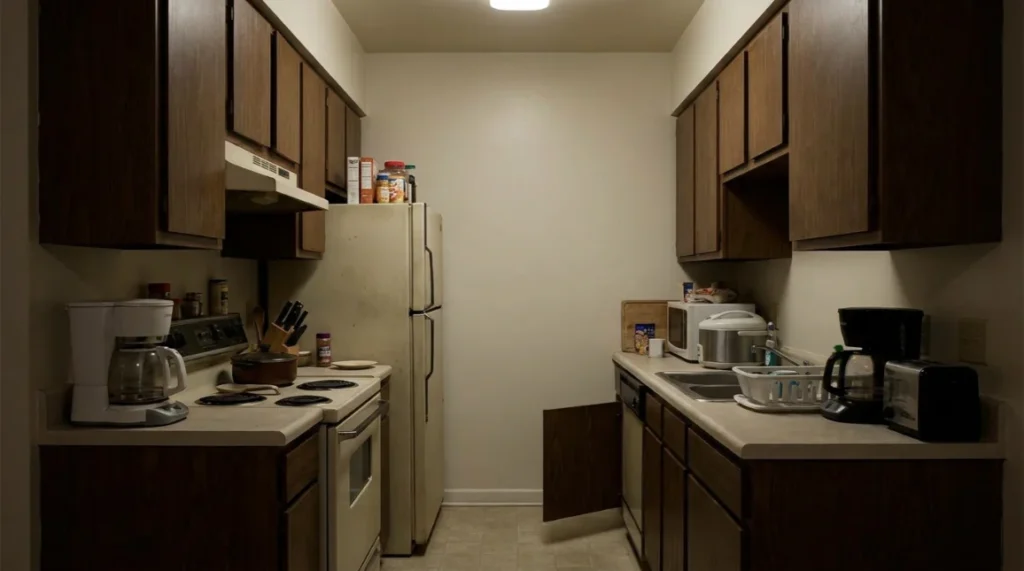
The modern farmhouse Scandinavian kitchen is a hybrid style that has become very popular, particularly in homes that want warmth without the elaborate detailing of traditional farmhouse decor.
This look typically combines:
- Simple shaker-style cabinetry (slightly more detailed than flat-panel but still understated)
- Natural wood shelving and countertops
- A large farmhouse-style sink in white or concrete
- Warm, slightly textured walls rather than perfectly smooth white
It is a soft, liveable aesthetic that suits families with children especially well. Practical, forgiving, and genuinely warm.
18. Make Small Scandinavian Kitchen Spaces Work Harder
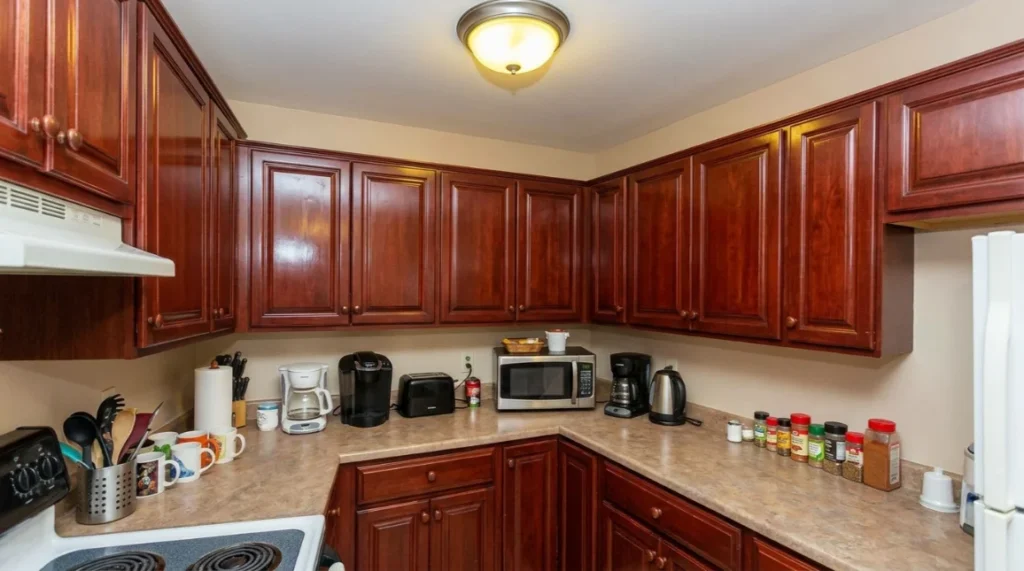
A small space Scandinavian kitchen can be just as beautiful — and sometimes even more so — than a large one. The constraints force you to be more thoughtful about every decision, and that tends to produce better results.
Key strategies for small Scandinavian kitchen ideas for small spaces:
- Use vertical space with floor-to-ceiling cabinets or tall open shelving
- Choose light-reflecting surfaces throughout to prevent the space feeling closed in
- Keep your countertops almost entirely clear at all times
- Opt for slimline appliances where possible
- Use a fold-down table or a narrow breakfast bar for eating rather than a full dining table
Common Mistakes to Avoid in a Scandinavian Kitchen
Going too cold: All white with no texture or warmth quickly starts to feel like a hospital. Always balance white with natural wood, soft textiles, or plants.
Over-decorating: Adding too many decor pieces completely defeats the purpose. When in doubt, remove one more thing.
Ignoring the floor: Light wood floors or simple matte tiles are part of the full picture. Dark or patterned flooring fights against the clean kitchen aesthetics you are building.
Skipping the lighting layer: A single overhead light is never enough. Layer your Scandinavian kitchen lighting ideas for a space that feels warm and functional at any time of day.
Choosing trendy over timeless: Scandinavian design is about timeless kitchen design ideas. Resist the urge to chase every seasonal trend. Classic shapes and honest materials always age better.
Final Thoughts
A Scandinavian kitchen is not about perfection. It is about creating a space that actually serves you well, that feels calm when you walk into it, and that makes everyday tasks like cooking, eating, and gathering with people you care about genuinely pleasant.
The 18 ideas above cover everything from a full renovation to simple changes you can make this weekend. Start wherever makes sense for your budget and your space. Even one or two of these shifts — clearing your counters, adding a pendant light, or painting your cabinets — can make a surprising difference.
Nordic kitchen decor ideas have stayed popular for decades because they are genuinely liveable. Clean, warm, simple, and honest. That is a combination that never really goes out of style.
Frequently Asked Questions
1. What colors are used in a Scandinavian kitchen?
The Scandinavian kitchen color palette centers on whites, off-whites, soft grays, warm creams, and muted natural tones. Pale sage green, dusty blue, and warm beige also appear in more contemporary versions. The common thread is that all colors are muted and understated, never loud or saturated.
2. Can I create a Scandinavian kitchen on a small budget?
Absolutely. Scandinavian kitchen decor on a budget is very achievable because the style prioritizes less, not more. Painting existing cabinets, swapping hardware, decluttering surfaces, and adding a simple pendant light are all inexpensive changes that can transform the feel of a kitchen. You do not need a full renovation to get the look.
3. What type of cabinets are used in Scandinavian kitchens?
Flat-panel cabinets are most common in a Scandinavian kitchen design. These have smooth, undecorated doors with either no hardware at all or very minimal bar handles. The goal is a clean, uninterrupted surface. Shaker-style cabinets also appear in the farmhouse-Scandinavian hybrid look, where a slightly more detailed door is acceptable.
4. How do I make a small Scandinavian kitchen look bigger?
Light colors, reflective surfaces, and vertical storage all help a small space Scandinavian kitchen feel larger than it is. Keep countertops as clear as possible, use floor-to-ceiling cabinetry to draw the eye upward, and maximize natural light where available. Avoid dark colors and heavy textures, which tend to visually shrink a space.
5. What is the difference between Scandinavian and minimalist kitchen design?
Both prioritize simplicity and clean lines, but a Scandinavian kitchen adds warmth and coziness that purely minimalist design often lacks. Natural wood, soft lighting, textures like linen and rattan, and plants all appear in Nordic kitchens and give them a human, inviting quality. Pure minimalism can feel cold; Scandinavian design aims for calm without sacrificing comfort.