17 Chic Curved Kitchen Island Ideas for Contemporary Homes
Most kitchen islands are rectangular. Four corners, straight edges, predictable lines. Functional, certainly, but rarely the kind of design choice that makes a kitchen genuinely memorable.
A curved kitchen island changes that equation entirely. The rounded form introduces a softness and architectural interest that straight-edged cabinetry cannot replicate, improves the natural flow of movement through the kitchen, and creates a focal point that draws attention for exactly the right reasons.
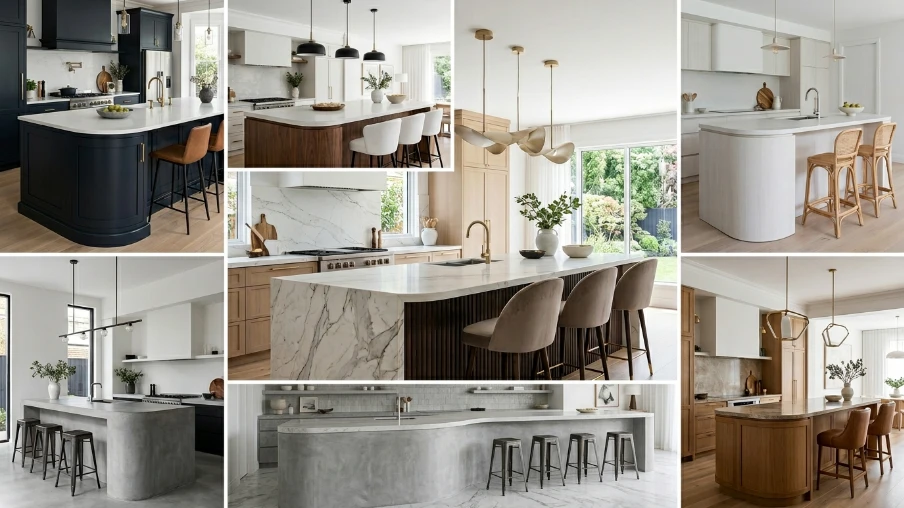
If you are planning a kitchen renovation, considering a kitchen remodel, or simply wondering whether your existing kitchen space could support something more visually interesting than a standard rectangular island, this guide covers 17 of the most beautiful and practical curved kitchen island ideas for contemporary homes in 2026.
Before getting into specific design ideas, it is worth understanding the practical and aesthetic case for choosing a curved kitchen island over a standard rectangular one.
The most immediate practical benefit is traffic flow. Sharp corners on rectangular kitchen islands create natural collision points in busy kitchen environments, particularly in open floor plan layouts where the kitchen connects directly to living and dining spaces. A curved or rounded kitchen island removes those corners entirely, creating a gentler path around the island that works more naturally in households with children, pets, and frequent social gatherings.
The aesthetic benefit is equally significant. Curved lines in an interior space create a visual softness that straight lines cannot provide, and in kitchens that are increasingly being designed to feel as comfortable and residential as living rooms, the curved kitchen island contributes to that softer, more welcoming character. It is also a design choice that signals custom craftsmanship because curved cabinetry requires more skilled fabrication than straight-edged cabinet work, which gives a curved island an inherently luxury quality regardless of the material budget.
1. Full Oval Curved Kitchen Island
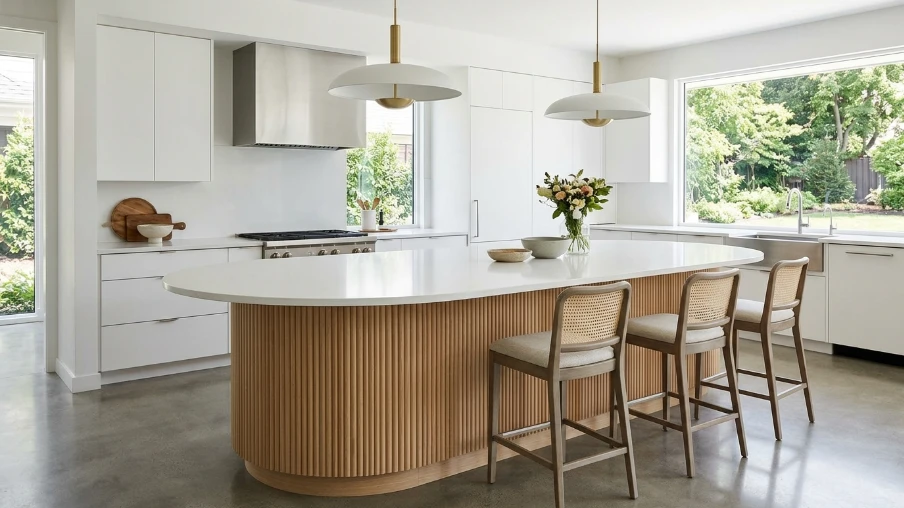
A fully oval kitchen island, where both ends curve symmetrically and the entire perimeter is rounded without any straight edges, is the most architecturally pure version of the curved kitchen island concept. The oval shape creates a genuinely sculptural quality that makes the island the clear visual centerpiece of the kitchen regardless of what surrounds it.
A full oval island works best in large, open floor plan kitchens where the surrounding space allows the complete form to be appreciated from multiple angles. The seating arrangement on an oval island typically wraps around one or both curved ends, creating a social, conversation-friendly breakfast bar configuration that suits family gathering spaces and entertaining-focused kitchen designs.
Choose a consistent countertop material across the full oval surface for the most cohesive result. A solid white quartz or a dramatic book-matched marble slab on an oval island creates one of the most visually impressive kitchen focal points available in contemporary kitchen design.
2. Curved Breakfast Bar Island
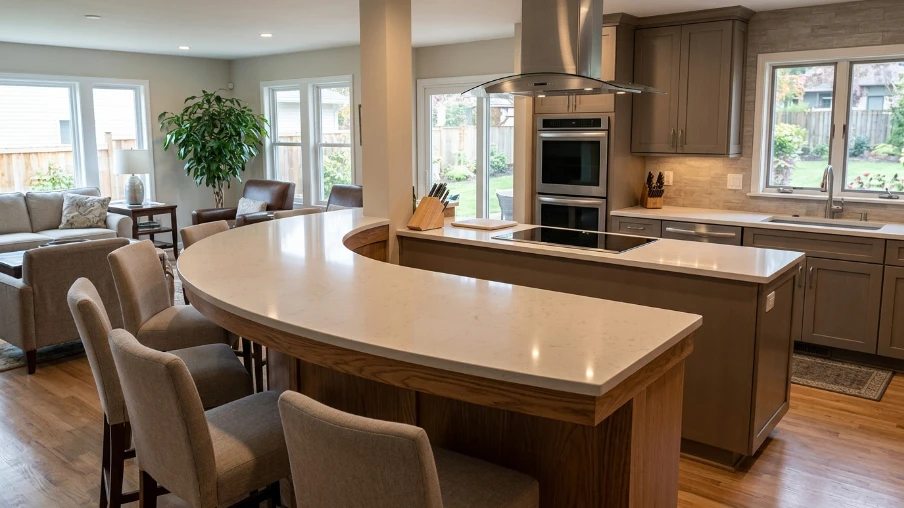
A curved breakfast bar island has a straight working side facing the cooking zone and a curved, outward-facing seating overhang on the living room or dining room side. This is one of the most practical curved kitchen island configurations because it provides the functional efficiency of a straight preparation surface while the curved bar overhang creates a more welcoming, less institutional seating arrangement for casual meals and social interaction.
The curved breakfast bar overhang creates a natural gathering point that rectangular bar counters do not replicate because the gentle arc of the seating edge positions stools in a slight curve that encourages conversation between the people seated at it, rather than the straight-line, side-by-side arrangement that rectangular bars create.
3. Kidney-Shaped Curved Island
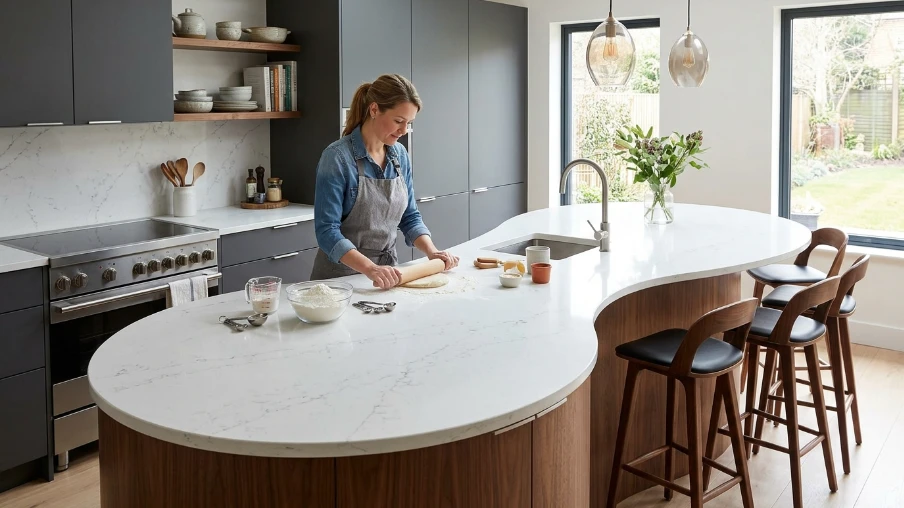
A kidney-shaped kitchen island, with a concave curve on the preparation side and a convex curve on the seating side, is one of the most ergonomically interesting curved kitchen island designs because the concave work surface wraps around the cook in a way that brings commonly used preparation areas slightly closer, reducing the reach distance for items at the sides of the island.
The kidney shape is less symmetrical and more sculptural than a standard oval, which gives it a distinctly custom, architectural quality that suits contemporary and design-forward kitchen aesthetics. The concave preparation side also works particularly well for baking and pastry preparation where having a curved work surface that the cook can stand within creates a more natural and efficient working position.
4. Curved Island with Waterfall Countertop Edge
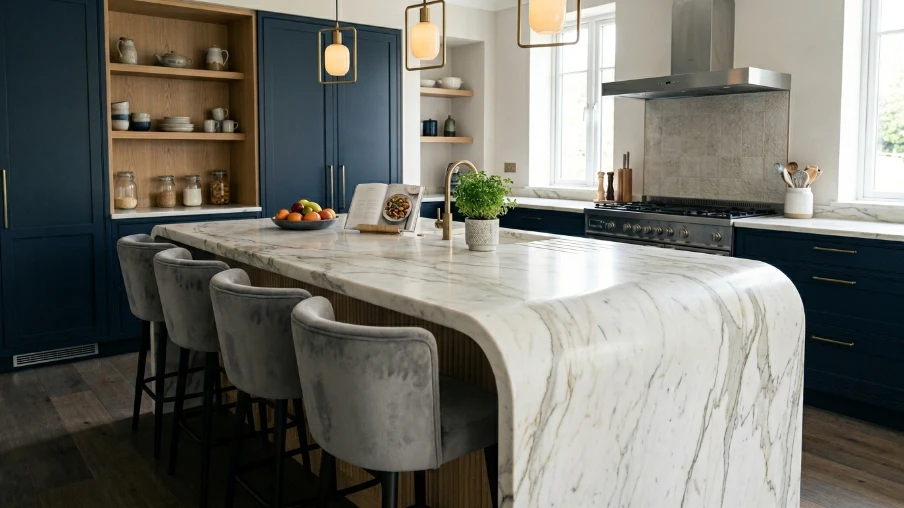
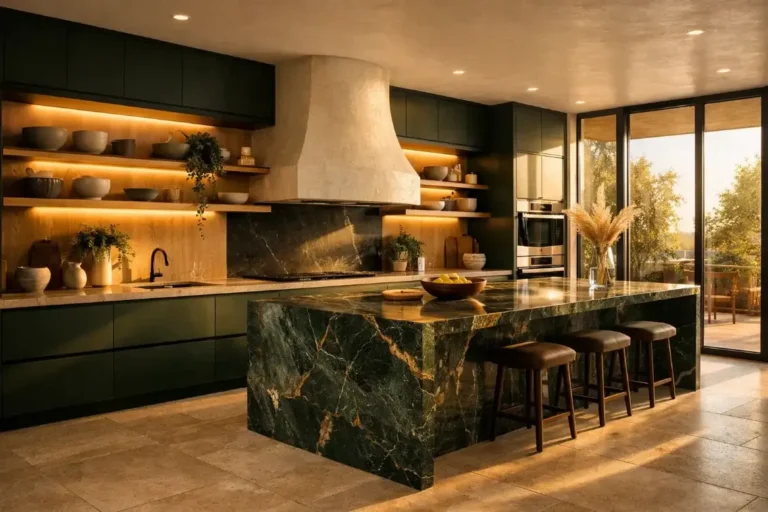
A waterfall countertop edge, where the countertop material continues vertically down the side of the island to the floor rather than stopping at the cabinet edge, creates one of the most visually luxurious kitchen island details available. When applied to a curved island, the waterfall edge follows the curve of the cabinetry below, creating a continuous, flowing surface that reads as a single sculptural piece rather than a counter sitting on top of a cabinet.
A marble waterfall edge on a curved kitchen island is one of the most aspirational and widely photographed kitchen design combinations in contemporary home interior design. The veining in the marble flows across the top and down the curved side simultaneously, creating a genuinely unique surface that cannot be exactly replicated in any other material at any other price point.
Quick Reference Table: Curved Kitchen Island Ideas at a Glance
| Island Style | Best Kitchen Size | Countertop Material | Seating Option | Style Direction |
|---|---|---|---|---|
| Full Oval Island | Large open plan | Marble or quartz | Wraparound bar stools | Luxury and contemporary |
| Curved Breakfast Bar | Medium to large | Quartz or concrete | 3 to 4 bar stools | Modern and family |
| Kidney-Shaped Island | Large | Marble or stone | Side seating only | Design-forward |
| Waterfall Edge Curved | Medium to large | Marble or quartz slab | End seating | Luxury and minimal |
| Curved Island with Storage | All sizes | Any material | Optional | Functional and modern |
| Two-Tone Curved Island | Medium to large | Mixed materials | Bar overhang | Contemporary and stylish |
| Curved Marble Island | Large | Marble | Wraparound | Classic and luxury |
5. Curved Kitchen Island with Integrated Storage
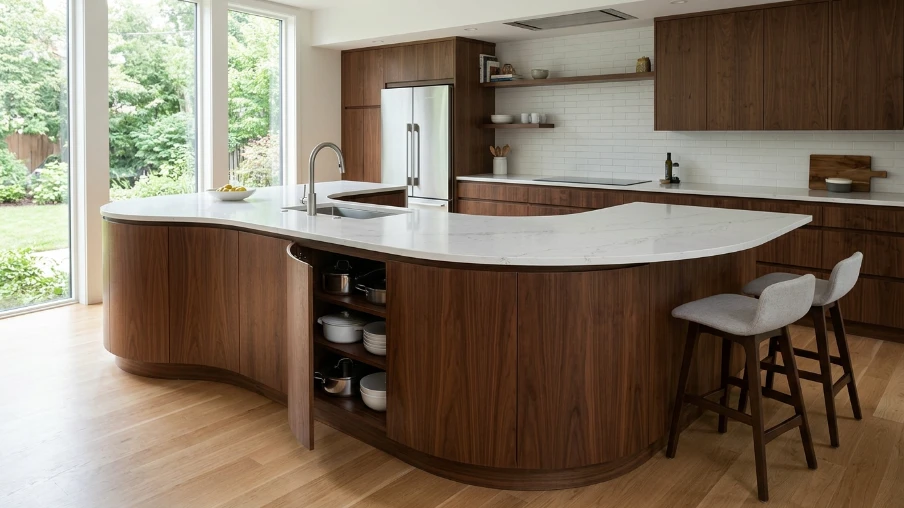
A curved kitchen island with integrated storage draws on the practical advantages of any kitchen island, providing additional cabinet space below the countertop, while the curved form distributes the storage volume around the island perimeter in a way that suits a wider range of cabinet configurations than a standard rectangular base allows.
Curved cabinetry doors on a storage island require custom or semi-custom fabrication because standard flat cabinet doors cannot follow a curved face without modification. This does add cost compared to a straight-edged island, but the result is a kitchen island that reads as genuinely bespoke and architecturally resolved rather than assembled from standard components.
Pull-out drawers, deep base cabinets for pot storage, and concealed appliance pockets integrated into the curved cabinetry base all contribute to a functional kitchen island that addresses real daily storage needs while maintaining the visual elegance of the curved form.
6. Two-Tone Curved Kitchen Island
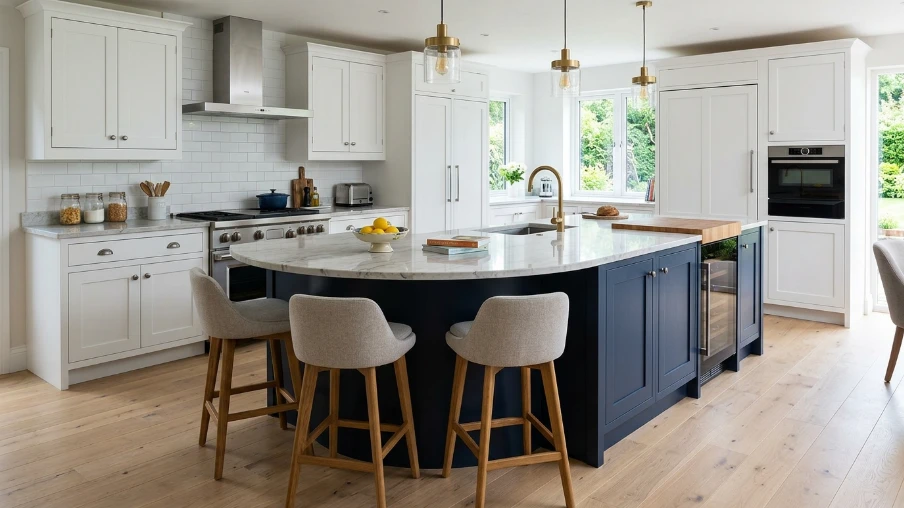
A two-tone curved kitchen island, where the island cabinetry is finished in a different color or material from the perimeter kitchen cabinetry, is one of the most effective ways to make a curved island read as a distinct architectural feature rather than a component of the overall kitchen.
The most popular two-tone combinations for curved kitchen islands in 2026 include a navy or deep forest green island against white perimeter cabinetry, a warm wood-toned island against painted white or grey surrounding cabinets, and a dark charcoal island against a lighter warm kitchen palette. Each combination creates a clear visual distinction between the island and the surrounding space that reinforces the island’s role as the kitchen’s focal centerpiece.
The curved form of the island amplifies the two-tone effect because the rounded edges create a smooth, continuous color transition rather than the hard line that a rectangular island produces at its corners.
7. Curved Marble Island
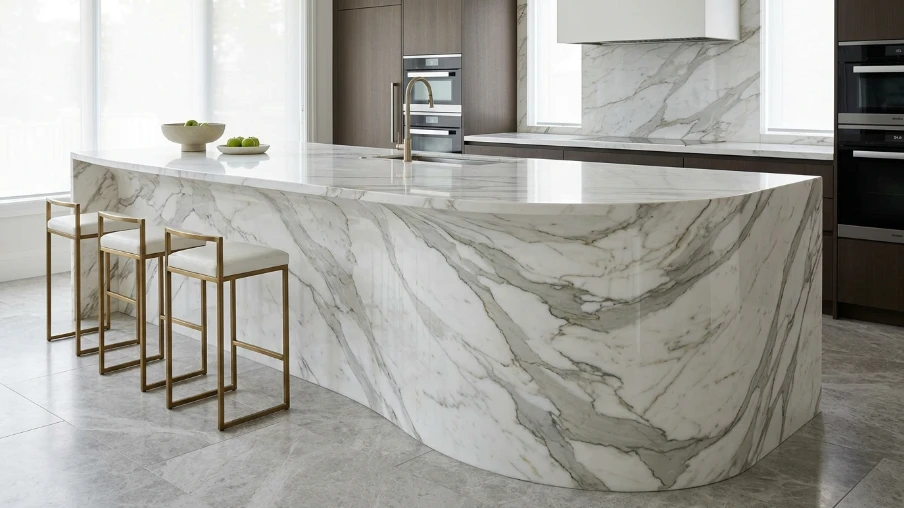
A curved kitchen island surfaced in full marble, whether genuine natural marble or a high-quality marble-effect quartz, is one of the most visually opulent kitchen island designs available. The combination of the curved form and the organic, flowing veining pattern of marble creates a completely unique surface because the natural stone’s pattern will never repeat exactly, which gives each marble curved island an inherently one-of-a-kind character.
For maximum visual impact, choose a marble slab with dramatic grey or gold veining on a white or cream background. Calacatta, Carrara, and Statuario marble varieties are the most commonly specified for high-end curved kitchen islands because their vein scale and contrast suit the large surface areas of island countertops particularly well.
8. Curved Island with Curved Seating
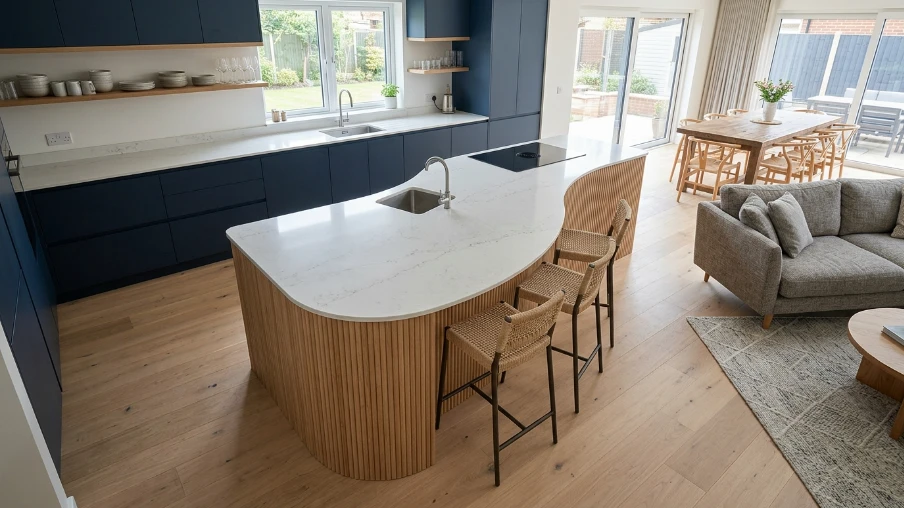
Matching curved bar stools or chairs to the curved profile of the kitchen island creates a fully cohesive seating arrangement where the furniture echoes the architectural form of the island itself. This design approach requires some advance planning because standard bar stools are designed for straight bar counters and may not position optimally along a curved overhang.
Round-seat bar stools or stools with slightly curved back designs suit curved kitchen islands most naturally because they do not create a hard geometric contrast against the soft curving form of the island above. Specify stools in upholstered round seats with minimal metal frames for the most refined and contemporary result at a curved breakfast bar or seating overhang.
9. Curved Island in an Open Floor Plan Kitchen
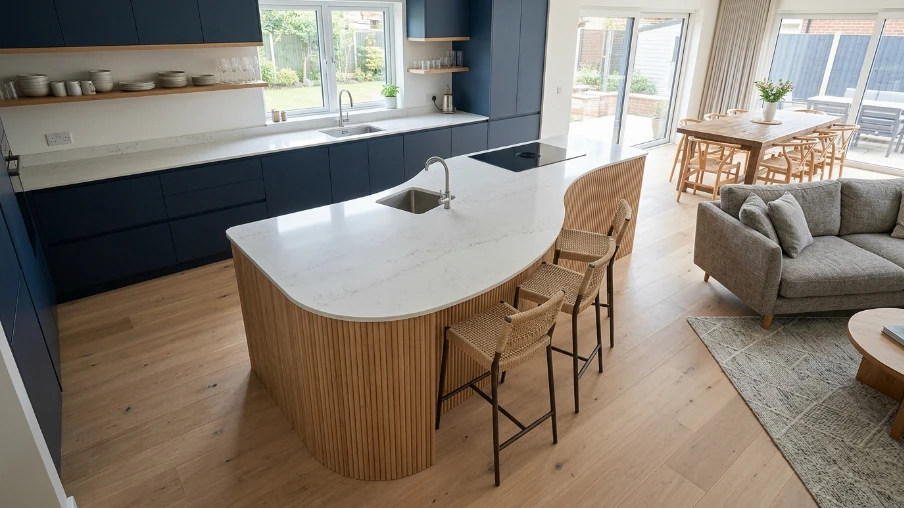
The open floor plan kitchen is the ideal setting for a curved kitchen island because the island exists as a freestanding form in a larger multi-function space, and the curved shape’s visual quality is most fully appreciated when it can be seen from multiple angles and distances simultaneously.
In an open plan living and dining kitchen, a curved island creates a natural, soft boundary between the cooking zone and the living zone without the visual rigidity of a straight-edged dividing structure. The island’s rounded form reads as an invitation to gather rather than a barrier that separates functional zones, which suits the social, open character of contemporary open floor plan living.
10. Small Curved Kitchen Island
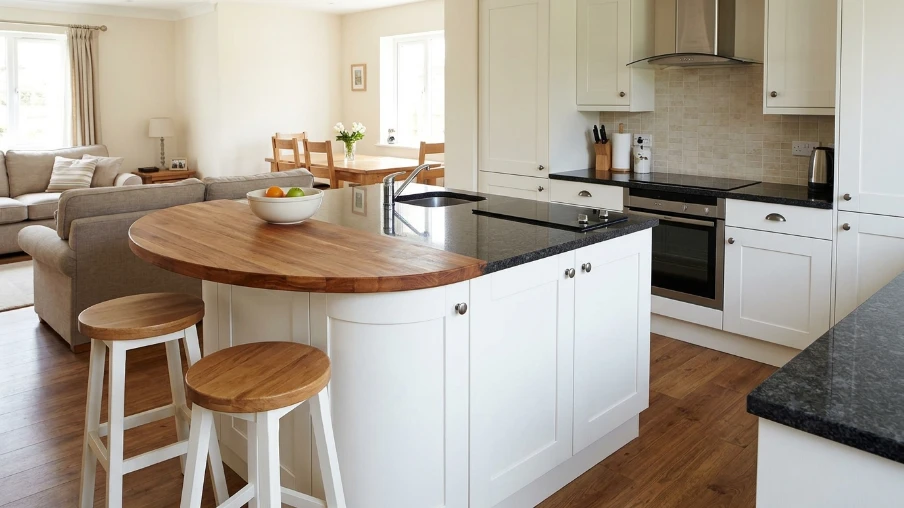
A small curved kitchen island, where one or both ends of a compact island are rounded rather than squared, provides the visual benefit of curved form in a space-efficient package that suits medium-sized kitchens where a full oval or kidney-shaped island would not leave adequate clearance for comfortable movement.
The most practical approach to a small curved kitchen island is rounding one end of the island, typically the end that faces the living or dining area, while keeping the opposite end straight against the kitchen wall or adjacent to the cooking zone. This partial curve approach delivers the softening visual quality of a curved island while maintaining the spatial efficiency of a more compact footprint.
11. Curved Island with Quartz Countertop
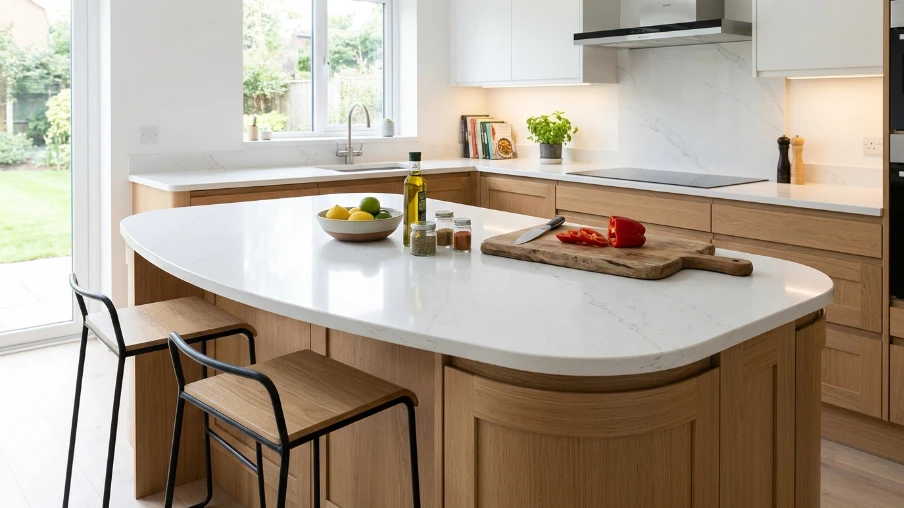
A quartz countertop on a curved kitchen island is the most practical material choice for households where the kitchen sees significant daily use involving food preparation, cleaning, and the general wear that busy family kitchens impose on surfaces. Quartz is non-porous, requires no sealing, resists staining from wine, oil, and acidic foods, and maintains its surface appearance consistently over many years of intensive use.
The manufacturing process of quartz engineered stone also makes it particularly suitable for curved countertops because the material can be precisely fabricated to follow a curved template without the risk of natural variations that genuine stone can present. A pure white quartz with subtle grey veining on a curved island creates a clean, contemporary countertop that suits almost every kitchen aesthetic from Scandinavian minimalist to modern luxury.
12. Curved Island with Pendant Lighting
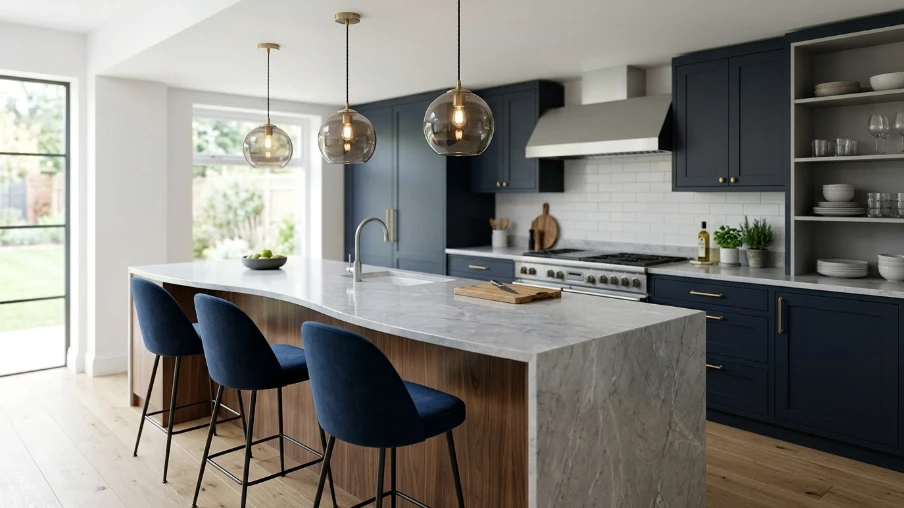
The lighting arrangement above a curved kitchen island requires specific planning because standard linear pendant arrangements that suit rectangular islands do not translate directly to a curved form. Circular or arced pendant lighting arrangements that follow the curve of the island below create the most cohesive and architecturally resolved result.
A curved arc of three or more pendants positioned directly above the curved island perimeter creates a lighting arrangement that visually reinforces the island’s form from above. Choose pendants in a consistent material and finish, brushed brass, matte black, or smoked glass, for a cohesive overhead installation that complements rather than competes with the island design below.
13. Curved Concrete Kitchen Island
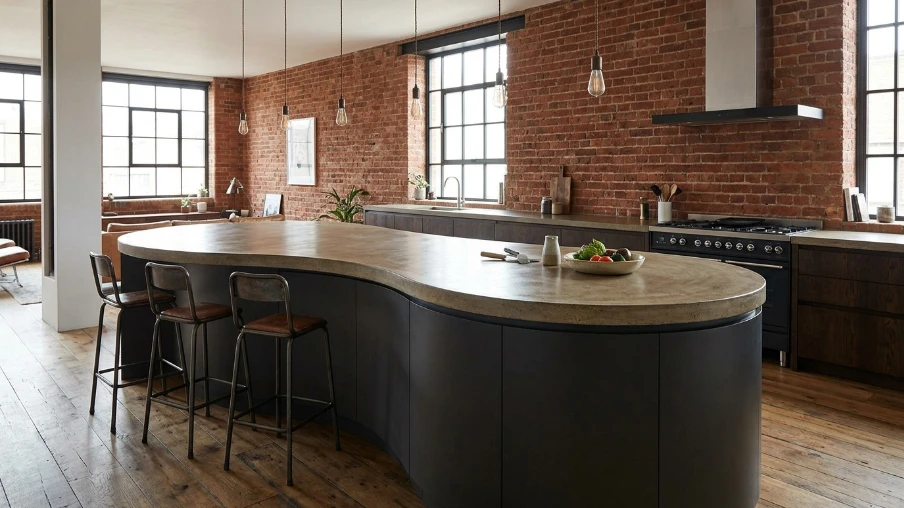
A curved kitchen island with a poured concrete countertop creates a distinctly industrial yet warm design aesthetic that suits loft-style apartments, converted warehouse living spaces, and contemporary homes with a material-forward interior design approach.
Concrete can be cast to follow any curved template precisely, which makes it one of the most technically flexible countertop materials for curved island applications. The natural warm grey tone of concrete suits dark cabinetry, exposed brick, and timber floor combinations particularly well. Seal concrete countertops with a high-quality penetrating sealer for the best stain resistance and apply mineral oil periodically to maintain the surface’s natural character.
14. Curved Island with Built-In Wine Storage
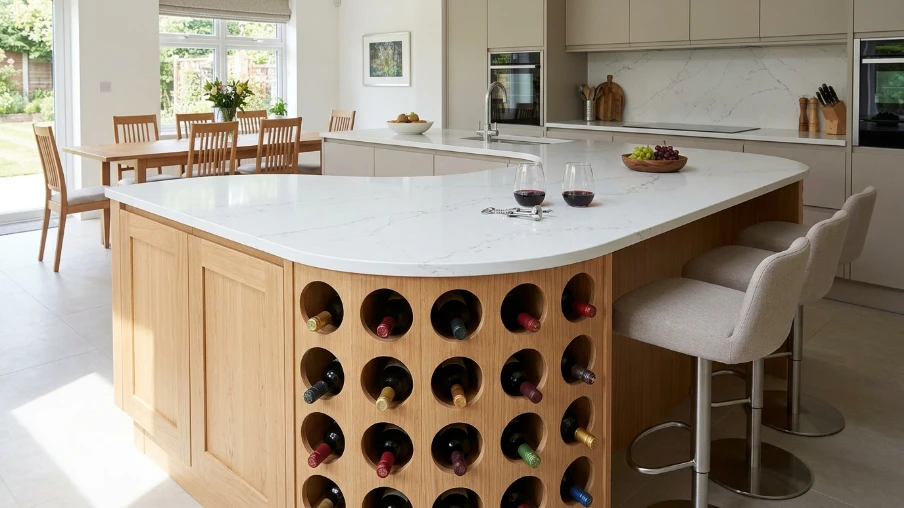
Incorporating wine storage into the curved base of a kitchen island creates a practical and visually interesting design feature that suits entertaining-focused households and open plan kitchen dining spaces where the island is frequently visible from the dining and living zones.
Wine rack cutouts integrated into the curved cabinetry face create a distinctive pattern of circular openings in the island base that adds visual depth and texture to the cabinetry surface. This approach to wine storage suits both natural wood finished and painted island cabinetry, and the circular openings echo the rounded form of the curved island in a subtly cohesive design detail.
15. Curved Island with Contrasting Wood Detail
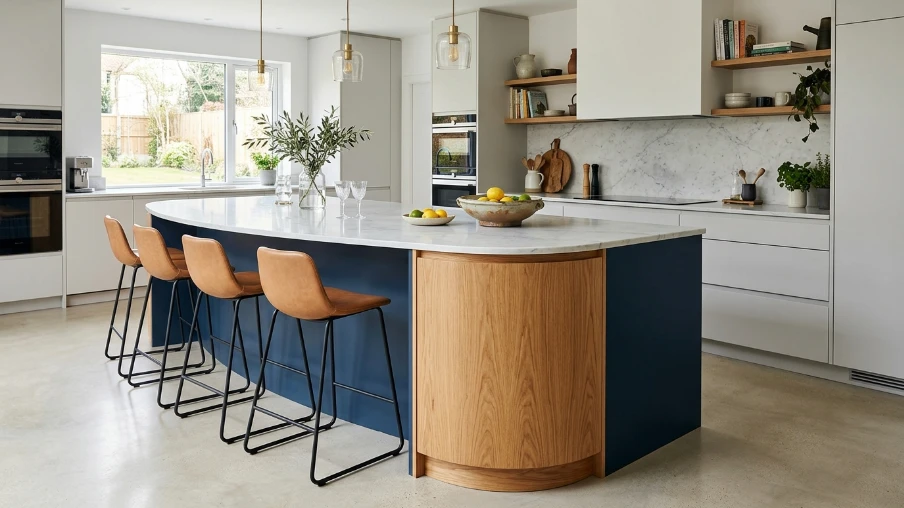
Adding a contrasting wood detail to a curved kitchen island, whether as a wood-toned lower cabinetry face beneath a painted or stone upper section, a wood overhang on the seating side, or a wood-effect end panel on the curved termination of the island, introduces warmth and natural texture to what might otherwise be an entirely hard-surface kitchen environment.
Warm oak, walnut, and white oak wood tones are the most commonly specified timber varieties for curved island detail work in contemporary kitchen design because they suit both light and dark surrounding kitchen palettes and add the organic quality that natural materials bring to otherwise synthetic kitchen environments.
16. Curved Kitchen Island with Integrated Sink
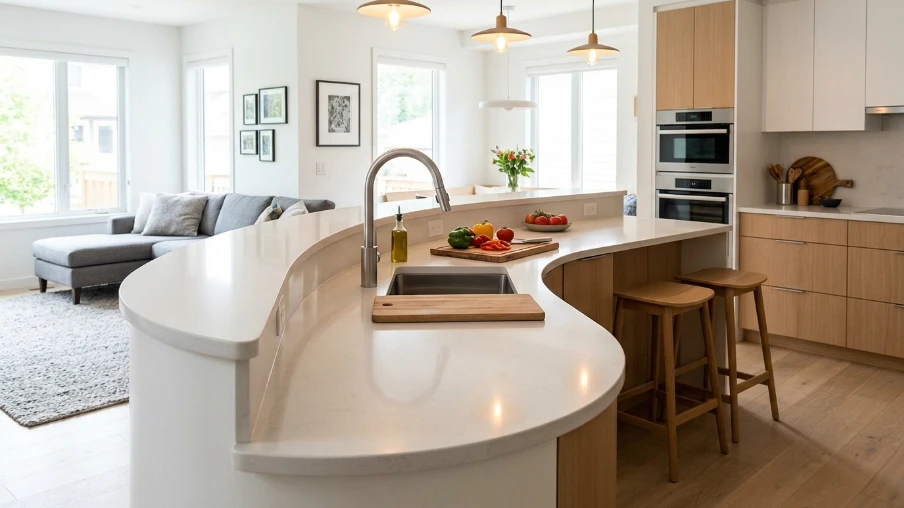
An integrated sink in a curved kitchen island positions one of the kitchen’s primary working elements within the island itself, which creates a cooking and preparation zone that faces the living area rather than the wall. This orientation suits open plan kitchens where the cook wants to maintain visual connection with guests or family in the adjacent living space during meal preparation.
A curved island with an undermount sink positioned in the curved section of the countertop creates a naturally defined preparation zone where the curve creates a slight separation between the wet sink area and the dry preparation surface on the straight section of the island. Choose an undermount rather than drop-in sink configuration for the cleanest possible countertop surface that suits the smooth, continuous quality of a curved island design.
you may also like this: 18 Unique Kitchen Trends Ideas Modern Style Designs 2026
17. Curved Island with Statement Pendant Chandelier
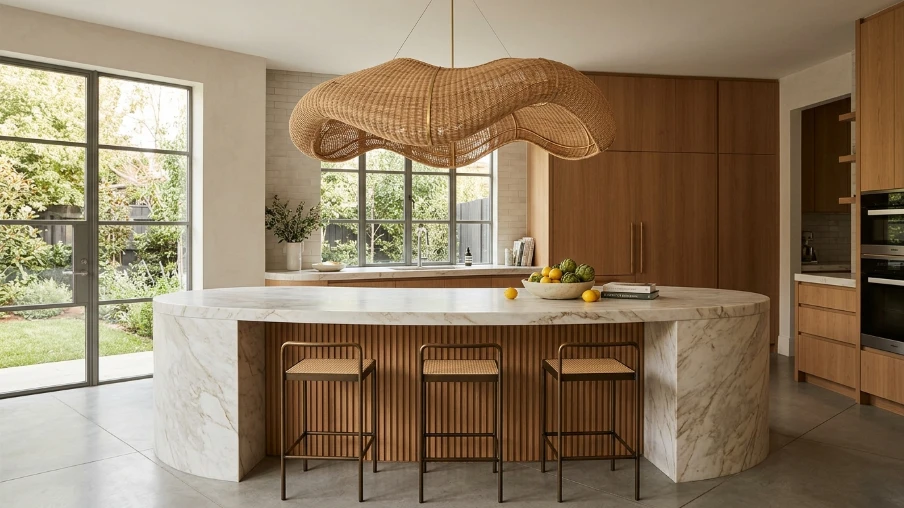
A single large statement pendant chandelier hung directly above a curved kitchen island creates one of the most visually dramatic and luxurious kitchen interior moments available. A circular or organic-form chandelier in a material that complements the island countertop, rattan for a warm natural aesthetic, brass for a luxury finish, or blown glass for a contemporary art quality, creates an overhead installation that reinforces the curved island’s role as the kitchen’s architectural centerpiece.
The chandelier scale should relate to the island size directly. A large oval island suits a chandelier with a diameter of approximately half the island length for balanced visual proportion. A smaller curved island suits a single large pendant rather than a chandelier, which provides similar focal impact at a more appropriate scale.
Common Mistakes with Curved Kitchen Island Design
Underestimating the clearance requirement is the most common planning mistake. A curved island in a kitchen that does not provide adequate surrounding floor space creates circulation problems that make the kitchen genuinely less functional than it was before the island was installed. Always measure carefully and maintain minimum 42-inch clearances on all sides before committing to a curved island design.
Choosing a curved island form without considering the cabinet storage configuration is the second frequent oversight. A full oval island with continuous curved cabinetry on all sides may have limited practical interior storage depending on how the curved cabinet doors open and how the interior shelving is configured around the curved perimeter. Confirm the storage layout with your cabinetmaker before finalizing the island design.
Conclusion
A curved kitchen island is one of the most architecturally significant and visually rewarding design choices available to homeowners planning a kitchen renovation. The 17 ideas in this guide demonstrate the full range of what curved island design can achieve, from the understated elegance of a simple rounded end on a compact island to the full sculptural drama of a marble oval with a waterfall edge and chandelier above.
Plan the clearances carefully, choose materials that suit both the aesthetic vision and the practical demands of your household, and work with a cabinetmaker who has specific experience with curved cabinetry fabrication. The result is a kitchen feature that sets your home apart and creates a space you will genuinely enjoy every time you walk into the room.
Frequently Asked Questions
Q1. How much does a curved kitchen island cost compared to a rectangular one?
A curved kitchen island typically costs twenty to thirty percent more than a comparable rectangular island because the curved cabinetry requires more skilled fabrication and the curved countertop template adds complexity to the cutting and finishing process. The total cost depends on size, material choices, and the level of customization required.
Q2. What is the minimum kitchen size for a curved island?
A curved kitchen island requires a minimum clearance of 42 inches on all sides of the island. This means the kitchen needs to be large enough to accommodate the island dimensions plus at least 42 inches of clear walkway space on every side. For a standard medium-sized curved island, a kitchen floor plan of at least 150 square feet is generally recommended.
Q3. What countertop material is best for a curved kitchen island?
Quartz is the most practical choice for high-use household kitchens because it is non-porous, requires no sealing, and maintains its appearance consistently. Marble is the most visually luxurious choice for lower-use or entertaining-focused kitchens. Concrete suits industrial and loft-style aesthetics and can be cast to any curved template precisely.
Q4. Can a curved kitchen island work in a small kitchen?
Yes, with a modified approach. A partial curve on one end of an otherwise compact island, rather than a full oval or kidney shape, provides the visual softening benefit of curved form while maintaining a space-efficient footprint. The curved end should face the most visible area of the kitchen, typically toward the living or dining zone, for maximum visual impact.
Q5. How many stools fit at a curved kitchen island?
The number of stools depends on the island’s curved perimeter length and the overhang depth. A standard breakfast bar overhang of 12 to 15 inches accommodates standard bar stools with a spacing of approximately 24 inches per stool along the curved edge. A medium curved island typically seats three to four stools comfortably, while a full oval island can accommodate five to six depending on its overall dimensions.